Choose your cookies

Necessary cookies hold the site together — cart, sign-in, language. Analytics ones show us what works here and what to build your recommendations on. Marketing ones would measure ads outside Yumsto; we're not running any yet. Nothing but the necessary ones runs until you say yes.

How we handle your data

Cookie settings

Dairy and Eggs: Guides and Tips

Dairy and Eggs: Guides and Tips

Eggs, cream, butter, quark and cheese: how long they keep, what to swap them for and what to do when they won't behave. Why cream splits in a sauce, why egg whites won't whip and what to bake with the quark left in your fridge.

Quick answer

How long do eggs keep in the fridge?

Until the best-before date on the carton. In the EU it may be at most 28 days from laying, so shelf life counts from laying, not from purchase. The “3–5 weeks” figure comes from the US, where eggs are washed and the clock starts differently.
Frequently asked questions

All articles

  1. Why Do Hard-Boiled Eggs Get a Green Ring? How to Prevent It

    The green-gray ring around a hard-boiled egg yolk comes from overcooking: heat releases sulfur from the white, which reacts with iron in the yolk to form iron sulfide where the two meet. The egg is still safe to eat. Cook it just until the yolk is firm, then cool it quickly in cold water, and the ring won't form.

  2. European Butter vs American Butter: Fat, Water and Baking Differences

    European butter usually has a little more fat and a little less water than standard American butter: typically 82% fat or more, where US law sets the minimum at 80% and most supermarket butter sits close to it. It is also more often unsalted and sometimes cultured. For most cakes and cookies you can swap one for the other gram for gram; the difference shows most in pastry and plain butter flavor.

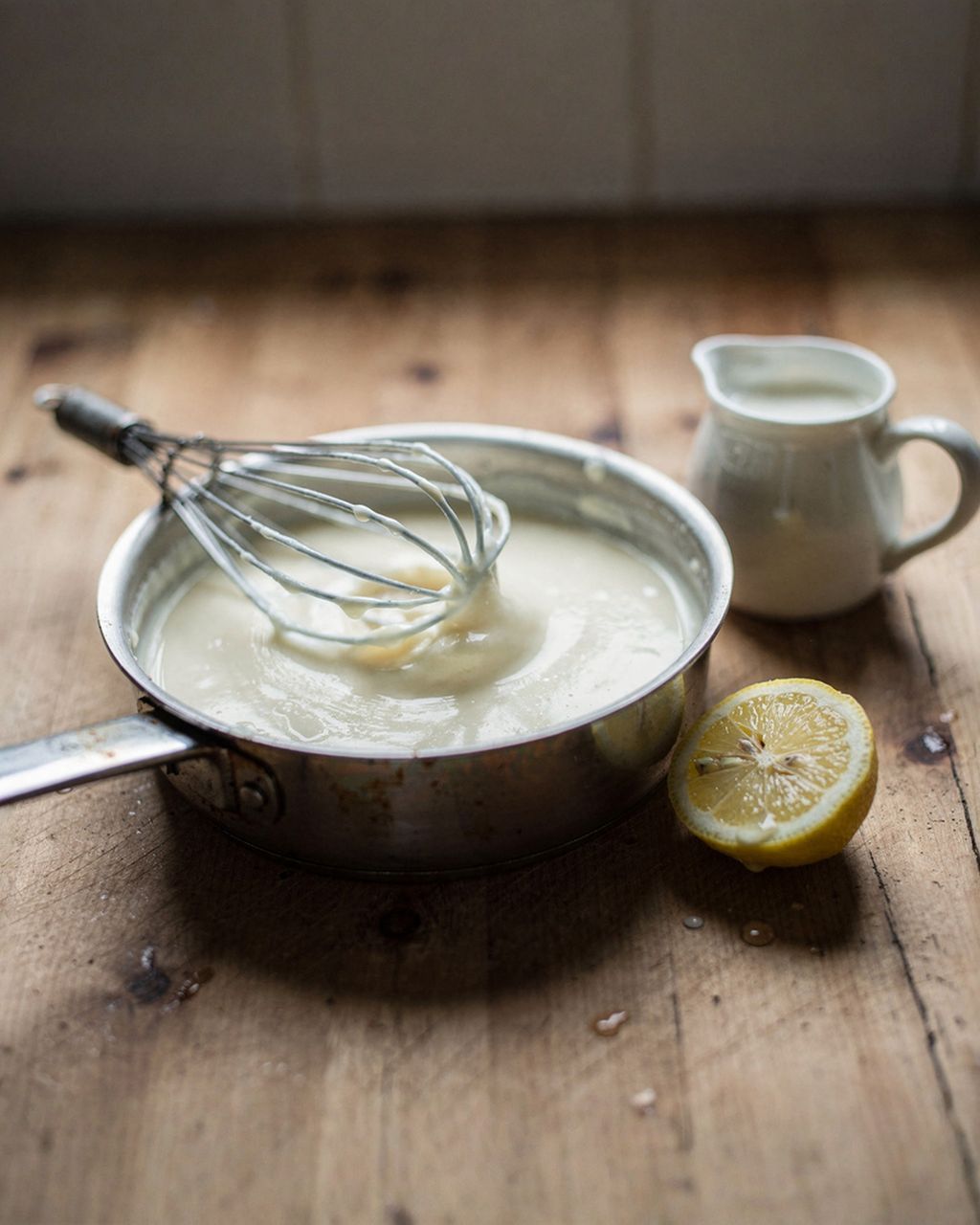
  3. Why Is My Pastry Cream Not Setting? Runny Pastry Cream Fixed

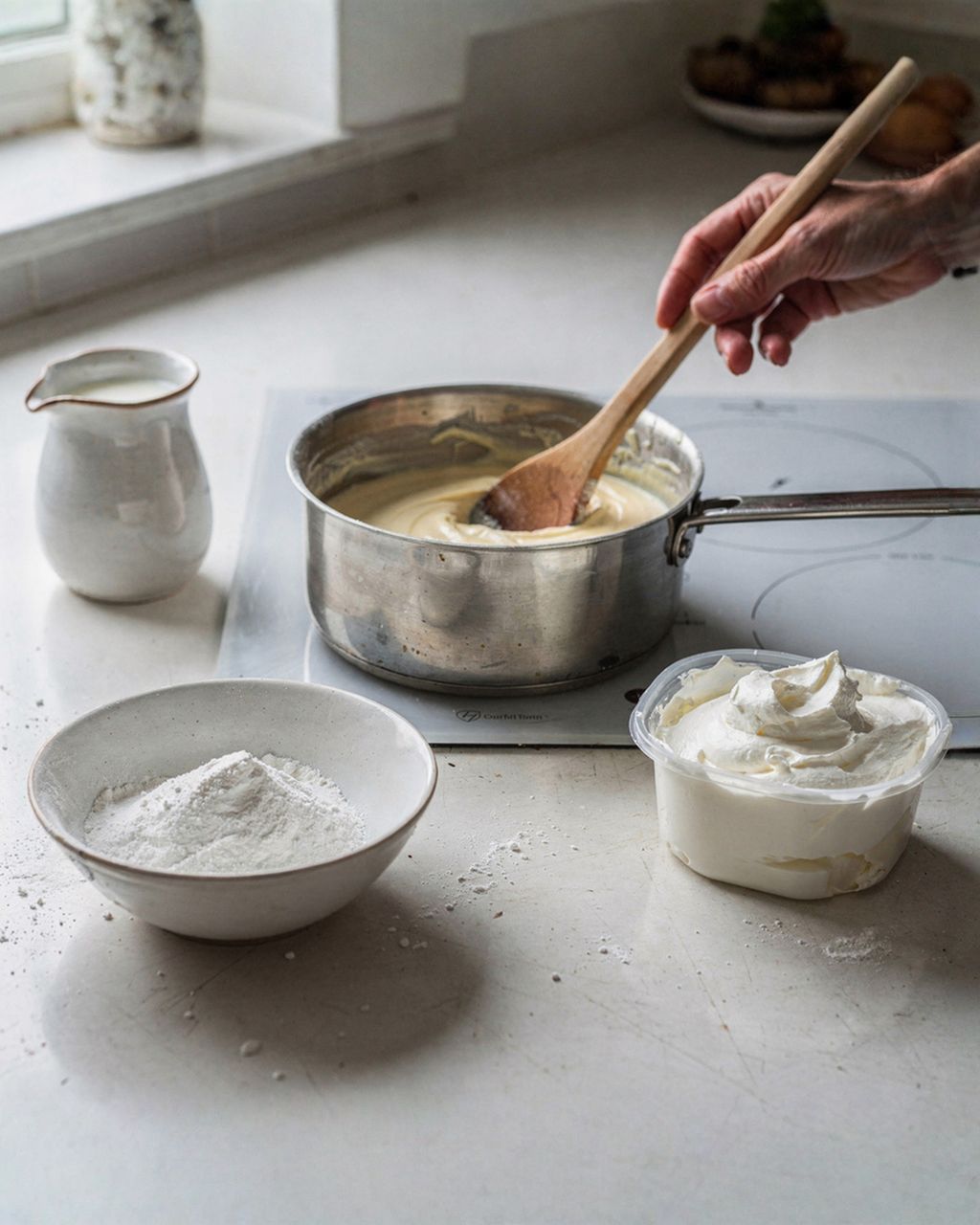
    Pastry cream usually doesn't set because it wasn't boiled long enough after the yolks went in, so the starch never fully thickened and an enzyme in the yolks thinned it later. Too little starch, over-whisking once cold, or adding liquid at the end also leave it runny. Most runny pastry cream can be rescued by boiling it again.

  4. Why Is My Custard Not Thickening? Causes and How to Fix It

    Custard usually isn't thickening because it hasn't got hot enough yet: an egg custard sauce needs to reach about 79–82 °C (175–180 °F), and a cornstarch custard has to come to a simmer or gentle boil. It can also be too thin because the ratio is off, or because it thinned again after cooking. Here is how to tell which, and how to rescue it.

  5. Why Does My Pastry Cream Taste Eggy or Starchy? How to Fix It

    Pastry cream tastes eggy when the yolks dominate the other flavors: too many yolks or whole eggs, too little vanilla, sugar or salt, or overcooking that brings out a sulfur note. A raw, starchy or floury taste means it wasn't boiled long enough. Both are easy to fix next time, and an eggy batch can often be rescued.

  6. Pancakes Without Milk: Water, Oat Milk and Other Swaps

    You can make pancakes without milk by swapping it one for one with water, oat milk, soy milk, another plant milk or thinned yogurt. Water works but gives paler, leaner pancakes, so add a little extra fat and a pinch of sugar; oat and soy milk come closest to dairy. Here is what each swap does and how to adjust the batter.

  7. How to Make Pancakes Without Eggs: Substitutes That Work

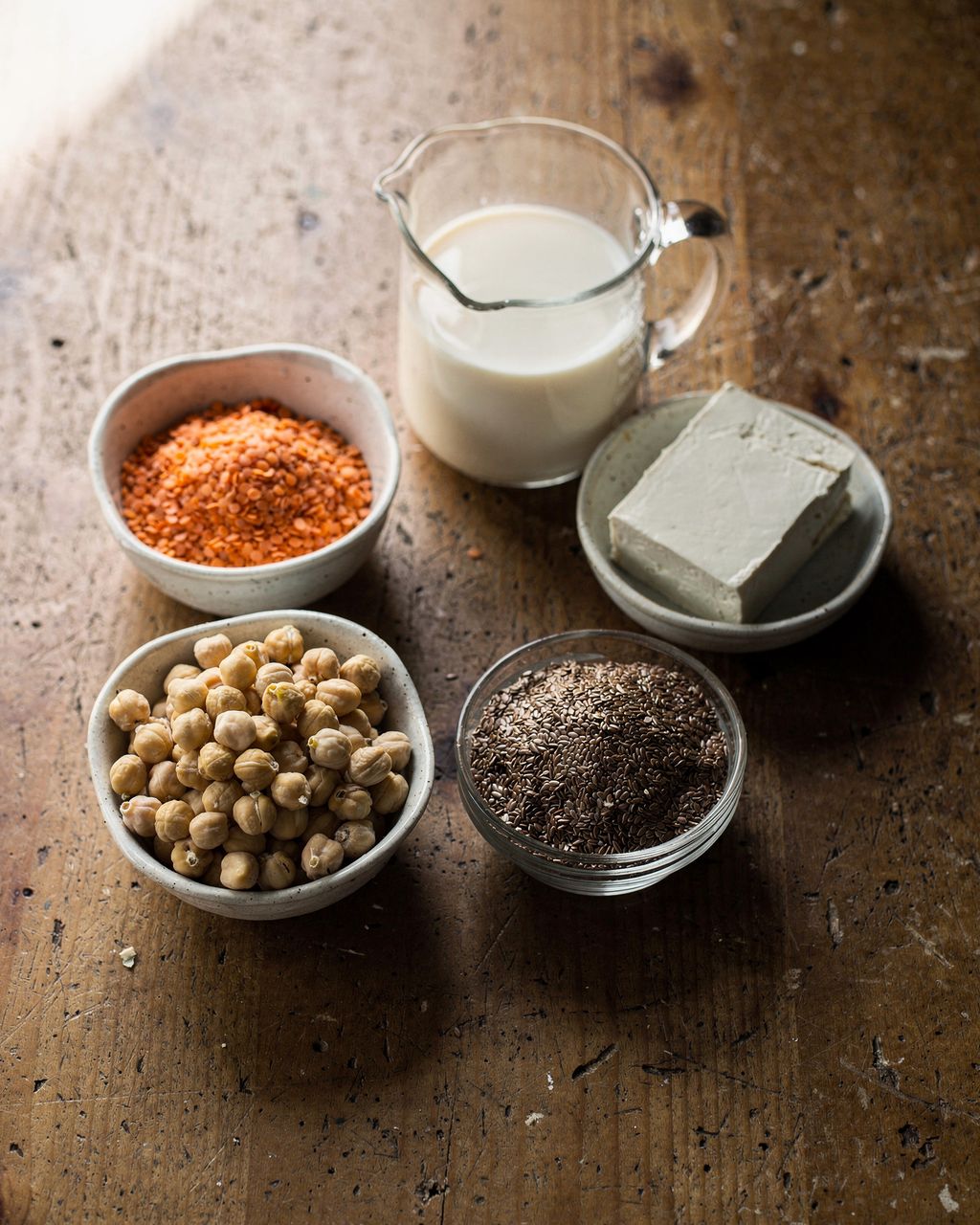
    You can make good pancakes without eggs: leave the egg out and add a little extra baking powder and fat, or replace each egg with a flax egg, mashed banana, applesauce or yogurt. In a pancake the egg mostly adds richness, color and some structure, and baking powder already does most of the lifting. The swaps below show what each substitute changes, so you can pick one for fluffy, tender pancakes.

  8. Custard vs Pudding vs Pastry Cream: What's the Difference?

    The difference is what thickens them: custard is set mainly by eggs, American pudding mainly by starch, and pastry cream by both eggs and starch, cooked thick enough to pipe into pastries. They share milk, sugar and vanilla, so they look alike. Here is how to tell them apart, and which to use where.

  9. Buttermilk Substitute for Pancakes and Waffles: What Works Best

    The best buttermilk substitute for pancakes and waffles is Greek yogurt thinned with milk, about 1 part yogurt to 2 parts milk; milk soured with lemon juice or vinegar is the quickest. Both give the batter the acid that baking soda needs, so the pancakes still rise and taste gently tangy. Plain milk on its own is the one swap to avoid in a recipe that uses baking soda.

  10. How to Make Brownies Without Eggs: The Best Egg Substitutes

    You can make good brownies without eggs by replacing each egg with about 1/4 US cup (60 g) of plain Greek yogurt, 3 tablespoons of aquafaba, or a flax egg made from 1 tablespoon of ground flaxseed and 3 tablespoons of water. Eggless brownies are usually fudgier and a little more fragile, so let them cool fully before cutting.

  11. Banana Bread Substitutes for Butter, Oil, Eggs, Sour Cream and Sugar

    Banana bread takes substitutes well: you can swap butter and oil for each other, replace eggs with applesauce, yogurt or flax, use Greek yogurt for sour cream, and cut or change the sugar, as long as you keep the batter about as wet as the recipe intended. Each swap changes the texture a little, and stacking several at once is where loaves go gummy. Here is what each swap does and the amounts to use.

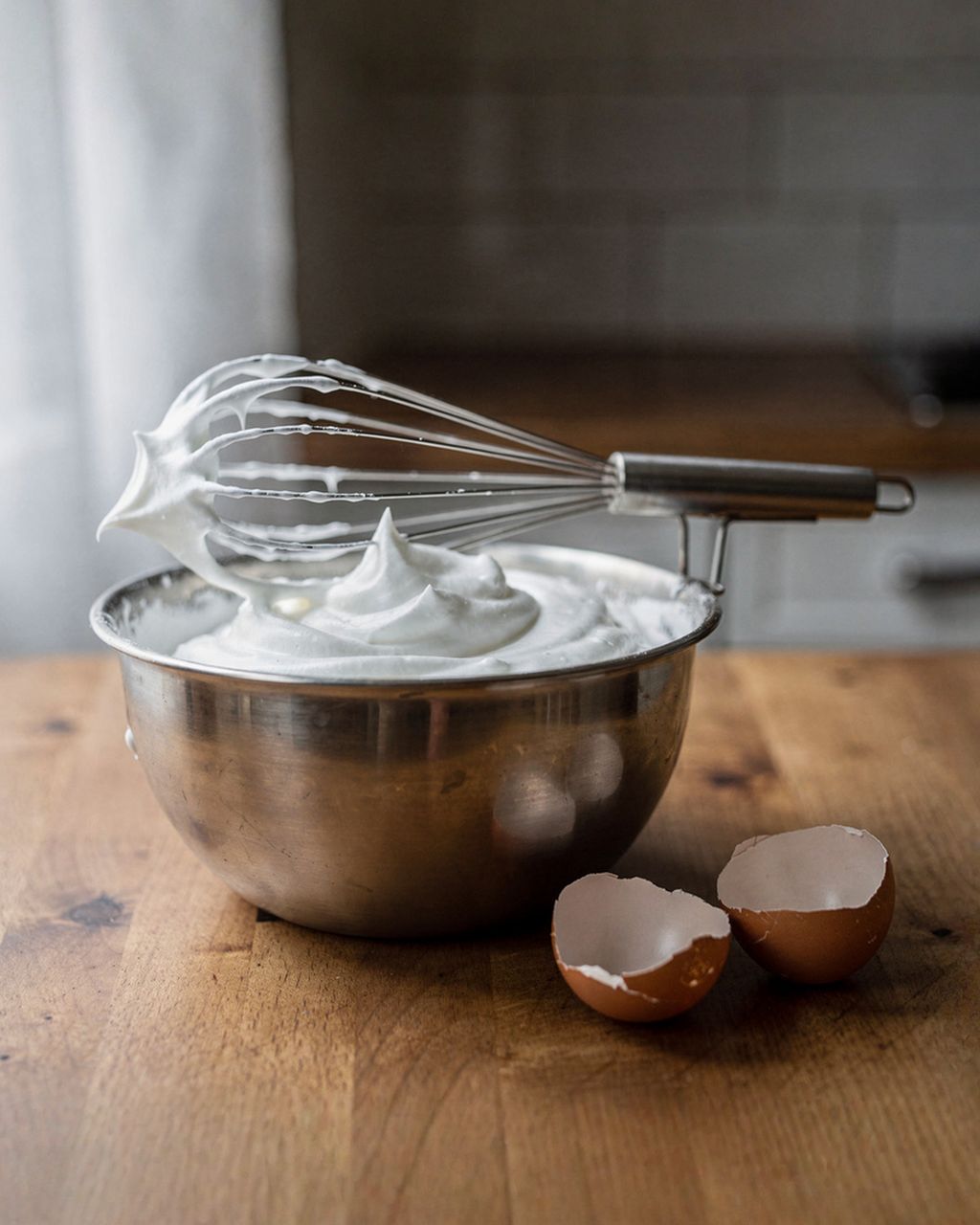
  12. Why Does Meringue Weep on Pie? Weeping vs Beading on Lemon Meringue

    Meringue weeps on a pie when its underside stays undercooked, so liquid seeps out and pools between the meringue and the filling; droplets on top, called beading, come from the opposite problem, overcooking. Spreading the meringue onto hot filling, sealing it to the crust and stabilizing it with a little cooked cornstarch stop both. A properly baked meringue also matters for food safety, because it is made from egg whites.

  13. Butter vs Shortening vs Lard in Pie Crust: Flakiness, Tenderness and Flavor

    Butter gives pie crust the best flavor and big, crisp flakes, but it is harder to handle; shortening gives a tender, easy dough with little flavor; lard sits in between and is the savory baker's choice. Many American bakers use a mix, such as 3 parts butter to 2 parts shortening by volume, to get both. Shortening is hard to find in much of Europe, so all-butter or butter and lard crusts are the practical choice there.

  14. How Many Grams in a Cup of Yogurt? Plain, Greek and Skyr Compared

    A US cup (236.6 ml) of plain yogurt weighs about 245 g, and USDA FoodData Central gives the same 245 g for Greek yogurt. A metric cup (250 ml) holds about 259 g. Yogurt weighs only a little more than water, so 1 ml of yogurt is about 1 g, a handy shortcut when a recipe mixes grams and milliliters.

  15. How Many Grams in a Cup of Milk? Whole, Skim, Plant Milk and ml

    A US cup (236.6 ml) of whole milk weighs about 244 g, and a metric cup (250 ml) about 258 g, according to USDA FoodData Central. Milk is slightly denser than water, so 1 ml of milk weighs about 1.03 g rather than 1 g. Skim milk weighs almost the same, about 245 g per US cup, and most plant milks about 240 to 244 g.

  16. How Many Grams in a Cup of Grated Cheese? Parmesan, Cheddar, Mozzarella

    A US cup (236.6 ml) of finely grated parmesan weighs about 100 g, while a US cup of shredded cheddar or mozzarella weighs about 113 g, according to USDA FoodData Central. A metric cup (250 ml) holds about 106 g of grated parmesan and about 119 g of shredded cheddar. Packing the cheese down, or grating it fluffier, changes these figures a lot.

  17. What Is Smažený Sýr? Czech Fried Cheese and Which Cheese to Use

    Smažený sýr is Czech fried cheese: a thick slice of Edam, breaded like a schnitzel and fried until golden outside and molten inside. It comes with tartar sauce and fries or potatoes, and it is a fixture of Czech pubs, canteens and street-food stands. Here is which cheese is used, how it is served and what to buy if you want to make it outside the Czech Republic.

  18. What Is Hermelín? The Czech Camembert-Style Cheese, Explained

    Hermelín is a Czech soft cheese with a white mold rind, made in the style of French camembert but usually milder and creamier. Czechs bake it, fry it in breadcrumbs, grill it and marinate it in oil with onion and paprika as a pub snack. Outside Czechia, a young camembert or a small brie is the closest swap.

  19. What Are Olomoucké Tvarůžky? The Czech Cheese Famous for Its Smell

    Olomoucké tvarůžky are small, golden, ripened cheeses made from Czech curd cheese, with a low fat content and a famously strong smell. They have been made in the town of Loštice in Moravia since the 19th century and carry an EU Protected Geographical Indication. Czechs eat them with beer, raw onion and bread, fry them in breadcrumbs, or mash them into spreads.

  20. Bread Spreads: Quark, Egg, Fish and Vegetable (Even for New Year's Eve)

    Bread spreads rest on five bases: quark (tvaroh, a Czech fresh curd cheese), eggs, cheese, smoked fish, and vegetables or legumes. Each base needs something bold (mustard, blue cheese, dill, garlic), something for texture (grated carrot, chopped egg whites, nuts) and a pinch of salt. Below you'll find tested spread recipes from every group, from the fastest at 7 minutes to the slowest, with chickpeas soaked for at least 24 hours. We also cover how long spreads keep in the fridge and how to build a New Year's Eve table from them.

  21. What to Make with Ricotta and Cottage Cheese: Cakes, Galettes, Pancakes and Baked Potatoes

    What can you make with ricotta and cottage cheese? With ricotta, bake a plum cake, a galette, a Czech bublanina (fruit sponge cake) or tartlets, and stir up a spread. With cottage cheese, make pancakes for breakfast, baked potatoes or potato patties for dinner. Both cheeses are fresh and mildly tangy, but they behave a little differently in the kitchen. Ricotta is smooth and adds tenderness to batters and doughs, while cottage cheese has curds and more moisture and does best in the oven and in a skillet. Below you'll find what each cheese does in a dish, a link to a tested recipe for most of them, and a few tricks to get it right the first time.

  22. Bublanina (Czech Fruit Sponge Cake): A Foolproof Recipe with Crumble Topping, Yogurt or Ricotta

    Bublanina (a Czech fruit sponge cake) is a quick cake made from whipped eggs, sugar, fat, liquid and flour with baking powder. You scatter fruit over the batter and bake it at 180°C (350°F) for about 30–45 minutes. As it bakes, the batter flows around the fruit and little bubbles rise up around it, which is where the name comes from. Below you'll find a foolproof basic method, followed by all the variations people search for most: with crumble topping, yogurt, ricotta, quark, buttermilk, plums, strawberries, currants, cherries and blueberries.

  23. Savory Breakfast: Eggs, Toasts, Tortillas and No-Bread Recipes

    A savory breakfast means eggs, cheese, ham, vegetables or a bean spread instead of sweet buns and jam. It usually comes with bread, but it doesn't have to. You can build it fastest from three bases: eggs in a pan, toast or bread with something creamy on top, and a tortilla to wrap whatever you have on hand. Below you'll find specific recipes, plus versions with no eggs, no bread or made with rolled oats, and tips for lunchboxes and kids.

  24. Lívance Recipe: Fluffy Czech Pancakes with Yogurt, Quark or Oats

    A lívance recipe (Czech small, thick pancakes) is simpler than it looks: a cup of flour, an egg, milk or yogurt and a teaspoon of baking powder, with the thick batter spooned onto a hot pan and flipped as soon as bubbles burst on the surface. Fluffiness doesn't come from a secret ingredient but from three things: a thick batter, brief mixing and medium heat. Here you'll find the basic method, no-yeast and yeast versions, lívance made with yogurt, cottage cheese, oats and kefir, egg-free variations and savory lívance for dinner. Most link to a tested recipe; the kefir, yeast and egg-free versions are for now only a rough guide.

Cart