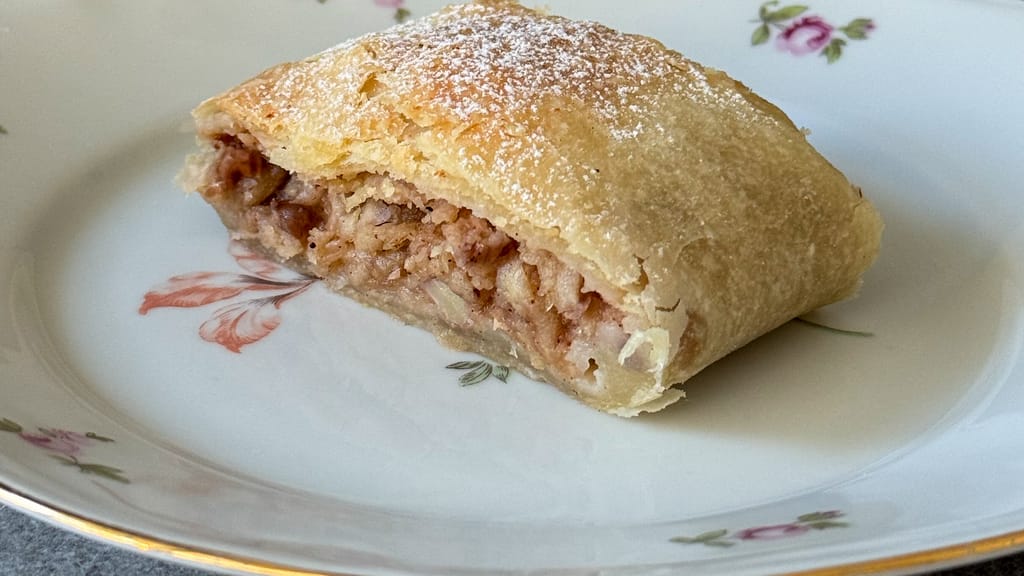
Apple strudel with homemade stretched pastry
What to Brush on Strudel: Egg, Milk, Butter, and the Perfect Crust

Updated Jul 18, 2026
What you brush on strudel before baking decides whether it comes out of the oven with a glossy, golden crust or looks pale and dull. Egg gives the deepest shine and richest golden colour, butter brings crispness and buttery flavour, while milk and cream leave a softer, gentler finish. It's not just about looks, either — the coating seals in moisture and shapes the flavour too. What you choose really comes down to your dough and filling. Let's run through all the options, and more importantly, when and how to brush so it actually works.
Each option does something different — pick based on the finish you're after:
Whole beaten egg – the shiniest, deepest golden crust, with a bit of crispness.
Egg yolk plus a spoon of milk or water – the richest, deepest golden colour, great for special occasions.
Egg white – less shine, but the crispest, sturdiest crust.
Milk – a gentle, faintly caramel colour and a softer crust; the simplest option.
Cream – a richer colour and a silky-soft finish.
Melted butter – the classic finish for hand-pulled strudel dough: flaky layers, delicate texture, and a buttery aroma.
Honey or sugar glaze (applied after baking) – a sweet shine and a slightly sticky finish.
What you brush on depends mainly on the dough — stretched (hand-pulled) strudel dough and puff pastry each want something different.
Traditional hand-pulled strudel dough isn't brushed with egg but with melted butter, applied repeatedly throughout baking. The butter seeps between the thin layers, separates them, and creates that signature flaky, layered crust. Egg would actually seal the dough shut here and ruin the layering.
Puff pastry and Danish-style dough (store-bought or homemade), on the other hand, love egg – the proteins in egg encourage browning (the Maillard reaction) far better than fat alone, giving that glossy, bakery-style finish.
The filling matters too. Sweet fruit strudels can take a sweet glaze after baking; for savoury strudels (like one with cabbage), skip the sweet glaze and brush with egg before baking instead.
Apple strudel with homemade stretched pastry
Apple strudel made from homemade hand-pulled dough – an example of hand-pulled strudel that's brushed with butter
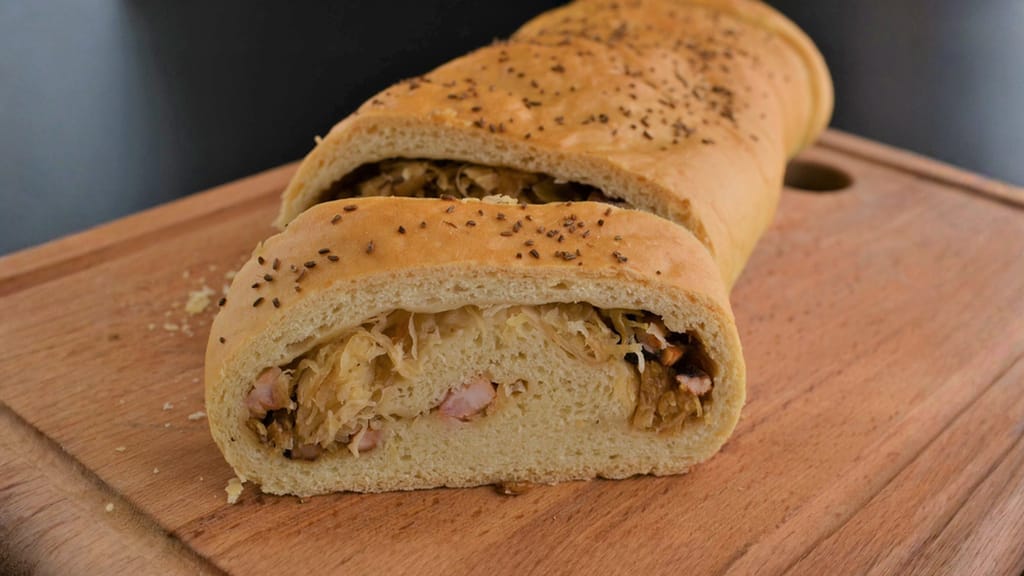
Autumn cabbage and bacon strudel
Autumn strudel with cabbage and English bacon – a savoury strudel brushed with egg rather than a sweet glaze
Of all the options, egg gives the strongest shine and the deepest golden colour. But which part of the egg you use changes the result:
Whole egg beaten with a fork – a balanced golden colour, shine, and a bit of firmness.
Just the yolk with a spoon of milk or water – the deepest, almost amber-gold colour; ideal for special occasions.
Just the white – the least shine, but the crispest, sturdiest crust.
Why egg specifically? Baking tests show its proteins boost browning (the Maillard reaction) better than fat alone, so the surface browns deeper and more evenly. Beat the egg smooth with a fork so no stringy bits of white end up in the brush strokes. A splash of water gives a thinner, crispier film; a spoon of milk gives a slightly softer, richer colour. Brush on right before it goes into the oven.

Milk and cream give a softer, gentler, less crisp crust than egg — handy when you don't want a hard, shiny finish, or you simply don't have an egg to spare. The colour is lighter and more caramel-toned (milk sugars and proteins are behind the browning here).
Low-fat milk – the lightest option, with a matte, slightly drier crust.
Whole milk – a richer colour and softer crust; a good middle ground.
Cream (higher fat content) – the richest colour and a silky-soft finish, though the least crisp.
Want shine and softness at once? Mix egg with a spoon of milk or cream — you'll get the golden shine of egg with a slightly softer crust.
Melted butter is the key to a crisp, flaky, hand-pulled strudel with real buttery flavour — it won't give the shine that egg does, but it delivers on crispness and aroma.
Before baking: brush the whole surface with a thin layer of melted butter. For hand-pulled dough, brush repeatedly, roughly every 15 minutes of baking – the butter seeps between the layers and keeps them flaky.
After baking: brush a little more butter over the strudel while it's still hot; it boosts both crispness and aroma.
For extra flavour: stir a touch of vanilla or a pinch of cinnamon into the butter – it beautifully brings out the apples or pears in the filling.
Butter also works well when you want to complement a creamy filling – with a curd cheese strudel, for instance, it highlights the softness of the curd.

Honey, or sugar dissolved in a splash of hot water, is brushed on after baking as a glaze – it gives a sweet shine and keeps the filling moist. Don't use it before baking: the sugar on the surface would darken too fast, or even burn. Brush a thin layer over the hot strudel and let it set. This works best on juicy fruit strudels.
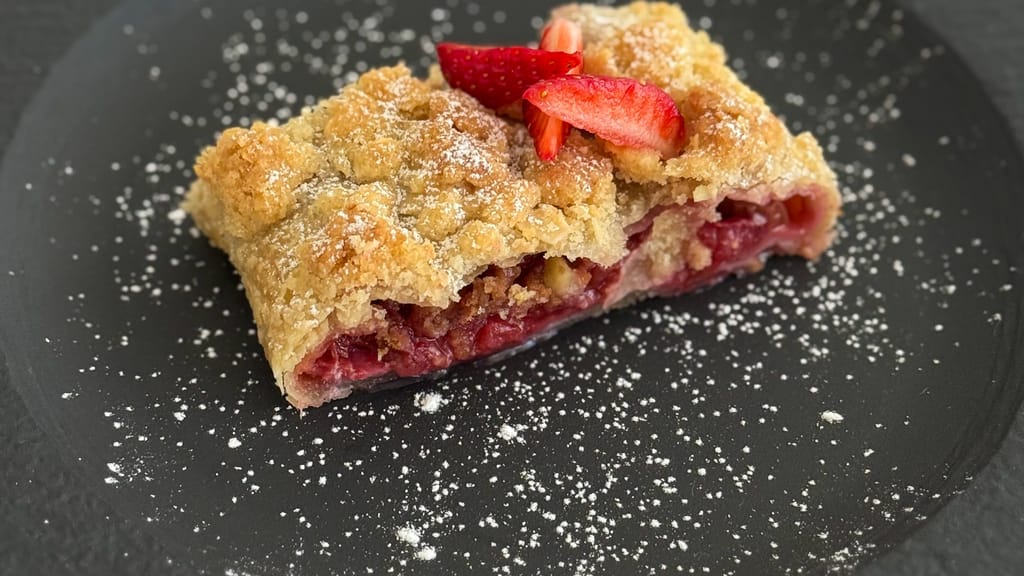
Strawberry-rhubarb strudel with buttery crumble
Rhubarb and strawberry strudel with a buttery crumble topping – a fruit strudel where a sweet glaze after baking really shines
Even the best coating can be ruined by poor technique. Stick to a few rules:
A silicone or soft pastry brush – spreads the mixture evenly without shedding bristles into the dough.
A thin, even layer over the whole surface, with no pooling anywhere – pooled patches bake unevenly.
Brush egg, milk, or cream just before it goes into the oven, butter can be applied during baking too, and honey or sugar only afterwards.
A second coat (before baking and again halfway through) gives a richer colour and more shine.
Bake at 180–200°C (350–400°F), and avoid opening the oven for the first 20 minutes or so, so it holds its heat and the surface sets. Baking usually takes 35–45 minutes depending on the filling and thickness — go by colour and smell.
You don't have to, but it's worth it. Unbrushed strudel tends to look pale and flat; even a thin coat of milk or butter gives it colour, shine, and helps lock in moisture.
Reach for milk, cream, or melted butter — they all give colour and shine without egg. For a plant-based option, unsweetened plant milk works well, especially with a splash of maple syrup or oil stirred in to help it brown.
Usually it's down to brushing with egg white alone or low-fat milk, an oven that wasn't hot enough, or skipping the brushing altogether. Try a whole egg or just the yolk, and bake at 180–200°C (350–400°F).
It's at its best on day one. Store it loosely covered at room temperature — not in an airtight container, which softens the crust. A few minutes in a 150°C (300°F) oven will bring the crispness right back.
One recipe worth heating the oven for, one tip, and one deal from the shop. Nothing else.