Foolproof bubbly cake (bublanina)
Bublanina (Czech Fruit Sponge Cake): A Foolproof Recipe with Crumble Topping, Yogurt or Ricotta
Updated Nov 20, 2026
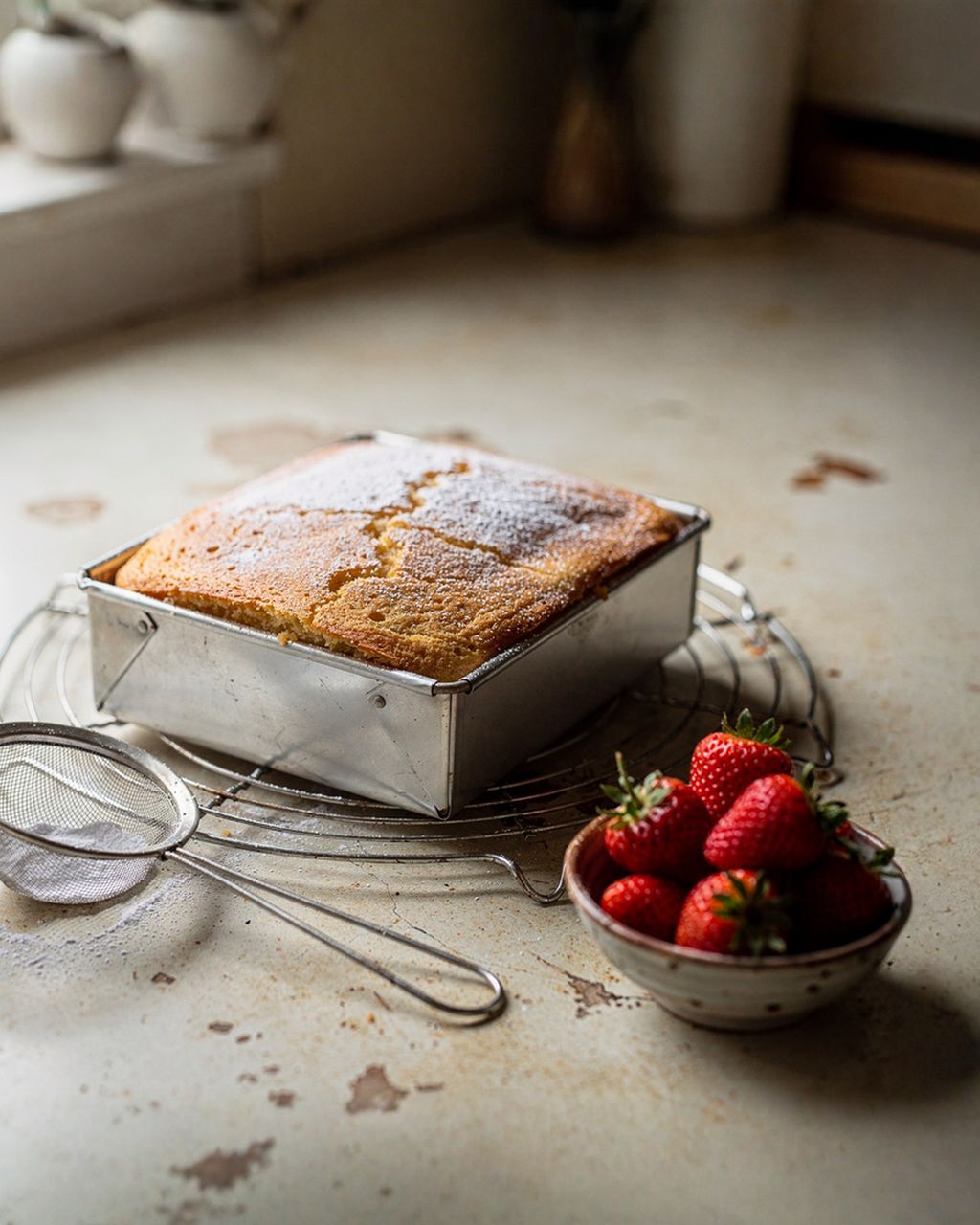
Bublanina (a Czech fruit sponge cake) is a quick cake made from whipped eggs, sugar, fat, liquid and flour with baking powder. You scatter fruit over the batter and bake it at 180°C (350°F) for about 30–45 minutes. As it bakes, the batter flows around the fruit and little bubbles rise up around it, which is where the name comes from. Below you'll find a foolproof basic method, followed by all the variations people search for most: with crumble topping, yogurt, ricotta, quark, buttermilk, plums, strawberries, currants, cherries and blueberries.
A basic bublanina rests on a simple ratio that scales with the size of your pan. The ratio for a 24 cm (9.5-inch) round pan comes from the moist, fluffy yogurt bublanina described in detail below, made with all-purpose (plain) flour: 2 eggs, 110 g sugar, 90 g fat (sunflower oil in that recipe), 120 g liquid (yogurt there, but milk works elsewhere) and 140 g all-purpose flour with 2 teaspoons (about 8–10 g) of baking powder, plus 250 g fruit. For a deep baking sheet, plan on roughly double or more: 280–490 g flour and one packet (10–12 g) of baking powder. The exact amounts for each size are in the pan-size overview below. Set the oven to 180°C (350°F). That's all there is to it, which is why bublanina gets baked when there's extra fruit in the house and nobody feels like making a yeast dough.
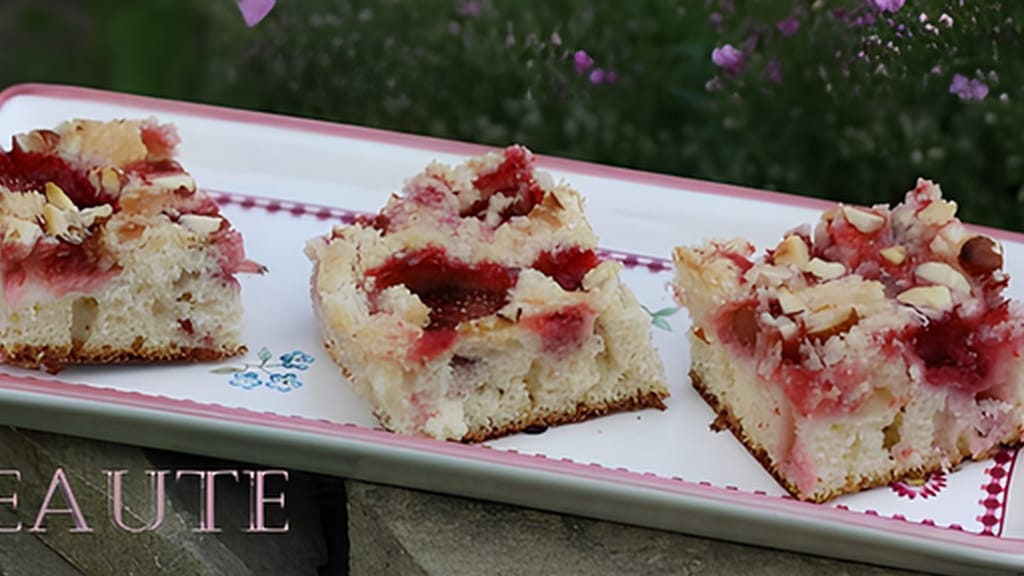
The simplest version, quite different from that ratio, is in the recipe Bublanina, která se vždycky podaří (the foolproof bublanina). It makes a big batch for a baking sheet, and everything for the batter simply gets mixed together: 490 g semi-coarse flour (Czech polohrubá, slightly grittier than all-purpose), 200 g granulated sugar, two eggs, 12 g baking powder, 5 g ground vanilla and, as the liquid, two full-fat plain yogurts, in standard 2 × 150 g cups, so about 300 g. No fat goes into the batter at all; the full-fat yogurt replaces it. You spread the batter on the sheet, top it with 200 g strawberries and sprinkle over a mixture of 20 g fine granulated sugar, 20 g butter and 100 g sliced almonds. It bakes at 200°C (400°F), higher than the basic 180°C, because it's a thin layer on a sheet. It's done when the surface turns golden and a skewer comes out dry, which takes about 40 minutes.
Why semi-coarse flour? Its particles are slightly coarser than all-purpose flour, so the batter turns out sturdier and holds the fruit better instead of letting it sink to the bottom. You can use all-purpose flour, just expect a finer, softer crumb and fruit that sinks more. Some recipes combine the two: all-purpose flour goes into the batter, and semi-coarse flour is used for dusting the pan and coating the fruit.
Three things matter more than the exact recipe:
Eggs and fat should be at room temperature. Cold eggs straight from the fridge make melted fat seize, and the batter won't come together smoothly.
Always mix the flour and baking powder together dry beforehand. Otherwise the baking powder is distributed unevenly and the cake rises only in patches.
Once the flour goes in, mix only briefly. Long mixing develops gluten and turns a fluffy bublanina into a rubbery slab.
Foolproof bubbly cake (bublanina)
Foolproof bublanina: sheet-pan version with plain yogurt, strawberries and sliced almonds, ready in 40 minutes
A fluffy bublanina comes from the air you whip into the eggs and sugar, and from not mixing it back out in the later steps. A classic whipped bublanina is made like this (the foolproof sheet-pan bublanina above simply mixes everything together, and the buttermilk version below starts by creaming the fat with the sugar):
Preheat the oven to 180°C (350°F), top and bottom heat. Bublanina needs full heat from the first minute, otherwise the baking powder fades before the batter sets.
Grease the pan or baking sheet with fat and dust it with flour, tapping out the excess. Don't skip the corners or edges where bare metal is left, because the batter will stick there.
Whip the eggs with the sugar until the mixture turns pale, thickens and increases noticeably in volume. Depending on the size of your bowl and mixer, this takes 3–6 minutes. It's ready when the batter running off the whisk falls in a ribbon that stays on the surface for a moment.
Whisk in the fat and liquid (milk, yogurt, buttermilk). Let melted fat cool first, because hot fat would deflate the foam.
Fold in the flour with the baking powder on low speed or with a spatula, just until the dry lumps disappear.
Pour the batter into the pan, smooth it and scatter the fruit over it. You can also fold the fruit in, see below.
Bake for 30–45 minutes, depending on the height of the batter. The bublanina is done when the surface is golden, the edges pull away slightly from the pan and a skewer inserted into the batter away from the fruit comes out dry.
The exact temperature and time depend mainly on whether you bake on a sheet or in a round pan. A thin layer on a sheet is done sooner, while a tall layer in a cake pan needs longer and sometimes a slightly lower temperature so the top doesn't brown before the center bakes through. Detailed temperatures and times for sheet-pan cakes are in the article what temperature to bake buchty and sheet-pan cakes at.
Don't open the oven for the first 20 minutes. Until the crumb sets, it's held up only by the gas bubbles from the baking powder and the whipped-in air. A rush of cold air collapses them and the cake sinks in the middle. If the top browns too quickly, cover it loosely with aluminum foil rather than lowering the temperature right at the start.
Almost any fruit with firm flesh and a distinct flavor works in bublanina: currants, blueberries, raspberries, sweet cherries, sour cherries, strawberries, apricots, plums, gooseberries, rhubarb and sliced apples. It works less well with very watery fruit such as melon or overripe peaches, which release so much juice that the batter around them stays gummy.
To keep the fruit from sinking and making the batter soggy, coat it in a little flour before scattering it, even just a spoonful. The flour coating catches the juice that runs out during baking and forms a thin layer around the fruit that the batter clings to. Tart fruit, typically currants or gooseberries, can be sweetened a little more with a spoonful of sugar.
Frozen fruit works just as well as fresh and is the most convenient route to bublanina in winter. The main rule: don't thaw it. Thawed fruit releases juice into the bowl, turns soft and falls apart in the batter. Take it straight from the freezer, coat it in flour and scatter it over the batter. Just allow a few extra minutes of baking time, because cold fruit chills the batter around it.
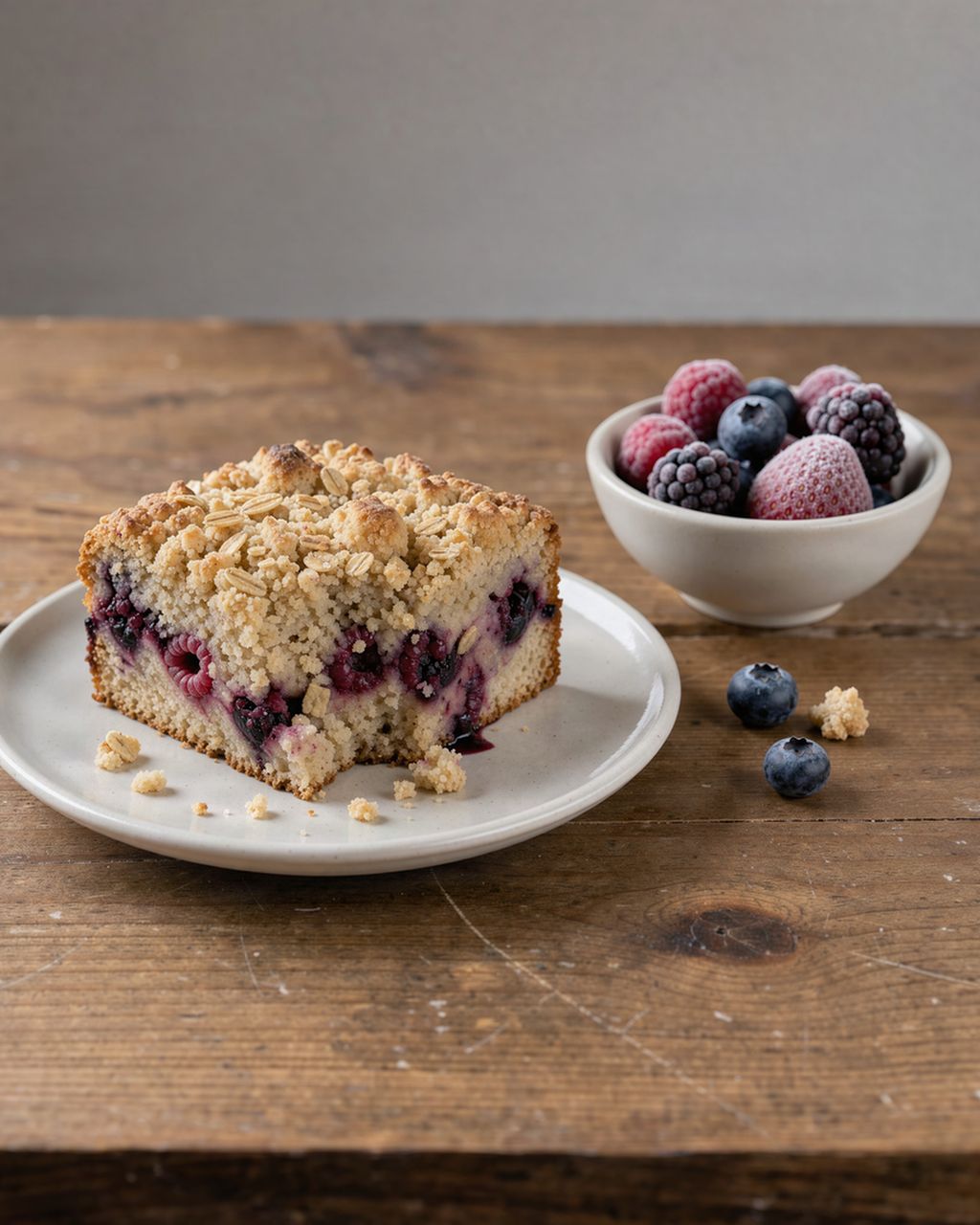
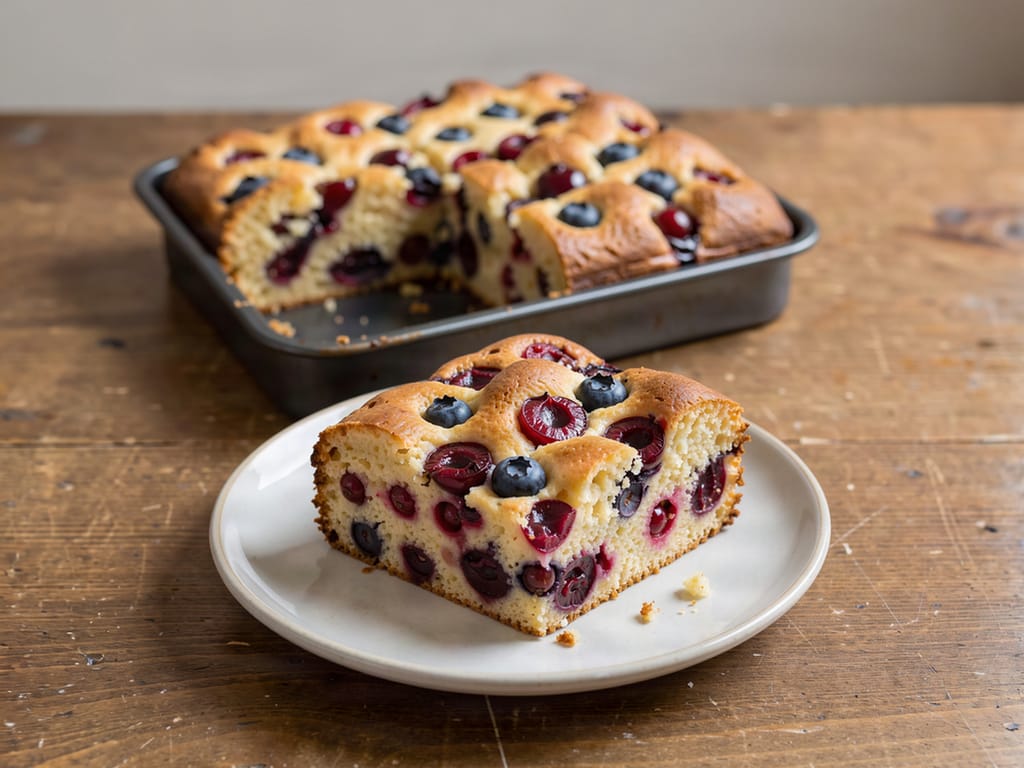
This is exactly how the buttermilk breakfast bublanina with small fruit works. The recipe uses 250 g frozen fruit, and if you reach for a frozen mixed berry blend, you don't need to thaw it at all. The batter here isn't made by whipping eggs but by classic creaming: you beat 100 g softened butter-flavored vegetable fat with 180 g fine granulated sugar until creamy, then whisk in three eggs one at a time, the seeds from a vanilla pod and 150 ml cultured buttermilk. Finally you fold in 280 g semi-coarse flour with 10 g baking powder and 3 g salt. The fruit, coated in flour and 20 g brown cane sugar, is either folded into the batter or scattered over the surface, and it bakes at 180°C (350°F) for 40–45 minutes in a greased baking pan or roasting pan. The buttermilk gives the batter a gently tangy flavor that suits berries well.
Fold in or scatter on top? Fruit folded in spreads through the whole height of the cake, so you get a little in every bite. Fruit scattered on top sinks into the batter only partly, forms the typical bubbles around it, and the cake looks like it came from grandma's baking sheet. Both work; with folded-in fruit, coating it in flour is a must.
If you have leftover frozen fruit, you'll find more baking ideas in the article what to bake with frozen fruit.
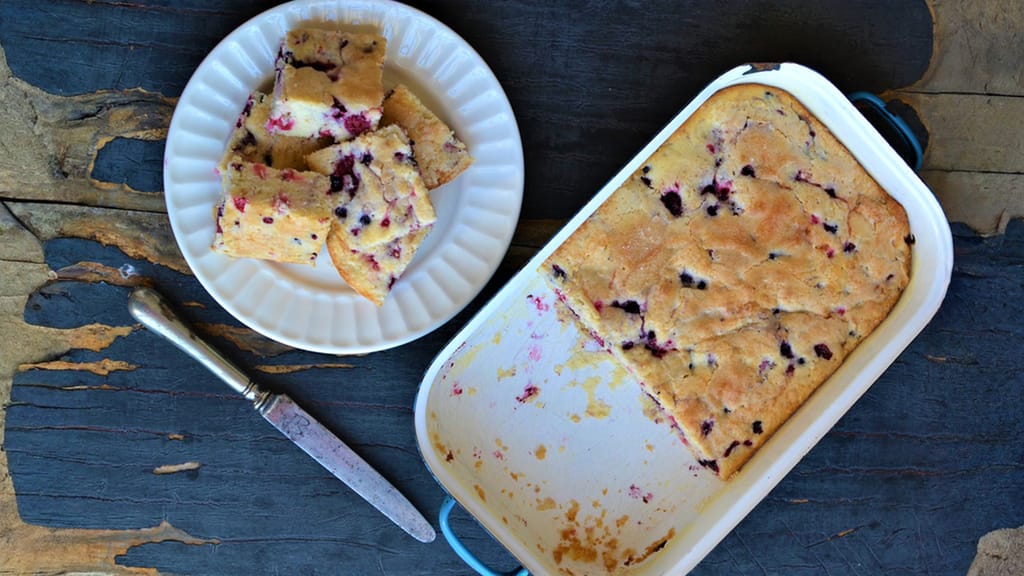
Buttermilk breakfast bublanina with mixed berries
Buttermilk bublanina with frozen mixed berries: creamed vanilla batter, 40–45 minutes at 180°C (350°F)
Bublanina with crumble topping is an ordinary bublanina with a loose mixture of fat, sugar and flour or oats sprinkled over the fruit before baking. The crumble turns golden and crisp in the oven, and the contrast with the moist batter and juicy fruit is exactly why people want it.
The bublanina with summer fruit and crunchy crumble topping shows the method. The recipe uses 200 g butter-flavored vegetable fat in total, which goes into the batter, the crumble and the greasing of the pan; the exact split isn't given. You whip two eggs with 150 g brown cane sugar into a pale, thick foam, pour in the melted, slightly cooled fat together with 200 g whole milk and finally work in 300 g semi-coarse flour with 12 g baking powder on low speed. Pour the batter into a greased, floured pan, scatter 50 g each of red currants, blueberries, raspberries and cherries over it and cover with a crumble made from 100 g fine granulated sugar, 100 g rolled oats and the rest of the fat. Top with 20 g sliced almonds and bake for 45 minutes at 180°C (350°F); including cooling, the whole thing takes about an hour and a half.
A lot can go wrong with crumble if you make it in a food processor. The recipe therefore advises rubbing it together with your fingers until you have lumps the size of peas. A machine easily overworks the fat and sugar into one sticky mass, which spreads in the oven instead of turning crisp.
A few more rules for crumble:
The fat must be cold or only slightly softened, not melted. Melted fat gives you a paste instead of crumble.
Sprinkle the crumble on the fruit, not directly on bare batter. The fruit holds it up, and the batter won't absorb it.
Rolled oats make a coarser, crunchier crumble; flour alone makes a finer, sandy one. Sliced almonds add a nutty flavor and even more crunch.
Don't judge doneness by the crumble, which turns golden early. Always test with a skewer in a spot away from the fruit.
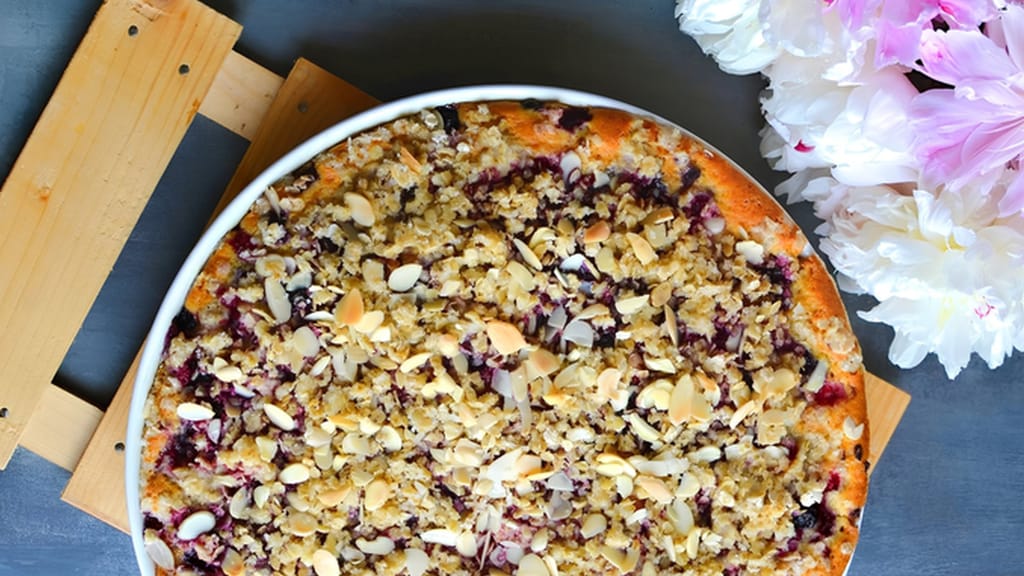
Summer fruit bubblanina with crunchy crumble
Bublanina with currants, blueberries, raspberries, cherries and oat crumble
Yogurt bublanina uses yogurt instead of milk, which adds moisture and a lightly fresh flavor; the version with sunflower oil also stays moist the next day. It's a good choice when you want a smaller cake in a round pan rather than a whole sheet.
The moist and fluffy yogurt bublanina with fruit is baked in a round pan about 24 cm (9.5 inches) in diameter. You whip two eggs with 110 g fine granulated sugar and a teaspoon (about 4–5 g) of vanilla sugar thoroughly into a thick, pale foam, which the recipe calls the key step for fluffiness. Then you whisk in only briefly 90 g sunflower oil, 120 g Greek-style plain yogurt and the grated zest of a lemon, and gently fold in 140 g all-purpose flour with two teaspoons (about 8–10 g) of baking powder using a spatula. Spread the batter in the pan, arrange 250 g cherries on top, sprinkle with sliced almonds and bake at 180°C (350°F) for about 30 minutes, checking doneness with a skewer.
Oil instead of butter or solid fat has one practical advantage: it doesn't firm up at fridge temperature, so this bublanina stays soft even straight from the cold. The lemon zest isn't decoration; it balances the sweetness and brings out the flavor of the fruit.
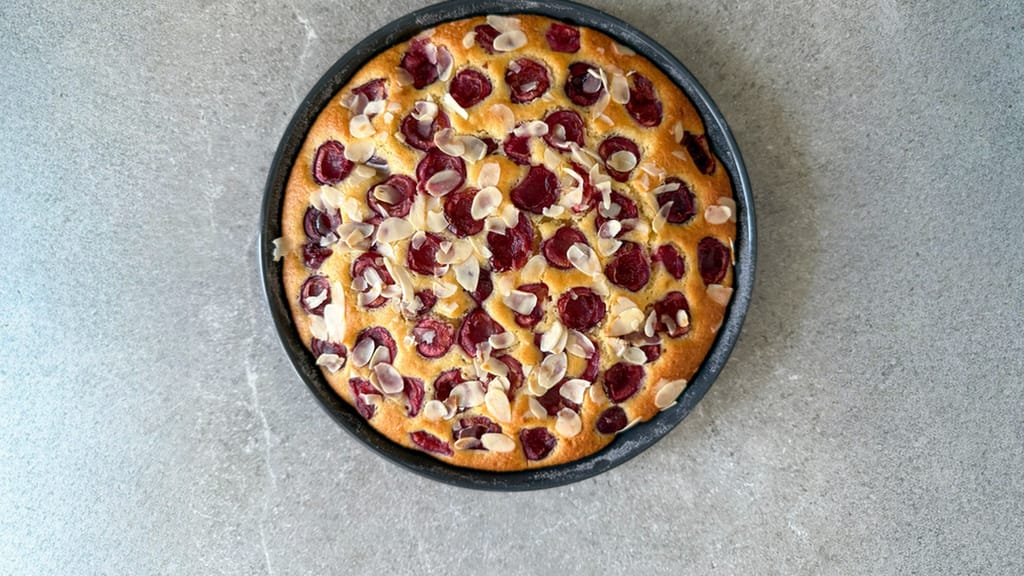
Soft & fluffy yogurt bublanina with fruit
Yogurt bublanina with cherries and almonds in a round pan, ready in under an hour
Bublanina with quark (tvaroh, a Czech fresh curd cheese) comes in two forms: either you stir the quark directly into the batter, or you dollop it over the surface among the fruit as a sweet filling. Either way, the cake gets a gently tangy, creamy flavor familiar from quark bakes.
The version with quark islands on top is simple: beat about 250 g soft quark smooth with an egg yolk, two tablespoons of sugar and vanilla sugar. Pour the finished batter into the pan, spoon mounds of quark over it and fill the gaps between them with fruit. During baking the quark sinks a little into the batter and creates moist, creamy patches in it. If your quark is very wet, let it drain in a sieve first, otherwise the batter around it won't bake through. The article how to make a fluffy strawberry bublanina with quark shows how this looks with strawberries.
Ricotta is a mild, slightly sweet whey cheese and works in batter much like quark. The bublanina with summer fruit and ricotta mixes it straight into the base: you whip the eggs with 150 g brown cane sugar into a fluffy foam, add 250 g ricotta and 125 g melted butter-flavored vegetable fat. Then you fold in 250 g whole grain spelt flour mixed with a pinch of salt and 12 g baking powder, and season with lemon juice and zest. Pour the lump-free batter into a greased, floured 26–28 cm (10–11-inch) pie or tart pan, arrange 200 g strawberries and 40 g blueberries on top and bake for 45 minutes at 180°C (350°F). Whole grain spelt flour gives the cake a nutty flavor and a somewhat denser, darker crumb than white wheat flour.
For more ideas on what to bake with ricotta, see the article what to cook with ricotta and cottage cheese.
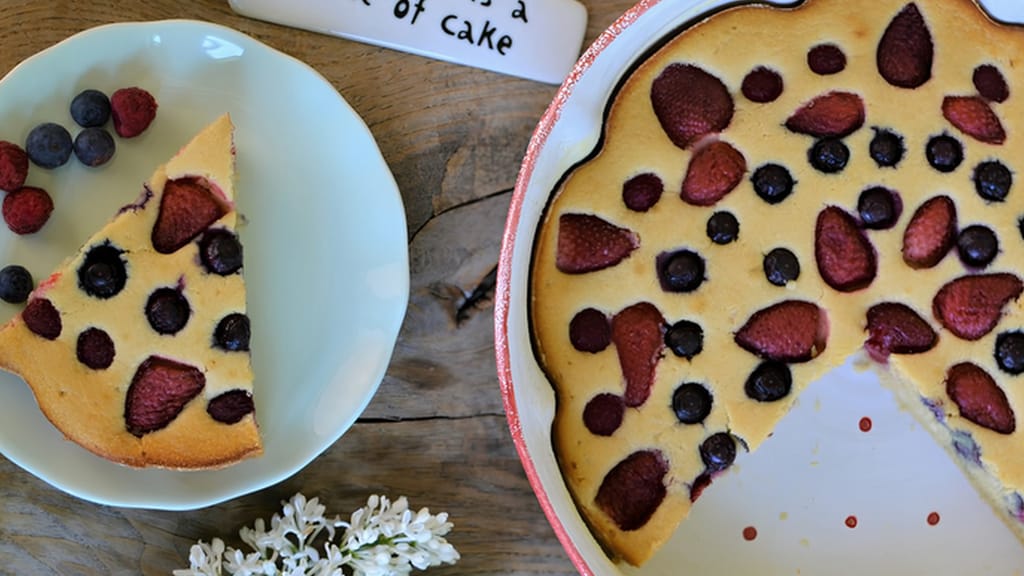
Summer fruit and ricotta bublanina
Bublanina with ricotta, strawberries and blueberries made with spelt flour
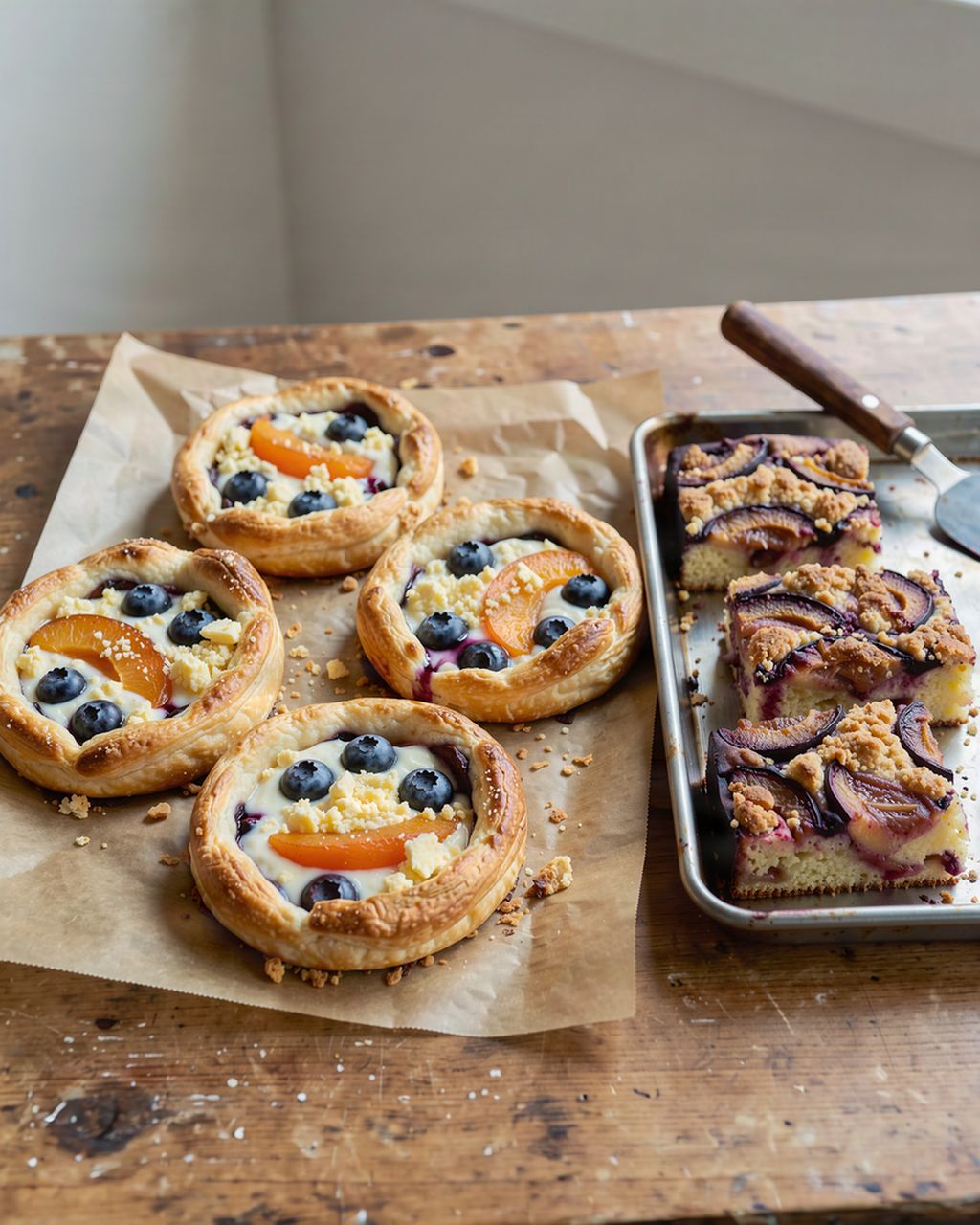
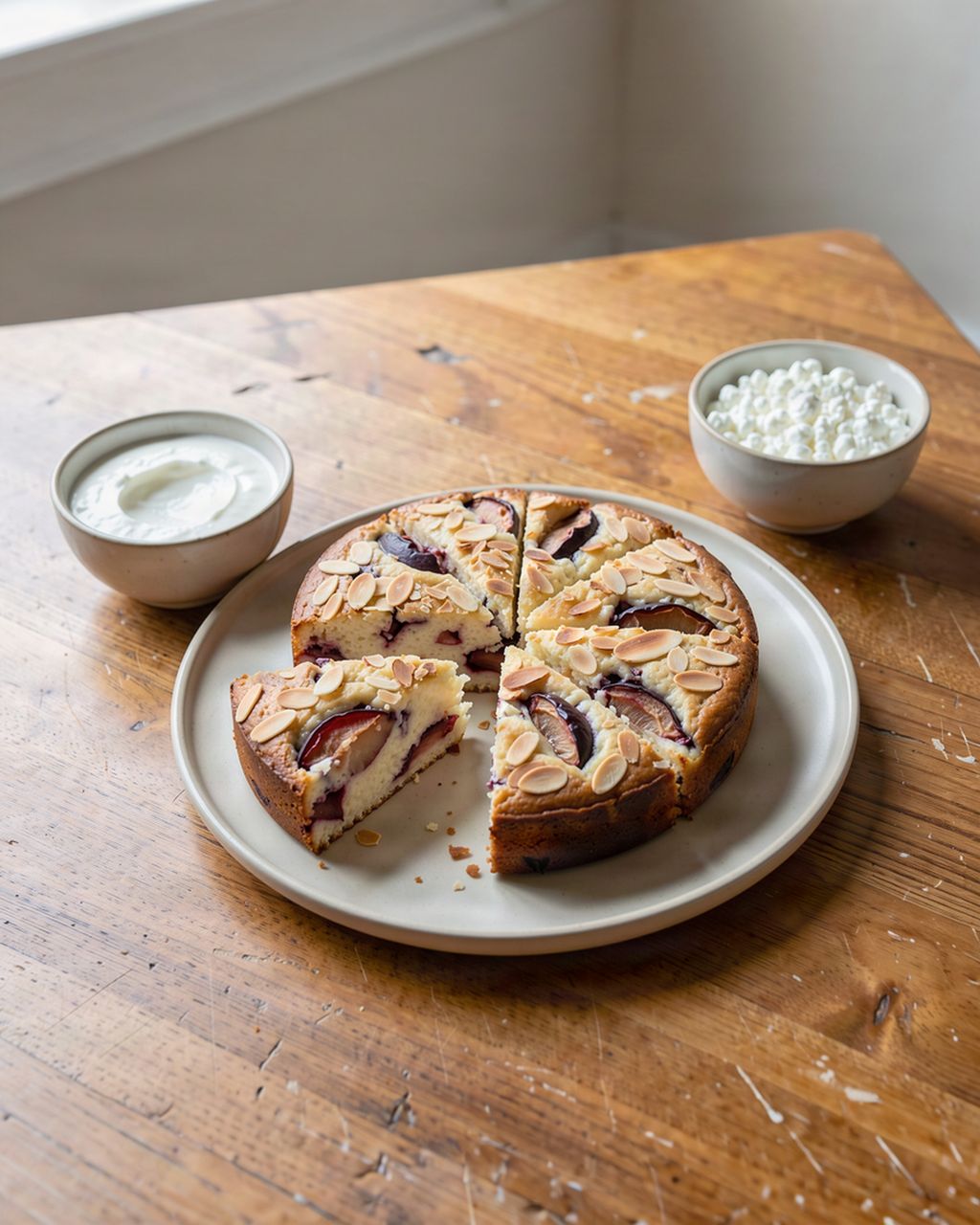
Bublanina with plums is the autumn variation, in which you set plum halves on the batter cut side up and sprinkle them with cinnamon sugar. Plums are larger and juicier than small berries, so they need a slightly different approach.
Method: for a baking sheet, plan on 600–800 g plums. Wash them, pit them and halve them, cutting larger ones into quarters if you like. Prepare any of the batters described above, pour it onto a greased sheet and arrange the plums on it close together, cut side up, so the juice stays in the fruit and doesn't run into the batter. Sprinkle them with a mixture of a tablespoon of sugar and half a teaspoon of ground cinnamon and bake at 180°C (350°F) for 35–45 minutes, until the batter turns golden and a skewer between the plums comes out dry. Crumble topping, perhaps with ground nuts, goes very well with plums too.
Late plums are the sweetest and firmest, while early ones tend to be more watery and tart, so sweeten those a bit more. Use frozen plums like any other frozen fruit, straight from the freezer. If you prefer a yeast base, take a look at the classic yeast plum sheet cake with crumble topping: a yeast dough made with all-purpose and semi-coarse flour, 500 g plums tossed with cinnamon and poppy seeds, and a nut crumble, baked for about 30 minutes at 180°C (350°F). More sheet-pan and yeast cakes are gathered in the article fruit and yeast cakes.
Bublanina with strawberries is the most common summer version, and strawberries work best in it cut into halves or quarters rather than whole. Large whole strawberries release so much juice in the batter that an underbaked, damp ring is left around them.
Wash the strawberries first and only then hull them, otherwise water gets into them and makes the cake soggy. Pat them thoroughly dry on a paper towel, cut them and coat lightly in flour. Place them on the batter cut side up. You'll find strawberries in two recipes above: in the sheet-pan foolproof bublanina and in the bublanina with summer fruit and ricotta, where they're combined with blueberries. Strawberries go well with lemon zest, vanilla and quark.
Bublanina with currants is among the very best, because the tartness of the currants balances the sweet batter and crumble. Red currants work better than black ones, which have a more pronounced, aromatic and slightly bitter flavor, but you can use either.
Strip the currants from their stems only after washing, fastest by pulling the stem through the tines of a fork. The berries are small and juicy, so coat them in flour with a spoonful of sugar and scatter them over the batter in a thin, even layer. On their own, currants are too tart for many people, so in bublanina they're often combined with sweeter fruit and crumble, exactly as in the bublanina with summer fruit and crunchy crumble topping, where there's 50 g of them alongside blueberries, raspberries and cherries.
Bublanina with cherries is made with pitted fruit, because pits would be an unpleasant surprise in the cake and also tear the crumb when you slice it. You can pit cherries with a cherry pitter, but a sturdy drinking straw or skewer works too: push it in from the stem end and the pit pops out the other side.
Pitted cherries release more juice, so let them drain briefly in a sieve and only then coat them in flour. Halved cherries sink into the batter less and form nicer bubbles than whole ones. The most cherries, 250 g, go into the moist and fluffy yogurt bublanina with cherries in a round pan. You can bake a sour cherry bublanina the same way, just sweeten the fruit a little more.
Bublanina with blueberries is the least fuss: blueberries don't need cutting or pitting and hold their shape well. Just rinse them, dry them and coat them in flour.
Frozen blueberries bleed color, so the batter around them turns blue to purple. It doesn't change the flavor, but if you want a light crumb, scatter them only over the surface of the batter and don't fold them in. Fresh blueberries are gentler; just don't squash them while coating. You'll find blueberries in two recipes with several kinds of fruit: in the bublanina with summer fruit and crunchy crumble topping and in the bublanina with summer fruit and ricotta. Blueberries pair beautifully with lemon zest and quark.
Fruit most often sinks to the bottom because the batter is too thin, the fruit too heavy and wet, or the oven wasn't hot enough. It helps to coat the fruit in flour, keep the batter on the thicker side and put the pan into a fully preheated oven. Other mistakes and how to avoid them:
The bublanina collapsed in the middle. Either the oven was opened too early, or the cake wasn't baked through. Test with a skewer only after 25–30 minutes, and always at the highest point of the cake.
The batter is rubbery and dense. It was mixed too long after the flour went in, or the eggs and sugar weren't whipped enough. Just work in the flour; don't whip it.
There's a wet, underbaked band around the fruit. The fruit was too juicy or thawed. Add frozen fruit straight from the freezer, and pat juicy fruit dry and coat it in flour.
The top is dark and the center raw. The temperature is too high for the height of the batter. Cover the cake with aluminum foil and let it finish baking, and next time choose a lower temperature or a thinner layer of batter.
The cake stuck to the pan. The greasing and flouring wasn't thorough. An alternative is to line the bottom with parchment paper.
The bublanina is dry. It baked too long. Take it out as soon as the skewer comes out dry, not once the edges start to brown hard.
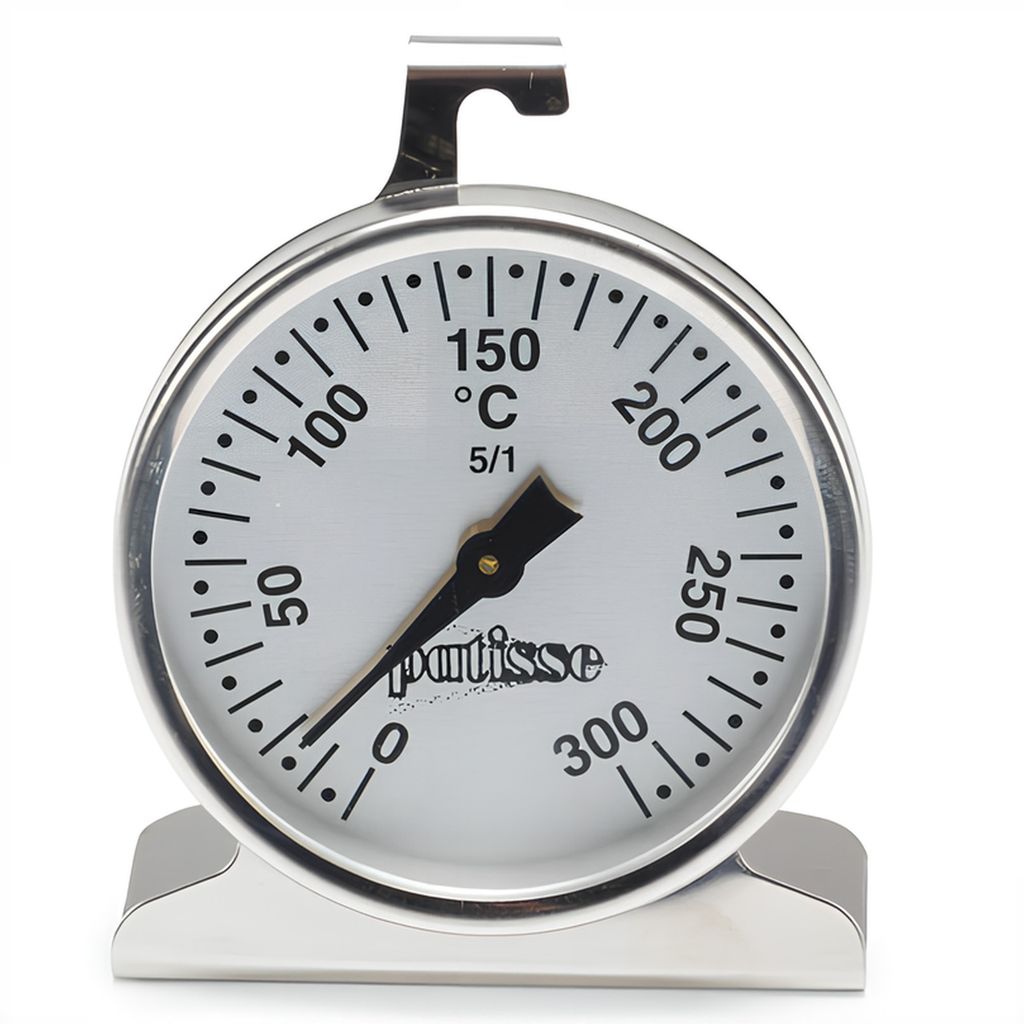
If you're not sure your oven really heats to what it shows, it's worth checking with an oven thermometer. Home ovens commonly deviate from the set temperature, and with a quick cake like bublanina you can tell.
Recipe of the week, one tip that saves you time and one deal from the shop. Unsubscribe in one click.
The next issue goes out on Thursday, November 26.
Bublanina is baked either on a deep baking sheet or in a round or square pan, and what matters most is the height of the batter layer. The ideal is a layer of raw batter about 2–3 cm (about 1 inch) deep: the cake bakes evenly in it and the fruit sinks in just right.
Round pan, 24 cm (9.5 inches): batter from two eggs and about 140 g flour is enough, as in the yogurt bublanina.
Pie or tart pan, 26–28 cm (10–11 inches): batter from about 250 g flour, as in the ricotta bublanina.
Deep baking sheet or large roasting pan: batter from 280–490 g flour, as in the buttermilk bublanina or the foolproof sheet-pan bublanina.
When you move a recipe from a pan to a sheet, plan on a thinner layer and a shorter baking time; going from a sheet to a tall pan, the opposite. Slice bublanina only once it's cool or at least lukewarm, because warm crumb squashes under the knife and the fruit pulls out of it.
Patisse
Patisse Oven ThermometerAccording to baking storage charts, a cake with fresh fruit keeps 1–2 days at room temperature and 3–5 days in the fridge. At room temperature, keep it covered with a kitchen towel or in a box. In the fridge, cover it well so it doesn't dry out.
Yes, you can freeze bublanina, but the fruit turns watery and soft after thawing, and the crumb around it tends to be moister. If you want to freeze it, let it cool completely, cut it into portions, wrap each one tightly and thaw slowly in the fridge. The version without crumble topping freezes best, because the crumble loses its crunch after thawing.
The name bublanina is usually explained by the bubbles that form in the batter around the fruit as it bakes, and by the fluffy, airy crumb. In English it can be called a bubble cake. Nobody knows who baked it first; it is one of the traditional home-baked cakes in Czechia and Slovakia.
To make bublanina without gluten, replace the wheat flour with a gluten-free baking flour blend and check that the baking powder is also labeled gluten-free. The crumb tends to be more delicate and less fluffy, so mix the batter only briefly and coat the fruit in the same gluten-free blend.
Yes, canned (compote) fruit works in bublanina. Just let it drain well in a sieve and pat it dry, otherwise it will make the batter soggy. Then coat it in flour just like fresh fruit and scatter it over the batter.
One recipe worth heating the oven for, one tip, and one deal from the shop. Nothing else.