Divine homemade mayonnaise
How Long Do Eggs Last in the Fridge? Shelf Life and How to Store Them

Updated Oct 25, 2026
Store-bought eggs keep in the fridge until the best-before date on the package, and in the EU that date can be set no more than 28 days after laying. So egg shelf life is counted from the day the egg was laid, not the day you bought it. The "3–5 weeks" figure that circulates online comes from the US, where eggs are washed and the clock starts at purchase. Here in the EU, go by the date on the carton. This guide covers how long raw, homemade, cooked, separated and frozen eggs last, why eggs sit on the shelf in the shop but belong in the fridge at home, what the water test can (and can't) tell you, and when salmonella is a risk.
Raw eggs from the shop keep in the fridge until the best-before date on the package. Under EU egg marketing rules (Regulation (EU) 2023/2465, which replaced Regulation 589/2008), that date is set no more than 28 days after laying, and under Regulation (EC) No 853/2004 eggs must reach the consumer no later than day 21 after laying. How many of those days are left for you depends on how old the eggs were when they hit the shop, which is why the date on the carton matters more than any general number of weeks.
Overview by form (fridge at 4 °C / 39 °F, freezer at −18 °C / 0 °F):
Raw eggs from the shop, in the shell: until the best-before date on the package (max. 28 days from laying, Regulation (EU) 2023/2465). Put them in the fridge as soon as you get home.
Homemade eggs (from your own hens or a local farm): count from the day they were laid and use the same 28 days as a ceiling, just as for shop eggs. Refrigerate them right away and write the laying date in pencil on the shell or carton.
Hard-boiled in the shell: up to 1 week; refrigerate within 2 hours of cooking (USDA FSIS).
Hard-boiled, peeled: also up to 1 week (USDA FSIS), but in a sealed container, since without the shell they dry out faster and absorb odours.
Separated raw whites and yolks: 2–4 days in a sealed container (USDA FSIS). We cover this in more detail in how long egg whites last in the fridge and raw egg yolks in the fridge.
Cracked or beaten raw eggs: up to 2 days in a clean, covered container (USDA FSIS, the rule for eggs cracked into a container).
Eggs in the freezer (−18 °C / 0 °F): beaten whole eggs and egg whites up to 12 months. Yolks on their own thicken and turn gel-like after thawing, so beat them with a pinch of salt or sugar before freezing. Don't freeze eggs in the shell or hard-boiled eggs (USDA FSIS): a raw egg cracks, and a cooked white turns rubbery after thawing.
Cooked egg dishes (omelette, bake, quiche): 3–4 days in the fridge (USDA FSIS).
So where does "3–5 weeks" come from? That's the USDA FSIS figure for American eggs, which must be washed and refrigerated before sale, and it's counted from purchase. Don't apply it to eggs from a European shop, where the date on the package rules.
You can also tell freshness in the kitchen: fresh eggs hold their shape better when fried or poached, while older ones are easier to peel after boiling. There's more in how to peel eggs easily.
Eggs sit on the shelf in EU shops because they're not washed and should be kept at a constant temperature. Once you get them home, though, put them in the fridge. There are two reasons:
An unwashed shell. Under Regulation (EU) 2023/2465, Class A eggs may not be washed or cleaned, so they keep their cuticle, the natural protective layer on the shell. In the US, eggs are washed and lose the cuticle, so they have to stay cold the whole time.
Condensation. European egg rules explicitly warn that when a cold egg is taken into a warm place, water condenses on it. That moisture makes it easier for bacteria to grow on the shell and probably to get inside. That's why eggs aren't chilled before sale and shops keep them on the shelf.
At home the rule flips: the European Food Information Council (EUFIC) recommends putting eggs in the fridge after buying them and avoiding temperature swings. Refrigeration is key to stopping salmonella from multiplying in the egg.
This leads to a practical rule: once an egg has been chilled, keep it cold. Don't leave a chilled egg on the counter for more than 2 hours (USDA FSIS). If you're whisking, take it out just before you need it.
Store eggs in the fridge at 4 °C (39 °F) or below (USDA FSIS recommendation), at the back of the middle or bottom shelf, where the temperature is steadiest. Skip the door. For where other foods belong, see where to put food in the fridge by temperature zone.
In the original carton. It protects the shell from absorbing odours (the shell is porous), cushions temperature swings, and keeps the best-before date in front of you.
Pointed end down. The air bubble stays at the top, in the blunt end, and the yolk stays centred, so the egg keeps its quality longer.
Don't wash them before storing. You'd wash off the cuticle, which is why the EU prohibits washing Class A eggs. If you need to wash an egg, do it just before using it.
Keep them away from raw meat and ready-to-eat food. Salmonella can be on the shell too (the Czech National Institute of Public Health, SZÚ, recommends keeping raw eggs apart from foods that won't be cooked afterwards).
Open the carton in the shop. Don't buy cracked or dirty eggs (USDA FSIS).
Store homemade eggs just like shop-bought ones: in the fridge, unwashed, counting from the day they were laid. Unlike shop eggs, they have no stamp or date, so write down the laying day yourself and use the older eggs first.
A lightly soiled shell: wipe it dry, and don't wash it.
A heavily soiled egg (droppings or feathers stuck to the shell): it's best to throw it out. It wouldn't make it to a shop, since Class A eggs must have a clean, undamaged shell under Regulation (EU) 2023/2465.
Don't put fridge eggs back in the pantry. A chilled egg will sweat in a warm room (see condensation above).
Don't use a cracked egg raw, because bacteria can get in through the crack. What to do depends on when you notice it:
Cracked in the shop: don't buy it (USDA FSIS).
Cracked on the way home or in the fridge: crack it into a clean container, cover it, refrigerate it and use it within 2 days, only thoroughly cooked (USDA FSIS).
Cracked while hard-boiling: it's fine. Refrigerate it within 2 hours of cooking and eat it within a week.
Heavily soiled, or with a damaged shell and unknown age: throw it out.
Never use cracked raw eggs in mayonnaise, tiramisu, creams or no-bake sweets.
You can judge an egg's age with three simple home tests: put it in cold water (a fresh egg sinks, an old one stands up and floats), crack it open (a domed yolk and thick white mean a fresh egg) and smell it (a sulphur smell means throw it out).
One important distinction: these tests show age and quality, not safety. You can't spot salmonella by eye, by smell or in water. An egg that carries it looks and smells completely normal. The only protection is refrigeration, respecting the date and thorough cooking.
The water test shows only the age of the egg, nothing more. Fill a bowl with cold water and lower an egg into it. A very fresh egg lies on its side on the bottom, an older one stands on its point, and a very old one floats. That's because the air cell in the blunt end grows as the egg loses moisture through the shell. For reference, an egg labelled "extra" may have an air cell of no more than 4 mm (Regulation (EU) 2023/2465), but that's measured by candling, and you can't see it by eye.
What it shows: the approximate age and the size of the air cell. According to USDA FSIS, a floating egg means lower quality but may still be safe.
What it doesn't show: whether the egg is safe. EUFIC states explicitly that the water test is not a reliable way to check either quality or safety. An egg that sinks can carry salmonella too.
So a floating egg isn't automatically bad, and a sunken one isn't automatically safe. The date, cracking it open and the smell decide whether to use it, and with older eggs, always cook them thoroughly.
Once cracked, you can recognise a fresh egg by its tall, domed yolk and thick, compact white that doesn't spread. You'll see it best if you crack the egg onto a flat plate. In an older egg the yolk is flat and the white spreads out wide. Spreading isn't dangerous in itself. It's a reliable sign of age, not of spoilage.
You'll know a bad egg right away: it smells of sulphur, like hydrogen sulphide. That smell is unmistakable, and if there's any unusual odour or discolouration, don't use the egg. Shaking helps too: if you hear a slosh inside, the contents have thinned and the egg is old. A normal smell only means the egg hasn't spoiled, not that it's free of salmonella.
Eat eggs past their best-before date only thoroughly cooked, and only if they look and smell normal (EUFIC). The same goes for older eggs just before the date: use them in dishes you'll bake or cook through. Don't eat raw, soft-boiled or poached eggs after the date.
When an egg is done: when both the white and yolk are firm. Bake egg dishes (bakes, quiche, frittata) until the centre reaches 71 °C (160 °F) (USDA FSIS).
Why age matters: according to EFSA, salmonella multiplies faster inside an egg as the temperature and storage time rise. EFSA calculated that if the sale period were extended from 21 to 28 days (with the best-before date unchanged), the risk of infection would rise by 40% from raw eggs and by 50% from lightly cooked ones.
Where the risk is greatest: in raw and lightly cooked dishes, such as homemade mayonnaise, tiramisu, aioli, soft-boiled or poached eggs, and creams made with raw yolks.
A few habits that cut the risk to a minimum:
Don't use eggs with a cracked or dirty shell raw.
Don't leave cracked eggs or egg batters standing in the warm, and refrigerate finished dishes within 2 hours (USDA FSIS).
Wash your hands, dishes and work surface after handling raw eggs.
Use pasteurised eggs for raw recipes. SZÚ recommends that raw eggs, if eating them is unavoidable, be pasteurised.
In December the topic is most pressing for no-bake sweets and creams, so read raw eggs in sweets and creams: the salmonella risk and what to use instead of raw eggs in no-bake sweets.
Divine homemade mayonnaise
Heavenly homemade mayonnaise made with raw eggs: use only fresh eggs with intact shells, and pasteurised eggs for at-risk groups.
Most mistaken ideas about eggs in the fridge either shorten their shelf life or send perfectly good eggs to the bin for no reason. These are the four you hear most often:
"Eggs belong in the fridge door." The most common mistake. The door is the warmest spot with the biggest temperature swings. Eggs belong in their carton on a shelf.
"If an egg floats it's bad, and if it sinks it's fine." Neither is true. The water test shows age, not safety.
"Straight in the bin after the best-before date." It's not a use-by date. But after the date, use eggs only thoroughly cooked (EUFIC), never raw.
"Eggs for baking must sit out for hours to reach room temperature." They don't. Take them out just before using, or put them in lukewarm water for 5–10 minutes. Don't leave a chilled egg on the counter for more than 2 hours (USDA FSIS).
You'll find more on temperatures and placement in egg storage: temperature, placement and how to tell if they're fresh.
Fresh eggs pay off most where they're the main ingredient. Poached, fried and whisked eggs hold their shape and volume noticeably better when they're fresh. Hard-boiled eggs you can't finish can be turned into pickled eggs. A few ideas from Yumsto:

Eggs benedict with spicy hollandaise and pastrami
Eggs Benedict with hollandaise: a breakfast where fresh eggs make all the difference.
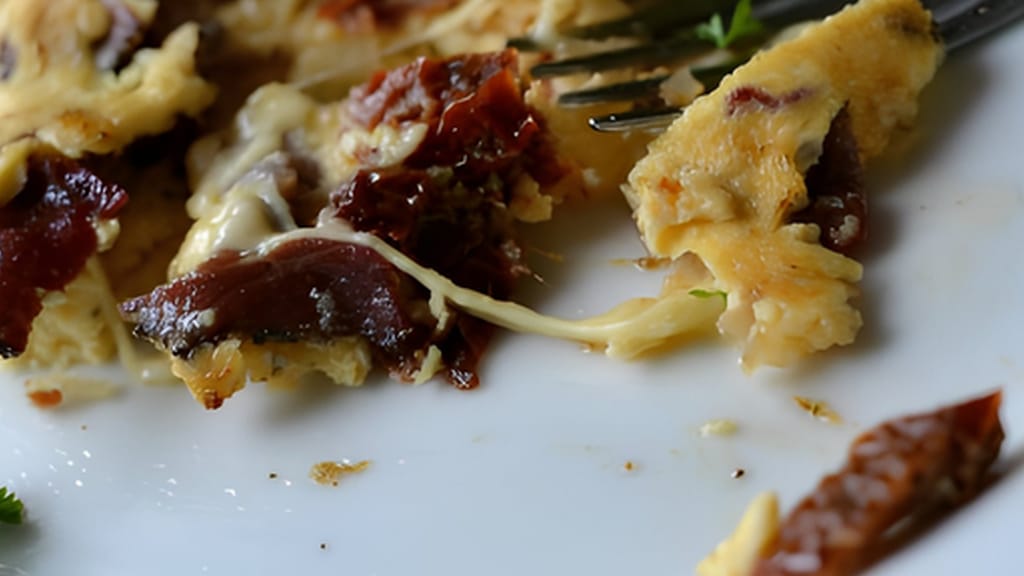
Omelette with dried beef and tomatoes
Omelette with dried beef and tomatoes: a quick egg dinner.
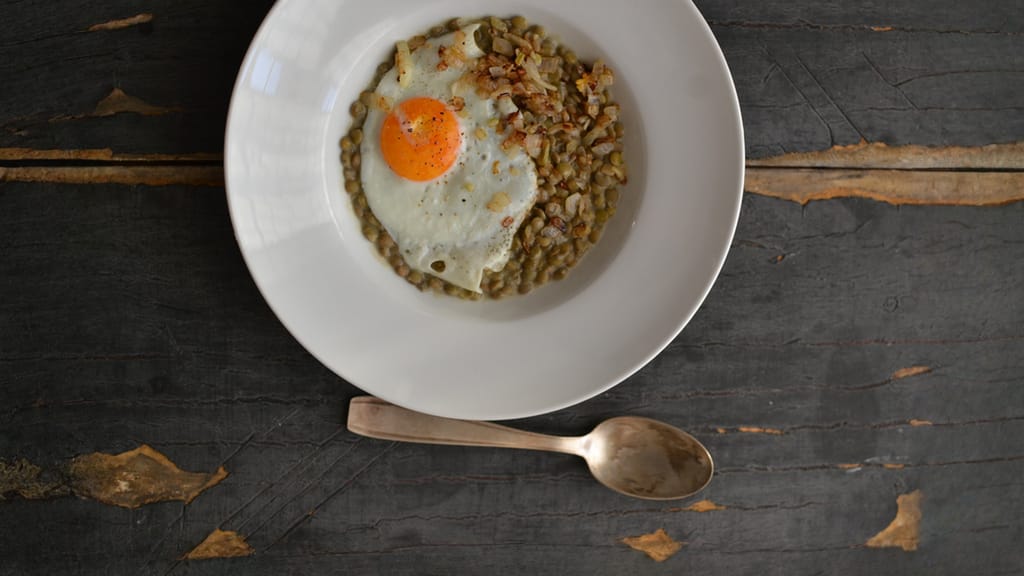
Sour lentils with a fried egg
Sour lentils with a fried egg: a classic where the egg plays first fiddle.
You can freeze eggs, but not in the shell, because it cracks as the egg freezes. Beaten whole eggs and egg whites keep in the freezer at −18 °C (0 °F) for up to 12 months. Beat yolks with a pinch of salt or sugar before freezing, or they thicken and turn gel-like once thawed (USDA FSIS). Thaw them in the fridge and use them in dishes you'll cook thoroughly.
The first digit of the code on the shell shows how the hens were kept: 0 = organic, 1 = free range, 2 = barn (indoor), 3 = cage. Next come the country code (CZ for the Czech Republic) and the farm number. The code says nothing about freshness. That's what the best-before date on the carton is for.
Don't wash eggs before storing them. Washing removes the cuticle, the shell's natural protective coating, which is why the EU prohibits washing Class A eggs (Regulation (EU) 2023/2465). Wipe a lightly soiled shell dry, and wash it only just before use. If an egg is heavily soiled, it's best to throw it out.
Hard-boiled dyed eggs keep in the fridge for up to 1 week, just like any other hard-boiled eggs (USDA FSIS). That's only true if you refrigerate them within 2 hours of cooking and dyeing. Don't eat eggs that have sat out on the table as decoration all day.
Only eggs no more than 9 days old (counted from laying) with an air cell of no more than 4 mm may be labelled "extra" (EU egg marketing rules, Regulation (EU) 2023/2465). After day 9 they become regular Class A eggs with the same best-before date. They're a good pick wherever freshness shows on the plate, such as poached and fried eggs.
One recipe worth heating the oven for, one tip, and one deal from the shop. Nothing else.