
Why Is My Cooked Cabbage Bitter? Overcooking, Sulfur and Fixes
Why Do Hard-Boiled Eggs Get a Green Ring? How to Prevent It
Updated Nov 21, 2026
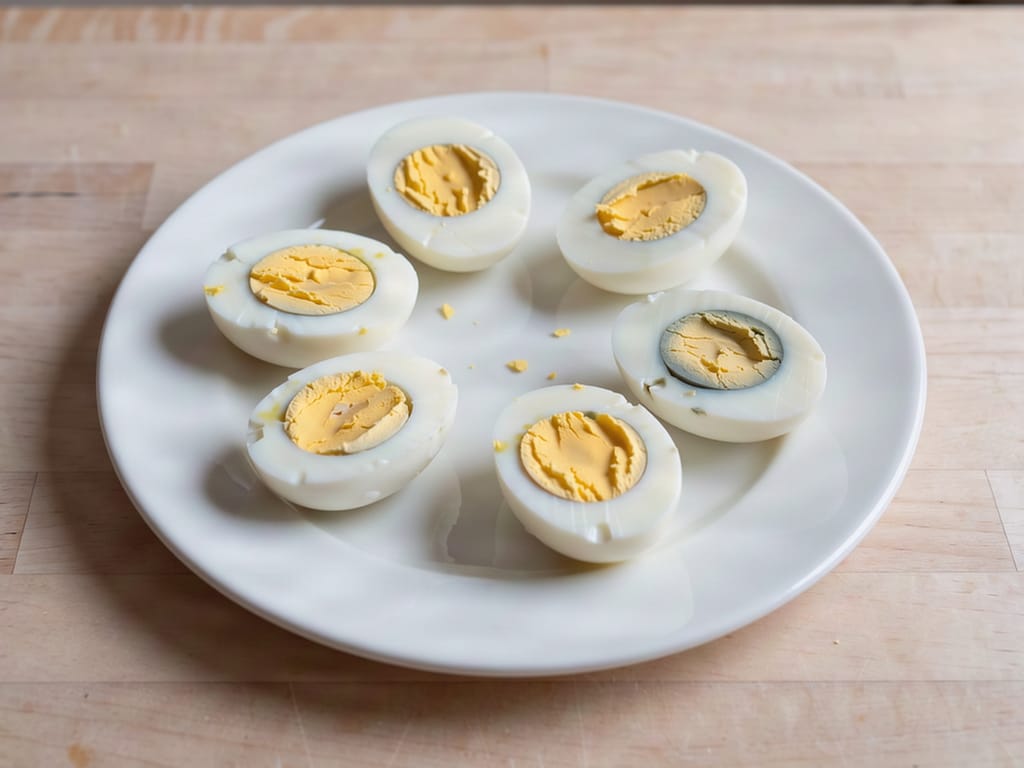
The green-gray ring around a hard-boiled egg yolk comes from overcooking: heat releases sulfur from the white, which reacts with iron in the yolk to form iron sulfide where the two meet. The egg is still safe to eat. Cook it just until the yolk is firm, then cool it quickly in cold water, and the ring won't form.
The green or gray ring is a small piece of kitchen chemistry.
Egg white contains sulfur in its proteins. As the egg heats, some of that sulfur is released as hydrogen sulfide gas, the source of the "eggy" smell.
The gas moves toward the cooler center of the egg, the yolk.
The yolk contains iron. Where the gas meets the yolk, the two react and form iron sulfide, which is gray-green.
That's why the ring sits exactly on the outer surface of the yolk. The longer and hotter the egg cooks, the more gas is released and the thicker the ring.
Recipe of the week, one tip that saves you time and one deal from the shop. Unsubscribe in one click.
The next issue goes out on Thursday, November 26.
Too long. The most common cause. An egg boiled hard for a long time, or left sitting in the hot water after cooking, has plenty of time to form the ring.
Too hot. A hard, rolling boil heats the outside faster and harder than needed.
Slow cooling. Eggs keep cooking after they come out of the pan. Left to cool on the counter or in the warm pan, they carry on making iron sulfide.
Older eggs. Egg whites become more alkaline as eggs age, which makes the reaction happen more readily. Older eggs do peel more easily, so there's a trade-off.
Altitude matters too. At high altitude water boils below 100 °C, so eggs need longer, as our guide to the boiling point of water explains.
Yes. The ring is the result of cooking, not spoilage, and egg producers and food scientists describe it as harmless. It can make the yolk drier and give a faintly sulfurous taste, which is the real reason to avoid it.
Two things are different and are not a cooking reaction:
A raw egg with a green, pink or unusually colored yolk or white.
A cooked egg or egg dish with an off or rotten smell.
Both should go in the bin. A faint yellow-green tint in raw egg white is normal and comes from riboflavin (vitamin B2).
The aim is a yolk that's firm but still bright yellow. The FDA advises cooking eggs until both the yolk and the white are firm, so don't go softer than that for hard-boiled eggs.
An outline that works for large eggs:
Put the eggs in a pan in one layer and cover them with cold water by about 2–3 cm (an inch).
Bring to a boil, then take the pan off the heat and cover it.
Leave the eggs in the hot water for about 12 minutes for large eggs (about 9 for medium, 15 for extra-large).
Lift them straight into a bowl of iced water and leave them until cold, then refrigerate them if you aren't eating them right away.
You can also lower eggs into simmering water and keep it at a gentle simmer for about 10 to 12 minutes, then chill them in iced water. Steaming works the same way.
Cut one egg to check. If the yolk is firm and bright with no ring, the timing is right for your eggs and pan.
The same iron and sulfur reaction turns other cooked eggs gray-green.
Scrambled eggs held hot for a long time, on a buffet or in a warming dish, can turn greenish. Cook them closer to serving.
Baked egg dishes that cook very long or very hot can show green patches near the bottom.
Bare cast-iron pans can also tint eggs gray or green.
None of this means the eggs are unsafe, but they will taste better cooked gently and served soon.
Cooked eggs are perishable. The FDA says to:
refrigerate cooked eggs and egg dishes, and never leave them out of the fridge for more than 2 hours, or more than 1 hour above 32 °C (90 °F)
use hard-cooked eggs, in the shell or peeled, within 1 week after cooking
Keep them in a covered container, in the fridge. In Czech kitchens, a boiled egg glut usually becomes vajíčková pomazánka, an egg spread for bread, which our guide to bread spreads covers. For more ideas, see what to cook with eggs.
Because they were cooked too long or too hot, or cooled too slowly. Sulfur from the white reacts with iron in the yolk and forms gray-green iron sulfide on the yolk's surface.
Yes. The green ring is a harmless chemical reaction that affects color and can give a slightly sulfurous taste. A cooked egg with an off or rotten smell is a different matter and should be thrown out.
Cook the eggs just until the yolk is firm, using a gentle simmer or hot water off the heat, then move them straight into ice-cold water. Fast cooling stops the reaction.
The same iron and sulfur reaction happens when cooked eggs are held hot for a long time, or cooked in a bare cast-iron pan. Cook them closer to serving and keep the heat gentle.
The FDA says to use hard-cooked eggs, in the shell or peeled, within 1 week after cooking. Keep them in the fridge and don't leave them out for more than 2 hours.
One recipe worth heating the oven for, one tip, and one deal from the shop. Nothing else.