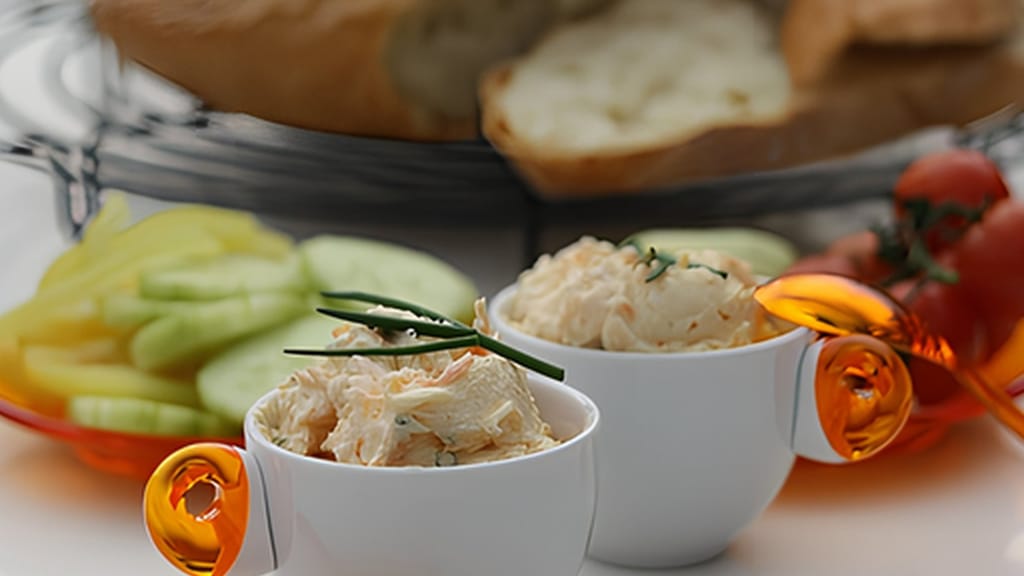
Curd cheese and carrot spread
Bread Spreads: Quark, Egg, Fish and Vegetable (Even for New Year's Eve)
Updated Nov 20, 2026
Bread spreads rest on five bases: quark (tvaroh, a Czech fresh curd cheese), eggs, cheese, smoked fish, and vegetables or legumes. Each base needs something bold (mustard, blue cheese, dill, garlic), something for texture (grated carrot, chopped egg whites, nuts) and a pinch of salt. Below you'll find tested spread recipes from every group, from the fastest at 7 minutes to the slowest, with chickpeas soaked for at least 24 hours. We also cover how long spreads keep in the fridge and how to build a New Year's Eve table from them.
The best bread spread is the one whose base suits the occasion: quark for an everyday breakfast, eggs for a snack, smoked fish and roasted vegetables for a celebration. Five bases will get you almost anywhere:
Quark spreads: full-fat quark, yogurt, grated vegetables or cheese. Fresh, ready in 10 minutes.
Egg spreads: hard-boiled eggs, mustard, mayonnaise or cream cheese. Heartier, and a Czech classic.
Cheese spreads: niva (Czech blue cheese), gouda or goat cheese, bound with cream cheese. Salty and bold.
Fish spreads: smoked salmon or smoked mackerel with dill and lemon. Festive.
Vegetable and legume spreads: roasted beets, salsify, sun-dried tomatoes, avocado, chickpeas. Colorful and meat-free.
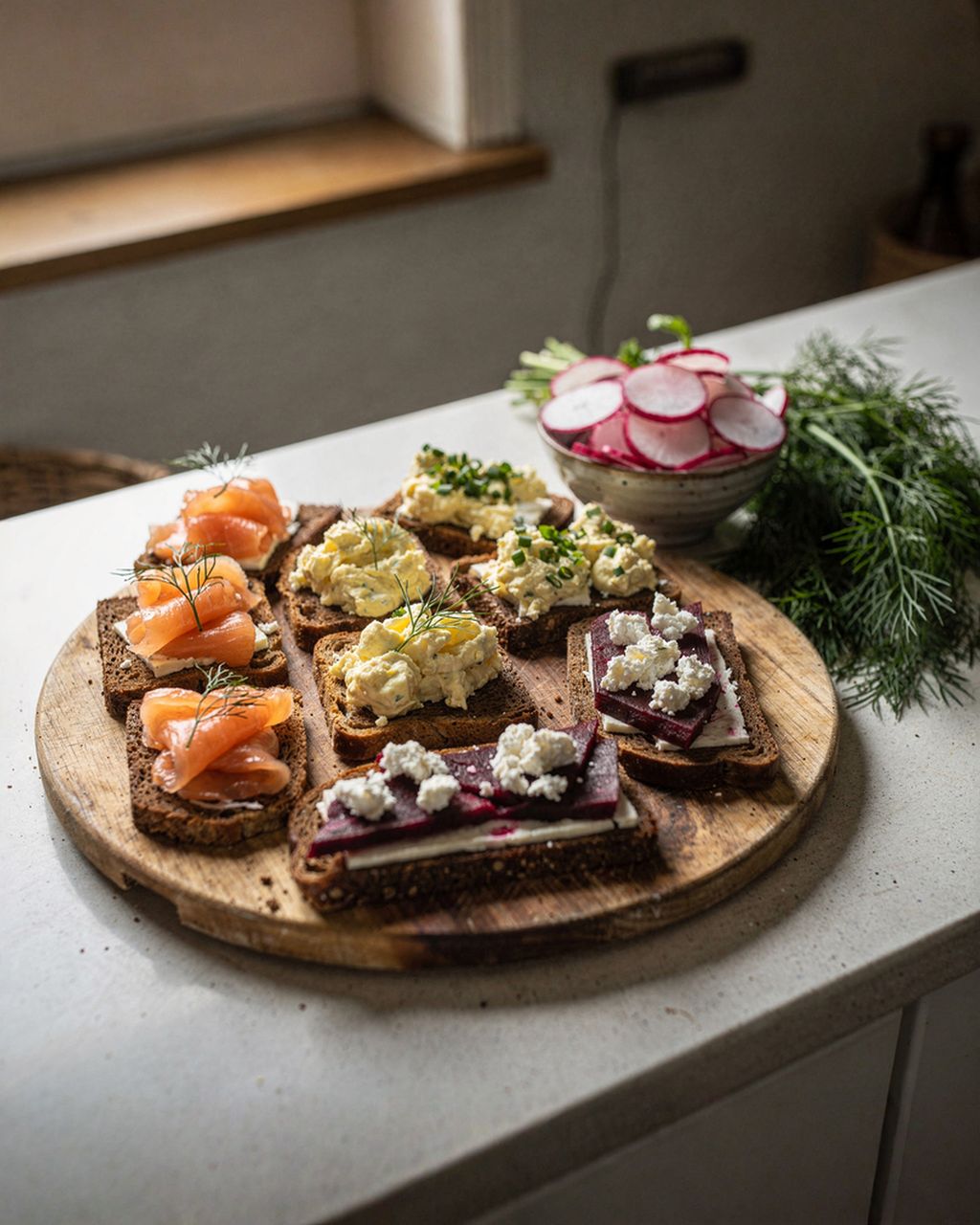
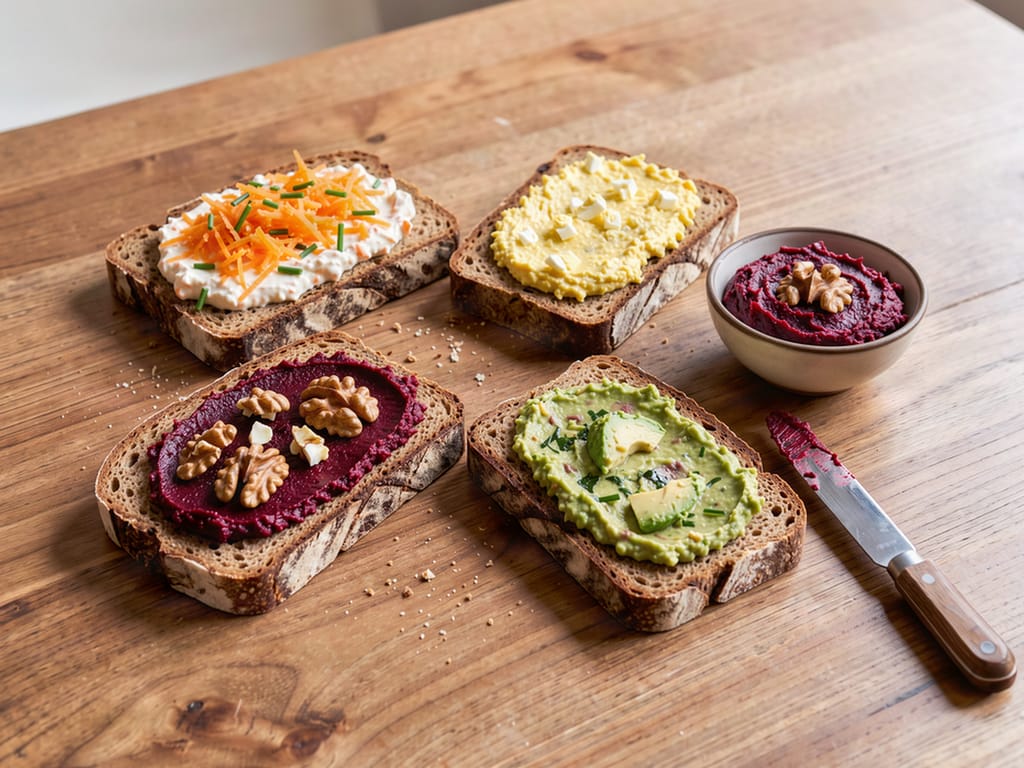
If you're not sure, make one of each color. A yellow egg spread, an orange carrot-quark spread and a pink beet spread on one board look like a feast, even though each took only a quarter of an hour.
Seasonal baking plans, tested recipes and kitchen tricks that save you time. Unsubscribe in one click.
A good spread rests on four rules: the spreadable base makes up half to two thirds of the volume, you grate ingredients finely, you salt last, and you let the finished spread rest in the fridge. Then it spreads without tearing the bread, stays on the knife, tastes bold even when cold and doesn't weep water. In more detail:
The spreadable base is roughly half to two thirds of the volume. Quark, cream cheese, ricotta or mashed yolks hold the rest together. Less base means a spread that crumbles.
Grate finely, chop small. Fine shreds of carrot or cheese distribute evenly and don't fall off the bread. Leave coarse pieces only where you want them noticed, such as nuts on top.
Salt last. Gouda, blue cheese, smoked fish and olives are all salty on their own. Mix everything first, taste, and only then add salt.
Let it rest in the fridge for a while. In half an hour the flavors come together and the spread firms up slightly. Take it out for a few minutes before serving, though, because an ice-cold spread tastes flat.
Acidity works wonders: a squeeze of lemon, a teaspoon of mustard or some sour cream brightens even plain quark. When a spread tastes "like nothing," it usually isn't missing salt but acid.
Chlebíčky (Czech open-faced sandwiches) follow stricter rules: the spread has to be thicker and smoother to hold the topping and keep the roll from going soggy. You'll find exact ratios in our article on spread ratios and consistency for chlebíčky. Here we stick to spreads for bread, which can be quite a bit more rustic.
When a spread doesn't turn out, thicken a runny one with cream cheese or quark, loosen a stiff one with yogurt, pour off the water from one that weeps (and drain the ingredient next time), brighten a bland one with acid, and rescue an oversalted one with another portion of unsalted base. In detail:
Too runny: stir in a spoonful of cream cheese, quark or grated hard cheese and chill for half an hour. For an egg spread, another chopped egg helps.
Too stiff: add yogurt, milk or sour cream a teaspoon at a time. Two teaspoons are usually enough, and more will thin it out.
Weeping water: the usual culprits are wet quark, unsqueezed vegetables or tomatoes with their seeds. Pour off the water, stir in a spoonful of cream cheese, and next time drain or squeeze the ingredient beforehand.
Bland: acid first (lemon, mustard), then salt, then pepper or paprika last. In that order you'll see what it's really missing.
Oversalted: add another portion of unsalted base, meaning quark, cream cheese or egg. Neither water nor sugar will fix the salt.
Quark spread is the fastest spread you can make: quark, something salty, something fresh, and it's done in ten minutes. Use full-fat quark, because low-fat quark tends to be drier, more sour and harder to spread.
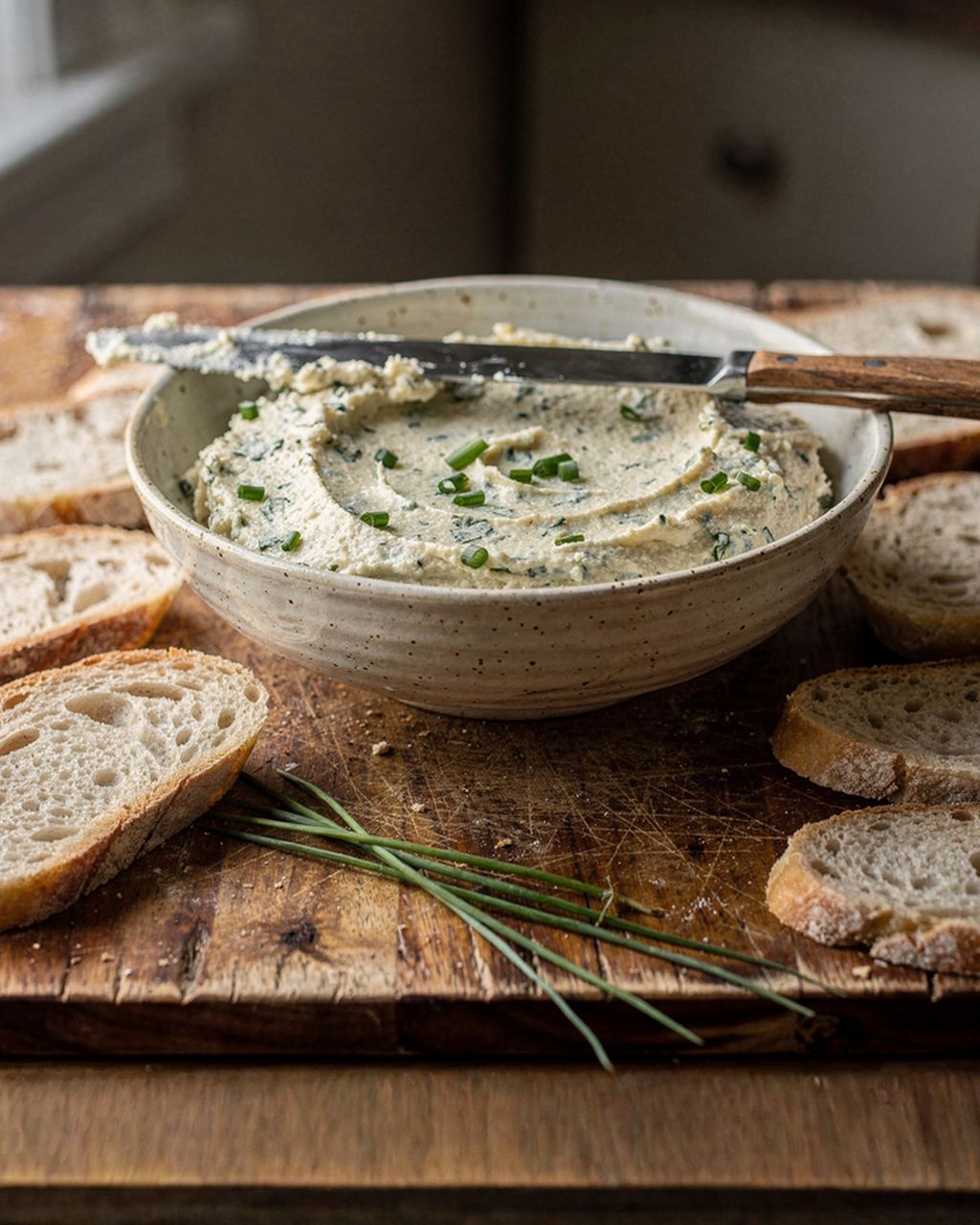
Carrot quark spread is ready in 10 minutes. Grate two carrots and 100 g of gouda on the fine side of the grater and stir them into 250 g of full-fat quark with 20 g of full-fat plain yogurt. Add salt and pepper and sprinkle with chives, but go easy on the salt, since gouda is salty by itself. The carrot adds sweetness and color, the cheese a salty depth.
A few tips for working with quark:
If the quark is lumpy, first whisk it on its own with the yogurt, using a fork or a whisk. Only then add the other ingredients.
If the quark is very wet, let it drain in a sieve for a quarter of an hour. Otherwise the spread will release water within an hour.
Yogurt or a little milk loosens the spread. Add it by the teaspoon, because you can't rescue a runny spread.
If you make the spread a day ahead, add chives, spring onions or dill just before serving. Green herbs in quark wilt and darken overnight.
Curd cheese and carrot spread
Carrot quark spread with gouda on bread, ready in 10 minutes
Egg spread rests on hard-boiled eggs, mustard and a creamy binder, and everyone who makes it makes it their own way. Hard-boil hen's eggs for about 10 minutes from the moment the water returns to a boil, and chill them right away in cold water. Cooling them quickly and not overcooking them helps prevent a gray-green ring around the yolk, and the eggs peel more easily.
Egg spread with cheese handles the yolks and whites separately, and that's its trick. Halve seven cooled eggs and mash the yolks with a fork together with mustard, 40 g of mayonnaise and a little pomazánkové máslo (a Czech soft dairy spread, not butter) or cream cheese into a smooth cream. Chop the whites finely with a knife, add them with 150 g of finely grated gouda, season with salt, pepper and sweet paprika, and stir in rings of spring onion. The whole thing takes about 14 minutes if the eggs are boiled in advance.
Yellow spread with egg and gouda is a smaller, more delicate version made with quail eggs. Hard-boil six quail eggs for 3 to 4 minutes from the moment the water returns to a boil and chill them right away. Grate them together with 50 g of gouda and mix with 125 g of cream cheese and a teaspoon of mustard, preferably whole grain. Stir with a fork only until pieces of egg are still visible in the spread.
Why separate yolks and whites: the yolks dissolve into the mustard and fat to make a cream that carries the flavor, while the chopped whites add bite. If you mash everything at once, you get a paste with no structure.
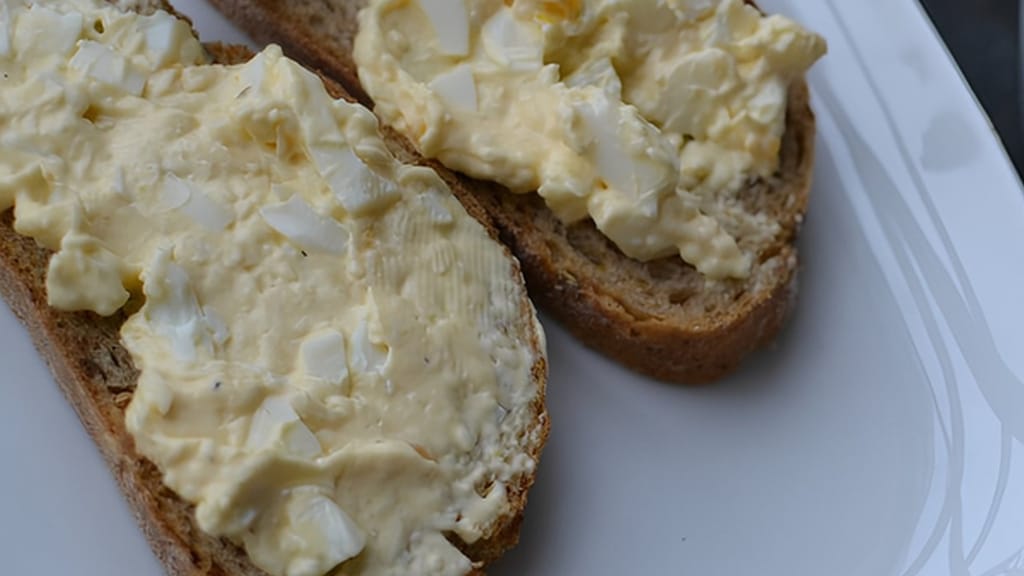
Egg spread with cheese
Egg spread with gouda and spring onion
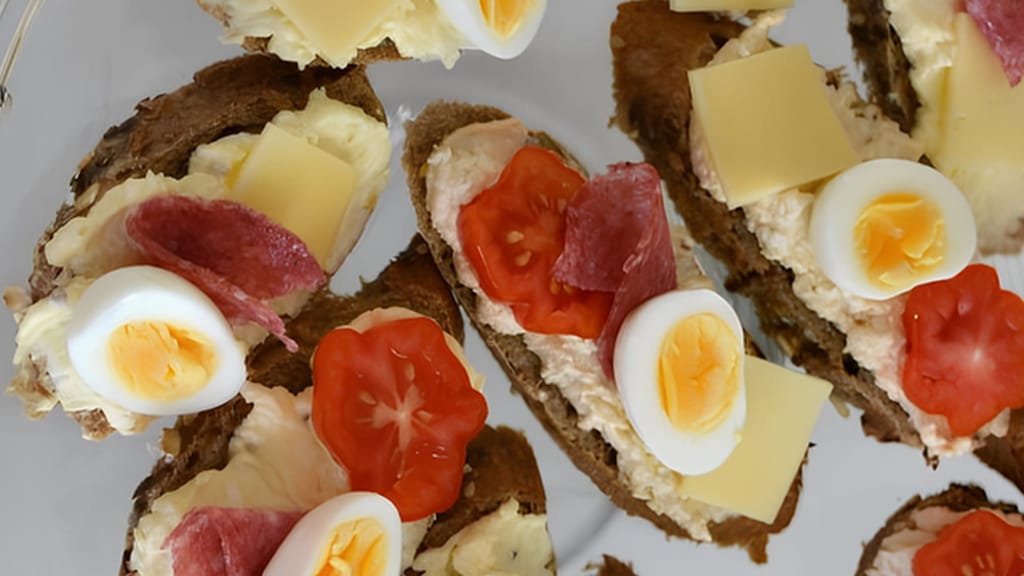
Yellow egg spread – with gouda
Yellow spread with quail eggs, gouda and mustard
A cheese spread needs one bold cheese and one creamy cheese that softens it and makes it spreadable. The most common pairs are niva (Czech blue cheese) with cream cheese, gouda with eggs, or goat cheese with ricotta.
Red spread with niva is the fastest recipe in this article, ready in 7 minutes. Crumble 50 g of niva with a fork and stir it into 125 g of cream cheese; softened cream cheese combines with the niva more easily, so take it out of the fridge a little ahead. Add 10 g of spicy mayonnaise and stir until the spread is an even color. Taste only at the end, because niva is usually so salty you won't need any added salt.
One thing to watch: thanks to the mayonnaise, even this cheese spread contains egg. If you avoid eggs, replace the spicy mayonnaise with a teaspoon of sour cream and a pinch of hot paprika.
The yellow gouda spread from the previous section and the roasted beet spread with goat cheese, which we get to under vegetables, are also built on a cheese base.
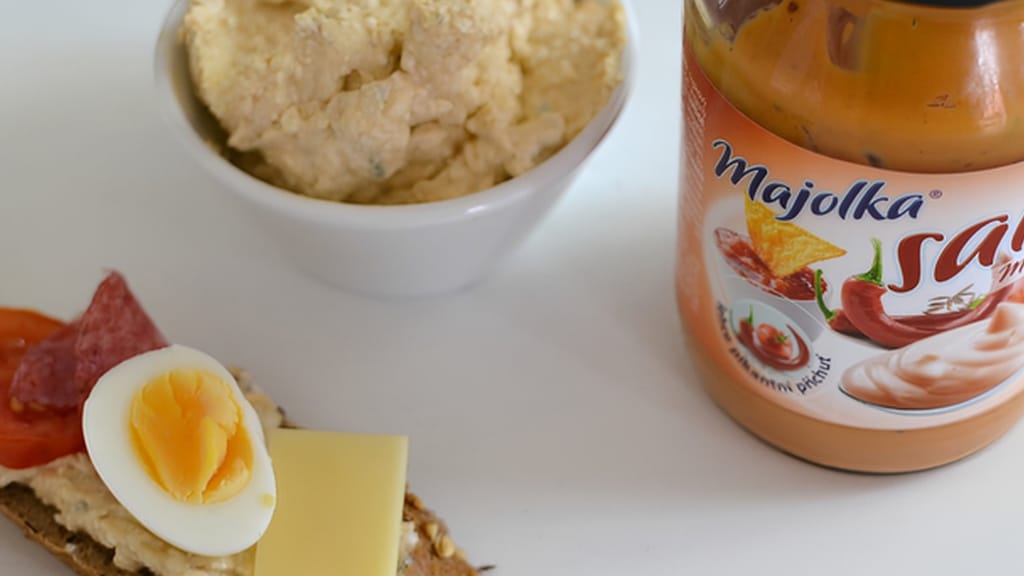
Red spread with blue cheese
Spread with niva and spicy mayonnaise in 7 minutes
A fish spread is smoked fish, cut or flaked small, a creamy base, and dill or lemon to brighten the smoky flavor. Smoked fish is already cooked, so there's nothing to cook.
Salmon spread has only four ingredients and is ready in 12 minutes. Cut 150 g of smoked salmon into small pieces with a sharp knife, so they're noticeable in the spread but still spread easily. Chop the dill as finely as you can, without the tough stems, and mix everything with 300 g of cream cheese and 20 ml of whole milk. Serve it on a crusty roll, baguette or dark bread; it firms up in the fridge and spreads even better afterwards.
Spread made from smoked mackerel is a cheaper, more assertive Czech classic. Skin the mackerel, pick out all the bones carefully, and mash the flesh with a fork with roughly the same amount of quark or cream cheese. Season with a teaspoon of mustard, finely chopped onion and a few drops of lemon; you'll hardly need any salt. Look for bones with your fingers, not your eyes, since the thinnest ones only show up in your mouth.
Keep fish spread in a sealed container in the fridge, and we recommend eating it within 2 days. The US FoodSafety.gov gives 3 to 5 days in the fridge for tuna and mayonnaise-based salads; for a homemade spread we stick to the shorter limit.
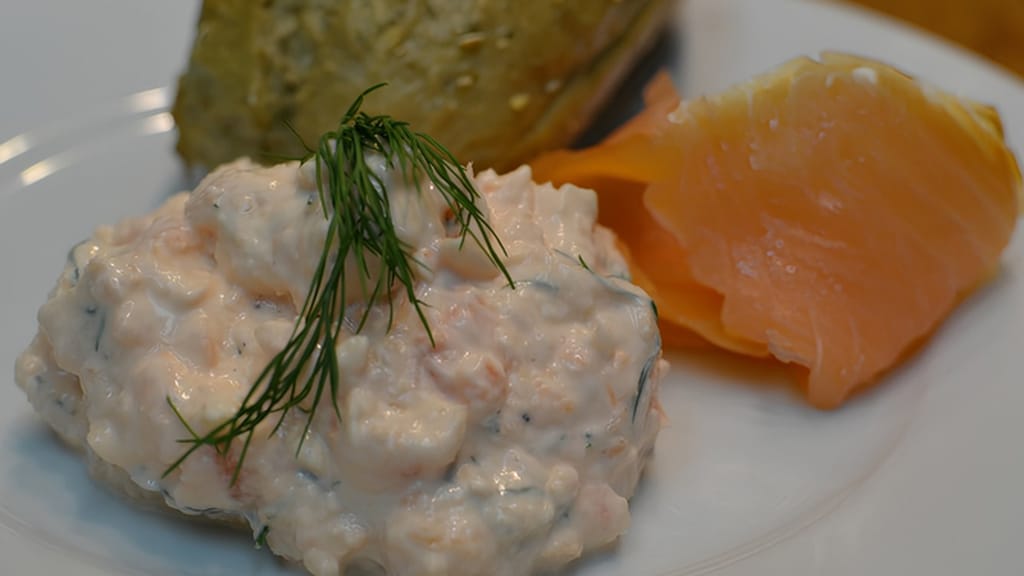
Smoked salmon spread
Salmon spread with smoked salmon and dill in 12 minutes
Meat-free spreads are built on vegetables, legumes and cheeses: all the recipes in this section are meat-free, but only the guacamole is vegan, and the rest contain dairy. A vegetable spread gives bread a color that no quark spread has.
Roasted red beet spread with ricotta and goat cheese asks for time, not effort. Wrap each beet tightly in aluminum foil and roast at 200°C (400°F) for roughly 45 to 90 minutes, depending on size, until a skewer slides in without resistance. Leave the beets in the foil to cool slightly so they can be peeled, then blend them with 200 g of ricotta, 150 g of fresh goat cheese, 100 g of walnuts, salt and white pepper. Roasting sweetens the beet and pushes its earthy flavor into the background, so don't cut this step short.
Salsify spread with hazelnuts is ready in 25 minutes, and the winter vegetable takes on a delicate, nutty flavor. Peel the salsify in hot water, rinse off the sticky milky sap right away, grate it finely and mix with 150 g of cream cheese, salt and pepper. Roast the hazelnuts for about 10 minutes in a 200°C (400°F) oven until fragrant and the skins crack, chop them coarsely and sprinkle them over the spread on baguette slices.
Sun-dried tomato and olive spread tastes like the Mediterranean in 15 minutes. Finely chop 100 g of pitted black olives and 40 g of drained sun-dried tomatoes, and chop some basil and two cloves of garlic. Stir everything into 250 g of cream cheese with 50 g of sour cream and leave it in the fridge for a while so the flavors come together.
Carrot hummus is a legume spread that takes planning: you soak dried chickpeas for at least 24 hours, so the whole recipe takes over 25 hours. Cook the soaked chickpeas with carrot and a little sweet and hot paprika until completely tender, with the skins slipping off as a good sign. Drain them and blend with garlic, warm milk, salt, pepper and butter until smooth, then top with sesame seeds and sun-dried tomatoes. Because of the butter and milk it isn't vegan, even though it is meat-free.
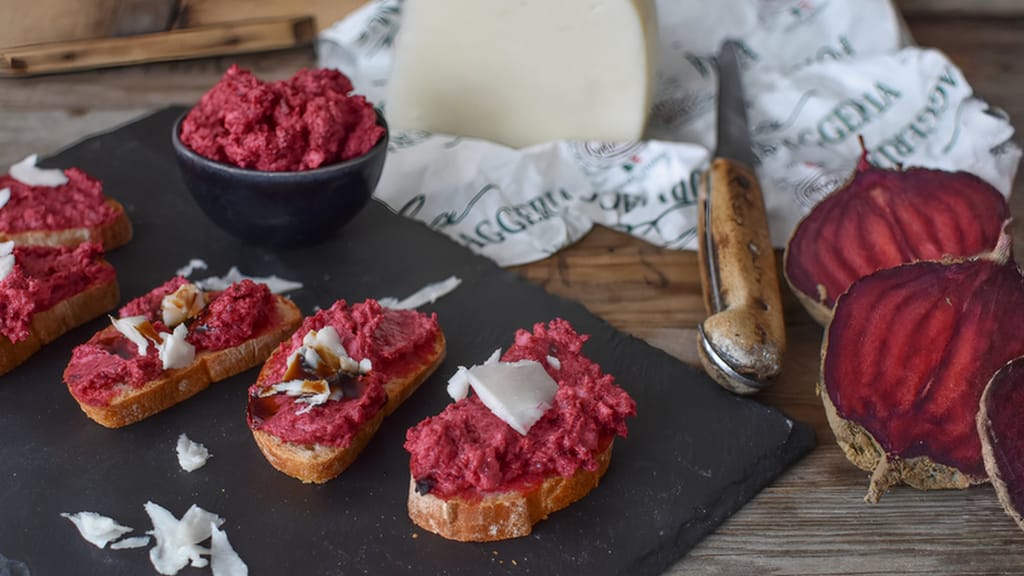
Roasted beetroot spread with ricotta and goat cheese
Roasted red beet spread with ricotta, goat cheese and walnuts
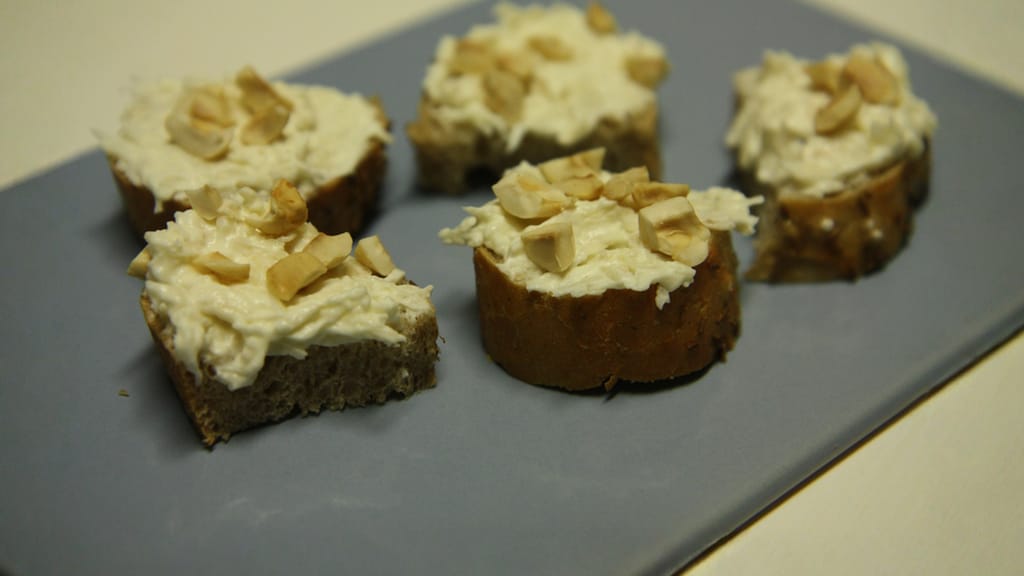
Black salsify spread with hazelnuts
Salsify spread with roasted hazelnuts in 25 minutes
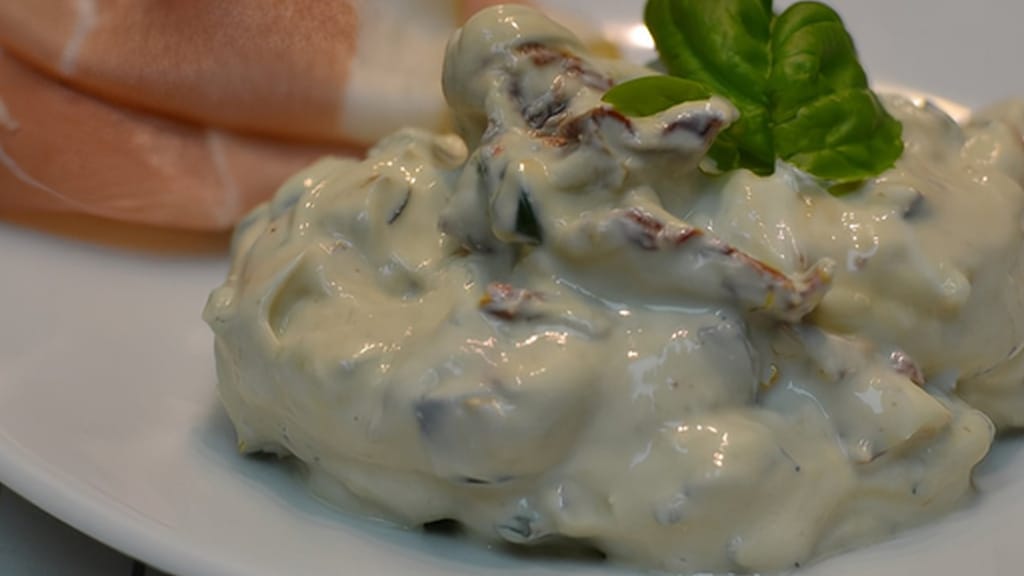
Sun-dried tomato and olive spread
Spread with sun-dried tomatoes, black olives and basil
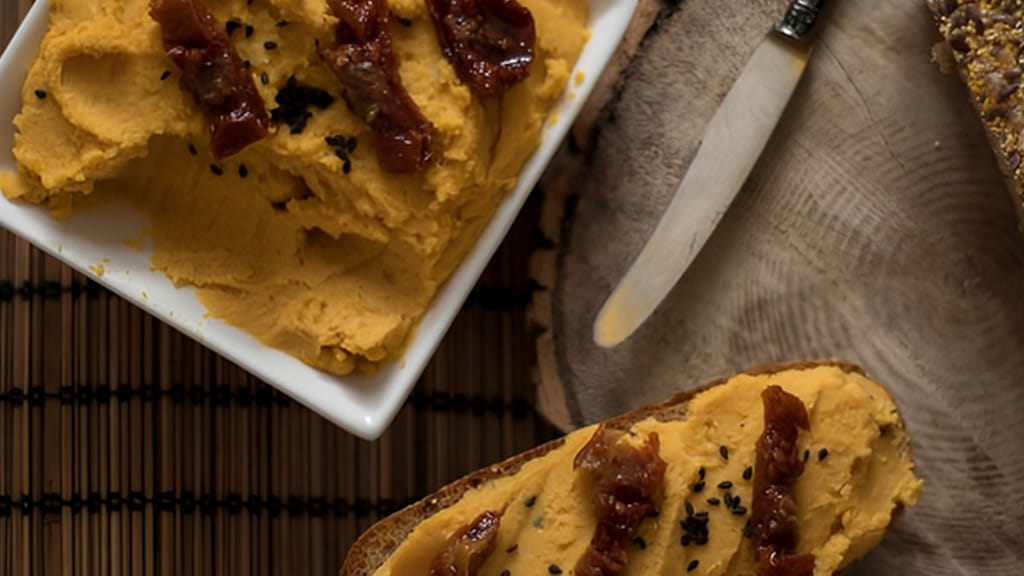
Carrot hummus
Carrot and chickpea hummus with sesame seeds and sun-dried tomatoes
Avocado spread is ripe avocado, acid and salt, and its greatest enemy is time: it browns in the air. Guacamole is the only purely plant-based recipe among ours. Scoop out two avocados and mix with finely chopped shallot, tomatoes and jalapeño, season with salt and pepper and pour over the lime juice. If you're not serving it right away, cover it with plastic wrap pressed against the surface and put it in the fridge.
You'll find what really works against browning in our article Avocado Spread That Doesn't Turn Brown.
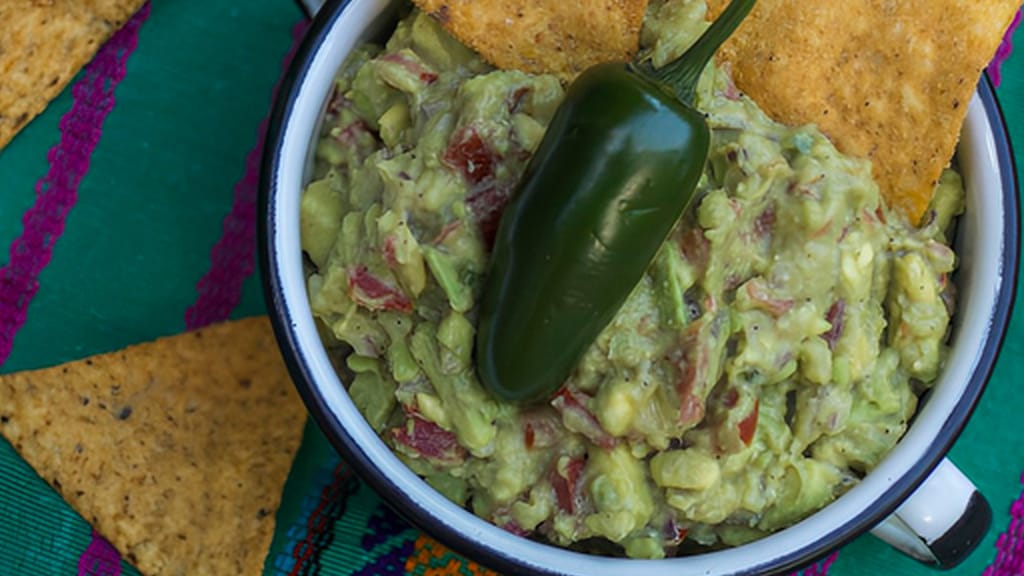
Guacamole
Guacamole with lime, shallot and jalapeño, a vegan avocado spread
A zucchini spread only works if you get the water out of the zucchini. Grate the zucchini finely, salt it lightly and let it release its juice for ten minutes, then squeeze it out thoroughly in handfuls through a clean kitchen towel. Mix it with quark or cream cheese, a pressed clove of garlic, chopped dill and a squeeze of lemon. Unsqueezed zucchini turns the spread into soup within an hour.
Czech spreads are mainly egg, quark, niva cheese and smoked mackerel spreads, meaning everything you can mix from what's in the fridge and spread on Šumava bread or everyday Czech bread (konzumní). You'll find recipes for each of them earlier in the article.
They have three things in common. The base is usually dairy (quark, cream cheese, pomazánkové máslo) or egg. The flavor comes from something sharp and salty: mustard, onion, niva or smoked fish. And seasoning is restrained, with salt, pepper, sweet paprika and chives, and no exotic spices.
A classic Czech spread goes on in a thick layer on a slice of bread, not on thin baguette slices. That's why it can be more rustic, with pieces of egg, shreds of carrot or chopped onion. If you want to turn it into chlebíčky or canapés (jednohubky), thicken it and chill it.
Each spread suits a different bread: delicate, creamy spreads go on light bread, bold and salty ones on dark bread. A rough rule that works:
Quark and egg spreads: everyday Czech bread (konzumní), caraway bread, rohlík rolls. Caraway pairs naturally with egg spread and with quark spread with chives.
Cheese spreads with niva: dark rye bread or seeded bread that stands up to salty niva.
Fish spreads: dark bread, a crusty roll or a baguette. Smoked fish and sourdough rye bread are a proven pair.
Vegetable spreads with nuts (beet, salsify): baguette or multigrain baguette, where the color and nutty crunch stand out.
Hummus and avocado: toasted bread, topinky (pan-fried bread slices) or pita; warm bread suits them.
Fresh bread is good, but day-old, lightly toasted bread is often better. The toasted surface soaks up less moisture from the spread, and the bread doesn't tear when you spread it.
A quick bread spread is ready before a topinka (pan-fried bread slice) is done, as long as you have a spreadable base and one bold ingredient at home. Ordered by the total time of the recipe:
Red spread with niva: 7 minutes
Carrot quark spread: 10 minutes
Salmon spread: 12 minutes
Egg spread with cheese: 14 minutes (with eggs boiled in advance)
Sun-dried tomato and olive spread: 15 minutes
Yellow spread with quail eggs: 15 minutes
Guacamole: 17 minutes
Salsify spread: 25 minutes
Be prepared for a longer wait with two recipes. The roasted beet spread needs 45 to 90 minutes in the oven and then a while for the beets to cool enough to be peeled and blended. Carrot hummus takes longest, since the chickpeas soak for at least 24 hours. Both can be made ahead, though, so on the day you serve you only have to spread.
What to keep in the fridge so a quick spread is always at hand: full-fat quark or cream cheese, a few hard-boiled eggs in their shells, a piece of gouda or niva, mustard and a lemon. Combine two or three of them and you have a spread in a few minutes.
A spread for canapés (jednohubky) has to be thicker than one for bread, so that it holds the garnish and doesn't run off a small piece of bread. Choose recipes with a firm base, such as cream cheese, ricotta or goat cheese, and chill the spread well before spreading.
Avocado canapés with smoked salmon have two textures: one avocado becomes a cream, the other is sliced. Mash the first avocado with lime juice and stir in pomazánkové máslo or cream cheese, which firms up the cream so it holds on the baguette. Spread it on slices of multigrain baguette, top with a slice of the second avocado, a piece of smoked salmon and a sprig of dill. Ready in 30 minutes.
The beet spread with goat cheese, which you can garnish with a drop of creamy balsamic or with sprouts, and salsify with roasted hazelnuts on baguette also suit canapés. The carrot quark spread and the egg spread with chopped whites are too loose for canapés and are better on bread.
Cut the baguette for canapés on the diagonal into slices about a centimeter thick, and spread the topping no earlier than an hour before serving, otherwise the bread goes soft.
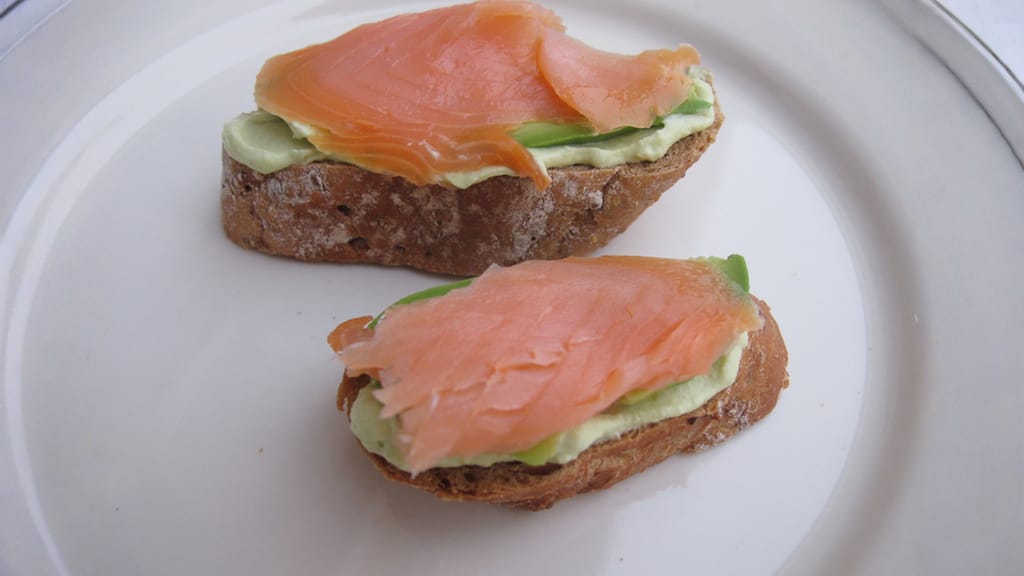
Avocado canapés with smoked salmon
Avocado canapés with smoked salmon and dill on multigrain baguette
For New Year's Eve, make three or four spreads that differ in color and base: one egg, one fish, one vegetable and one cheese. Guests taste from all of them, so more than four kinds only add dishes and leftovers.
A proven New Year's Eve foursome from the recipes above:
Yellow: spread with egg and gouda
Deep pink: roasted beet spread with ricotta and goat cheese
Pale salmon: salmon spread with dill
Red: spread with niva and spicy mayonnaise
If you also want a purely plant-based option, add the guacamole, and for a Mediterranean choice without avocado, the spread with sun-dried tomatoes, olives and basil.
How to plan it so you aren't rushing on December 31:
Two days ahead: roast the beets. It's the longest step, and roasted beets keep in the fridge.
The day before: hard-boil the eggs and leave them in their shells, then mix the beet spread and the sun-dried tomato spread.
Morning of December 31: mix the egg, salmon and niva spreads.
Before guests arrive: the guacamole and avocado canapés, since avocado shouldn't wait.
Put spreads out in smaller bowls and refill them from the fridge, rather than letting one big bowl sit all evening in the warmth of the living room. For what else to prepare and how much to make, see our article New Year's Eve Party Food at Home.
Keep spreads made with mayonnaise, eggs or fish in a sealed container in the fridge, and we recommend eating them within 2 days. The US FoodSafety.gov gives 3 to 5 days in the fridge for egg and mayonnaise-based salads; for a homemade spread we stick to the shorter limit, because you don't know how long each ingredient sat out. Use other spreads as soon as you can, and never after the use-by date of the shortest-lived ingredient, such as quark or cream cheese. Add herbs and avocado only on the day you serve.
According to the US Department of Agriculture (USDA), perishable food shouldn't stay out of the fridge for more than 2 hours, or just 1 hour in heat above 32°C (90°F). At a party, put spreads out in smaller bowls and refill them from the fridge. Don't save anything that sat in the warmth all evening.
We don't recommend freezing spreads, because they lose their texture once thawed. Quark and cream cheese release water and turn grainy, mayonnaise can separate and egg whites turn rubbery. Make a smaller batch instead, or prepare just the ingredients ahead, such as roasted beets.
You can replace mayonnaise in a spread with full-fat plain yogurt, sour cream, quark or cream cheese. Yogurt and sour cream add tang, while cream cheese adds creaminess and body. For an egg spread, it's enough to mash the yolks with mustard and a spoonful of yogurt.
Plan roughly 100 to 150 g of spread per person when spreads are one of several treats. If they're the main dish of the evening, aim for the upper end and add plenty of bread. For four kinds of spread for ten people, about 300 g of each is enough.
Yes, you can mix quark, cheese and egg spreads in the evening and just spread them in the morning. Leave them in a sealed container in the fridge overnight, wrap the spread bread, and carry it to work or school kept cool, ideally with a cooling pack. Add herbs and spring onions in the morning, as they wilt overnight.
One recipe worth heating the oven for, one tip, and one deal from the shop. Nothing else.