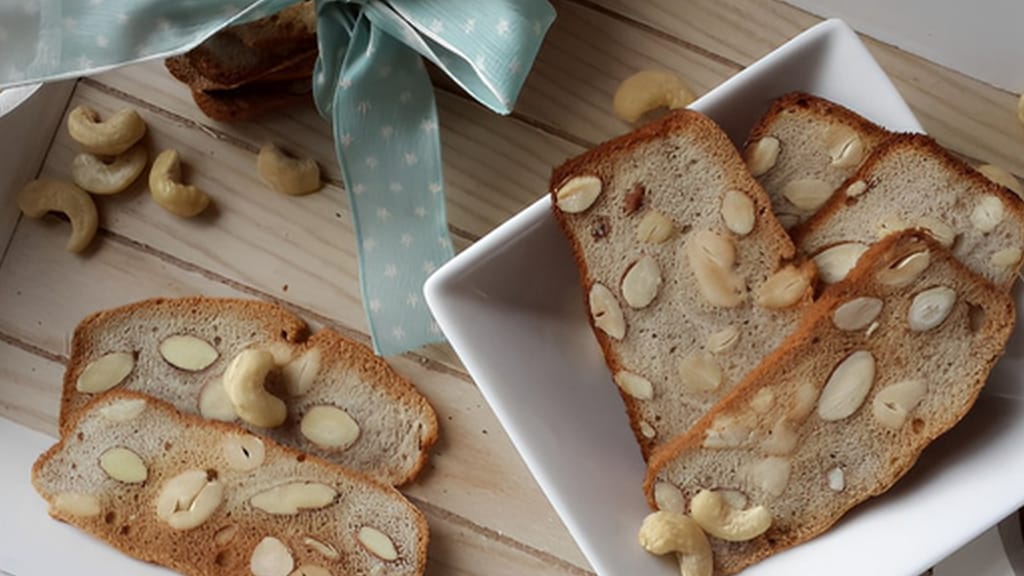
Egg white nut loaf
Why Egg Whites Won't Whip Stiff: Causes and How to Fix It
Updated Oct 6, 2026
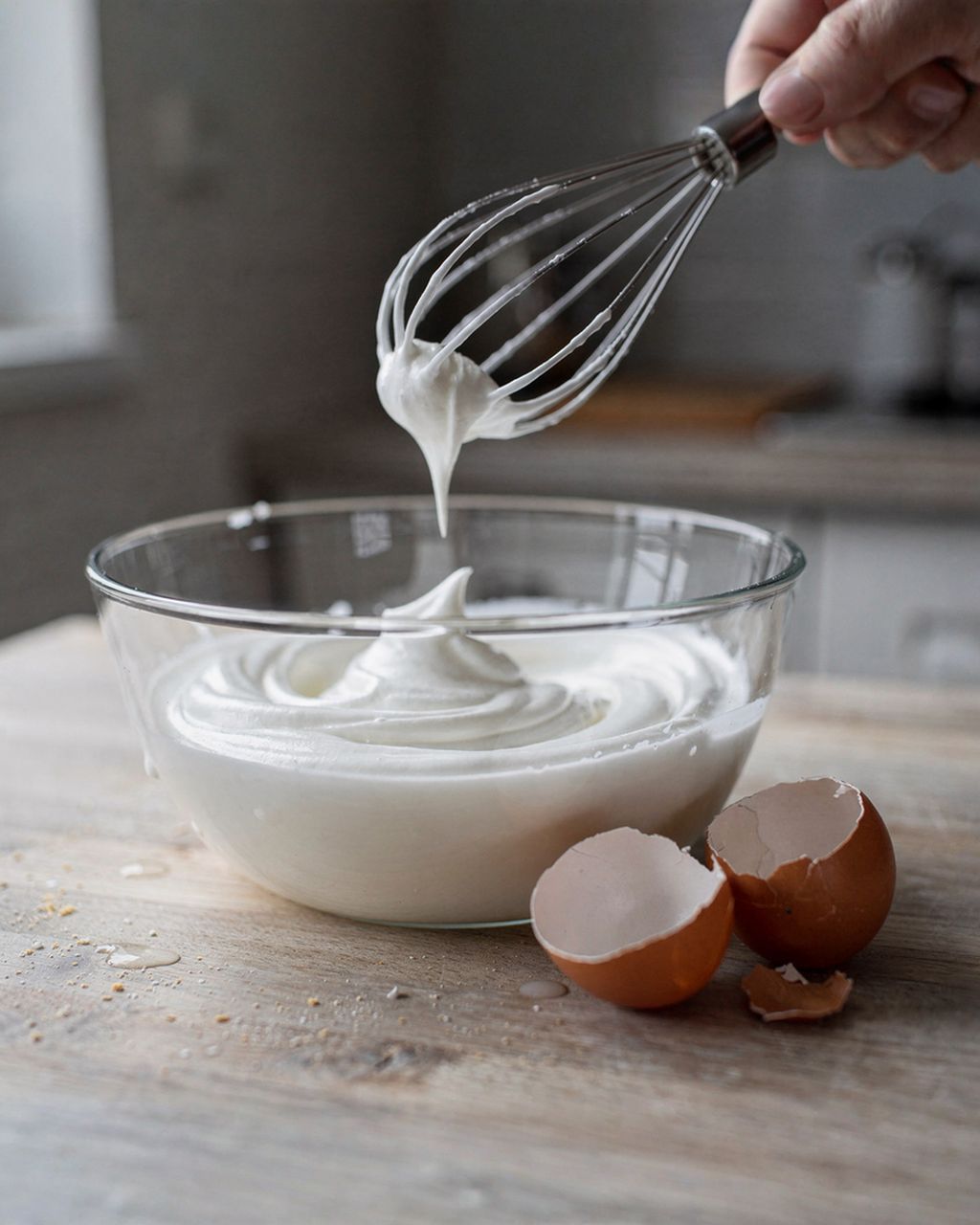
Why won't egg whites whip up stiff? Nearly always it comes down to a trace of fat (a drop of yolk, a greasy bowl), sugar added too soon or all at once, or over-whipping, which leaves the foam grainy and deflated. Egg white is mostly water and protein, and whipping unfolds that protein into a firm network around tiny air bubbles. Anything that disrupts that network ruins the foam. We'll go through the causes one by one, show you how to tell what went wrong, and explain how to rescue the whites — or make them more stable from the start.
If your egg whites won't whip up stiff, it's almost always down to one of these seven things:
Fat in the whites – a trace of yolk, a drop of oil.
A greasy or plastic bowl or whisk.
Sugar added too soon or all at once.
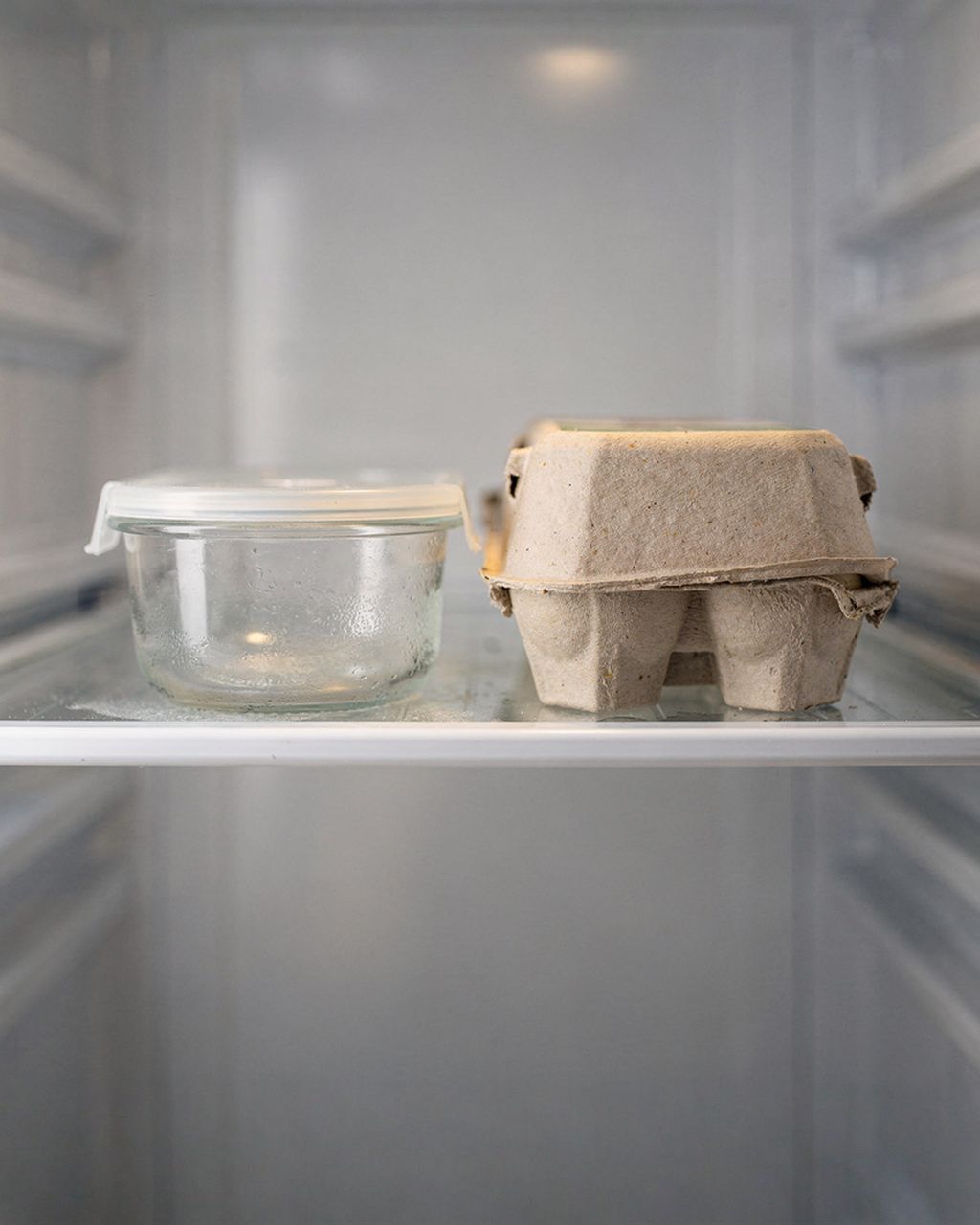
Cold whites straight from the fridge.
Too few whites in too big a bowl – the beaters can't reach them.
Over-whipping – the whites turn grainy, weep, and collapse.
Water or leftover detergent on your equipment.
In practice, it's usually fat or sugar. Start there.
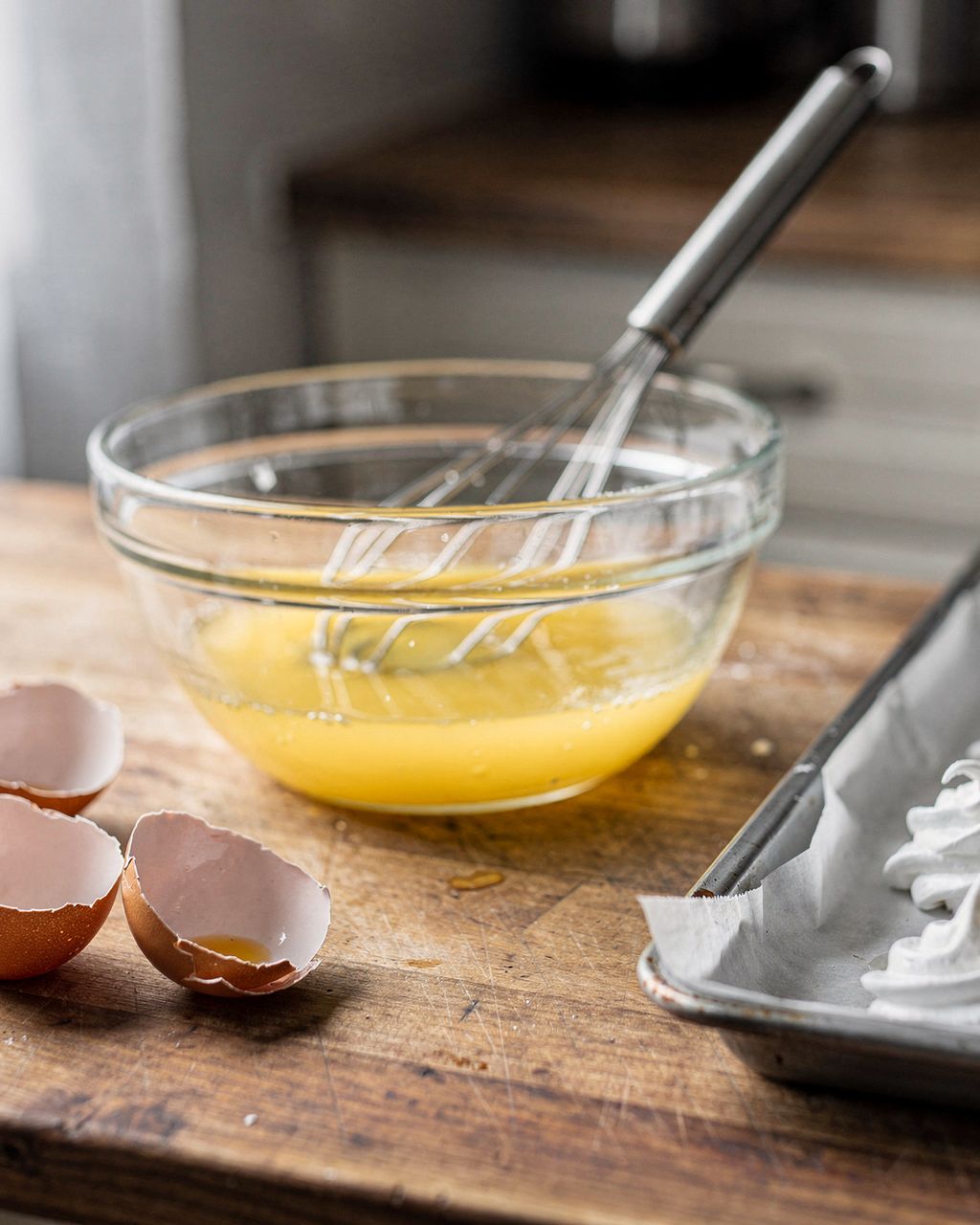
Just one drop of yolk and your whites won't whip up at all, or only into a thin foam. Yolk contains fat, and fat wedges itself between the proteins exactly where they need to hold the air bubbles in place. The protein network can't close up properly, and the foam won't hold.
Crack eggs over a small bowl first, not directly into the big one. If a yolk breaks, you only lose that one egg, not the whole batch of whites.
Don't fish out yolk with your finger. Skin is oily. Use half an eggshell instead.
Cold eggs separate more easily – the yolk is firmer and less likely to break. Just make sure you whip the whites once they've warmed up (see below).
A stainless steel or glass bowl works best for whipped egg whites. Plastic holds onto a thin greasy film even after washing, and that's enough to stop your whites from whipping up properly. Leftover detergent or water on the sides of the bowl causes the same problem.
Quick trick: wipe the bowl and whisk with a paper towel dipped in lemon juice or vinegar, then let it dry. The acid removes any trace of fat, and the tiny bit that's left actually helps stabilise the foam (more on that below).
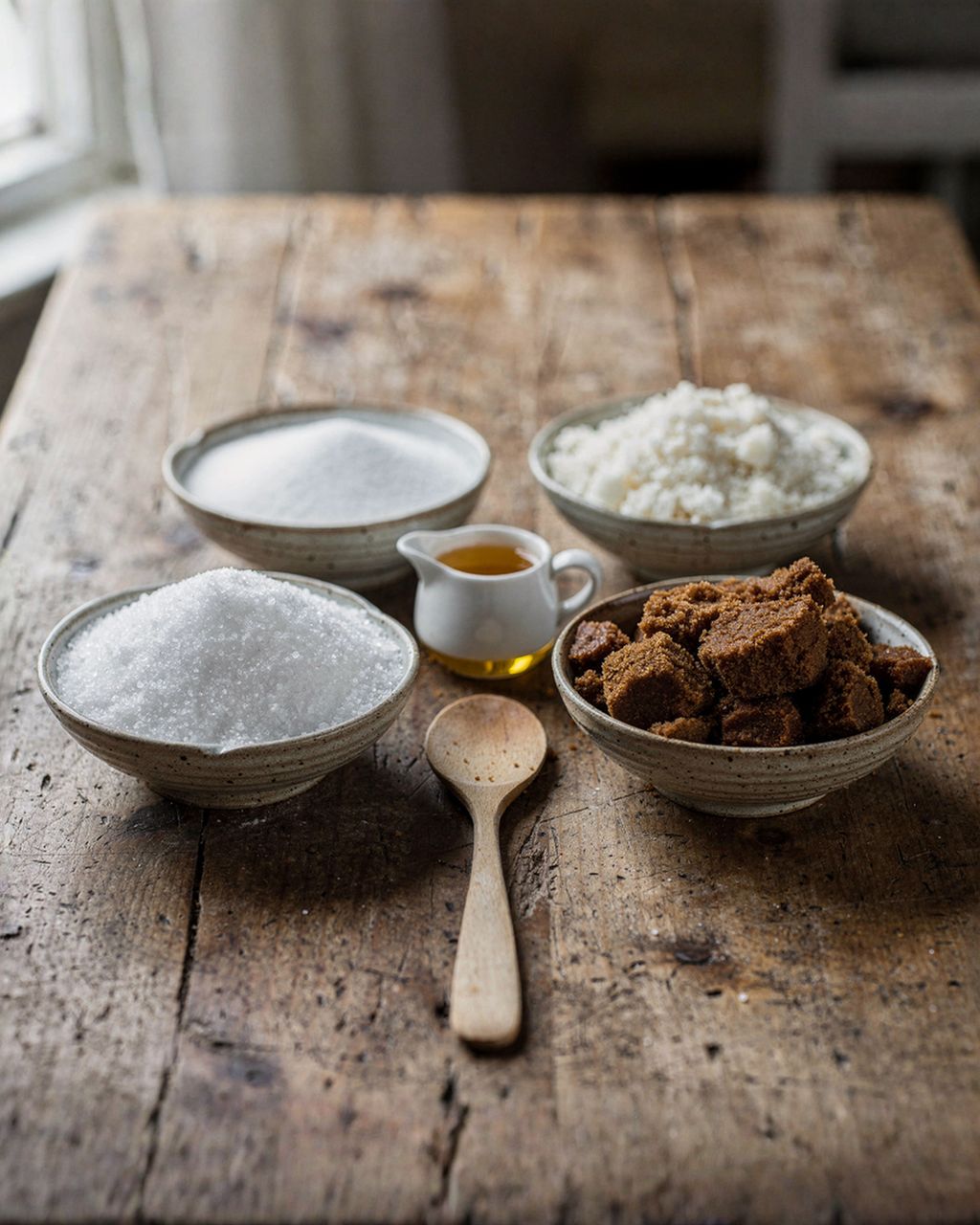
Add sugar to whipped egg whites only once they've formed soft peaks, and add it gradually, a spoonful at a time. Sugar makes the whites glossy and firm, but adding it right at the start means the whites take much longer to whip and reach a smaller volume. Dump it all in at once, and the weight collapses the foam.
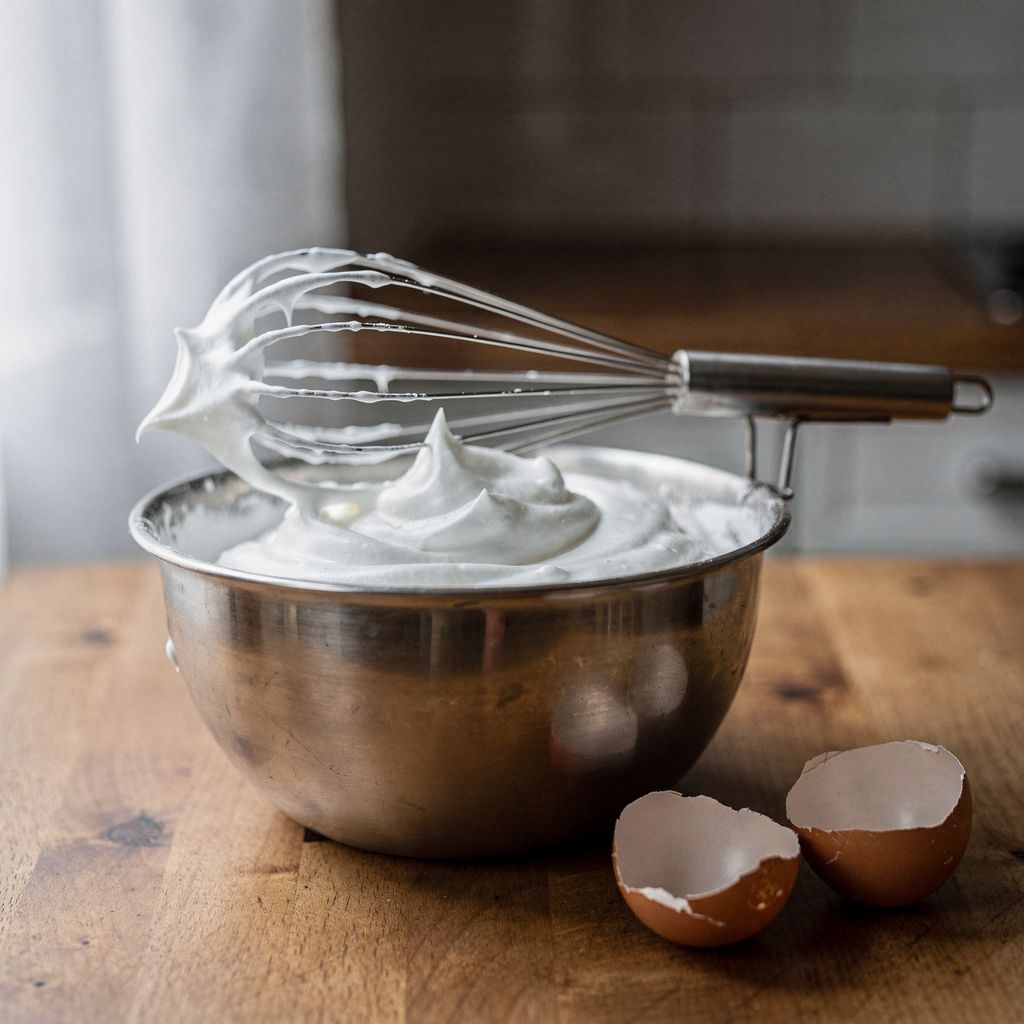
Whip the whites alone first, until they're white, foamy, and form soft peaks on the whisk that bend over at the tip.
Then add the sugar gradually, a spoonful at a time, whisking for at least 20–30 seconds between additions.
Keep whipping until the sugar dissolves. Rub a little of the foam between your fingers – you shouldn't feel any gritty crystals. Undissolved sugar draws water later on, making the whites weep: meringues and whipped toppings end up with sticky droplets on the surface.
Finer sugar dissolves faster, which is why meringues are usually made with caster sugar or icing sugar.
Egg whites at room temperature (around 20°C/68°F) whip up faster and to a greater volume than whites straight from the fridge. The proteins are more flexible, and the foam picks up air more easily. Just leave them covered on the counter for 20–30 minutes before you start.
A second common pitfall: two egg whites at the bottom of a large stand mixer bowl. The whisk barely reaches them, ends up beating mostly air above them, and the whites never whip up properly. For small amounts, use a smaller, narrower bowl so the beaters are properly submerged.
Over-whipped egg whites look dull and grainy, even lumpy, crack when you move the whisk through them, and liquid pools at the bottom. It's mainly whites without sugar that can be over-whipped: the proteins clump together so tightly that they squeeze out water. This kind of foam won't fold into batter properly and will collapse in the oven.
Sugar largely protects against over-whipping, which is why meringue mixtures can be whipped for a long time with little risk. But keep an eye on plain whipped whites meant for a sponge cake or soufflé: stop as soon as a peak holds on the whisk and just the very tip bends over.
Whipped egg whites deflate if they sit around too long, if they're folded into batter too roughly, or if a fatty ingredient is added too soon. Without sugar or any other stabiliser, the foam starts breaking down within just a few minutes.
Left standing too long. Whip plain egg whites only once the rest of your batter is ready, and use them straight away.
Folding in too roughly. First fold in about a third of the whites to loosen the batter. Then gently fold in the rest with a spatula, scooping from the bottom up, without overworking it.
A fatty ingredient. Chocolate, butter, or nuts folded in too early or too forcefully will knock the air out of the foam. Add them last, and fold gently.
You can only rescue egg whites that whip up poorly if there's no fat involved: pour thin whites into a smaller bowl and add a little lemon juice, combine over-whipped whites with a fresh egg white, or simply keep whipping whites with sugar for longer. Here's what to do depending on what went wrong:
There's yolk or fat in there: there's nothing you can do – no amount of whipping will fix it. Don't throw the whites out, though; use them in an omelette or in a recipe that doesn't need whipped whites, and start over with a clean bowl. For ideas on what to make, see Leftover egg whites: 12 ways to use them up.
It's taking forever but nothing's happening: check whether the beaters actually reach the whites, switch to a smaller bowl, and add a little lemon juice (about ½ teaspoon per 4 whites).
Over-whipped whites without sugar: add one fresh egg white for every four over-whipped ones and whip briefly, just until the mixture comes back together and turns glossy again. It's a fix, not a miracle – you won't get back to the original volume, but it'll still work in a batter.
Whites with sugar are thin and won't hold: keep whipping. Sugared whites need time – up to 8–10 minutes on full speed isn't unusual. If they still won't hold after that, there's almost certainly fat in there somewhere.
You can firm up whipped egg whites with acid, the right amount of sugar, and dried egg white. Each works in its own way.
Acid. About ½ teaspoon of lemon juice or vinegar per 4 whites, or a pinch (about ⅛ teaspoon per white) of cream of tartar. According to Harold McGee (On Food and Cooking), acid slows down the formation of overly tight bonds between the proteins, which makes the foam harder to over-whip and better at holding onto both water and air. Add it right at the start, as soon as the whites begin to foam.
Sugar in the right ratio. For firm meringues, the tried-and-tested ratio of sugar to egg white is roughly 2:1 by weight. One egg white weighs around 30–35 g, so that works out to about 60–70 g of sugar per white. Less sugar gives softer whites for batters; more gives firmer meringues.
Dried egg white. A teaspoon of the powder stirred into fresh whites adds extra protein, making the foam denser and much more resistant to deflating. It's useful for meringues, mousse-style cakes, and whipped toppings, or whenever the whipped whites need to sit for a while before use. We go into more detail on working with it in Dried egg white: why pastry chefs use it. You'll find dried egg white and other ingredients for more advanced baking among our baking ingredients.
One thing to leave out: salt. It was long believed to firm up whipped whites. According to Harold McGee (On Food and Cooking), though, salt actually slows down whipping and makes the foam less stable.
A firm, stable foam of whipped egg whites is the foundation of anything that relies purely on air trapped in egg whites. Think nutty meringue sponge, delicate lilac meringues with lemon curd, or homemade Montélimar white nougat, where hot honey and sugar syrup get folded into the whipped whites. If your whites won't whip up properly, you'll notice straight away in recipes like these.
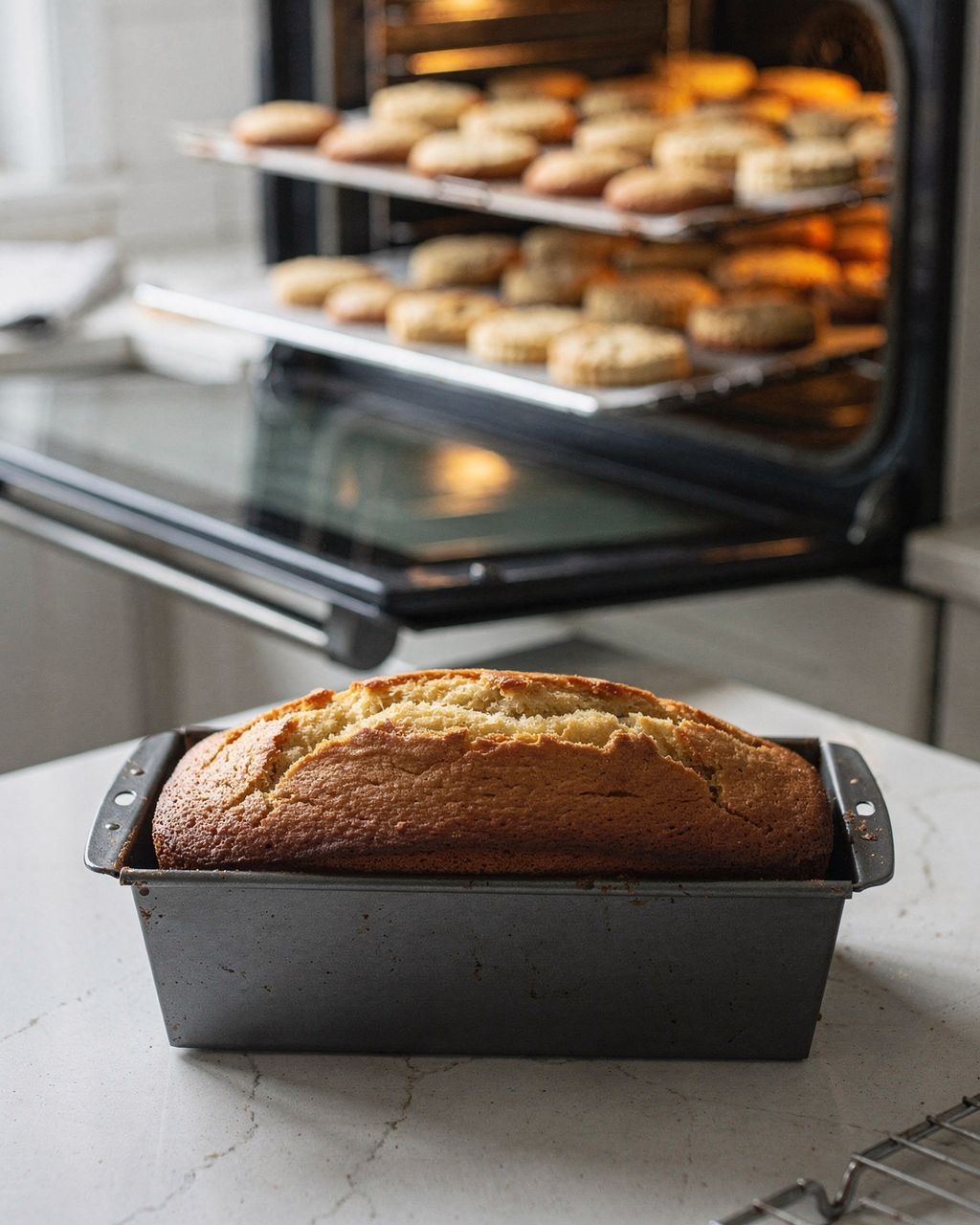
Egg white nut loaf
Nutty meringue sponge made with firmly whipped egg whites
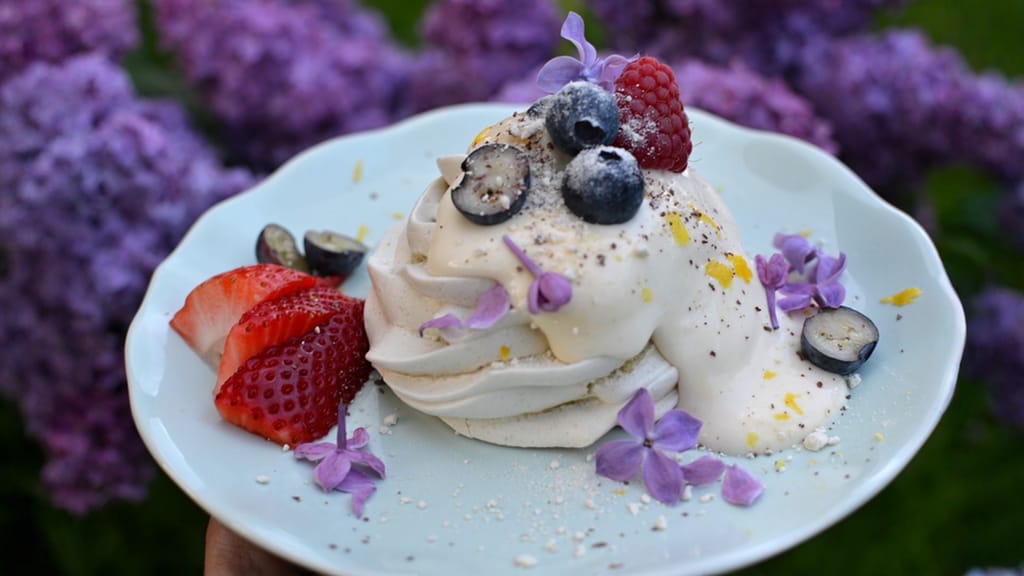
Lilac meringue kisses with lemon curd cream and fresh fruit
Lilac meringues with lemon curd, made with firmly whipped egg whites
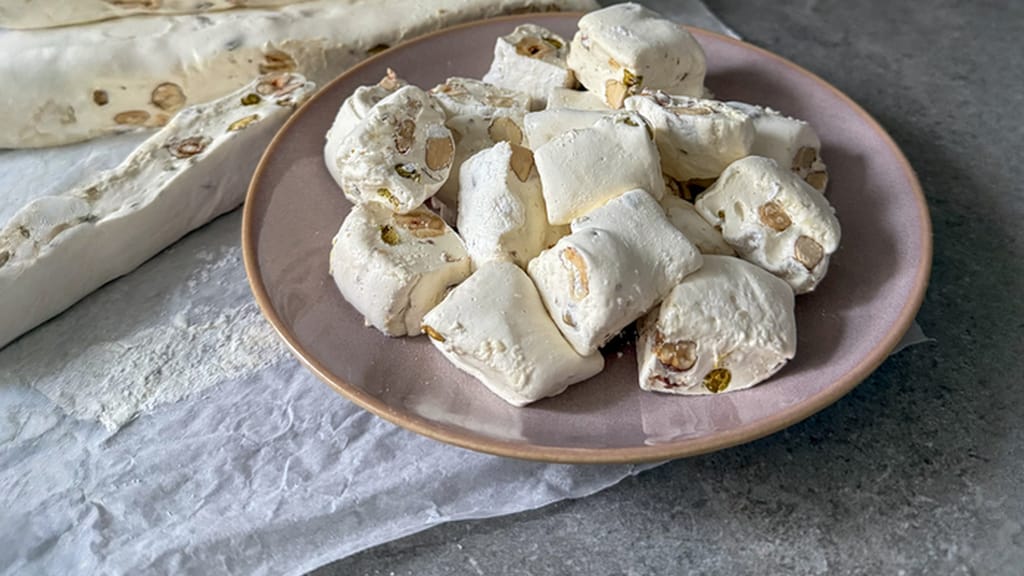
Montélimar nougat – homemade white nougat with honey and nuts
Montélimar white nougat: whipped egg whites with honey and nuts
Yes, you can whip egg whites by hand with a whisk, it just takes longer: around 5–10 minutes of brisk whisking depending on quantity. A large balloon whisk, a stainless steel bowl, and room-temperature egg whites all help. For meringues with a lot of sugar, though, an electric mixer is far more comfortable.
Yes, thawed egg whites whip up well, you'll just get a slightly smaller volume than with fresh ones. Thaw them slowly in the fridge, let them come up to room temperature, and make sure there's no trace of yolk in them.
Liquid pasteurised egg whites from a carton are harder to whip because the heat used in pasteurisation partly damages the proteins that hold the foam together. The result is usually a thinner foam that takes longer to whip. Acid helps (about ½ teaspoon lemon juice per 4 whites), along with plenty of patience. Some carton egg whites aren't recommended by the manufacturer for whipping at all, so check the label.
Older egg whites (a few days in the fridge) whip up faster because they're thinner, but the foam tends to be less stable. Fresh egg whites take longer to whip but give a firmer foam. That's why fresher whites are better for meringues and mousse-style cakes, while older ones are fine for a quick batch of whipped whites to fold into batter.
Yes, you can whip egg whites into stiff peaks without sugar. The foam is more delicate, though: it over-whips easily and deflates quickly, so use it right away. It'll be more stable with a little lemon juice (about ½ teaspoon per 4 whites) or a teaspoon of dried egg white.
One recipe worth heating the oven for, one tip, and one deal from the shop. Nothing else.