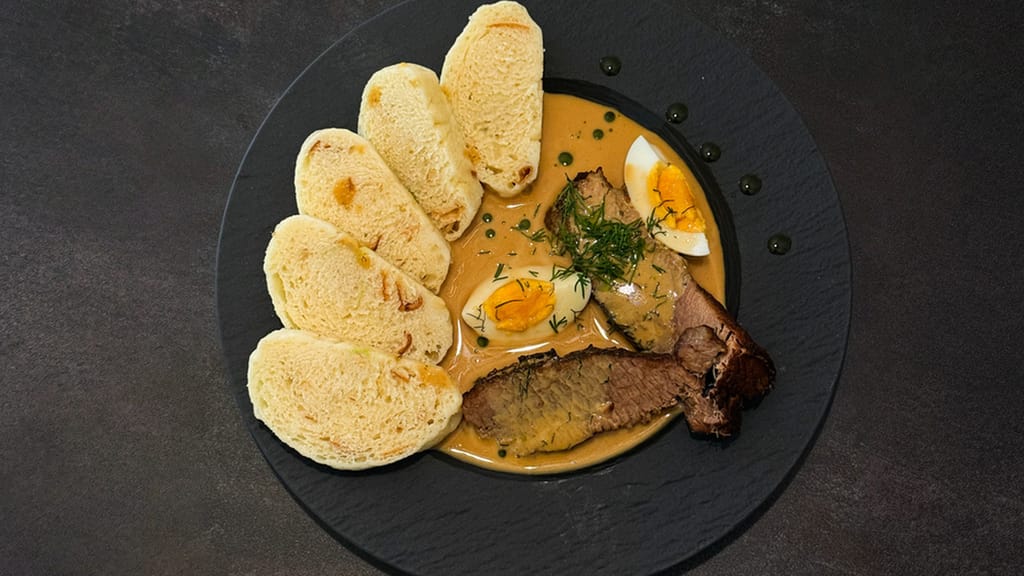
Dill sauce with slow-roasted beef
Updated Aug 28, 2026
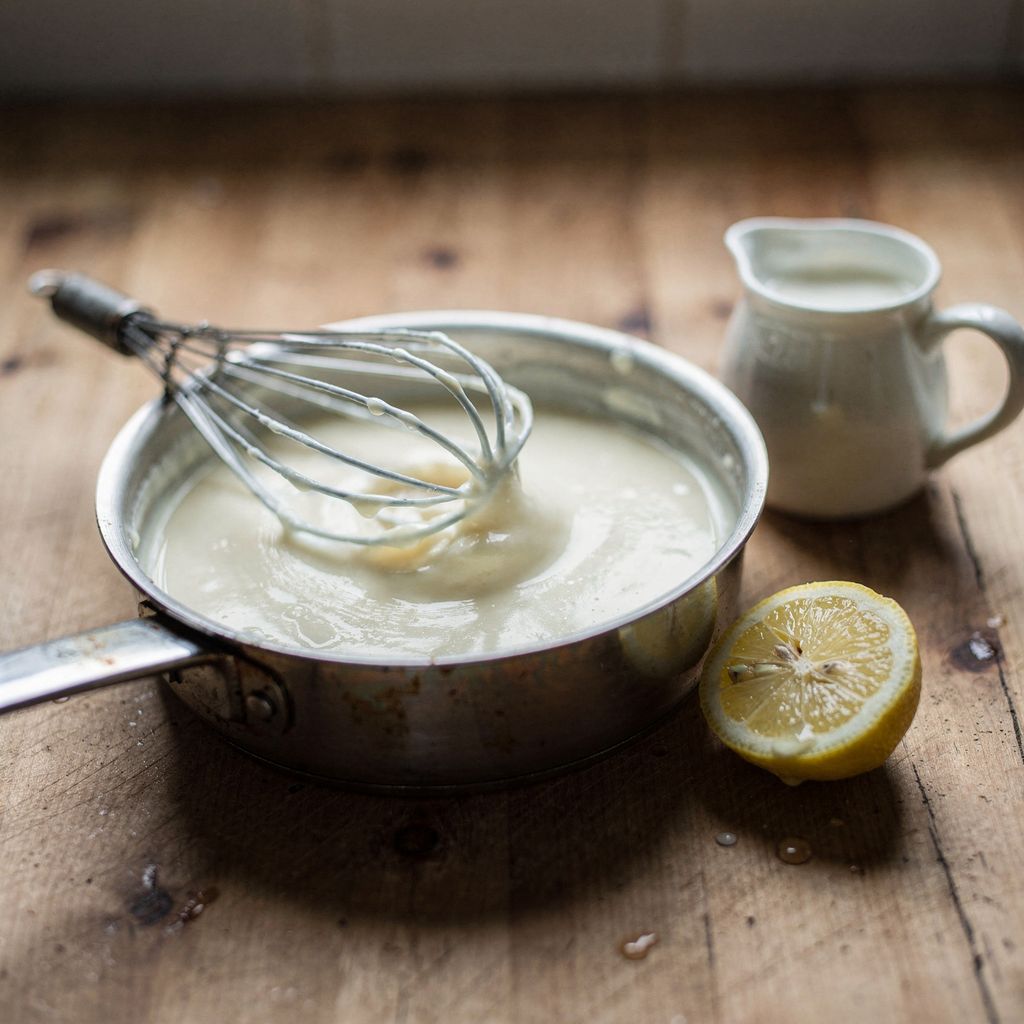
Cream sauce curdles for four reasons: acid, too-high heat, salt, and cream that's not fatty enough. Usually at least two team up — you splash wine into a finished sauce, or let 12% cooking cream simmer away on the stove for a bit too long. The good news: curdled sauce isn't ruined, and in most cases you can bring it back to smooth in under thirty seconds. Here's why it happens, how to fix it, and how to stop it happening next time.
Cream curdles when its proteins — casein — stop repelling each other and clump together into visible grains. Four things trigger this:
acid (wine, lemon, vinegar, tomatoes) — drops the pH below a critical threshold
heat above a gentle simmer — destabilises the proteins and causes clumping
salt — its ions shield the charge that was keeping the micelles apart
low fat content in the cream — removes the physical barrier between proteins
In undisturbed cream, casein micelles float around like tiny spheres coated in a layer of so-called kappa-casein, which sticks out from the surface like fine hairs and carries an electric charge. This makes the micelles repel each other and stay dispersed. Once that layer collapses — whether from acid, heat, or salt — the micelles touch and clump together. And because fat is dispersed throughout the cream between them, it acts as a mechanical barrier: the more fat, the harder it is for the proteins to reach each other.
Acid curdles cream because it pushes the pH down to around 4.6, the point at which casein loses its charge and drops out of solution. It's the same principle behind making curd cheese — you just don't want it happening in your sauce.
A rough guide to the acidity of things you'd normally add to a sauce:
lemon juice — pH around 2.2 (the most aggressive)
vinegar — pH 2.5–3.0
white wine — pH 3.0–3.4
tomatoes — pH roughly 4.2–4.9; tomato paste and passata 3.5–4.7
sauerkraut, pickles, capers
Notice that a tomato base sits right at the critical threshold, and tomato paste often tips over it. That's why a tomato-cream sauce curdles so reliably, even without a single drop of lemon.
The tricky part is that the acid isn't always obvious. A white wine reduction boiled down to a syrup has concentrated acidity — the alcohol has evaporated, but the tartaric acid is still there. Pour cold, low-fat cream straight into a reduction like that and it will curdle instantly.
Keep cream sauce around 85°C — the surface should just barely tremble, with the occasional lazy bubble. A hard boil is the fastest route to a grainy cream sauce, for three reasons at once:
Heat destabilises the proteins. Above roughly 70–75°C, whey proteins unfold and attach themselves to the surface of casein micelles; the protective layer weakens and the micelles start clumping. Casein alone could handle the heat — but in the pan it's the combination of heat, acid, and salt working together that curdles it.
Boiling concentrates everything else. Water evaporates, but the acid and salt stay behind — pH drops and saltiness climbs right under your spoon.
Boiling is mechanical stress. The bubbling surface constantly knocks into the micelles and helps push them together.
Full-fat cream above 30% fat can handle a gentle simmer just fine, and will even reduce down beautifully. 12% cooking cream will break apart before you've even had a chance to taste the sauce.
Salt curdles cream indirectly: sodium and chloride ions shield the electric charge on the surface of casein micelles, so they stop repelling one another. On its own, salt is a much gentler trigger than acid, but it tips the balance in two situations:
when you reduce the sauce — the volume shrinks, the saltiness doubles, and what was fine at the start no longer is
when it combines with residual acid — together they take effect faster than either one alone
And watch out for salt you didn't consciously add: bacon, smoked meats, parmesan, soy sauce, stock cubes, capers, olives. All of that adds up in a reduction too.
Cream that's a few days from its use-by date can curdle even without acid or boiling — lactic acid bacteria have quietly been producing enough acid to push the pH close to the threshold already. The stove finishes the job.
Test it in ten seconds: drop a spoonful of cream into a cup of hot water and stir. If little flecks appear, don't put it in your sauce — it can still go on top of a coffee, but it won't survive a hot, acidic sauce.
Go for cream with at least 30% fat. It can handle a gentle simmer, reduction, and acid — and it doesn't matter that it costs more, because you need less of it per sauce. Despite its name, 12% "cooking cream" is actually the worst choice on the shelf when it comes to making sauces.
What to expect from each type of cream:
Cooking cream, 10–12% — curdles the easiest. Add it right at the very end, off the heat, into a sauce you won't cook any further. Never combine it with wine or lemon.
Whipping cream, 31–33% — the workhorse for sauces. Handles a gentle simmer, reduces well, and copes with acid if you add it sensibly.
Cream 40% and above — the most stable you'll find. If you're making a wine- or lemon-based sauce and don't want to risk it, this is your safety net.
Sour cream, 10–18% fat, pH roughly 4.2–4.5 — acidic and low in fat at the same time. It curdles almost instantly in hot liquid.
Crème fraîche, typically 30–42% fat, acidity similar to sour cream (pH around 4.5) — the fat content makes the difference here, not the acidity. That's why, of all the cultured creams, it's the only one that can handle simmering.
Milk, 1.5–3.5% — curdles almost every time in a hot, acidic sauce. It has no business in a sauce without a starch to back it up.
Sour cream and crème fraîche have almost identical acidity — the real difference is fat, and that's what decides the outcome. Fat coats the proteins and physically stops them meeting; and the more fat a cream has, the fewer proteins it actually contains. Acidity is only one variable out of two.
Pull the pan off the heat, whisk in a spoonful of ice-cold cream, then blitz with a stick blender — this trio fixes most curdled sauces in under thirty seconds. If that doesn't work, move down the list.
Off the heat, straight away. As long as the sauce sits on a hot burner, curdling keeps going. Tip it straight into a different, cold pan — the residual heat in the base of the first pan is enough to keep doing damage.
A spoonful of ice-cold cream and a whisk. The cold shock stops the proteins from destabilising further, and fresh fat supplies what was missing. Whisk vigorously, not gently.
Stick blender, 20–30 seconds. The most effective fix of all. The blender mechanically breaks the protein clumps back down into particles too small to see, and redisperses the fat at the same time. Tilt the container so the blender doesn't suck in air.
Push it through a fine sieve. If the grains are small and you don't have a blender, push the sauce through a sieve and discard what's left behind. The sauce will be thinner, but smooth.
The starch rescue. Mix a teaspoon of cornflour into two tablespoons of cold cream, stir it in off the heat, then warm to 70–80°C until it thickens. The swollen starch thickens the sauce and keeps the proteins dispersed — which is why it also works as a preventive measure.
Rebuild the emulsion from scratch. The heavy artillery: heat three tablespoons of full-fat cream in a clean pan and whisk the curdled sauce back in a spoonful at a time, the way you'd build a mayonnaise. It takes a few minutes, but it can save even sauces that seemed hopeless.
What you can't rescue: if the fat has separated out and you see a yellow oily pool floating alongside curd-like flecks, the emulsion has broken completely. Don't try to bring it back — drain off the fat, blend the rest, and use it as a base to whisk fresh cream into.
Prevent curdling by using cream above 30% fat, keeping the temperature under 85°C, reducing the acid before the cream goes in, and adding salt only at the very end. Those four things cover most cases; the eight rules below cover the rest.
Use cream with at least 30% fat. The single change with the biggest impact.
Reduce the acid before adding the cream. Never the other way round.
Salt right at the very end, after reducing, after tasting.
Don't let it boil hard. Aim for 85°C and a gently trembling surface.
Temper the cream. Pour a few spoonfuls of the hot sauce into a cup with the cream, stir, then tip that mixture back into the pan. A gradual change in temperature and pH is what the proteins can tolerate — a sudden shock is not.
Don't pour cold cream straight from the fridge into a boiling reduction. Let it sit on the counter for a bit, or temper it as in point 5.
Starch as insurance. A teaspoon of cornflour stirred into cold cream ahead of time thickens the sauce and keeps the proteins dispersed. With low-fat cream and milk, it's practically mandatory.
With 12% cooking cream, add it off the heat, into the finished sauce, and don't cook it any further.
Butter at the end isn't the same as cream, but it does a similar job: a knob of cold butter whisked into the sauce off the heat adds richness and shine without needing to reheat the sauce at all.
One rule trumps all the others: acid goes into the pan before the cream, never after. Once you've got a finished cream sauce and squeeze lemon into it, the acid curdles the cream locally, in a concentrated drop, before it has a chance to mix through. Cream poured into an already-reduced acidic base, on the other hand, dilutes gradually, and the proteins can cope with that.
Reduce the wine down to a quarter of its volume before adding the cream. Reducing drives off the alcohol, which destabilises cream on its own too, and leaves behind a concentrated flavour.
A method that holds up:
Sauté the shallot, add the wine, reduce until syrupy — barely a couple of tablespoons should remain in the pan.
Turn the heat right down to low.
Add full-fat cream in stages and whisk between each addition.
Salt and lemon right at the end, off the heat.
Red wine tends to be slightly less acidic than white, but it brings tannins, which bind to milk proteins and curdle cream too. Be careful mixing red wine and cream in the same pan, and reduce it even further. Classic beef cheeks braised in red wine don't need cream at all for exactly this reason — the sauce gets its body from gelatine released by the meat.
Always add lemon right at the end, off the heat, a drop at a time, stirring constantly — and always with full-fat cream. Lemon carries the biggest risk of all, because at around pH 2.2 it's the most acidic thing you'll use in the kitchen.
A safer move: use the zest instead of the juice. Grated zest gives the sauce all the lemon aroma with almost none of the acid. Save the juice for finishing the plate.
That milk and lemon can be combined on purpose is proven by the famous milk, lemon and sage chicken — there, the milk is deliberately curdled, and the resulting curds are the whole point of the sauce. Telling the difference between "it curdled" and "it curdled on purpose" is half of the cook's craft.
Simmer the tomato base for a good while first, and add the cream only at the very end, off the heat. Fresh tomatoes sit at roughly pH 4.2–4.9, while paste and passata drop to 3.5–4.7 — concentrated tomato products fall below the threshold where casein drops out, which is why tomato-cream sauces curdle so often.
Three things that reliably prevent it:
A pinch of baking soda added to the tomato base before the cream goes in. It nudges the pH just above the critical threshold. Use only a genuine pinch per pan — any more and the sauce will taste soapy.
Full-fat cream, or crème fraîche outright. Never use 12% cream with tomatoes.
Butter in place of some of the cream. A knob of cold butter whisked into the tomato base adds creaminess without a single milk protein that could curdle.
The same principle is at work in Indian cooking: butter chicken builds on a tomato base and gets its creaminess via butter and a late addition of cream.
Different rules apply with plant-based alternatives. Coconut cream is high in fat but contains no casein — it doesn't curdle, it just separates into fat and water under a hard boil, which can be whisked back together. That's exactly what happens in a chickpea curry with coconut cream and fresh apple, which combines fat and strong acidity with no issues at all.
Never pour sour cream or yoghurt straight into a hot sauce — always temper them, and never let them boil. Crème fraîche is the only one of the three that can handle a gentle simmer, thanks to its higher fat content.
How to handle each one:
Sour cream (10–18%) — ladle spoonfuls of the hot sauce into a bowl with the sour cream until the mixture is lukewarm, then return it to the pan off the heat. A teaspoon of starch stirred into the sour cream beforehand cuts the risk to almost nothing.
Crème fraîche (30–42%) — go ahead and add it directly. Reducing will even thicken it further, which works in the sauce's favour.
Plain yoghurt (3–10%) — the riskiest of all, since it has the least fat and the most whey. Don't add it to a hot sauce without starch, and never let it come even to a gentle simmer.
This is exactly where traditional cooking has quietly had a working solution for years: dill sauce and pot roast with cream sauce both combine cream with vinegar or lemon and still don't curdle — because the acidic element goes into the base long before the cream comes into play, and the base is thickened.
The fastest way to master cream sauce with acid is with recipes that build in safeguards against curdling right in the method.
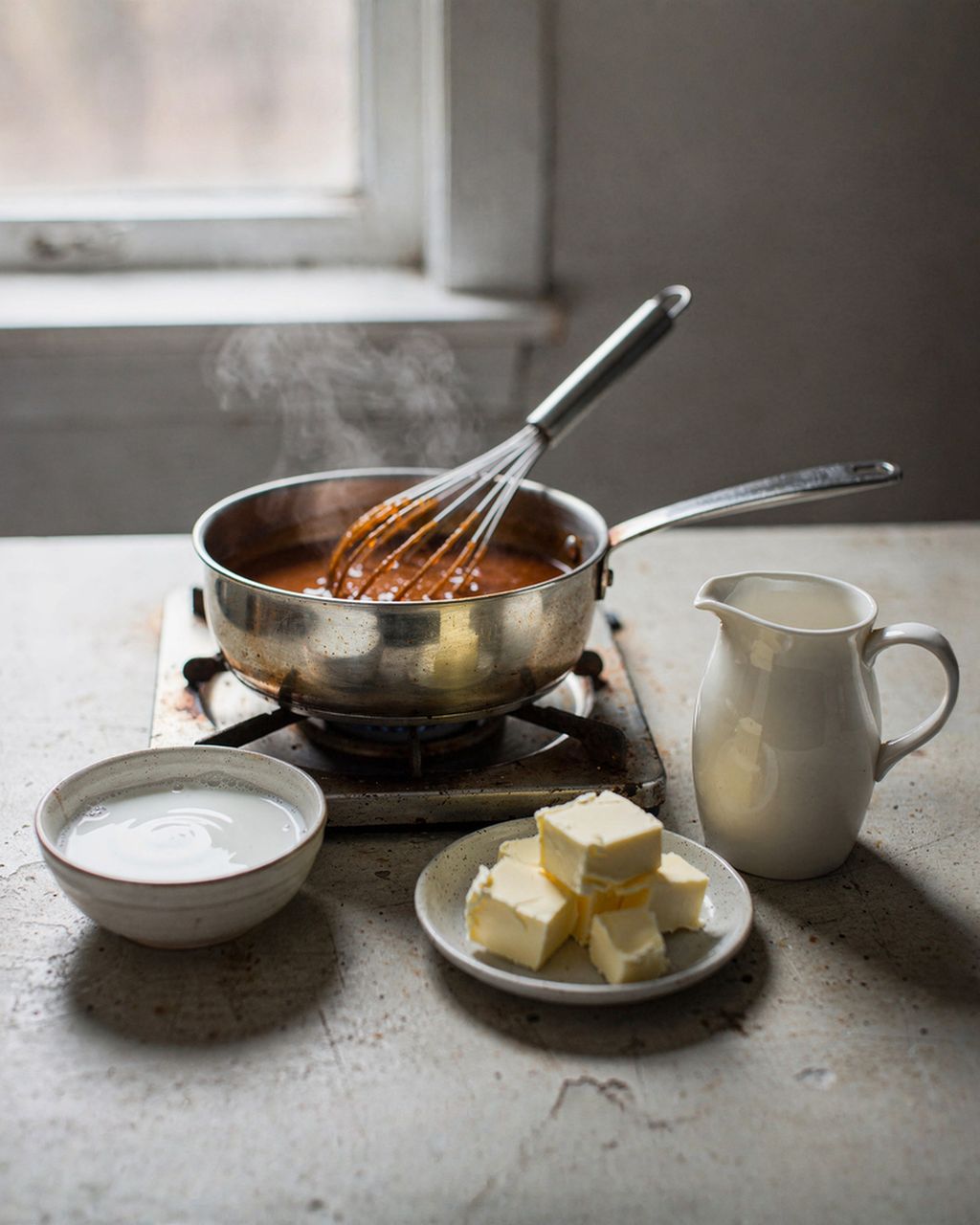
Dill sauce with slow-roasted beef
Dill sauce with slow-roasted beef — cream and vinegar in one pan, no curdling
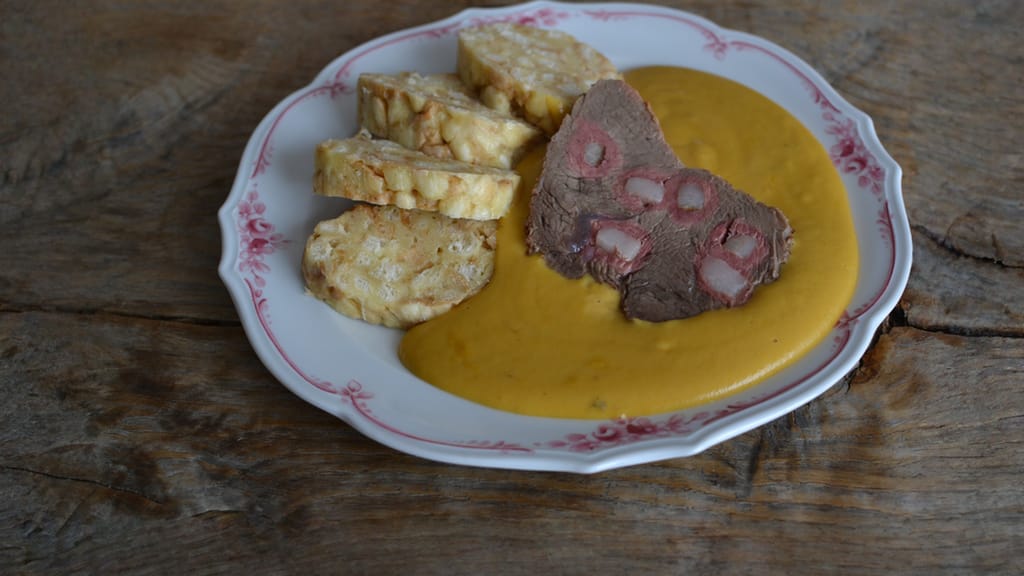
Sunday lunch: perfect homemade svíčková (czech beef sirloin in creamy vegetable sauce)
The perfect homemade pot roast with cream sauce — how to work cream into an acidic base step by step
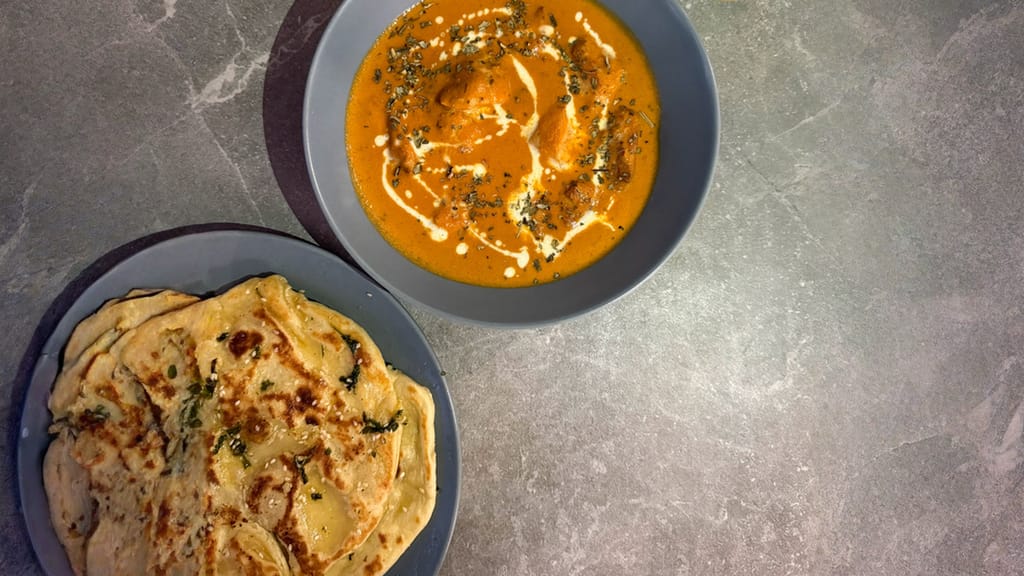
Restaurant-style butter chicken (murgh makhani)
Butter chicken — cream going into a tomato base, where it should curdle, and doesn't
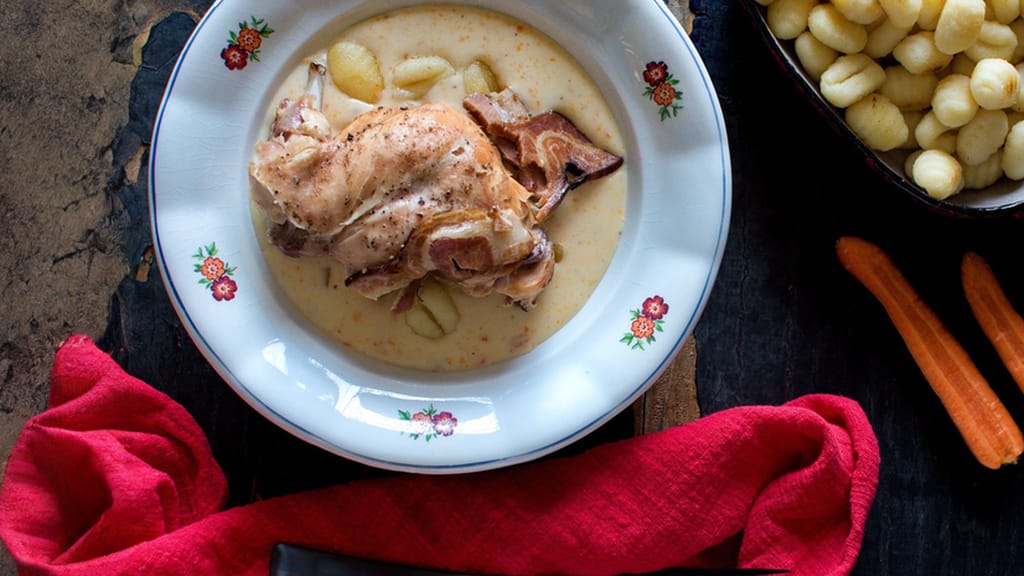
Slow cooker rabbit in creamy sauce
Slow cooker rabbit in cream sauce — cream held at low heat for hours on end
Yes, curdled cream sauce is completely safe to eat — the problem is purely textural, not a food safety issue. The proteins have simply clumped into small grains, but nothing has spoiled. It's actually the same process that makes cottage cheese or fresh curd cheese. If you don't want to blend it smooth, just use it as is: tossed through pasta with plenty of parmesan, or as the base of a bake, no one will notice the curdling.
Cream sauce curdles on reheating because it's going through a second round of protein stress, and it's likely turned slightly more acidic sitting in the fridge overnight. Always reheat slowly, on the lowest heat, stirring occasionally — never blast it in the microwave and never let it come to a boil. If the sauce looks too thick as you reheat it, loosen it with a splash of milk or cream, not water.
Plant-based creams don't curdle the way dairy cream does, because they contain no casein — instead they separate into fat and water, which can usually be whisked back together. Coconut cream is the most stable option (high fat content), followed by oat cream, which is held together by beta-glucans and added stabilisers despite having only around 13–15% fat. Soy cream is the exception: soy proteins react to acid much like dairy proteins do, so go easy on wine and lemon if you're using it.
Cheese doesn't reduce the risk of curdling — if anything, it makes things worse. Hard cheeses break down above roughly 80°C into stringy protein strands and a pool of oil. So always add cheese off the heat, finely grated and in small handfuls, once the sauce is only lukewarm. Processed cheese, on the other hand, behaves well in sauces because it contains melting salts that keep the proteins dispersed.
You can freeze cream sauce, but it will almost always turn grainy once thawed — freezing breaks the emulsion even in full-fat cream. Sauces thickened with starch or a roux hold up best in the freezer, since the starch keeps proteins dispersed even through thawing; sauces made with 12% cooking cream shouldn't be frozen at all. Thaw overnight in the fridge, reheat on the lowest setting, then blitz the finished sauce with a stick blender to restore the texture.
The first warning sign is a dull surface: a smooth cream sauce has a glossy sheen, while one starting to curdle turns matte and looks grainy, like fine sand. The second sign is that the sauce suddenly runs off the spoon faster than it did a minute ago — the emulsion is breaking and liquid is separating out. In both cases you've still got time: pull the pan off the heat and whisk in a spoonful of cold cream, and you'll rescue the sauce without needing a blender.
One recipe worth heating the oven for, one tip, and one deal from the shop. Nothing else.