Plum & ricotta almond cake
What to Make with Ricotta and Cottage Cheese: Cakes, Galettes, Pancakes and Baked Potatoes
Updated Nov 20, 2026
What can you make with ricotta and cottage cheese? With ricotta, bake a plum cake, a galette, a Czech bublanina (fruit sponge cake) or tartlets, and stir up a spread. With cottage cheese, make pancakes for breakfast, baked potatoes or potato patties for dinner. Both cheeses are fresh and mildly tangy, but they behave a little differently in the kitchen. Ricotta is smooth and adds tenderness to batters and doughs, while cottage cheese has curds and more moisture and does best in the oven and in a skillet. Below you'll find what each cheese does in a dish, a link to a tested recipe for most of them, and a few tricks to get it right the first time.
Ricotta is best for sweet bakes, while cottage cheese suits savory oven dishes and pancakes. Here's the full overview:
Sweet ricotta: plum cake with almonds, apricot galette with ricotta dough, bublanina (Czech fruit sponge cake) with summer fruit, tartlets with ricotta and quark cream, strawberry panna cotta, ricotta cheesecake.
Savory ricotta: roasted beet spread with goat cheese, quick ricotta pasta.
Cottage cheese for breakfast and sweet dishes: cottage cheese pancakes with fruit.
Cottage cheese for lunch and dinner: baked potatoes with vegetables, baked potato patties, a quick spread.
There's a simple rule. When you want a smooth, tender result, reach for ricotta. When graininess doesn't matter and the cheese is going to be baked or fried, cottage cheese does the job. Each dish has its own section below, and most of them link to a tested recipe.
We send seasonal cooking and baking plans and recipes made from everyday ingredients. Unsubscribe in one click.
Ricotta is traditionally made from whey, cottage cheese from milk. That's the whole difference, and everything else follows from it.
Ricotta means "recooked" in Italian. Cheesemakers heat the whey left over from making another cheese, acidify it and coax the last fine protein flakes out of it. That's why Italian regulations don't treat it as a cheese in the strict sense, but as an edible by-product of cheesemaking. Store-bought ricotta today is often made straight from milk. The result is smooth, creamy and mildly sweet, with a slight graininess you notice on the tongue more than by eye.
Cottage cheese is made the other way around. Milk is curdled with acid or rennet, the curd is cut, separated from the whey and rinsed. What's left are individual curds floating in a thin creamy dressing. Cottage cheese is therefore wetter and noticeably saltier, and its curds hold their shape in batter.
What this means in the kitchen:
Ricotta blends into batter almost completely, adding tenderness and a soft crumb. It suits cakes, creams and tender doughs.
Cottage cheese releases more liquid. In the oven and in a skillet the curds melt slightly and stay juicy, but in a cream they look lumpy unless you process them.
Ricotta is more neutral in flavor and takes both sugar and salt. Cottage cheese is saltier, so in a sweet recipe you balance it with fruit or honey.
If you're curious how ricotta fits in with other Italian ingredients for desserts, take a look at the guide to Italian dessert ingredients, from ricotta to mascarpone.
With ricotta, bake a fruit cake, a galette, a bublanina or tartlets. In each of the four it does something different: in the cake and bublanina it replaces some of the fat and liquid, in the galette it makes the tender dough more pliable, and in the tartlets it's the main ingredient of the cream. That keeps the bake from drying out, so it stays moist the next day too.
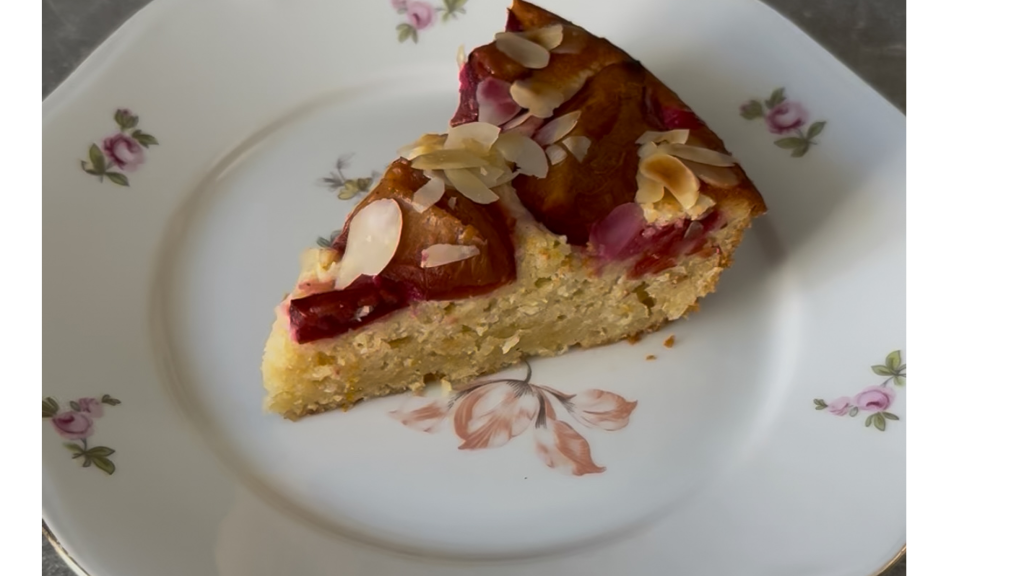
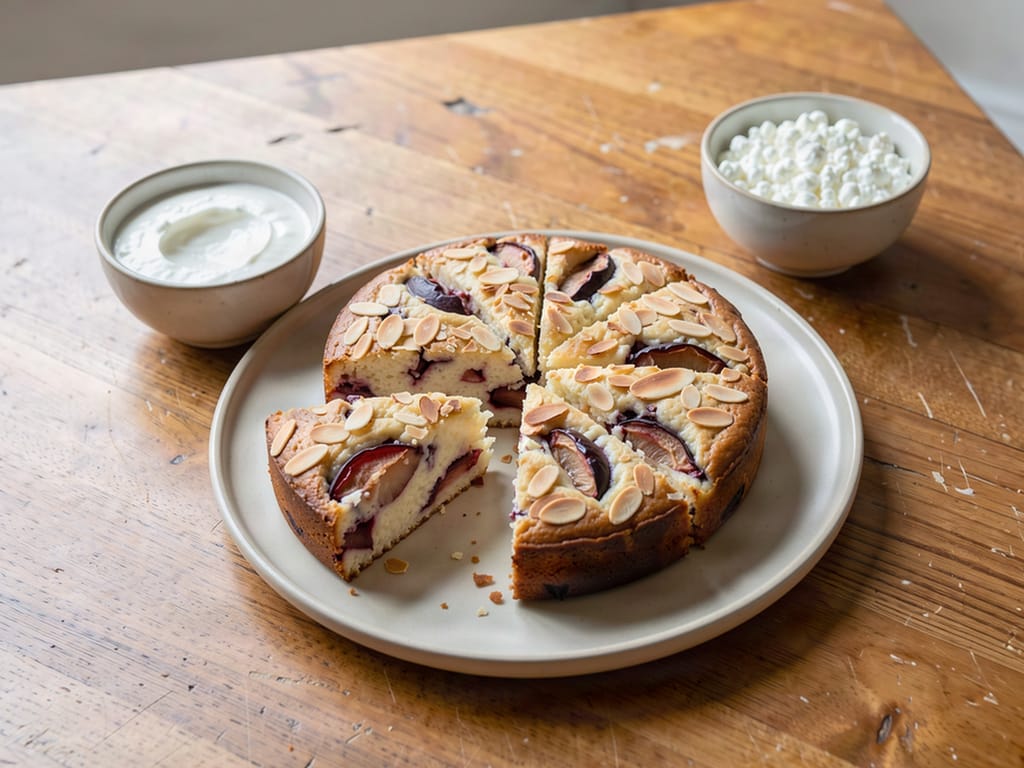
Plum ricotta cake is built on ricotta creamed with sugar and orange zest, which makes the batter tender, and on beaten egg whites that lighten it. Plum ricotta cake with almonds has ground almonds in the batter and plums on top, macerated with vanilla sugar and a spoonful of brandy.
Key tip: fold the egg whites in by hand with a spatula, in batches, so they don't deflate. Bake the cake in an oven preheated to 170°C (340°F) for 40–50 minutes. It's done when a skewer inserted in the center comes out with no liquid batter, just a few moist crumbs; if raw batter clings to it, bake on in 5-minute increments. The center may stay slightly moist after baking and will firm up as the cake cools in the pan.
Plum & ricotta almond cake
Plum ricotta cake with almonds: tender ricotta batter, plums in brandy and sliced almonds
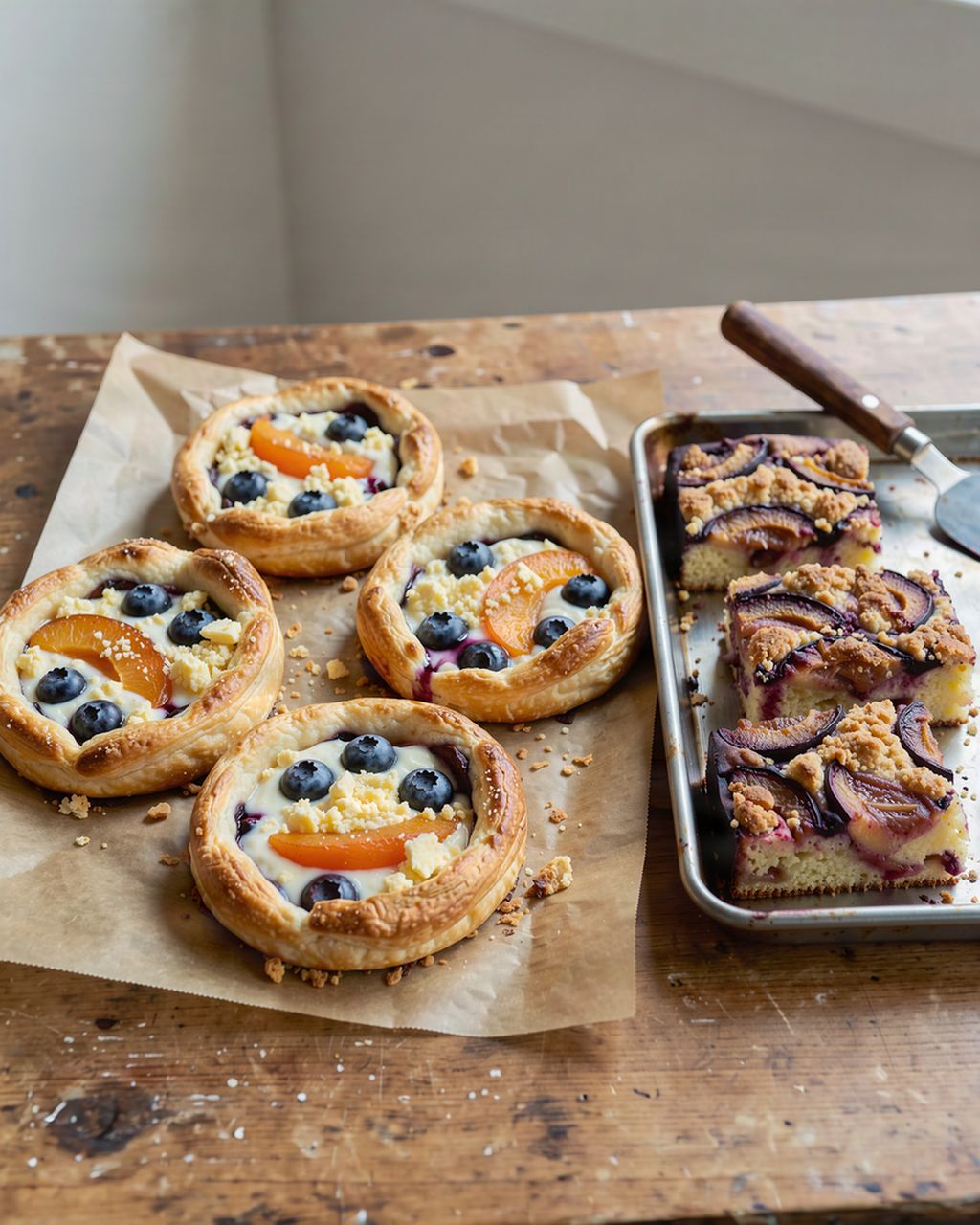
A galette is a free-form tart baked without a pan, and here ricotta replaces part of the butter and water, so the tender dough is softer and easier to work with. Apricot galette with ricotta dough and rosemary pairs apricots with rosemary, lemon zest and vanilla.
Key tip: bring the ricotta dough together only briefly, don't overwork it, and let it rest in the fridge. Scatter a little almond flour on the base under the fruit; it soaks up the juice so the dough doesn't turn soggy.
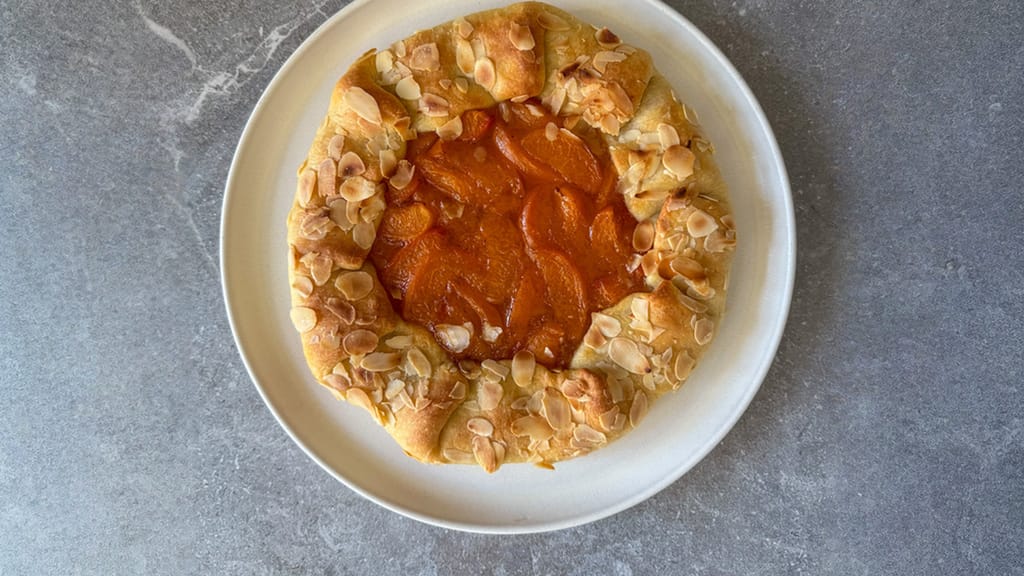
Apricot galette with ricotta pastry and rosemary
Apricot galette with ricotta dough and rosemary: tender ricotta pastry and juicy apricots
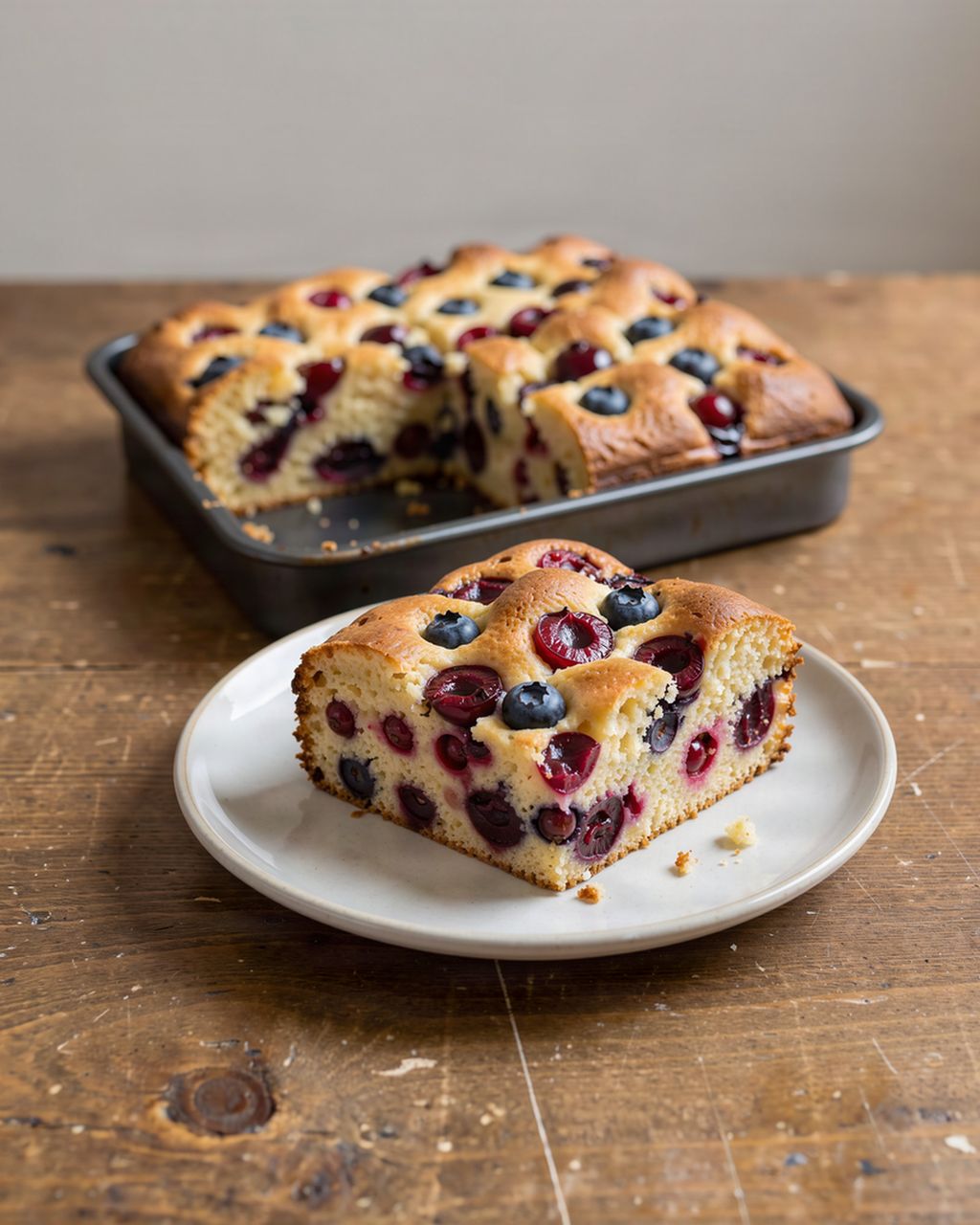
Ricotta turns bublanina into a more tender, richer cake that doesn't dry out as easily. In the bublanina with summer fruit and ricotta, the ricotta is folded into a foam of eggs and sugar, the batter is made with spelt flour, and strawberries and blueberries go on top. It's the quickest of the ricotta cakes, ready in about an hour.
Key tip: fold the ricotta gently into the whipped foam so the batter stays airy. You'll find more versions of bublanina, with streusel or with yogurt, in the article Bublanina: A Recipe That Always Works.
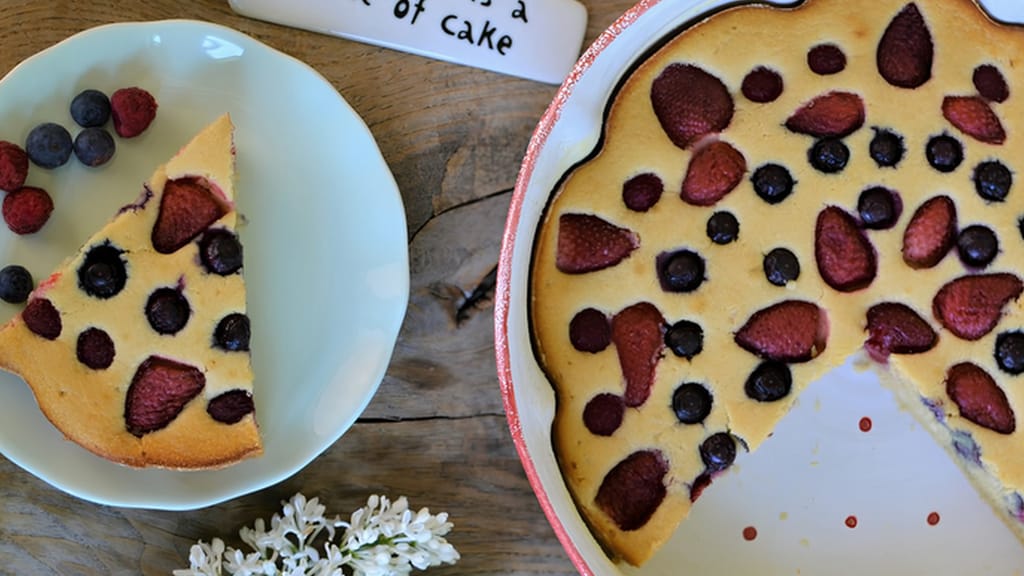
Summer fruit and ricotta bublanina
Bublanina with summer fruit and ricotta: a tender cake with strawberries and blueberries
In tartlets, the ricotta goes not into the dough but into the cream: it's mixed half and half with quark (tvaroh), and the cream is then smoother and less sour than quark alone. Tartlets with ricotta and quark cream have a cocoa shortcrust shell and raspberries on top.
Key tip: spoon the cream only into completely cooled shells, because in warm ones it would turn runny.
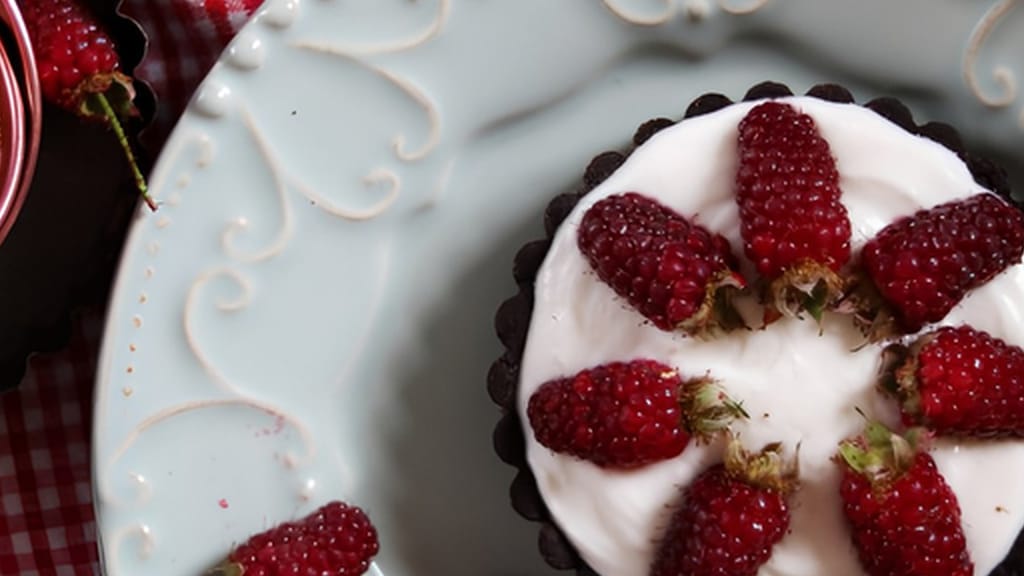
Tartlets with ricotta and curd cheese cream
Tartlets with ricotta and quark cream: cocoa shortcrust shells with raspberries
Without an oven, make ricotta into a cream in glasses or into panna cotta. Ricotta whips well with sugar, and with gelatin in cream it makes a filling that holds its shape and can be unmolded.
Strawberry panna cotta with chocolate and mint jelly is a weekend project, not a quick fix: strawberry ricotta cream sets in half-spheres, is then coated in dark chocolate and served with mint jelly. Allow just under six hours, though for most of that the dessert is simply setting in the fridge.
Key tip: first stir a few spoonfuls of the ricotta cream into the cream with the dissolved gelatin, so the temperatures even out and the gelatin doesn't form strings. Only then combine everything.
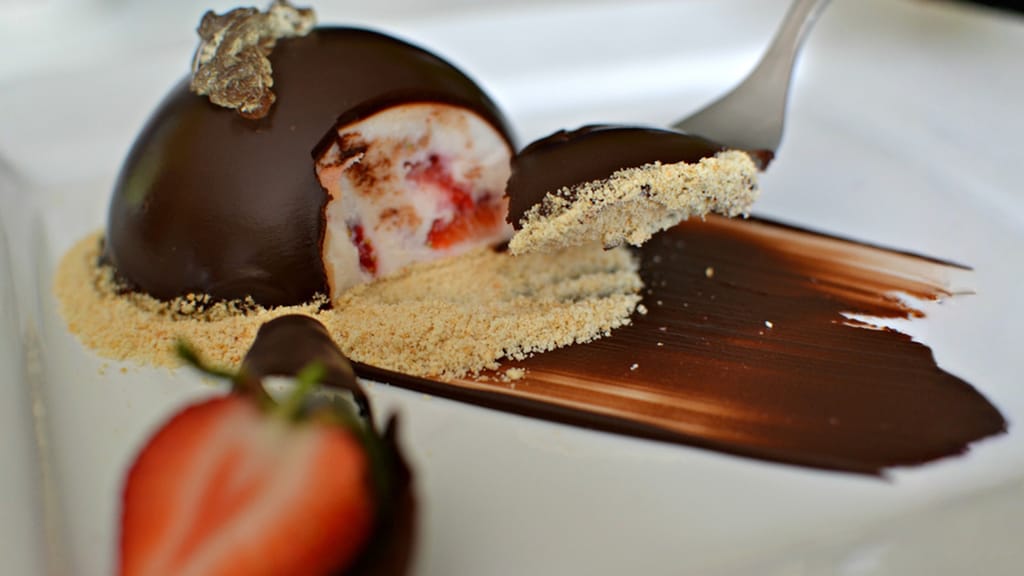
Strawberry panna cotta with chocolate and mint jelly
Strawberry panna cotta with ricotta, chocolate and mint jelly
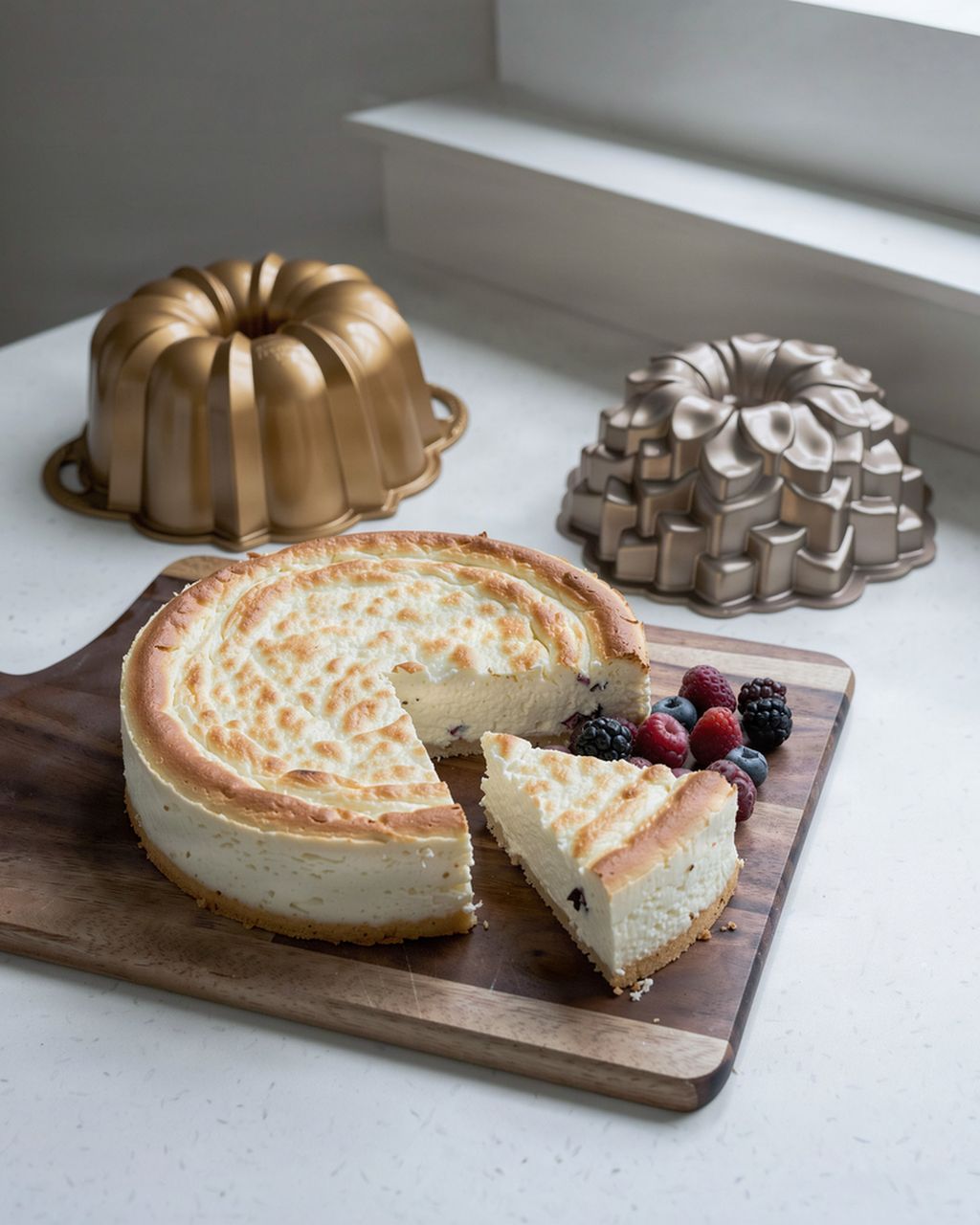
Ricotta cheesecake is the Italian counterpart of the classic cheesecake: the filling is less dense, more grainy and scented with citrus. We don't have a tested recipe for it yet, but the result depends mainly on how you prepare the ricotta.
First let the ricotta drain in a sieve lined with a cloth in the fridge for 2–12 hours, ideally overnight. The longer it drains, the firmer the filling. Then press it through a sieve or blend it until smooth, otherwise the filling will be sandy. If you'd like a more classic version with quark, see what to bake with quark.
For savory dishes, use ricotta as the base of a spread or as a creamy pasta sauce. Its mild flavor won't overpower vegetables or herbs, and the sauce needs no cream.
Roasted beets, ricotta and goat cheese make a deep pink spread that's lightly sweet and gently piquant. The ricotta softens the beets and makes them creamy, the goat cheese adds punch and walnuts add texture. Roasted beet spread with ricotta and goat cheese mostly calls for patience with the oven.
Key tip: wrap each beet separately in aluminum foil so it roasts in its own juices and doesn't dry out. You'll find more spread ideas in the article Spreads for Bread.
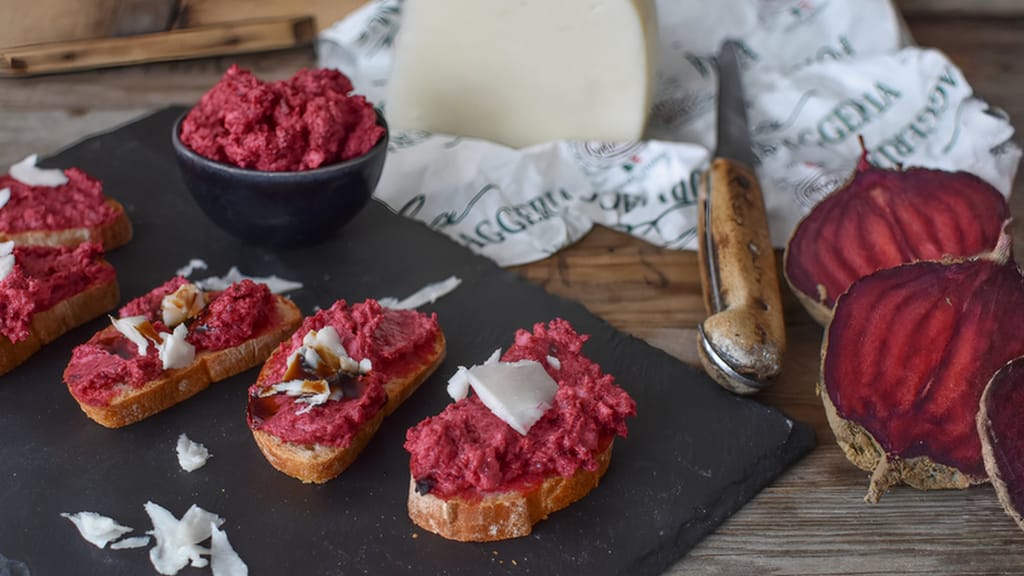
Roasted beetroot spread with ricotta and goat cheese
Roasted beet spread with ricotta and goat cheese
Pasta with ricotta is ready in the time it takes to cook the pasta. We don't have a tested recipe for it yet, but the principle is simple: toss hot pasta in a bowl with ricotta seasoned with lemon zest, pepper and Parmesan, and add a little pasta water. For 400 g of pasta, use 200–250 g ricotta, 30–50 g grated Parmesan and 50–100 ml pasta water, adding it gradually until the sauce turns glossy and coats the pasta. The starch in the water binds the ricotta into a creamy sauce, and the ricotta won't curdle because you're not heating it on the stove.
With cottage cheese, make baked potatoes or baked potato patties with vegetables. In the oven the cottage cheese softens, the curds melt a little and give the dish juiciness and saltiness, so you don't need as much cheese on top.
Baked potatoes with cottage cheese show this cheese in its best role: layers of potatoes, cottage cheese, shallots, spring onions, and peas with carrots, covered with egg and milk and sprinkled with Edam. The cottage cheese softens in the oven and keeps the layers juicy. Baked potatoes with cottage cheese and vegetables are ready in about an hour and a quarter.
Key tip: cook the potatoes ahead and let them cool completely, ideally the day before. Cold potatoes slice more easily and won't fall apart in the oven.
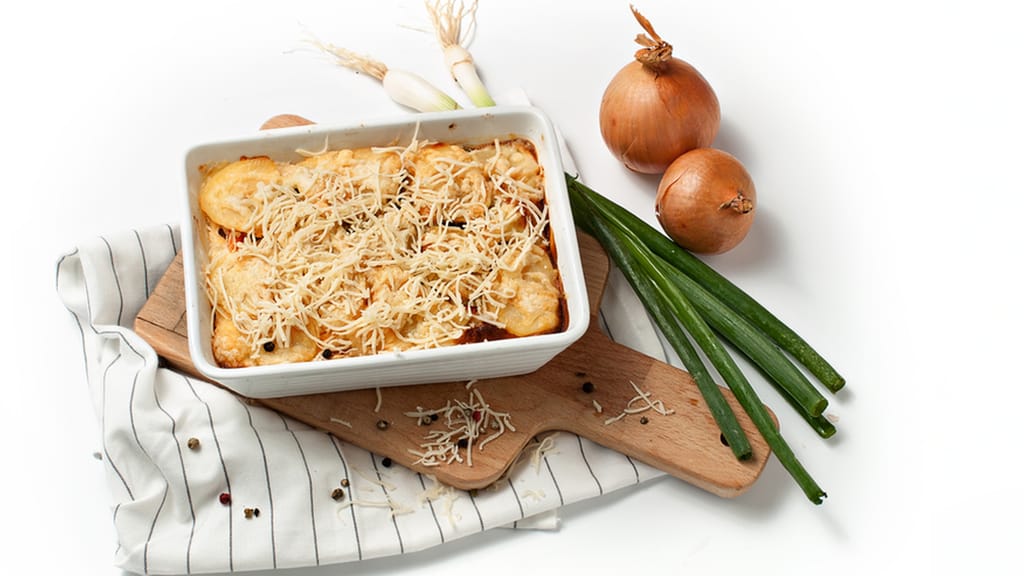
Baked potatoes with cottage cheese and vegetables
Baked potatoes with cottage cheese and vegetables: layers of potatoes, cottage cheese, and peas with carrots under an egg custard
Potato patties with cottage cheese are essentially small pizzas made from potato dough, with the cottage cheese playing the role of mozzarella. Baked potato patties with vegetables and cottage cheese are topped with braised bell pepper, zucchini and tomato purée, a spoonful of cottage cheese goes on top, and they're baked briefly.
Key tip: boil the potatoes in their skins. They won't soak up water, so the dough needs less flour.
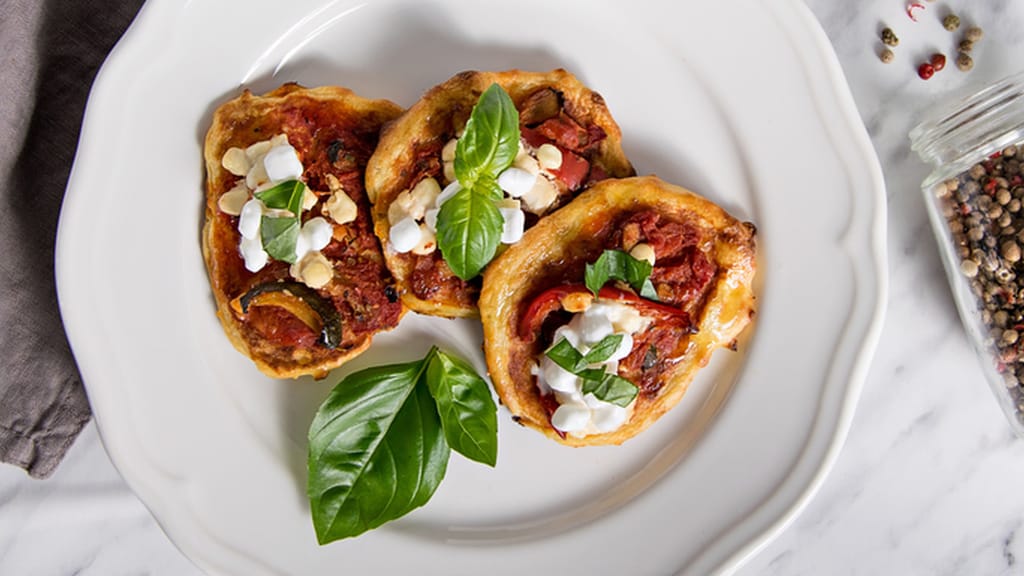
Baked potato patties with vegetables and cottage cheese
Baked potato patties with vegetables and cottage cheese
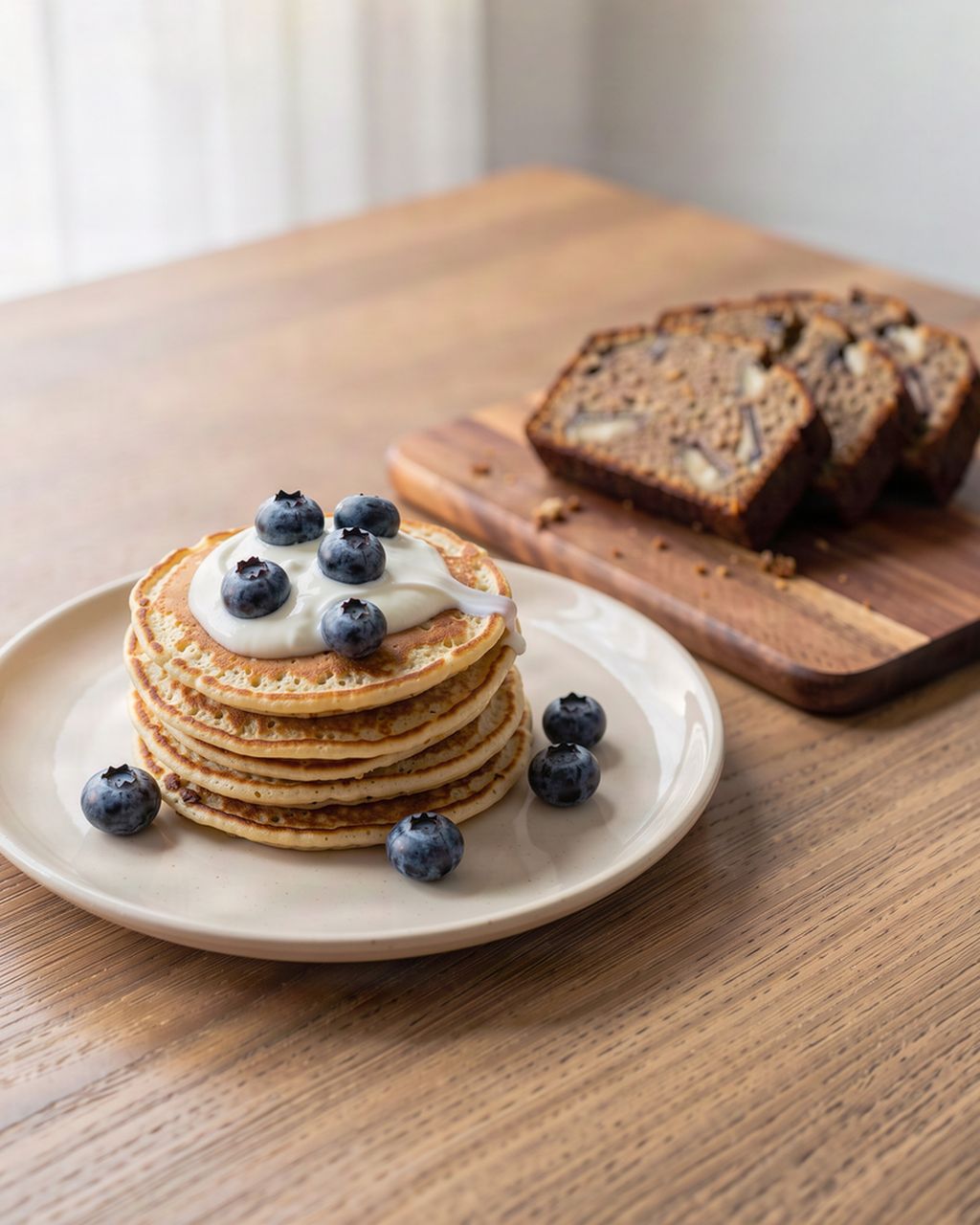
For something sweet, make pancakes with cottage cheese. Mashed cottage cheese replaces the milk and most of the flour in the batter, so the pancakes come out thick, tender and mildly salty, which works wonderfully with fruit and honey.
Cottage cheese pancakes with fruit and vanilla quark are ready in a quarter of an hour. Key tip: the right batter is thick and holds its shape on a spoon. If it's runny, add a little flour.
You'll find banana bread, waffles and other sweet breakfasts in the article Sweet Breakfast.
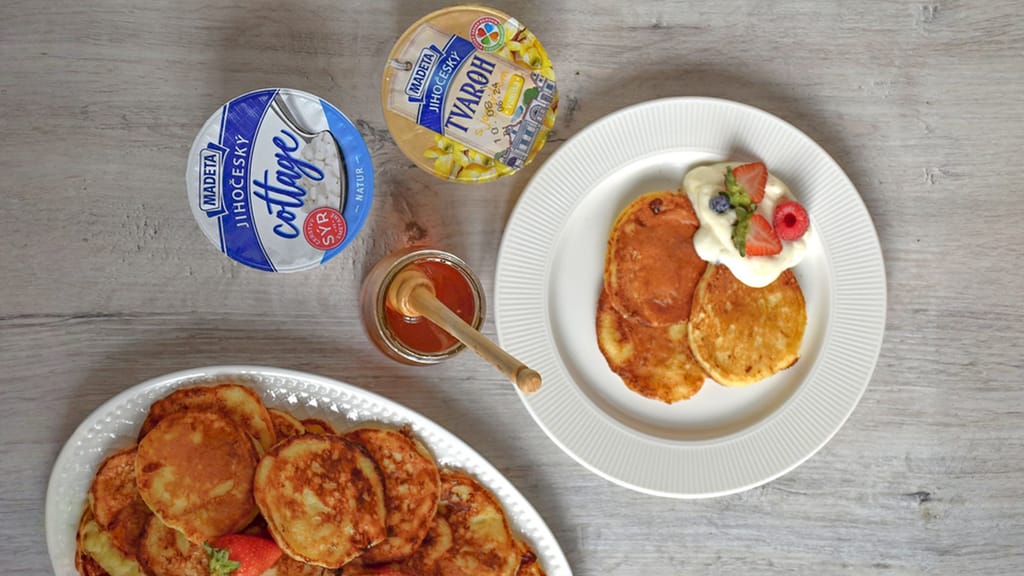
Cottage cheese pancakes with fruit and vanilla curd cheese
Cottage cheese pancakes with fruit and vanilla quark: a quick breakfast in 15 minutes
You can stir up a cottage cheese spread in five minutes, because cottage cheese is already salty and moist on its own. We don't have a tested recipe for it yet, but the method is simple.
Let the cottage cheese drain in a sieve for 15–30 minutes so the spread doesn't run off the bread. Then either mash it with a fork if you want to keep the curds, or blend it briefly for a smooth spread. For 200 g of cottage cheese, stir in 2–3 tablespoons of finely chopped chives or spring onion, 3–4 grated radishes and pepper, and add salt only after tasting. Spread it on dark bread and top with slices of cucumber or tomato.
The most common mistake is too much water. Both cheeses are moist, and when extra liquid gets into the batter, the cake doesn't bake through and pancakes spread. A few rules that fix this:
Drain them. Put cottage cheese with a lot of dressing in a sieve for 15–30 minutes. Ricotta is usually fine as it is, but if whey is standing on top in the tub, pour it off.
Take the ricotta out ahead of time. At room temperature it creams smooth with sugar and butter; cold, it forms lumps.
Mash or blend the cottage cheese depending on your goal. In pancakes and baked dishes, mashing with a fork is enough; in a cream you have to blend it until smooth, or it stays grainy.
Account for the salt. Cottage cheese is saltier than ricotta, so in a savory recipe use less salt and taste as you go.
Add cream only to a cooled shell. Heat melts ricotta cream, which is why you fill tartlets only after they've cooled completely.
Don't overwork ricotta dough. This applies especially to galette dough: knead briefly so that pieces of cold butter stay in it, which makes the baked dough tender and flaky.
If you use cottage cheese in a cake instead of ricotta, drain it and blend it until smooth. Then it behaves almost the same, though the cake will be slightly saltier. For tartlet creams or panna cotta, it's better not to swap the ricotta, as the cream wouldn't be smooth.
Ricotta is the most delicate and sweetest, cottage cheese the wettest and saltiest, quark (tvaroh) the tangiest and driest, and žervé (a Czech soft cream cheese) the fattiest and smoothest. All four are fresh, unaged cheeses, but they don't behave the same in a batter or a cream.
Ricotta: smooth, with a slight graininess, mildly sweet. It blends into batter almost completely.
Cottage cheese: separate curds in a dressing, saltier and wetter. It holds its shape and stays juicy in the oven.
Quark: dense and crumbly, distinctly tangy. It's drier than both ricotta and cottage cheese, so the batter comes out firmer.
Žervé: spreadable and creamy, fattier than the other three. It suits spreads best.
How to swap them in baking:
Swap them 1:1 by weight. Use as many grams of the substitute cheese as the recipe calls for in ricotta.
Drain cottage cheese before swapping. Leave it in a sieve for 15–30 minutes, then blend it until smooth, otherwise you'll get curds and extra water in the batter.
Press quark through a sieve or blend it. You usually don't need to drain it, as it's dry enough already. Because it's more sour, taste the batter and add a little sugar if needed.
Use žervé in batters only with care. It's fattier and softer, so a cake made with it comes out heavier. It works better in a spread, where it replaces ricotta almost unchanged.
Drain ricotta for cheesecake longer. Give it 2–12 hours in a sieve with a cloth in the fridge, as described above, or the filling will be soft.
In savory oven dishes such as baked potatoes, ricotta, cottage cheese and quark can stand in for each other without much trouble. You'll notice the difference mainly in saltiness, so add salt only after tasting.
What this means for the recipes in this article: the plum cake, galette and bublanina can take drained cottage cheese or sieved quark instead of ricotta. Tartlets and panna cotta depend on smooth ricotta, so don't try a swap there. The pancakes and baked potatoes are made for cottage cheese. Quark works in them too, but the dish comes out drier and tangier, so add an extra spoonful of milk to the batter or custard.
For a spread, it's the other way around. The smoothest one is made with žervé, followed closely by ricotta. Cottage cheese has to be blended, and quark mixed with a little milk or yogurt, or it stays crumbly.
Use opened ricotta and cottage cheese within a few days, and keep them in the fridge until then. An unopened tub follows the date on the packaging, and that's the first thing to check.
Go by the label. The use-by date applies to an unopened pack; once it has passed, don't use the cheese.
Once opened, fridge only. Close the tub tightly or transfer the cheese to a clean container with a lid.
Scoop with a clean spoon. Every bit of other food or used spoon dipped in the tub introduces something that spoils the cheese faster.
Don't put leftovers back. Whatever you've scooped into a bowl or batter doesn't go back in the tub.
Open only as much as you'll use. If a recipe calls for half a tub, plan the other half into another dish within the next few days, such as pancakes or a spread.
Bake the rest. Leftover ricotta or cottage cheese is best used up in baked potatoes, bublanina or pancakes, where a few spoonfuls are enough.
Before using opened cheese, smell it and taste a teaspoon. Fresh ricotta smells milky and mildly sweet, cottage cheese purely milky. Pour off any whey that appears on the surface in the tub so the dish doesn't turn watery. If you're not sure, don't use the cheese.
You can also add ricotta to classic fruit and yeast koláče (Czech filled yeast pastries) in place of some of the quark. In the article Fruit and Yeast Koláče you'll find koláče with quark, with streusel, on a tray and in a mug, which work with similar fruit to the plum ricotta cake.
If the cheese turns yellow, bitter or smells sour, throw it out. Keep both ricotta and cottage cheese in the fridge in a tightly closed container, and always scoop them out with a clean spoon.
You can freeze both, but after thawing they release water and turn grainy. They're then no good for a cream or spread, but you can still use them in a cake, a bublanina or baked potatoes. Thaw them slowly in the fridge and pour off the liquid they release.
For baking, the best substitute for ricotta is drained cottage cheese blended until smooth, or mild quark (tvaroh, a Czech fresh curd cheese). Quark is more sour, so a cake may need a little more sugar. In no-bake creams, such as tartlets or panna cotta, it's better not to swap the ricotta, as the cream won't be as smooth.
Kids usually like cottage cheese pancakes with fruit, bublanina with ricotta and baked potatoes with cottage cheese best. They have a mild flavor with no sharp spices and can be eaten with hands or a spoon. Children can help with the pancakes too: all they need to do is mash the cottage cheese with a fork.
Ricotta can replace mascarpone in a cream, but the cream will be lighter and less dense, because mascarpone is much fattier. Cottage cheese is a poorer fit: even blended, it stays saltier and thinner.
One recipe worth heating the oven for, one tip, and one deal from the shop. Nothing else.