Sandtner's homemade eggnog liqueur
How Long Does Eggnog Last and How to Store It
Updated Oct 6, 2026
Homemade eggnog made with pasteurized egg yolks (or yolks heated to 71°C/160°F) keeps for 2–4 days in the fridge, according to official USDA/FDA guidance; store-bought egg liqueur typically lasts months after opening, depending on the label. Eggnog made with raw yolks has no safe fridge storage window at all. Strongly alcoholic homemade versions, around 20% ABV, are traditionally left to age for weeks — but that's done at your own risk, and only with pasteurized or heated yolks. Here's a breakdown by type, what alcohol really does (and doesn't do) for shelf life, proper storage rules, and the warning signs that mean it's time to pour your eggnog down the drain.
Homemade eggnog made with pasteurized yolks (or yolks heated to 71°C/160°F) keeps for 2–4 days in the fridge — that's the official USDA/FDA guidance, and it's the safest answer to go by. As a rough guide, assuming storage at 2–4°C (36–39°F):
Homemade, made with pasteurized or heated yolks (with or without alcohol): 2–4 days in the fridge. Heating the yolks lowers the salmonella risk, but it doesn't buy you extra weeks — the dairy will still spoil over time, and the bottle can pick up fresh contamination too.
Homemade with raw yolks: there's no safe storage window in the fridge.
Strongly spiked homemade eggnog (around 20% ABV): traditionally left to age for weeks — but that's done at your own risk, and only with pasteurized or heated yolks.
Store-bought, unopened: good until the date on the label, and it can sit at room temperature in a dark spot.
Store-bought, opened: keep it in the fridge; brands typically give you a few months (Verpoorten, for instance, recommends drinking it within six months) — but always follow the label.
All of these numbers assume clean eggs, a sterilized bottle and a fridge that stays consistently cold. If any of those conditions slip, shorten the timeline accordingly.
Alcohol only extends eggnog's shelf life at high concentrations, slowly and unreliably — in a diluted homemade eggnog, you simply can't count on it. Strong, boozy eggnog is traditionally aged, but that aging isn't a safety guarantee.
An informal experiment by microbiologists at Rockefeller University (a one-off demonstration, not a published study) used an eggnog-style drink at around 20% ABV, deliberately spiked with salmonella. After one week in the fridge, the bacteria was still detectable; after three weeks, it was gone. The EU requires store-bought egg liqueur (advocaat) to contain at least 14% alcohol — but that's a product definition, not a safety threshold.
Two important caveats:
Alcohol doesn't work instantly. Freshly mixed eggnog made with raw yolks isn't "disinfected" the moment you add the spirit. The FDA explicitly warns against relying on alcohol as a safety net.
Dilution kills the effect. Homemade eggnog made with condensed milk, cream and milk easily ends up around 10–12% ABV. Do the math: 300 ml of 40% rum in a litre of finished eggnog works out to roughly 12%. To hit the ~20% used in that experiment, 40% rum would need to make up about half the total volume.
So the safest route is still pasteurized or heated eggs — and drinking the eggnog within a few days.
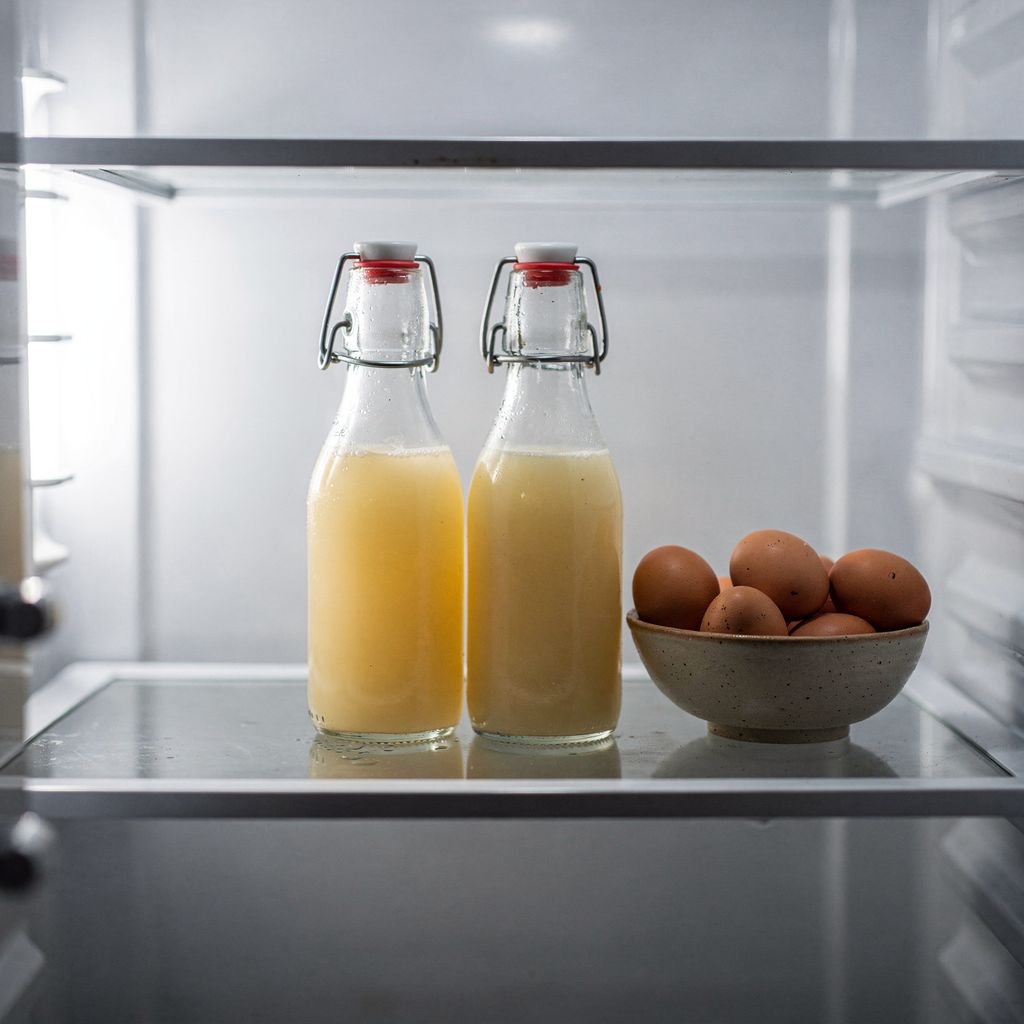
Store eggnog in a clean, sterilized glass bottle, tightly sealed, at the back of the fridge at 2–4°C (36–39°F). A few details that actually make a difference:
Sterilize bottles and caps. Boil a bottle with a flip-top or screw cap for 10 minutes, then let it air-dry upside down on a clean tea towel. Give rubber seals just a quick dip in boiling water.
Pour in the eggnog cold. Warm eggnog takes longer to cool in the fridge and causes condensation under the lid.
Fill almost to the top. Less air in the bottle means slower oxidation and less room for fridge odours to seep in.
Back shelf, not the door. The door temperature swings by several degrees every time the fridge is opened.
Pour it out — don't drink from the bottle or dip in a used spoon. Any contact with mouths or used spoons introduces bacteria straight into the bottle.
Label it with the date. A strip of tape and a marker on the bottle — a few days in, you won't remember when you made it.
Always give the bottle a quick shake before pouring. Fat and egg yolk settling at the top is normal for homemade eggnog; a good shake should bring it back together.
You can make eggnog ahead, but safely only by a few days — the same 2–4 day window applies. So for Christmas Eve, mix it no earlier than 21–22 December; for New Year's Eve, around the 28th.
Long aging of strongly spiked versions (around 20% ABV) is a tradition, not a safety recommendation — if you go that route, only do it with pasteurized or heated yolks, and at your own risk.
For a non-alcoholic version, also use only pasteurized or heated yolks. The same 2–4 day window applies, but it's best to mix it the day before: the clock starts ticking from when you make it, so you'll still have plenty of time to drink it. For ideas on what to use instead of rum so non-alcoholic eggnog still tastes great, see our article on what to use instead of rum in eggnog.
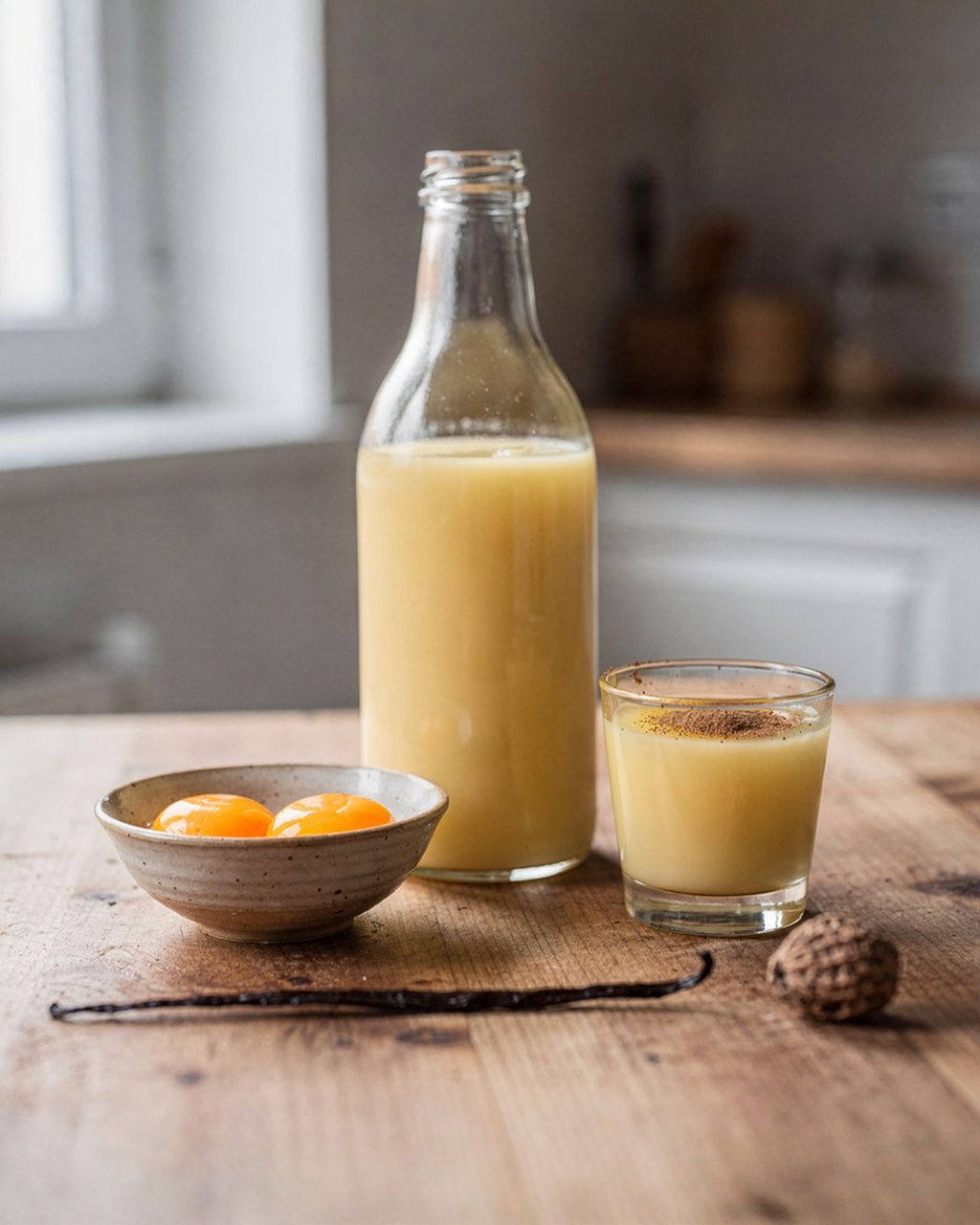
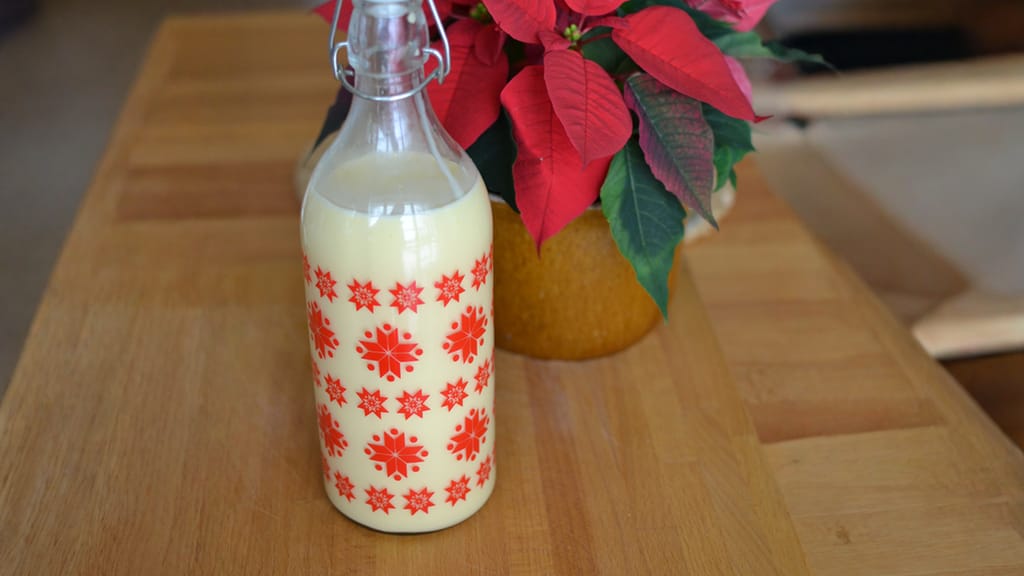
Sandtner's homemade eggnog liqueur
Sandtner-style eggnog — a traditional recipe
Spoiled eggnog is usually easy to spot by a sour or musty smell, and by the fact that it won't come back together even after a good shake. Pour it out if you notice any of the following:
Smell: sour, fermented, "cheesy" or sulphurous instead of sweet vanilla-rum.
Texture: lumps or flecks that don't disappear even after a thorough shake, or a thin, watery layer separated from the thicker part.
Fizz: any faint bubbling or hissing when you open the bottle signals fermentation.
Taste: sour, bitter or sharp. Only taste a drop, and only if the smell and appearance check out first.
Colour: a greyish or greenish tinge, or spots and a film near the neck or under the lid.
Keep in mind: salmonella doesn't change the smell or appearance, so eggnog that passes this check isn't automatically safe — which is why sticking to the storage window above still matters.
Also don't confuse spoiled eggnog with curdled eggnog: curdled eggnog (grainy right from the start, because the yolks overheated or the rum was added too fast) still smells normal and can often be rescued. For how to do that, see our article on why eggnog curdles.
You can freeze eggnog, but it's not really worth it — once thawed, it tends to turn grainy and watery. The fat and yolk separate during thawing and don't properly recombine. Even the US FoodSafety.gov advises against freezing homemade eggnog.
If you have leftovers, bake them into a bundt cake within a few days, or stir them into a baked custard. Egg whites, on the other hand, freeze beautifully — if you're left with extra whites after making eggnog, check out our article on 12 ways to use up leftover egg whites.
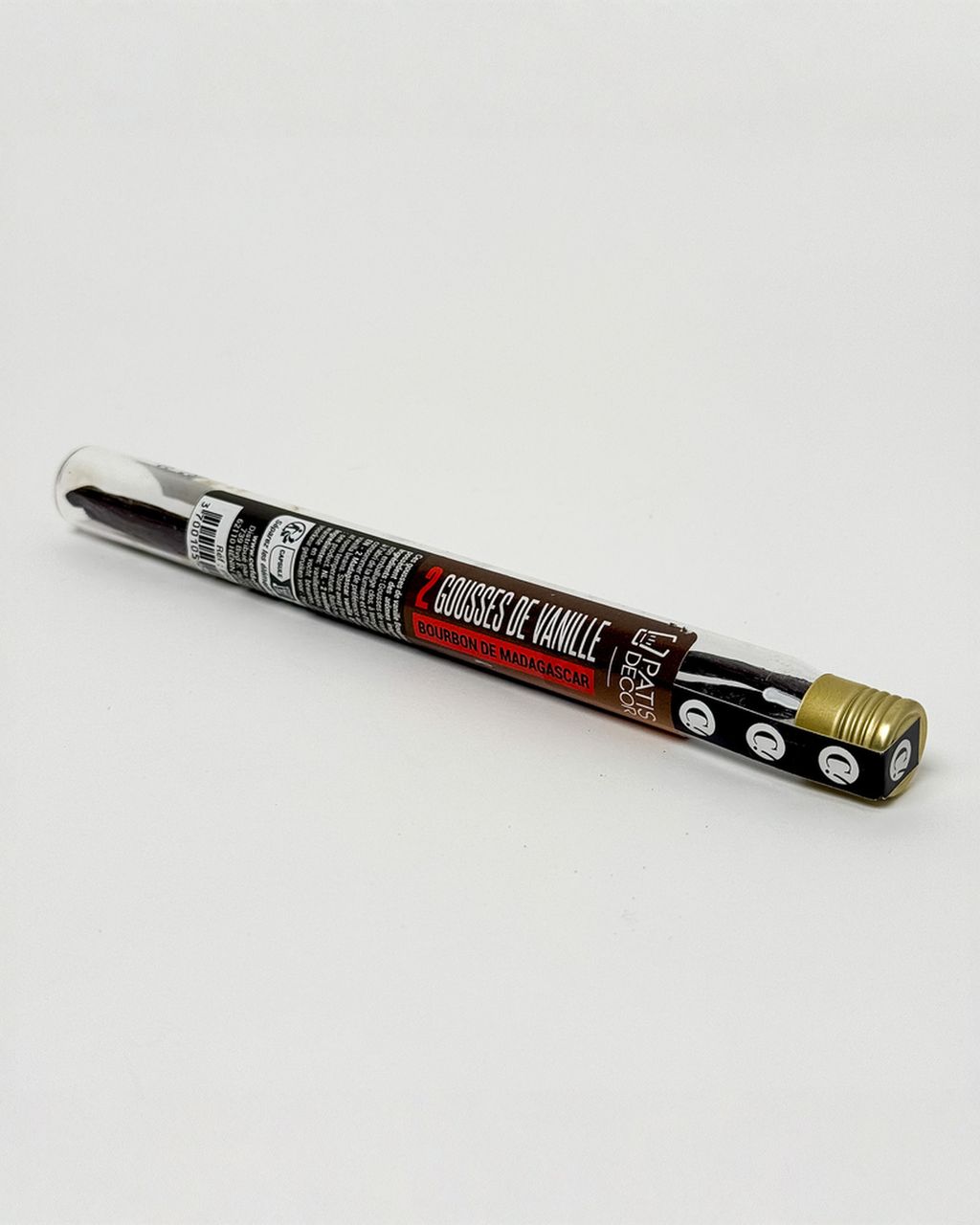
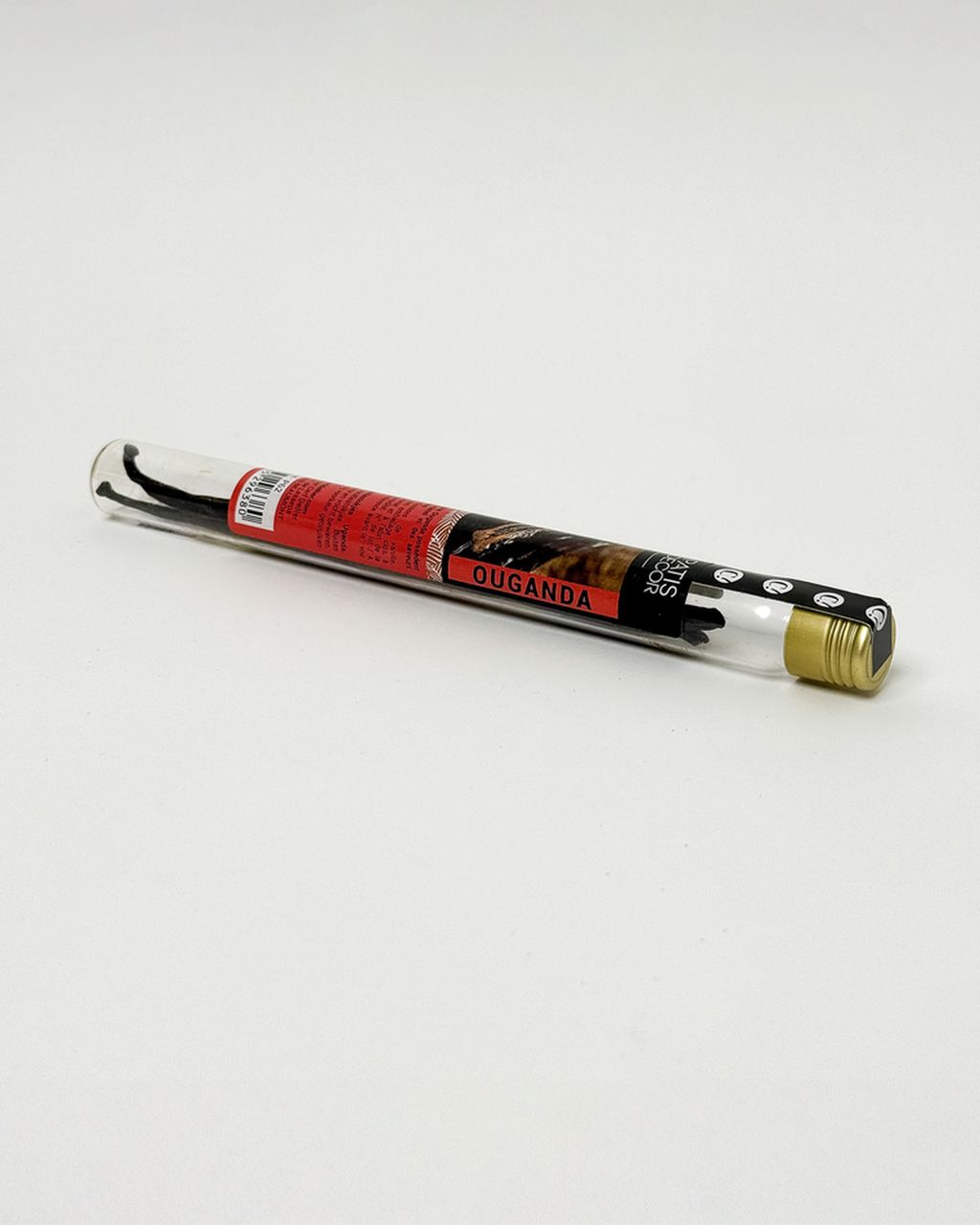
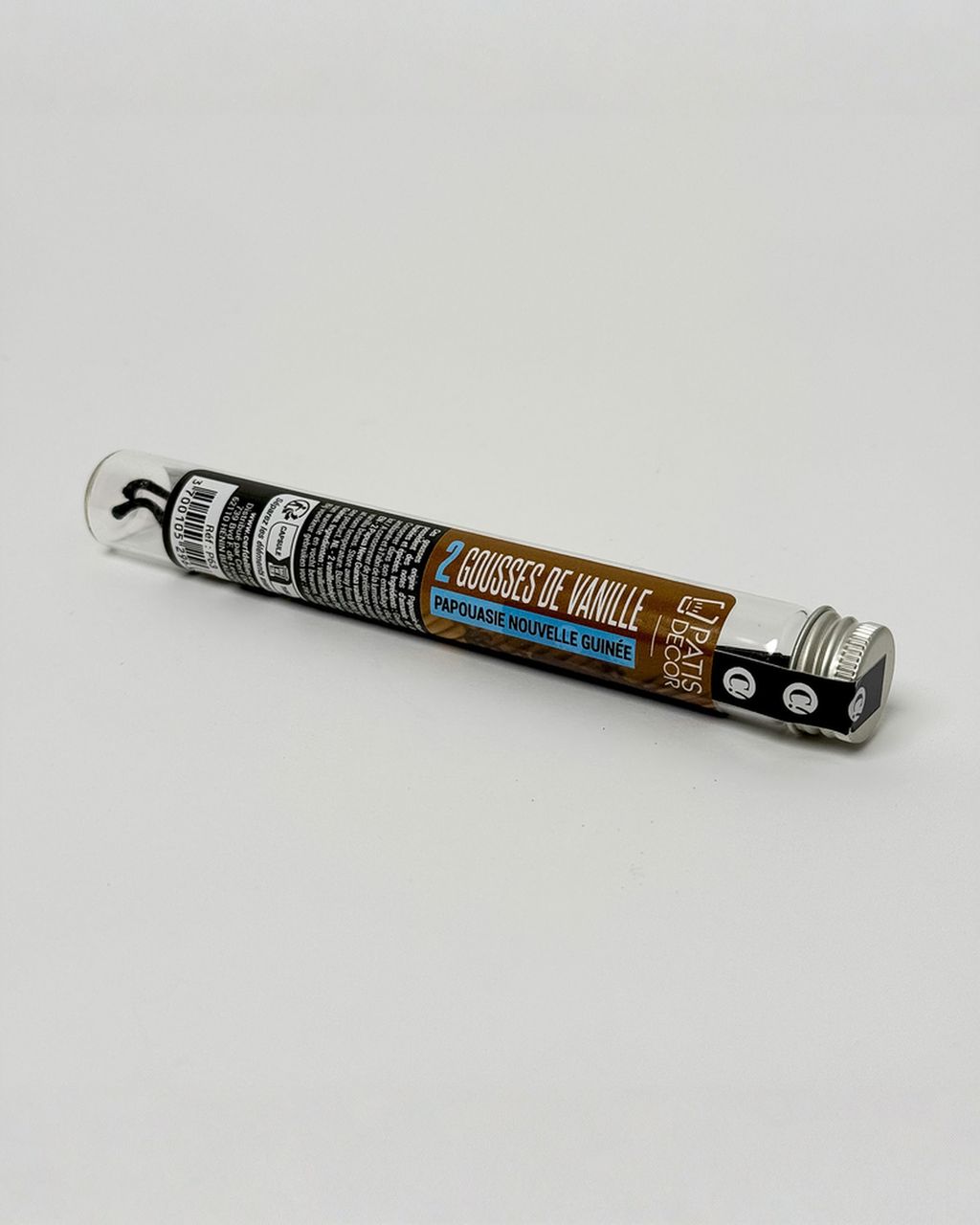
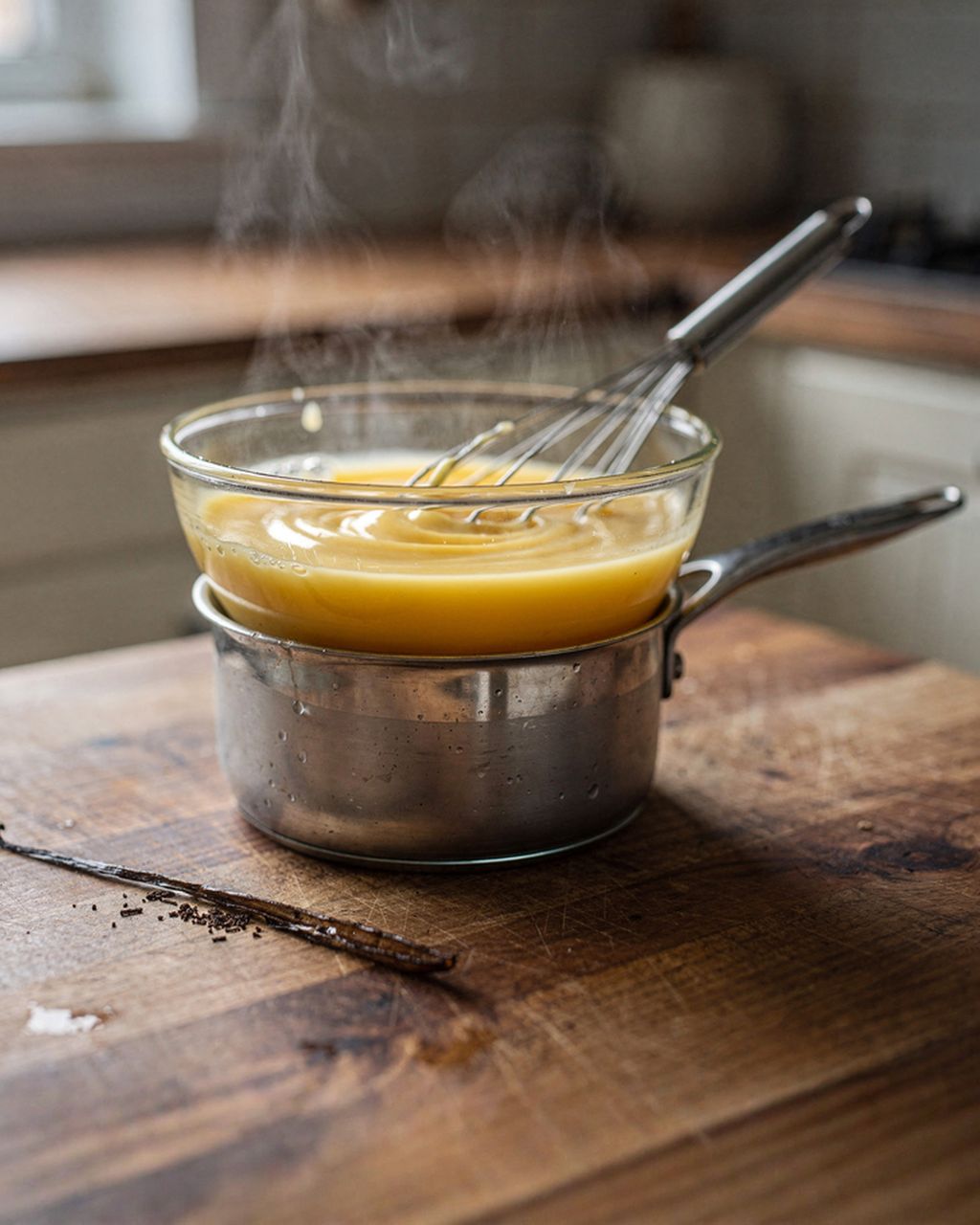
A vanilla pod won't make eggnog last longer — vanilla isn't a preservative, it just gives a deeper, rounder flavour than vanilla sugar can. If you want eggnog with real vanilla, scrape the seeds from half a pod straight into the egg yolks, then drop the scraped pod into the bottle to infuse.
The only rule: cut the pod with a clean knife on a clean board, and add it to the bottle only once the eggnog has cooled. You'll find different types of real vanilla in our vanilla and vanilla pods category.
Homemade eggnog doesn't keep outside the fridge, no matter how much rum is in it — it still contains raw or heated egg yolks and dairy, so it needs to stay cold. When serving, leave it out on the table for no more than two hours. Only unopened store-bought egg liqueur can handle room temperature.
Eggnog made with condensed milk keeps the same as any other homemade eggnog — the same 2–4 day fridge window applies. Condensed milk is shelf-stable on its own, but that no longer holds once it's mixed with egg yolks, and it also dilutes the drink, lowering the alcohol content.
You can't tell if eggnog has salmonella by taste, smell or appearance — the drink doesn't change at all. The only real protection is using pasteurized or heated yolks and sticking to the 2–4 day window, not taste-testing it.
Don't top up leftover eggnog with a fresh batch — the shelf life of the mix then depends on the older batch, and you won't know how much time it has left. Keep every batch in its own labelled, dated bottle.
A cake made with eggnog keeps like any ordinary cake — covered, in a cool room, for about 3–4 days, since the eggnog gets fully cooked through during baking. An unbaked custard or whipped cream made with eggnog belongs in the fridge and should be eaten within 2–3 days.
One recipe worth heating the oven for, one tip, and one deal from the shop. Nothing else.