Summer mascarpone and curd cheese cake with loads of fresh fruit
Updated Sep 18, 2026
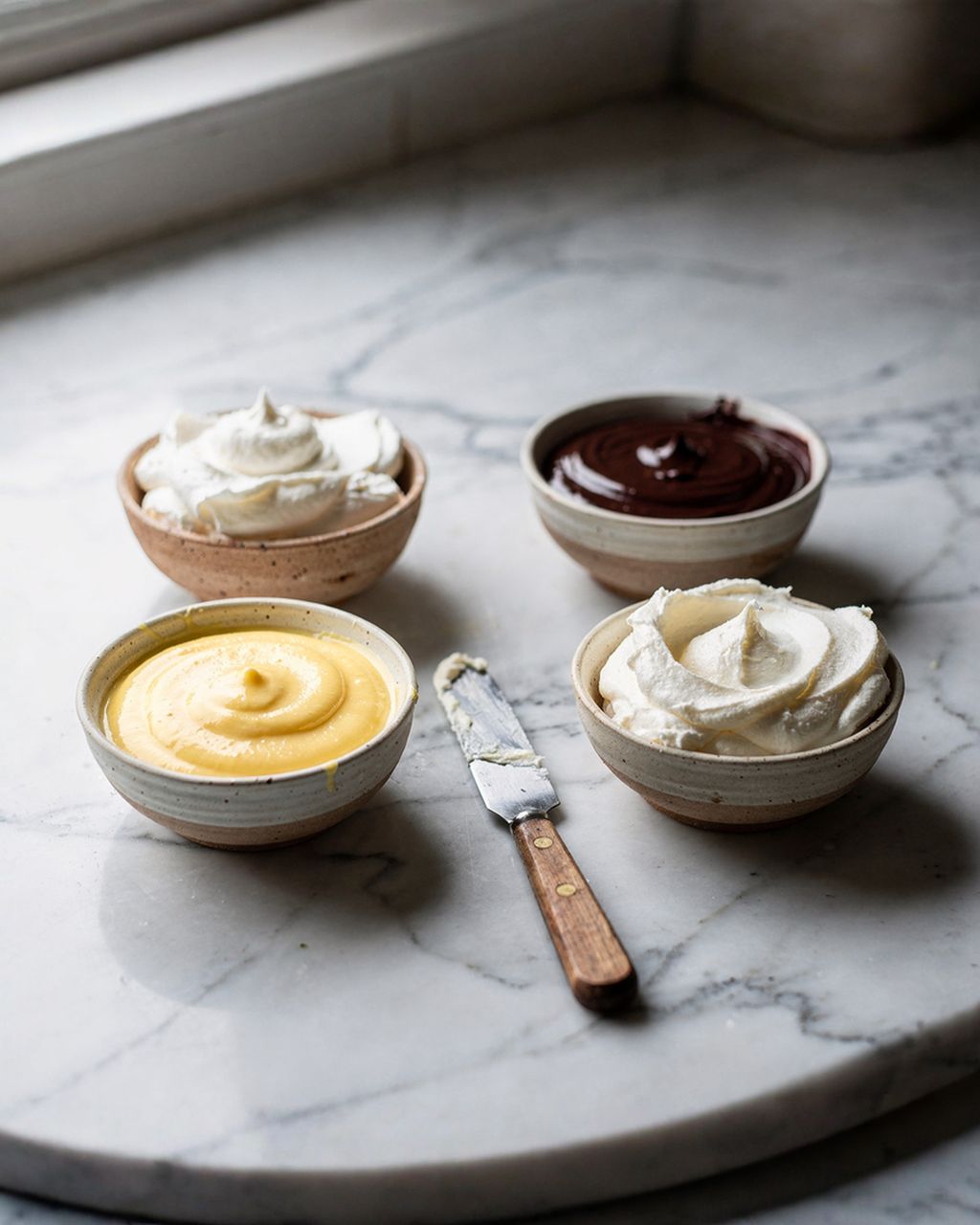
What can you use instead of mascarpone in a cake? The closest match is full-fat curd cheese whipped with whipping cream in a 2:1 ratio, followed by cream cheese with a bit of butter. But no substitute works as a straight swap: mascarpone has 40–47g of fat per 100g and almost no free water, so cheaper cheeses and curds need to be drained and enriched with extra fat first. Below you'll find seven substitutes with exact ratios, a rundown of what's involved in making mascarpone at home from cream, and ways to firm up the filling so your cake holds its shape.
In a cake filling, mascarpone can be replaced with curd cheese and whipped cream, cream cheese, ricotta, drained Greek yogurt, sour cream, crème fraîche, or homemade mascarpone made from cream. Ratios below are for a standard 250g tub of mascarpone (for drained substitutes, the weight given is after draining, with the starting weight in brackets):
Full-fat curd cheese + whipped cream, 2:1 – 170g curd cheese after draining (start with 190–200g) + 80g of 33–40% cream. Closest match in taste and texture.
Cream cheese + butter – 200g cheese + 50g softened butter. Holds shape best, ideal under fondant.
Ricotta + cream – 200g ricotta after draining (start with 240–260g) + 50g heavy cream. Grainy, so it must be blended.
10% Greek yogurt + whipped cream, 1:1 – 125g yogurt after draining (start with 190–210g) + 125g cream.
Sour cream – only as part of the filling, up to a third at most. On its own it's too tangy and thin.
Crème fraîche, 1:1 – 250g. Matches the texture well, but tastes distinctly tangy.
Homemade mascarpone from cream – 500ml of 33–40% cream yields roughly 280–320g. Closest match in flavour.
If you're still deciding on the type of filling and mascarpone is just one option, take a look at the five basic types of cake filling and choose based on what the filling needs to support.
Mascarpone isn't a classic cheese but concentrated cream – the cream is curdled with acid and the whey is left to drain off without pressing or ageing, so nearly all the fat stays behind along with very little free water. Based on the composition of common brands, it has 40–47g of fat per 100g, which works out to roughly 80% fat in dry matter.
What you're comparing it to (fat per 100g of product):
mascarpone – 40–47g
crème fraîche – 30–40g
cream cheese (like Philadelphia) – 20–30g
sour cream – 10–18g (the legal minimum is 10%; 10–12% and 15–17% versions are commonly sold)
full-fat curd cheese – 9–12g
ricotta – 8–13g
Greek yogurt – 5–10g
That difference shows up twice in the finished cake. First in flavour: fat carries sweetness and rounds off tanginess, so anything under 20g of fat will taste sharp and thin in the filling. Second in texture: the extra water in curd cheese or yogurt has nothing to bind to in the filling, and after a few hours in the fridge the cake will start weeping into the sponge.
The practical takeaway: every low-fat substitute needs to be drained (through a cheesecloth), enriched with fat (cream, butter, or a portion of mascarpone mixed in), and often stabilised too (gelatine, whipped cream stabiliser). Only then will it behave like mascarpone.
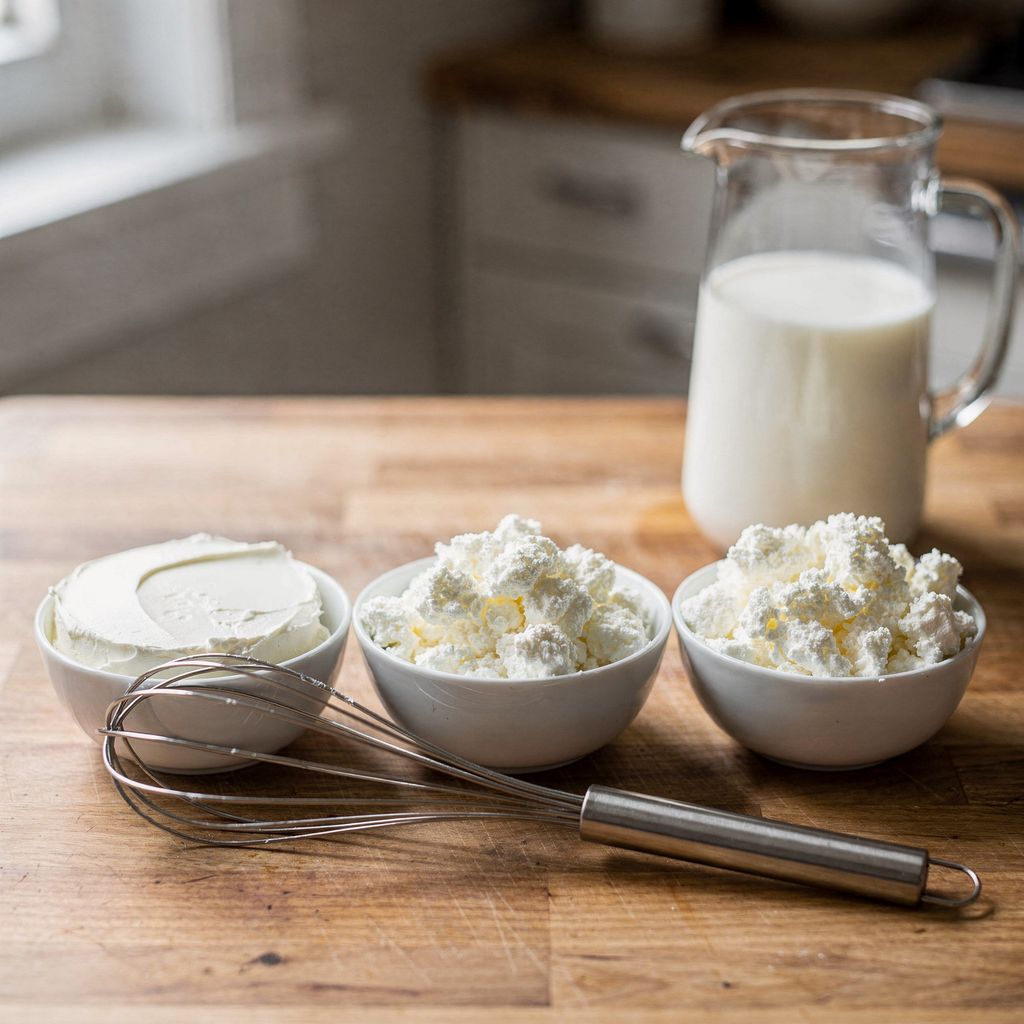
Full-fat curd cheese whipped with cream is the closest substitute for mascarpone in a cake – for 250g of mascarpone, use 170g of drained curd cheese and 80g of 33–40% cream, a 2:1 ratio.
The method that makes this work:
Let the curd cheese drain in a sieve for at least 2 hours, ideally overnight. From 250g, 20–40ml of whey will drain off, so it loses roughly 10–15% of its weight – to end up with 170g of drained curd cheese, start with 190–200g.
Press it through a fine sieve or blend briefly with a stick blender – this breaks down the grainy texture that whipping alone won't remove.
Whip the cream separately to soft peaks (not stiff) and fold it into the curd cheese with a spatula, not with a whisk or mixer.
Watch the type of curd cheese you use. Soft full-fat curd cheese in a tub works well, while firm curd cheese wrapped in foil is drier and stays grainy in the filling even after pressing through a sieve. Skip low-fat curd cheese with 4.5g of fat – the result will be thin and tangy.
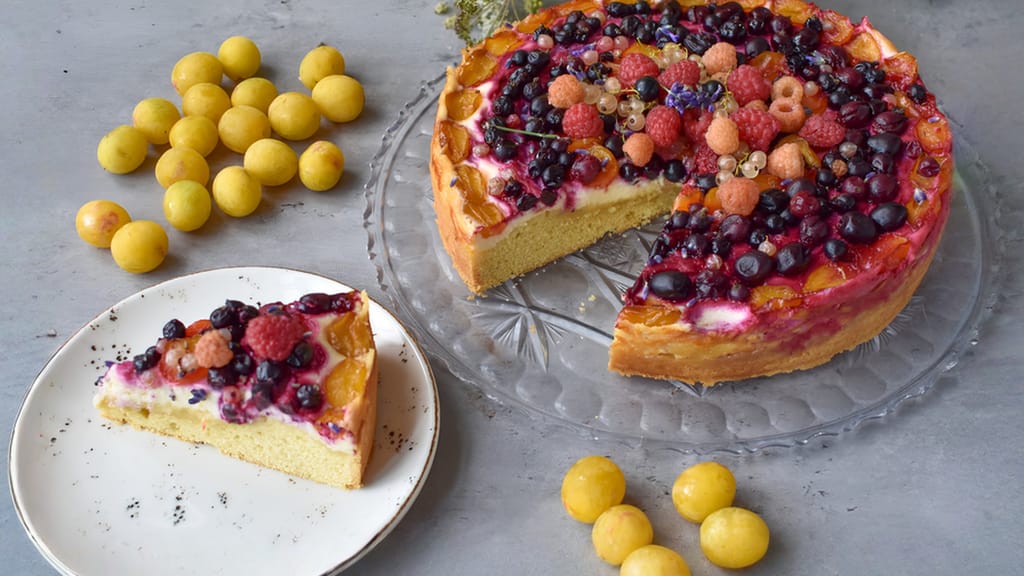
This ratio isn't just theory – it's exactly what our summer cake is built on, where curd cheese and mascarpone work together so the filling can support juicy fruit.
Summer mascarpone and curd cheese cake with loads of fresh fruit
Summer cake with mascarpone, curd cheese and fresh fruit – the curd-and-cream ratio that holds up
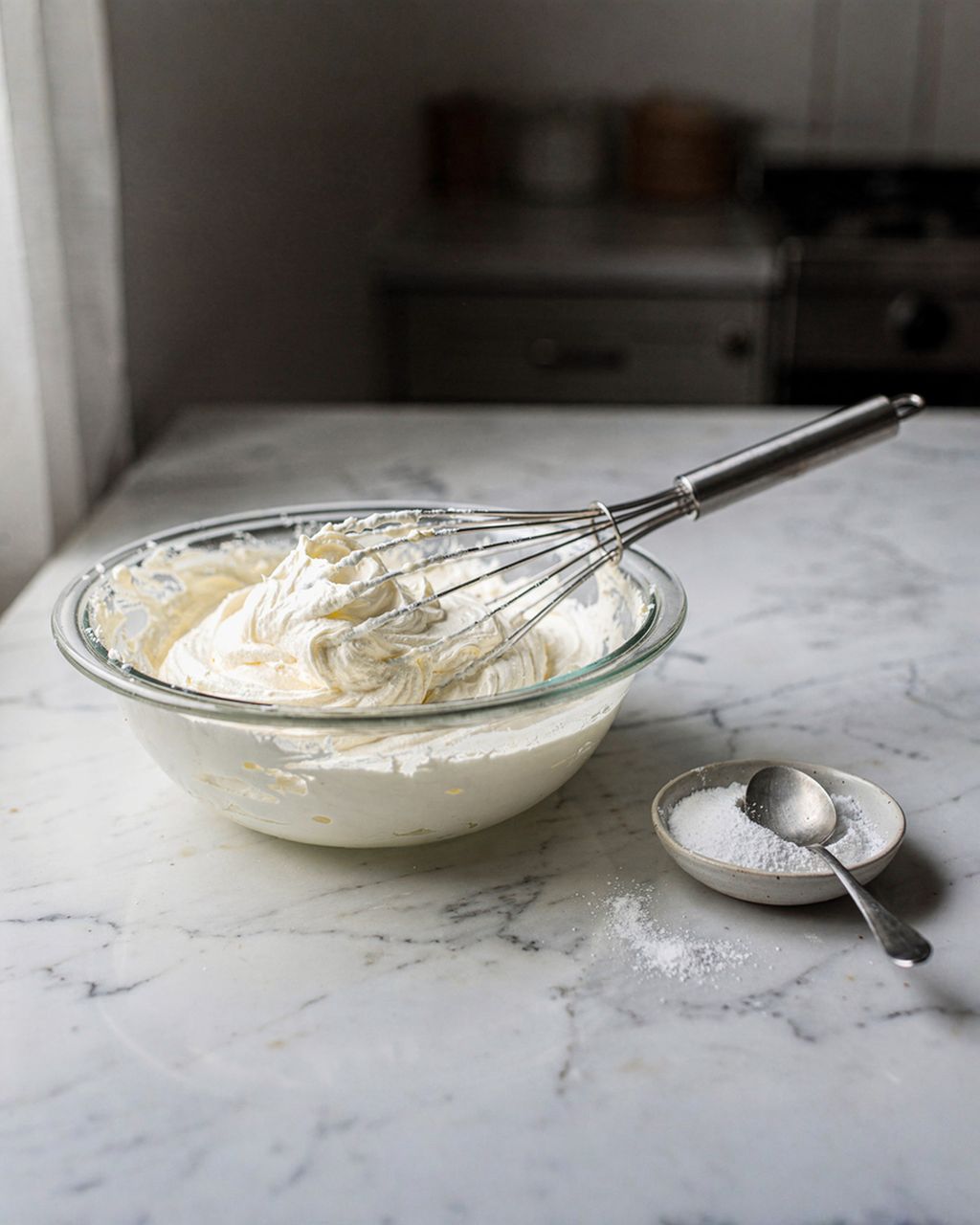
Cream cheese is the most dependable substitute for mascarpone wherever the filling needs to hold a crisp shape – for 250g of mascarpone, use 200g of cream cheese and 50g of softened butter. The butter makes up for the missing fat, and in the fridge the filling firms up enough to support fondant and piped decorations.
Two things that make or break it:
The cheese should be cold (6–8°C), the butter at room temperature (20–22°C). If you beat in cold butter, the filling will curdle into lumps.
Beat for just 30–60 seconds on medium speed. Cream cheese holds a lot of water in its protein network, and prolonged beating releases it – the filling turns runny and can't be saved.
Cream cheese tastes tangier than mascarpone. Balance this out by adding 40–60g of icing sugar per 250g of mixture plus a pinch of salt; salt tames tanginess better than extra sugar.
For cheesecake and cupcake frosting, cream cheese is often even a better choice than mascarpone – it holds a piped peak from a nozzle that pure mascarpone never could.
Ricotta only works as a mascarpone substitute in a cake once you've drained it and blended it completely smooth – otherwise it stays grainy and you'll notice it on your tongue. Ratio: 200g ricotta after draining (start with 240–260g) + 50g heavy cream for 250g of mascarpone.
Ricotta is one of the least fatty substitutes (8–13g per 100g) and also holds the most whey. So let it drain in a cheesecloth-lined sieve in the fridge for 4–12 hours; it will lose 15–25% of its weight. Then blend it with a stick blender for at least a minute – don't just stir it.
Where ricotta works well: in baked fillings (cheesecake, tart), where it bakes through and the eggs stabilise the structure anyway. Where it fails: in an unbaked filling between layers, since on its own it won't hold together and needs gelatine.
Both Greek yogurt and sour cream can only replace mascarpone as part of the filling, never the whole amount – they hold too much water and acidity.
10% Greek yogurt: drain it through cheesecloth for 8–12 hours (it will lose 30–40% of its weight and thicken almost to cream cheese consistency), then mix 1:1 with whipped cream. From 250g of yogurt, you'll have 150–175g left after draining; so for 125g of drained yogurt, start with 190–210g.
Sour cream: let it make up no more than a third of the filling, and round out the rest with mascarpone, cream cheese or whipped cream. On its own, it would make the cake soggy.
Both bring noticeable tanginess, which is a plus for sweet, rich cakes – caramel, chocolate, or fruit-filled ones. In delicate vanilla sponge cakes, though, they'll overpower everything else.
With a yogurt- or curd-based filling, always plan on using gelatine. Without it, the cake will collapse by morning.
Crème fraîche substitutes for mascarpone at a 1:1 ratio, since it has 30–40g of fat per 100g and a similarly thick texture – the only difference is a noticeably tangier taste, which you can balance with 30–40g of icing sugar per 250g.
A second option, if you have no cheese in the fridge at all: 33–40% whipping cream beaten with a whipped cream stabiliser. It's not a flavour match, but it works functionally – it adds volume and holds up in the cold. The dosage is 1 sachet (10g) per 250ml of cream, and beat the cream cold straight from the fridge, as warm cream won't whip properly. On its own, though, whipped cream is too airy for a filling between layers; treat it as an addition to curd cheese or cheese rather than the filling itself.
If you're out of stabiliser, check out what to use instead of whipped cream stabiliser – from gelatine to instant pudding powder.
Make a plant-based mascarpone substitute from soaked cashews or chilled coconut cream – both have enough fat for the filling to behave like a dairy one.
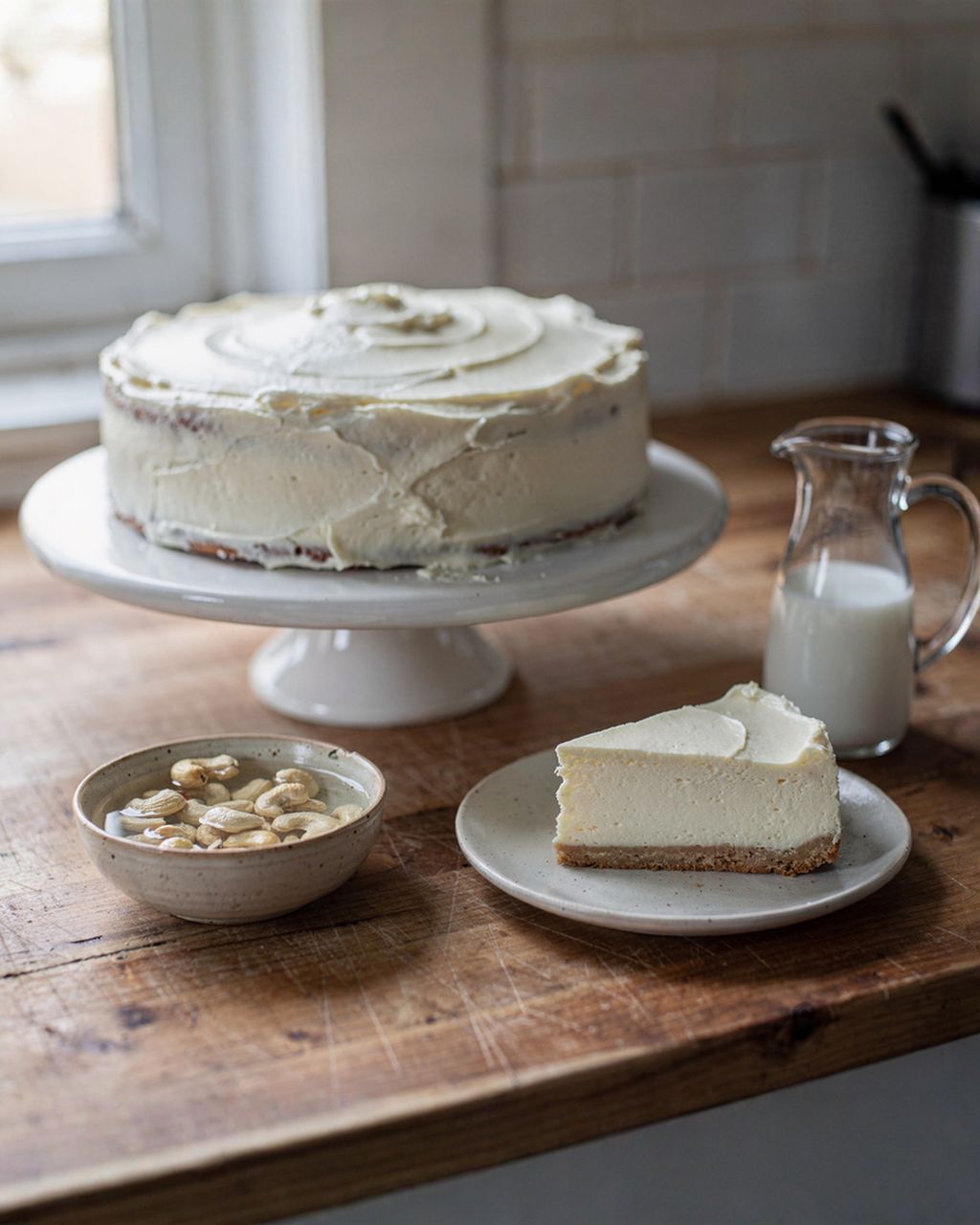
Cashew cream: soak 150g of cashews for 4–8 hours (or 15 minutes in hot water), drain and blend with 60ml of plant milk, 1 tablespoon of lemon juice and 30g of sugar until completely smooth. You'll need a powerful blender – a stick blender will leave bits. Yields roughly 250g.
Coconut cream: refrigerate a can of full-fat coconut milk for 12 hours, drain off the liquid and use only the solid layer from the top (about 150g from a 400ml can). Whip it like cream.
Vegan cream cheese: use it 1:1 just like the dairy version, though it tends to be saltier – add sugar a spoonful at a time and taste as you go.
Lemon juice here isn't for flavour but for tanginess: without it, the plant-based filling tastes flat and won't resemble mascarpone at all. Half a teaspoon per 250g is the minimum.
Homemade mascarpone comes down to three steps: heat the cream to 82–90°C (steam should rise, but it must not boil), add acid with lemon juice or citric acid, and let it drain through cheesecloth. So you only need two ingredients, and flavour-wise it's the one substitute you genuinely can't tell apart from the original.
What to plan for: 500ml of 33–40% cream yields roughly 280–320g of finished mascarpone, and it needs to drain for 12–24 hours (overnight is the minimum). The two things that most often ruin homemade mascarpone are overheating the cream – above 90°C it curdles and turns grainy – and not draining it long enough, which leaves the filling thin and runny in the cake.
Homemade mascarpone is a fresh product with no preservatives, so keep it in a sealed container in the fridge and use it within days, not weeks.
There are four ways to firm up a mascarpone substitute: sheet gelatine, whipped cream stabiliser, instant pudding powder, or butter. You'll need one of these for any lower-fat substitute, or the cake will collapse by the next day. Dosage for 500g of finished filling:
Sheet gelatine – 7–8.5g (4–5 sheets; a standard sheet weighs around 1.7g, so a 10g pack has about 6 sheets). Soak for 5 minutes in cold water, squeeze out, melt to 40–50°C and stir it into 2–3 tablespoons of the filling first, then fold that into the rest. Pouring hot gelatine straight into cold filling creates rubbery strands.
Whipped cream stabiliser – 2 sachets (20g), whisked into the cream before combining it with the curd cheese. The gentlest option, holding for a day or two.
Vanilla instant pudding powder – 1 sachet cooked with 200ml of milk, cooled and whisked into the filling. It adds flavour too, plus a thickness similar to a classic curd cheesecake.
Butter – 100–125g (20–25% of the filling's weight). The only option that holds up at room temperature for several hours, making it the right choice for a summer party or a cake going under fondant.
Scale gelatine or stabiliser to the height of the cake: a two-layer sponge with a thin layer of filling can get away with the lower end, while a four-layer cake with a thick filling needs the higher end.
There are three cases where you shouldn't substitute mascarpone: tiramisu, fillings under mirror glaze or delicate piped decoration, and a cake that needs to survive outside the fridge. Here's why:
Tiramisu. The filling makes up half the dessert and has nowhere to hide – curd cheese and yogurt both taste like a compromise here. What's more, mascarpone in tiramisu is whipped with egg yolks into a warm foam, and low-fat substitutes will curdle in the process.
Filling under mirror glaze or delicate piped decoration. You need precisely predictable firmness, and every substitute behaves differently once chilled.
A cake that has to sit outside the fridge. Curd cheese, yogurt and ricotta all hold so much free water that they soften within an hour at room temperature.
On the other hand, substitutes work perfectly well wherever the filling is just there to back up a strong flavour – in chocolate, caramel and fruit cakes. A proven example is mango curd cheesecake, where the curd cheese filling holds up on its own without a drop of mascarpone.
Raspberry tiramisu
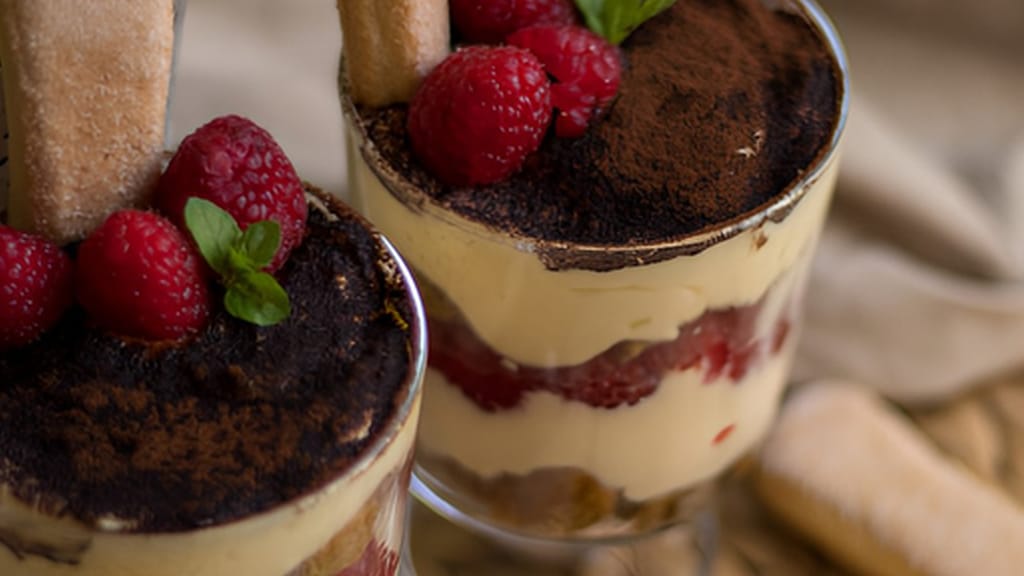
Tiramisu with raspberries – a dessert where swapping out the mascarpone really isn't worth it
From 250g of full-fat curd cheese you can make a substitute for roughly 320g of mascarpone: once drained you'll have 210–225g left, which you then whip with 100–110g of 33–40% cream in a 2:1 ratio. If your recipe calls for one standard tub of mascarpone (250g), weigh out just 190–200g of curd cheese to start. Always keep the ratio at two-thirds drained curd cheese to one-third whipped cream – any less cream and the filling turns tangy and thin.
Yes, swapping mascarpone is easier in a baked cheesecake than in an unbaked filling, because the eggs stabilise the structure for you. Cream cheese works best at a 1:1 ratio, and drained, blended ricotta or full-fat curd cheese also do the job well. Just keep in mind that lower fat content raises the risk of cracking – bake at 150–160°C in a water bath and let the cheesecake cool in the oven with the door ajar.
It depends on the shelf life of the ingredients used and how much water is in the filling: substitutes with higher water content – curd cheese, yogurt, ricotta – should be eaten sooner than a filling made with mascarpone or cream cheese. The cake will never outlast the shortest-dated ingredient you put into the filling, so check the use-by date on the cheese, curd cheese and cream packaging. Always keep the cake refrigerated and covered so the filling doesn't pick up fridge odours or dry out at the edges.
High-fat fillings (mascarpone, cream cheese with butter, crème fraîche) freeze best, though even these will change slightly in texture. Curd cheese, yogurt and ricotta separate into water and curds once thawed and can't be brought back together. Freeze the finished cake whole or in slices, and always thaw it slowly in the fridge over 8–12 hours – never at room temperature.
Yes, with tangier substitutes add roughly a third more sugar than you would with mascarpone – for 250g of cream cheese, curd cheese or yogurt, use 40–60g of icing sugar instead of the usual 30–40g. Use icing sugar, not granulated: it won't dissolve in a cold filling and will leave a gritty texture. A pinch of salt tames tanginess more effectively than extra sugar.
One recipe worth heating the oven for, one tip, and one deal from the shop. Nothing else.