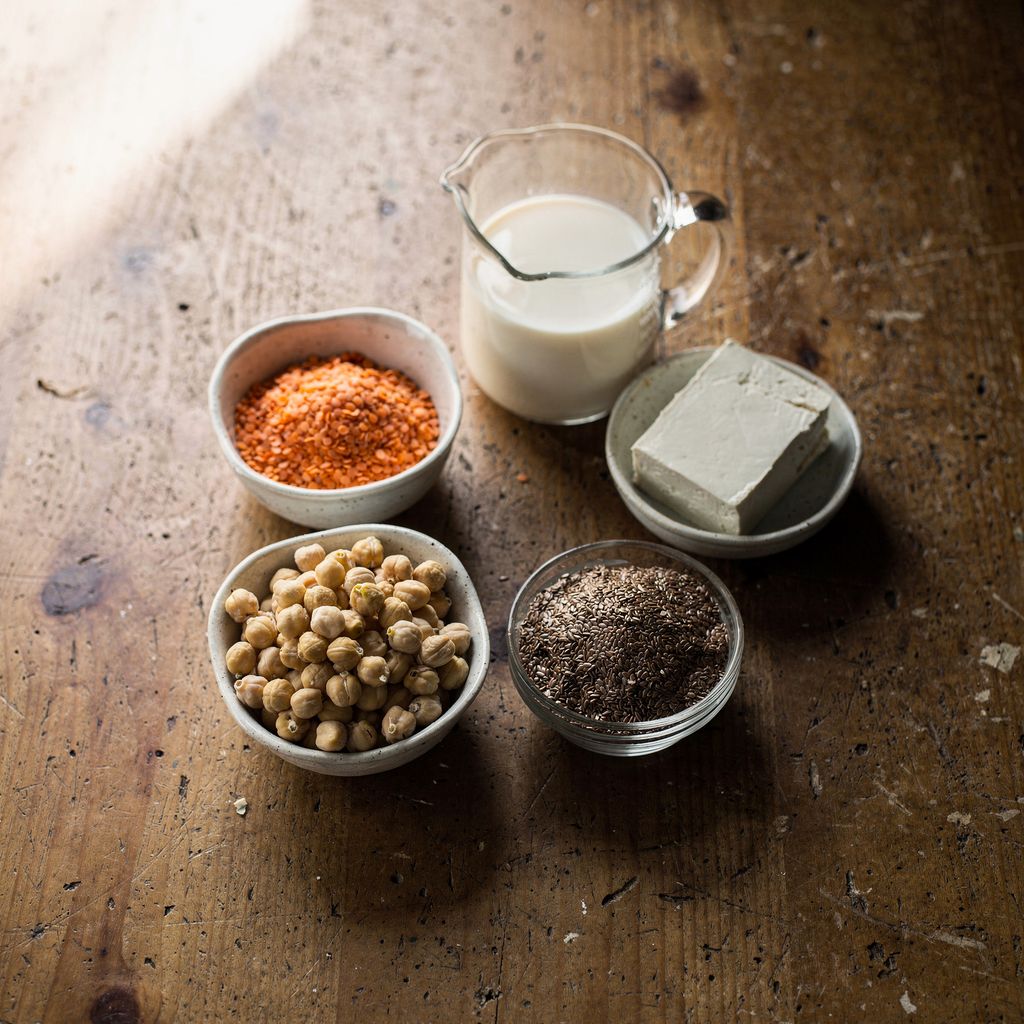
Red lentil soup with coconut milk and chilli
What Vegans Don't Eat: The Complete List of Foods and Hidden Ingredients
Updated Aug 30, 2026
What vegans don't eat can be summed up in one sentence: nothing that comes from an animal – meat, fish and seafood, milk and dairy, eggs, or honey. It gets trickier with things that don't look animal-derived at all: gelatine in gummy sweets, whey in crisps, carmine in yoghurt, isinglass in wine. This guide covers the full list, how to read labels, substitutes with exact ratios, and which classic dishes from Czech cuisine you can make fully plant-based without compromise – and which ones take real work.
Vegans don't eat any food of animal origin. In practice, that comes down to five groups:
Meat and meat products – beef, pork, poultry, game, cured meats, lard, crispy pork bits, and meat stocks and bouillons.
Fish and seafood – including shrimp, mussels, caviar, fish sauce and the anchovies in Worcestershire sauce.
Milk and dairy products – cream, butter, ghee, cheeses, yoghurt, curd cheese, whey, casein.
Eggs – chicken and quail eggs, and everywhere they hide: mayonnaise, tartar sauce, custards and puddings, egg pasta, meringues, egg-based salads.
Honey and other bee products – honey, beeswax (E901), propolis, royal jelly, pollen.
On top of that come ingredients that don't look animal-derived at first glance – gelatine, rennet, carmine, shellac, vitamin D3 from lanolin. These get their own section below, since they're exactly where it's easiest to slip up.
Veganism usually isn't just about the plate, either. It typically extends to avoiding leather, wool, silk and cosmetics tested on animals. The Vegan Society in the UK, which coined the word vegan in 1944, defines it as seeking to exclude animal exploitation as far as is practically possible.
There are essentially three reasons – ethics, environmental impact, and cultural or personal choice – and most people combine at least two of them. Some also cite health as a motivation.
The most common reason is ethical: not supporting farming systems where an animal is treated purely as a means of production. That's not just about slaughter. Milk production relies on cows being repeatedly impregnated and calving, with the calf then taken away; egg production in conventional farming has no use for male chicks of laying breeds. This interconnectedness is exactly why vegans also skip milk and eggs, even though no animal dies directly for them – and why they see vegetarianism as a halfway point, not the destination.
Honey sparks the most disagreement, even among vegans themselves. The argument goes that a colony's own stores get taken and replaced with sugar syrup, that queens can be harmed in the process, and that commercial pollination operations put pressure on wild pollinators. Some plant-based eaters make an exception for honey from a small local beekeeper; by the strict definition, though, honey isn't a vegan food.
According to a 2023 FAO report, animal agriculture accounts for roughly 12% of global greenhouse gas emissions. An older, widely cited 2013 estimate put the figure at 14.5% – the difference comes mainly from a change in methodology, not a drop in emissions.
But emissions aren't the whole story. Most of the world's agricultural land is used for grazing or growing feed crops, and demand for feed (soy in particular) is a major driver of deforestation in South America. One irony that still surprises people: the vast majority of soy grown worldwide doesn't end up in tofu – it ends up in animal feed troughs. On top of that comes water use and the eutrophication of waterways from fertiliser and slurry runoff.
There are huge differences between animal products, though – beef and lamb have a footprint that's an order of magnitude higher than poultry, eggs or milk. That's why partial cuts also make sense, not just an all-or-nothing switch.
Plant-based eating has roots in the principle of ahimsa (non-violence) in India and in European fasting traditions; the word vegan itself dates to 1944. Ahimsa underpins Jainism, Hinduism and Buddhism, where meat-free cooking has been alive for thousands of years and underlies an entire cuisine built on legumes, rice, and both dairy and non-dairy sauces.
Europe has its own thread in fasting traditions: Orthodox fasting rules out meat, milk and eggs, and effectively built an extensive plant-based cuisine of its own. Czech "fasting dishes" – legume soups, porridges, potato pancakes – grew out of the same logic, and plenty of them are vegan without anyone ever calling them that.
The word vegan itself was coined by Donald Watson and others from vegetarian – taking the beginning and the end, since veganism, as they put it, "begins and ends with vegetarianism".
The difference comes down to how many groups of animal products get cut out – vegans cut out all of them:
Vegan – no meat, fish, milk, eggs or honey.
Ovo-lacto vegetarian – no meat or fish, but milk and eggs are fine. This is what most people picture when they hear "vegetarian".
Lacto-vegetarian – eats dairy, no eggs.
Ovo-vegetarian – eats eggs, no dairy.
Pescatarian – no meat from mammals or birds, but fish and seafood are fine. This isn't vegetarianism, even though it's often marketed that way.
Flexitarian – eats everything, but consciously cuts back on animal products.
One more term that trips people up constantly: "plant-based" isn't the same thing as "vegan". Plant-based describes what's in the food; veganism is an ethical stance covering an entire lifestyle. A plant-based burger fried in ghee is a plant-based product, but it isn't vegan.
The most common hidden animal ingredients are gelatine, whey and casein, animal rennet in cheese, carmine (E120), shellac (E904), L-cysteine (E920), lanolin-derived vitamin D3, and fining agents in wine and beer. Here's how to spot them:
Gelatine – made from pig and cattle skin and bones. In the EU it's not listed under an E-number; on labels it's simply written as "gelatine" (though some sources refer to it as E441). It turns up in jelly sweets, marshmallows, mousses, some yoghurts and desserts, puddings, and supplement capsules.
Whey and casein – milk proteins that show up even where you wouldn't expect dairy: crisps and savoury snacks, bread, instant soups, "non-dairy" whipped cream in a can, and milk chocolate.
Rennet in cheese – traditional chymosin rennet is taken from calves' stomachs. Parmigiano Reggiano, Grana Padano and pecorino are all required by their own production rules to use it. Vegetarian versions are labelled "microbial" or "plant-based rennet".
Carmine / cochineal (E120) – a red dye made from crushed cochineal insects. Found in fruit yoghurts, sweets, fillings and some aperitifs.
Shellac (E904) – a glazing agent made from the secretion of the lac beetle. Found on glossy sweets and dragée-style coatings, and sometimes on waxed fruit.
L-cysteine (E920) – a dough conditioner used in baking. It can come from feathers or bristles, though it's now commonly made microbially too. You won't know which without asking the manufacturer directly.
Vitamin D3 – typically sourced from lanolin, i.e. sheep's wool. Vegan-friendly options are vitamin D2, or D3 made from lichen, which is usually highlighted on packaging.
Lecithin (E322) – almost always soy-derived, occasionally from egg. In practice, it's rarely an issue.
Wine and beer – fined with isinglass (fish bladder), gelatine, casein or egg white. Casein and egg white must be declared as allergens if they remain detectable after fining – but isinglass doesn't have to be declared, so a clean allergen label is no guarantee of vegan status. Your best bet is a "vegan" certification or checking the winery's or brewery's own website.
Sauces and pastes – Worcestershire sauce is built on anchovies, and so is Caesar dressing; Thai fish sauce and shrimp paste are everywhere in Southeast Asian cooking, and Korean kimchi is often made with fish sauce as a base.
A practical approach: read the ingredients list from the bottom up (additives tend to be listed last), look for a V-Label or Vegan Trademark certification, and use one of the ingredient-scanning apps for unclear E-numbers.
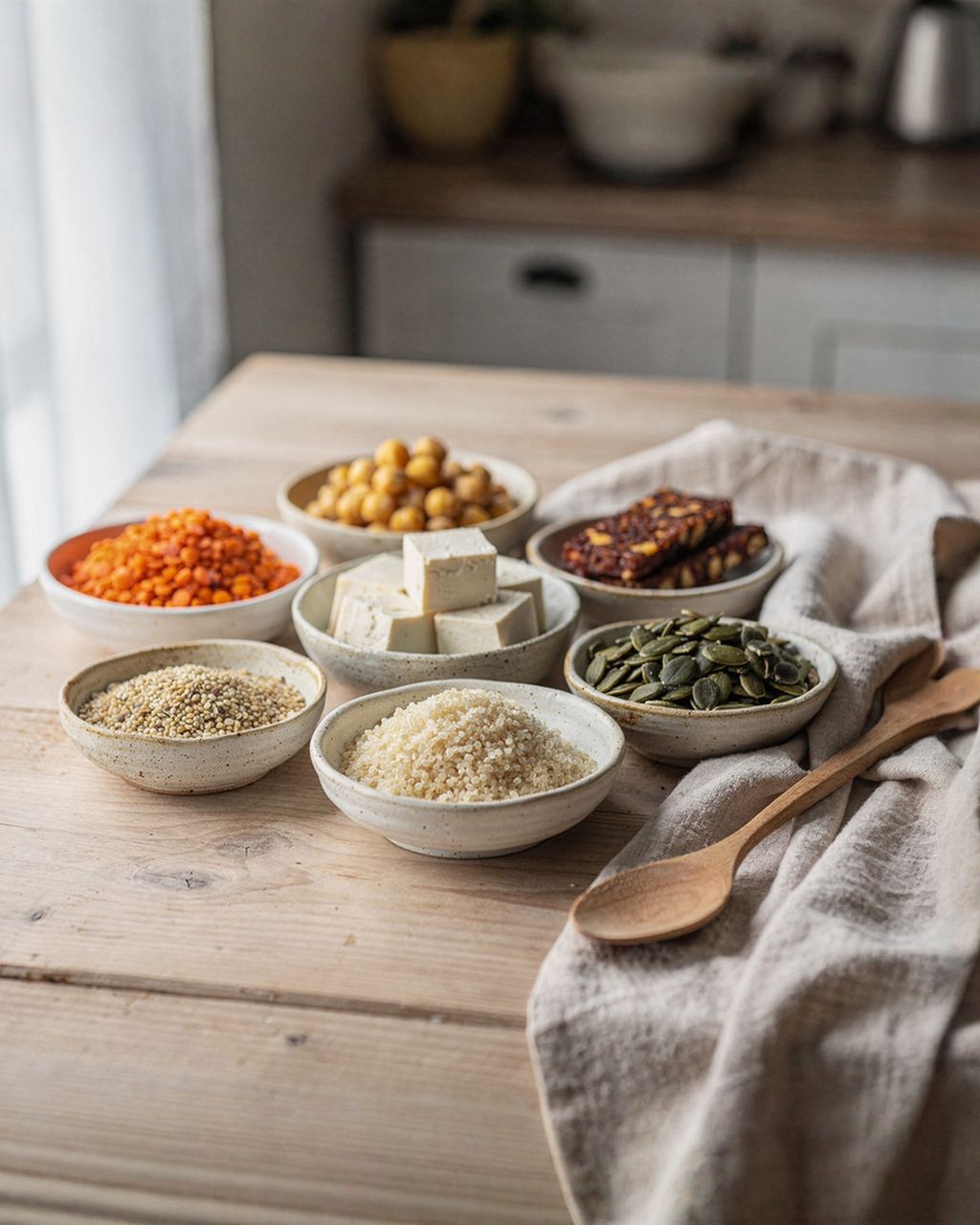
Replace meat with legumes, tofu, tempeh and mushrooms; milk and cream with soy, oat or tinned coconut milk; eggs with flax eggs, aquafaba or gram flour; honey with maple, agave or date syrup.
The key to making any swap work is simple: don't pick a substitute based on how closely it matches the flavour of the original, but based on the function it served in the recipe – binding, leavening, fat, umami or creaminess. Once that's clear, swapping stops being a guessing game.
Legumes handle bulk and protein, mushrooms and fermented pastes bring umami, and tofu and tempeh provide texture. A few things that make or break the result:
Press your tofu. Wrap extra-firm tofu in a tea towel, weigh it down with a chopping board, and leave it for 20–30 minutes. This squeezes out water that would otherwise soak up marinade in its place.
Freeze and thaw it. Freezing forms ice crystals inside the tofu; once thawed, it takes on a spongy texture that soaks up marinade completely differently and browns beautifully in the pan.
Simmer tempeh first. Ten minutes in hot water or steam before marinating gets rid of the slightly bitter fermented edge.
Salt mushrooms right at the end. Oyster mushrooms and button mushrooms release water when salted early and end up steaming instead of browning. Let them brown in a hot pan first, then salt at the very end.
For umami, reach for tomato paste cooked down until dark, soy sauce, miso, dried mushrooms, smoked paprika, or a spoonful of nutritional yeast.
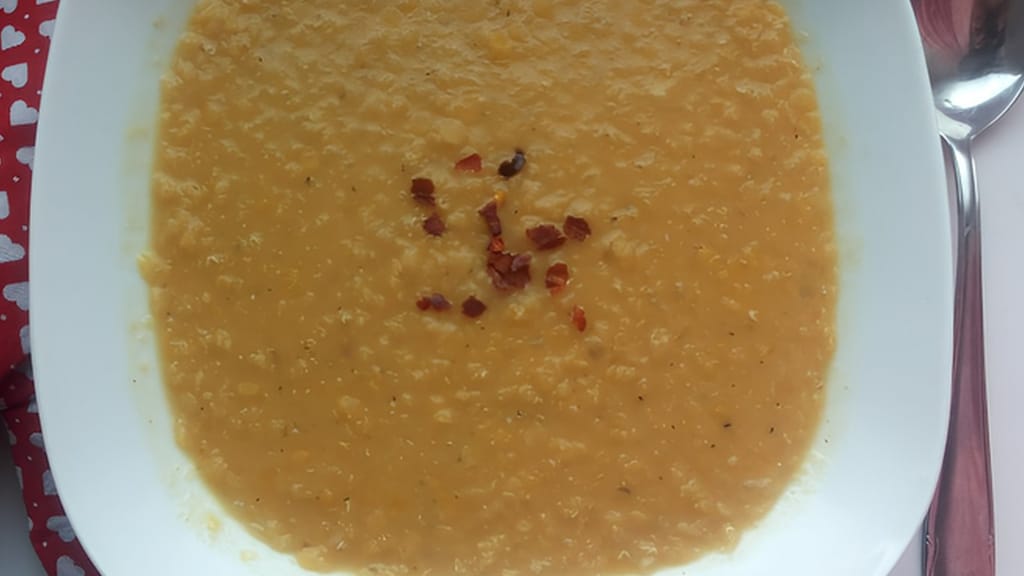
Red lentil soup with coconut milk and chilli
Red lentil soup with coconut milk and chilli – a hearty legume-based meal in half an hour
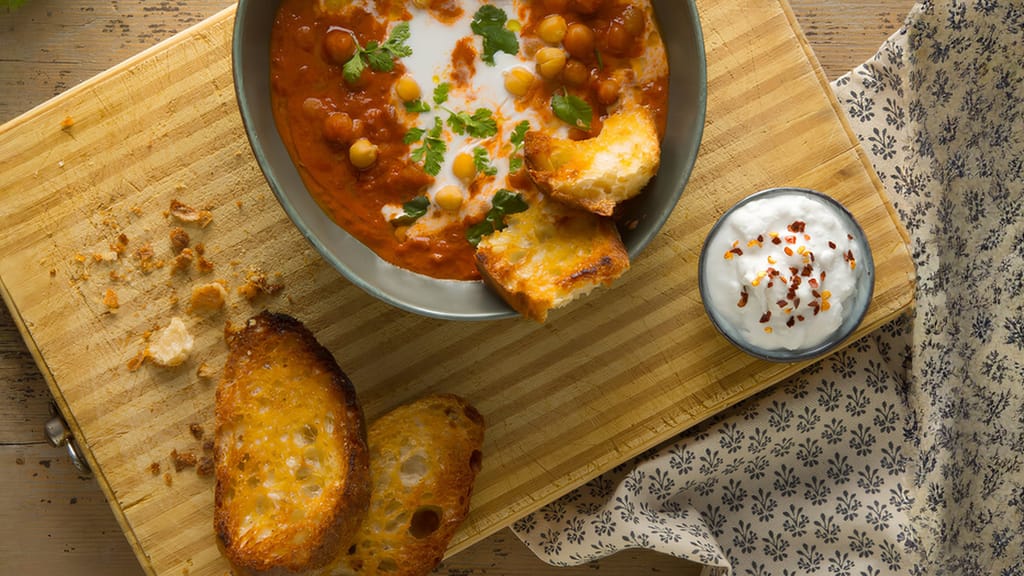
Chickpea curry with coconut cream and fresh apple juice
Chickpea curry with coconut cream – plant-based protein and creaminess without any dairy
Replace milk with soy or oat milk, cooking cream with tinned coconut milk or oat cream, and butter with a good-quality plant fat with a matching fat content. The details determine whether it'll hold up under heat:
Soy milk comes closest to cow's milk in protein content (around 3g per 100ml) and is the only plant milk that reliably works where protein matters. It can curdle in hot, acidic coffee, though: pour the milk in first and add the coffee to it, or bring both to a similar temperature first.
Oat milk is the sweetest and froths best, which is why cafés love it. Use it sparingly in savoury sauces.
Almond and rice milk are thin and fairly neutral in flavour – good in porridge and smoothies, weak in sauces.
Tinned coconut milk (17–22% fat) is the closest match to cooking cream. Tone down the coconut flavour with acidity and spices, not sugar.
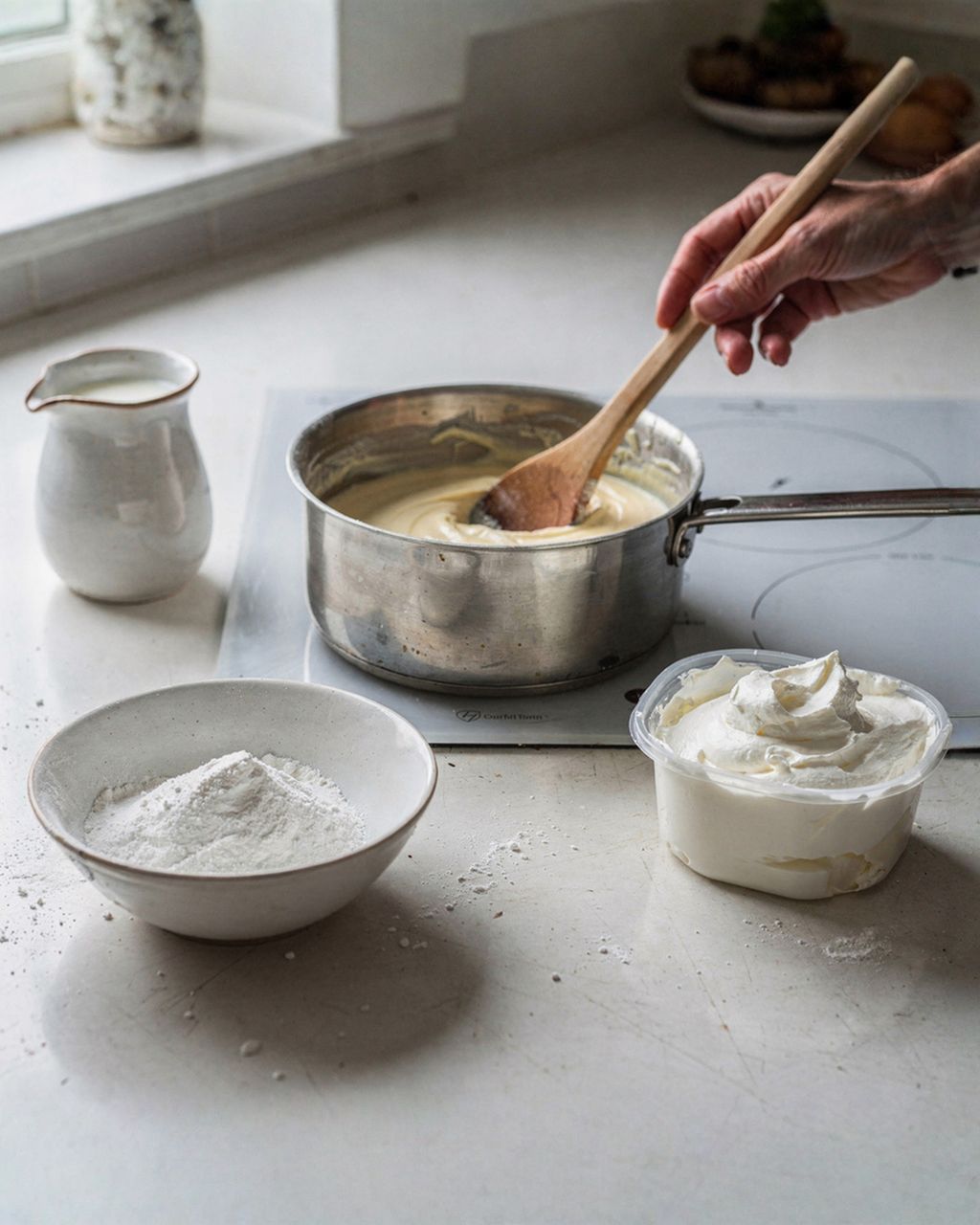
Butter in baking can be swapped for solid plant-based fat or a good margarine with a matching fat content, and for frying, use oil. In recipes where butter is there for flavour (béchamel, roux), add a spoonful of nutritional yeast.
We've covered in detail what to use instead of cream in a sauce. Homemade nut milk is also the cheapest way to figure out which flavour actually works for you.

Walnut milk
Homemade walnut milk – a plant-based alternative to cow's milk made from just two ingredients
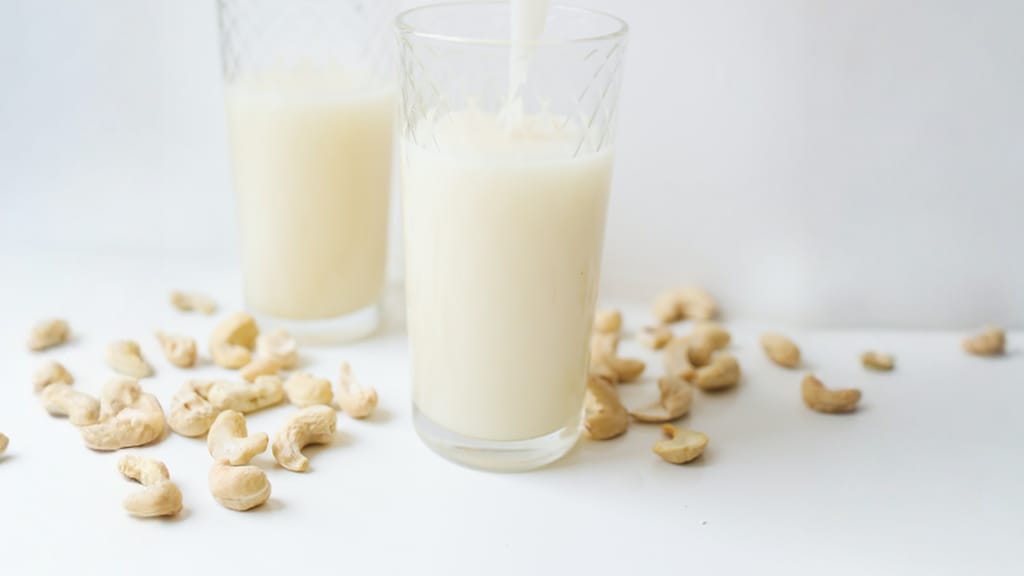
Cashew-coconut milk
Cashew-coconut milk – a creamy plant-based option for coffee and porridge
Replace eggs with flax or chia eggs, aquafaba, apple purée, banana, gram flour, or baking soda with vinegar – always based on the job the egg was doing in the recipe: binding, leavening, or moisture and flavour. Ratios that actually work (always per one egg):
Flax egg (binding): 1 tbsp ground flaxseed + 3 tbsp water, let it sit for 10 minutes to thicken. The flax needs to be ground – whole seeds won't absorb enough liquid in the batter to bind it.
Chia egg (binding): 1 tbsp chia seeds + 3 tbsp water, same method. Leaves visible flecks in the batter.
Aquafaba (whipped, foam, mayonnaise): 3 tbsp of the liquid from a tin of chickpeas = 1 egg, 2 tbsp = 1 egg white. One tin gives you roughly 150ml. Whip for 3–5 minutes to stiff peaks; a pinch of cream of tartar or a drop of lemon juice helps stabilise the foam.
Apple purée (moisture): 60g. It doesn't provide any lift – for light, well-risen bakes, add an extra half teaspoon of baking powder.
Mashed banana (moisture): 50g. The flavour comes through, so plan for it.
Gram flour (omelette, coating): 3 tbsp gram flour + 3 tbsp water, whisk and let sit for 15 minutes.
Leavening: 1 tsp baking soda + 1 tbsp vinegar, added right before baking.
One extra trick: kala namak, black Himalayan salt with a sulphurous aroma, gives tofu an egg-like flavour. Without it, "scrambled tofu" just tastes like warm tofu.
The best showcase for what aquafaba can do is vegan chocolate mousse without cream.
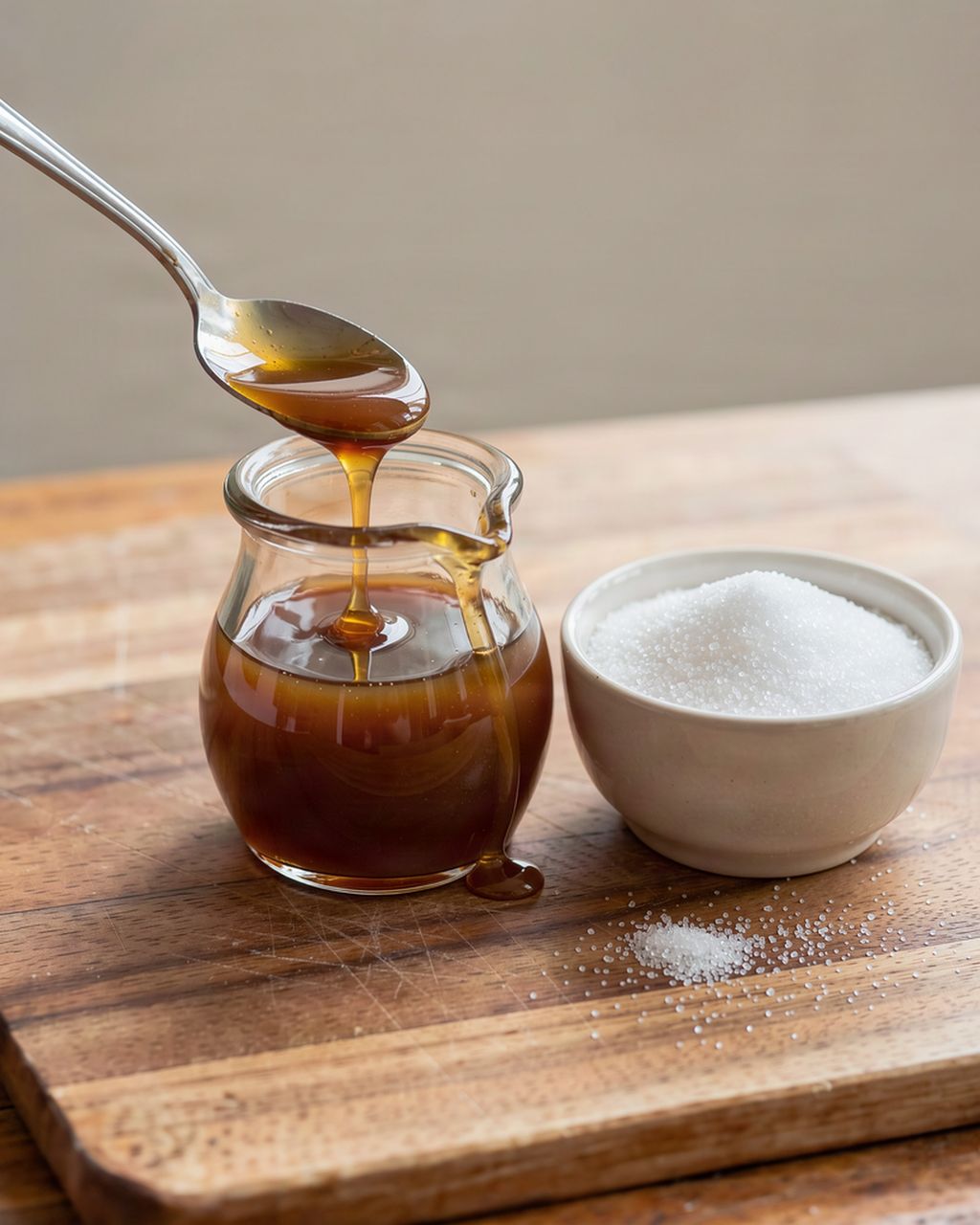
Honey in baking can be replaced with maple, agave, date, rice or beet syrup – but they're not equally sweet or equally thick, so they're used in different amounts:
Maple syrup – the most versatile option; use a 1:1 ratio in baking and cut about 3 tablespoons of other liquid per 250ml of syrup.
Agave syrup – sweeter than honey, so use about two-thirds of the amount. It's also thinner, so it's less suited to glazes.
Date and rice syrup – darker, caramel-like flavour, great in marinades and gingerbread.
Beet syrup – dark, thick and full-flavoured, widely available at supermarkets and health food shops. It works better than agave in gingerbread and dark baked goods; use it roughly 1:1 for honey.
A category of its own: apple butter – it's not a syrup but a thick fruit paste. It's less sweet, but adds moisture and fruity flavour to batter – great in gingerbread, fillings and dark bakes, where you can use it 1:1 for honey and slightly cut back on other liquid. It's not a fit for glazes, marinades or tea, though.
Watch out for one quality that's hard to fully replicate: honey is hygroscopic and helps baked goods hold onto moisture. With gingerbread and honey cakes, expect them to dry out a bit faster, and let them rest in a sealed container with a slice of apple.
There are seven things worth keeping an eye on in a vegan diet: vitamin B12, iodine, calcium, iron, zinc, omega-3, and vitamin D in winter.
Vitamin B12 – plant foods aren't a reliable source of vitamin B12; algae and spirulina only contain inactive analogues. Fortified foods and supplements are the reliable sources. The Vegan Society recommends a supplement providing at least 10µg daily, or 2,000µg once a week; for reference, the EFSA's recommended daily intake is 4µg (packaging often lists 2.5µg as a reference value).
Iodine – plant-based diets tend to be low in iodine generally. Iodised salt is the easiest fix; be cautious with seaweed, though, since its iodine content varies wildly and kelp in particular can contain dangerously high amounts.
Calcium – fortified plant milks typically contain around 120mg per 100ml, but shake the carton before pouring, since calcium settles at the bottom. Also worth including: tofu set with calcium salts, poppy seeds, sesame seeds and tahini, broccoli, kale.
Iron – plant sources provide non-haem iron: legumes, tofu, poppy seeds, oats, dried apricots. Lentils, spinach and tofu all pair well with something acidic – lemon, paprika or sauerkraut brightens and lightens the flavour.
Zinc – legumes, seeds, whole grains. Soak legumes overnight and let grains ferment slightly – it's mostly a matter of taste and easier-to-work dough.
Omega-3 – ALA is found in ground flaxseed, chia and walnuts; algae oil provides EPA and DHA.
Protein – a combination of legumes and grains covers all the essential amino acids. They don't need to be eaten together in one meal: current guidance says variety across the whole day is enough.
This article isn't making a case for whether a vegan or mixed diet is "healthier" – that comes down to what's actually on your plate, not the label of the diet. If you're planning a long-term switch to veganism, or considering it for children, during pregnancy, or alongside a chronic illness, talk it through with a doctor or dietitian. We've got a separate piece on plant-based protein sources: vegan protein and where to find it.
Plenty of Czech classics have always been plant-based – braised lentils, split pea purée, sauerkraut soup (kyselo), legume soups, sauerkraut, potato pancakes. Traditional fasting-day cooking left behind a surprisingly large stock of ready-made recipes. Everything else falls into two camps: dishes where swapping one ingredient does the job, and dishes that need to be rebuilt from scratch.
Potato pancakes, fruit dumplings, yeasted buns, mushroom and tomato sauce, and bread dumplings all go vegan with a single swap – egg for potato starch, milk and cream for plant-based versions. Neither flavour nor texture suffers:
Potato pancakes (bramboráky) – swap the egg for 2 tablespoons of potato starch per 1kg of potatoes; the batter holds together just the same.
Fruit dumplings made with potato dough – work fine without eggs; just work the dough while it's warm and move quickly.
Yeasted buns (buchty) – swap butter for plant-based fat, milk for oat milk, and use oat milk with a teaspoon of maple syrup instead of egg yolk for the glaze (it browns just as well).
Mushroom and tomato sauces – swap the cream for tinned coconut milk or oat cooking cream.
Bread dumplings (houskový knedlík) – leave out the egg entirely and add 1 tablespoon of potato starch per 500g of plain flour; the dough holds together fine without egg binding.
Svíčková (creamy sauce with beef), potato salad with tartar sauce, kulajda (creamy potato-dill soup) and schnitzel can all be made vegan, but they need rebuilding from scratch – they were built on meat stock, egg or cream:
Svíčková – replace the meat stock with root vegetables cooked down until dark plus dried porcini, and the cream with oat cooking cream. Roasted celeriac or seitan work well in place of the meat.
Potato salad and tartar sauce – make homemade mayonnaise from aquafaba or soy milk: blend 100ml of milk with 200ml of oil using a stick blender from the bottom up, then season with mustard and lemon. The 1:2 ratio is the key – otherwise the emulsion won't come together.
Kulajda – built on both egg and cream; the vegan version uses oat cream and poached tofu, but it does end up being a different dish.
Schnitzel (řízek) – celeriac, cauliflower or pressed tofu work well; for coating, use plant-based milk mixed with plain flour into a thick paste instead of egg.
One closing note that'll save you disappointment: almost anything can be veganised, but the best plant-based dishes usually aren't the ones trying to copy a meat dish. A lentil salad or roasted chickpeas don't need to compete with anything else – they're great on their own terms.
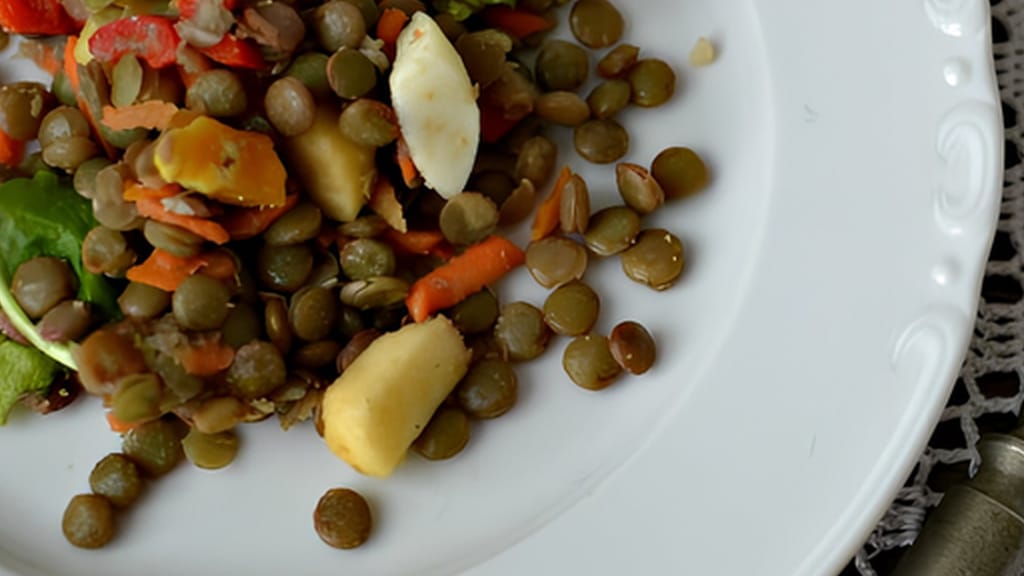
Lentil salad
Lentil salad – plant-based protein that isn't standing in for anything, and holds its own
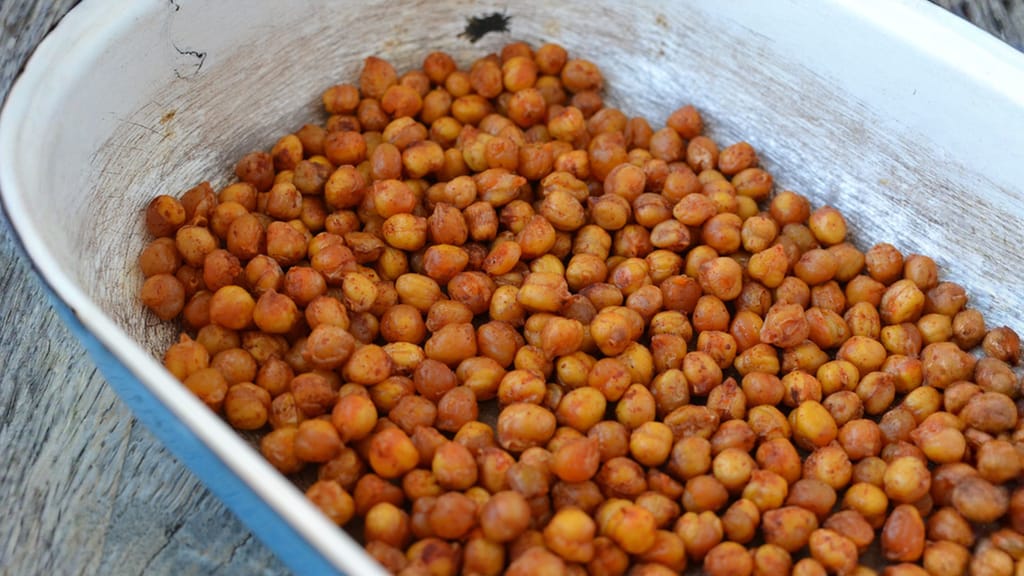
Crispy roasted chickpeas with spices
Crispy spiced roasted chickpeas – a vegan alternative to savoury snacks that usually contain whey
Classic rolls, baps and most breads are vegan – just flour, water, yeast, salt, sugar and oil. Watch out for sweet and laminated pastries (butter, milk, egg wash), toast-style loaves, which sometimes contain whey or milk powder, and dough conditioners like L-cysteine (E920), which can be animal-derived. At a bakery, just ask; at the shop, check the ingredients list.
In most of Europe, yes – standard white sugar here is made from sugar beet, and bone char isn't used in the process. The issue you hear about mostly in American and British sources concerns some cane sugar, which is filtered through bone char. With imported cane sugar, look for a vegan label; unrefined and organic cane sugar isn't processed with bone char.
Most dark chocolate above 70% cocoa is vegan, but that's not guaranteed. Some brands add milk powder or milk fat for a smoother taste, so it's worth checking the ingredients even on dark chocolate. Separately, chocolate made on shared production lines with milk chocolate often carries a "may contain traces of milk" warning – that's an allergen notice, not an ingredient, and most vegans don't avoid chocolate because of it.
Often not, even though they look like purely plant-based products. Instant noodles frequently hide animal ingredients in the seasoning sachet – dried meat stock, chicken or beef flavouring, sometimes egg powder in the noodles themselves. With crisps and savoury snacks, the usual culprits are whey and milk powder, even in flavours that don't sound remotely dairy (paprika, onion, salt and vinegar). The quickest check: look for milk and egg bolded in the allergen list – they're legally required to appear there.
The only reliable way to know if a wine or beer is vegan is a vegan or V-Label mark on the bottle, the winery's or brewery's own website, or a database like Barnivore – the ingredients list alone won't tell you. Casein and egg white must be declared as allergens if they remain detectable after fining, but isinglash (fish gelatine) doesn't have to be declared at all, so an allergen-free label is no guarantee of vegan status. As a rule, unfiltered and natural wines and beers are more often vegan, since fining is skipped entirely.
Your safest bet is to ask the kitchen what they can do without meat or dairy – often more than what's listed on the menu. In practice, potato pancakes, chips, vegetable sides, legume-based soups, pasta in tomato sauce without cheese, roasted vegetables and hummus tend to work well. Ask about three things that often hide in plain sight: butter used to finish sauces and sides, meat stock in soups, and cream in dressings.
One recipe worth heating the oven for, one tip, and one deal from the shop. Nothing else.