How Many Grams Is a Stick of Butter? US Sticks vs European Blocks
European Butter vs American Butter: Fat, Water and Baking Differences
Updated Nov 21, 2026
European butter usually has a little more fat and a little less water than standard American butter: typically 82% fat or more, where US law sets the minimum at 80% and most supermarket butter sits close to it. It is also more often unsalted and sometimes cultured. For most cakes and cookies you can swap one for the other gram for gram; the difference shows most in pastry and plain butter flavor.
The difference is small but real:
More fat, less water. European butter is typically 82% fat or more. US butter must be at least 80% milk fat by law, and standard supermarket butter is close to that.
Usually unsalted. Across much of Europe, plain butter means unsalted butter. In the US, salted butter is the default in many shops.
Sometimes cultured. Some European butters are made from soured, fermented cream, which gives a tangier, fuller flavor.
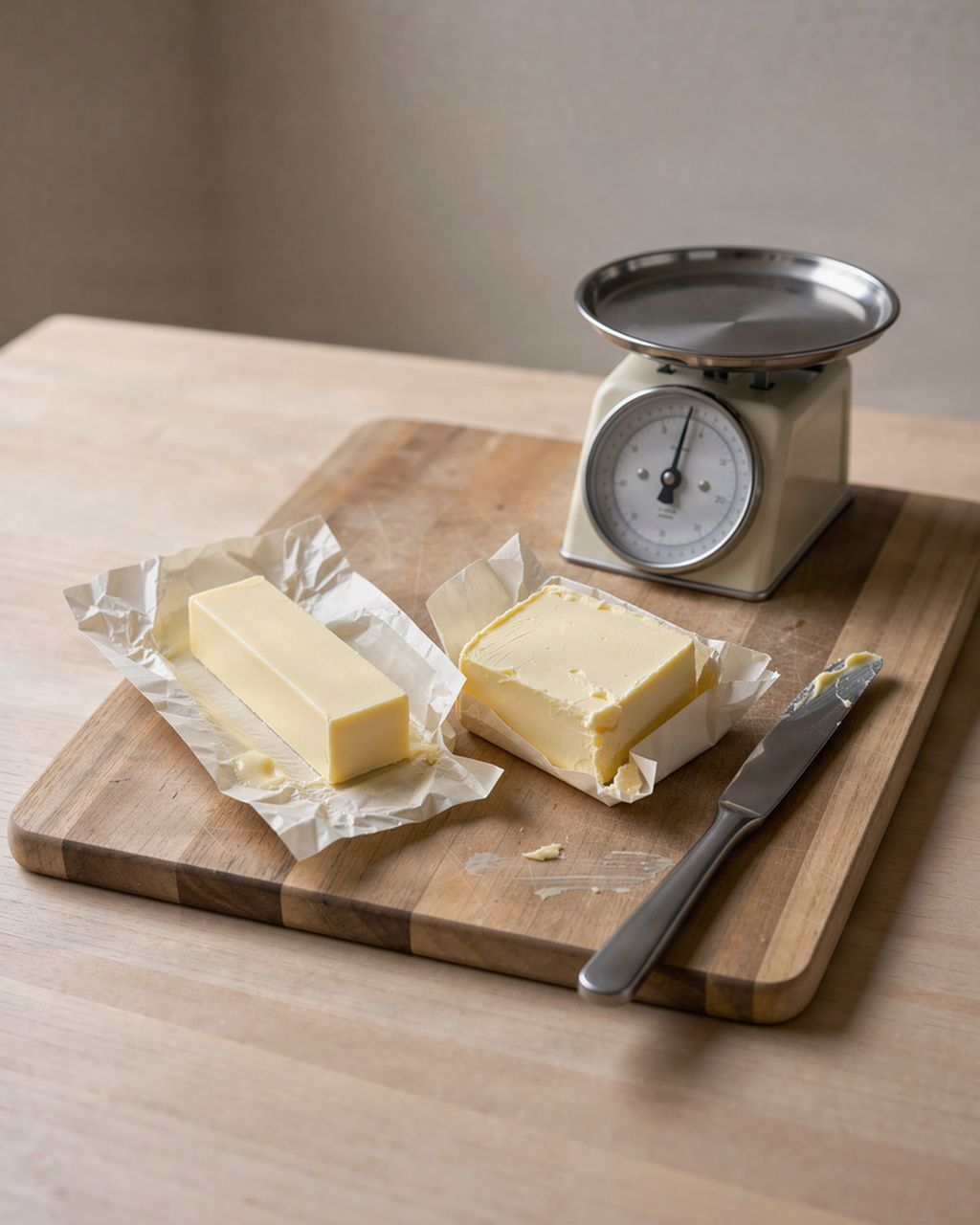
Different packs. A US stick is 113 g (4 oz, 8 tablespoons). European butter mostly comes in 250 g and 125 g blocks.
In most recipes these differences hardly matter. In pastry, shortbread and anything where butter is the main flavor, you'll notice them.
United States. Federal law defines butter as containing not less than 80% milk fat by weight (21 U.S.C. 321a, repeated in USDA's butter grading rules in 7 CFR Part 58). Anything lower can't be sold as butter.
European Union. EU rules (Regulation 1308/2013, Annex VII) define butter as at least 80% but less than 90% milk fat, with no more than 16% water and 2% non-fat milk solids. So the legal floor is the same 80%.
The real difference is what's on the shelf. EU public-intervention butter must be at least 82% fat, and 82% is the usual figure on European packs. In Czech shops, ordinary butter, máslo, is labeled 82%, and some premium butters go higher. American brands sold as "European-style" usually advertise a higher fat percentage than standard US butter for the same reason.
The rest of a block is mostly water, plus a small amount of milk solids, and salt if it's salted.
For most home baking, a 2% difference in fat is small.
Cakes, muffins and quick breads: swap gram for gram. You won't see much difference.
Cookies: a higher-fat butter can make them spread slightly more and taste richer.
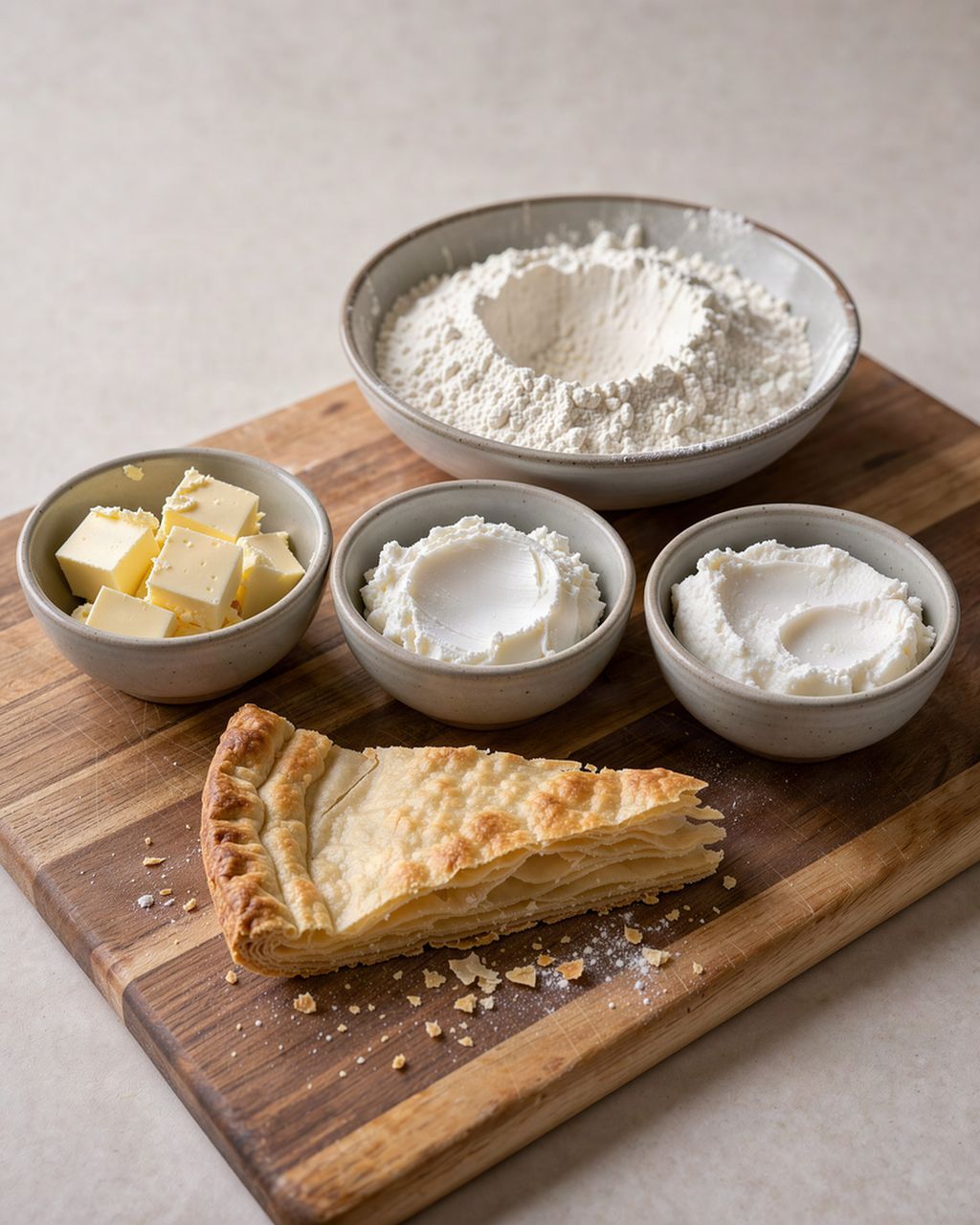
Pie crust, puff pastry and croissants: this is where higher-fat butter shines. Less water means less gluten development and a more tender, flakier result, and higher-fat butter stays pliable when cold, which helps lamination. Our guide to butter vs shortening in pie crust covers what fat does in pastry.
Buttercream: richer and a little firmer, and often more yellow.
Browned butter and sauces: less water means less spitting and a quicker brown.
If you're converting a US recipe in Europe, there's no need to adjust the amount of butter. Just weigh it. Our guide to the stick of butter in grams has the conversions.
In Europe, butter is usually unsalted unless the pack says otherwise. In Czech shops, máslo on its own is unsalted, and salted butter is sold separately and labeled. Irish and some French butters are often sold salted.
In the US, salted butter is very common, which is why American baking recipes usually ask for unsalted butter and add salt separately.
If you only have salted butter for a recipe that calls for unsalted, reduce the added salt. Salt content varies by brand, so check the label.
Cultured butter, also called sour cream butter, is churned from cream that has been fermented with lactic bacteria first. The fermentation gives a deeper, slightly tangy, nutty flavor. It's common in France, Germany and Scandinavia, and is often what Americans mean when they talk about the taste of "European butter".
Sweet cream butter, the standard kind in the US and in many European countries, is made from fresh cream without that step.
Both bake the same way at the same fat content. Use cultured butter where you'll taste it: on bread, in shortbread, in pastry or finished into a sauce.
A US stick: 113 g (4 oz), which is 8 tablespoons or half a US cup.
A US cup of butter: 227 g, or 2 sticks.
A tablespoon: about 14 g.
A European block: usually 250 g, about 2.2 US sticks. Half blocks are 125 g.
For other amounts, our tablespoon of butter in grams page and the cups and spoons to grams tool do the maths. Converting a whole European recipe? Our guide to converting European recipes to US measures covers the rest.
Recipe of the week, one tip that saves you time and one deal from the shop. Unsubscribe in one click.
The next issue goes out on Thursday, November 26.
Shops in both places sell products that look like butter but aren't:
Spreadable blends of butter and vegetable oil, which usually contain less milk fat and often more water than butter. They are fine on toast but behave differently in pastry and cookies.
Margarine and baking fats, which are made from vegetable oils.
In Czech shops, pomazánkové (sold as tradiční pomazánkové): a soft, cream-based dairy spread with at least 31% milk fat. It used to be called pomazánkové máslo, but since a 2012 EU court ruling it can't be sold as butter. Use it on bread, not in baking.
When a recipe says butter, use a product labeled butter. If you need cream as well, our guide to heavy cream in Europe explains the fat levels to look for.
European butter usually has more butterfat, typically 82% or more, and less water than standard American butter, which only has to reach 80%. It is also more often unsalted and sometimes cultured, which gives it a slightly tangy flavor.
Yes, gram for gram. Cakes, cookies and frostings barely change. Pastry and laminated doughs come out a little flakier and richer, and cookies may spread slightly more.
Most butter on European shelves is labeled 82% fat, and some is higher. EU rules allow butter from 80% milk fat with no more than 16% water, so check the label.
Usually not. In Czech shops, for example, ordinary butter is unsalted and salted butter is sold separately and labeled. In the US, salted butter is common, so American recipes often specify unsalted.
Cultured butter is made from cream that has been fermented with lactic bacteria before churning, which gives it a fuller, slightly tangy flavor. It bakes like ordinary butter of the same fat content.
One recipe worth heating the oven for, one tip, and one deal from the shop. Nothing else.