Why Is My Custard Not Thickening? Causes and How to Fix It
Why Does My Pastry Cream Taste Eggy or Starchy? How to Fix It
Updated Nov 21, 2026
Pastry cream tastes eggy when the yolks dominate the other flavors: too many yolks or whole eggs, too little vanilla, sugar or salt, or overcooking that brings out a sulfur note. A raw, starchy or floury taste means it wasn't boiled long enough. Both are easy to fix next time, and an eggy batch can often be rescued.
Pastry cream is meant to taste of vanilla, milk and butter, with the yolks in the background giving richness. When it tastes like scrambled egg or omelet, one of these is usually behind it:
Too many yolks, or whole eggs, for the amount of milk.
Too little vanilla, sugar or salt to balance the yolks.
Overcooking: scorching on the bottom of the pan or very long cooking brings out a sulfur note.
It picked up fridge smells because it was stored uncovered.
If the taste is more raw, floury or chalky than eggy, skip to the starchy section below. For the base method, see our crème pâtissière.
Recipe of the week, one tip that saves you time and one deal from the shop. Unsubscribe in one click.
The next issue goes out on Thursday, November 26.
Yolks carry most of the flavor and color in pastry cream. Classic recipes use about 4–6 egg yolks per 500 ml of milk. Going well above that makes the cream richer but also noticeably eggier.
Whole eggs taste different again. The whites add a more distinct "cooked egg" flavor and a firmer, less silky set. Recipes that use whole eggs to avoid leftover whites are fine, but expect a stronger egg note.
What to change next time: use yolks only, at the lower end of the range, and let the starch do more of the thickening.
The flavorings in pastry cream are there to balance the yolks, not just to decorate.
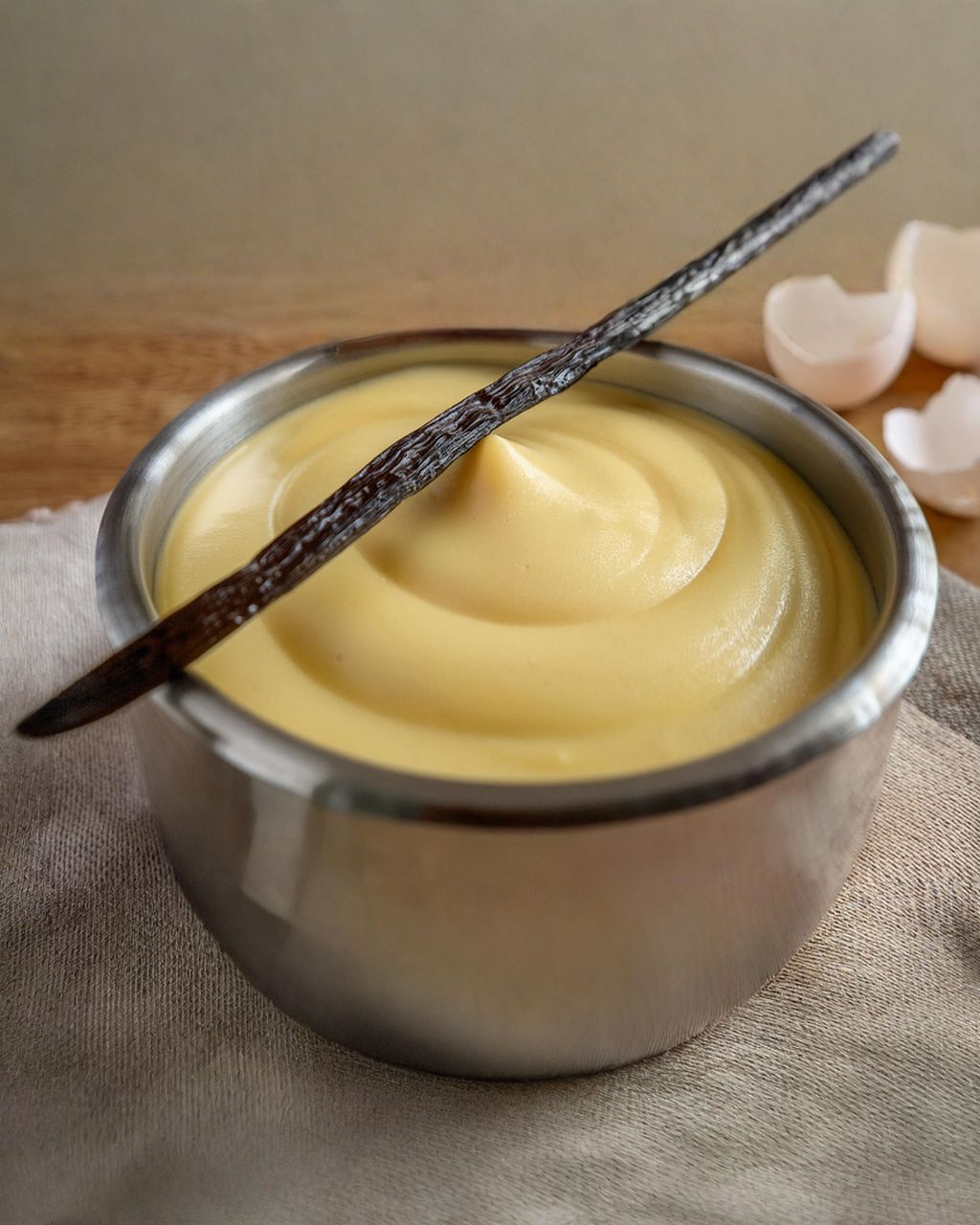
Vanilla: a real vanilla bean infused in the milk gives the roundest flavor. Our guide to how much vanilla to use has amounts for custards, and vanilla substitutes covers extract, paste and vanilla sugar.
Salt: a small pinch makes the vanilla and dairy taste fuller and pushes the egg back.
Sugar: too little makes the yolks stand out. Most recipes use about 80–125 g of sugar per 500 ml of milk.
Butter: a knob stirred in at the end rounds out the flavor and adds gloss.
Citrus zest: a strip of lemon or orange zest infused in the milk is a traditional way to freshen custards.
Liqueur or rum also masks egg flavor, but alcohol stirred into a cream doesn't cook off. Use an alcohol-free flavoring if anyone avoids alcohol.
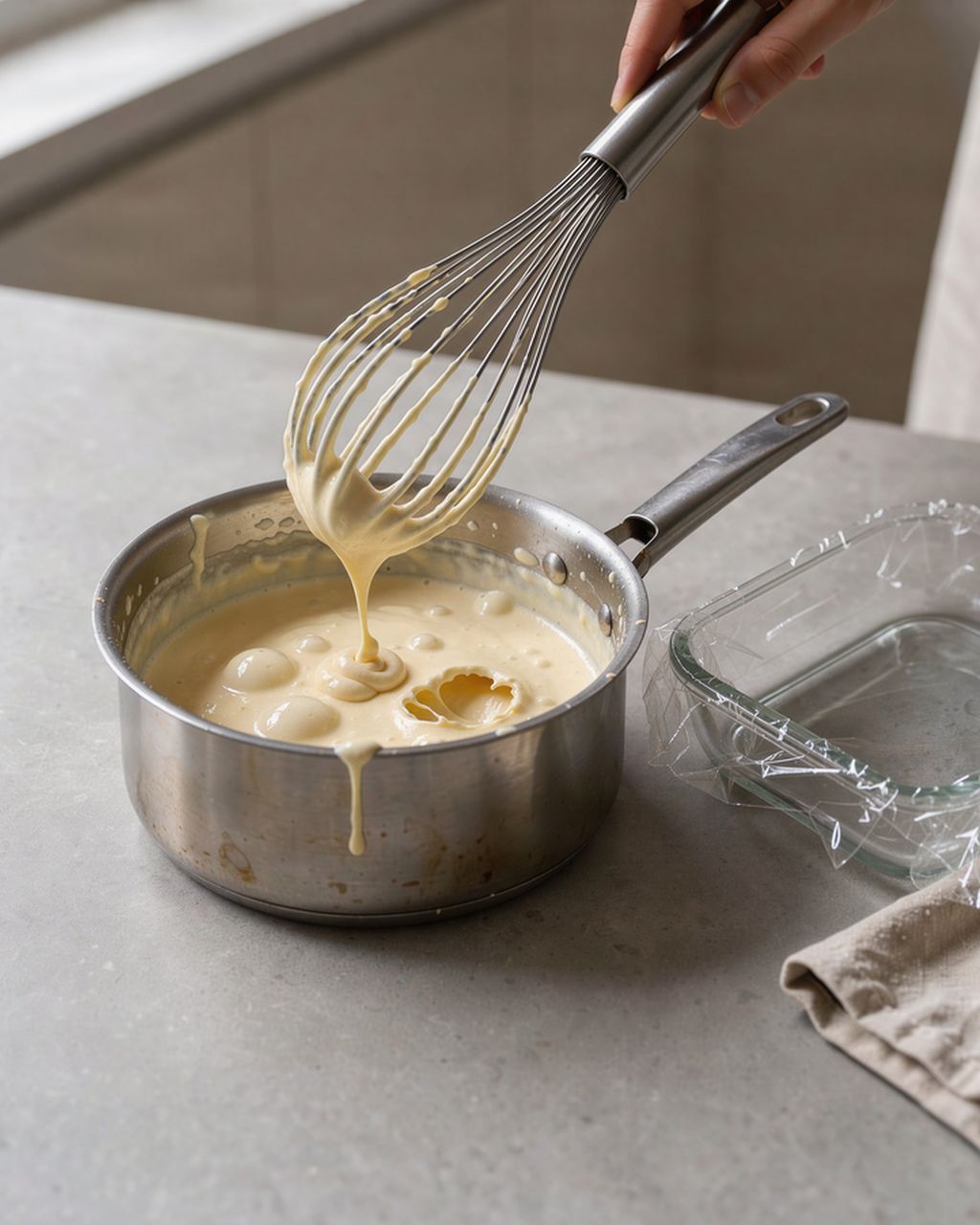
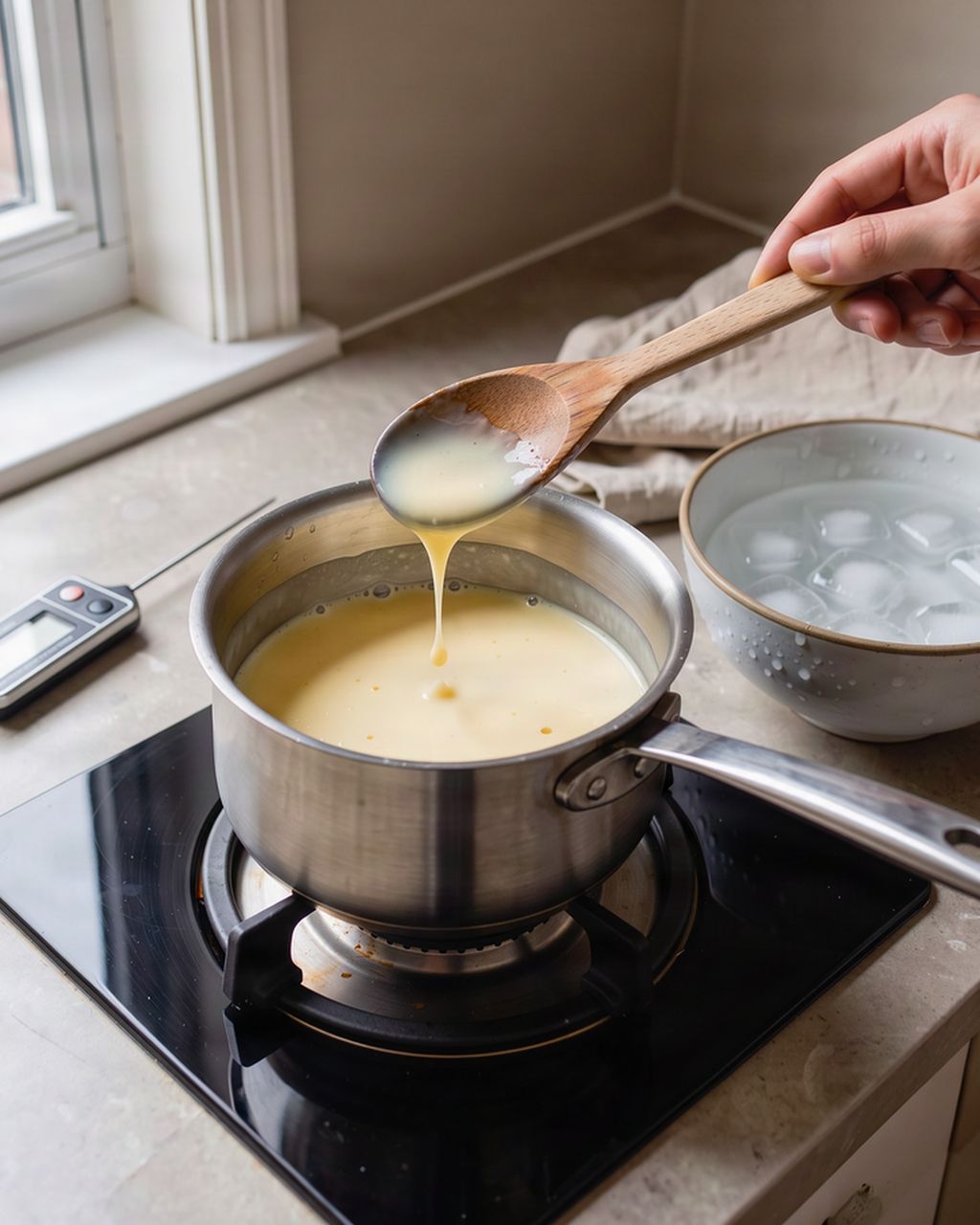
A raw, chalky or floury taste means the starch wasn't cooked enough. Cornstarch only thickens fully once the liquid comes to a simmer or gentle boil; until then it tastes raw. America's Test Kitchen cooks pastry cream until a few bubbles burst on the surface and it reads about 93 °C (200 °F), and most recipes keep it bubbling, whisking, for a minute or two.
Flour-based pastry cream needs a little longer than cornstarch to lose its raw taste.
Too much starch gives a pasty, gluey taste even when fully cooked. Most recipes use roughly 30–55 g of cornstarch per 500 ml of milk, or a little more if they use flour.
Boiling properly fixes two problems at once: the starchy taste, and pastry cream that turns runny overnight.
Scorching: pastry cream is thick and catches easily. A scorched layer on the bottom gives a burnt, eggy-sulfur taste through the whole batch. Whisk constantly, reach into the corners, and use medium heat rather than high. If it catches, pour the cream into a clean bowl without scraping the bottom.
Long cooking: a minute or two of bubbling is enough. Cooking much longer brings out more egg flavor and can thin the starch.
Aluminum pans: egg custards cooked or whisked in bare aluminum can turn grayish and taste metallic. Use stainless steel or an enameled pan.
The same causes apply to baked custards, with two extras:
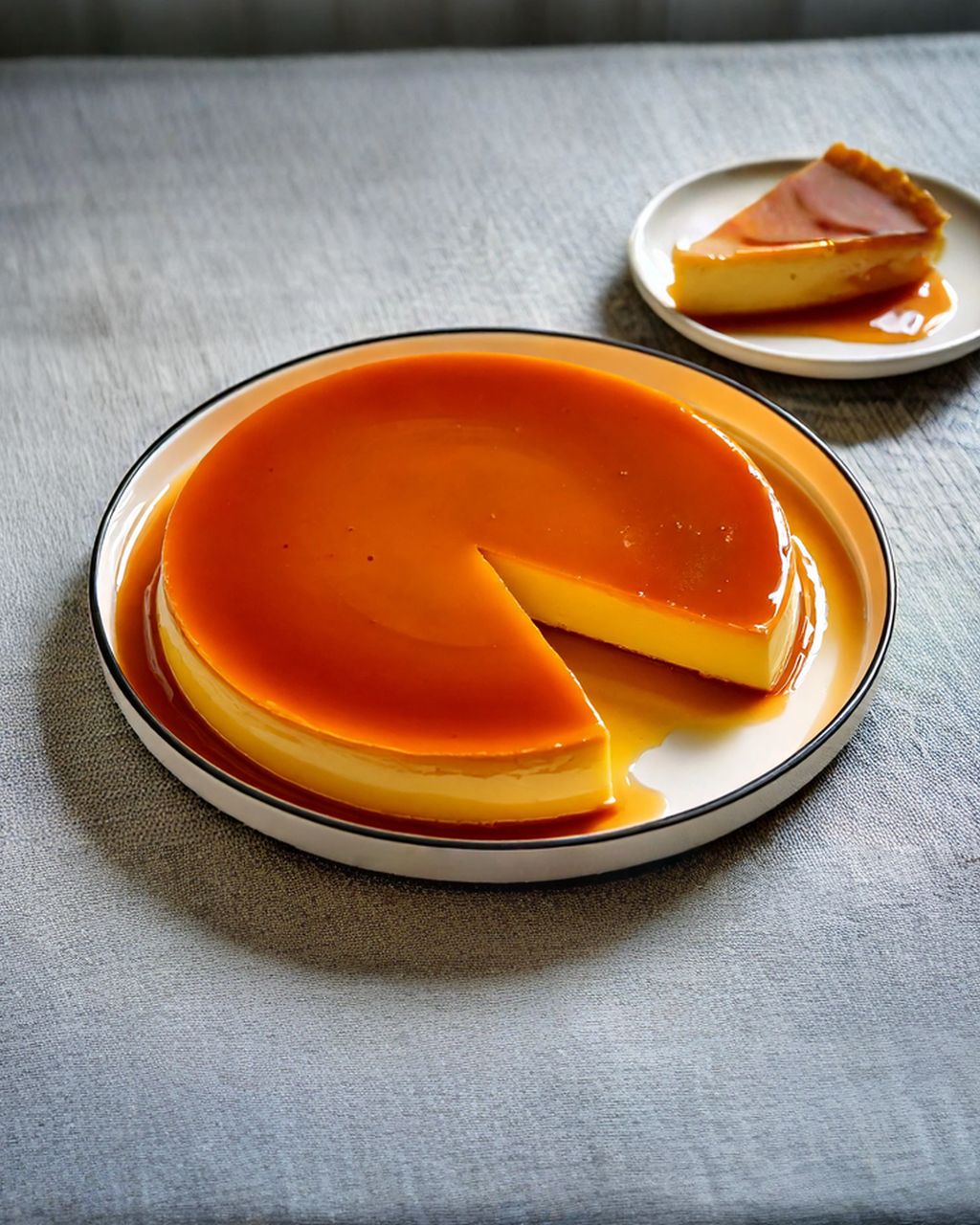
Whole eggs vs yolks. Flan and custard tarts often use whole eggs for a firmer set, which tastes more of egg than a yolk-only crème brûlée. Swapping some whole eggs for yolks makes them richer and less eggy, though softer.
Overbaking. An overbaked custard turns slightly rubbery, weeps liquid and develops a stronger egg flavor. Bake gently, ideally in a water bath, and take it out while the center still trembles. Ovens can run hotter or cooler than the dial, so an oven thermometer helps.
A bitter caramel layer, as in flan or crème brûlée, also balances the egg flavor nicely.
While the cream is still warm:
Stir in a little more vanilla extract or paste, and a pinch of salt.
Beat in a knob of soft butter.
Add a little finely grated lemon or orange zest if it suits the dessert.
Once it is cold:
Fold in whipped cream. This lightens both the texture and the flavor, turning it into crème diplomate.
Pair it with strong flavors: chocolate, coffee, caramel or tart fruit hide egg notes well.
Keep it covered with plastic wrap or baking paper pressed onto the surface, so it doesn't pick up fridge smells.
Pastry cream tastes eggy when the egg flavor isn't balanced by enough vanilla, sugar and salt, or when the recipe uses many yolks or whole eggs. Overcooking can add a sulfur note. Use a real vanilla bean or more extract, a pinch of salt, and stir in butter at the end.
Pastry cream tastes starchy or floury when it wasn't boiled long enough for the starch to cook through. Cornstarch only thickens fully once the liquid comes to a simmer or gentle boil, and flour needs a little longer. Keep it bubbling, whisking constantly, for a minute or two.
To mask an egg taste in pastry cream, stir in more vanilla, a pinch of salt, a knob of butter and a little citrus zest while it is warm. Folding in whipped cream once it is cold also softens the flavor. Next time, use fewer yolks or yolks only.
Classic French pastry cream uses yolks only, which gives the richest, least eggy flavor. Some recipes use whole eggs or a mix to save yolks; whites add a more noticeable egg taste and a slightly firmer, less silky texture.
A metallic taste or gray tint usually comes from cooking pastry cream in a bare aluminum pan, or from whisking it hard in one. Use a stainless steel or enameled pan and a silicone or stainless whisk.
One recipe worth heating the oven for, one tip, and one deal from the shop. Nothing else.