Roasted pear cupcakes with cream cheese frosting
Quark Frosting for Muffins and Cupcakes: How to Make It Pipeable and Keep It from Running
Updated Oct 24, 2026
Quark frosting holds its shape when it has little water and plenty of fat. So use drained full-fat quark, plus mascarpone or butter, add the powdered sugar only at the end, and mix briefly. If you want extra insurance, add a little gelatin. Pipe it with a large closed star tip, such as a 2D, onto completely cooled muffins. Below, you'll find why each step works, how much of everything to use, and what to do if your frosting still goes runny.
Quark frosting runs because quark is 70–80% water, and both mixing and sugar draw that water out. Buttercream holds because the fat in it firms up in the fridge. Quark has little fat, so it needs some help.
Your frosting usually runs because of one of these five things:
Wet quark. Soft quark from a tub is creamy, but it has the most water.
Too little fat. Quark and sugar without mascarpone, butter, or whipped cream simply has nothing to firm up.
Granulated sugar. It dissolves slowly and pulls whey out of the quark. After half an hour, the frosting thins out.
Mixing too long. A mixer on high speed breaks up the quark curds and releases water from them.
Warm muffins or a warm kitchen. Even a good frosting softens and slides off a lukewarm cake.
Drain the quark overnight in the fridge. Put it in a sieve lined with muslin or a double layer of cheesecloth, cover it, and weigh it down with a small plate. In 8–12 hours, a noticeable amount of whey will drain out. Exactly how much depends on the brand, but with soft quark it can be as much as a tenth of the weight. Weigh the drained quark, not the amount on the package.
Which quark to buy: full-fat. The fat helps it hold its shape and makes the frosting smoother. Block quark (firmer and crumbly) is drier than the tub kind, and you often don't need to drain it at all.
Smooth texture: drier quark is crumbly, so press it through a fine sieve. The frosting will be smooth and won't look grainy at the tip.
In a hurry: if you don't have time for overnight, let the quark drain for at least 2 hours and add more weight. Or replace part of the quark with mascarpone.
Muffin frosting is firmed up by fat that sets in the cold. You have three options, and each gives a different result:
Mascarpone (about 40% fat): the surest option and the least work. Quark and mascarpone in roughly a 1:1 ratio pipes almost like buttercream and still tastes of quark. Add the mascarpone cold and mix only briefly. Overmixed, it curdles.
Butter (82% fat): the firmest, because butter sets hardest in the fridge. For 250 g of quark, use 100–125 g of butter. The butter must be softened and the quark at room temperature. Cold quark added to soft butter will curdle. The flavor is richer, more like American cream cheese frosting.
Whipped cream (30–33% fat): the lightest, but it holds the least. Whip the cream separately and just fold it into the quark with a spatula. The frosting will be fluffy and sensitive to heat, so we don't recommend it for tall piping without mascarpone or gelatin.
A quark frosting for a layer cake calls for different ratios. You'll find them in our article on quark cake frosting that holds its shape. If you're working on a frosting that's based on pudding, with quark only firming it up, read butter-free pudding frosting.
Quark frosting calls for powdered sugar, added at the end and as sparingly as possible. Granulated sugar dissolves slowly in quark, draws water out of it, and the frosting then weeps. Powdered sugar dissolves right away and doesn't leave grit.
How much: 60–100 g per 500 g of base (quark + fat). Taste it. Every extra spoonful of sugar softens the frosting a little.
When: only once the quark and fat are combined. Sift it in and mix on low speed just until combined.
Vanilla sugar and flavorings are fine. Add lemon juice or fruit purée by the teaspoon, because any liquid thins the frosting. For fruit flavor, freeze-dried fruit powder or zest works better.
Add gelatin when the frosting needs to last: for an outdoor party, a warm room, or tall piping. Quark with mascarpone usually holds in the fridge even without it. But if you're making a lighter frosting with whipped cream, it's a good safeguard.
How much: for 500 g of frosting, roughly 4–5 g of powdered gelatin with a strength of 200 bloom. No more, or the frosting will turn rubbery and set in the bag instead of piping.
Method: sprinkle the gelatin over about five times its weight in cold water (4 g in 20 ml) and let it bloom for 10 minutes. Then dissolve it gently, in the microwave in a few short bursts or over steam, to about 50–60 °C (120–140 °F). Don't boil it, because boiling weakens it.
Tempering: stir 2–3 spoonfuls of the frosting into the warm gelatin, and only then add this mixture to the rest. Cold quark would shock warm gelatin into rubbery strings.
Timing: with gelatin, you have about 15–30 minutes to pipe before it starts to set. Get your piping bag and tip ready beforehand.
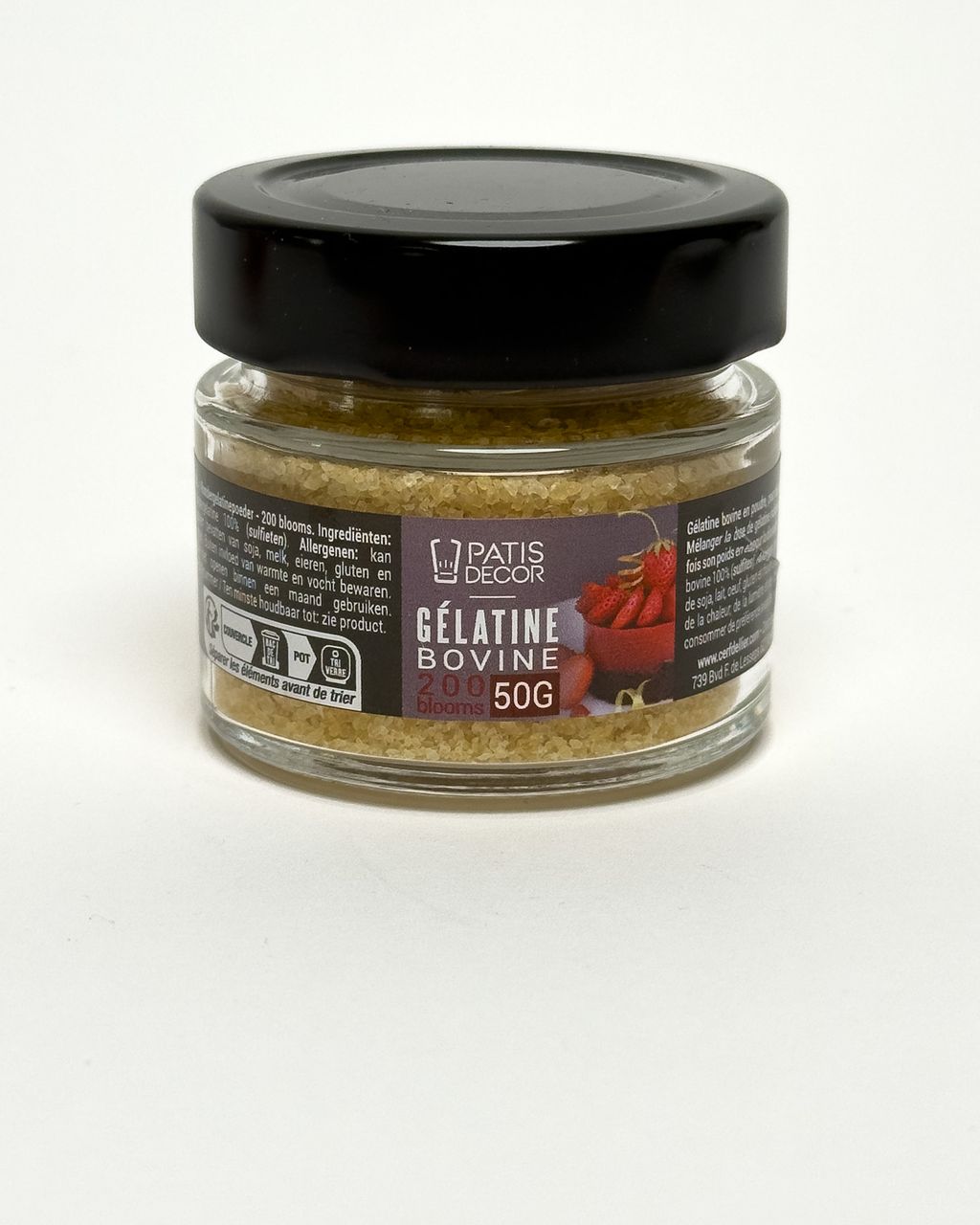
Gelatin strength is given in bloom and differs from brand to brand. We use powdered beef gelatin, 200 bloom, which the amounts above are calculated for. With sheet gelatin or a weaker gelatin, recalculate the amount according to the package. Gelatin is animal-based. For vegetarians, leave it out and rely on mascarpone or butter.
For 12 muffins with a tall swirl, roughly 550–600 g of frosting is enough. This is a basic ratio you can build on:
250 g full-fat quark (drained, weighed after draining)
250 g cold mascarpone
70–90 g powdered sugar
seeds from ½ vanilla bean or 1 teaspoon vanilla extract
optional: 4 g powdered gelatin (200 bloom) + 20 ml water
Press the quark through a sieve.
Briefly mix it with the mascarpone on low speed or with a spatula, just until smooth. 30–60 seconds is enough.
Sift in the sugar, add the vanilla, and mix just until combined.
If you're adding gelatin, stir it in now (see above).
Chill the frosting in the fridge for 30–60 minutes. It will firm up and pipe better.
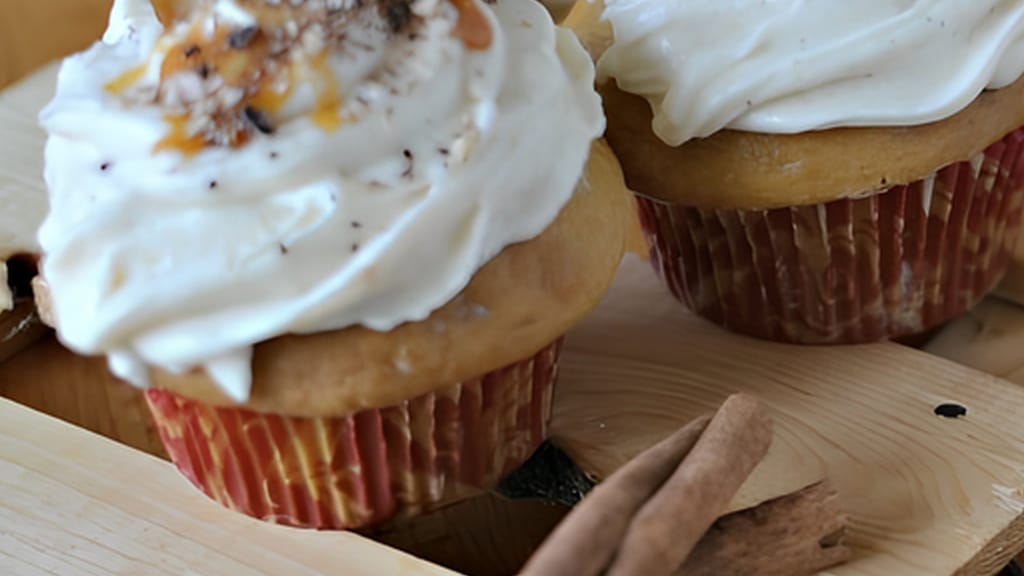
You can see how it looks on a finished dessert in our baked pear cupcakes with quark frosting.
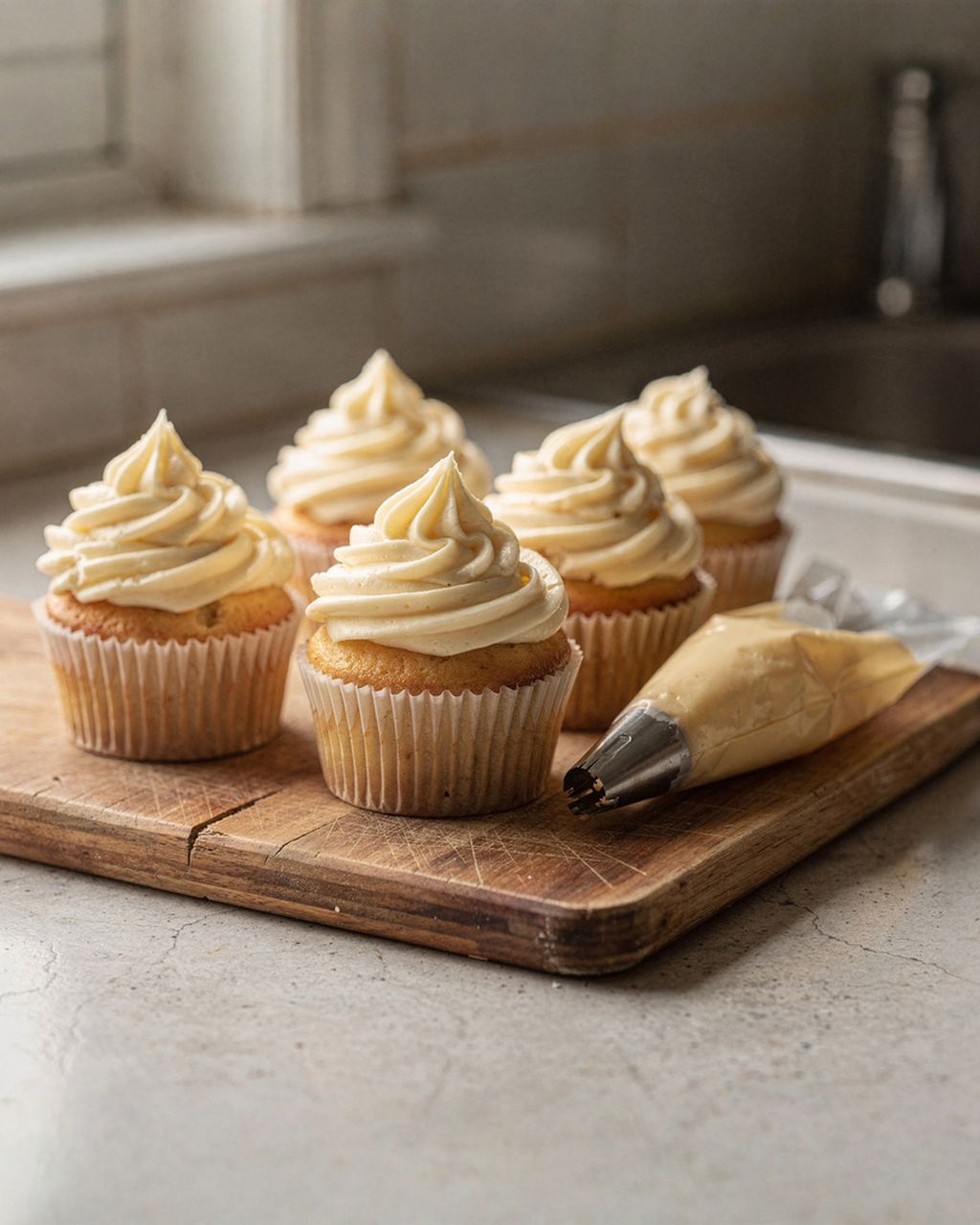
Roasted pear cupcakes with cream cheese frosting
Baked Pear Cupcakes with Quark Frosting
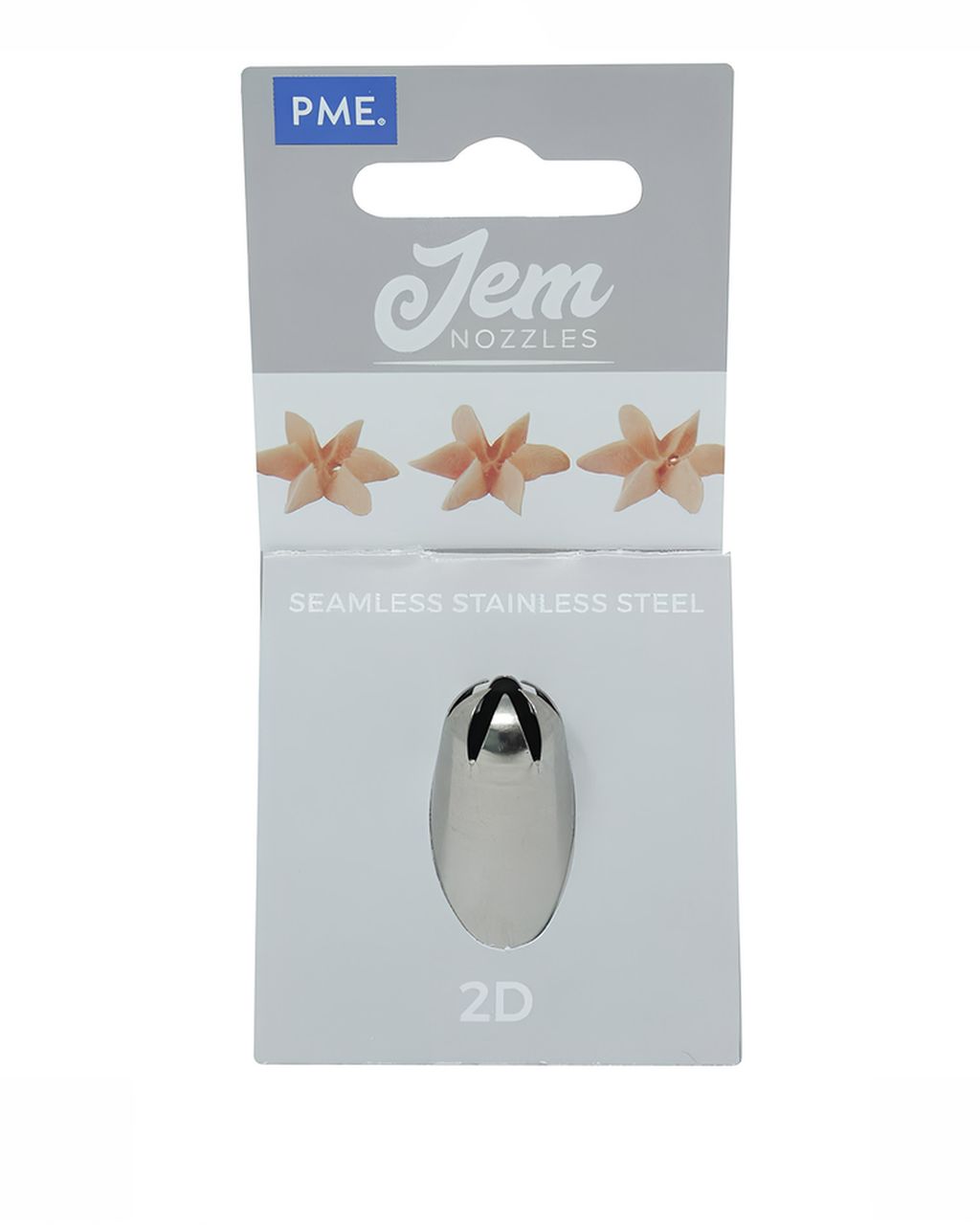
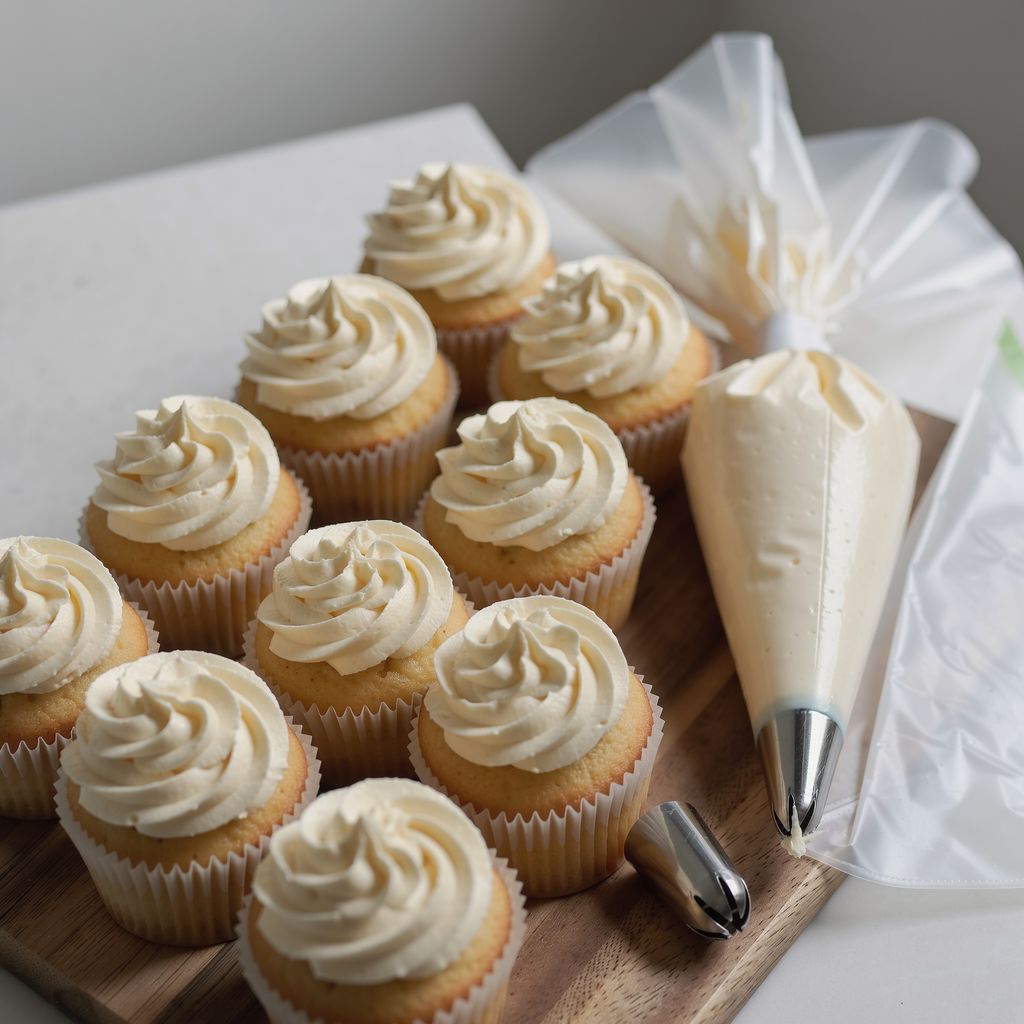
For quark frosting, use a large closed star tip, such as a 2D. Quark is softer than buttercream, and the deep grooves of a closed star give it an inner skeleton, so the swirl keeps its height. The frosting also gets a texture that shows it's made with quark, not butter.
A comparison of tips, including ones we don't sell:
Closed star tip 2D (or similar): the best choice for quark. Full blooms and swirls hold, and the creamy texture shows nicely in the grooves. We use the JEM Drop Flower #2D decorating tip.
Open star tip (type 1M): the classic "soft-serve" swirl. It works, but the shallower grooves tend to blur together with soft frosting, and the swirl can sag.
Large round tip (type 1A): the safest choice if your frosting came out softer. It makes a smooth dome that hides any slumping.
Fine flower tips (petal, chrysanthemum, tiny stars): not for quark. Thin petals need stiff buttercream, and quark will spread out within an hour.
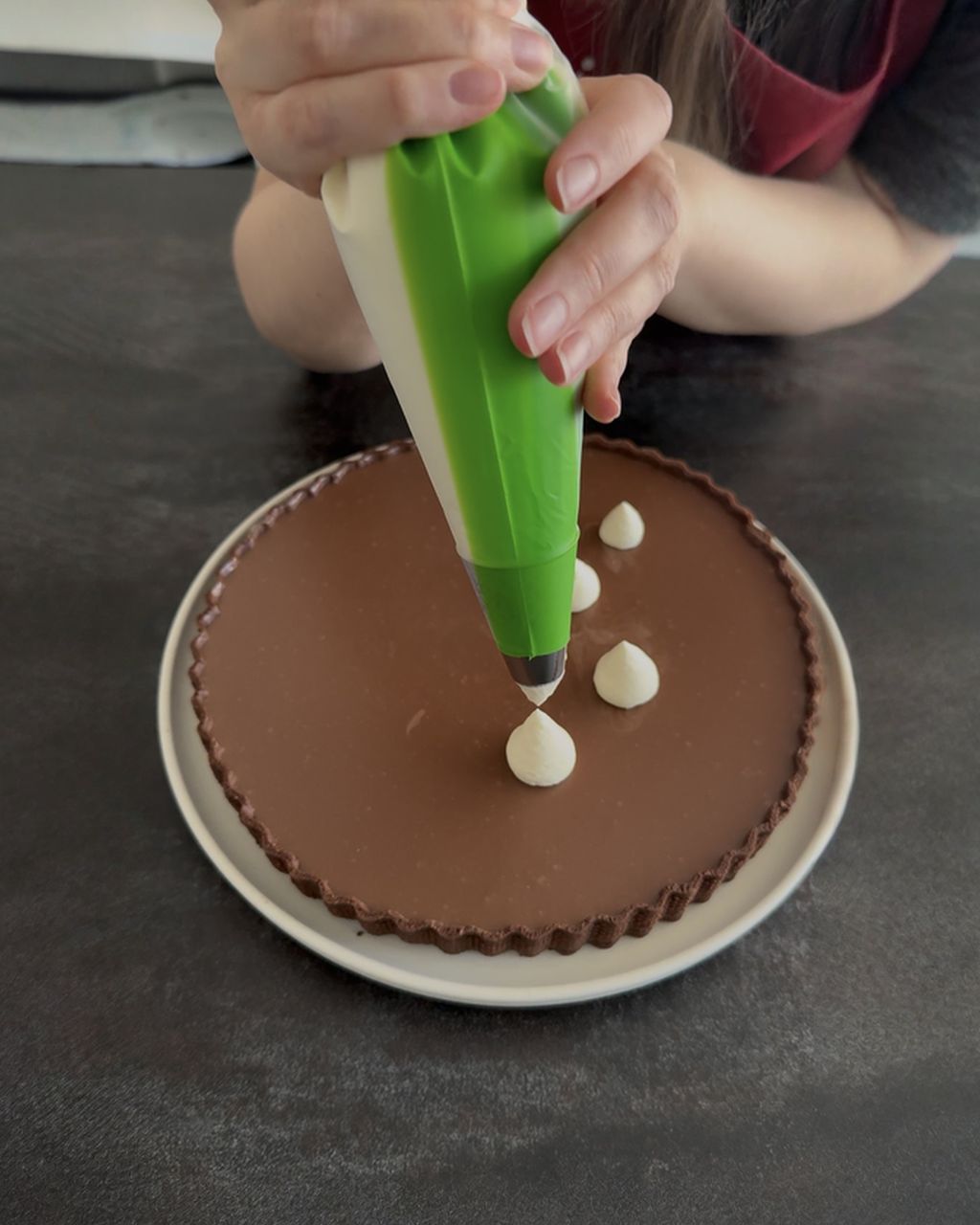
Technique with the 2D: hold the tip upright about 1 cm above the center of the muffin, start in the middle, and pipe a spiral outward and back up. Squeeze evenly, release the pressure at the end, and pull the tip quickly straight up.
Pipe quark frosting cold onto completely cooled muffins and put them straight back in the fridge. Heat is the number one enemy of quark.
Cool the cakes: at least an hour on a wire rack. A lukewarm muffin melts the frosting from underneath.
Fill the bag with only half the frosting: leave the rest in the fridge for now. Your hand warms the frosting in the bag, and the longer it sits there, the softer it gets by the time you reach the last muffin. A 36 cm bag holds enough frosting for about 6 swirls and is still easy to work with. We use 36×20 cm piping bags.
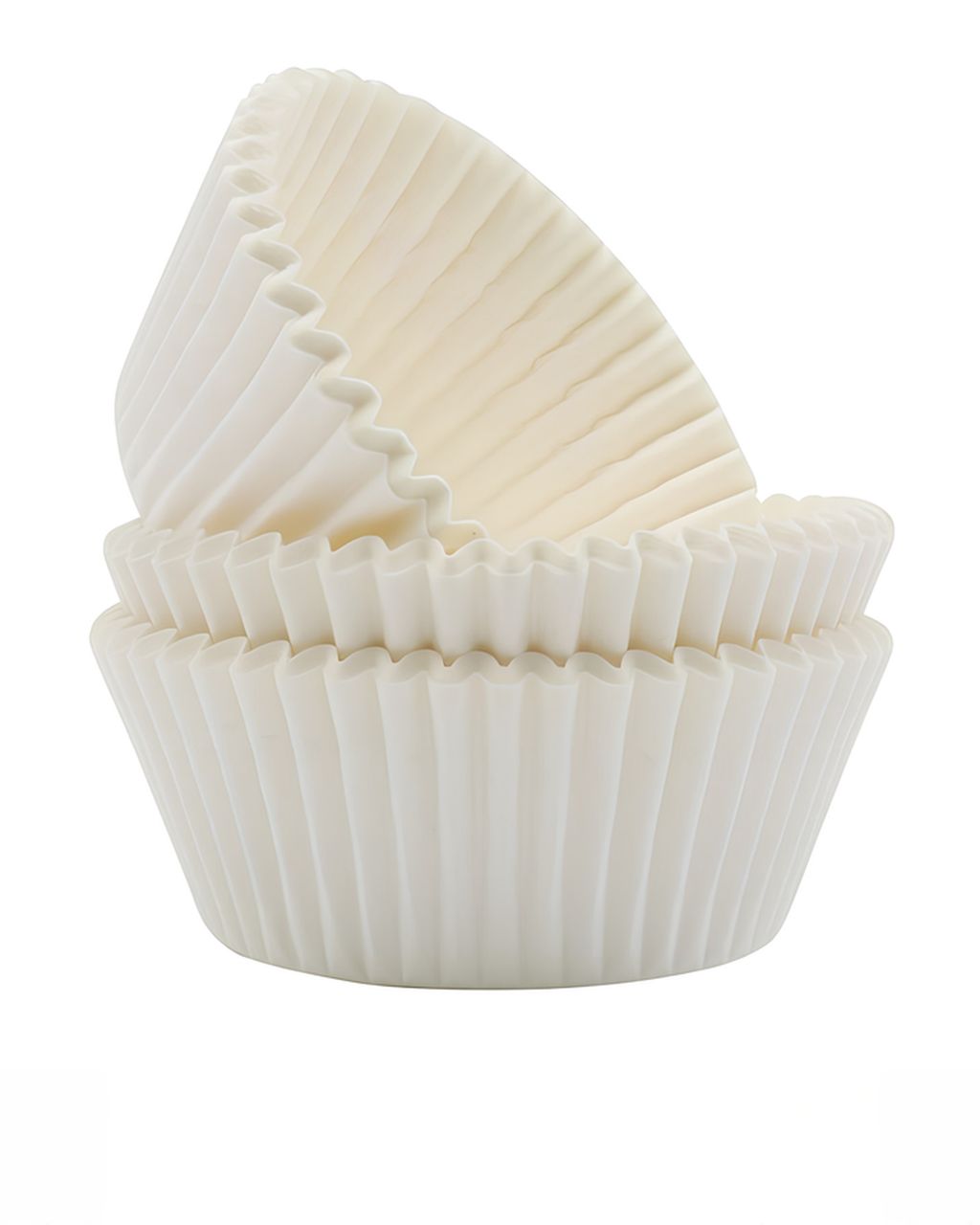
Liners that keep their shape and stay clean: sturdier paper liners don't let grease through, and the muffin doesn't spread outward in them. The classic choice is white paper cupcake liners, which make every frosting color stand out.
Store finished muffins in the fridge: in a covered box, and eat them within 2 days. Take them out 15–20 minutes before serving.
If you'd like to hide some frosting inside the muffin too, check out filled cupcakes.
You can make it with part-skim or low-fat quark, but it won't hold as well, because that quark has more water and less fat to firm up in the cold. Drain it overnight under a good weight. Without mascarpone, butter, or 4–5 g of gelatin per 500 g of frosting, you'll get a smooth dome rather than a tall swirl.
Yes. Quark frosting without gelatin keeps in a covered container in the fridge until the next day. Before piping, just stir it briefly with a spatula, not a mixer. Make frosting with gelatin right before decorating, because it sets in the fridge and won't pipe out of the bag.
Yes, use gel or powdered food colorings; liquid ones aren't suitable. Liquid color thins the frosting just like water does. For a natural color, use freeze-dried fruit powder, such as raspberry or strawberry, which adds flavor and won't make the frosting soggy.
Quark and mascarpone frosting most often curdles from overmixing, because mascarpone behaves like overwhipped cream when beaten for too long and releases its fat. The second common cause is mixing ingredients at very different temperatures. So mix for only 30–60 seconds on low speed.
Quark frosting for muffins isn't a great candidate for freezing, because the quark releases water after thawing and the frosting turns grainy. The butter version handles the freezer better; after thawing it in the fridge, mix it briefly. Unfrosted muffins freeze with no problem, and you can make fresh frosting afterward.
One recipe worth heating the oven for, one tip, and one deal from the shop. Nothing else.