What Is Smažený Sýr? Czech Fried Cheese and Which Cheese to Use
What Are Olomoucké Tvarůžky? The Czech Cheese Famous for Its Smell
Updated Nov 20, 2026
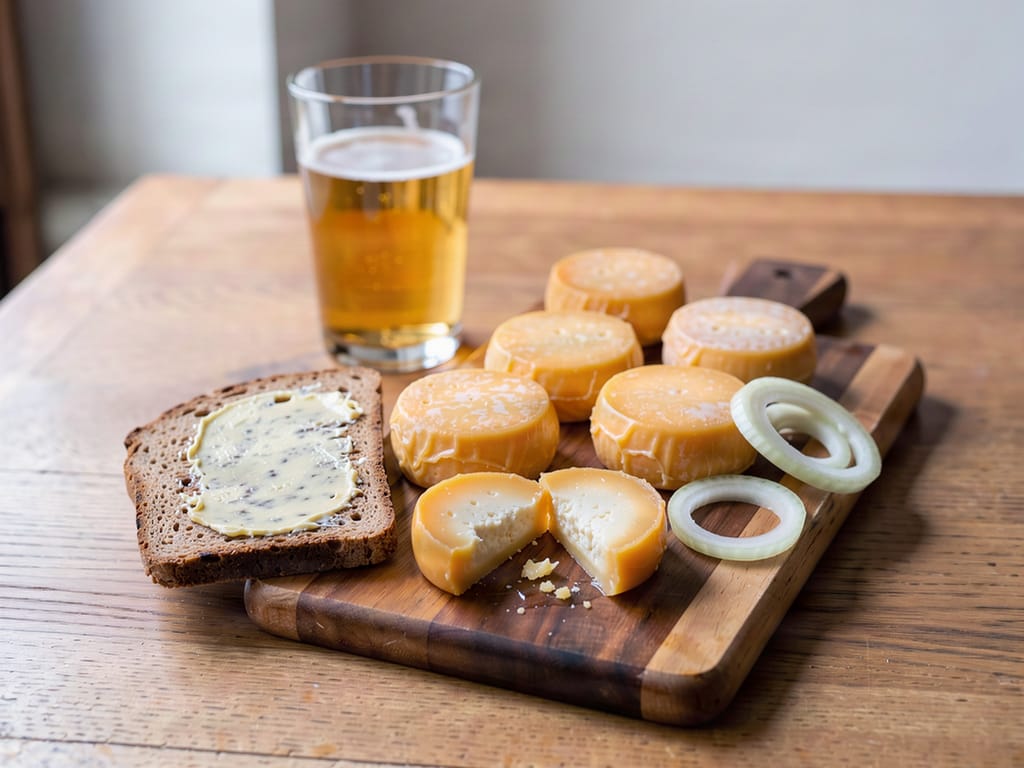
Olomoucké tvarůžky are small, golden, ripened cheeses made from Czech curd cheese, with a low fat content and a famously strong smell. They have been made in the town of Loštice in Moravia since the 19th century and carry an EU Protected Geographical Indication. Czechs eat them with beer, raw onion and bread, fry them in breadcrumbs, or mash them into spreads.
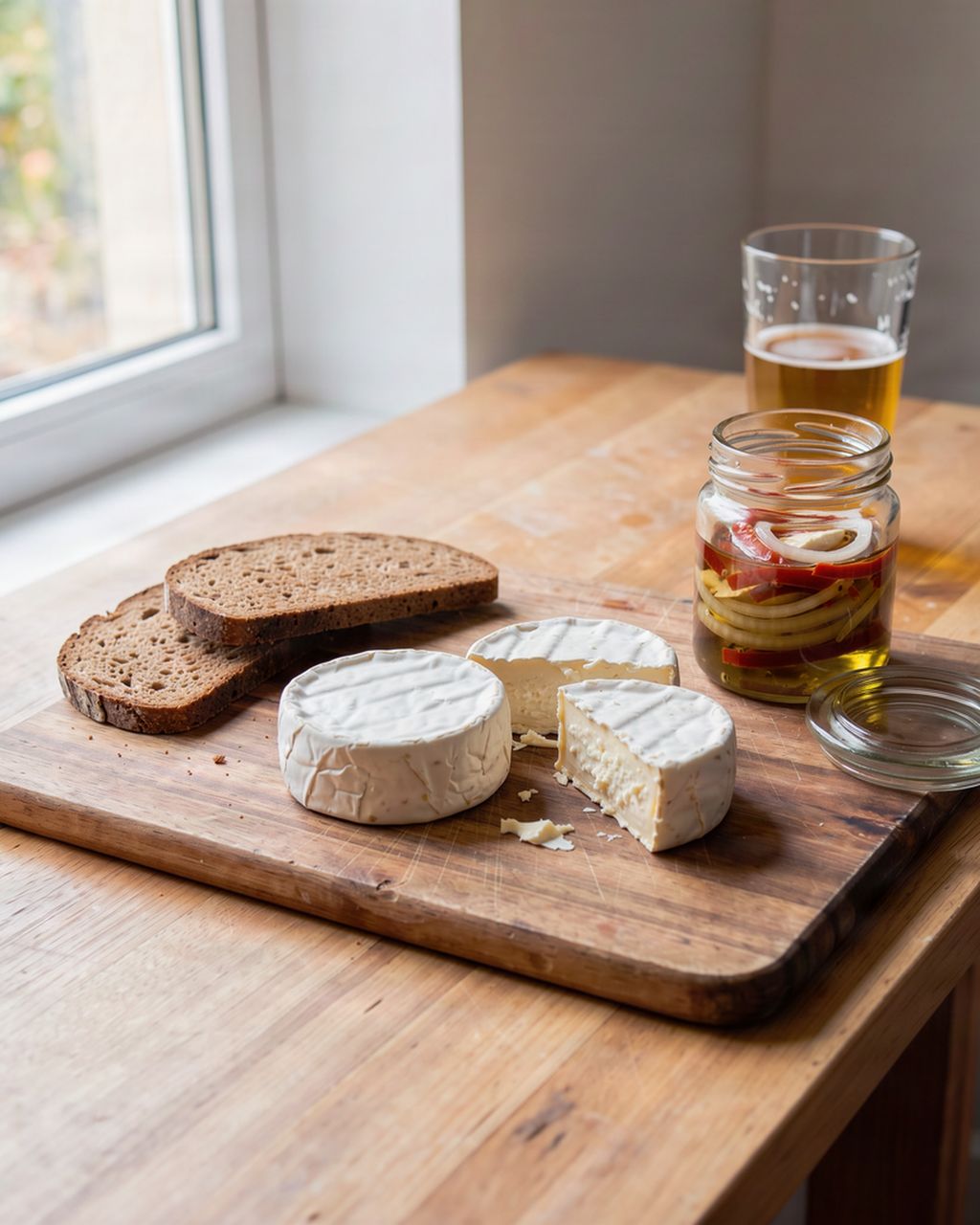
Olomoucké tvarůžky (roughly OH-lo-mouts-keh TVAH-roozh-kee) are small ripened cheeses, sold as rounds, little rolls or pieces in a cardboard pack. Their outer layer is golden yellow and soft, almost translucent, and the center stays white and crumbly when they are young.
They are not made directly from milk. The base is low-fat tvaroh, Czech curd cheese, which is mixed with salt, shaped and then ripened. During ripening, cultures on the surface work their way inward, so the cheese turns soft and golden from the outside in.
The word tvarůžky comes from tvar, shape, because the cheese is shaped by hand or machine. You will also hear the older name syrečky, little cheeses. Our ingredient page on Olomouc cheese has the nutrition figures.
Recipe of the week, one tip that saves you time and one deal from the shop. Unsubscribe in one click.
The next issue goes out on Thursday, November 26.
The cheese belongs to Haná, the flat farming region around Olomouc in central Moravia. Village farmers made it from leftover curd for centuries, and written records of the cheese go back to the 15th century.
Today it is made in Loštice, a small town north-west of Olomouc. The A.W. company has made tvarůžky there since 1876, and it runs a museum devoted to the cheese next to its plant. The cheese is called Olomoucké because Olomouc was the market town where it was traded.
In 2010 the EU registered Olomoucké tvarůžky as a Protected Geographical Indication (PGI). Under it, only cheese made in the defined area to the registered specification may carry the name. The specification also caps fat at 1% and sets the dry matter between 34% and 38%.
Let us be honest: they smell. Open a pack in a small kitchen and everyone in the flat will know, and Czech jokes about tvarůžky usually involve trains, offices or relationships. The smell is sharp and pungent, and people often compare it to old socks or a cow shed.
The taste is milder than the smell. A young tvarůžek is tangy, salty and slightly sour, with a firm white core. A riper one is softer all the way through, more savory and more pungent.
So why do people love them? Partly the flavor, which is strong and savory while being low in fat. Partly tradition, because for many Moravians they taste of home. And partly the dare.
A few practical notes:
Keep them in their pack, wrapped again in a box or a lidded container, in the fridge. The smell travels to butter and milk.
Take them out a little before serving. Cold tvarůžky taste flat.
Don't trim off the golden outer layer. It is the best part.
The classic way is cold with beer:
On a plate with raw onion, sliced thin, plus dark bread or a rye roll spread with butter. Some people add a sprinkle of caraway or paprika.
Nakládané tvarůžky (marinated): pieces layered in a jar with onion and spices under oil or a vinegar brine. Czech shops sell them ready-made. Keep the jar in the fridge and follow the storage advice on the label.
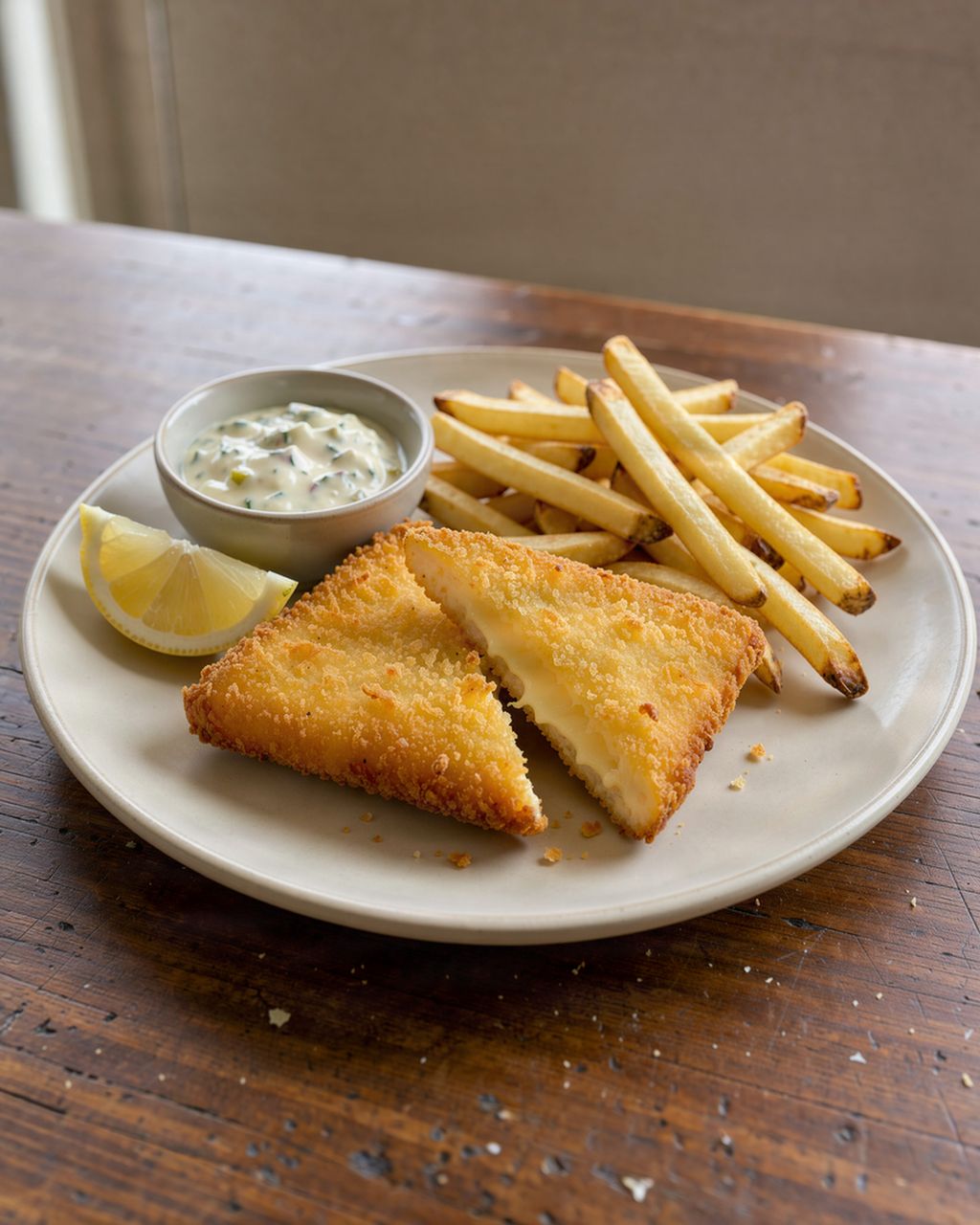
Smažené tvarůžky (fried): breaded and fried until the inside melts and is steaming hot all the way through, like Czech fried cheese, but with a much stronger flavor. Usually served with tartar sauce and bread or potatoes.
In spreads (tvarůžková pomazánka): mashed with butter or soft curd cheese, onion and sometimes mustard, then spread on bread.
Baked into things: grated into potato pancakes, folded into a savory pastry, or melted onto toast. A shop in Loštice even started making tvarůžky ice cream in 2016.
For more ideas on what goes on a beer table, see our guide to wine and beer snacks. For the onion, our guide on how to cut an onion helps if you want thin, even rings.
Tvarůžky belong to a family of Central European sour-milk cheeses. Here is how the cousins compare:
Harzer and Mainzer (Germany): the closest relatives. Also made from low-fat curd, also ripened from the outside in, and also strong-smelling. If you can find Harzer in a German shop or deli, it is the best stand-in.
Limburger (Belgium and Germany): a smear-ripened cheese with a similar famous smell, but made from whole milk, so it is far richer and creamier.
Pivní sýr (Czech beer cheese): a soft smear-ripened cheese, similar in spirit to Limburger, and a different product from tvarůžky. See our page on pivní sýr.
In the US and UK, real tvarůžky turn up mainly in Czech, Slovak and Polish shops and online. Keep them in the fridge and eat them by the date on the pack. Tvarůžky are a soft, surface-ripened cheese. The NHS (opens in a new tab) warns that unpasteurised or soft ripened dairy foods may contain listeria, and a similar Austrian acid-curd cheese, Quargel, caused a listeria outbreak in Austria, Germany and the Czech Republic in 2009 and 2010. If you are pregnant, eat tvarůžky only cooked until steaming hot all the way through, such as fried or baked, not cold from the beer-table plate. The UK Food Standards Agency (opens in a new tab) also counts people over 65 and people with a weakened immune system among those at higher risk from listeria, so the same advice applies to them.
Tvarůžky are made from low-fat curd, so they are low in fat: the PGI caps it at 1%, and A.W. labels list less than 0.5 g per 100 g, with about 127 kcal per 100 g. Most of the rest is protein and water.
They are also salty, because salt is part of the recipe, and A.W. lists salt at up to 5.5% of the cheese, so check the nutrition panel if you watch your salt. And remember that a plate of tvarůžky usually comes with butter, bread and beer, which change the totals more than the cheese does.
Olomoucké tvarůžky are Olomouc cheese, a ripened sour-milk cheese from Moravia in the Czech Republic. They are also called Olomoucké syrečky and in English simply Olomouc cheese.
Tvarůžky smell strong because they are ripened with surface cultures that break down the protein in the curd, which gives the pungent smell and the golden, slightly sticky skin. The smell is much stronger than the taste.
Yes, tvarůžky are low in fat, because they are made from low-fat curd cheese. The PGI specification caps fat at 1%, and the maker's labels list less than 0.5 g of fat per 100 g.
Olomoucké tvarůžky are made in Loštice, a small town in the Olomouc Region of Moravia, by the company A.W., which has made them since 1876. The name comes from Olomouc, the regional city where the cheese was traded.
The closest substitute for tvarůžky is German Harzer or Mainzer cheese, which are also low-fat ripened sour-milk cheeses. Limburger is stronger and much richer, but it gives a similar smell on a beer board.
One recipe worth heating the oven for, one tip, and one deal from the shop. Nothing else.