Why Is My Custard Not Thickening? Causes and How to Fix It
Custard vs Pudding vs Pastry Cream: What's the Difference?
Updated Nov 21, 2026
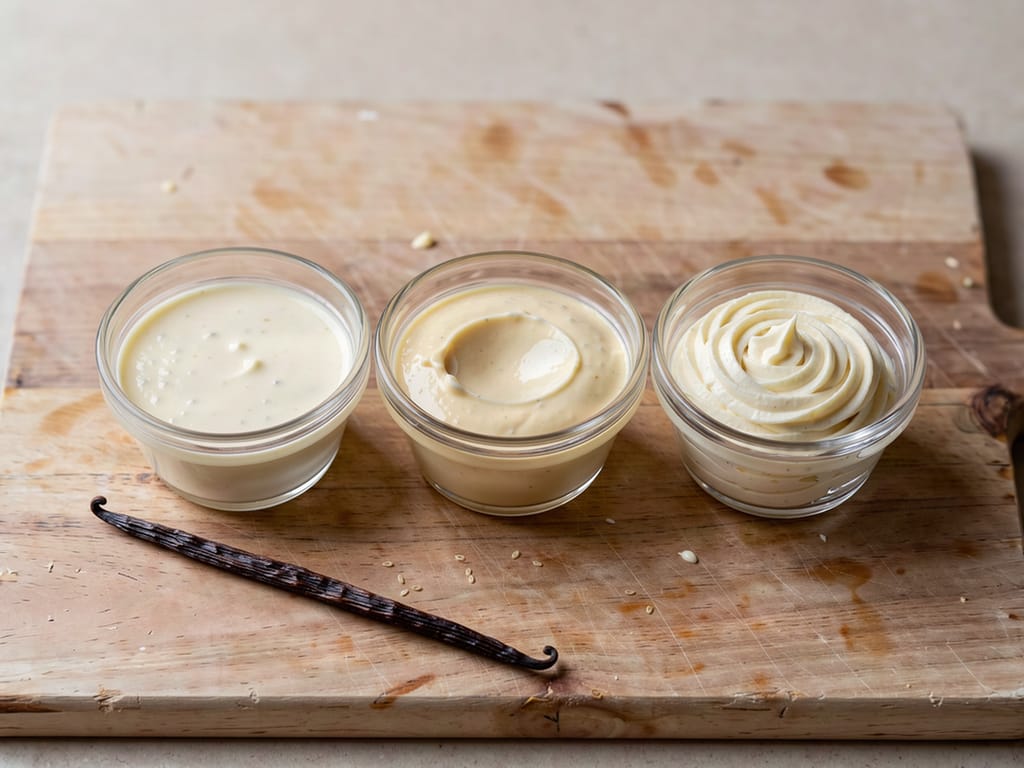
The difference is what thickens them: custard is set mainly by eggs, American pudding mainly by starch, and pastry cream by both eggs and starch, cooked thick enough to pipe into pastries. They share milk, sugar and vanilla, so they look alike. Here is how to tell them apart, and which to use where.
All three are milk, sugar and flavoring, cooked until thick. What separates them is the thickener:
Custard: thickened by eggs. Either stirred on the stove into a pouring sauce, or baked into a set custard.
Pudding (American sense): thickened by starch, usually cornstarch, sometimes with a yolk or two. Soft and spoonable.
Pastry cream: thickened by eggs and starch together, then boiled. Thick enough to pipe and hold its shape inside a pastry.
A rough rule: the more starch, the thicker and more forgiving. The more yolks, the richer and silkier.
Custard is milk or cream set by egg. The proteins in the eggs thicken the liquid gently as it heats. There are two main kinds:
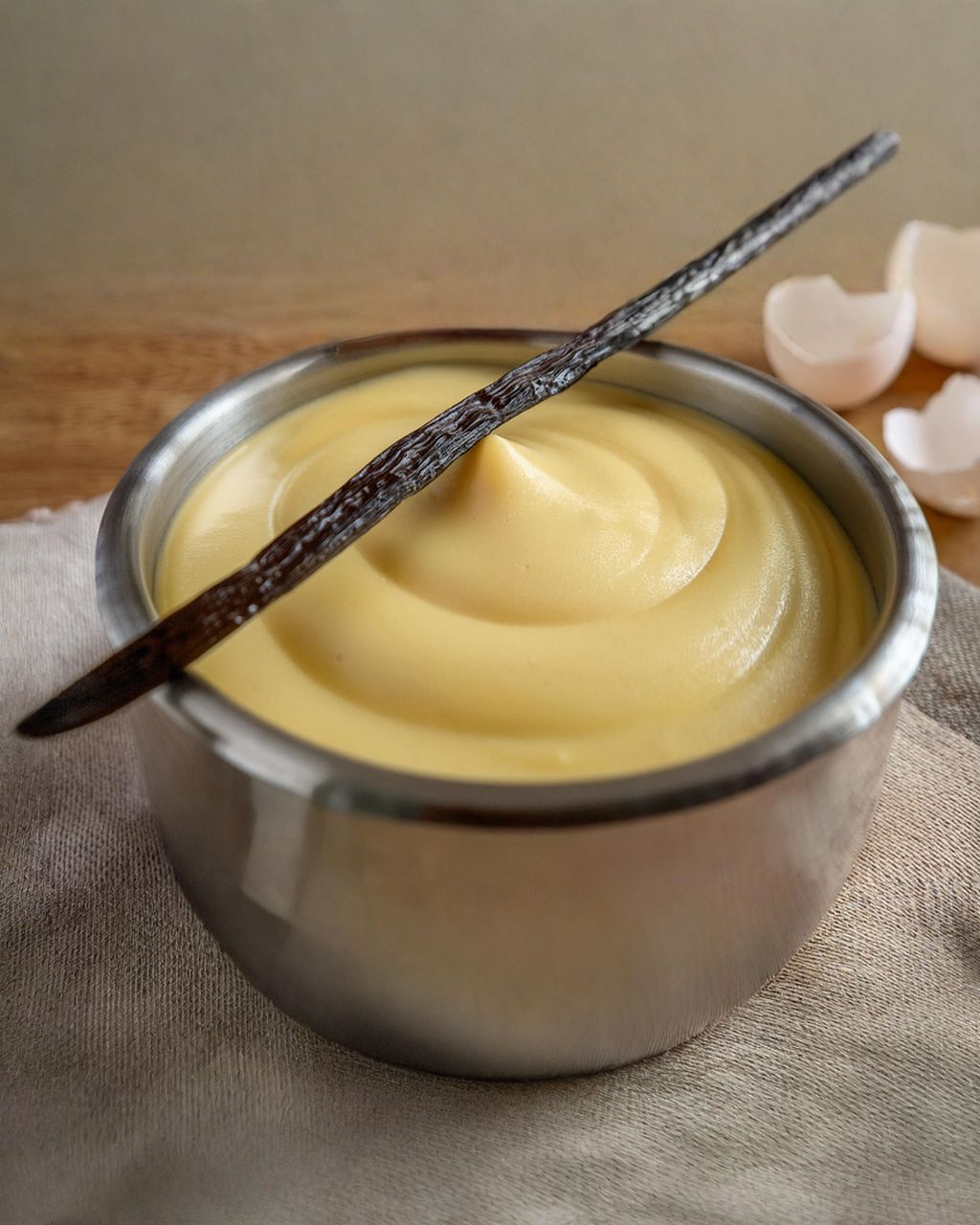
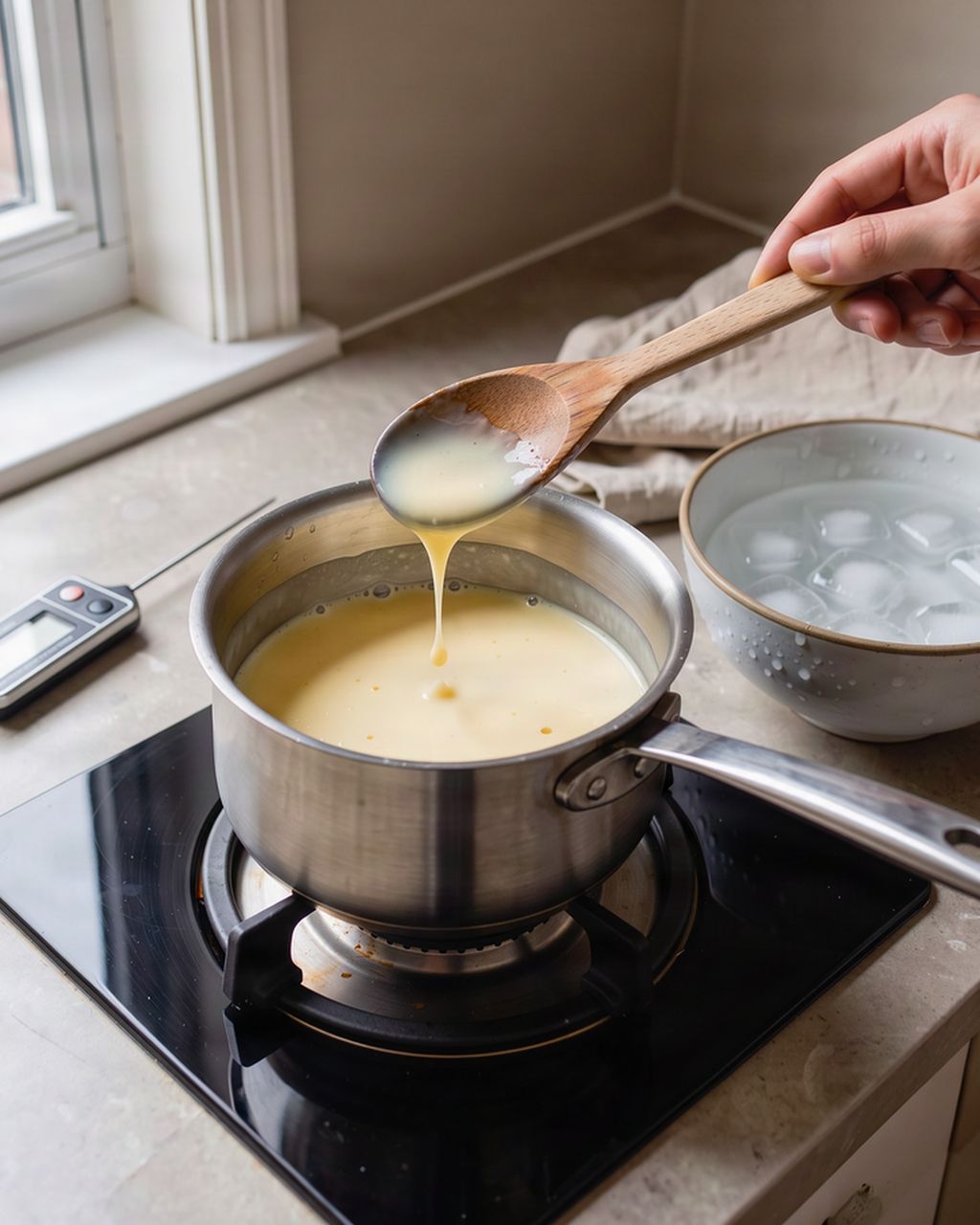
Stirred custard, such as crème anglaise: cooked on the stove, stirred constantly, until it coats a spoon. It pours, and it is used as a sauce for cakes, fruit and puddings. It can't be boiled, or the eggs curdle.
Baked custard, such as flan, crème caramel or crème brûlée: eggs and milk or cream baked gently, often in a water bath, until set but still trembling.
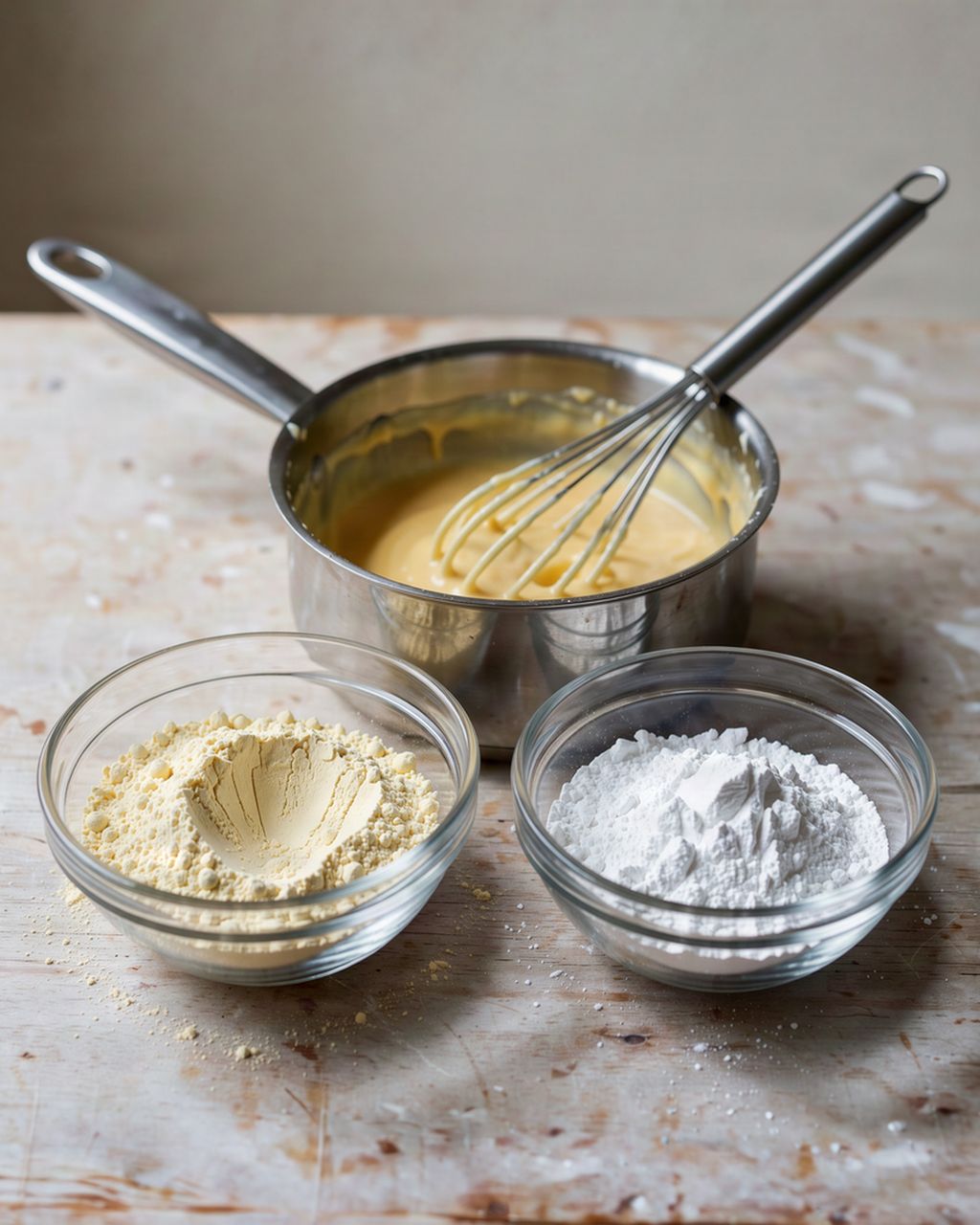
British twist: much British custard is made from custard powder (or bought ready-made). Classic powders such as Bird's Original are cornstarch with flavoring and color and contain no egg, but recipes vary by brand, so check the label if you are avoiding egg or milk. So in the UK, "custard" often means a starch-thickened pouring sauce.
In the US and Canada, pudding is a soft, spoonable dessert of milk, sugar and flavoring thickened mainly with cornstarch, sometimes enriched with egg yolks and butter. Boxed pudding mixes work the same way. See homemade pudding from scratch for the method.
In the UK, Ireland and Australia, "pudding" also means dessert in general, as well as specific dishes like Christmas pudding, rice pudding or sticky toffee pudding, which aren't custards at all.
In Czech kitchens, pudink means the American-style kind: a vanilla pudding powder of cornstarch, flavoring and color, boiled with milk and sugar. It is eaten from a bowl, but also used, thickened up, as a filling for cakes and koláče (round filled yeast pastries).
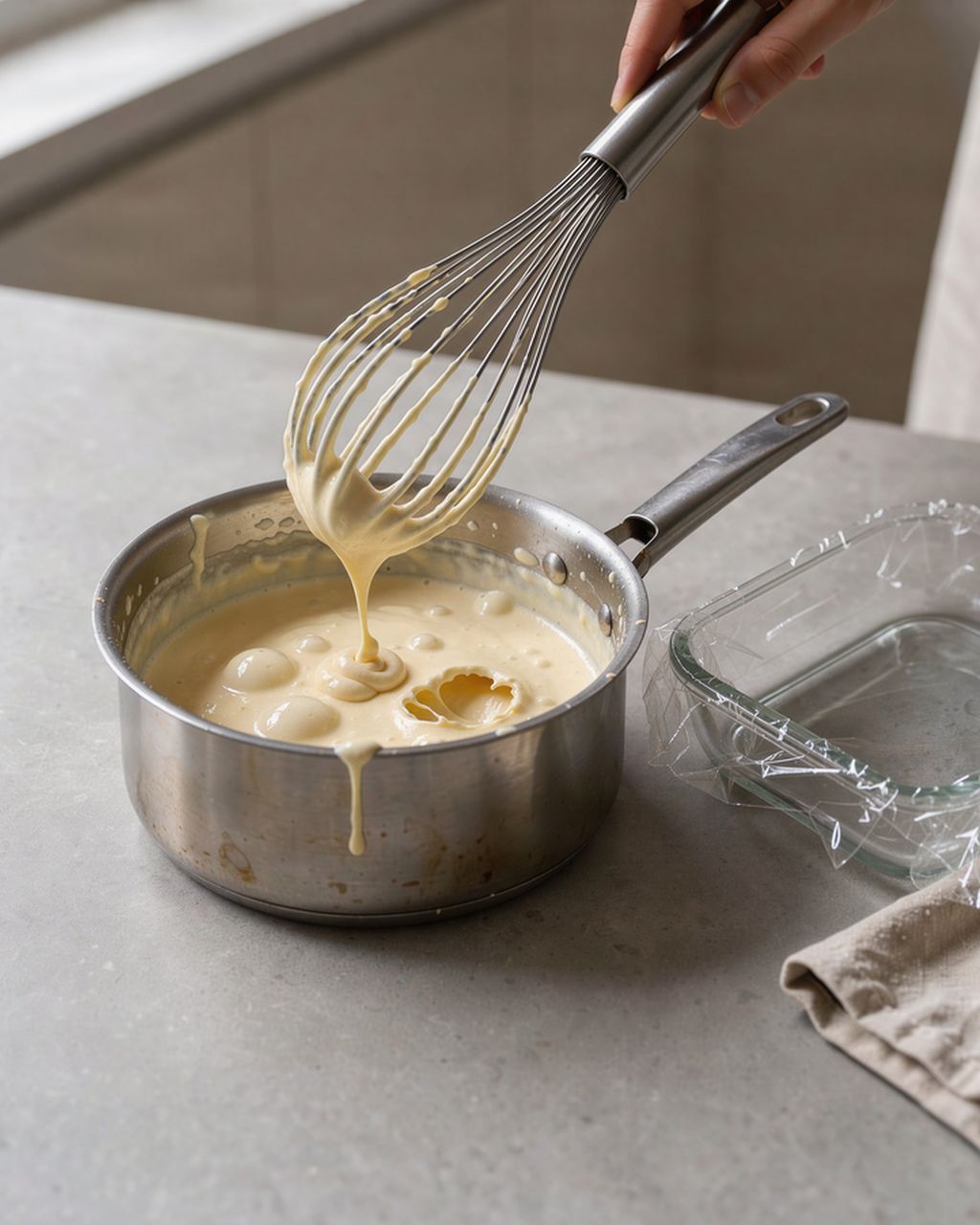
Pastry cream, or crème pâtissière, is the filling inside éclairs, cream puffs, fruit tarts, Boston cream pie and many Czech cakes. It is made with milk, sugar, plenty of egg yolks and cornstarch or flour, and it is boiled.
The starch does two jobs: it makes the cream thick enough to pipe and slice, and it protects the yolks, so pastry cream can be brought to a boil without curdling. That boil also matters, because egg yolks contain an enzyme that would otherwise thin the starch overnight.
For the method, see crème pâtissière.
Crème anglaise (custard sauce): yolks only; pourable; never boiled; for pouring over desserts or as an ice cream base.
Baked custard (flan, crème brûlée): whole eggs or yolks; set, wobbly; baked gently; eaten on its own.
Pudding: mainly starch; soft, spoonable; boiled briefly; eaten from a bowl or as a soft filling.
Pastry cream: yolks plus starch; thick, pipeable; boiled; for filling pastries, tarts and cakes.
Custard powder custard (UK): starch only; pourable or thick; boiled; served hot with crumbles and pies.
Pastry cream is a base that bakers change into other fillings:
Crème diplomate (diplomat cream): pastry cream folded with whipped cream, often with gelatin. Light and creamy.
Crème mousseline: pastry cream beaten with soft butter. Rich and firm, for layer cakes. Both are covered in crème diplomate and mousseline.
Bavarian cream: a custard sauce set with gelatin and folded with whipped cream.
Chantilly cream: simply sweetened whipped cream, no custard at all.
Boston cream: the pastry cream filling in Boston cream pie and doughnuts.
Recipe of the week, one tip that saves you time and one deal from the shop. Unsubscribe in one click.
The next issue goes out on Thursday, November 26.
Often, with small changes:
Pudding instead of pastry cream: works for doughnuts, layered desserts and soft fillings. For éclairs or tarts that must hold a clean edge, cook the pudding thicker with more starch, and add a yolk or two for richness. In Czech home baking, thick pudink is a common cake and koláče filling for exactly this reason.
Pastry cream instead of custard sauce: whisk cold pastry cream with milk or cream until it pours. It tastes good but is heavier and starchier than crème anglaise.
Custard sauce instead of pastry cream: no. Without starch it can't thicken enough to pipe, and it curdles if you boil it to try.
Custard powder custard instead of crème anglaise: fine for pouring over crumbles and pies. It is lighter in flavor and won't curdle.
Boxed instant pudding instead of pastry cream: quick, but usually softer and sweeter, and it doesn't hold a piped shape as well. Fine for no-bake desserts and trifles.
To pour over a cake, fruit or crumble: crème anglaise or custard-powder custard.
To eat with a spoon: pudding or a baked custard.
To fill éclairs, cream puffs, tarts or doughnuts: pastry cream, because it holds its shape.
To fill a layer cake: diplomat cream or mousseline.
Whichever you make, all three are perishable. Egg custards and pastry cream are cooked egg dishes, and FDA advises never leaving cooked egg dishes out of the refrigerator for more than 2 hours, or 1 hour above 32 °C (90 °F). Cool them quickly in a shallow container, press plastic wrap onto the surface, refrigerate within 2 hours of cooking, keep them covered in the fridge, and eat them within 3 to 4 days, the FDA limit for refrigerated leftover cooked egg dishes. Don't leave filled éclairs or cream pastries out at room temperature; keep them in the fridge until serving.
Custard is thickened mainly by eggs, while American-style pudding is thickened mainly by starch such as cornstarch. Custard is silkier and richer; pudding is simpler and more forgiving. In the UK, though, pudding also just means dessert, and custard is often made from cornstarch-based custard powder.
Pastry cream is a type of custard, but a thicker one. It uses egg yolks plus cornstarch or flour and is boiled, so it sets firm enough to pipe into éclairs, cream puffs and tarts. A plain custard sauce has no starch and pours.
Pastry cream has more egg yolks and is cooked thicker, for filling pastries; pudding has fewer or no yolks and is softer, meant to be eaten from a bowl. In practice they overlap a lot, and a rich vanilla pudding is close to a soft pastry cream.
Yes, crème anglaise is a pouring egg custard: milk or cream, sugar and yolks, cooked gently until it coats a spoon, with no starch. It is the French name for what the British call proper custard.
In the UK and Australia, pastry cream is usually called crème pâtissière or crème pat, and bakeries often sell it simply as custard, as in custard slices and custard tarts.
Diplomat cream, or crème diplomate, is pastry cream lightened by folding in whipped cream, often with a little gelatin to help it hold. It is softer and airier than pastry cream and is popular as a cake filling.
One recipe worth heating the oven for, one tip, and one deal from the shop. Nothing else.