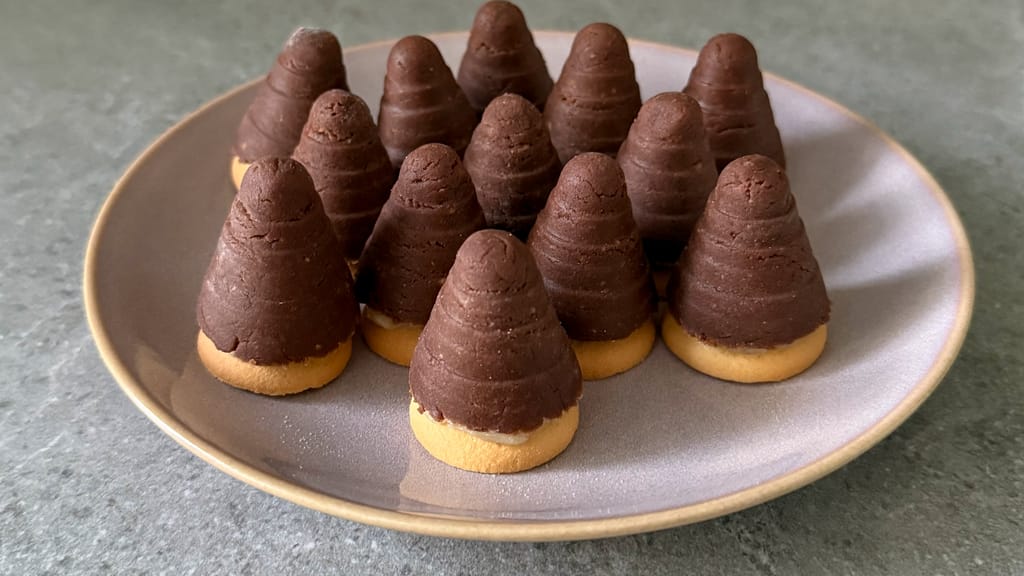
Grandma's traditional wasp's nest cookies with rum cream
What to Fill Wasp Nests With: 7 Fillings (and Why They Won't Go Soggy)
Updated Sep 26, 2026
Wasp nests (vosí hnízda) are filled with buttercream — most often egg-yolk buttercream with rum, or with eggnog liqueur, ganache, caramel, nut cream, thick fruit butter, or an egg-free, alcohol-free filling based on strong coffee or cocoa. They all have one thing in common: they're rich and dense, never watery. The dough for wasp nests is an unbaked mix of crumbs, nuts, sugar and fat — it has no crust to hold water back, so anything watery will soak in from the inside and the nests will fall apart in the box within a week.
The filling for wasp nests has to be built on fat — butter, chocolate or nut paste. The unbaked nest dough is just a pressed-together mix of crumbs, ground nuts, sugar and fat, with no baked crust to stop water migrating out of the filling and into the shell.
Water in food moves from the component where it's more loosely bound to the one where it's more tightly bound — technically, from higher water activity to lower — until that activity equalises; the actual water content doesn't have to even out. Buttercream contains roughly 10–20% water (plain butter has about 16g of water per 100g according to the USDA database, and cream made with egg yolks and rum comes in a few percent higher still), while custard or whipped-cream fillings sit at roughly 60–75%. A moist cream has plenty of free water, dry dough has almost none — and that difference is exactly what softens the nest from the inside within a few days, so it crumbles apart when you lift it out of the box.
The spoon test: scoop some filling onto a spoon and turn it upside down over a bowl. Good filling drops off in one piece and holds its shape. If it drips in a thin stream or spreads out, it's too runny — either thicken it with more butter or chocolate, or don't use it for wasp nests.
If you want to get your basic creams straight, take a look at the five classic pastry creams and what each one is good for — of those, only the buttercream and chocolate ones are suitable for wasp nests.
Seven fillings work well in wasp nests:
egg-yolk buttercream with rum — the classic, the most common choice
eggnog liqueur buttercream — lighter and milder than the rum version
chocolate ganache — the most stable of the creams, with no raw egg
caramel cream — a sweet counterpart to the cocoa dough
nut cream (nougat) — carries on the nutty flavour of the nest itself
thick fruit butter or jam — the only fruit option that actually holds up
an egg-free, alcohol-free filling — buttercream with strong coffee or cocoa, for kids and anyone who'd rather skip the rum
You'll find the ratios and method for each below. Quantities are calculated for roughly 40 nests.
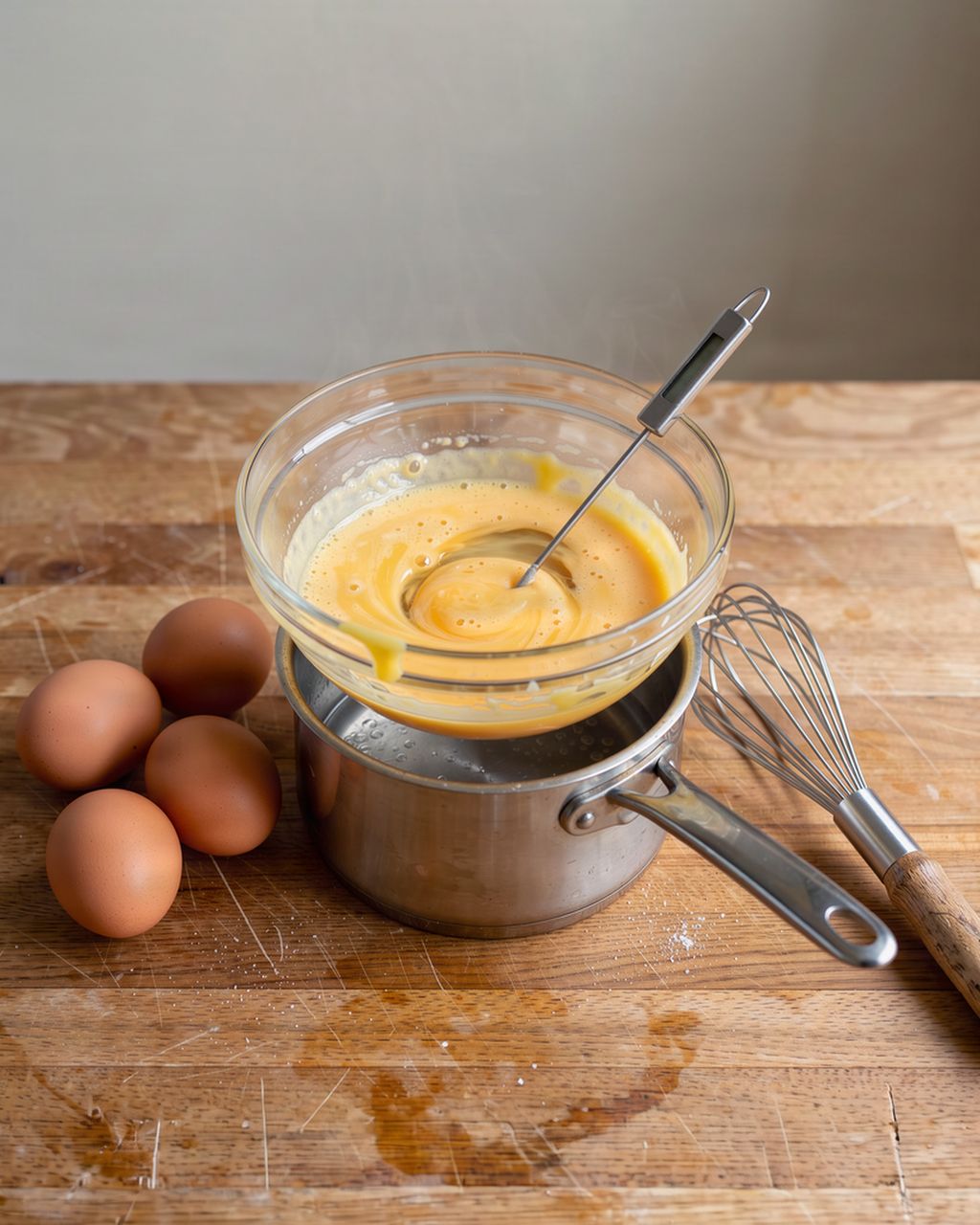
The classic wasp nest filling is 150g softened butter, 100g icing sugar, 2 egg yolks and 2–3 tablespoons of dark rum. That makes about 300g of cream — just enough for one batch of nests.
Let the butter come up to 20–22°C (68–72°F). Cold butter won't combine with the sugar, and melted butter won't whip up light.
Beat the butter with the icing sugar for 4–5 minutes, until it's noticeably paler and has increased in volume.
Add the egg yolks one at a time, beating each until pale before adding the next.
Stir in the rum right at the end, a spoonful at a time. Pouring it all in at once will curdle the cream.
The rum isn't just there for aroma — it cuts through the perceived sweetness and, together with the cocoa in the dough, keeps the whole sweet balanced. Use icing sugar, not caster sugar — caster sugar won't dissolve in cold butter and the cream will feel sandy on the tongue.
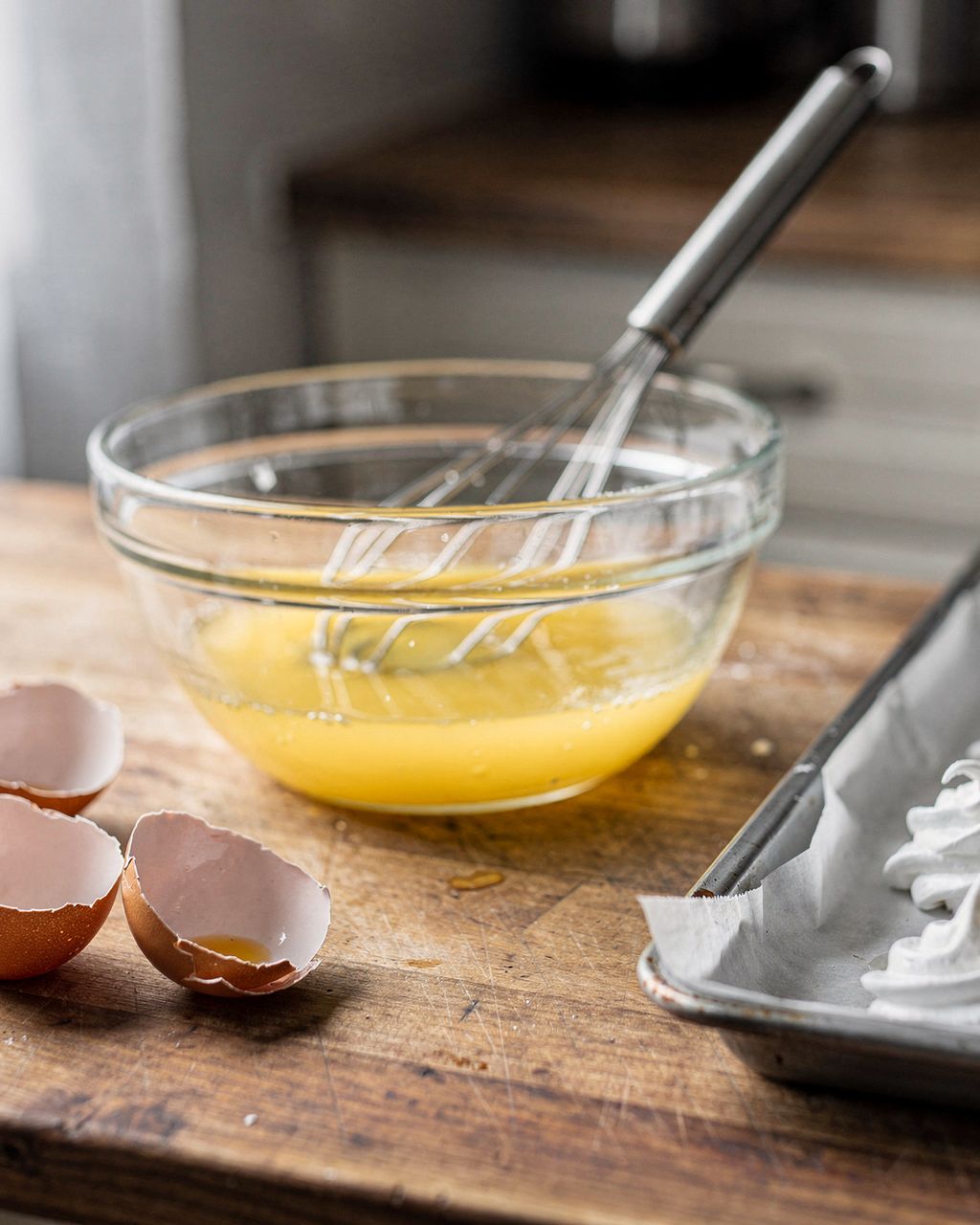
Bonus: using two egg yolks leaves you with two egg whites. Whip them into meringues (egg white plus double its weight in sugar, dried for 90 minutes at 90°C/195°F), coconut macaroons, or bake them into an egg-white sponge loaf with nuts — any of these three uses up the whites completely.
Grandma's traditional wasp's nest cookies with rum cream
Traditional wasp nests with rum buttercream — the full method from dough to filling
Make eggnog liqueur cream from 120g butter, 80g icing sugar and 70ml eggnog liqueur. It's lighter, softer and less sharp than the rum version — good if you find the classic too strong against cocoa dough.
Liqueur contains both water and sugar, so it's harder to work into butter than pure rum. Add it a spoonful at a time and keep everything at the same temperature: cold liqueur poured into tempered butter is the most common reason the cream curdles into grains.
Homemade liqueur works better than store-bought because you control the thickness yourself — homemade eggnog liqueur is thicker than most shop versions, and the cream made with it holds its shape without further thickening. Just bear in mind that homemade liqueur is made with raw egg yolks: treat cream made with it the same way as egg-yolk cream — keep it in the fridge and use within 3 days. Alcohol at around 14% ABV won't kill salmonella.
For a wasp nest filling you need ganache in a 2:1 ratio — 200g dark chocolate to 100ml whipping cream (at least 30% fat). The classic 1:1 glaze ratio is too soft for filling and will run out at room temperature.
Ratios by type of chocolate:
dark (55–70%): 2 parts chocolate to 1 part cream
milk chocolate: 2.5 : 1
white chocolate: 3 : 1
Bring the cream just to the boil, pour it over the chopped chocolate, let it sit for a minute, then stir — working from the centre outwards — until you get a smooth, glossy emulsion. Finally stir in 20g of butter to soften the ganache. Let it set for 2–3 hours at 18–20°C (64–68°F) and whip briefly so it pipes smoothly from the bag.
Of all the cream fillings, ganache keeps the longest and contains no raw eggs. If it sets too fast or won't pipe, a spoonful of extra warm cream will loosen it up.
And if you want to see how far white chocolate can be taken in wasp nests, this version takes a completely different route from rum and cocoa:
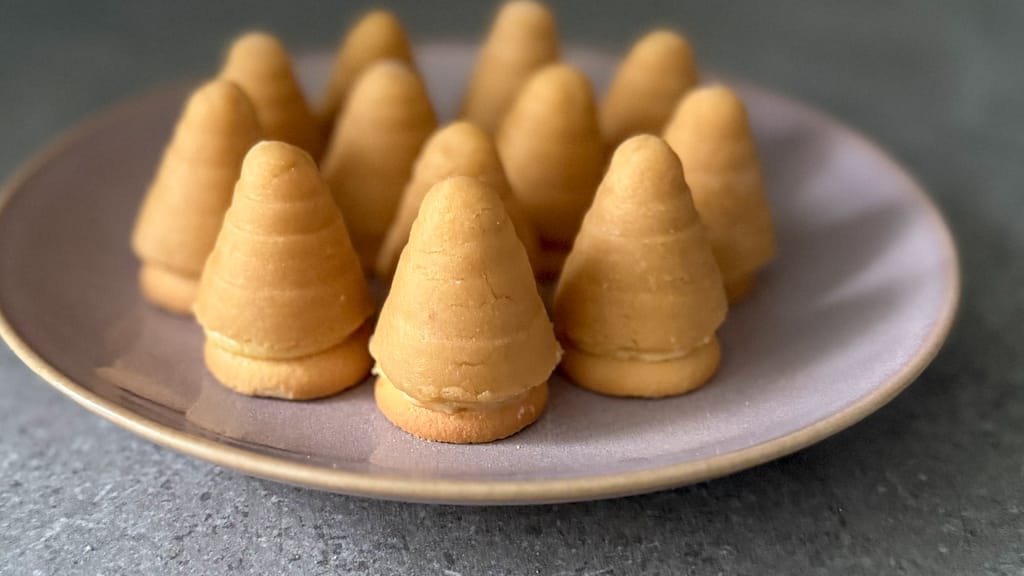
White chocolate wasp nests with mango and passion fruit
White chocolate wasp nests with mango and passion fruit — a modern fruity twist
Caramel for wasp nests has to be beaten together with butter, or it'll stay runny and leak out. To 200g of finished salted caramel cooled to room temperature, beat in 60–80g softened butter — the sticky sauce turns into a cream that holds its shape.
The salt here does more than add flavour: the cocoa dough of the nest is quite sweet on its own, and salted caramel is the only filling that can cut that sweetness without using alcohol. A pinch of salt per portion of cream is enough.
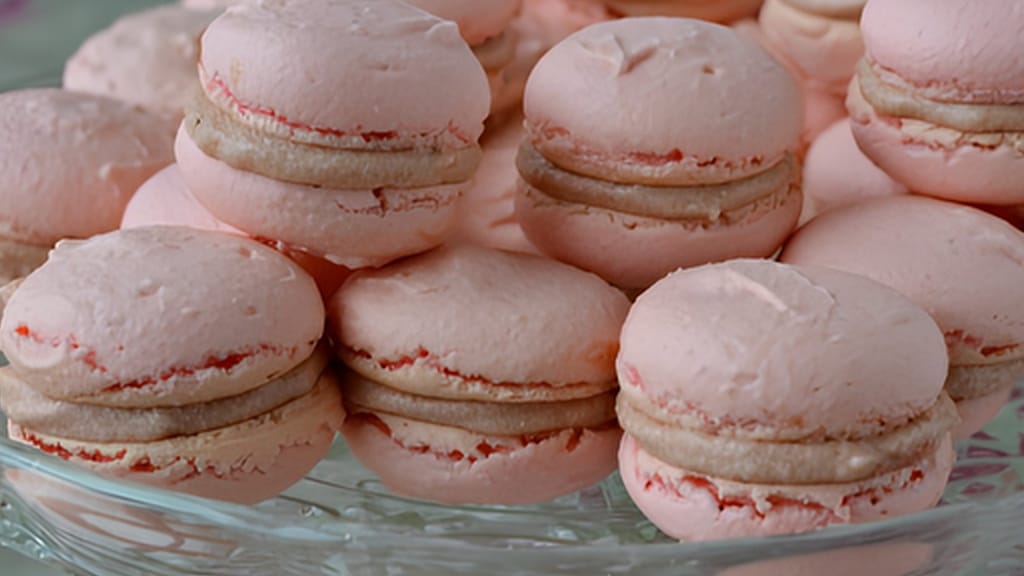
Salted caramel cream - great for macarons and more
Salted caramel cream — the base that, once beaten with butter, works as a wasp nest filling too
Make nut cream from 100g roasted ground hazelnuts, 100g softened butter, 70g icing sugar and a pinch of salt. Roast the nuts for 8–10 minutes at 160°C (320°F) before grinding, and let them cool — raw nuts taste flat and slightly astringent in the cream.
A quicker route: beat 150g nougat spread together with 50g softened butter. The spread alone is too soft at room temperature and will squeeze out of the nest; the butter firms it up.
Nut cream makes the most sense when the nest dough already contains nuts — the flavour doesn't clash, it just deepens.
Of the fruit fillings, only really thick fruit butter works in wasp nests — plum butter with no added water, the kind that drops off a spoon in one piece. Runny jam is exactly the case where the nest goes soft from the inside within a week.
Three ways to get it right:
Plain fruit butter: use homemade plum butter (povidla), cooked down really thick.
Reduced jam: simmer ordinary jam in a saucepan for 5 minutes, let it cool completely, then fill.
Fruit-butter cream: beat 100g fruit butter together with 100g softened butter. The fat binds the water and this holds up best of the three.
Tart fruit pairs better with cocoa and rum than sweet fruit — plum, redcurrant or apricot work well, while strawberry tends to taste too bland against cocoa dough.
Make an egg-free, alcohol-free filling from 150g softened butter, 100g icing sugar and 3 tablespoons of strong, cooled coffee or 2 tablespoons of cocoa. Coffee and cocoa add the depth that rum would otherwise provide. The method is the same as for the classic cream, just without the egg yolks and alcohol.
Sub-variations for when small children will be eating the sweets too:
With sweetened condensed milk (commonly known as Salko): beat 100g butter together with 150g sweetened condensed milk. Sweeter, but very stable.
Ganache: gives the best result of all — no eggs, no alcohol.
A flavour stand-in for rum: a few drops of rum flavouring, a teaspoon of vanilla extract, or finely grated orange zest.
Don't dose rum flavouring the way you would rum itself — 3–4 drops replace a full two tablespoons of alcohol, and any more starts to taste artificial.
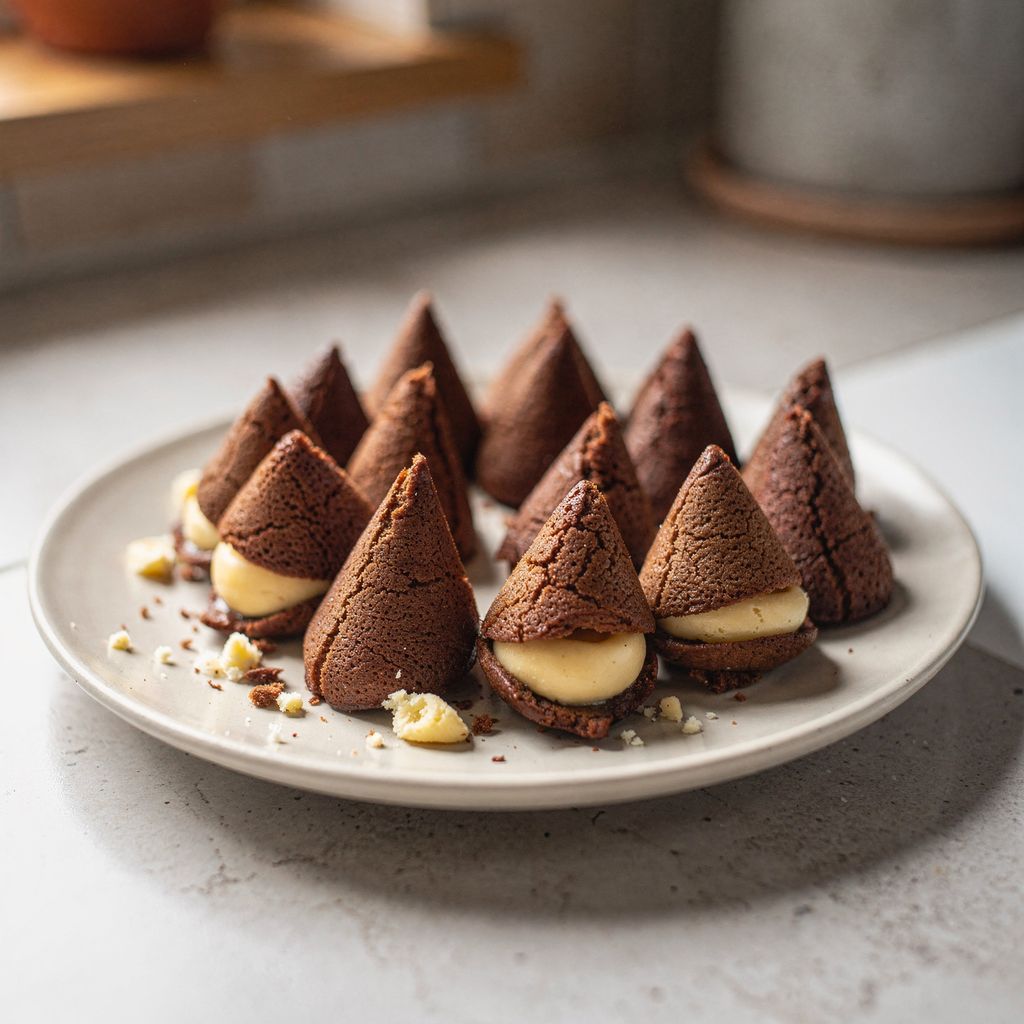
Allow 6–8g of filling per wasp nest — roughly one heaped teaspoon. For a batch of 40 nests you'll need 240–320g of cream.
Converting to common batch sizes:
20 nests: 120–160g of cream
40 nests: 240–320g of cream
60 nests: 360–480g of cream
Don't fill right to the rim. Leave 2–3mm of space — otherwise the cream will squeeze out the sides when you close it with the sponge disc, the nests will stick together in the box, and the edges will snap off when you lift them out.
If you have leftover cream, use it to fill linzer cookies or wafer tubes, or sandwich it between two sponge discs. Buttercream also freezes well: it keeps for 3 months in a sealed container — just thaw it overnight in the fridge, bring it up to 20–22°C, and whip it again.
Pipe the filling in using a piping bag with a 6–8mm round tip, not a knife. It's quicker and cleaner — the cream won't smear the edges of the nest, which would otherwise stick to your fingers and to each other.
Let the nests cool and set completely first. At least 30 minutes in a cool spot after unmoulding. You can't fill warm, soft dough — the hollow will stretch out of shape under the pressure of the piping bag.
Whip the cream just before filling so it's smooth and bubble-free. Working temperature 20–22°C: cold cream won't pipe, warm cream will run.
Push the piping tip right to the bottom of the hollow and pipe until the cream rises to 2–3mm below the rim. Fill from the bottom up, or you'll leave an air pocket inside the nest.
Seal it with a disc of sponge cake or wafer pressed firmly into place. If you'd rather skip the sponge, seal the base with a thin layer of leftover dough instead.
Let it set in a cool spot for 2 hours before packing the nests into a box.
Wasp nest dough usually contains coconut fat, which starts softening at around 25°C (77°F) — sooner than you'd expect. So don't warm the cream or the nests in your hands, and don't work near a hot oven; the walls will start to collapse under the pressure of the piping bag.
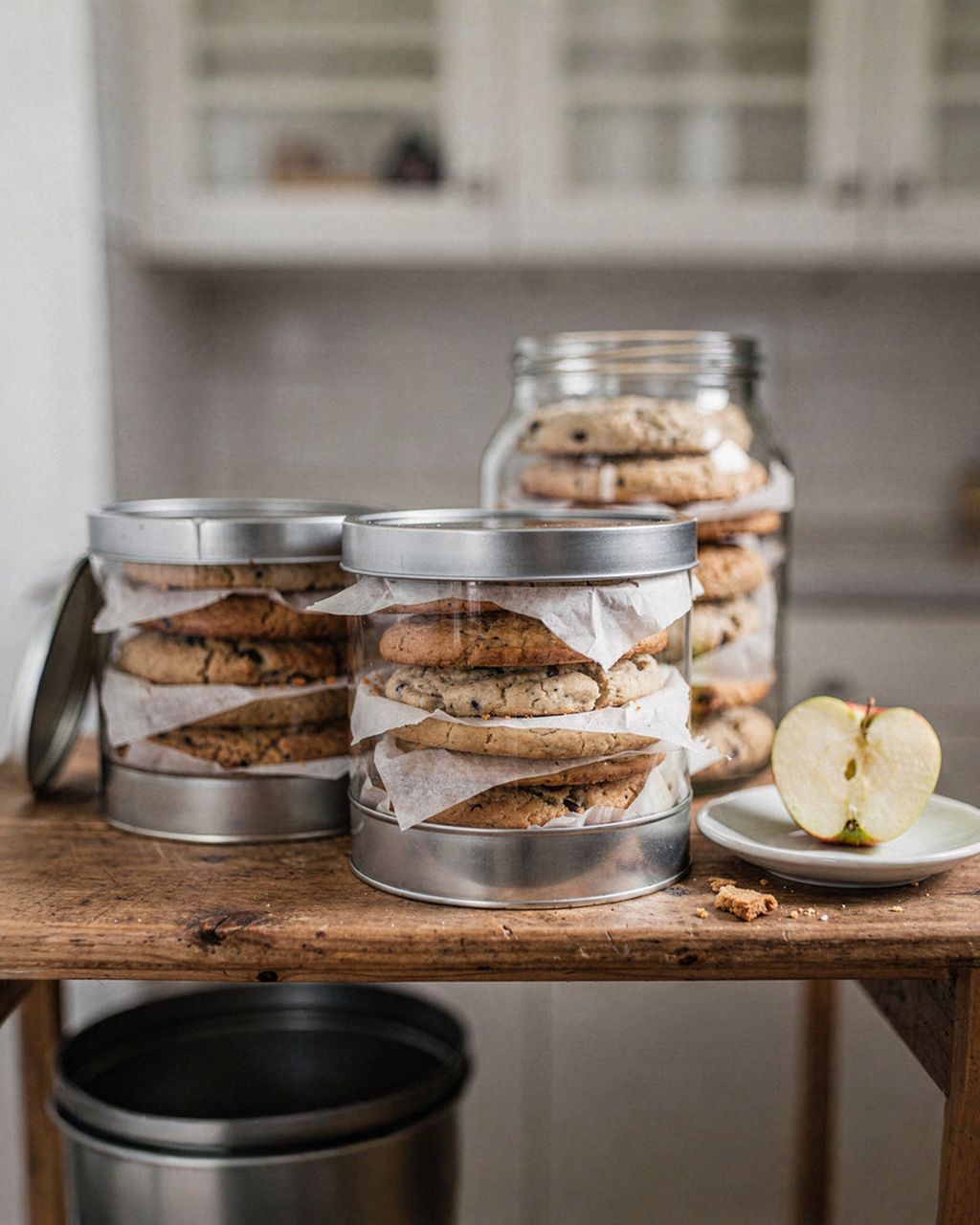
Wasp nests filled with buttercream that contains no raw egg keep for 2–3 weeks in a cool room at 15–18°C (59–64°F), stored in a sealed tin between sheets of baking paper. Shelf life comes down to the filling, not the dough.
Egg-yolk buttercream with rum: made with raw egg yolks belongs in the fridge and should be eaten within 3 days — the alcohol in the cream won't kill off bacteria. If you want to store it for weeks, make the cream with pasteurised egg yolks instead: it will then keep for 2–3 weeks at 15–18°C.
Eggnog liqueur cream: made with store-bought (heat-treated) liqueur, 2–3 weeks at 15–18°C; made with homemade liqueur containing raw egg yolks, treat it like egg-yolk cream — fridge only, use within 3 days. Alcohol at around 14% ABV won't kill salmonella.
Ganache: 2–3 weeks — the most stable of the creams, since it contains no raw eggs (fruit butter keeps even longer).
Nut cream and caramel cream: 2–3 weeks
Fruit butter: 3–4 weeks
Anything with custard, whipped cream or curd cheese: a maximum of 3–4 days in the fridge, and even that's a compromise
Freezing: filled nests with buttercream can handle up to 3 months in the freezer
Wasp nests also benefit from resting for 7–14 days — the dough picks up just enough moisture from the filling to stop crumbling, and the rum has time to mellow through the rest of it. That's exactly why they're made as one of the first Christmas sweets, not left until the last minute. (Versions made with raw egg yolks can't handle this long resting period — for a long shelf life, go with pasteurised yolks or ganache.)
Never store them near a radiator or on the counter above a dishwasher. The coconut fat in the dough starts softening at around 25°C, and the cream will work its way out in the warmth before you get a chance to eat it.
Yes — both buttercream and egg-yolk cream keep for 3 days in the fridge in a sealed container. Before filling, let it come back up to 20–22°C (68–72°F) for 1–2 hours and whip it briefly again — cold cream won't pipe smoothly and will tear the edges of the nests. Ganache can be made a day ahead; let it set at room temperature rather than in the fridge.
Usually because the ingredients were at different temperatures — cold egg yolk or liqueur poured into tempered butter will break the emulsion. The fix: sit the bowl in a lukewarm water bath for 10 seconds and keep whisking; it usually comes back together. If not, whisk in 20–30g of softened butter a spoonful at a time.
They crumble because the dough wasn't pressed firmly enough into the mould and the filling hasn't had time to soak in yet. When shaping, press the dough against the mould wall until it's solid and free of visible loose crumbs, then let the filled nests rest for 7–14 days — moisture from the cream will work its way into the shell and the crumbliness will disappear on its own. Breaking when you lift them out of the box usually means an overfilled nest: cream squeezed out over the rim glues the neighbouring nests together.
Defrost them slowly in a sealed container — overnight in the fridge first, then 2 hours at room temperature. Keep the container closed until the sweets are fully back to room temperature; otherwise moisture from the air condenses on the cold surface, softening the dough and dulling the shine of the cream. Never defrost them near the oven or on a radiator — the coconut fat in the dough starts softening at around 25°C (77°F).
Not strictly, but it's worth doing. A disc of sponge cake or wafer seals the hollow, keeps the cream in, and gives the nest a flat base to sit on. An alternative is a thin layer of leftover dough pressed firmly in place. Without a seal, the cream will gradually work its way out in a warm room and the nests will stick together in the box.
One recipe worth heating the oven for, one tip, and one deal from the shop. Nothing else.