Simple chocolate cake
Chocolate Cake Frosting: Whipped Ganache, Buttercream or Mascarpone
Updated Oct 15, 2026
You can make chocolate cake frosting at home in three main ways: as Parisian cream (whipped ganache made from cream and chocolate), as chocolate buttercream with melted chocolate, or as a mascarpone and whipped cream frosting. Parisian cream has the most chocolate flavor, buttercream is the most stable for covering and piping, and mascarpone frosting is the quickest and airiest. The chocolate you choose matters too: real couverture with cocoa butter firms the frosting and gives it flavor, while a fat-based coating ruins it. Below you'll find ratios in grams, temperatures, and advice on which chocolate to buy.
Choose based on the job the frosting has to do in your cake: Parisian cream for flavor, buttercream for covering and decorating, mascarpone frosting when you need a quick, airy filling. A quick comparison:
Parisian cream (whipped ganache) – 33 % cream and chocolate, with no extra sugar. The most intense chocolate flavor and a velvety texture. It has to rest in the fridge for 8–12 hours before you whip it. It holds well when chilled and softens in the warmth.
Chocolate buttercream – butter, melted chocolate and a little powdered sugar. Ready in 15 minutes, the firmest of the three, it tolerates room temperature up to about 22 °C (72 °F), and you can put fondant over it. It is also the densest and sweetest.
Chocolate mascarpone frosting – mascarpone, whipped cream and melted chocolate. Ready in 10 minutes, creamy and light on the tongue, but the softest. It suits fillings and a rustic top, not sharp edges.
For a full overview of all frostings, not just chocolate ones, see types of cake frosting and where each one works best. The basic techniques are covered step by step in how to make cake frosting.
Parisian cream is a ganache made from hot cream and chocolate, which you whip into a mousse-like frosting once it has chilled. For dark chocolate at around 55 %, the basic ratio is 1 part chocolate to 2–2.5 parts 33 % cream, for example 200 g chocolate to 450 g cream.
Heat the cream to just below boiling (about 80–90 °C / 175–195 °F), pour it over chopped chocolate or chocolate callets, and after a minute stir until smooth.
Let it cool, cover with plastic wrap pressed directly onto the surface, and refrigerate for 8–12 hours. The fat crystals need time, otherwise the frosting won't whip.
Whip briefly, only to soft or medium peaks. As soon as the frosting turns dull and grainy, it is overwhipped.
How to adjust the ratio so the frosting holds layers and a coating, and what to do when it softens, is covered in detail in firm Parisian cream for cakes. We won't repeat it here.
Chocolate buttercream is the safest choice when you're covering a cake, piping, or taking it to a party. Rough ratio: 250 g softened butter, 150 g dark chocolate, 60–80 g powdered sugar, a pinch of salt and 2–3 tablespoons of cream.
The butter should be at 18–20 °C (64–68 °F): a finger presses into it easily, but it isn't greasy. Beat it with the sugar for 5–7 minutes until pale and fluffy.
Melt the chocolate and let it cool to 28–32 °C (82–90 °F), which feels lukewarm against your lip. Pour it in a thin stream into the whipped butter.
Chocolate that is too warm melts the butter and the frosting turns runny. Colder chocolate sets before it disperses, leaving dark flecks in the frosting.
Finally, fine-tune the consistency with the cream: less for covering, more for filling.
If you want a less sweet, smoother frosting, make a Swiss meringue buttercream (egg whites and sugar heated to 70 °C / 158 °F) instead of beating butter with sugar, and add the chocolate to the finished buttercream. The same temperature applies to it.
Chocolate mascarpone frosting is ready in ten minutes and tastes like a lighter, creamier Parisian cream. Rough ratio: 250 g mascarpone, 200 g 33 % cream and 100–120 g dark chocolate (150 g if using milk chocolate).
Let the mascarpone soften at room temperature for 20 minutes. Straight from the fridge it is so cold that the chocolate seizes into little grains.
Fold the melted chocolate, cooled to about 35 °C (95 °F), into the mascarpone with a spatula, not a mixer.
Pour in the cold cream and whip on medium speed just to stiff peaks. Mascarpone overwhips quickly: within seconds it curdles and turns greasy like butter.
This frosting holds as a filling between two layers and as a spread-on top. It is too soft for sharp sides or for going under fondant. For a white chocolate version, and ratios so the frosting doesn't turn cloying, see white chocolate mascarpone cake frosting.
Chocolate frosting calls for real chocolate with cocoa butter, ideally couverture, not a cocoa-flavored or fat-based coating. Note that on Czech packaging real couverture is labeled “čokoládová poleva” (chocolate glaze). Avoid only the “cocoa” and “fat-based” coatings, which contain vegetable fat instead of cocoa butter. Cocoa butter firms the frosting once chilled and gives it flavor. The vegetable fat in coatings sets differently, so the frosting turns waxy and Parisian cream won't whip. The difference is explained in detail in couverture vs. cooking chocolate.
What works and when:
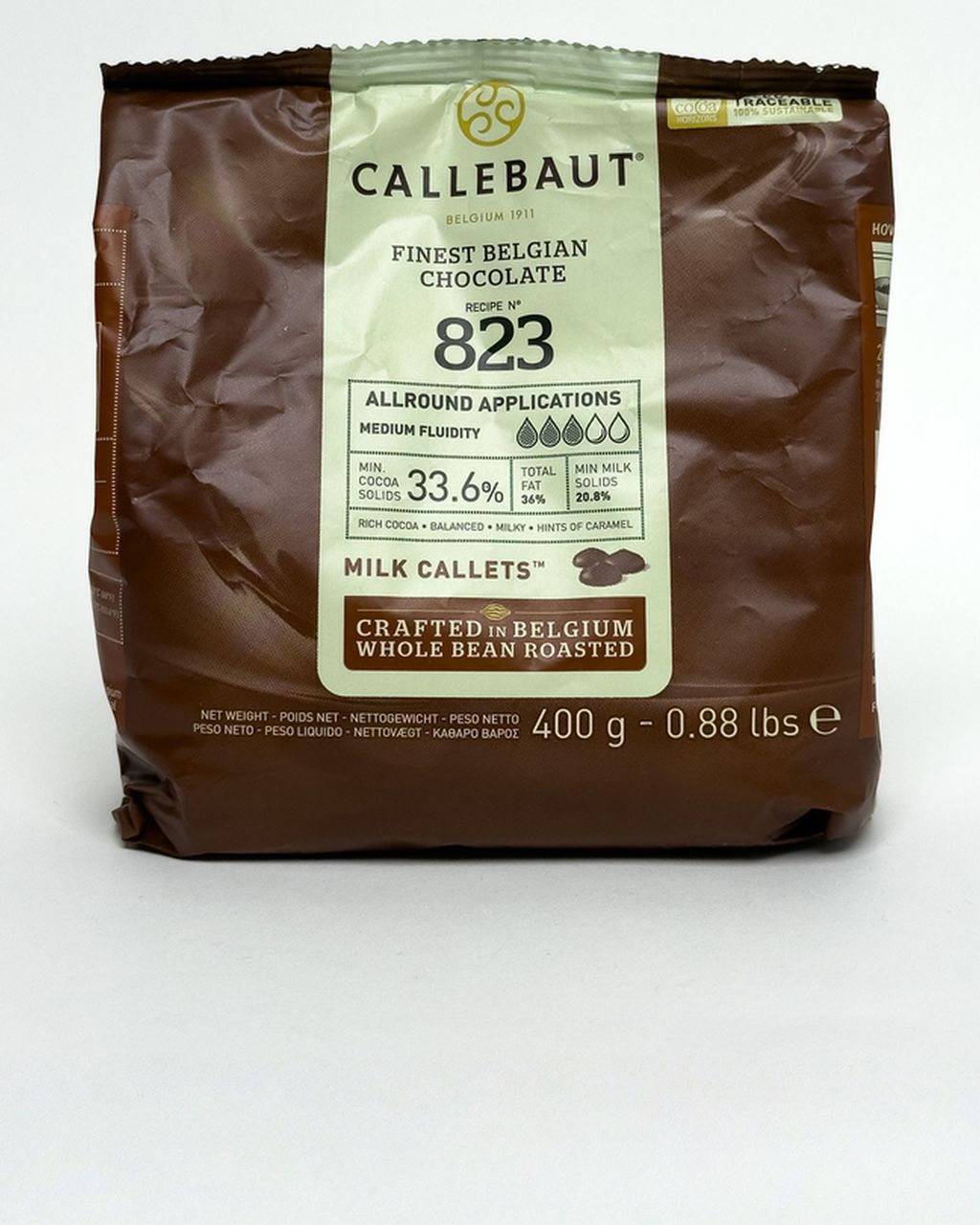
Dark chocolate at around 55 % is the all-purpose choice that kids and adults both like. For frostings we most often use Callebaut 811 (54.5 % cocoa, medium fluidity according to the manufacturer). It is just sweet enough, ganache made with it sets reliably, and the callets melt quickly and evenly.
Dark chocolate at 70 % and up gives a pronounced, more bitter flavor. The frosting sets firmer and the ganache splits more easily, so add more cream (a ratio of around 1:2.5 to 1:3). We don't currently sell this strength. Callebaut 70-30-38 or Valrhona Guanaja work well, as does a good 70 % bar from the supermarket.
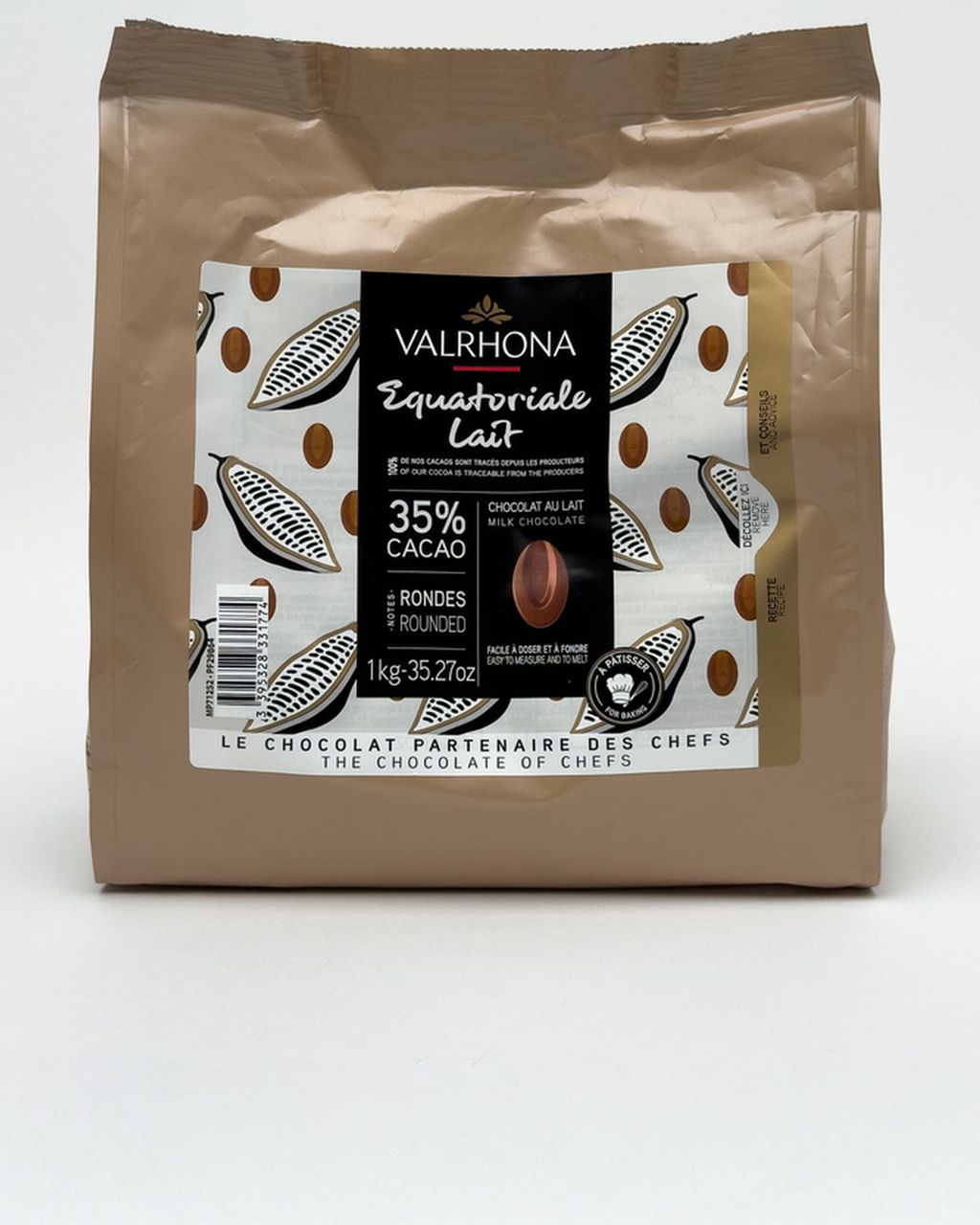
Milk chocolate makes the frosting milder and sweeter, but it sets much less. For Parisian cream, use more of it, roughly 1 : 1.5 (200 g chocolate to 300 g cream). Callebaut 823 (33.6 % cocoa) is a classic milk chocolate with a pronounced chocolate flavor. Valrhona Équatoriale Lactée 35 % is rounder, more caramelly and milky; it costs more, but you can taste the difference in a simple frosting.
Supermarket bar chocolate (dark, 50–70 %) is fine for buttercream and mascarpone frosting if cocoa butter, not vegetable fat, is in the ingredients. For Parisian cream it is less predictable, because the fat content varies from brand to brand.
Browse the whole selection of real chocolate callets in the baking chocolate and frostings category. For how percentages and types differ in batter rather than in frosting, see which chocolate for brownies and chocolate cake.
The less cocoa a chocolate contains, the more of it you need in the frosting for it to set and taste right. Rough guidelines for dark chocolate at 55 % and milk chocolate at around 34 %:
Parisian cream: dark 1 : 2–2.5 with cream, milk 1 : 1.5.
Buttercream (per 250 g butter): 150 g dark, 200 g milk, and cut the sugar in half.
Mascarpone frosting (per 250 g mascarpone): 100–120 g dark, 150 g milk.
For a tiered cake, sharp edges and fondant, use buttercream, or a firm Parisian cream. Keep mascarpone frosting for fillings.
Buttercream sets like chocolate once chilled, holds its piped shape and supports fondant. At room temperature it keeps its shape up to about 22 °C (72 °F).
Parisian cream holds well in the fridge and, with a firmer ratio, can handle a coating, but it softens faster in a warm room. Keep the cake chilled and take it out just before serving.
Mascarpone frosting stays put between layers if you dam it in. Pipe a ring of firmer frosting around the edge of the layer as a wall and put the mascarpone inside. That way it won't squeeze out of the sides of the cake.
For how to level, coat and get straight sides, see how to cover a cake with frosting or ganache.
Nearly every split chocolate frosting comes down to temperature or overwhipping, and nearly all of them can be saved.
The ganache has separated and looks greasy and shiny. It was too hot, or there isn't enough liquid in it. Add 1–2 tablespoons of warm cream and blend with an immersion blender held down at the bottom of the bowl so it doesn't take in air.
Parisian cream is grainy and dull. It is overwhipped. Briefly warm about a quarter of the frosting until it melts, then fold it back into the rest with a spatula.
Buttercream looks like cottage cheese. It is too cold. Warm the bowl for a few seconds with a heat gun or over steam and keep whipping. If it is runny and shiny instead, put it in the fridge for 15 minutes and then whip again.
There are dark flecks of chocolate in the frosting. The chocolate was cold, or you added cold butter or mascarpone. Warm it briefly and stir, and the flecks will melt.
Mascarpone frosting is greasy and grainy. It is overwhipped, and there's hardly any fix. Fold it into another batch of whipped cream and whip for less time next time.
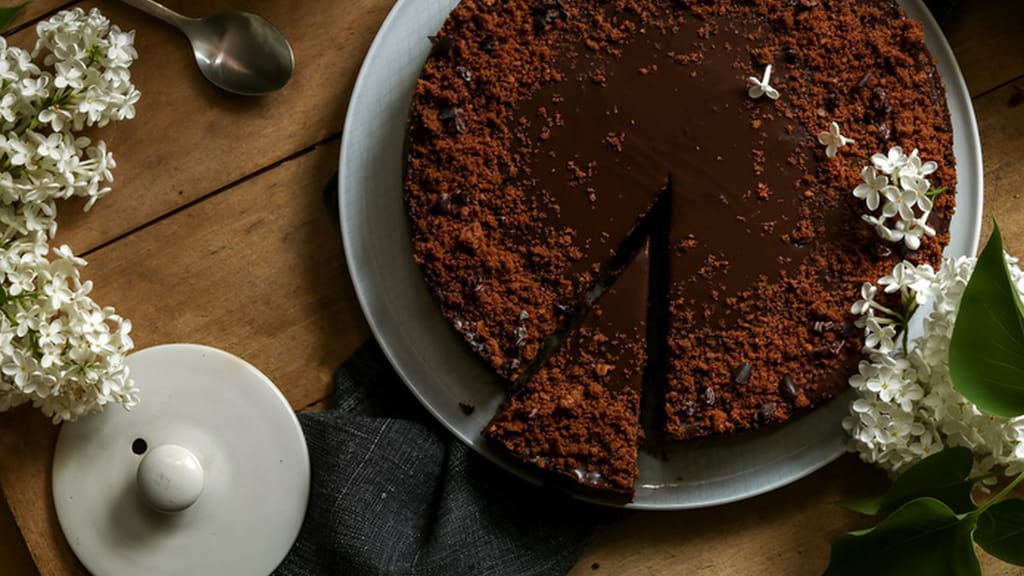
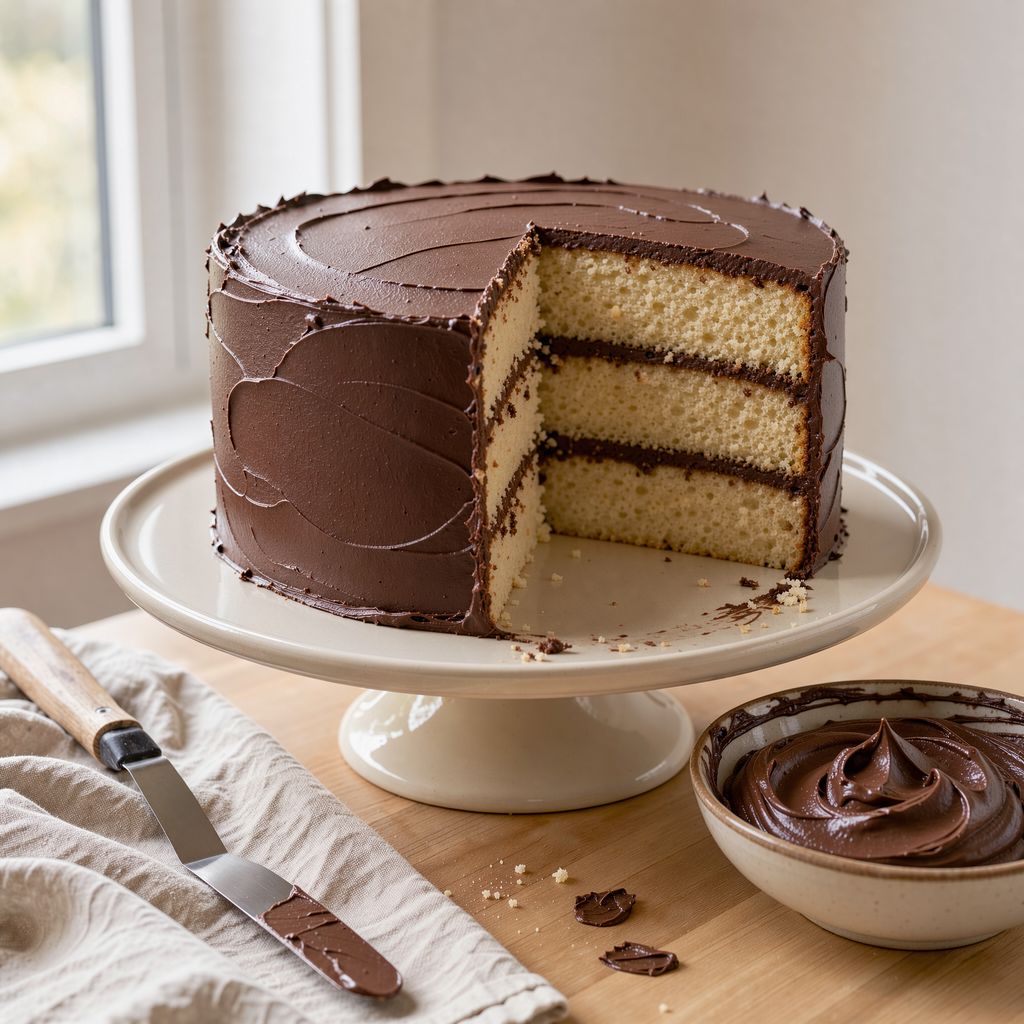
Chocolate cake frosting – Parisian, buttercream or mascarpone – goes with a cocoa cake layer as well as a plain sponge. Tart fruit, such as raspberries or sour cherries between the layers, pairs especially well with Parisian cream and mascarpone frosting. Buttercream can handle a coffee or caramel syrup for soaking the layers. Our simple chocolate cake makes a good base. If you're making smaller portions, we deal with chocolate frosting that keeps its shape on a cake in chocolate cupcakes.
Simple chocolate cake
Simple chocolate cake, a base for chocolate frosting
Yes, you can make chocolate cake frosting ahead of time. With Parisian cream you actually have to, buttercream keeps in the fridge for 5–7 days, and only mascarpone frosting should be made on the day you assemble the cake. The base for Parisian cream needs 8–12 hours in the fridge before you whip it. Store buttercream in an airtight container, let it soften to room temperature before using, and give it a quick re-whip. Mascarpone frosting loosens as it stands.
For a 20 cm (8-inch) cake with two layers of filling and a full coating, plan on roughly 700–900 g of frosting. Each filling layer takes about 150–200 g, a thin crumb coat takes 150 g, and the final coat another 250–300 g. If you only fill the cake and spread frosting over the top, about 500 g is enough.
You can make a cocoa-based chocolate frosting only as buttercream; Parisian cream needs the cocoa butter from real chocolate. For buttercream, add 25–35 g of good-quality Dutch-process cocoa per 250 g of butter, plus an extra tablespoon of cream, because cocoa thickens the frosting. Parisian cream sets thanks to the cocoa butter in the chocolate, and cocoa powder alone can't replace it. We explain the differences in our article [cocoa vs. chocolate for cooking](/cs/articles/kakao-kakaovy-prasek-cokolada-na-vareni).
Parisian cream made with dark chocolate comes out the least sweet, because apart from the sugar already in the chocolate, you add none. For buttercream, cut the powdered sugar down to 30–40 g or leave it out entirely, use a darker 70 % chocolate instead of 55 %, and add a pinch of salt. You can also make it Swiss-meringue style with less sugar. Tart fruit in the filling or a teaspoon of instant coffee also cuts through the sweetness nicely.
Yes, chocolate cake frosting can be frozen: buttercream for up to 3 months, Parisian cream as unwhipped ganache, but mascarpone frosting doesn't survive freezing. Thaw buttercream overnight in the fridge, then whip it again. Freeze Parisian cream as cooled ganache, thaw it in the fridge, and only then whip it. After thawing, mascarpone frosting weeps liquid and turns grainy.
One recipe worth heating the oven for, one tip, and one deal from the shop. Nothing else.