Why Is My Pavlova Weeping? Syrup Beads, Leaks and How to Stop Them
Why Does Meringue Weep on Pie? Weeping vs Beading on Lemon Meringue
Updated Nov 20, 2026
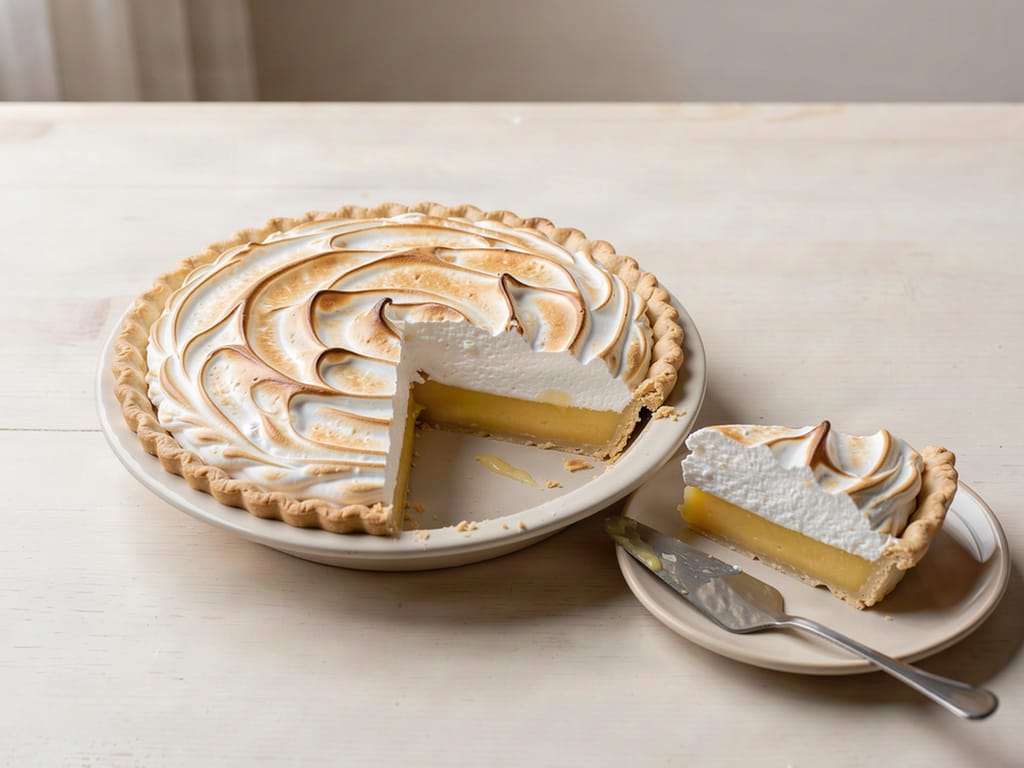
Meringue weeps on a pie when its underside stays undercooked, so liquid seeps out and pools between the meringue and the filling; droplets on top, called beading, come from the opposite problem, overcooking. Spreading the meringue onto hot filling, sealing it to the crust and stabilizing it with a little cooked cornstarch stop both. A properly baked meringue also matters for food safety, because it is made from egg whites.
Meringue is egg white and sugar whipped into foam. In the oven, the egg proteins set and hold the water and sugar inside. Two things go wrong:
Undercooked meringue never sets fully at the bottom. Its liquid drains out and collects between the meringue and the filling. That is weeping.
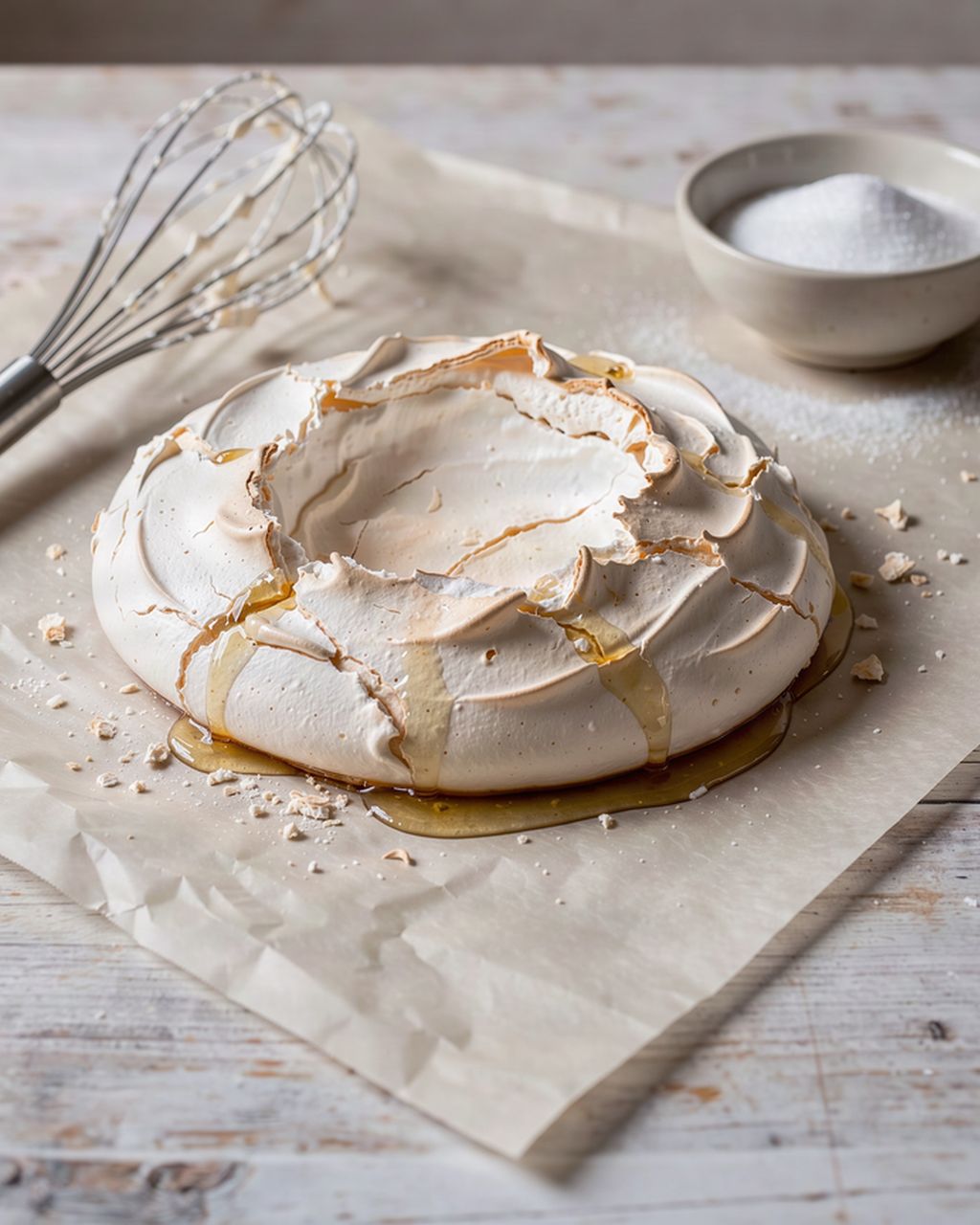
Overcooked meringue sets too hard. The proteins tighten, squeeze out sugar syrup, and it appears on the surface as small golden droplets. That is beading.
One pie can show both, because the top of the meringue sits close to the oven heat while the bottom sits on the filling. If the filling is cool, the underside stays raw while the top browns and beads.
Cut a slice and look:
A puddle or watery layer under the meringue, the meringue sliding on the filling: weeping. The meringue's underside was undercooked. Fix: hot filling, a slightly longer bake, a seal to the crust.
Small amber or clear beads on the peaks: beading. The meringue was overcooked, the oven was too hot, or undissolved sugar turned to syrup. Fix: moderate oven, no extra time, sugar fully dissolved.
A watery filling that runs out of the slice: not the meringue at all. See the filling section below.
Humidity makes both worse. Sugar draws moisture from the air, so on damp days meringue weeps and beads more easily.
The single most useful fix is timing. Have the meringue whipped and ready by the time the filling is cooked, and spread it while the filling is still hot. The heat underneath cooks the bottom of the meringue at the same time as the oven cooks the top.
Start at the edges. Spoon the meringue around the rim first and make sure it touches the crust all the way round. This seals the filling in and stops the meringue from shrinking away from the edge as it bakes.
Fill the middle, then swirl the top into peaks.
Bake at a moderate temperature. Long-standing USDA consumer guidance is that meringue-topped pies should be safe if baked at 350 °F (177 °C) for about 15 minutes, with the meringue spread on hot filling as above. Much hotter, and the peaks brown and bead before the inside is cooked.
Cool it gently, then chill it. A sudden chill makes meringue shrink and weep, so cool the pie at room temperature, away from drafts, for no more than 2 hours (1 hour above 90 °F / 32 °C), the FDA's limit for cooked egg dishes, then refrigerate it.
If the crust itself goes soggy under the filling, that is a separate problem; our guide to blind baking shortcrust pastry covers it.
Many pie bakers add a cooked cornstarch paste to the meringue. Food writer Shirley Corriher made the method well known: a small amount of cornstarch is cooked with water until it thickens into a clear gel, then beaten into the meringue toward the end of whipping. Only a small amount is needed; follow the quantities in the recipe you use, and bake the topped pie as described above rather than shortening the time.
Why it works: the starch holds on to water, and it sits between the egg proteins so they do not tighten as much in the oven. Less tightening means fewer beads; held water means less weeping. A stabilized meringue also cuts cleanly instead of tearing.
Tips:
Cook the paste until it is clear and thick, then let it cool a little before adding it.
Add it a spoonful at a time once the meringue holds soft peaks, then keep whipping.
Use superfine or caster sugar and whip until it no longer feels gritty.
Recipe of the week, one tip that saves you time and one deal from the shop. Unsubscribe in one click.
The next issue goes out on Thursday, November 26.
Meringue is made from egg white, and raw egg can carry Salmonella. The guidance:
Baked pie meringue: long-standing USDA consumer guidance is that meringue-topped pies should be safe if baked at 350 °F (177 °C) for about 15 minutes, with the meringue spread on hot filling.
Only torched or briefly browned meringue: a kitchen torch colors the surface but does not cook the inside. The US FDA recommends pasteurized eggs or pasteurized egg products for any dish in which eggs are served raw or undercooked, so use pasteurized whites for a torched French meringue.
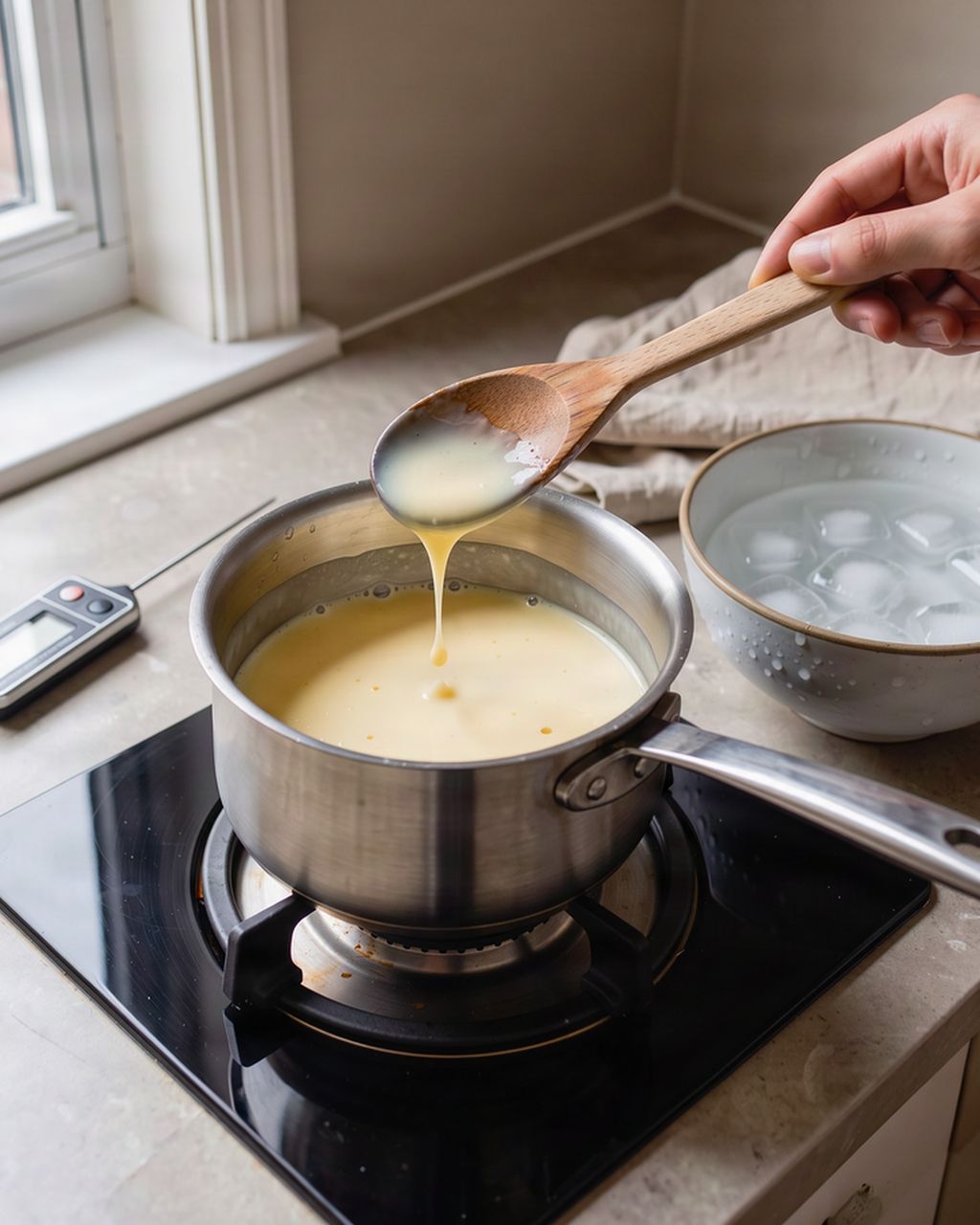
Swiss meringue: the whites and sugar are whisked over simmering water and then whipped. The FDA's safe temperature for egg dishes is 160 °F (71 °C). Check the mixture with an instant-read thermometer and keep whisking over the heat until it reaches 71 °C before you whip it.
Italian meringue: hot sugar syrup, cooked to about 118–121 °C (244–250 °F), is poured into whipped whites. The syrup heats the whites a lot, but we have found no food-safety authority that confirms the whites reliably reach 71 °C throughout. If that matters for your table, use pasteurized whites or bake the topped pie as above.
For anyone pregnant, very young, elderly or with a weakened immune system, use pasteurized egg whites for any meringue that is not fully baked, including torched French and Italian meringue.
Our guides to French, Swiss and Italian meringue and to raw eggs in desserts go further. Once the pie has cooled, keep it in the fridge: the FDA says cooked egg dishes should not stay out of the refrigerator for more than 2 hours, or 1 hour above 90 °F (32 °C), and that leftover cooked egg dishes should be eaten within 3 to 4 days. The meringue is at its best on the first day.
Sometimes the meringue is fine and the lemon filling is what turns runny. Two common reasons:
The yolks were not boiled with the starch. Egg yolks contain an enzyme, amylase, that breaks down starch. If a cornstarch and yolk filling is not brought back to a full, gentle boil for a minute or two after the yolks go in, the enzyme survives and the filling thins as it stands.
The lemon juice went in too early. Long boiling with acid weakens cornstarch. Many recipes stir the juice in at the end, off the heat.
A filling that sets properly and goes into the pie hot, topped straight away with meringue sealed to the crust, gives you clean slices with no puddle.
That layer of liquid is weeping, and it usually means the bottom of the meringue was undercooked, most often because it went onto a cool filling. Spread the meringue onto the filling while the filling is still hot so the meringue cooks from below as well as above.
Weeping is liquid pooling under the meringue, from undercooking; beading is small amber droplets of syrup on top, from overcooking or too much heat. A meringue can show both if the top overbakes while the bottom stays raw.
Most bakers spread it on hot filling, so the heat from below cooks the underside of the meringue and stops it weeping. If the filling has cooled, warm it gently before topping or use a cooked Swiss or Italian meringue.
Long-standing USDA consumer guidance is that meringue-topped pies should be safe if baked at 350 °F (177 °C) for about 15 minutes, with the meringue spread on hot filling. A meringue that is only torched or briefly browned may not get hot enough, so use pasteurized egg whites or a Swiss meringue heated to 160 °F (71 °C), the FDA's safe temperature for egg dishes.
Yes, a little cornstarch cooked with water into a paste and beaten into the meringue holds moisture and stops the egg proteins from tightening too much in the oven. It reduces both weeping and beading and makes the meringue easier to cut cleanly.
One recipe worth heating the oven for, one tip, and one deal from the shop. Nothing else.