Why Is My Custard Not Thickening? Causes and How to Fix It
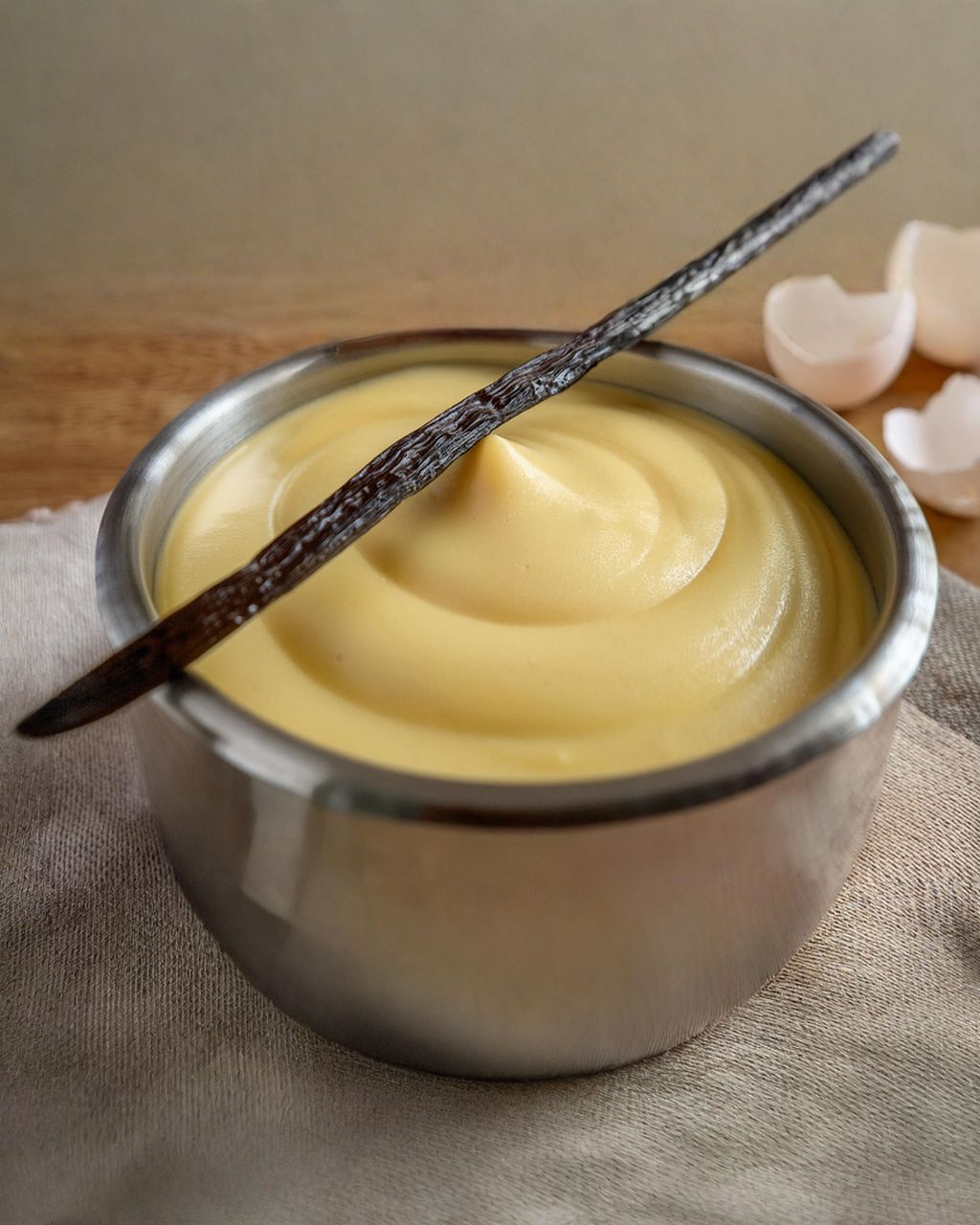
Why Is My Pastry Cream Not Setting? Runny Pastry Cream Fixed
Updated Nov 21, 2026
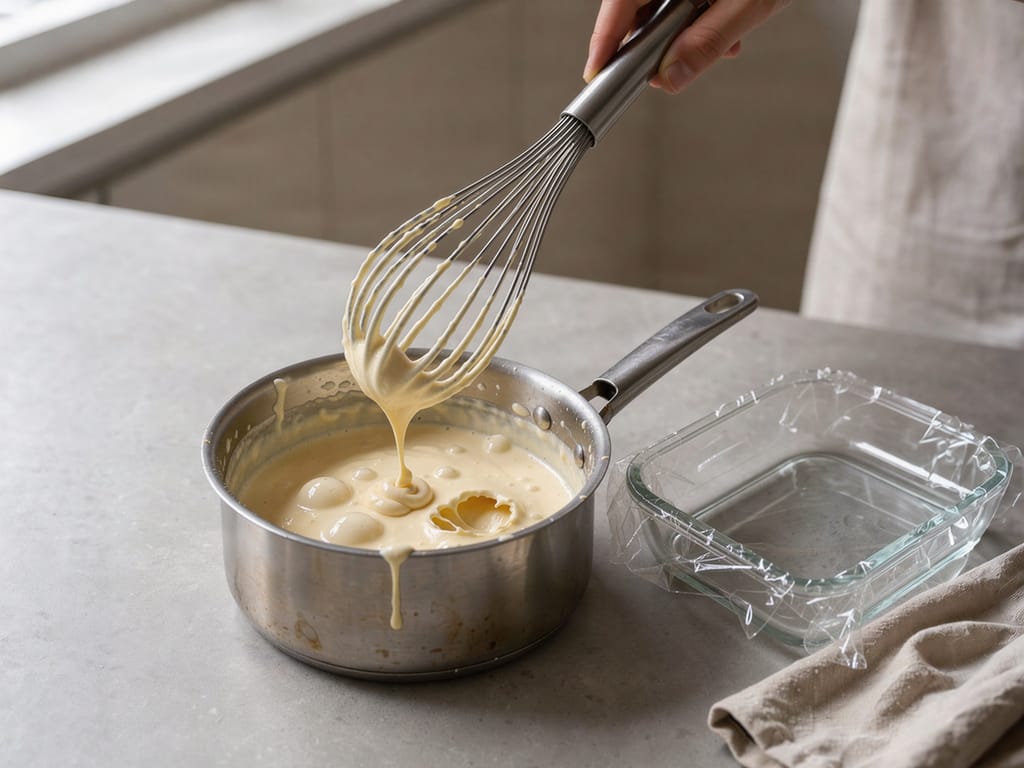
Pastry cream usually doesn't set because it wasn't boiled long enough after the yolks went in, so the starch never fully thickened and an enzyme in the yolks thinned it later. Too little starch, over-whisking once cold, or adding liquid at the end also leave it runny. Most runny pastry cream can be rescued by boiling it again.
Pastry cream is milk, sugar, egg yolks and cornstarch or flour, boiled until thick. When it stays runny, the cause is nearly always one of these:
It wasn't boiled, or not for long enough. The most common cause by far.
The yolks thinned it later. It thickened in the pan, then went runny in the fridge.
Too little starch for the amount of milk.
It was whisked hard after cooling, which breaks the starch gel.
Liquid was added at the end: liqueur, fruit purée, extra cream or melted butter.
It isn't cold yet. Pastry cream only reaches full firmness once it is chilled right through.
For the full method, see our crème pâtissière.
Seasonal baking plans, tested recipes and kitchen tricks that save you time. Unsubscribe in one click.
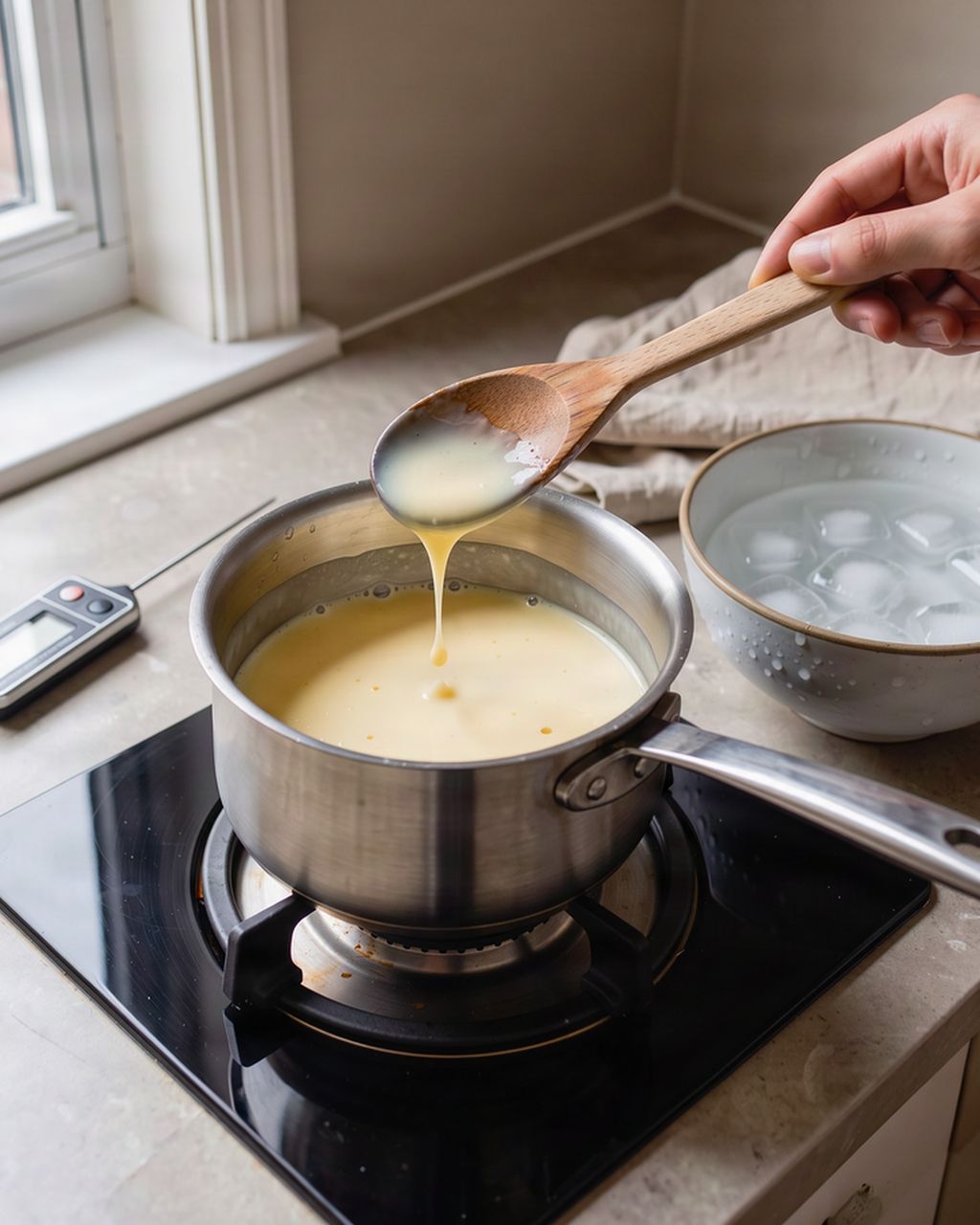
Many cooks stop as soon as pastry cream thickens, worried about curdling the eggs. But the starch needs more. Cornstarch only thickens fully once the liquid comes to a simmer or gentle boil.
America's Test Kitchen cooks pastry cream to about 93 °C (200 °F), until it is thick and glossy and a few bubbles burst on the surface. Most recipes then keep it bubbling, whisking constantly, for a minute or two.
Won't the eggs curdle? No. In pastry cream, the starch protects the yolks, so it can boil safely as long as you keep whisking and scraping the bottom and corners of the pan. It is also well above the 71 °C (160 °F) that FDA advises for cooked egg dishes.
This is the frustrating one: the cream was thick in the pan and runny the next morning.
Egg yolks contain amylase, an enzyme that breaks down starch. If the cream was only heated to thickening point and not boiled, some of the enzyme survives and slowly digests the starch in the fridge. Boiling destroys it, which is why pastry cream recipes insist on the boil after the yolks go in.
The fix: scrape it back into the pan, bring it to a boil while whisking, bubble for a minute or two, then cool and chill it again. If you used flour rather than cornstarch, the same applies.
Classic recipes use roughly 25–55 g of cornstarch per 500 ml of milk, or about 50–60 g if you use flour, depending on how firm the pastry cream needs to be. A soft cream for spooning over fruit sits at the low end; a filling for éclairs or doughnuts that must hold its shape sits at the high end. Our cups and spoons to grams tool converts spoon measures.
Flour sets softer than cornstarch gram for gram, and tastes starchy unless cooked longer.
Potato starch thickens quickly but is less stable with long cooking.
Too much milk or cream for the starch gives the same result as too little starch.
If it boils and is still thin, whisk a little more cornstarch into cold milk, pour it in, and bring it back to a boil.
Over-whisking once cold. Chilled pastry cream sets into a firm gel that looks lumpy. Loosen it with a spatula or a few seconds of gentle whisking. Long, hard beating breaks the gel and leaves it runny.
Liqueur, fruit purée or extra liquid. Each one thins it. Add only a little, and only once the cream is cold, or cook it thicker to start with.
Acidic fruit such as lemon or passion fruit also weakens cornstarch.
Using it warm. Warm pastry cream is soft. Chill it until cold right through before piping into éclairs or doughnuts, or before filling a tart.
Go by these signs, not just by thickness:
Big, slow bubbles break the surface in the middle of the pan, not only at the edges.
It turns glossy and slightly translucent, and loses its floury, opaque look.
It pulls away from the sides and bottom of the pan as you whisk, and the whisk leaves clear trails.
It tastes smooth, not chalky or floury. Taste a little from a clean spoon once it has cooled slightly.
It mounds on a spoon rather than running off.
Once you see all of these, keep it bubbling, whisking, for a minute or two, then take it off the heat and stir in the butter and vanilla. If it looks lumpy at this stage, whisk hard for a few seconds or push it through a sieve while hot; lumps are usually just starch that set unevenly.
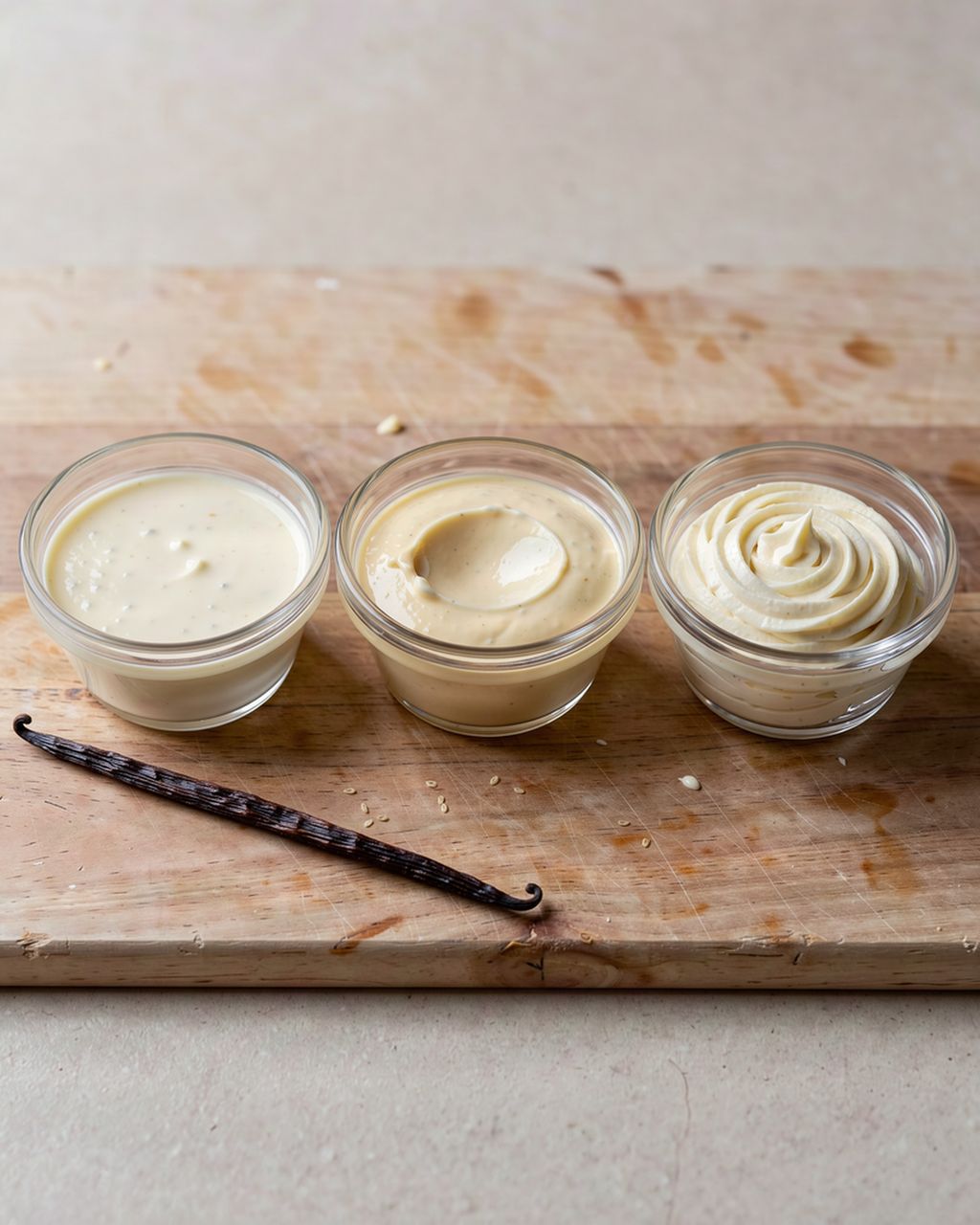
For layer cakes and tall fillings, bakers often change the pastry cream itself:
Crème diplomate: fold in whipped cream and a little gelatin, bloomed and then melted. It holds well when sliced.
Crème mousseline: beat in soft butter for a firm, rich filling.
Both are explained step by step in crème diplomate and mousseline.
Pastry cream is a cooked egg dish, so how you cool it matters as much as how you cook it.
Spread it out. Tip the hot cream into a shallow dish; FDA advises dividing large amounts into shallow containers so they cool quickly. Setting the dish in a larger bowl of ice water speeds things up; USDA FSIS says hot food can be chilled in an ice or cold water bath before refrigerating. Stir it now and then, and get it into the fridge as soon as it stops steaming, well within 2 hours.
Cover the surface. Press plastic wrap or baking paper directly onto it to stop a skin.
Into the fridge. FDA advises never leaving cooked egg dishes out of the refrigerator for more than 2 hours, or 1 hour above 32 °C (90 °F). Keep it covered in the fridge and use it within 3 to 4 days, FDA's limit for refrigerated leftover cooked egg dishes. Keep filled pastries in the fridge too, within the same limit.
Pastry cream usually won't set because it wasn't boiled after the yolks went in. Cornstarch needs a gentle boil to thicken fully, and boiling also destroys an enzyme in egg yolks that otherwise breaks the starch down. Bring it back to a boil while whisking, then let it bubble for a minute or two.
Pastry cream thickens in the pan within a couple of minutes once it boils, but it only reaches its full firmness once it is cold. Chill it covered in the fridge until cold right through before piping or filling.
Yes. Return runny pastry cream to the pan and bring it back to a boil, whisking constantly. If it is boiling and still thin, whisk in a little cornstarch mixed with cold milk and boil again briefly. Then cool it quickly and refrigerate it.
Pastry cream that goes runny overnight was not boiled enough after the yolks went in. Amylase, an enzyme in the yolks, survives gentle cooking and slowly digests the starch in the fridge. Boiling it again, whisking, usually fixes it.
Pastry cream splits when the yolks overcook before the starch has thickened enough to protect them, usually from high heat with too little whisking. Strain it or blend it while warm. Once it is thick, starch protects it, so a boil is fine as long as you whisk constantly.
To make pastry cream firmer, add a little more cornstarch next time, or melt bloomed gelatin and whisk it into a little of the pastry cream, then fold that and whipped cream into the rest to make diplomat cream. Beating soft butter into it, as in crème mousseline, also makes it firmer when chilled.
One recipe worth heating the oven for, one tip, and one deal from the shop. Nothing else.