Lilac meringue kisses with lemon curd cream and fresh fruit
Updated Sep 17, 2026
Leftover egg whites can go four ways: whip them into meringue (meringues, macaron-style laskonky, pavlova, macarons), fold them into creams and mousses, use them in place of whole eggs for savoury cooking (omelettes, breading, egg washes), or simply freeze them. In the fridge, in an airtight container, count on 2–4 days; in the freezer, the USDA says up to 12 months — and once thawed, they whip up almost as well as fresh ones. Below you'll find 12 concrete ways to use them, with ratios and temperatures, plus the technique that keeps your meringue from collapsing.
There are 12 ways to use up leftover egg whites: meringues, laskonky (French macaron-style sandwich biscuits), pavlova, macarons, meringue buttercream, royal icing, mousses, soufflé, omelette, egg-white bakes, breading, and egg white as glue.
Meringues – ratio of 1 part egg white to 2 parts sugar, dried at 90–100°C for about 1.5–2 hours.
Laskonky (sandwich meringues) – the same meringue with icing sugar, sandwiched with cream filling.
Pavlova – one large meringue with a crisp shell and soft centre, using 4–6 egg whites.
Macarons – almond flour, icing sugar, and egg whites rested for a few days.
Meringue buttercream – Swiss or Italian meringue as the base for buttercreams and fillings.
Royal icing – 1 egg white (about 33 g) to 180–200 g icing sugar.
Chocolate and fruit mousse – meringue provides the volume instead of whipped cream.
Soufflés and baked puddings – whipped whites are the only leavening here.
Egg-white omelette – 3–4 whites, 2–3 minutes over low heat.
Egg-white bakes and quick breads – a lighter, drier crumb without the fat from the yolk.
Breading – egg white holds breadcrumbs on more securely than whole egg.
Egg white as glue and glaze – seeds on bread, roasted nuts, clumping granola.
Bonus: 15–20 ml of egg white makes a thick foam for a whiskey sour, and professional kitchens also use egg white to clarify stock for consommé.
Raw egg whites keep for 2–4 days in the fridge and up to 12 months in the freezer. The only real variable is how quickly you get them properly sealed — egg white is about 90% water, and in an open bowl it picks up fridge odours within a few hours.
Fridge: pour into an airtight container right after separating, store at the back of the fridge below 4°C, and use within 2–4 days.
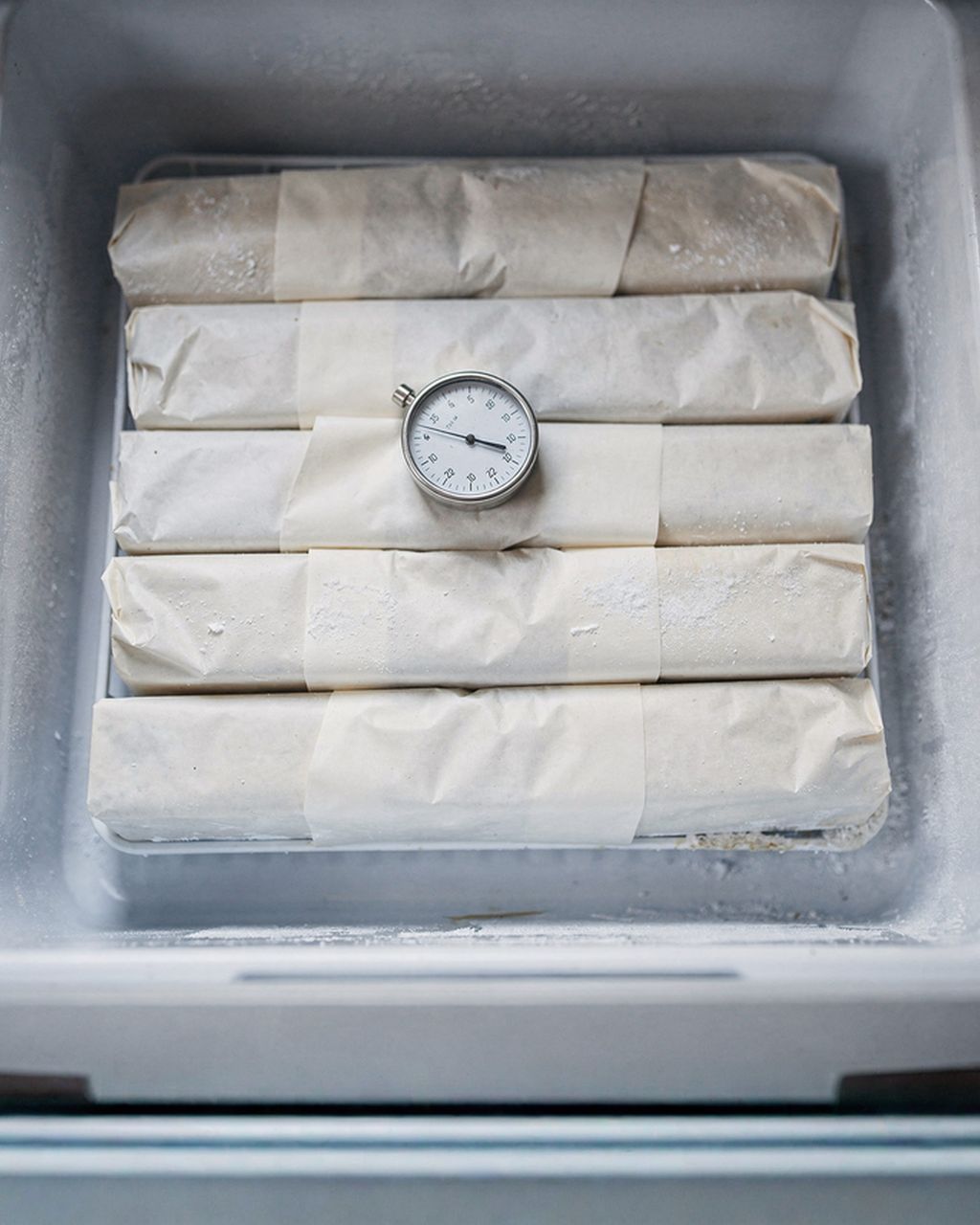
Freezer: pour egg whites into an ice cube tray — one white per cube (about 33 g). Once frozen, tip them into a bag and label it with the date and count, or in three months you'll have no idea how many are in there.
Freezer shelf life: the USDA lists 12 months as the window during which egg whites hold their best quality. The longer they sit in the freezer, the harder they get to whip — for meringues and pavlova, reach for the freshest ones you have.
Thawing: overnight in the fridge, then use within 24 hours. Never thaw in the microwave — the edges set instantly, and that egg white will no longer whip into meringue.
Don't refreeze. Once an egg white has thawed, it doesn't go back in the freezer.
Let egg whites sit out for 30 minutes before whipping. Cold egg white whips more slowly and reaches a smaller volume — and this goes double for thawed whites.
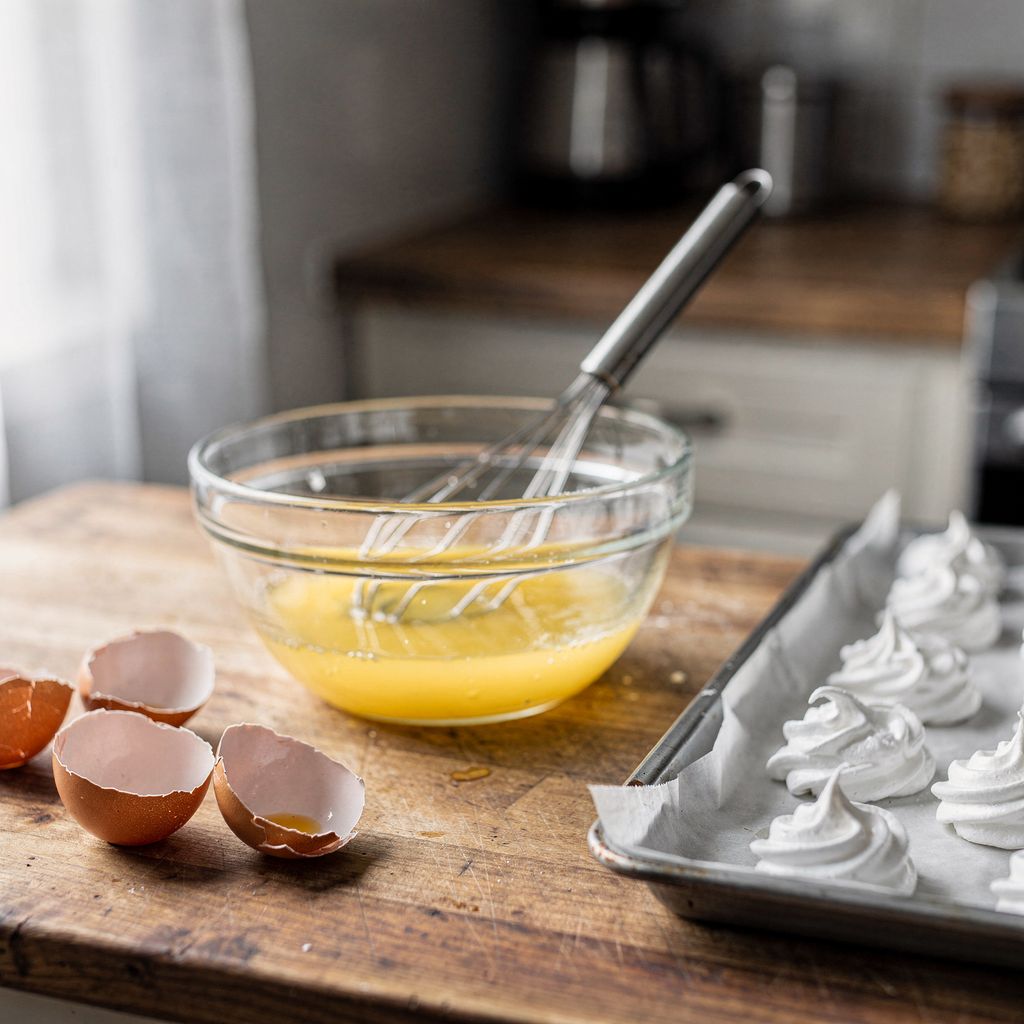
Meringue holds when the bowl is completely grease-free, there's not a drop of yolk in the whites, and you add the sugar gradually, starting at the soft-peak stage. Fat breaks down the protein network that holds the foam together — which is why even a speck of yolk stops the whites from reaching full volume.
Bowl: glass or stainless steel. Plastic holds onto grease in microscopic scratches even after washing. Wipe the bowl and whisk with a paper towel dipped in vinegar or lemon juice, then dry.
Temperature: 20°C — about 30 minutes out of the fridge. Warmer egg white is thinner and takes on air more easily.
Acid instead of salt: 1/4 teaspoon lemon juice or cream of tartar per 4 egg whites. It stabilises the foam so it doesn't weep. Salt, on the other hand, weakens the foam.
Add sugar gradually: start by whipping the whites alone, and only once they hold soft peaks, add the sugar a spoonful at a time, 1–2 minutes apart. Sugar added right at the start noticeably slows down volume gain.
When to stop: the peak on the whisk stands up straight without flopping over, the mixture is glossy, and you can no longer feel sugar crystals between your fingers. Turning the bowl upside down over your head is an old trick, but it does work.
Over-whipped meringue looks grainy and cottony, with liquid pooling at the bottom of the bowl. You can rescue it by adding one fresh egg white and whipping briefly.
Meringues are the most direct way to use up a larger quantity of egg whites: stick to a ratio of 1 part egg white to 2 parts sugar (that's 100 g whites to 200 g sugar), and dry them at 90–100°C for about 1.5–2 hours. You're not baking them — you're drying them. The goal is to evaporate the water, not brown them.
Use half caster sugar and half icing sugar: the caster sugar dissolves into the meringue and gives it structure, while the icing sugar (with a touch of starch) helps it hold its shape as it dries. Once done, let the meringues cool in the switched-off oven with the door slightly ajar — a sudden change in temperature will crack them.
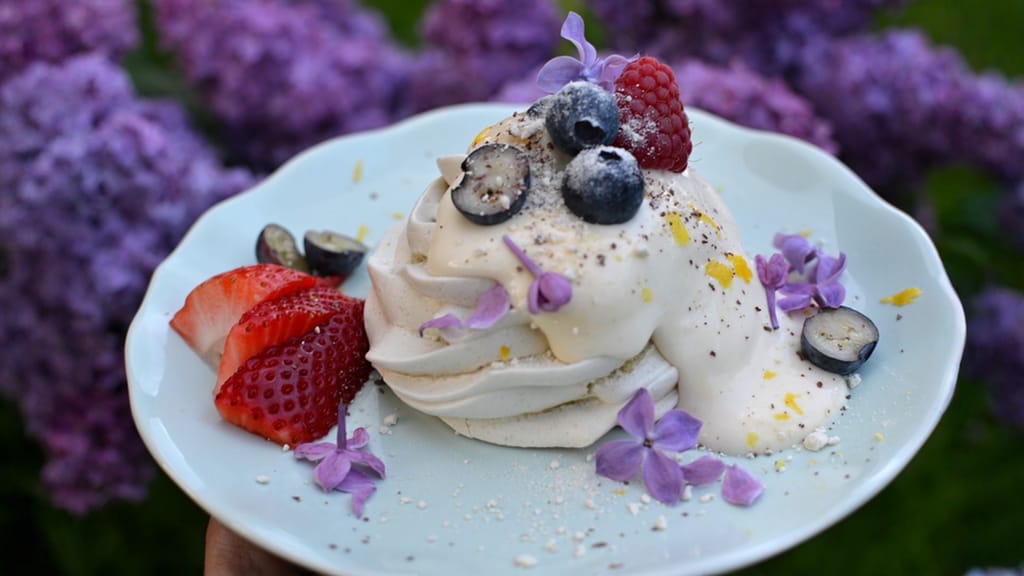
Lilac meringue kisses with lemon curd cream and fresh fruit
Lilac meringues with lemon curd and fresh fruit — delicate meringue made from leftover egg whites
Laskonky use up egg whites on the same principle as meringues, just piped into thin discs and sandwiched with cream — so one batch of meringue gives you a ready-made treat. The meringue here is denser and mixed with icing sugar, sometimes with ground coconut or almonds.
The key is low temperature and time: at 100°C, laskonky just dry out and stay white. Once they start browning, the oven's too hot and the base will stick to the paper.
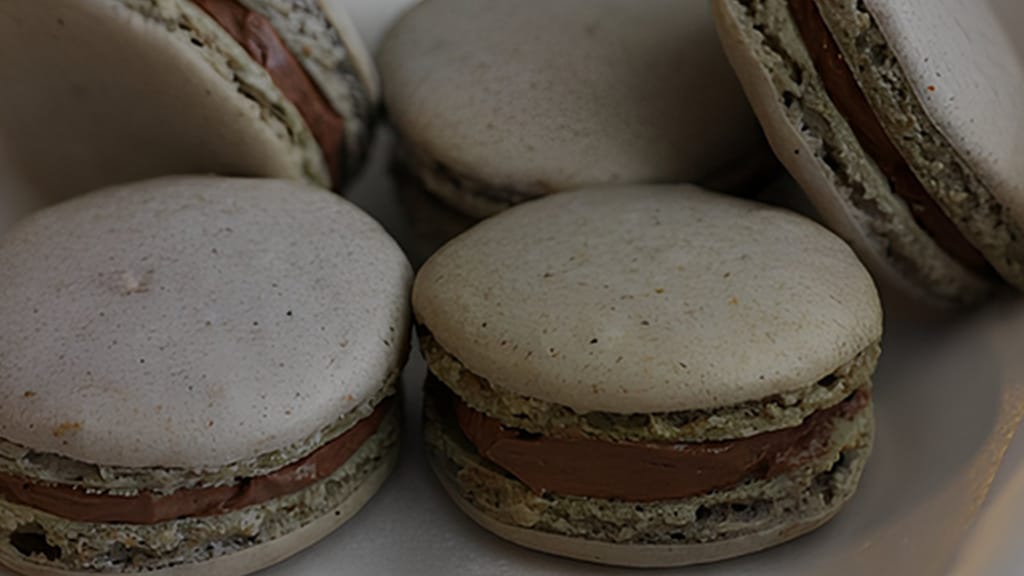
Lakronies
Laskonky made from egg whites — classic sandwich meringues filled with cream
Pavlova is one big meringue that uses up 4–6 egg whites in one go — ideal when you've got a whole bowlful to get through. It differs from meringues by the addition of starch (1 teaspoon per 4 egg whites) and vinegar or lemon juice: both the acid and the starch stop the proteins from setting completely, leaving a soft, marshmallow-like centre under a crisp shell.
Bake at 120°C for about 1 hour and let it cool inside the oven. Cracks on the surface aren't a flaw — they're the signature — and they'll be covered by the cream and fruit you add just before serving.
Macarons are the one use where rested egg whites are actually an advantage: a white that's spent 2–3 days in the fridge is thinner, easier to work with, and gives smoother-topped shells. The base is almond flour and icing sugar mixed with meringue in roughly a 1:1:1 ratio to egg whites.
The tricky part isn't the meringue but the macaronage — folding in the almond mixture until the batter flows off the spatula in a continuous ribbon. Then let the shells rest for 30 minutes before baking at 150°C.
The filling is half the work with macarons. Try white chocolate and coffee ganache or salted caramel filling — both can be made a day ahead.
Swiss and Italian meringue are ways to turn egg whites into a cream that holds up at room temperature and is also heat-treated. The only difference is when the whites get heated.
Swiss method: whip egg whites and sugar (ratio 1:1.5) over a water bath until the mixture reaches 71°C (160°F) and the sugar has fully dissolved — the temperature the USDA lists as safe for egg-based dishes. If working at a lower temperature, hold the mixture above 60°C for at least 3 minutes; simply hitting 60°C isn't enough. Then remove from the heat and whip until cooled.
Italian method: slowly pour a sugar syrup cooked to 118–121°C into whipped egg whites. It's a bit trickier to time, but the result is the most stable — it holds its shape on a cake all day long. Bear in mind, though, that the hot syrup only partially heat-treats the whites: it depends on the syrup-to-egg-white ratio and how quickly you pour it in.
Both can be turned into a buttercream: once the meringue has cooled (it needs to be under 25°C, or the butter will melt), whip in softened butter, cube by cube. If the mixture curdles halfway through, just keep whipping — it'll come back together within a minute.
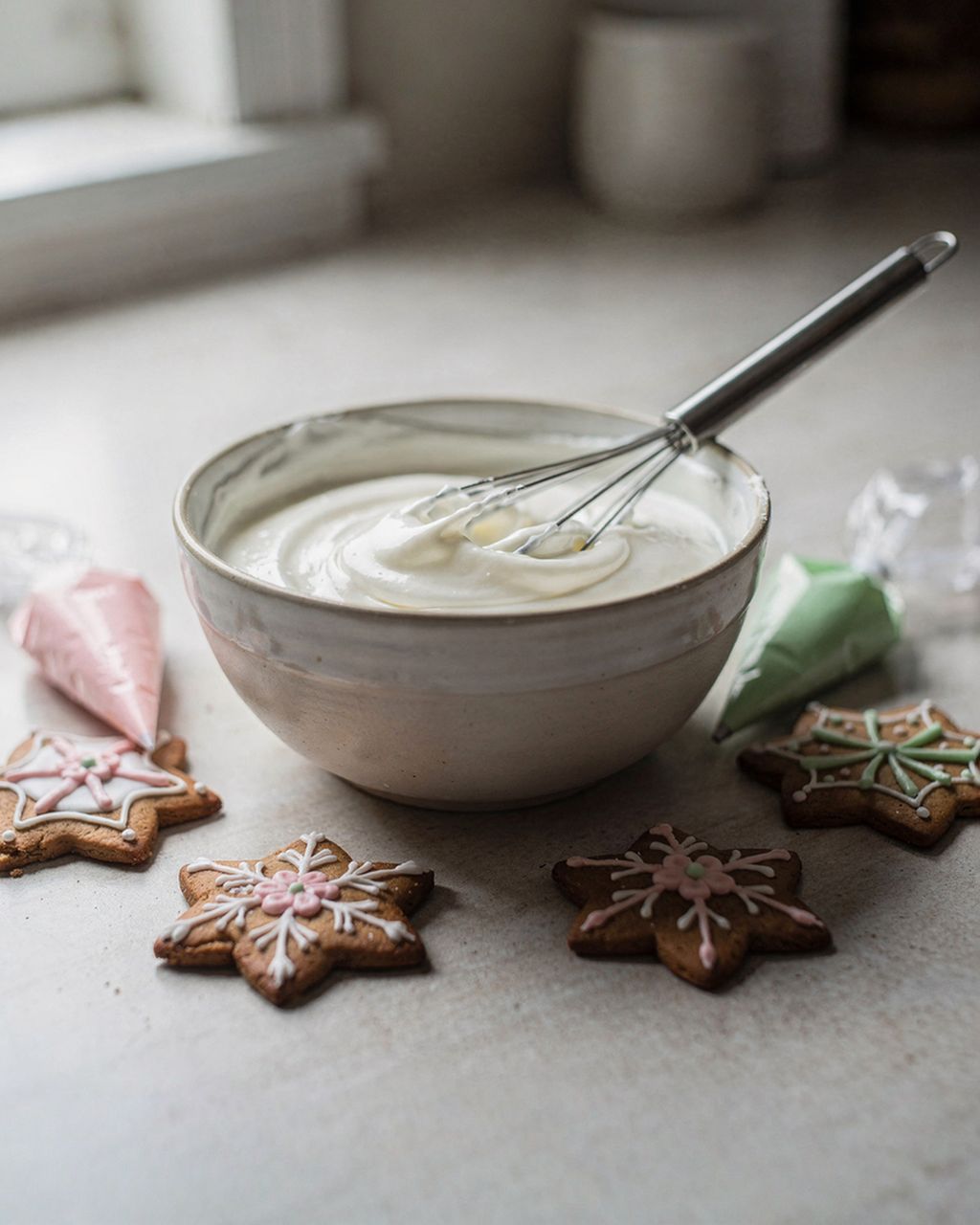
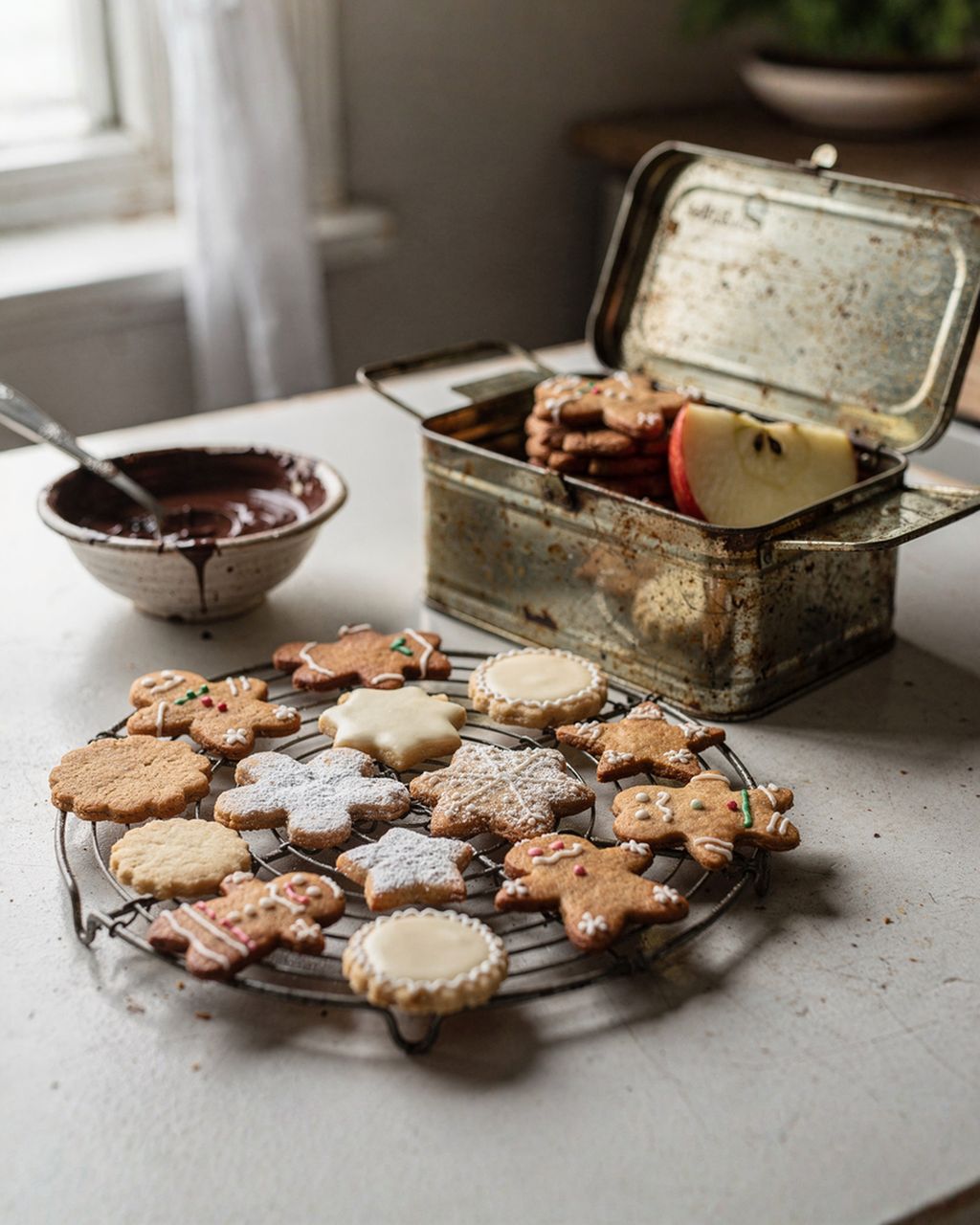
For royal icing, you need 1 egg white (about 33 g) to 180–200 g sifted icing sugar, plus a few drops of lemon juice. One egg white covers roughly a tray of biscuits, so two leftover whites will be enough for a whole batch of soft honey gingerbread.
Adjust the consistency with water, half a teaspoon at a time: a thick icing for outlines (a line holds for 10 seconds), a thinner one for flooding (a trail from the spoon disappears within 10 seconds). Cover finished icing with a damp cloth — left out, it forms a skin within minutes.
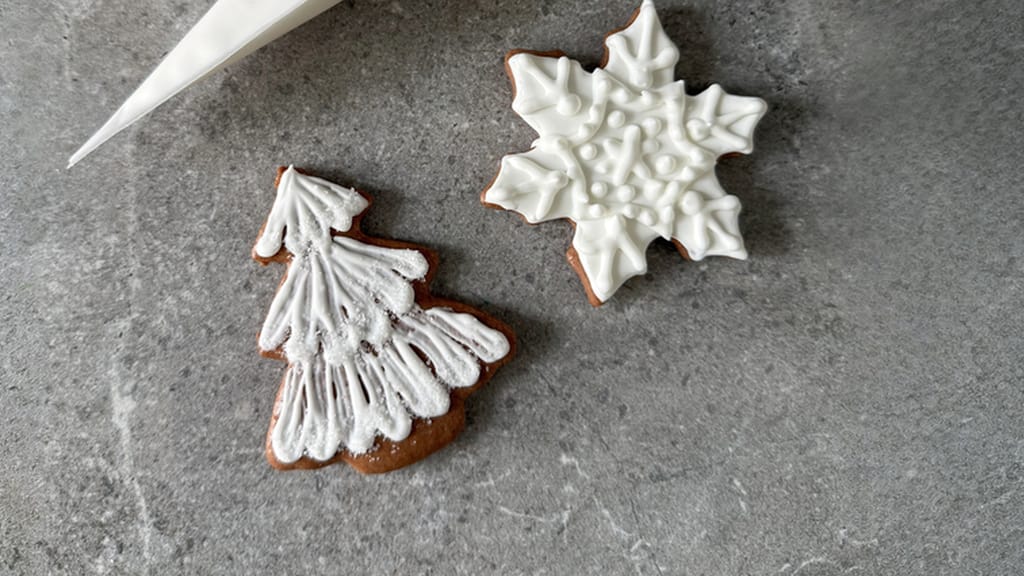
Royal icing for cookies: the foundation for perfect decorating
Royal icing for biscuits — a decorating base made from a single egg white
In mousses, whipped egg white stands in for whipped cream: it adds volume without the milk fat, so the flavour of the chocolate or fruit comes through more clearly. For a classic chocolate mousse, count on 3 egg whites per 100 g of chocolate.
Two things matter here. The chocolate needs to be just warm (around 35°C) — fold meringue into cold chocolate and it'll seize into lumps. And fold the meringue in with a spatula in three additions, working from top to bottom: the first addition just loosens the mixture, and the remaining two should be folded in as gently as possible.
Try chocolate mousse in its classic form, or go straight for the version that uses up egg whites twice over — both in the mousse and in meringue ghosts on top.
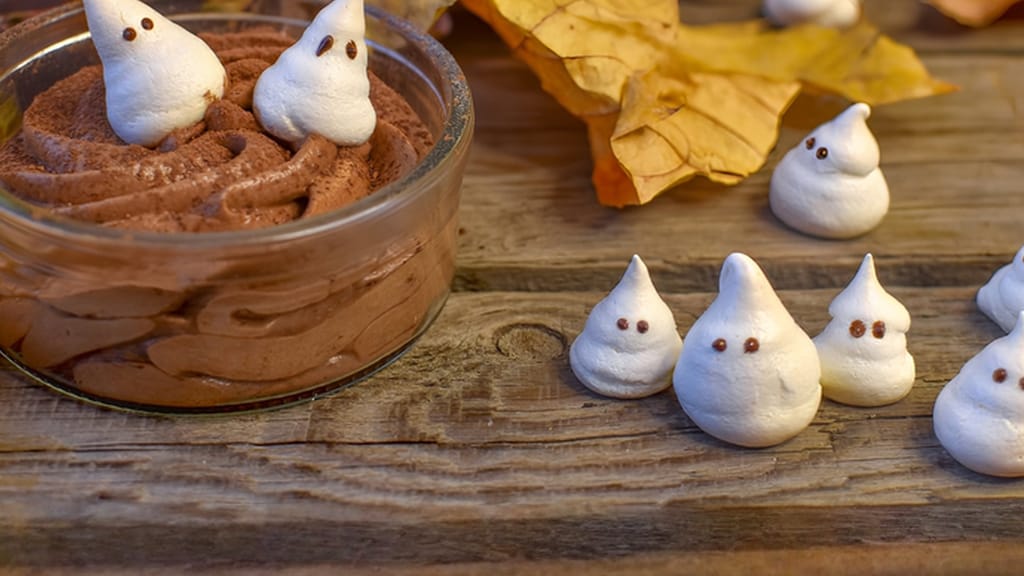
Halloween chocolate mousse with meringue ghosts
Halloween chocolate mousse with meringue ghosts — egg whites used in both the mousse and the meringues
In a soufflé, whipped egg whites are the only leavening — no baking soda, no baking powder. The air trapped in the foam expands in the oven and lifts the whole dish.
That's why the rules are stricter here: butter the dish with strokes from top to bottom and dust it with sugar (or with grated Parmesan for a savoury soufflé), so the batter has something to grip onto. And don't open the oven door while it bakes — a collapsed soufflé isn't a myth, it's just physics.
The quickest way to use up 3–4 egg whites is an omelette: 2–3 minutes over low heat and breakfast is done. 100 g of egg white (roughly 3 whites from medium eggs) gives about 11 g of protein and 52 kcal; 130 g gives about 14 g of protein and 68 kcal. Egg white sets at a lower temperature than yolk, so high heat will turn it rubbery.
Since there's no fat from the yolk, the flavour has to come from elsewhere — season well with salt and pepper, and add something with punch: a few drops of soy sauce, roasted tomatoes, feta, spring onion. A spoonful of milk or soured cream per 4 egg whites will soften up the omelette.
In baking, you can swap whole eggs for egg whites anywhere you don't want the fat or the yellow colour — the result is a lighter, paler and drier crumb. Handy conversion: 2 egg whites (about 65 g) replace 1 whole egg.
Since you're missing the fat and emulsifiers from the yolk, add something to bring back moisture: a tablespoon of oil, yoghurt or curd cheese for every two eggs replaced. Skip this and the batter turns out crumbly.
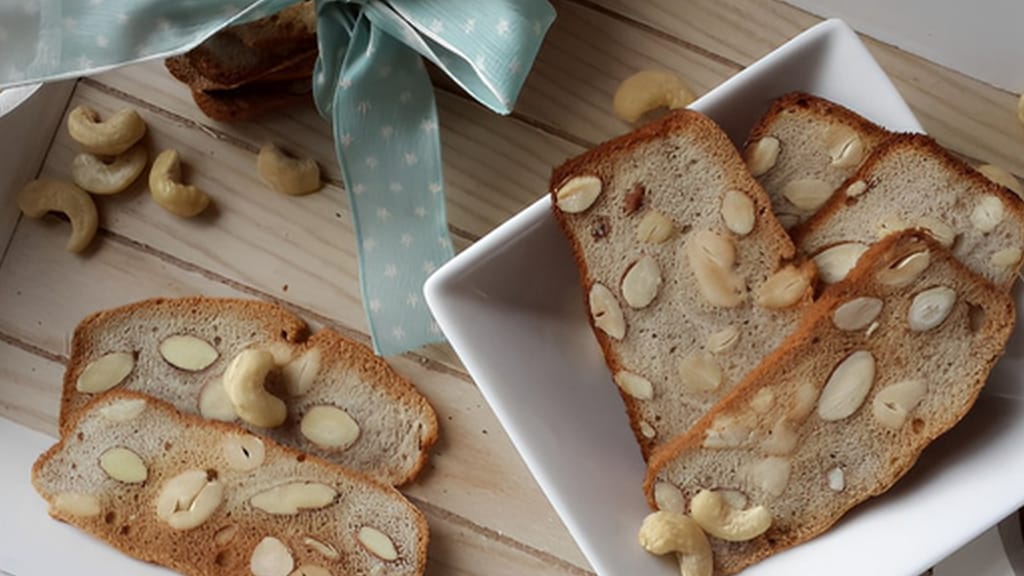
Egg white nut loaf
Egg-white loaf with nuts — a bake built specifically around leftover whites
In breading, plain egg white outperforms whole egg: it's stickier, sets faster, and the breadcrumbs stay on more securely while soaking up less oil. For 4 cutlets, count on 2–3 egg whites, lightly beaten with a fork and a pinch of salt.
The method stays the same — flour, egg white, breadcrumbs — just let the breaded meat rest in the fridge for 10 minutes before cooking. The protein has time to set, so the coating won't peel off during frying.
The same principle works in the oven too: baked crispy cutlets in cornmeal crumb show how to get the crunch without deep-frying.
Beaten egg white is the best edible glue in the kitchen — it sticks seeds onto bread, sugar onto nuts, and clumps together granola, and once dry, you can't see or taste it.
Seeds on bread: brush the loaf with egg white thinned with a teaspoon of water. It gives a matte, crisp crust and a lighter colour than a whole-egg wash, which bakes to a deep brown.
Roasted nuts: lightly beat 1 egg white, toss 200 g of nuts through it, sprinkle with 50 g of sugar mixed with cinnamon, and bake at 150°C for about 25 minutes. The egg white forms a thin, crisp shell on the nuts.
Clumpy granola: 1 egg white per 300 g of oats, stirred in with the oil and syrup, keeps big clusters together after baking instead of loose crumbs.
Glaze for biscuits: egg white mixed with a tablespoon of water and brushed onto honey gingerbread right after baking gives a soft sheen without needing icing.
Nine times out of ten, collapsed meringue comes down to fat, or sugar added too early. Check whether you're doing any of the following:
A speck of yolk in the whites. Scoop it out with half the shell, not a spoon — the shell attracts the yolk. If it breaks and spreads, set that egg white aside for something else.
A plastic bowl. It holds onto grease even after a run through the dishwasher. Reach for glass or stainless steel instead.
Sugar added at the start. This stops the whites from reaching full volume. Add it only once you've hit soft peaks, a spoonful at a time.
Cold egg whites straight from the fridge. Let them sit out for 30 minutes first.
A humid day. Meringue absorbs moisture from the air and turns sticky. On rainy days, dry it for 30–60 minutes longer.
Opening the oven door. For soufflés and pavlova alike, keep the door shut and let finished bakes cool inside the oven.
A white from a medium (M) egg (53–63 g) weighs roughly 31–36 g; from a large (L) egg (63–73 g), roughly 37–42 g. When a recipe lists grams, reckon on 3 medium whites per 100 g, or closer to 2.5 large whites per 100 g. This is exactly why it pays to freeze whites individually in ice cube trays — you can pull out just as many as you need without thawing the whole batch.
Yes — thawed egg whites whip up just fine, and you won't notice any difference in meringues or mousses. They lose a touch of whipping power, so let them come to room temperature for 30 minutes before whipping; they'll then reach full volume. Thaw them overnight in the fridge, never in the microwave.
You'll mostly notice spoiled egg white by smell — a fresh raw white smells neutral to almost nothing, while a spoiled one has a sharp, sulphurous odour you'll catch the moment you open the container. A pinkish or greenish tinge and a slimy, stringy texture are also red flags. If in doubt, throw it out — with eggs, it's not worth the gamble.
100 g of egg white has about 10.9 g of protein and 52 kcal, with virtually no fat or carbs — so one white from a medium egg (about 33 g) comes to roughly 3.6 g protein and 17 kcal. The yolk, by contrast, carries almost all the fat, cholesterol and most of the vitamins in an egg — which is why an egg-white omelette turns out so light.
Aquafaba (chickpea brine) can replace egg whites in meringues, macarons and cocktail foams at a ratio of 2 tablespoons (about 30 ml) of aquafaba per egg white; 3 tablespoons (about 45 ml) stands in for a whole egg. It works the other way too — where a recipe calls for aquafaba, you can use egg white at the same ratio. But in recipes where the egg white's job is to firm up structure — breading, egg-white bakes, soufflés — aquafaba doesn't work reliably, since it doesn't set the same way.
One recipe worth heating the oven for, one tip, and one deal from the shop. Nothing else.