Why Is My Pastry Cream Not Setting? Runny Pastry Cream Fixed
Why Is My Custard Not Thickening? Causes and How to Fix It
Updated Nov 21, 2026
Custard usually isn't thickening because it hasn't got hot enough yet: an egg custard sauce needs to reach about 79–82 °C (175–180 °F), and a cornstarch custard has to come to a simmer or gentle boil. It can also be too thin because the ratio is off, or because it thinned again after cooking. Here is how to tell which, and how to rescue it.
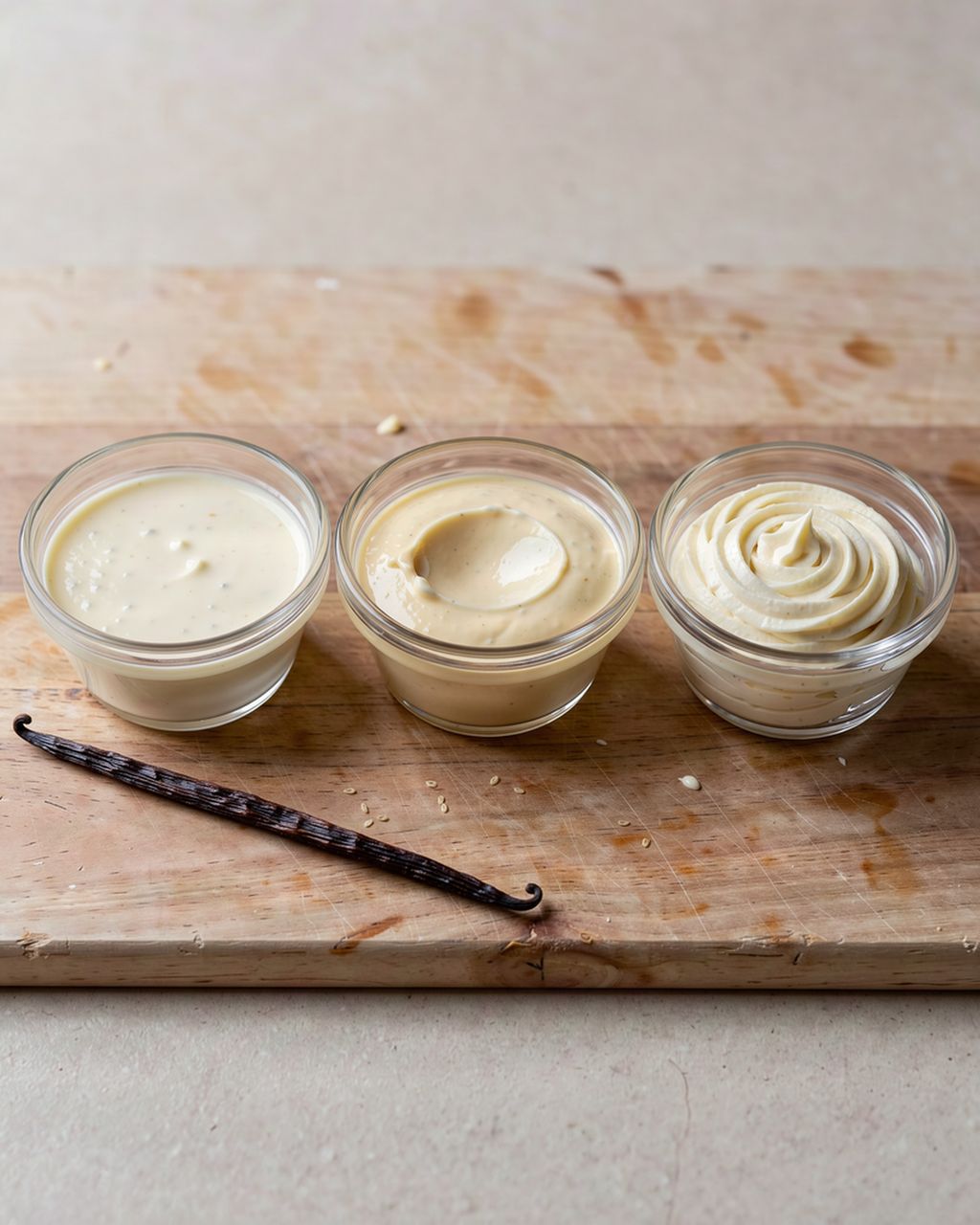
"Custard" covers three different things, and each one thickens differently:
Egg custard sauce (crème anglaise, English custard made from scratch): milk or cream thickened only by egg yolks, cooked gently on the stove. It thickens to a pourable, spoon-coating sauce. See crème anglaise.
Starch custard (custard powder, pudding, pastry cream): thickened mostly by cornstarch or flour, sometimes with yolks too. Boiled, and sets thick. See crème pâtissière.
Baked custard (flan, crème brûlée, custard tarts): eggs and milk set in the oven. See flan.
Find yours below.
Recipe of the week, one tip that saves you time and one deal from the shop. Unsubscribe in one click.
The next issue goes out on Thursday, November 26.
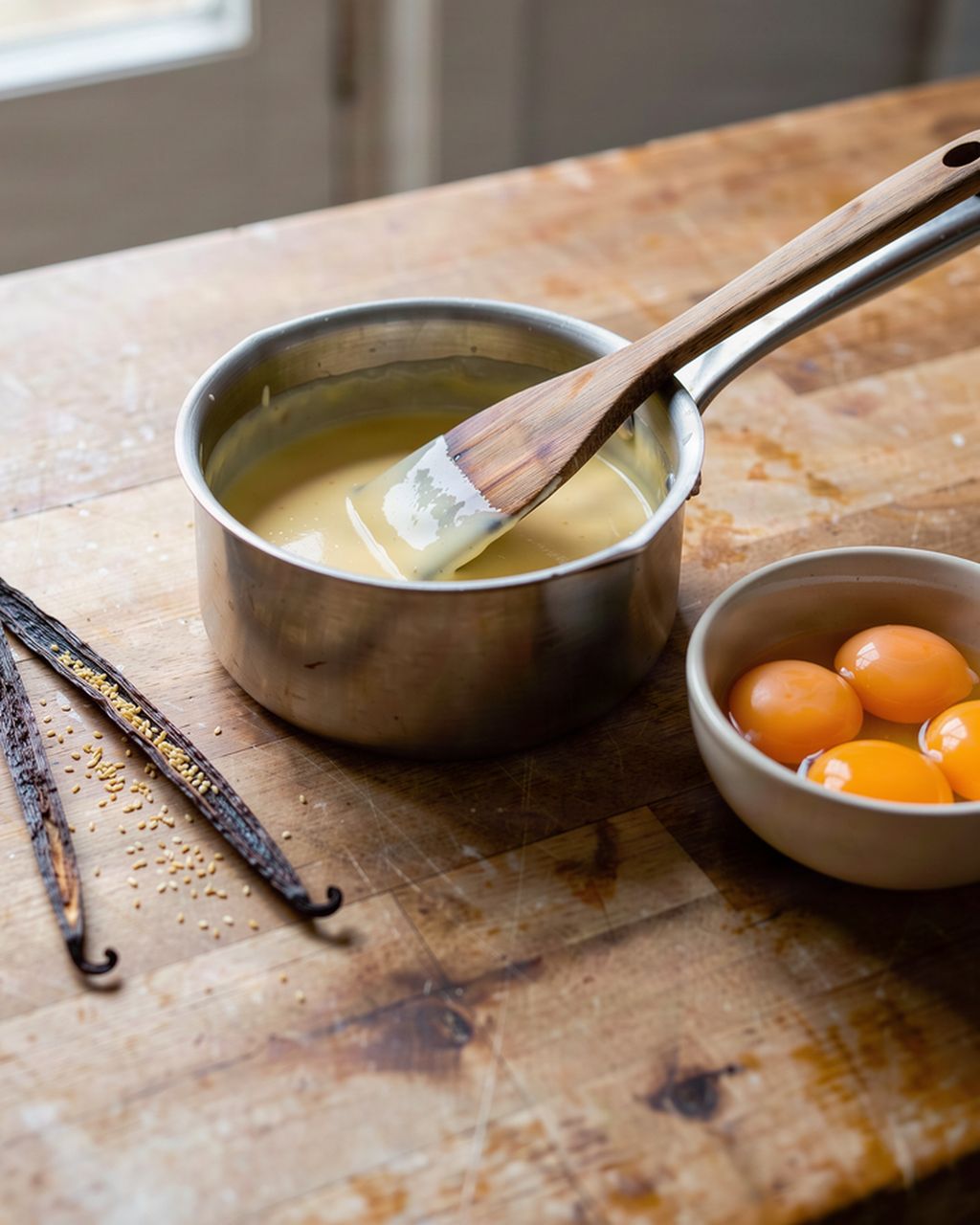
Egg yolks thicken milk only once they are hot enough. America's Test Kitchen takes crème anglaise off the heat at about 79–82 °C (175–180 °F). Above about 84 °C (185 °F), the point Valrhona gives as the ceiling for crème anglaise, the yolks start to curdle into lumps.
That window is above the 71 °C (160 °F) FDA advises for dishes containing eggs, so a properly thickened custard sauce is also cooked through.
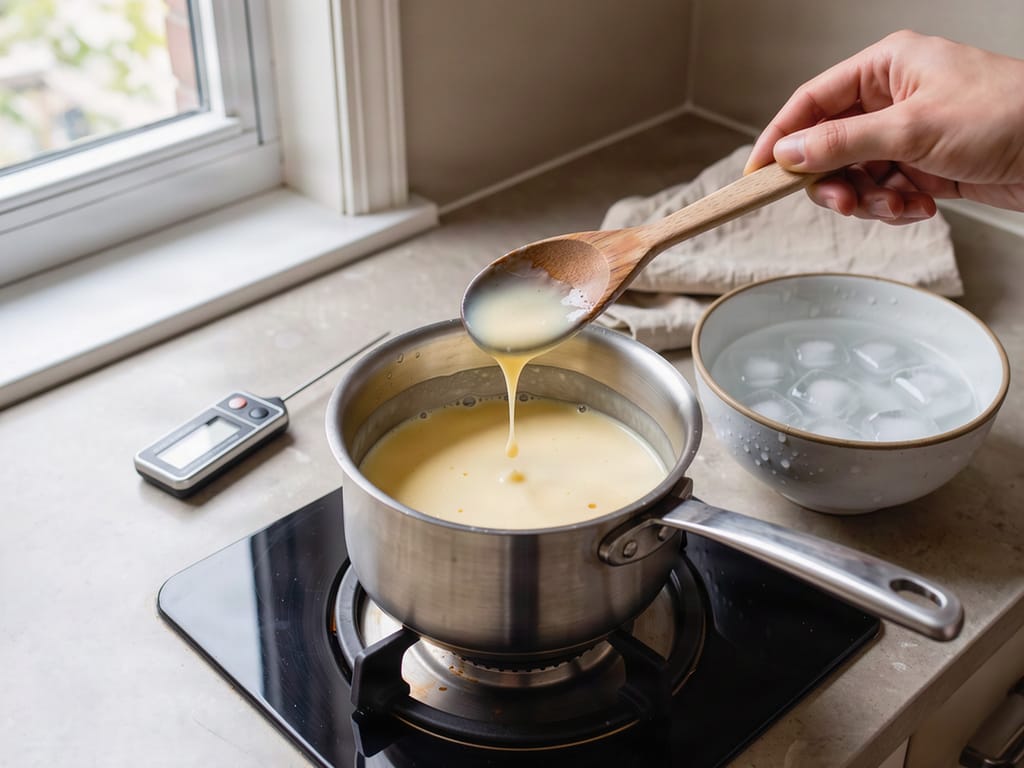
Signs it is ready: it coats the back of a spoon, and a line drawn through the coating with your finger stays clear. A thermometer is far more reliable, because the custard thickens suddenly near the end.
If it is stuck thin: your heat is probably too low (common with a double boiler), or the batch is large. Raise the heat a little and keep stirring, scraping the bottom and corners of the pan. Don't walk away.
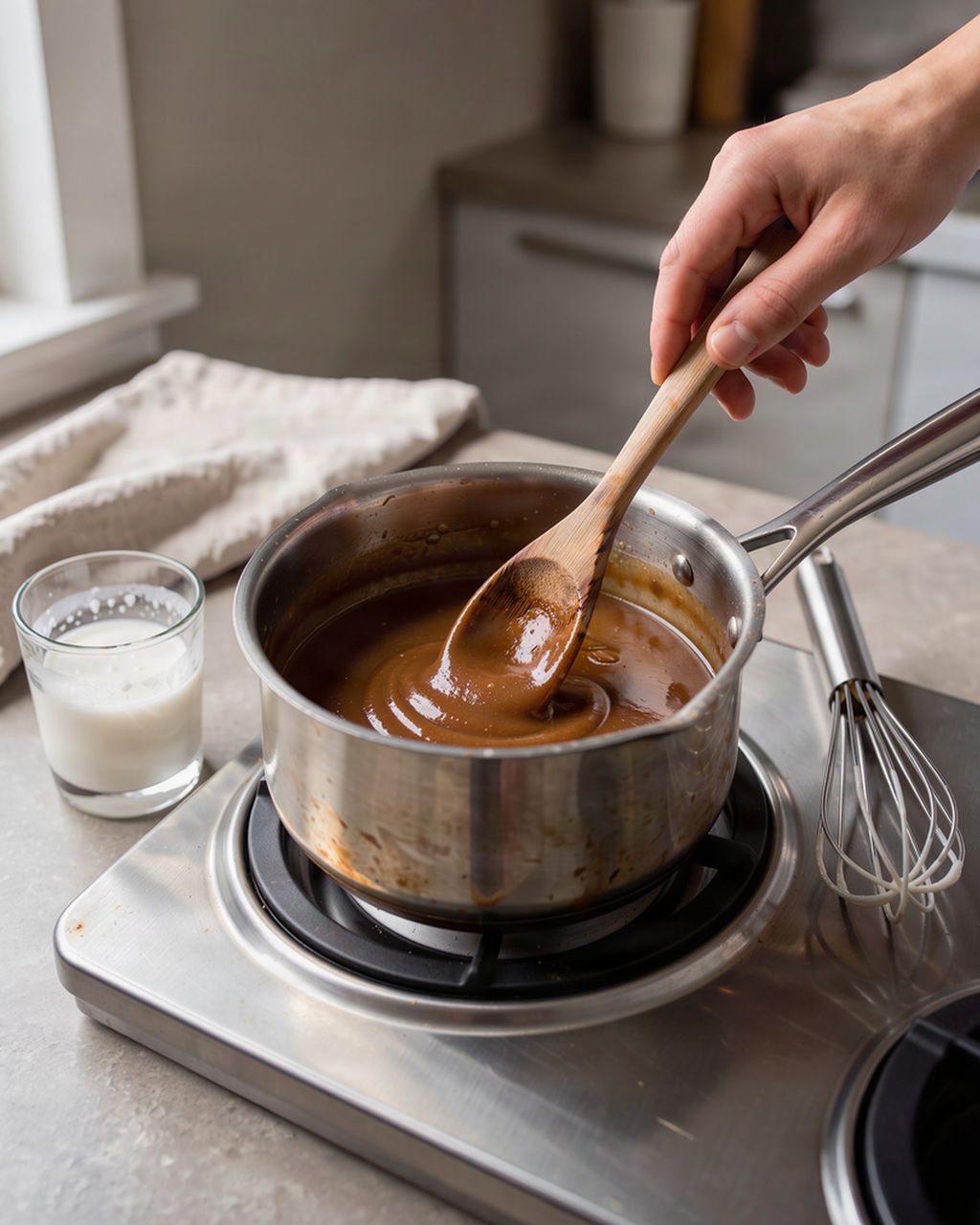
Custard made from custard powder, cornstarch or flour won't thicken until it is properly hot. Cornstarch only thickens fully once the liquid comes to a simmer or gentle boil, about 95 °C (203 °F). A custard that is merely steaming stays thin and tastes chalky.
The fix: bring it up to a gentle bubble while whisking, and let it bubble for about a minute. It turns from cloudy to glossy as it thickens.
If it bubbles and is still thin, there isn't enough starch for the amount of milk. Whisk a little more cornstarch into cold milk and pour it in while whisking, then bring it back to a bubble. Our guide to homemade pudding shows the ratios.
A custard that thickened and then went runny, in the pan or overnight in the fridge, has usually lost its starch structure.
Egg yolk enzymes. Yolks contain amylase, an enzyme that breaks down starch. In a custard with both yolks and starch, it can turn a thick custard watery within hours unless the custard was brought to a boil after the yolks went in. Heat destroys it. This is why pastry cream is boiled.
Hard whisking after it has set. Beating a cold starch custard hard breaks the gel. Stir gently to loosen it.
Acid. Lemon juice or fruit purée weakens cornstarch. Stir them in at the end, off the heat.
The fix: return a starch-thickened custard (one with both yolks and starch) to the pan and bring it back to a boil, whisking, then cool it quickly and refrigerate it again. Don't boil an egg-only custard sauce such as crème anglaise; it curdles.
Still liquid in the middle: underbaked, or the oven runs cool. Ovens can run hotter or cooler than the dial; an oven thermometer tells you. A baked custard should still wobble slightly in the center but not slosh, and it firms as it cools. Bake it in a water bath for even heat.
Watery, with liquid pooling around it: overbaked. The egg proteins tightened and squeezed out liquid. Lower the heat and take it out earlier next time.
Custard pie with a watery layer: often both, plus a wet crust. Blind-bake the crust and bake the filling more gently.
Overbaked custard can't be made smooth again, but it is still edible if it was cooled and refrigerated in time.
Sometimes custard thickens all at once and goes too far. Small lumps or a slightly grainy look mean some of the egg has overcooked.
Take it off the heat immediately and pour it into a cold bowl, so it stops cooking.
Whisk hard or blend it with a stick blender for a few seconds. A lightly curdled custard often turns smooth again.
Strain it through a fine sieve to catch any cooked egg.
If it has fully split into thin liquid and scrambled egg, it can't be brought back to a smooth sauce. Use it in a bread pudding, or start again.
To avoid it next time: heat the milk first, then pour it onto the yolks slowly while whisking (this is called tempering), cook over medium-low heat, stir constantly, and use a thermometer. A starch-thickened custard is far less likely to curdle, because the starch protects the yolks.
Egg custards and pastry cream are cooked egg dishes, so cooling matters.
Two hours, at most. FDA advises never leaving cooked egg dishes out of the refrigerator for more than 2 hours, or 1 hour when it is above 32 °C (90 °F).
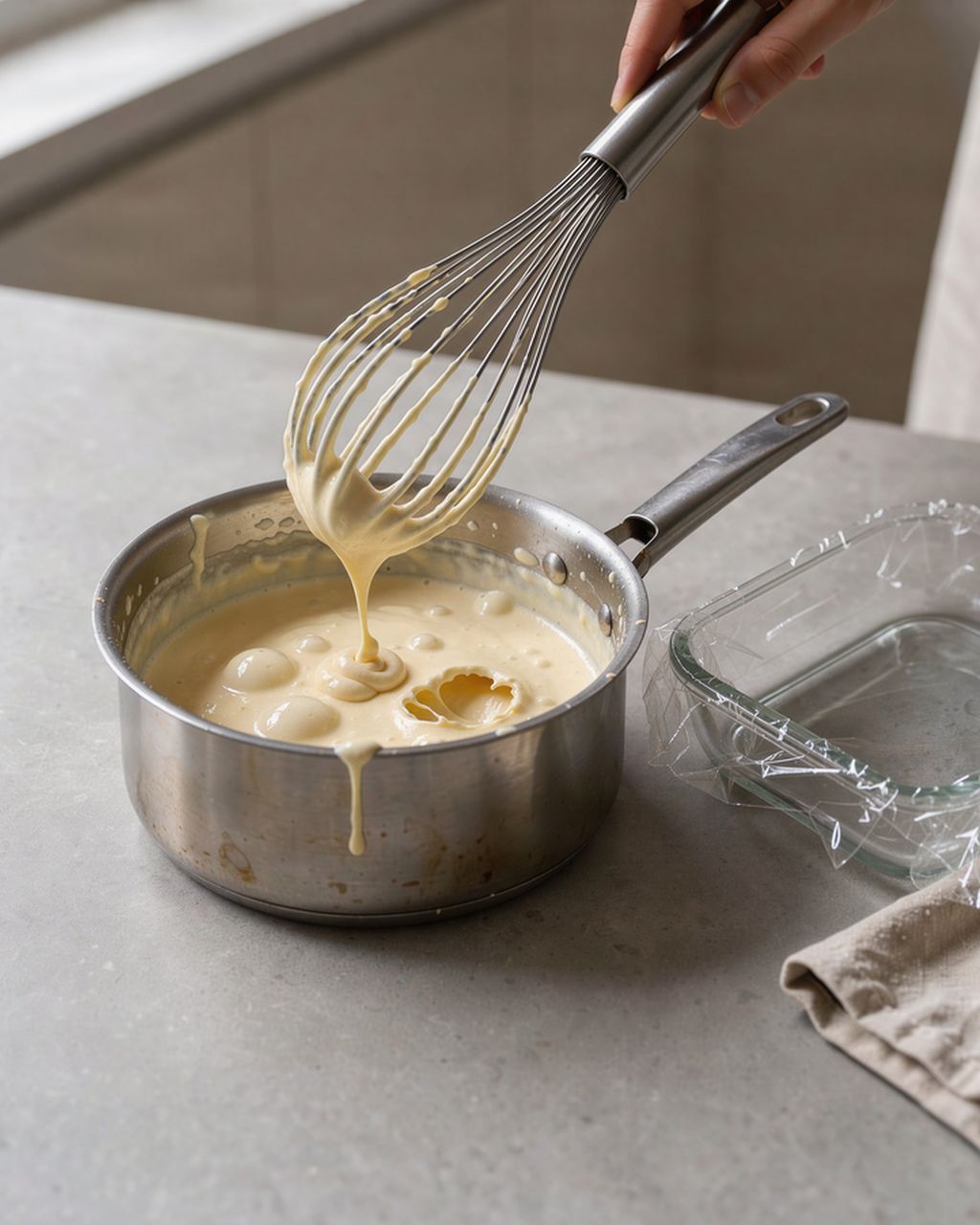
Cool it fast. USDA FSIS says hot food can go straight into the fridge, or be chilled quickly in an ice or cold water bath first. Pour custard into a clean bowl set in a larger bowl of ice water and stir now and then; for a big batch, FDA advises dividing it into shallow containers so it cools quickly.
Cover it. Press plastic wrap or baking paper onto the surface to stop a skin, then refrigerate it covered. FDA advises using refrigerated leftover cooked egg dishes within 3 to 4 days.
Custard most often doesn't thicken because it isn't hot enough yet. Egg custard sauce thickens at about 79–82 °C (175–180 °F), and a cornstarch custard only thickens fully once it comes to a simmer or gentle boil, about 95 °C (203 °F). Keep stirring over medium-low heat and check with a thermometer.
On the stove, an egg custard sauce usually takes several minutes of steady stirring over medium-low heat, and longer in a double boiler or a large batch. Go by temperature and the spoon test, not by the clock. A cornstarch custard thickens within about a minute once it is bubbling.
Yes, custard thickens noticeably as it cools, especially starch-thickened custard and pastry cream. An egg custard sauce that just coats a spoon when hot will be thicker when cold. Judge it by temperature and the spoon test, not by how thick it looks in the pan.
Custard that goes watery in the fridge usually contains egg yolks and starch and wasn't cooked hot enough: an enzyme in the yolks breaks the starch down. Baked custard that weeps liquid was usually overbaked. Bring a custard that contains starch back to a boil, whisking, then chill it again quickly. Don't boil an egg-only custard sauce; it will curdle.
First keep cooking it, gently, until it reaches the right temperature. If it is cooked and still thin, whisk in a little cornstarch slurry and bring it to a gentle boil. For an egg-only custard sauce, you can instead temper in an extra egg yolk and cook it to about 79–82 °C (175–180 °F); if the custard contains starch, any added yolk must be brought to a boil.
Lumps in custard are usually bits of overcooked egg, from heat that was too high or from adding hot milk to the yolks too fast. Pour it through a fine sieve straight away, or blend it briefly. Then lower the heat for the next batch.
One recipe worth heating the oven for, one tip, and one deal from the shop. Nothing else.