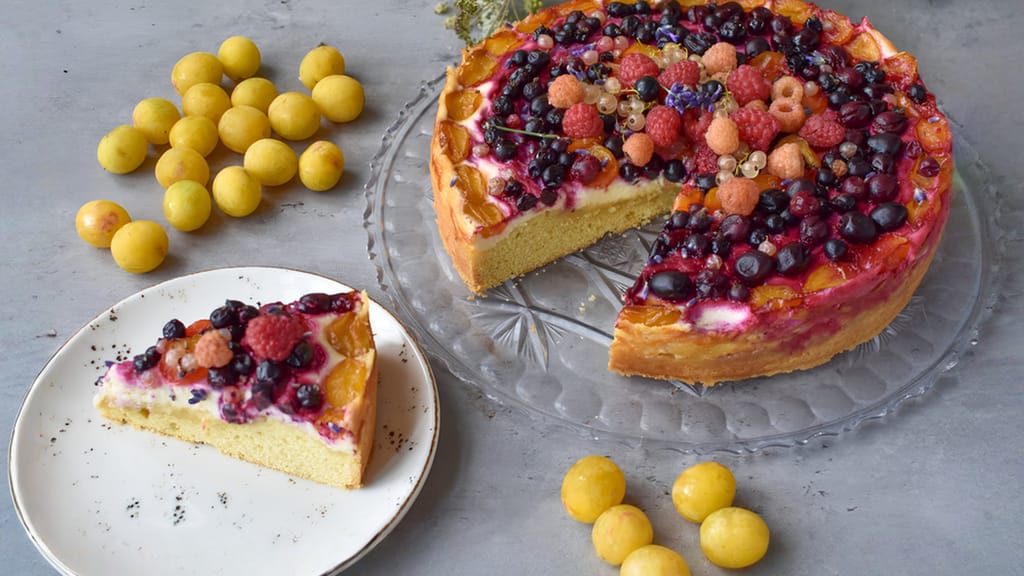
Summer cake with mascarpone, curd cheese and a mountain of fresh fruit
Butter-Free Pudding Cream for Cakes: How to Firm It Up with Whipped Cream, Quark, or Mascarpone
Updated Oct 24, 2026
You can make a pudding cream without butter hold up in a cake by combining a thickly cooked pudding with whipped cream, quark, or mascarpone, firming it with gelatin (0.6–0.9% of the cream's weight for the whipped cream and quark versions, less or none for mascarpone), and setting the cake in a cake ring lined with acetate. You need less gelatin here than for a plain mousse, because the starch in the pudding firms the cream too. In a classic buttercream, the butter provides the structure. When you leave it out, you have to make up for it in other ways: a thicker pudding, a rich dairy ingredient, and gelatin. Below you'll find the ratios for all three bases, the gelatin amounts, and a method for building the cake so the lighter cream doesn't spread out at the sides.
A cream without butter holds thanks to three things: a thicker pudding, a rich second ingredient, and gelatin. In a classic buttercream, the butter firms up once chilled and carries the whole cake. Whipped cream, quark, and mascarpone don't set as firmly, so you have to give them a hand.
Pudding: cook it with one fifth less milk than the packet calls for.
Second ingredient: whipped cream (lightest), quark (freshest), or mascarpone (creamiest).
Gelatin: for the whipped cream and quark versions, 0.6–0.9% of the cream's weight, which is 6–9 g per kilo. That's less than for a plain mousse, because the starch in the pudding firms the cream too. Mascarpone sets on its own in the fridge, so it needs only 0–4 g for the whole batch.
Assembly: build the cake in a ring lined with acetate and let it set for at least 6 hours.
If you'd rather stick with the classic butter version and want to know why it curdles, read pudding buttercream: why it curdles and how to make it smooth.
For cake cream, cook 1 packet of pudding powder (37–40 g, depending on the brand) with 400 ml of milk instead of the usual 500 ml. A thinner pudding would water the cream down once you mix in the whipped cream or quark.
Take about 100 ml from the 400 ml of whole milk and whisk the packet contents and 50 g of sugar into it.
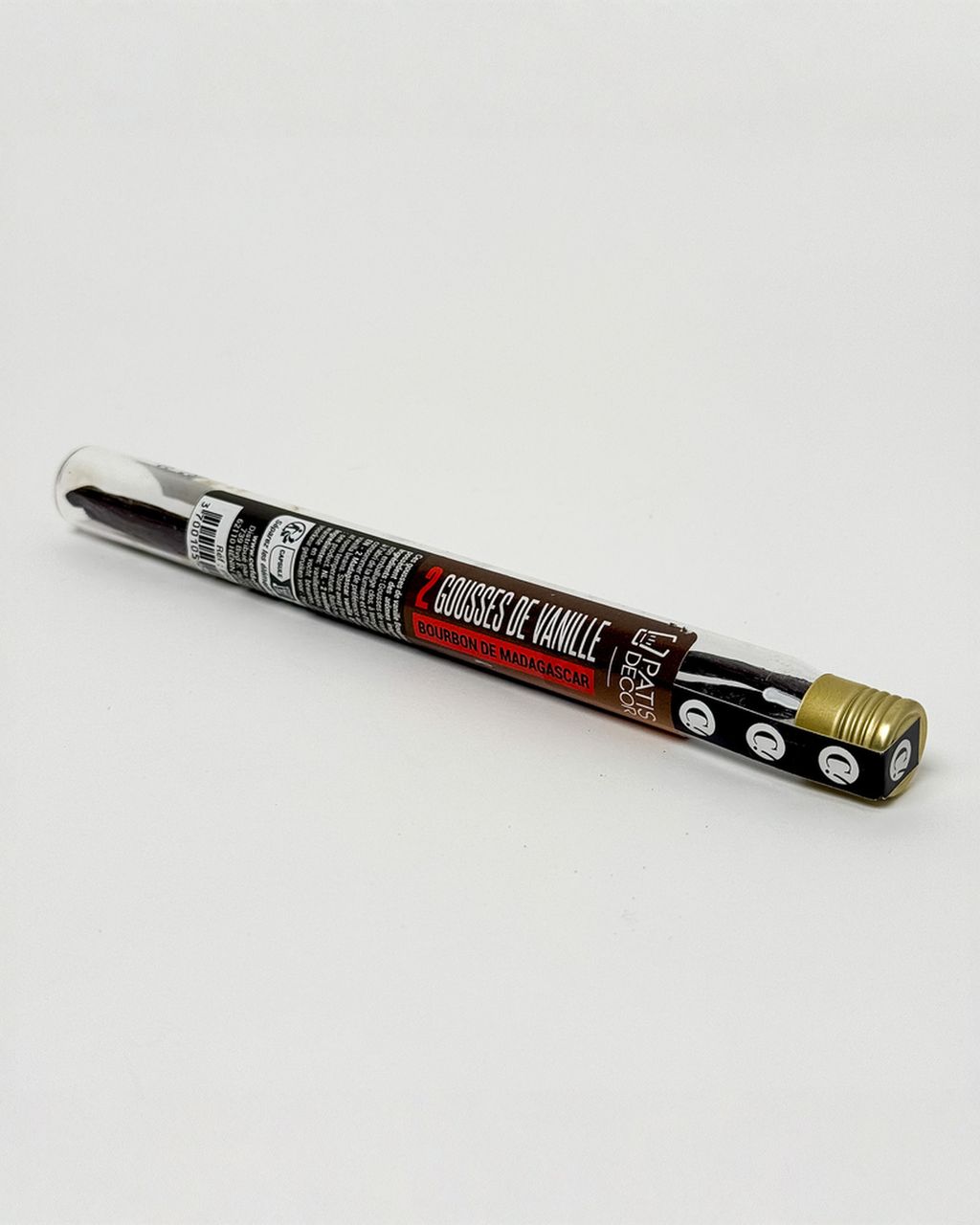
Bring the rest of the milk to a boil with one vanilla bean. Split the bean lengthwise, scrape the seeds into the milk, and drop in the empty pod too. Take the pod out just before you pour in the pudding mixture.
Pour in the whisked mixture and, stirring constantly, cook for another 1–2 minutes from the moment it starts to bubble. The starch needs to boil to thicken fully.
Pour the pudding into a bowl and press plastic wrap directly onto the surface so no skin forms. Otherwise you'll end up with firm bits in your cream.
Let it cool to 18–22 °C (64–72 °F), which is room temperature. Don't put it in the fridge, because it would set into a rubbery mass.
You'll get about 480 g of pudding. Before adding anything to it, whisk it smooth. Otherwise, set pudding breaks into lumps that you can't blend back together.
Vanilla carries all the flavor here, because there's no butter to round it out. A whole bean gives the cream a stronger, fuller aroma than vanilla sugar. One whole bean per 400 ml of milk is an amount you'll genuinely taste in the finished cream.
For 480 g of pudding, use 250 ml of heavy cream, ideally 33% fat, and 5 g of gelatin. You'll get about 730 g of fluffy cream that tastes like vanilla mousse.
Stir the gelatin into the whisked pudding (18–22 °C / 64–72 °F) before adding the whipped cream. Cold whipped cream would chill the cream and the gelatin would seize into strings.
Whip the cream chilled to 4–6 °C (39–43 °F) until soft peaks form, not stiff. Overwhipped cream starts turning into butter as you fold it in. If your cream won't whip at all, you'll find the causes in why your whipping cream won't whip.
Fold the whipped cream into the pudding with gelatin using a spatula, in three batches, from the bottom up. If you used a mixer, you'd knock the air out of it.
Without gelatin, this cream only works in cups or as a thin layer in a roulade. For a cake with several layers, always add gelatin.
This is the lightest and least firm cream, so it suits low cakes with two or three layers best.
For 480 g of pudding, use 500 g of full-fat quark in a tub and 6–8 g of gelatin. You'll get about 1 kg of cream with a slightly tangy flavor that slices well once chilled.
Use full-fat quark in a tub. It's smooth and you don't need to press it through a sieve. If you have crumbly block quark, press it through a sieve first, or grains will stay in the finished cream.
Briefly whisk the quark with 1–2 tablespoons of powdered sugar first. Then add the pudding to it a spoonful at a time, not the other way around.
For a lighter version, add 150 ml of whipped cream at the end and increase the gelatin to 8 g. Stir the gelatin into the pudding and quark mixture before the whipped cream, while the cream is still at 18–22 °C (64–72 °F).
Quark releases water. Without gelatin, after a day in the fridge that water soaks into the cake layers or leaks onto the board.
For more on quark creams, see quark cake cream that holds its shape. If you need a quark cream for piping on cupcakes that keeps the decoration's shape, read our article on quark cream for muffins and cupcakes.
For 480 g of pudding, use 250 g of mascarpone and 150 ml of whipped cream. You'll get about 880 g of cream. For a cake with two or three layers you don't need gelatin; for a tall cake, add 4 g.
Mascarpone contains around 40% fat and sets almost like butter in the fridge, so the cream holds even without gelatin.
Beat it on low speed and only briefly, just until it combines with the pudding. Overbeaten mascarpone curdles into a grainy mass that releases liquid.
Fold in the whipped cream last, with a spatula.
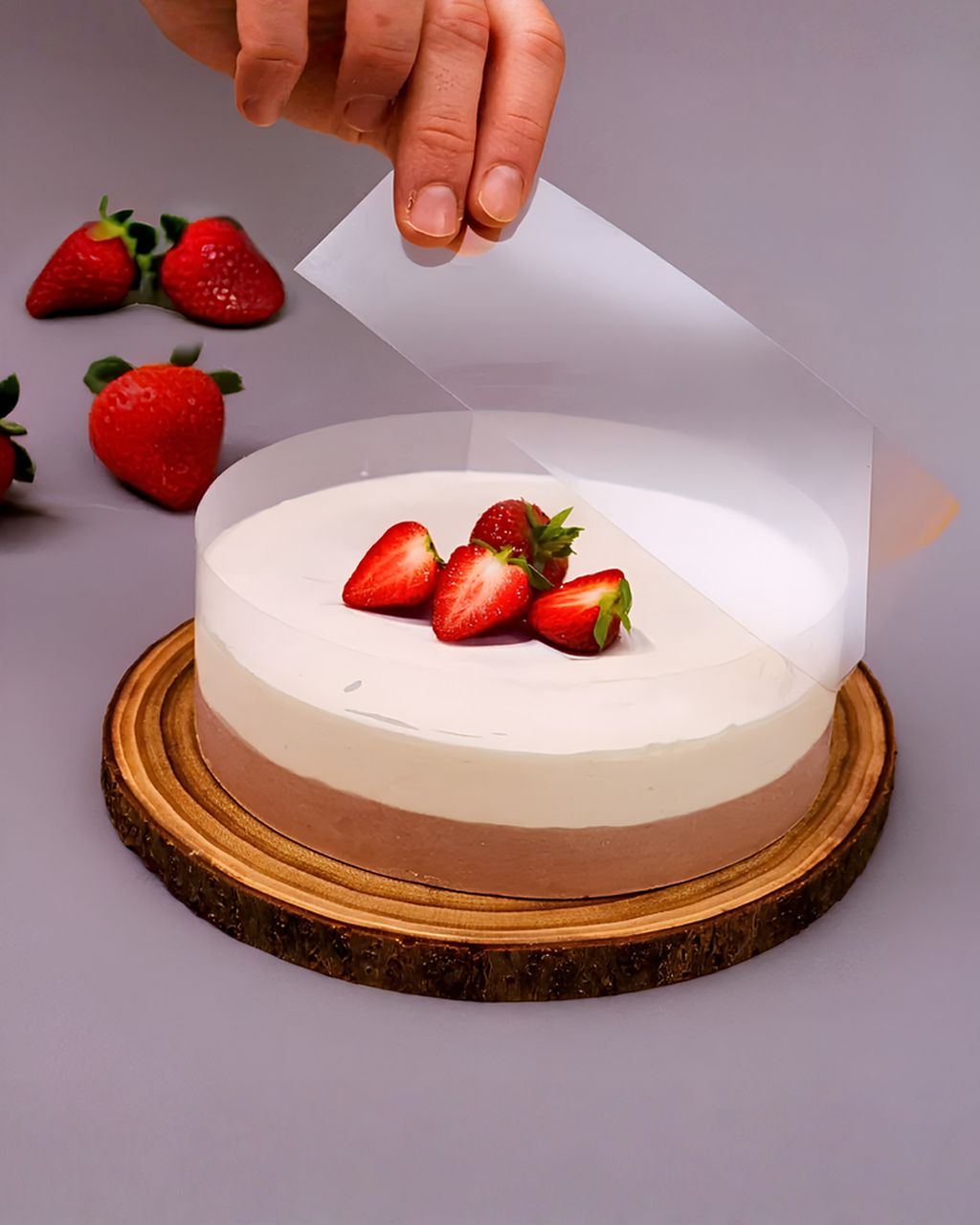
To see how a cake with mascarpone and quark looks in practice, try this recipe with fresh fruit:
Summer cake with mascarpone, curd cheese and a mountain of fresh fruit
Summer cake with mascarpone, quark, and fresh fruit
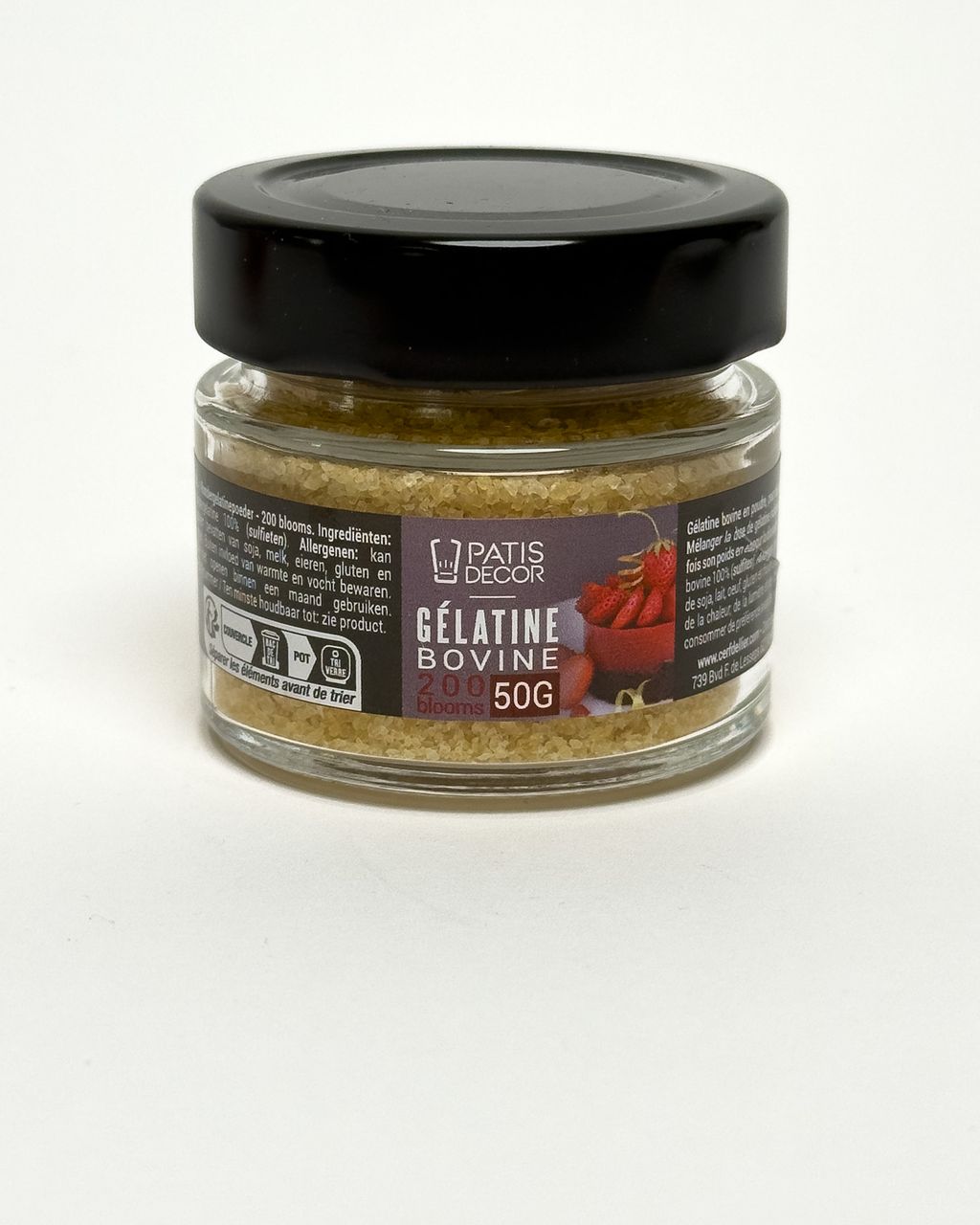
For pudding cream with whipped cream or quark, use 6–9 g of powdered gelatin with a strength of 200 Bloom per 1 kg of finished cream. That keeps the cream soft and sliceable. The pudding itself firms the cream, so you need less gelatin than for a plain mousse. More than about 10 g per kilo makes the cream needlessly stiff. Mascarpone cream needs less, 0–4 g per batch, because mascarpone sets on its own in the fridge. If your recipe calls for sheet gelatin or gelatin of a different strength, convert the amount using our article on what the Bloom number means.
Quick overview:
with whipped cream (~730 g): 5 g
with quark (~1 kg): 6–8 g
with mascarpone (~880 g): 0–4 g
Method:
Sprinkle the gelatin over five times its weight in cold water (6 g into 30 ml) and let it bloom for 10 minutes.
Dissolve it at 50–60 °C (122–140 °F). A few 10-second bursts in the microwave are enough. Don't boil it, because boiling weakens it, according to manufacturers.
Stir 2–3 tablespoons of the cream into the warm gelatin, and only then stir this mixture into the rest of the cream.
The cream shouldn't be colder than about 15 °C (59 °F). In a cold cream, the gelatin would seize into rubbery strings before it could disperse. For the whipped cream versions, stir the gelatin into the pudding (18–22 °C / 64–72 °F) and add the whipped cream only after it.
For cream, we use powdered beef gelatin, 200 Bloom, which is easy to measure by the gram. If you'd like agar or another thickener, you'll find them in the gelling agents and binders category. Our article on types of gelling agents explains how they differ.
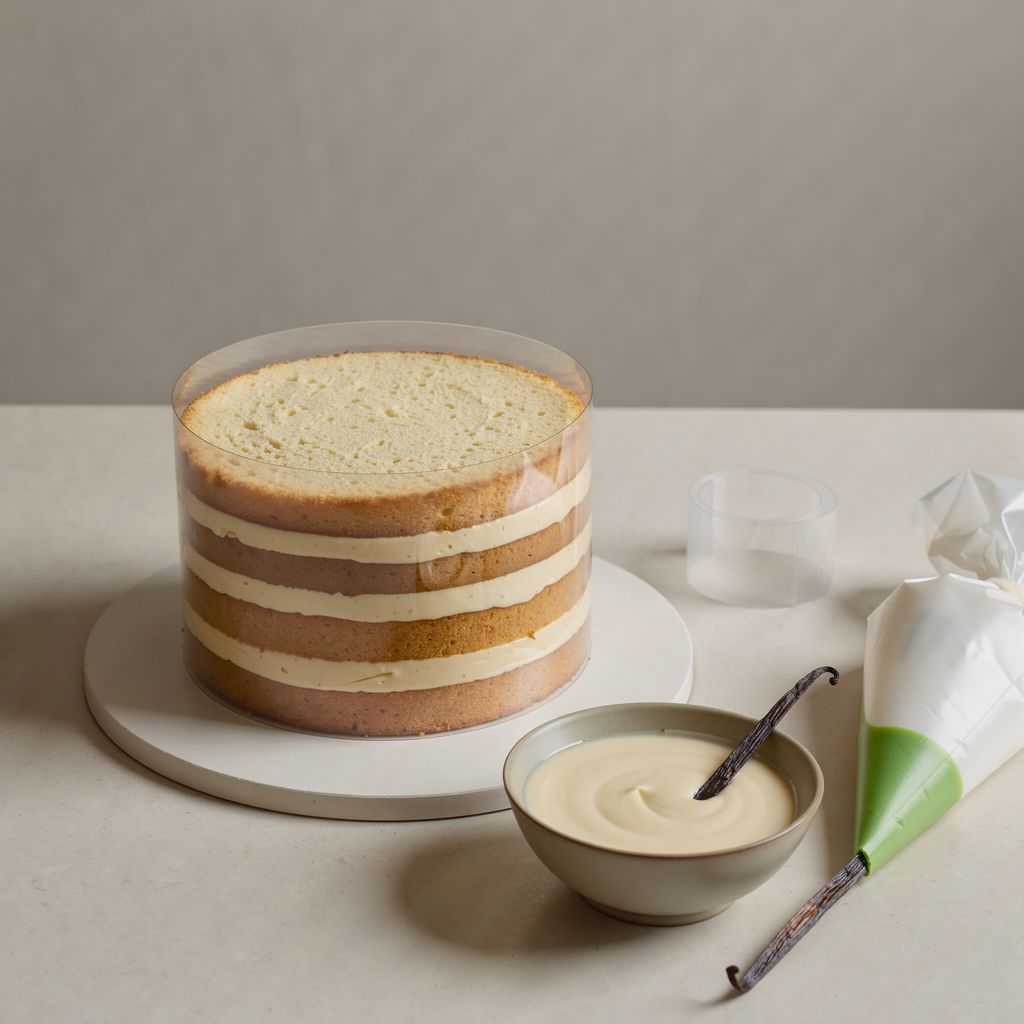
A cream without butter can't hold itself up, so assemble the cake in a ring lined with acetate and let it set for at least 6 hours, ideally overnight. The acetate supports the sides until the gelatin sets, and once you peel it off, the sides come out smooth and straight.
Bake a 18–20 cm (7–8 in) cake base and cut it into 3 layers. Trim each layer by 3–5 mm so a band of cream is left between it and the acetate.
Place the ring on a cake board and wrap acetate around its inner wall. Tape the ends of the acetate together.
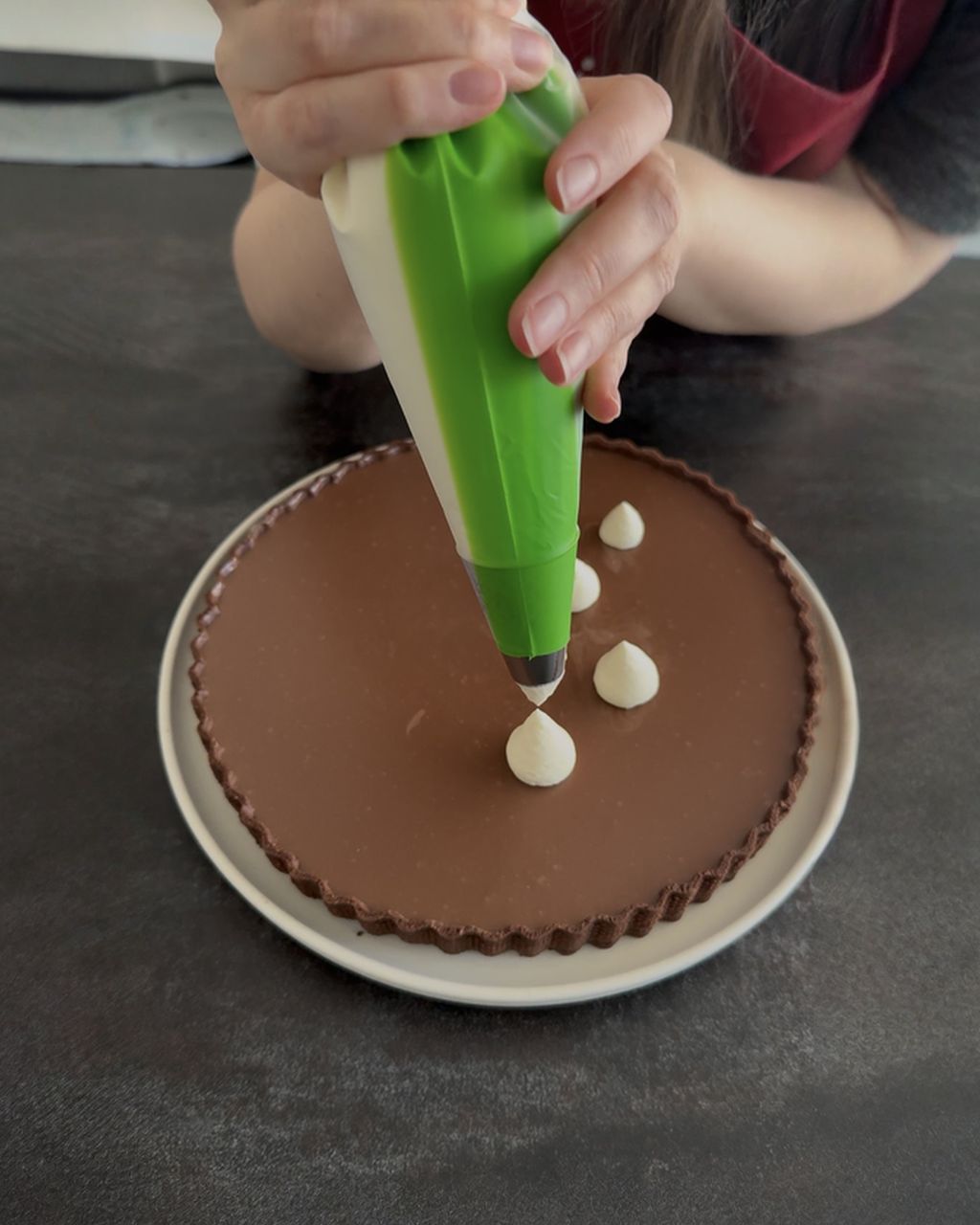
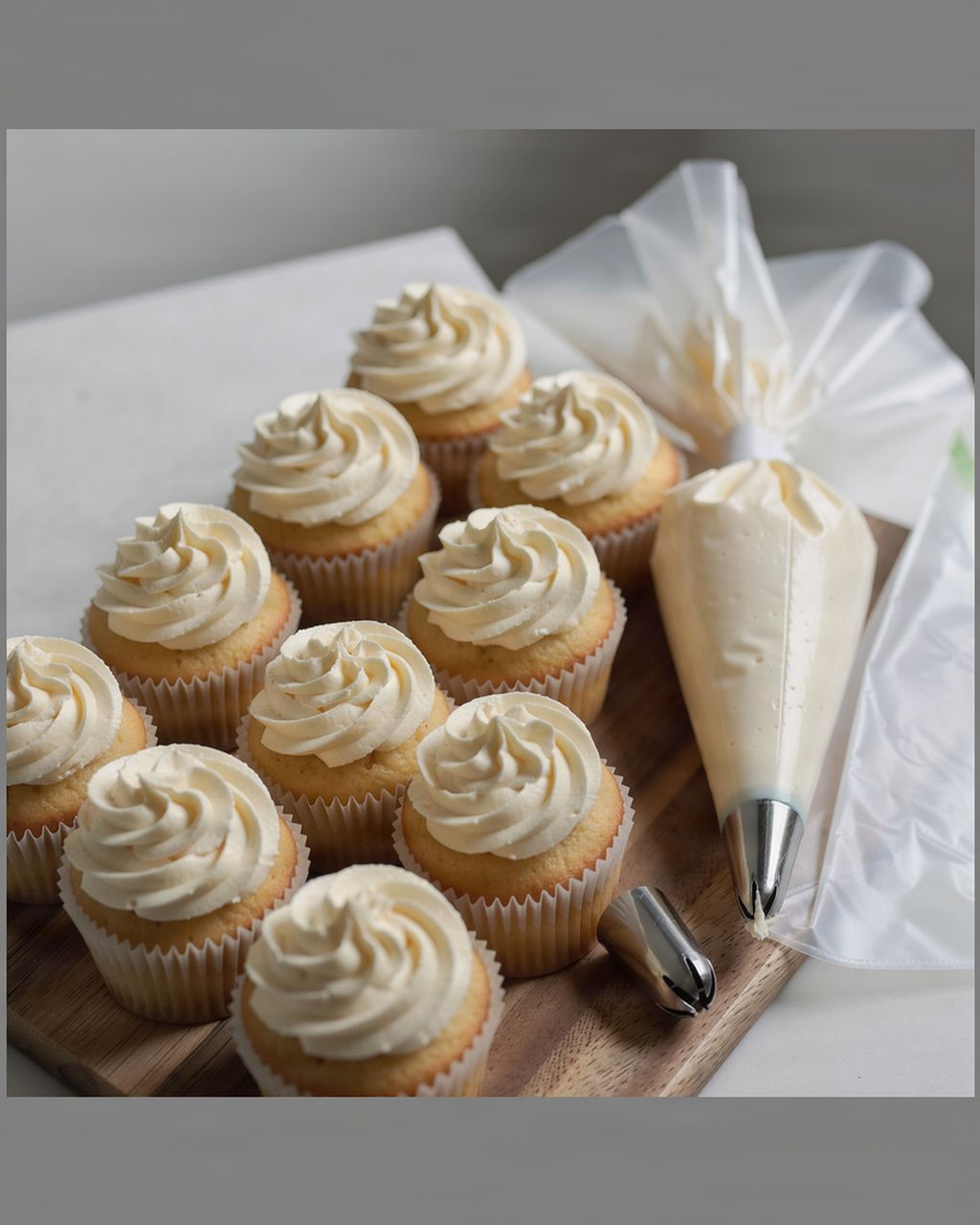
Put the first layer on the bottom and brush it with syrup. Pipe the cream from a piping bag with the tip cut to 1–1.5 cm. Start at the acetate and work in a spiral toward the center so the layer has the same height of 1–1.5 cm everywhere.
Press the next layer down lightly and repeat. Level the last layer of cream with a spatula.
Put the cake in the fridge for 6–12 hours. Then remove the ring and slowly peel off the acetate.
A three-layer 20 cm (8 in) cake needs about 900 g of cream. A 36 cm (14 in) piping bag holds 500–600 g, so fill it in two goes and the layers will come out at the same height.
Choose the acetate by the height of your cake. 35 mm pastry strip is a perfect fit for mini cakes in 6–8 cm (2.5–3 in) rings and for low cakes with a single layer. For a taller three-layer cake, use wider cake acetate. The whole ring-and-acetate method is described step by step in our article on mousse cake step by step.
A cake with butter-free pudding cream keeps in the fridge for 2–3 days. Watch your oldest ingredient: choose quark and mascarpone with a use-by date that is still a few days away. Cover the cake so the cream doesn't pick up fridge odors.
No, butter-free pudding cream isn't suitable for freezing in any version, whether made with whipped cream, quark, or mascarpone. All the versions are built on a starch-based pudding, which releases water once thawed. Keep the cake in the fridge and eat it within 2–3 days.
You can use agar, but the cream will turn out more jelly-like and brittle rather than soft and tender as it does with gelatin. Agar also has to be boiled, so dissolve it in part of the milk while you're cooking the pudding. That's why gelatin suits light creams better.
Yes. Cook the pudding with lactose-free milk, and instead of regular cream use lactose-free whipping cream or a plant-based whipping alternative. Plant-based alternatives whip differently from dairy cream. Our article on lactose-free whipped cream and plant-based whipping alternatives explains how.
A three-layer 18 cm (7 in) cake needs about 700 g of cream, and a 20 cm (8 in) cake about 900 g. One batch made with 1 packet of pudding mix and 400 ml of milk, plus quark or mascarpone, is enough for a 20 cm cake. The whipped cream version makes just enough for an 18 cm cake.
One recipe worth heating the oven for, one tip, and one deal from the shop. Nothing else.