Why Is My Pie Crust Tough? Causes and Fixes for Hard, Chewy Pastry
Butter vs Shortening vs Lard in Pie Crust: Flakiness, Tenderness and Flavor
Updated Nov 20, 2026
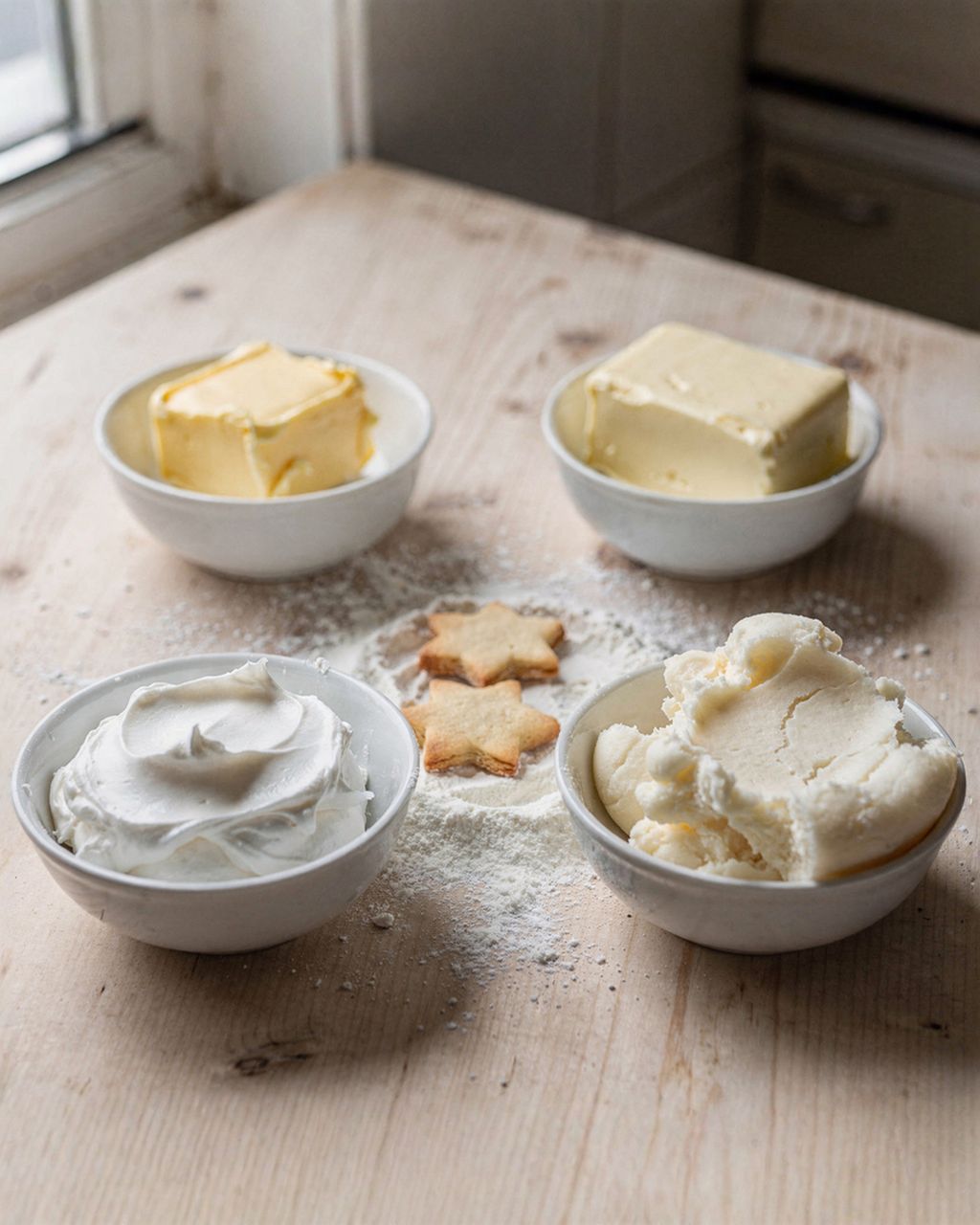
Butter gives pie crust the best flavor and big, crisp flakes, but it is harder to handle; shortening gives a tender, easy dough with little flavor; lard sits in between and is the savory baker's choice. Many American bakers use a mix, such as 3 parts butter to 2 parts shortening by volume, to get both. Shortening is hard to find in much of Europe, so all-butter or butter and lard crusts are the practical choice there.
Fat does two jobs in pie dough, and different fats are better at each.
Tenderness. Fat coats the flour and stops gluten forming, so the crust breaks cleanly instead of chewing like bread.
Flakiness. Pieces of solid fat stay separate in the dough. Rolling flattens them into thin sheets. In the oven, they melt and leave gaps, and any water turns to steam that puffs the layers apart.
A fat that stays solid over a wide temperature range is easy to work and gives reliable flakes. A fat that softens quickly smears into the flour and gives a denser crust.
Butter is the flavor choice. It browns well and tastes the way most people expect a homemade pie to taste.
Composition: butter is at least 80% fat, and most of the rest is water. That water turns to steam in the oven, which helps lift big, crisp flakes.
The catch: butter is already soft at about 18–20°C (64–68°F), a normal kitchen temperature, and melts at about 32–35°C (90–95°F). It smears easily, so the dough must stay cold.
Water and gluten: the water in butter also feeds gluten, so an all-butter dough turns tough faster if you overwork it.
All-butter crust works best when you keep everything cold, handle the dough little and rest it before rolling and baking. Use unsalted butter so you control the salt. A US stick is 113 g; our stick of butter in grams guide converts European blocks, and a tablespoon is about 14 g.
American vegetable shortening, such as Crisco, is solid vegetable fat with no water. It has three advantages:
It stays solid longer. Shortening stays solid until well above body temperature, much higher than butter, so it is far more forgiving in warm hands and warm kitchens.
It makes a very tender crust, because there is no water to build gluten.
It holds crimped edges well, since the dough does not slump as fast in the oven.
The downside is flavor. An all-shortening crust tastes of very little and browns less. The flakes are smaller and more delicate than butter flakes.
Lard is the old-fashioned pie fat, and it is still one of the best. Its fat crystals make a very flaky, crisp crust.
Melting point: lard melts at roughly 30–48°C (86–118°F) depending on the cut. Leaf lard is the firmest, and most lard stays solid longer than butter, so it is easier to handle.
Flavor: leaf lard, from around the kidneys, is the mildest. Ordinary rendered lard tastes gently of pork. That is lovely with meat pies, apples and savory tarts, and less so with a lemon or cream pie.
Mix it with butter for a crust with butter flavor and lard flakes.
In Czech kitchens, rendered pork lard (sádlo) is an everyday fat, and every supermarket stocks it. See our rendered pork lard page. Our article on choux pastry with oil, lard or butter shows how the same three fats behave in a different dough.
Many American recipes split the fat to get the best of both.
America's Test Kitchen uses 3 parts butter to 2 parts shortening by volume (about 170 g butter to 95 g shortening) in its foolproof pie dough.
King Arthur Baking's classic double crust uses 142 g of butter and 46 g of shortening for 300 g of flour, so mostly butter with a little shortening for tenderness.
Half and half is another common split.
When you swap fats, swap by weight, not by volume. Our cups and spoons to grams calculator converts butter, and our tool uses 227 g of butter per US cup (236.6 ml). If you replace shortening with butter, the dough gets a little extra water from the butter, so hold back a spoonful of the ice water and add it only if the dough needs it.
Recipe of the week, one tip that saves you time and one deal from the shop. Unsubscribe in one click.
The next issue goes out on Thursday, November 26.
If you avoid one fat or both, there are workable options:
Without shortening: go all-butter, or butter and lard. Keep the butter colder and handle the dough less.
Without butter: use lard alone, or shortening alone if you can get it. Both make tender, flaky crusts, with less flavor than butter. A pinch more salt helps.
Without lard: butter, shortening or a mix of the two.
Dairy-free or vegan: use a plant-based block butter or a baking block that is solid in the fridge. Tub spreads are too soft and watery. Check the label for a 'may contain milk' warning if you are baking for a milk allergy.
Oil crust: oil makes a press-in or rolled crust that is tender and mealy rather than flaky, because liquid fat cannot form flat layers. It suits quiches and savory tarts better than a lattice-topped fruit pie.
Whichever you use, the rules stay the same: cold fat, as little water as the dough will take, and a rest in the fridge before rolling.
Not easily, and that is why most European pie and tart recipes are all-butter.
UK: yes. Trex is a solid white vegetable fat and the closest thing to Crisco. It sit near the butter and lard.
Germany, Czechia and much of the EU: there is usually no direct equivalent on the shelf. Look in international or American food shops, or use butter or lard instead.
Avoid solid coconut fat as a stand-in, such as Palmin in Germany or Ceres in Czechia. It is hard and brittle from the fridge and melts at around room temperature, so it behaves nothing like shortening in pie dough.
Margarine and spreads: full-fat margarine is about 80% fat, like butter, but most tub products are reduced-fat or low-fat spreads with much more water. These give a soft, greasy dough. Only a block baking margarine of at least 80% fat is worth trying.
Our guide on replacing Iva Deko shortening covers a Czech shortening-style fat in cakes. For pie crust, our honest advice is simple: in Europe, go all-butter, or swap part of the butter for lard, weight for weight.
Butter is better for flavor and big flakes, shortening is better for tenderness and easy handling. If you can get both, a mix of about 3 parts butter to 2 parts shortening by volume gives a crust that tastes of butter but is more forgiving to roll.
Yes, swap butter for shortening one for one by weight, and keep the butter very cold. Butter is about 80% fat and the rest is mostly water, so you may need a spoonful less water in the dough.
In the UK, solid white vegetable fat such as Trex is the closest equivalent to American shortening like Crisco. Look for it in the baking fats section near the butter and lard.
Yes, lard makes a very flaky, tender crust and is a traditional choice for savory and fruit pies. Rendered leaf lard is the mildest; ordinary rendered pork lard can taste slightly porky, which suits meat pies more than sweet ones.
Yes, you can use lard alone, or a vegan block baking fat that is solid in the fridge. Oil crusts also exist, but they are mealy and tender rather than flaky, because liquid oil cannot form the flat layers that solid fat does.
One recipe worth heating the oven for, one tip, and one deal from the shop. Nothing else.