Plum, cinnamon and poppy seed lívance (czech pancakes)
Lívance Recipe: Fluffy Czech Pancakes with Yogurt, Quark or Oats
Updated Nov 20, 2026
A lívance recipe (Czech small, thick pancakes) is simpler than it looks: a cup of flour, an egg, milk or yogurt and a teaspoon of baking powder, with the thick batter spooned onto a hot pan and flipped as soon as bubbles burst on the surface. Fluffiness doesn't come from a secret ingredient but from three things: a thick batter, brief mixing and medium heat. Here you'll find the basic method, no-yeast and yeast versions, lívance made with yogurt, cottage cheese, oats and kefir, egg-free variations and savory lívance for dinner. Most link to a tested recipe; the kefir, yeast and egg-free versions are for now only a rough guide.
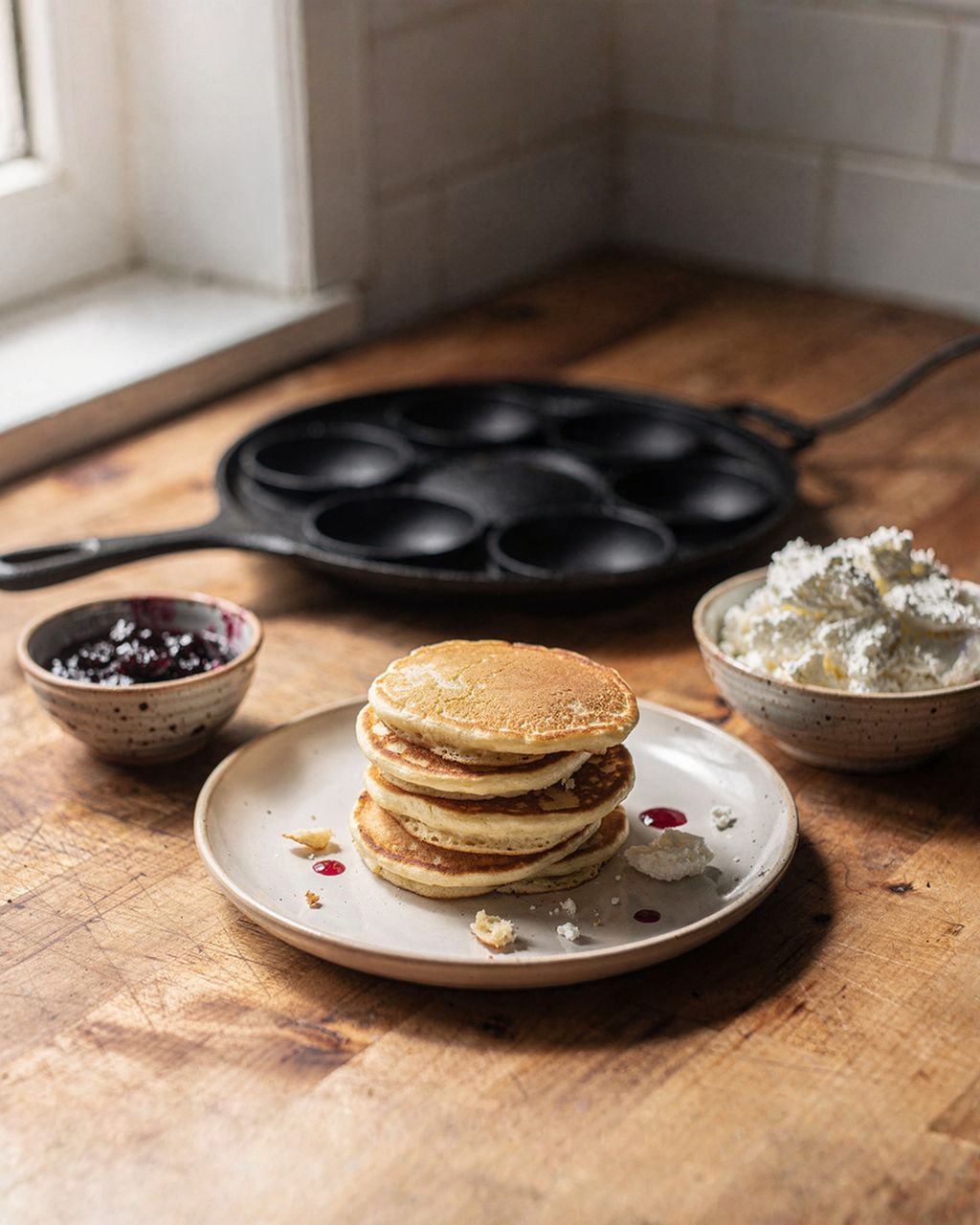
Classic lívance are made from a thick batter of flour, milk, egg and baking powder, which you spoon onto a hot pan and cook on both sides until golden. As a starting point, remember roughly this ratio:
140 g semi-coarse flour (Czech polohrubá, slightly grittier than all-purpose) (about 1 cup)
130 ml milk
1 egg
1 teaspoon baking powder, a pinch of salt and 1–2 tablespoons sugar
1–2 tablespoons melted butter stirred right into the batter
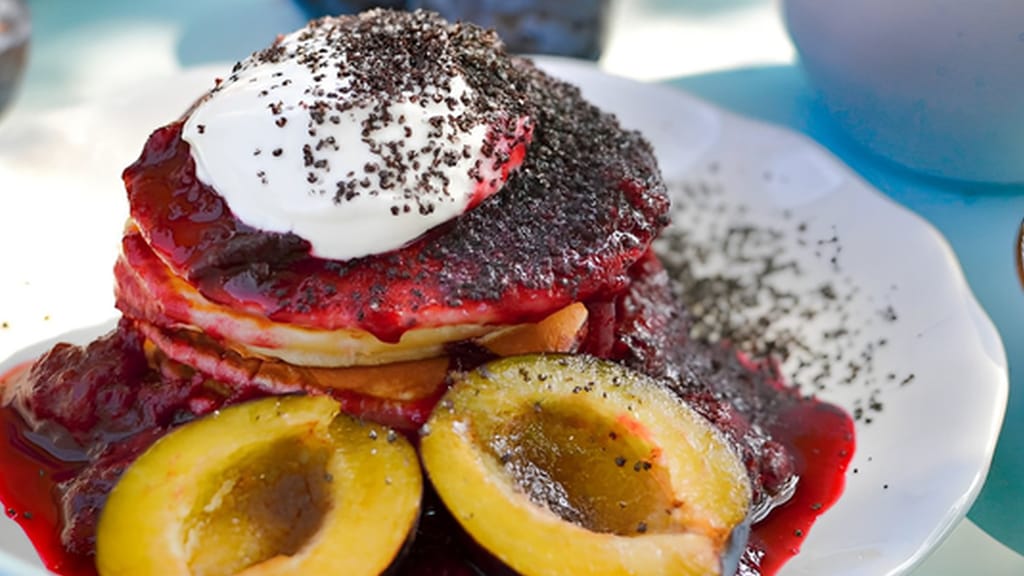
The method is always the same: whisk the wet ingredients together in one bowl, mix the dry in another, then combine them just until the dry flour disappears. Our lívance with plums, cinnamon and poppy seeds are built on this base, and they also get a plum compote and sour cream.
The butter in the batter has a practical purpose: it keeps the lívance from sticking to a nonstick surface, so you don't have to grease the pan every time. Semi-coarse flour gives the batter a bit of structure, so the lívance aren't gummy. If you want them softer, you can replace part of the milk with yogurt, more on that below.
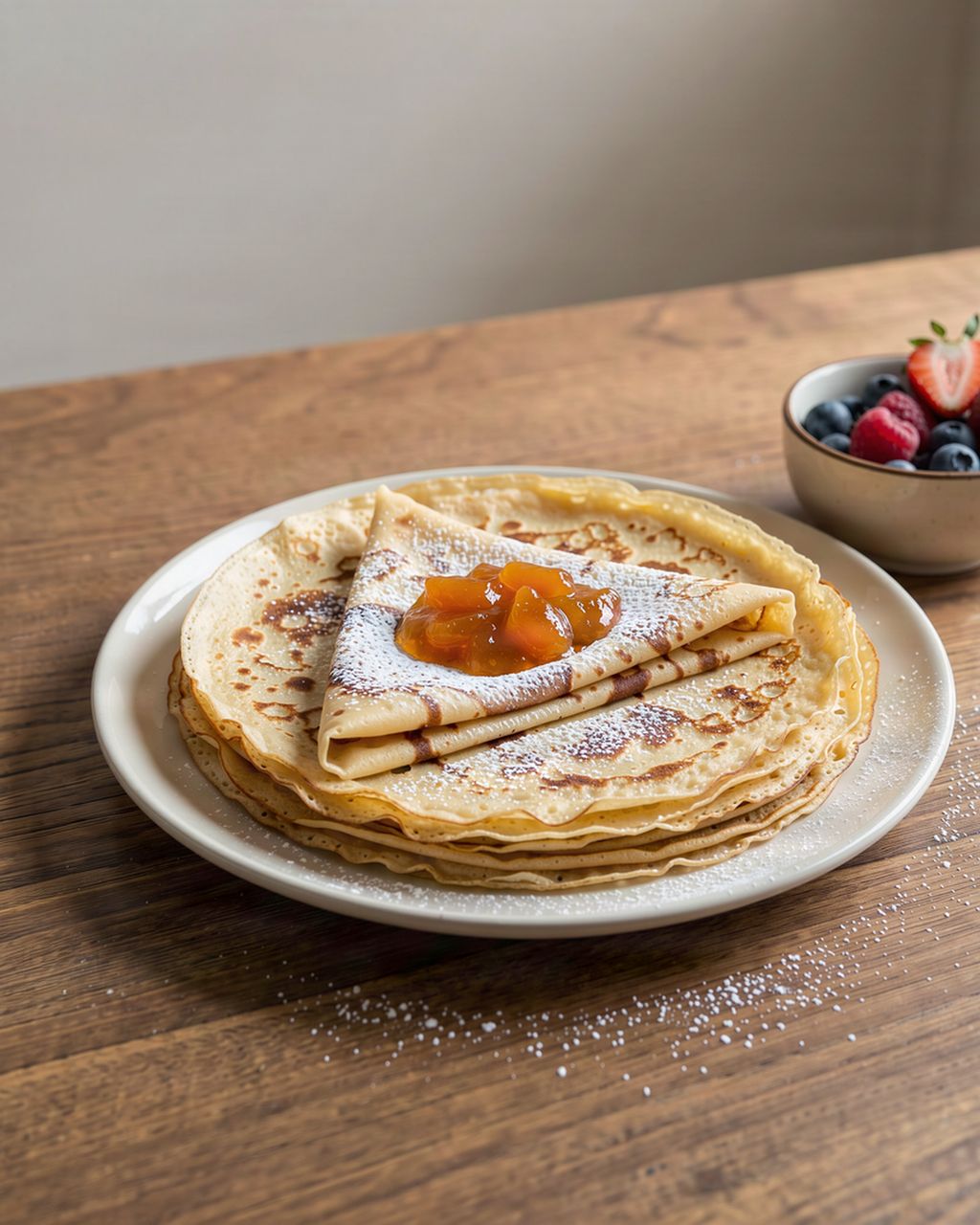
People often confuse lívance with palačinky (Czech crêpe-style pancakes), but they're two different things: palačinky batter is thin and spreads into a thin round, while lívance batter is thick and holds its shape. If you're after palačinky instead, we have a separate article on how long palačinky batter keeps and how to freeze palačinky.
Plum, cinnamon and poppy seed lívance (czech pancakes)
Lívance with plums, cinnamon and poppy seeds: classic lívance with plum compote
Seasonal baking plans, tested recipes and kitchen tricks that save you time. Unsubscribe in one click.
Fluffy lívance come down mainly to three things: the batter has the right thickness, you don't mix it longer than you have to, and the pan is heated to medium. Spelled out:
Thick as thick sour cream. The batter should run slowly off the spoon and stay in a mound in the pan. Thin batter spreads into a flat round and the bubbles escape before it can set. If it's too thin, add a tablespoon of flour; if it's as stiff as porridge, add a tablespoon of milk.
Mix only until combined. As soon as you can't see dry flour in the batter, stop. A few small lumps don't matter, they disappear during cooking. Whisking wheat flour for a long time develops gluten, and the lívance turn out rubbery and flat.
Medium heat, not maximum. On a pan that's too hot, the bottom turns black before the center cooks through. On a lukewarm pan, the lívanec spreads out and soaks up fat. Make a test one: if bubbles start to burst on the surface and the edges turn matte within a minute or two, the temperature is spot on.
A short rest helps too. According to many cooking guides, it's enough to let batter with baking powder stand for roughly 5 to 15 minutes: the flour absorbs the liquid in the meantime and the leavening gets going. Longer makes no sense, as the baking powder starts to lose strength.
If you want to go even further, separate the eggs: stir the yolks into the batter, whip the whites to stiff peaks and fold them in gently at the end. Our sweet potato lívance with avocado mash and cashew cream, made with spelt flour and sweet potato purée, are built this way.
One last rule: flip only once. A lívanec that you toss back and forth loses height. Flip it once the bottom turns golden and the surface goes matte, and cook the second side for roughly half as long.
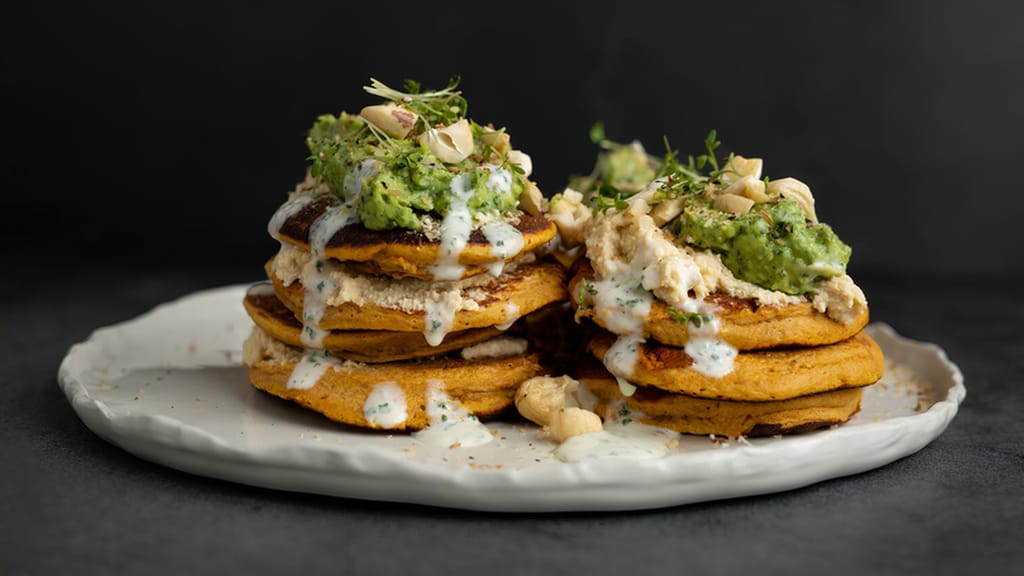
Sweet potato pancakes with avocado mash and cashew cream
Sweet potato lívance with avocado mash and cashew cream: fluffy thanks to whipped egg whites
No-yeast lívance are leavened with baking powder or baking soda instead of yeast, so you mix the batter and fry right away; the whole thing takes 15 to 30 minutes. It's the most common method today, and all the sweet recipes in this article work this way.
Baking powder reacts with moisture and heat and releases carbon dioxide, which puffs up the batter. Baking soda needs an acid, which yogurt, kefir, buttermilk or even honey supply. That's why acidic batters often need only soda or a smaller amount of baking powder. You can taste the difference: yeast lívance have a milder, slightly tangy flavor, while the baking powder ones are more neutral and quicker.
The fastest no-yeast lívance we have are cottage cheese lívance with fruit and vanilla quark (tvaroh, a Czech fresh curd cheese), ready in 15 minutes, and lívance with Greek yogurt and blueberries in 17 minutes. We go through both recipes below in the sections on cottage cheese and yogurt.
If you only have basic ingredients in the fridge, reach for the classic from the first section: flour, milk, egg, baking powder and butter. For kids, you can even cook the thick lívance batter in an electric sandwich maker with removable waffle plates, as our recipe for quark lívanečky suggests.
Yogurt pancakes (lívance) are softer and more tender than milk-based ones, because yogurt thickens the batter, adds fat and brings an acidity that helps the leavening. You can swap yogurt for all or half of the milk in the basic recipe; the batter will be thicker, so thin it with a spoonful of milk if needed.
Which yogurt? Greek is the thickest and gives the pancakes body and creaminess, regular plain full-fat yogurt adds more fat and a creamy flavor, and low-fat yogurt is the thinnest and the most tart. Don't use flavored yogurts in the batter: they contain sugar, which browns quickly in the pan, so the underside burns before the pancake is cooked through.
Our Greek yogurt and blueberry pancakes are different in that a large part of the flour is replaced by finely ground rolled oats, topped up with whole wheat flour.
Yogurt also works in savory pancakes: you'll find it in both the batter and the dip of the spinach pancakes we get to at the end.
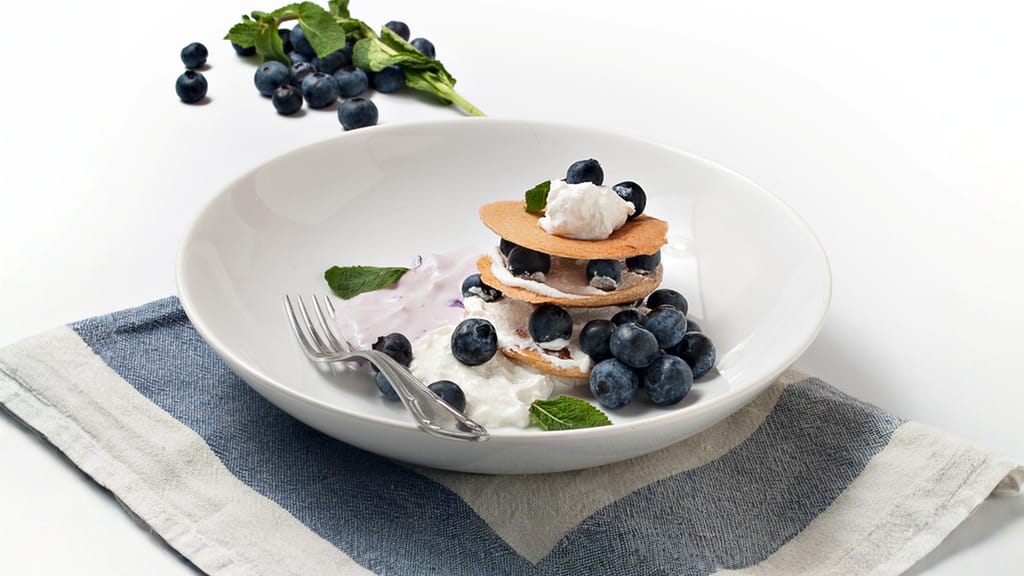
Greek yogurt pancakes with blueberries
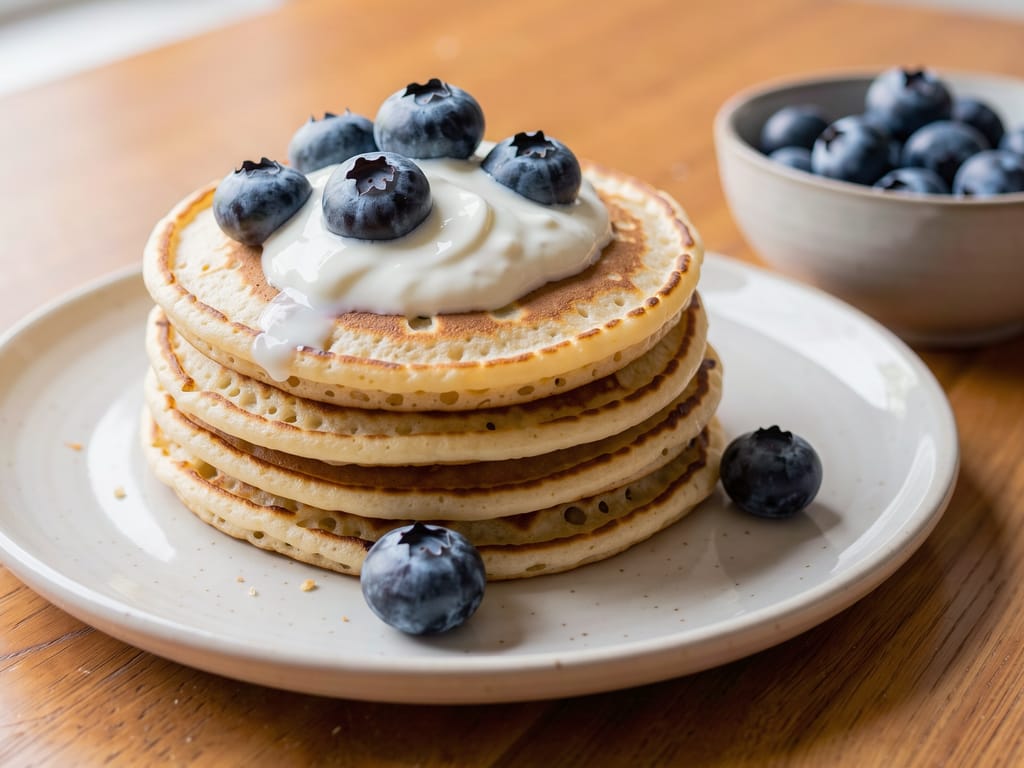
Lívance with Greek yogurt and blueberries: oat and yogurt lívance in 17 minutes
Cottage cheese lívance are made mainly from cottage cheese with eggs and just a little flour, so they're denser, moister inside and have a gently salty, milky flavor. Just enough flour is used to hold the batter together; the cottage cheese does most of the work.
The trick is in the mashing. Break up the cottage cheese curds partly with a fork so the batter comes together, but you don't need to make it completely smooth: the bits of cheese in the finished lívanec are what make it juicy. Cottage cheese also releases whey, so if your batter turns runny, don't add any liquid; add a tablespoon of flour.
Our cottage cheese lívance with fruit and vanilla quark are ready in 15 minutes and use just a few tablespoons of whole grain spelt flour instead of white flour, held together by egg and honey.
Cottage cheese also appears in the oat lívance with raspberries in the next section, where it adds tenderness to the oats.
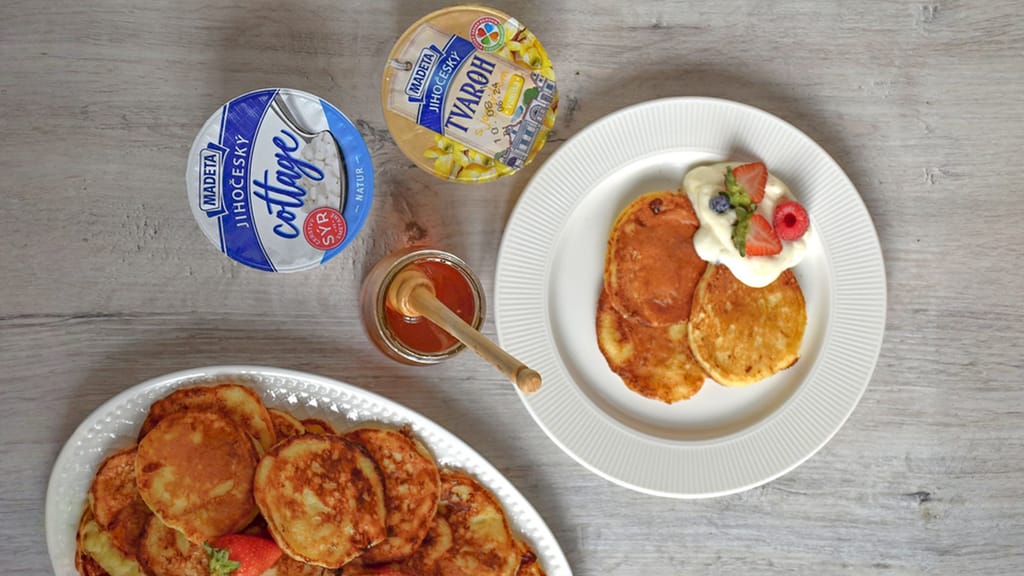
Cottage cheese pancakes with fruit and vanilla curd cheese
Cottage cheese lívance with fruit and vanilla quark: quick lívance in 15 minutes
Oat lívance are what you get when you replace part or all of the flour with blended rolled oats, which thicken the batter and give it a nutty flavor. The main rule: always blend coarse oats, otherwise the batter will be grainy and the lívance will fall apart.
The second rule is time. Oats absorb liquid more slowly than flour, so let the batter stand for a few minutes and only then adjust the thickness. What looks thin at the start thickens in five minutes. Fine instant oats can be used straight away, and they give the smoothest oat lívance.
Oat lívance with raspberries and yogurt are completely flour-free: the batter is held together only by blended oats, egg, cottage cheese and milk. You'll also find oats in the lívance with Greek yogurt and blueberries above, where whole grain flour tops them up.
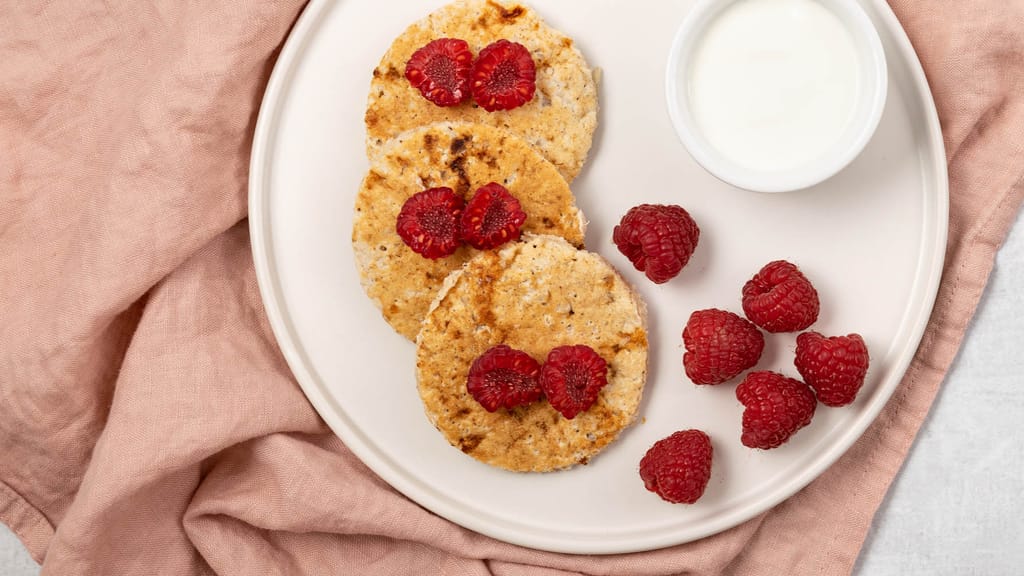
Oat pancakes with raspberries and yogurt
Oat lívance with raspberries and yogurt: oat lívance completely without flour
Quark lívanečky are the closest relatives of cottage cheese lívance, only instead of grainy cheese they use smooth quark, so they come out more delicate and creamier, almost like little quark patties. There's only enough flour to bind them; most of the batter is quark and egg, as our quark lívanečky show.
Quark batter is soft, so make the lívanečky smaller, about one tablespoon each. A large quark lívanec breaks when you flip it. If the quark is very wet, let it drain in a sieve for a while beforehand so you don't have to add more flour.

Curd cheese pancakes
Quark lívanečky: creamy quark pancakes with seasonal fruit
Kefir lívance tend to be fluffier than milk ones, because the acid in kefir reacts with baking soda and releases carbon dioxide, which lifts the batter. Kefir replaces the milk in the batter and helps with the leavening at the same time.
The method is simple: in the basic recipe, swap the milk for the same amount of kefir, use about half a teaspoon of baking powder and a quarter teaspoon of baking soda instead of the full teaspoon of baking powder, and mix the batter only just before frying. The soda starts reacting with the acid immediately, so don't leave kefir batter standing for long; the bubbles would fade in the bowl. Kefir is thinner than yogurt, so you may need a tablespoon or two more flour. Kefir lívance are lighter and slightly tangy, and sweet fruit or honey goes with them beautifully.
We don't have a separate kefir lívance recipe in our catalog yet, so this method is only a rough guide.
Yeast lívance are leavened with yeast instead of baking powder, so they have a mild, slightly tangy flavor and an airy, porous crumb like a good buchta. It takes time: the batter usually rises for roughly half an hour to an hour, depending on how warm your kitchen is, or it can be left to rise slowly overnight in the fridge.
The principle of traditional yeast lívance: you make a yeast sponge from yeast, a teaspoon of sugar, a little flour and lukewarm milk and leave it about 10 minutes in a warm place to start foaming. Then you mix it with flour, an egg, the rest of the milk and a pinch of salt into a thick batter, cover it and leave it to rise until it has visibly grown in volume. Don't stir the risen batter again; just scoop it onto the pan with a spoon so the bubbles stay in it. The milk for the yeast sponge should be body temperature; for overnight rising in the fridge you don't need to warm it.
Dried yeast works the same as fresh: one 7 g sachet corresponds to roughly 20 to 25 g of fresh yeast. We don't have a yeast lívance recipe in our catalog yet; until then, feel free to take flavor inspiration from the plum lívance with cinnamon and poppy seeds: plum compote and sour cream go with yeast lívance just as well as with the baking powder ones.
Four things can replace the egg in lívance: a flax egg, mashed banana, applesauce or aquafaba. Each of them binds and moistens the batter; amounts per egg:
flax egg: 1 tablespoon ground flaxseed and 3 tablespoons water, left to thicken for 10 minutes
mashed ripe banana: about 60 g, roughly half a medium banana; the lívance will be denser and banana-flavored
applesauce: roughly 60 g, with a more neutral flavor
aquafaba (liquid from canned chickpeas): around 3 tablespoons per whole egg
Without eggs the batter is more fragile, so make the lívance smaller and flip them only when the bottom is really firm. A bit more baking powder and a tablespoon of oil in the batter help too. Ground flaxseed gives lívance a slightly nutty, earthy flavor, but combined with oats or cinnamon that doesn't matter at all.
One thing to watch: egg-free lívance are not automatically vegan. If you're cooking plant-based, swap the milk, yogurt and butter for plant-based alternatives too. We don't have a separate recipe for sweet egg-free lívance in our catalog yet, and all the sweet lívance in this article contain eggs. The exception among the savory ones is the potato lívance with trout, whose batter is made only of potatoes, butter and flour.
Chickpea flour lívance are a good choice when you want lívance without wheat flour: chickpea flour makes a denser batter with a slightly nutty flavor, and cocoa pushes them toward dessert. Our cocoa lívance made with chickpea flour are a small serving for one, ready in 17 minutes, and instead of baking powder they're leavened by baking soda with honey, which supplies the acid it needs.
Chickpeas don't naturally contain gluten, but the lívance will be gluten-free only if you use chickpea flour and cocoa both certified as gluten-free; ordinary products may come into contact with wheat during processing. If you're cooking for someone with celiac disease, check the labeling on the package.
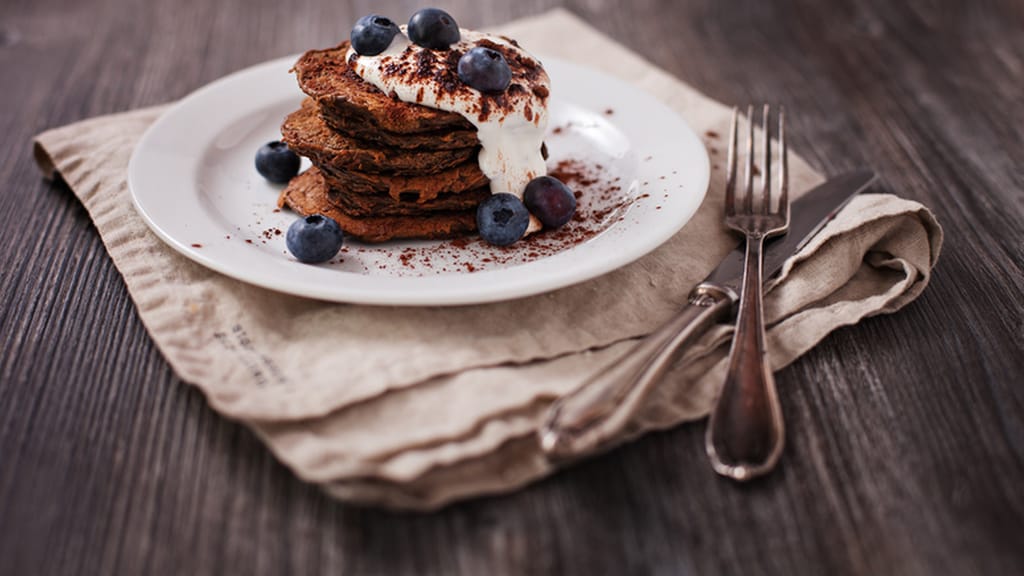
Cocoa chickpea flour pancakes
Cocoa lívance made with chickpea flour: lívance without wheat flour in 17 minutes
Savory lívance make a satisfying dinner or starter: instead of sugar the batter gets vegetables, potatoes or herbs, and they're served with a dip, fish or sour cream. We have two tested recipes.
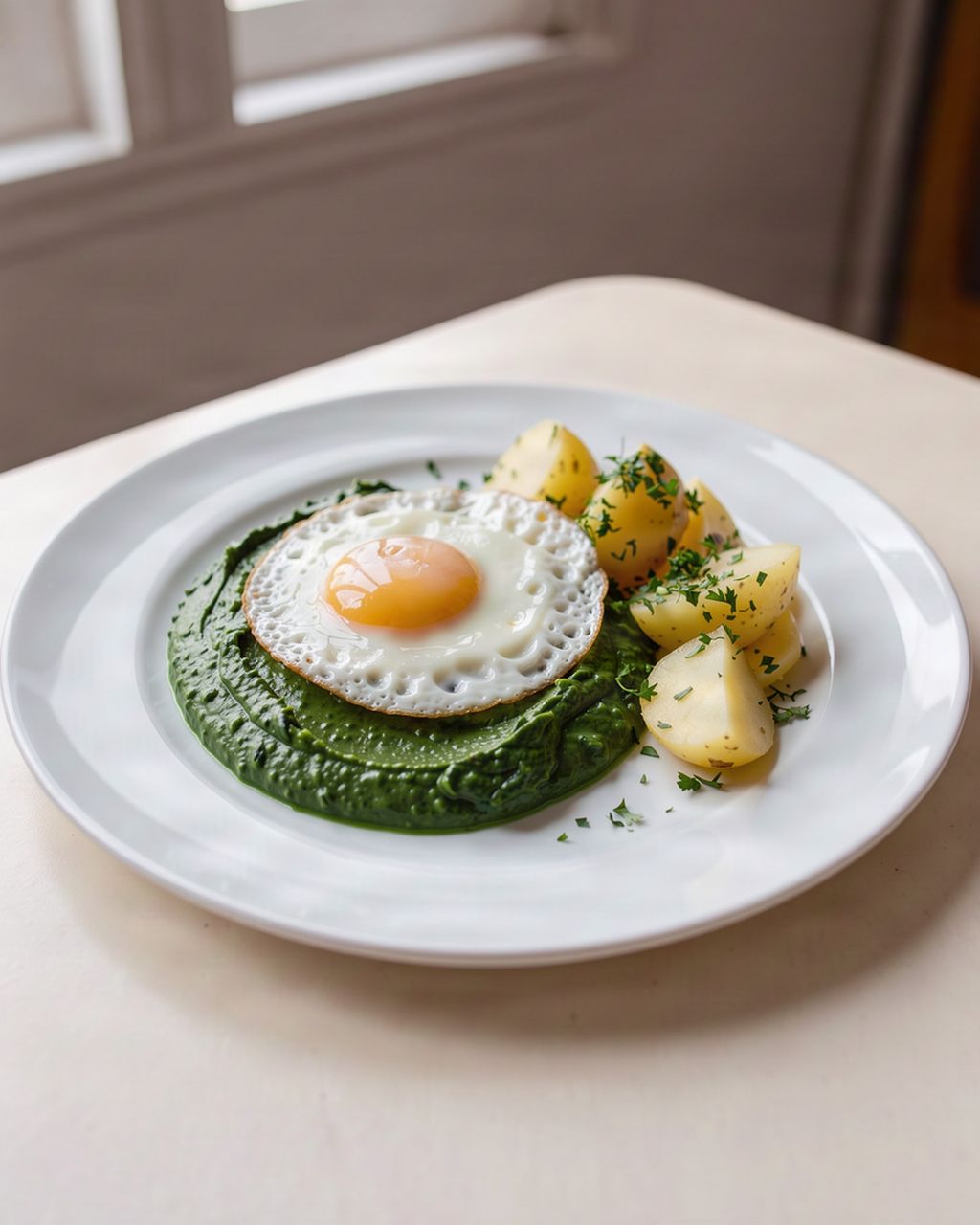
Spinach lívanečky with yogurt dip and smoked salmon are ready in 27 minutes; blanched spinach and garlic in a yogurt batter turn them into a quick savory dinner.
Potato lívance with trout are more of a festive bite-size appetizer: rounds of potato batter with dill sour cream and lemon-marinated trout. The recipe itself warns that citric acid only firms up and whitens the flesh, but it isn't cooking and doesn't reliably destroy bacteria or parasites. The trout must therefore be frozen against parasites (at least 24 hours at −20°C/−4°F, in a home freezer preferably 7 days, then thawed in the fridge), and the bites should not be served to pregnant women, small children, older people or people with weakened immunity.
If you're looking for more ideas for what to put in the pan in the morning instead of something sweet, take a look at what to cook with eggs for breakfast and dinner.
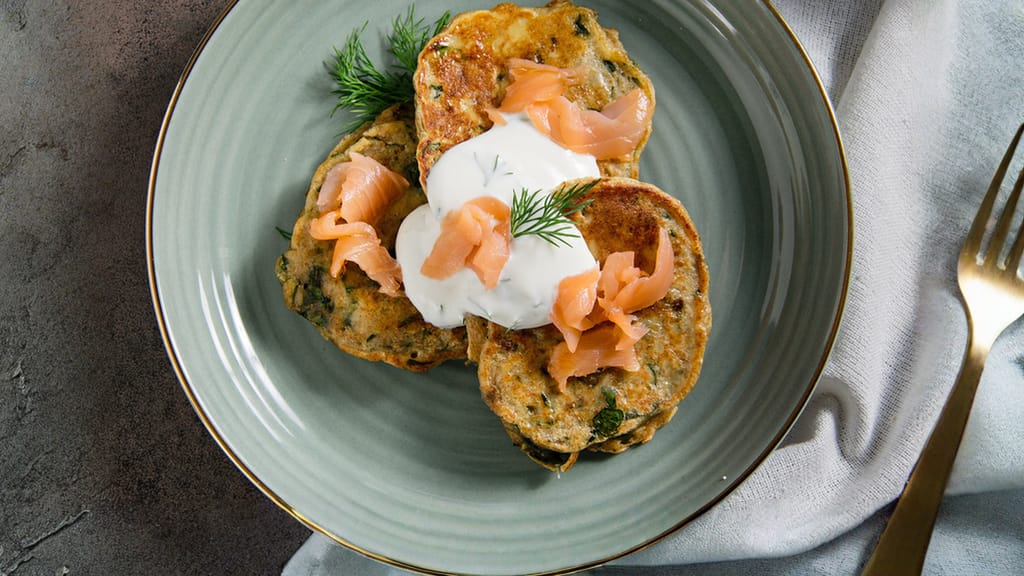
Spinach pancakes with yogurt dip and smoked salmon
Spinach lívanečky with yogurt dip and smoked salmon: savory lívance in 27 minutes
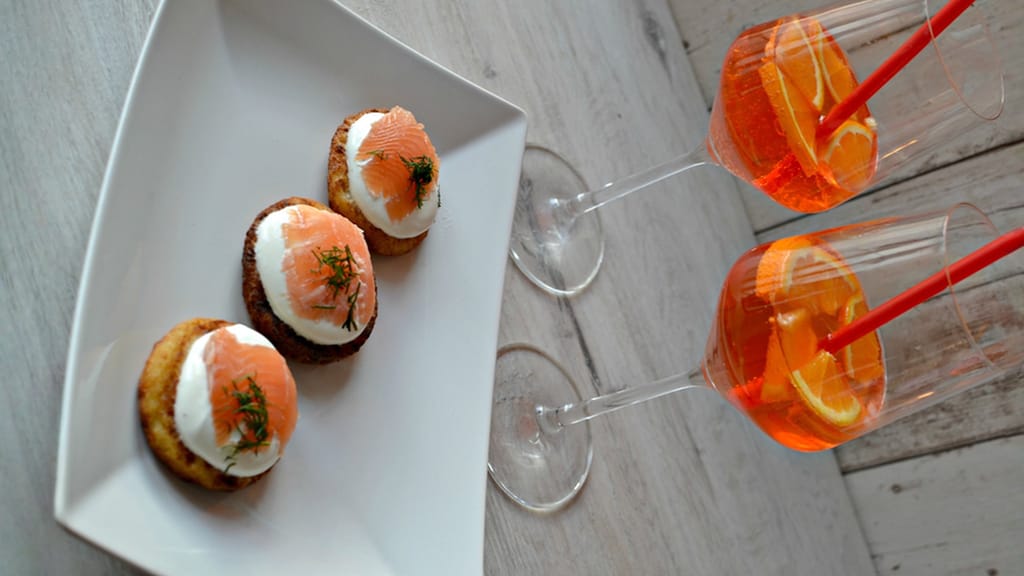
Potato pancakes with marinated trout
Potato lívance with trout: savory lívance as festive bite-size appetizers
Lívance go best with something tart and something creamy: fruit, yogurt or sour cream balance a batter that is gently sweet and buttery on its own. Tried-and-true combinations from our recipes:
plum compote with cinnamon, sour cream and poppy seeds
Greek yogurt and blueberries
plain yogurt and raspberries
strawberries and vanilla quark yogurt
dill yogurt dip and smoked salmon with savory lívance
sour cream with dill and marinated trout on the potato ones
Frozen fruit works just as well as fresh, just warm it briefly in a small saucepan first so it releases its juice and doesn't cool down your warm lívance. If you want the fruit in the batter itself, don't stir blueberries or chopped apple into the whole bowl: place them on the lívanec in the pan right after you pour the batter. That way the fruit spreads evenly and the batter around it doesn't stay raw.
Add syrup or honey only on the plate. Sugar in the batter browns quickly in the pan, and the more of it there is, the lower you have to turn the heat.
Most failed lívance have one of five causes: thin batter, overmixed batter, the wrong pan temperature, old leavening or missing fat.
Flat and thin (thin batter): add a tablespoon of flour until the batter holds a mound on the spoon.
Rubbery (overmixed batter): long mixing developed the gluten. Mix with a wooden spoon only until combined, not with a mixer.
Dark outside, raw inside (pan temperature): the pan is too hot or the lívance are too big. Turn the heat down to medium and make smaller mounds.
They don't rise at all (old leavening): the baking powder is old or damp. Try dropping a teaspoon of it into hot water; if it doesn't fizz, throw it out.
They stick (missing fat): the batter lacks fat or the nonstick pan is scratched. A tablespoon of melted butter in the batter and a drop of oil for the first batch solve the problem.
And one more thing almost everyone goes through: the first lívanec is usually the worst. The pan is still settling, so treat it as a test piece and use it to adjust both the heat and the thickness of the batter.
Lívance and American pancakes are very close relatives: both are a thick, leavened batter cooked in a pan. Pancakes tend to be larger and flatter and are often made with buttermilk and baking soda. Czech lívance are smaller, are traditionally also made with yeast, and are served with fruit, quark or plum butter (povidla) instead of maple syrup.
Lívance cook best in a nonstick pan with a drop of neutral oil, such as canola. Plain butter burns quickly in the pan and leaves dark spots on the lívance, so it's better to stir it into the batter melted, where it adds flavor and also helps prevent sticking.
Don't prepare batter with baking powder or baking soda the night before: the leavening fades by morning and the lívance turn out flat. You can mix the dry ingredients in one bowl and the wet in another the evening before and just combine them in the morning. The exception is yeast lívance, which actually improve when left to rise overnight in the fridge.
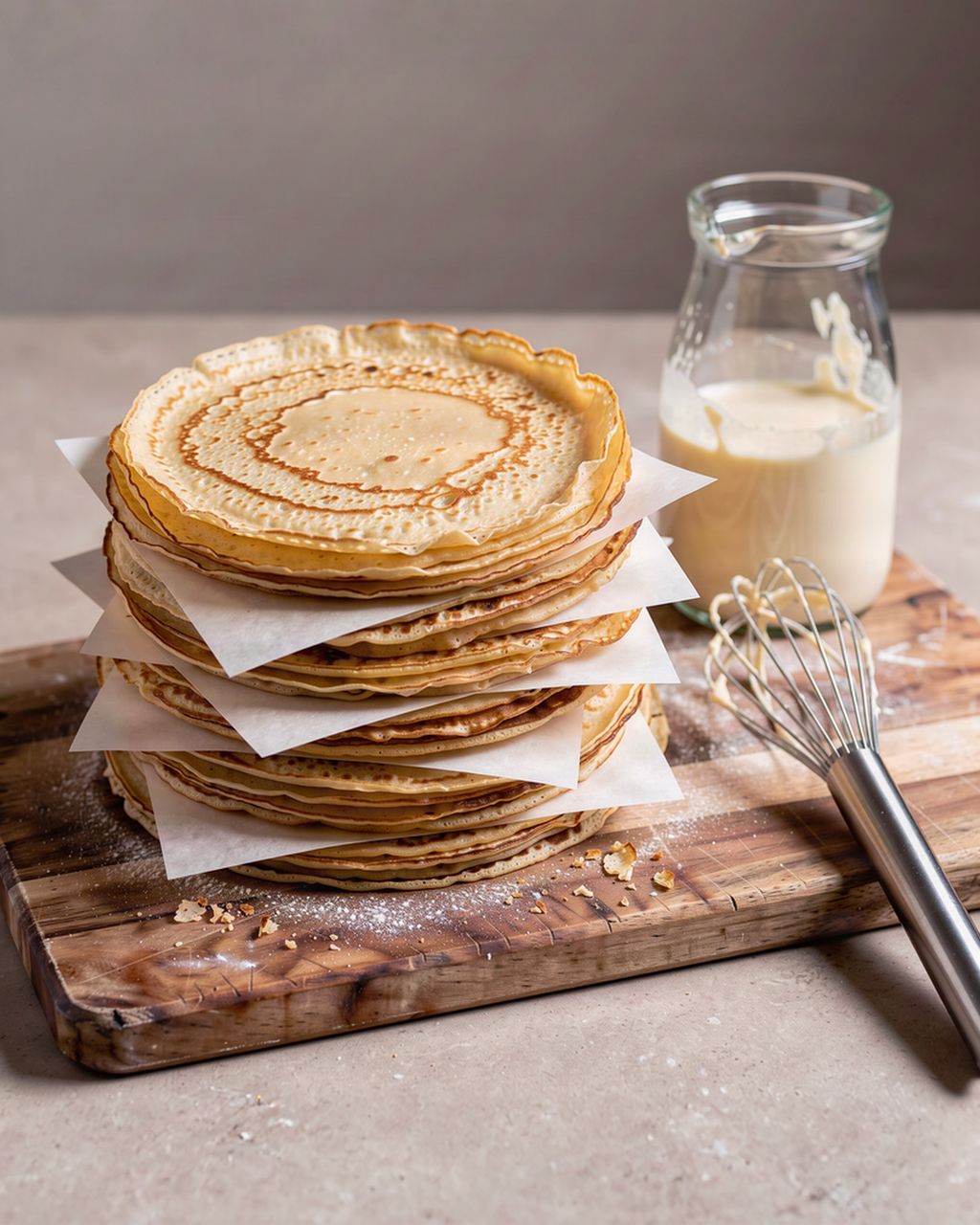
Lívance taste best fresh. In an airtight container in the fridge, eat them within 3–4 days, which is what USDA FSIS gives for cooked leftovers, though they're best within two days. They freeze well: let them cool completely, layer them with parchment paper and store them in a bag in the freezer. FoodSafety.gov states that food kept constantly frozen at 0°F (−18°C) stays safe, and freezer time only affects quality. In our experience, frozen lívance taste best within one to two months. Reheat them in a toaster or in a dry pan.
Stack the finished lívance on a baking sheet or plate in an oven heated to roughly 80–100°C (175–210°F) and cover them loosely with a kitchen towel. Don't pile them in a tall stack under a lid: steam collects under it and the lívance turn soft and collapse.
One cup of flour, roughly 140 g, makes about 12 to 16 small lívance around 8 cm (3 in) across, which is usually enough for two or three people at breakfast. If you spoon a single tablespoon of batter into the pan for each one, you'll get more of them, smaller and easier to flip.
One recipe worth heating the oven for, one tip, and one deal from the shop. Nothing else.