Ounces to Grams for Baking: Weight Ounces vs Fluid Ounces
How Many Grams in a Cup of Milk? Whole, Skim, Plant Milk and ml
Updated Nov 20, 2026
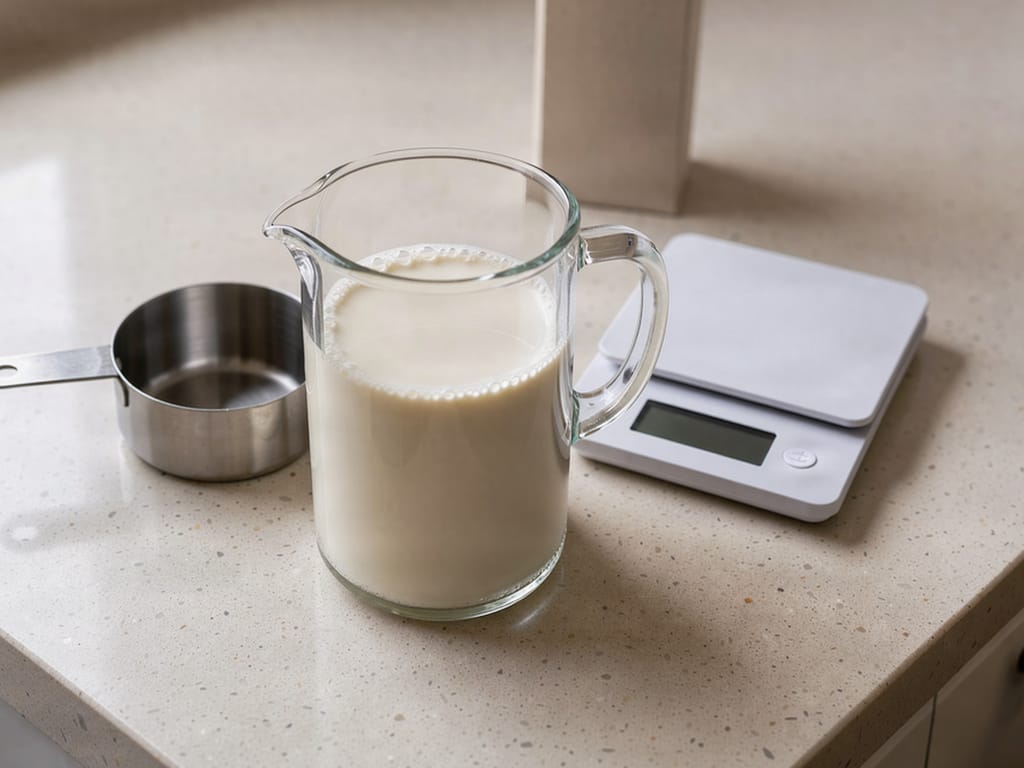
A US cup (236.6 ml) of whole milk weighs about 244 g, and a metric cup (250 ml) about 258 g, according to USDA FoodData Central. Milk is slightly denser than water, so 1 ml of milk weighs about 1.03 g rather than 1 g. Skim milk weighs almost the same, about 245 g per US cup, and most plant milks about 240 to 244 g.
USDA FoodData Central weighs a US cup of whole milk at 244 g and a tablespoon at 15 g. Scaled to other measures:
1 US cup (236.6 ml): about 244 g
½ US cup: about 122 g
¼ US cup: about 61 g
1 metric cup (250 ml): about 258 g
½ metric cup (125 ml): about 129 g
1 tablespoon: about 15 g
1 teaspoon: about 5 g
Some charts list a US cup of milk as 227 g. That is 8 ounces by weight, which is easy to confuse with the 8 fluid ounces of a US cup. A fluid ounce measures volume, an ounce measures weight, and for milk they are not the same.
Recipe of the week, one tip that saves you time and one deal from the shop. Unsubscribe in one click.
The next issue goes out on Thursday, November 26.
Water weighs 1 g per ml. Milk is a little heavier, about 1.03 g per ml, because the dissolved milk sugar, proteins and minerals are denser than water and outweigh the lighter fat.
In practice:
100 ml of milk: about 103 g
250 ml of milk: about 258 g
500 ml of milk: about 516 g
1 liter of milk: about 1,031 g
For a sauce or a soup, treating ml and grams as equal is fine. The gap matters when you are weighing everything on a scale, as many European bakers do, and the recipe gives milk in grams. Pouring 250 ml when the recipe says 250 g gives you about 8 g too much, which most doughs will not notice; for 250 g, pour about 243 ml. Even so, in a large batch of bread or a custard it adds up.
A tip from Czech kitchens: if a recipe gives milk in grams, put the bowl on the scale and pour the milk in directly. It is quicker than a measuring jug and more accurate.
Barely. Fat is lighter than water, so in theory less fat means a heavier cup. USDA FoodData Central figures per US cup:
Whole milk (3.25% fat): 244 g
Reduced-fat milk (2%): 244 g
Low-fat milk (1%): 244 g
Skim or nonfat milk: 245 g
The spread is about a gram, so use 244 g for any cow's milk. European milk labeled 3.5% fat, the usual whole milk in Czech shops, measures the same.
Other dairy liquids do weigh noticeably more per cup. USDA lists canned evaporated milk at about 252 g per US cup and sweetened condensed milk at about 306 g, because so much of the water has been cooked off. Do not use the milk figure for those.
Most plant milks are close to cow's milk, a little lighter. USDA FoodData Central figures per US cup (236.6 ml):
Soy milk: about 243 g (the same for plain, vanilla and light versions)
Almond milk: about 240 g for most entries; one unsweetened shelf-stable entry lists 262 g
Oat milk: not in USDA's standard reference table; typically about 240 to 244 g, depending on the brand
Coconut milk drink (the carton kind): about 240 g
Canned coconut milk is a different product: USDA lists it at 226 g per US cup, and it behaves more like cream than milk.
Because brands differ in what they add (oils, thickeners, sugar), the safest approach is to treat 240 g per US cup and 254 g per metric cup as a working figure, or weigh your own carton. You will find oat milk and almond milk among our ingredients.
Milk is where the size of the cup matters most, because liquids are often measured in large amounts. The three cups you are likely to meet:
US cup (236.6 ml): about 244 g of whole milk. American recipes.
Metric cup (250 ml): about 258 g. Australian, New Zealand and Canadian recipes, and many modern recipes online.
UK cup (284 ml): about 293 g. Half an imperial pint, found in older British recipes. Most modern UK recipes that use cups mean the 250 ml metric cup.
Pints differ too: a US pint is 473 ml, an imperial (UK) pint 568 ml. A British recipe that says "1 pint of milk" needs about 95 ml more than an American one.
If you cook from a recipe that gives milk in cups, use the cup from the recipe's country. Our cups and spoons to grams calculator converts between US and metric cups, and our guide to converting cup recipes to grams covers the rest of the ingredients.
European recipes give milk in milliliters, sometimes in grams. If you only have US cups (236.6 ml), common amounts convert like this:
100 ml: a little under ½ US cup, about 6¾ tablespoons
200 ml: a little over ¾ US cup
250 ml: 1 US cup plus about 1 tablespoon
300 ml: about 1¼ US cups
500 ml: 2 US cups plus about 2 tablespoons
1 liter: about 4¼ US cups
In a metric cup (250 ml) the math is simpler: 250 ml is exactly 1 cup, 500 ml is 2 cups.
If the recipe gives milk in grams instead, divide by about 1.03 to get milliliters: 300 g of milk is about 290 ml, a little under 1¼ US cups.
Dry milk is a different measure altogether. USDA lists a US cup of regular nonfat dry milk at 120 g and instant nonfat dry milk at only 68 g, because the instant kind is fluffier. Our article on milk powder in baking explains how to mix it back into milk.
If you buy milk in bulk and freeze some, see can you freeze milk, cream and yogurt for what changes after thawing.
One US cup (236.6 ml) of whole milk weighs about 244 g, according to USDA FoodData Central. A metric cup (250 ml) weighs about 258 g, and a UK cup (284 ml) about 293 g.
Not quite: 250 ml of milk weighs about 258 g, because milk is about 3% denser than water. For most cooking the difference is too small to matter, but it adds up in large batches.
Half a US cup of whole milk is about 122 g, and a quarter cup about 61 g. A metric half cup (125 ml) is about 129 g.
A tablespoon of milk weighs about 15 g, according to USDA FoodData Central. A teaspoon is about 5 g.
Very slightly: USDA lists a US cup of skim milk at 245 g and whole milk at 244 g. Fat is lighter than water, so less fat means a marginally heavier cup, but the difference is a gram.
Most plant milks weigh about 240 to 244 g per US cup. USDA lists soy milk at 243 g and most almond milks at 240 g. Oat milk is typically about 240 to 244 g, depending on the brand.
One recipe worth heating the oven for, one tip, and one deal from the shop. Nothing else.