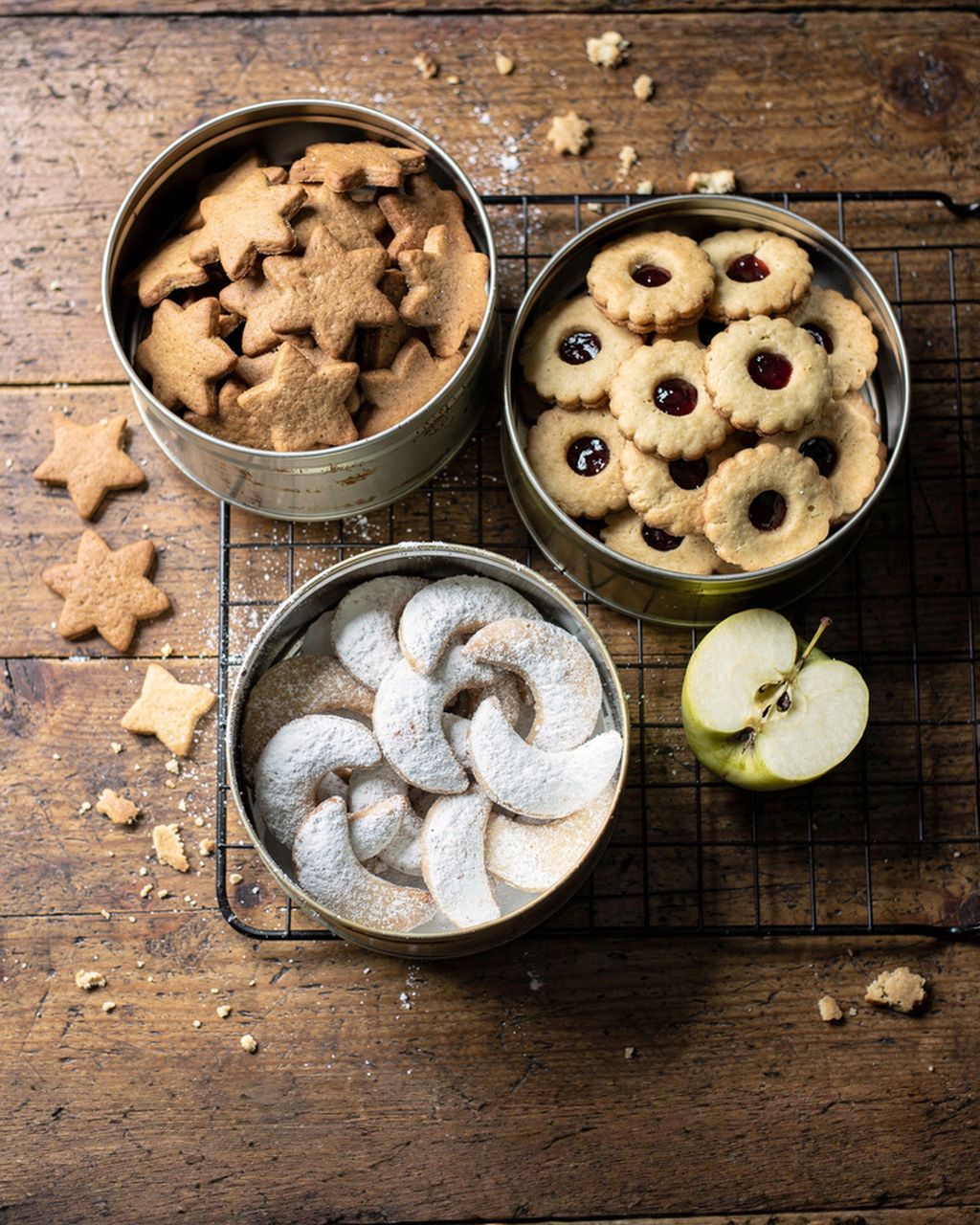
Classic christmas cookies: delicate linzer cookies
Types of Christmas Cookies: 20 Classics and What Sets Them Apart
Updated Oct 6, 2026
The easiest way to sort Christmas cookies is by dough: short buttery pastry, gingerbread and spiced dough, meringue-based, filled or sandwiched, and no-bake treats. The dough is what determines when to bake them, how long they'll keep, and what can go wrong along the way. Here are 20 classic Christmas cookies – for each one you'll find what makes it different from the rest, plus a link to a recipe or detailed guide wherever we have one.
Christmas cookies fall into five basic groups based on their dough, and within those, 20 classics that get baked most often in Czech households:
Short buttery pastry: linzer cookies, vanilla crescents, bear paws, spiced nut cookies, lard cookies, piped cookies
Gingerbread and spiced: gingerbread cookies, ginger biscuits, cinnamon stars
Meringue-based: meringue kisses, coconut macaroons, laskonky (meringue-cream sandwiches), florentines
Filled and sandwiched: Bad Ischl tartlets, mocha rounds, filled walnut shapes, cream-filled tartlet cups
No-bake: wasp nests, rum balls, nut brittle treats
The group tells you more than you'd think. Short pastry wants a cool kitchen and a moderate oven around 160–170°C (320–340°F), gingerbread needs time to soften, meringue-based treats need watching for moisture, and cream-filled ones need the fridge. That's why it's worth having something from every group on your plate – and baking them in a sensible order.
Short pastry is the backbone of most Christmas cookie plates: lots of fat, little liquid, no leavening. It's held together by butter and sugar, which is why you work with it cold and bake it at roughly 160–170°C (320–340°F), usually 8–12 minutes depending on size – you can read exactly why in our article on why Christmas cookies bake at a lower temperature.
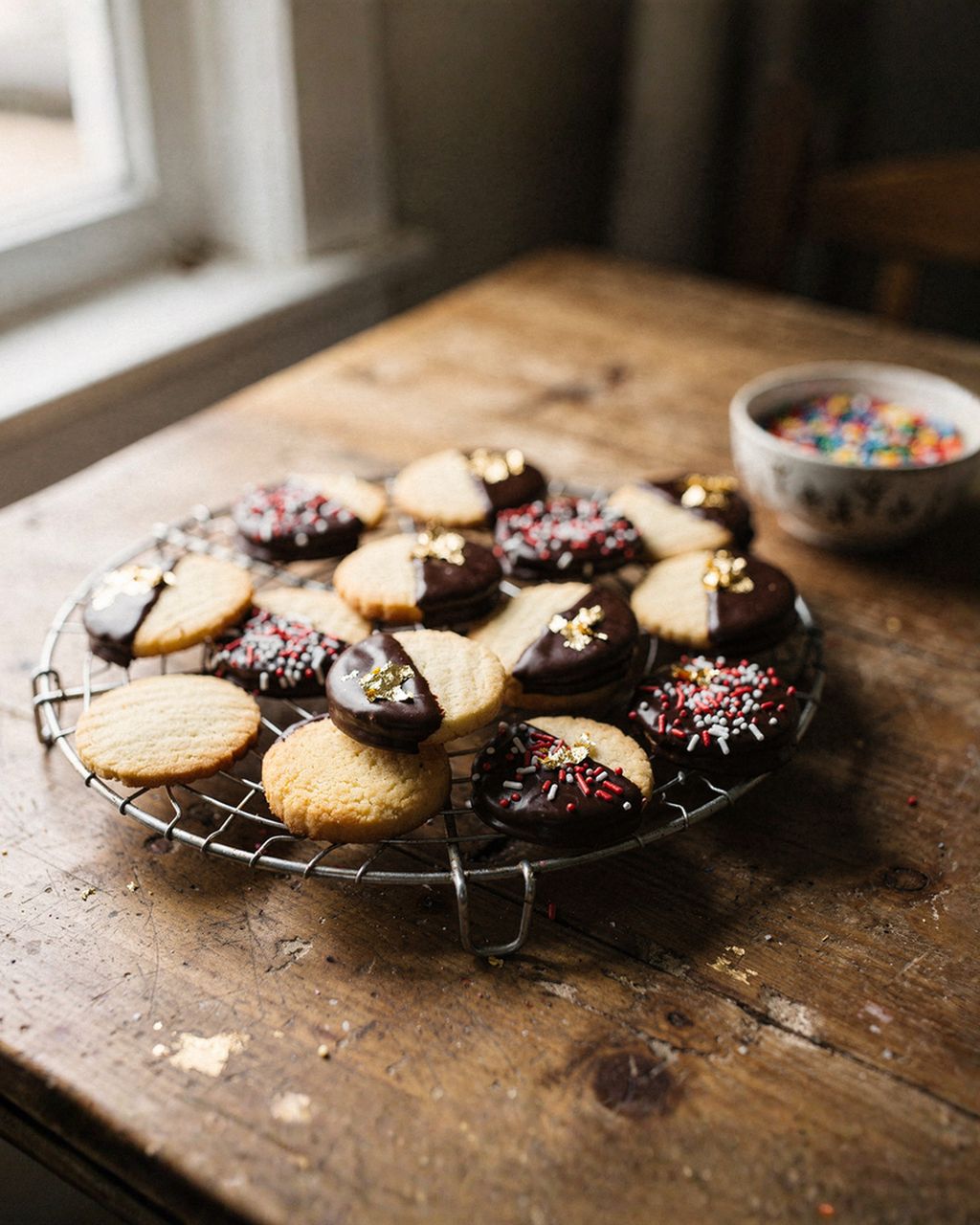
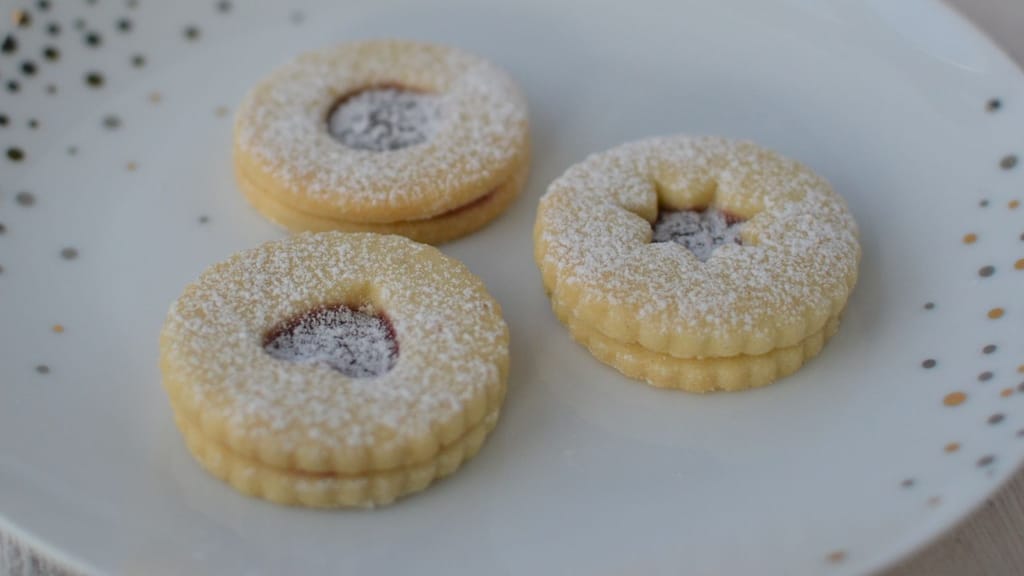
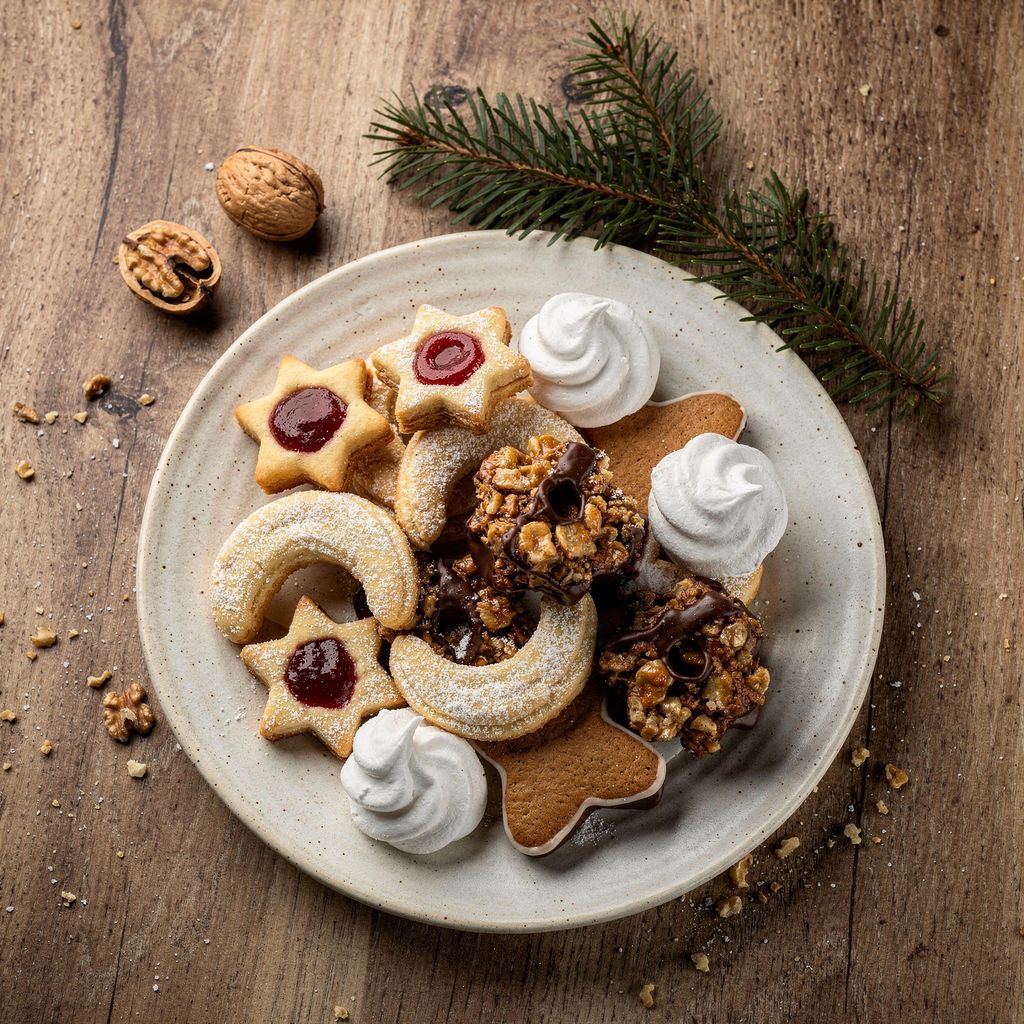
Linzer cookies are cut-out cookies made from butter pastry in the classic 3:2:1 ratio (flour, butter, sugar), sandwiched with jam and dusted with sugar. What sets them apart is exactly that simplicity – there's nowhere for mistakes to hide, so the quality of your butter and the temperature of your dough really matter. Bake them around 160–170°C (320–340°F) just until the edges turn pale gold, about 8–10 minutes. The dough should only have egg yolk, not a whole egg (here's why just the yolk).
Recipe: classic short-pastry linzer cookies, and a modern twist with linzer cookies filled with salted caramel
When something goes wrong: linzer cookies spreading while baking, dough that crumbles, linzer cookies turning out hard
When they taste best: how long linzer cookies keep
Classic christmas cookies: delicate linzer cookies
Classic short-pastry linzer cookies – step-by-step recipe
Vanilla crescents are hand-shaped butter pastry crescents made with ground nuts or almonds, rolled in vanilla sugar while still warm. What sets them apart from linzer cookies is the ground nuts, which give the dough a delicate crumbliness, and the fact that they're shaped by hand rather than cut out. Fresh out of the oven they're as fragile as sand, so coat them gently, just a few minutes after baking.
Variations: pistachio crescents and hollow nut crescents
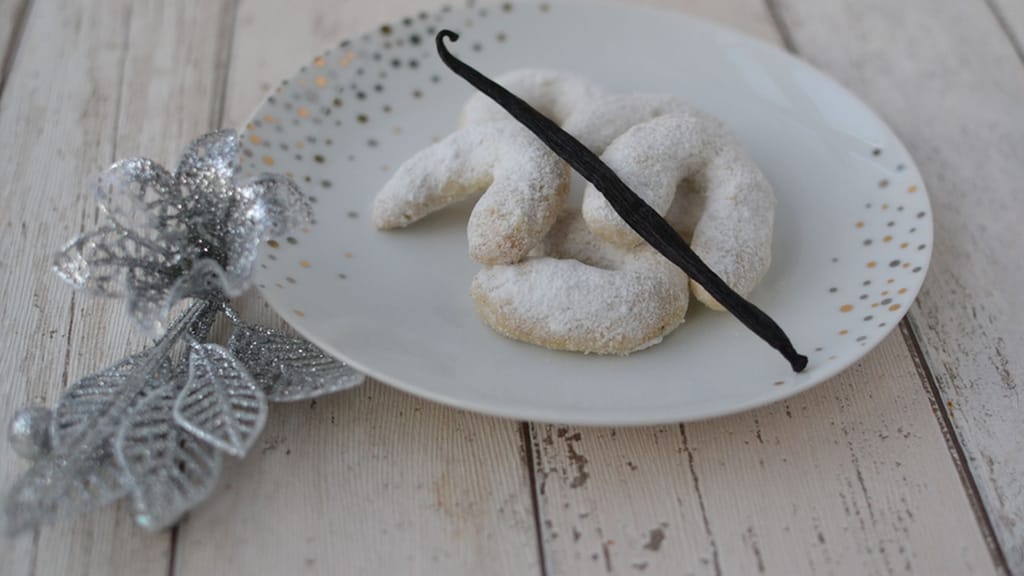
The best christmas cookies? vanilla crescents, of course!
Vanilla crescents with nuts, rolled in vanilla sugar – recipe
Bear paws are a nutty, often cocoa-flavoured dough pressed into ridged moulds, baked and then rolled in sugar. What sets them apart is the shape – the mould does the work for you – and a denser, nuttier flavour than linzer cookies have. Pop them out of the mould while still slightly warm; once fully cooled, they tend to break.
Pracny are spiced nut cookies baked in the same kind of ridged moulds, with a strong aroma of cinnamon and cloves. What sets them apart from bear paws is mainly the spice – and the fact that they're worth letting rest for a few days so the flavours can meld.
Lard cookies are small pastries made with lard instead of butter, which makes them extremely short and lightly salty. What sets them apart from linzer cookies isn't the shape but the fat – lard gives a crumblier, shorter texture than butter does.
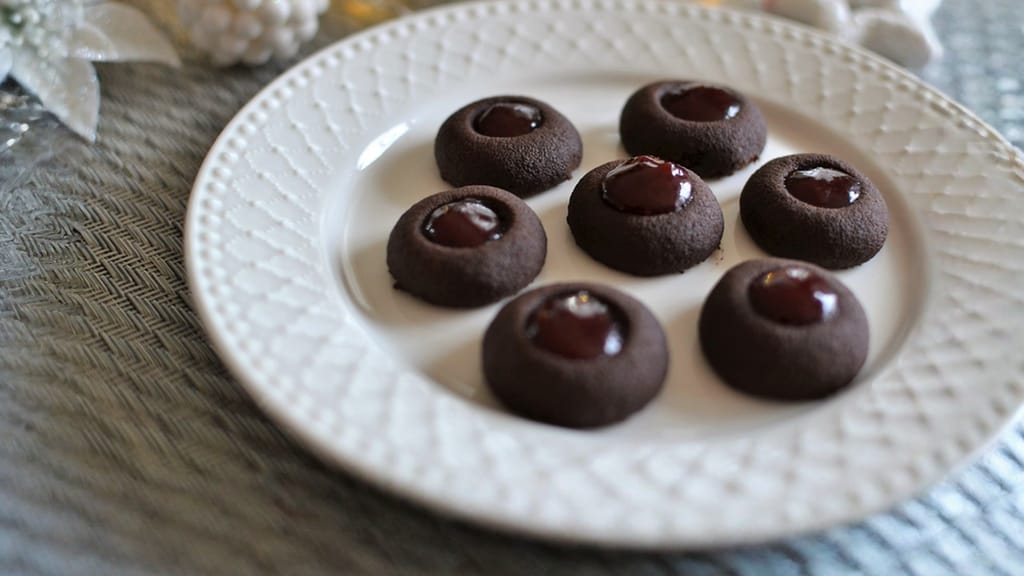
Sádláky – grandma's lard cookies
Lard cookies – a traditional Christmas treat from our grandmothers' kitchens
Piped (Viennese) cookies are made from a softer butter dough that isn't rolled out but piped through a nozzle into wreaths, swirls or crescents, then dipped in chocolate. What sets them apart is the consistency: the dough has to be soft enough to pipe through the nozzle, yet firm enough to hold its ridges in the oven.
Spiced cookies are built on honey, spice, and time. Unlike short pastry, they're often leavened (gingerbread with baking soda – see baking soda in gingerbread) and almost always need to rest so they can soften and develop their aroma.
Gingerbread cookies are cut-out cookies made from honey dough with gingerbread spice, decorated with royal icing. What sets them apart is how they change after baking: fresh out of the oven they're firmer, and only soften once stored in a sealed tin. That's why you should bake them among the first.
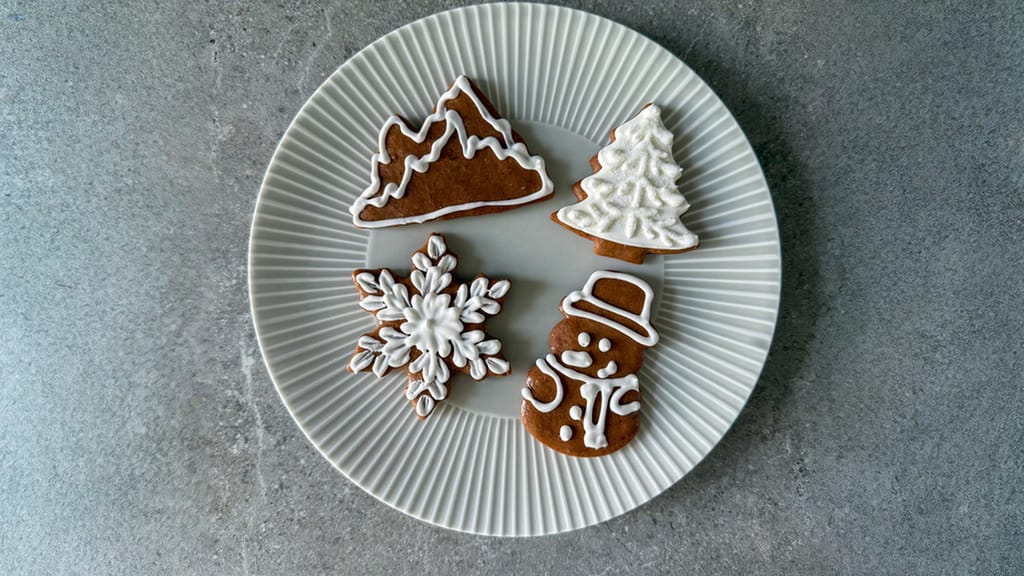
Soft honey gingerbread cookies that never go hard
Soft honey gingerbread cookies that don't go hard – Christmas gingerbread recipe
Ginger biscuits are an old Czech treat made from eggs, sugar, flour and ground ginger, with a gently spicy kick. What sets them apart is the method: the cut-out shapes are left on the tray overnight (or at least a few hours) to dry out, so the surface sets and the biscuits puff up beautifully in the oven. After baking, they need time to rest so they can soften.
Cinnamon stars are flourless cookies made from ground almonds, egg whites, sugar and cinnamon, topped with a white icing made from the same meringue mixture. They're only gluten-free if you double-check every ingredient and roll the dough on sugar rather than flour. What sets them apart is that the icing goes on before baking, and they're baked at a low 130–150°C (266–302°F) for just 10–15 minutes, so it stays snow-white. Inside, they stay pleasantly chewy.
Meringue-based cookies are held together by whipped egg whites, not flour and butter. They're light but sensitive to moisture – left in an open container, they soften quickly. Everything that can go wrong here starts with the meringue, so whip it to stiff peaks in a clean, grease-free bowl.
Meringue kisses are made from just egg whites and sugar (usually roughly double the sugar by weight), piped onto a tray and more dried than baked, at around 100°C (212°F). What sets them apart is their purity: no fat, no flour, so even a single drop of yolk or grease in the bowl will show.
Coconut macaroons are little mounds of egg white, sugar and shredded coconut, often baked on a wafer base. Compared to meringue kisses, they're softer and denser – the coconut traps moisture, so they stay soft inside while just the surface turns golden.
Laskonky are two thin meringue discs with coconut or nuts, sandwiched together with buttercream, often coffee-flavoured. What sets them apart is the combination of crisp meringue and soft cream – which is why they belong in the fridge and should be eaten sooner than the drier types.
Florentines are thin, crisp discs made from egg whites, sugar, a little flour and butter, almond flakes and candied fruit, with the base dipped in chocolate. They're really more thin almond wafers than cookies in the usual sense. Bake them at around 180°C (350°F) for 8–12 minutes, until they spread out and turn golden. Go by colour, not the timer – one extra minute will turn them bitter. Keep an eye on them near the oven.
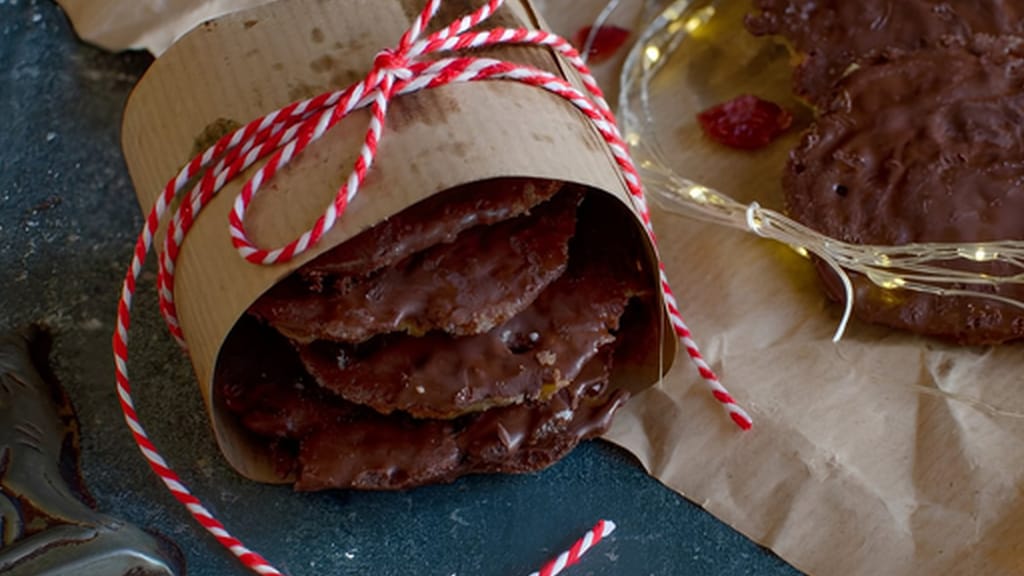
Chocolate-dipped marokánky (hazelnut florentine cookies)
Chocolate-coated florentines – recipe for crisp Christmas treats
Filled and sandwiched cookies are two (or more) pieces of short pastry joined with jam, a nut filling or buttercream, or little pastry cups filled with cream. The filling is really what defines them. This is the most labour-intensive group, and it shows the most on the plate. With cream fillings, the storage rules change too – see how long cream-filled cookies keep.
Bad Ischl tartlets are rounds of short, often cocoa-flavoured pastry sandwiched with jam or a nut filling, coated in chocolate and topped with an almond or a nut. Tradition has it they originated in the Austrian spa town of Bad Ischl, a favourite retreat of Emperor Franz Joseph I. What sets them apart from linzer cookies is the chocolate coating, the often cocoa-flavoured dough, and the almond or nut on top.
Mocha rounds are rounds of short pastry sandwiched with coffee buttercream and brushed on top with coffee icing – "mocha" in baking simply means coffee flavour. What sets them apart from linzer cookies is coffee instead of jam, and because they contain cream, they belong in the fridge. This is a classic from grandma's kitchen, for anyone who finds plain linzer cookies a bit too mild.
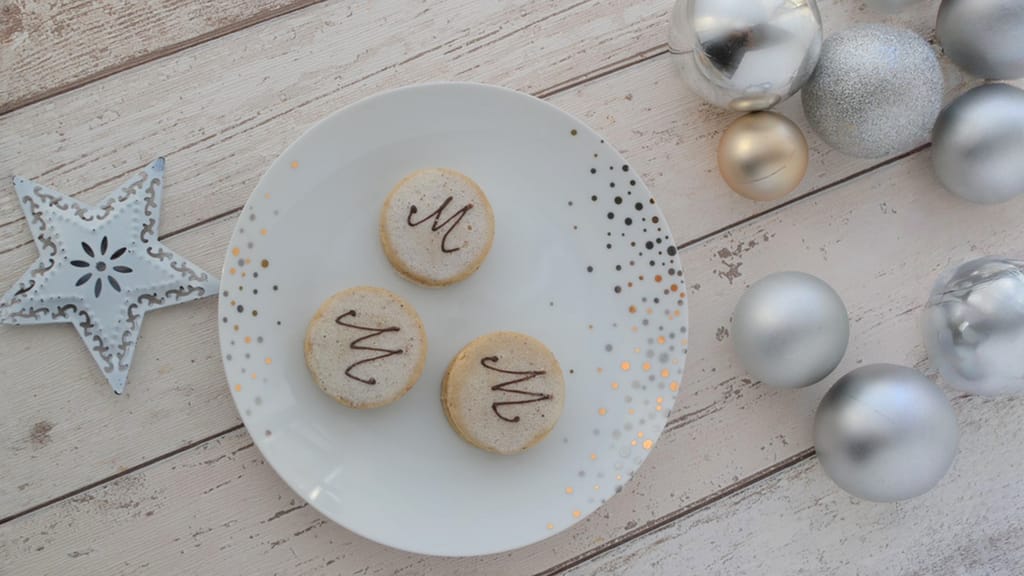
Mocca rounds – christmas cookies with a memory of grandma
Mocha rounds – coffee-flavoured Christmas cookies with grandma's touch
Filled walnut shapes are two halves baked in walnut-shaped moulds, filled with buttercream or a nut mixture and pressed together. What sets them apart is the shape – and the fact that you can't make them without special moulds.
Tartlet cups are small pastry shells baked in metal moulds and filled with cream, topped with a nut or chocolate. Empty shells keep for weeks, but once filled they only last a few days in the fridge – which is why they're filled only right before Christmas.
No-bake treats never see the oven – they're held together by fat, chocolate or caramel. They're quick, perfect for last-minute baking and for kids, but most need to be kept in the fridge.
Wasp nests are no-bake cones made from a sponge-cake or nut mixture, shaped on a cone-shaped mould and filled with cream, classically spiked with eggnog liqueur. What sets them apart is the hollow centre – and with it, the main problem, since the mixture can fall apart or turn runny.
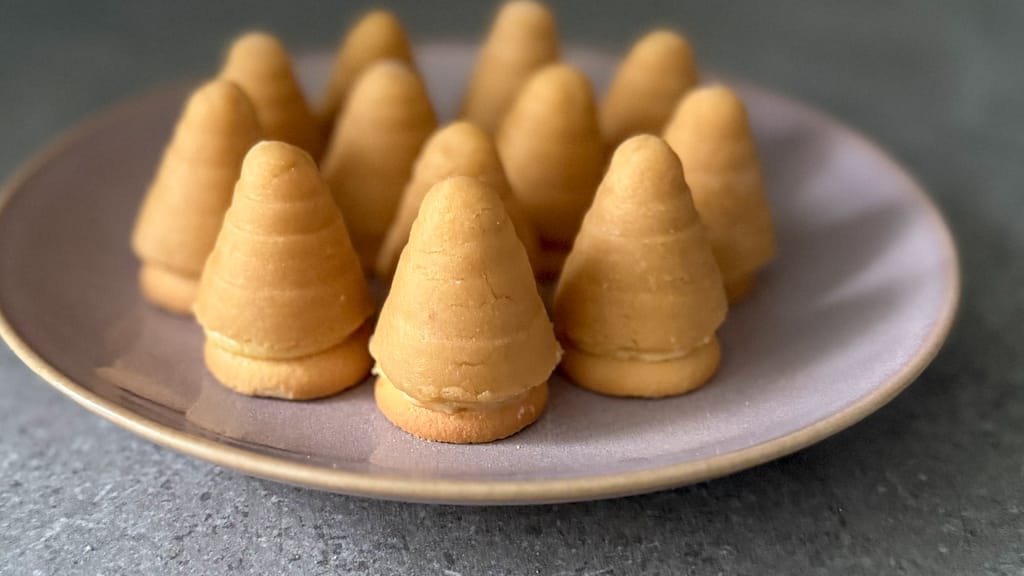
White chocolate wasp nests with mango and passion fruit
White chocolate wasp nests with mango and passionfruit – a modern twist
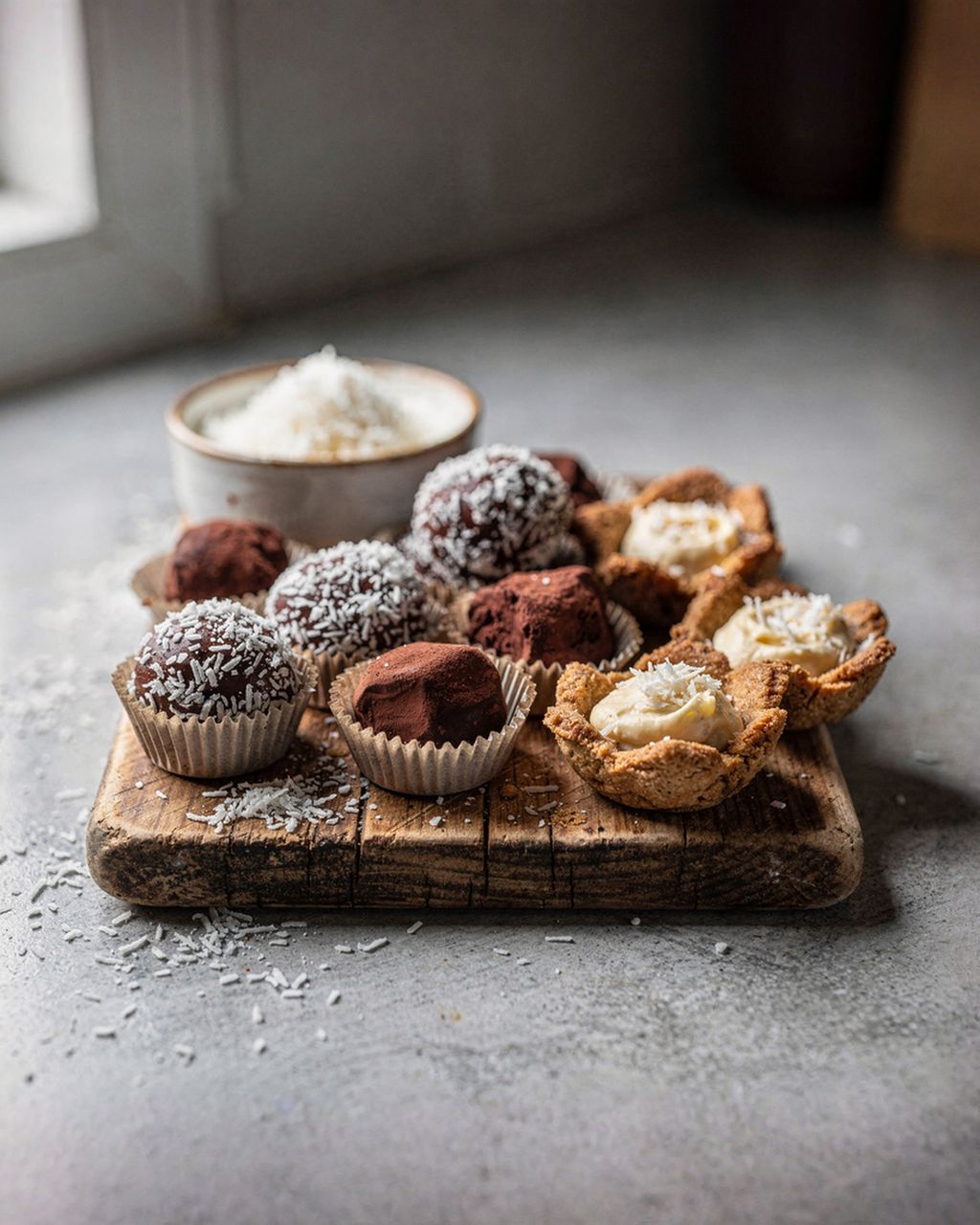
Rum balls are no-bake balls made from crushed sponge cake or biscuits, cocoa, fat and rum, rolled in coconut, cocoa or sprinkles. What sets them apart is that even a complete beginner can make them, and they can be flavoured however you like – try Baileys balls with white chocolate, or go alcohol-free with cocoa balls made from oats and dates.
Nut brittle treats are nuts coated in caramelised sugar, shaped while still hot into little cups or cubes and often dipped in chocolate. What sets them apart is the crisp, glassy texture – and the speed required: the caramel sets within moments, so you have to work quickly and carefully, since hot sugar burns.
Six to eight types are plenty for a festive plate – at least one from each group – baked in order of how long they keep: start with gingerbread and other spiced cookies that need to soften, then short pastry and meringue-based ones, and leave cream-filled and no-bake treats for last. You'll find the full order with specific dates in our calendar, when to bake Christmas cookies.
How long each type keeps: shelf-life overview by cookie type
Where to store them: how to store Christmas cookies so they stay crisp
Getting a head start: how to freeze cookies and dough
Temperatures and times: what oven temperature to bake each type of cookie at
You'll find ingredients, moulds and cookie cutters for every group all in one place on our Christmas cookies page.
The ones that really need resting time are gingerbread cookies, old-fashioned ginger biscuits, spiced nut cookies (pracny), Bad Ischl tartlets, and linzer-style cookies sandwiched with jam. With gingerbread and ginger biscuits, it's about softening in a sealed tin; with sandwiched cookies, it's about letting the filling gently moisten and soften the pastry. Meringues, florentines and brittle treats, on the other hand, taste best fresh and crisp.
Linzer dough is one specific type of short pastry, with a fixed 3:2:1 ratio (flour, butter, sugar) and only egg yolk, no whole egg. Short pastry is a broader category: it also includes doughs with ground nuts (vanilla crescents, bear paws), doughs made with lard (lard cookies), and softer piped doughs. What they all have in common is plenty of fat, little liquid, and a moderate oven around 160–170°C (320–340°F).
You can bake classic linzer cookies, gingerbread, lard cookies, ginger biscuits, meringues and coconut macaroons without any nuts at all. For nut-based types like vanilla crescents, swap the ground nuts for the same amount of ground sunflower seeds – the flavour will be a little different, but the dough will hold together just as well. If you're baking for someone with allergies, also check for trace nuts in chocolate and other ingredients.
No-bake treats (the alcohol-free rum balls), cutting out linzer shapes, and decorating gingerbread are the easiest for kids to help with. These types forgive imprecision and let kids see results right away. Leave the brittle treats with hot caramel and the florentines to the grown-ups.
One recipe worth heating the oven for, one tip, and one deal from the shop. Nothing else.