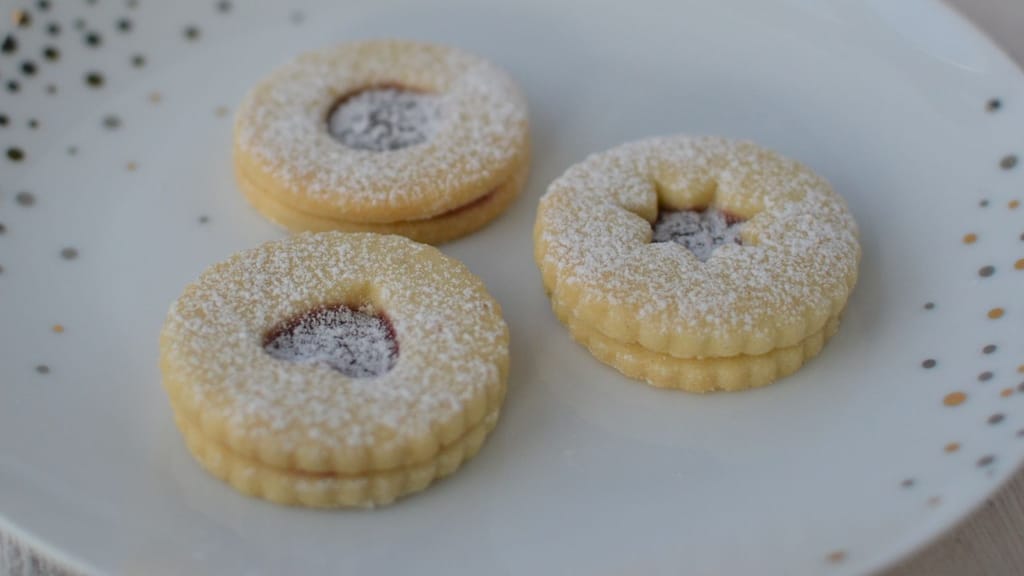
Classic christmas cookies: delicate linzer cookies
Updated Aug 29, 2026
Tough linzer cookies almost always come down to one of four causes: not enough fat relative to flour, overworking the dough, using granulated sugar instead of icing sugar, or baking two minutes too long. Crispness isn't a matter of luck — it's about ratios and temperature, and you control both. Below you'll find exactly what makes linzer cookies crisp, why they can still turn out hard even with a good recipe, and how to soften them back up with filling.
Linzer cookies turn tough for four reasons: not enough fat relative to flour, overworking the dough, granulated sugar instead of icing sugar and overbaking. In most kitchens at least two of these happen at once — and each one has its own fix.
Too little fat, too much flour. Once the ratio drops below 3:2 (flour to butter), there isn't enough fat to coat all the flour, and its proteins bond together into gluten. The result won't crumble — it'll snap like a cracker.
Overworking the dough. Every extra minute in the bowl or under your hands builds up the gluten network. The dough becomes stretchy and easy to roll — and comes out chewy once baked.
The wrong sugar. Granulated sugar doesn't have enough moisture in such a dry dough to dissolve properly, so it sits there like tiny grains, only partially dissolving later in the moisture released by the butter and egg yolk, then re-crystallizing again as the cookie cools.
Overbaking. The difference between crisp and tough linzer cookies is two minutes. Judge it by the color of the edges, not the center.
Watch out for one mix-up: if your dough falls apart while rolling and cutting, that's the opposite problem from post-bake toughness, and it needs a different fix — more chilling and more binding, not more flour. We walk through the same logic step by step for the closely related classic shortcrust in our article on Pâte sablée: classic French shortcrust pastry, step by step.
The classic ratio for crisp linzer dough is 3:2:1 — 300 g plain flour, 200 g cold butter, 100 g icing sugar, and one to two egg yolks. This ratio isn't tradition for tradition's sake: it's the smallest amount of flour that still holds its shape, and the largest amount of fat that can still be rolled out.
Fat makes linzer dough crisp by physically blocking gluten formation — it coats the flour particles so the proteins in them can't meet water and bond into long strands. That's exactly where the English word short in shortbread comes from: short and crumbly, not stretchy.
Two practical rules follow from this:
The butter has to be cold. Melted butter blends into the flour instead of coating it, releasing water and letting gluten get to work. Use cubes straight from the fridge, not softened butter.
Don't add flour to "fix" sticky dough. If the dough is sticking, it belongs in the fridge for 30 minutes, not under another handful of flour. Every extra spoonful of flour shifts the ratio toward toughness.
Butter is also why swapping the fat isn't a neutral move — margarine and shortening both have a different melting point and crystallize differently in the dough.
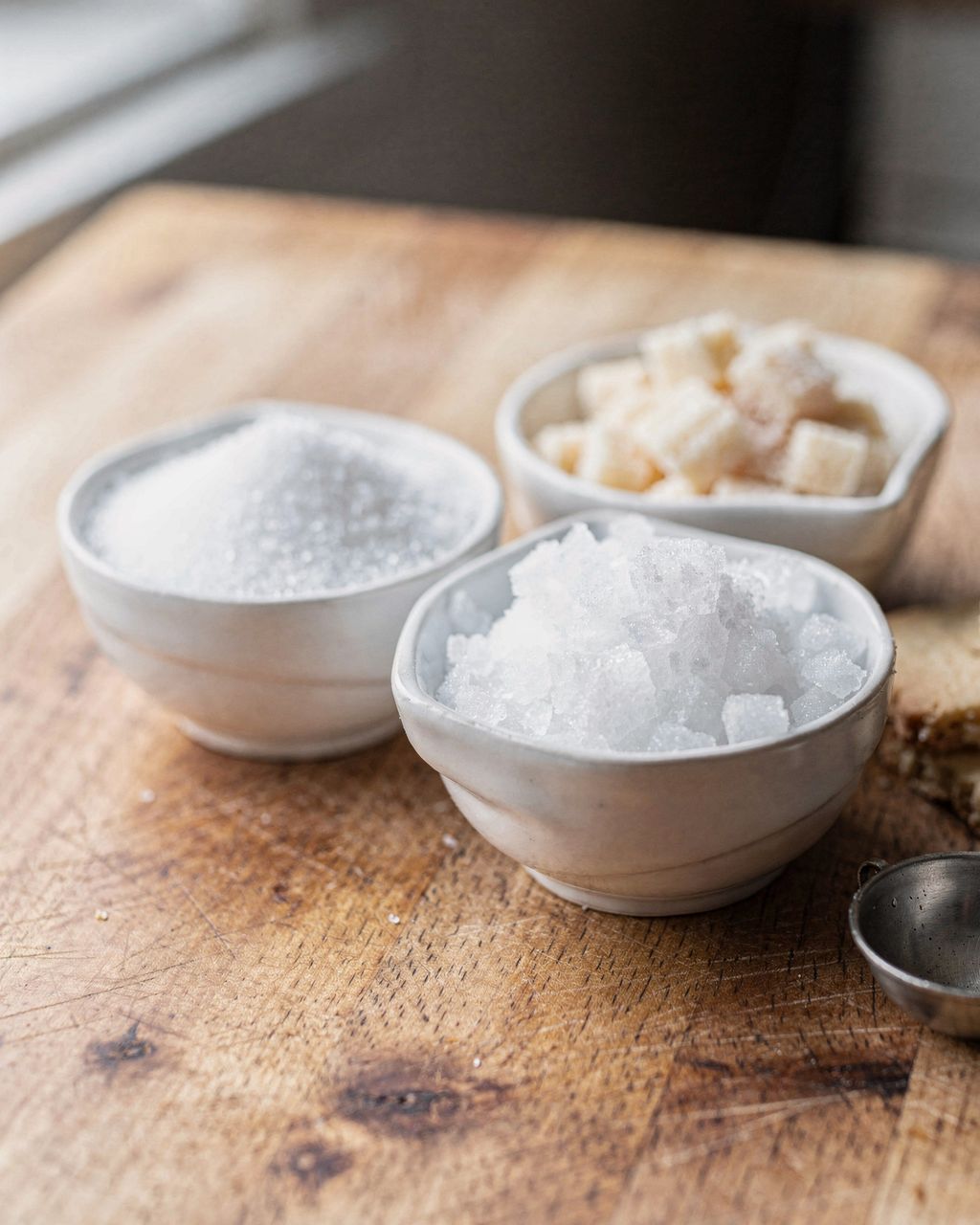
Linzer dough calls for icing sugar because it dissolves in the dough's minimal moisture — granulated sugar doesn't. In dry, fat-coated dough, granulated sugar crystals have nothing to dissolve into. Some of it will dissolve during baking, once moisture is released from the butter and egg yolk, but it re-crystallizes again as the cookie cools — leaving hard little flecks in the cookie.
Most icing sugars also contain up to 3% starch as an anti-caking agent, which binds residual moisture and further slows gluten formation. Two birds, one stone.
Use only egg yolks, not whole eggs in linzer dough. Egg white is mostly water and protein — both are exactly what you don't want in a crisp dough. Water activates gluten, and the protein sets firm during baking, stiffening the structure.
The yolk, on the other hand, brings fat and lecithin, which holds the fat and the rest of the dough together. It binds the dough without toughening it. One to two yolks is enough for 300 g of flour.
If all you have at home is a whole egg, it'll still work — count it as equivalent to 400 g of flour instead of two yolks per 300 g, and leave the dough in the fridge a bit longer. It'll be a touch tougher, but usable.
Linzer dough should be just brought together, not kneaded — the moment it holds together, stop. Not thirty seconds later.
A method that keeps this in check:
Cut the cold butter into the flour and sugar, then rub it in with your fingertips until it looks like coarse sand. Use your fingertips, not your palms — palms transfer far more heat into the dough.
Add the egg yolks and gather the dough into a ball with a spatula or your palm, in just a few motions, not with a stand mixer.
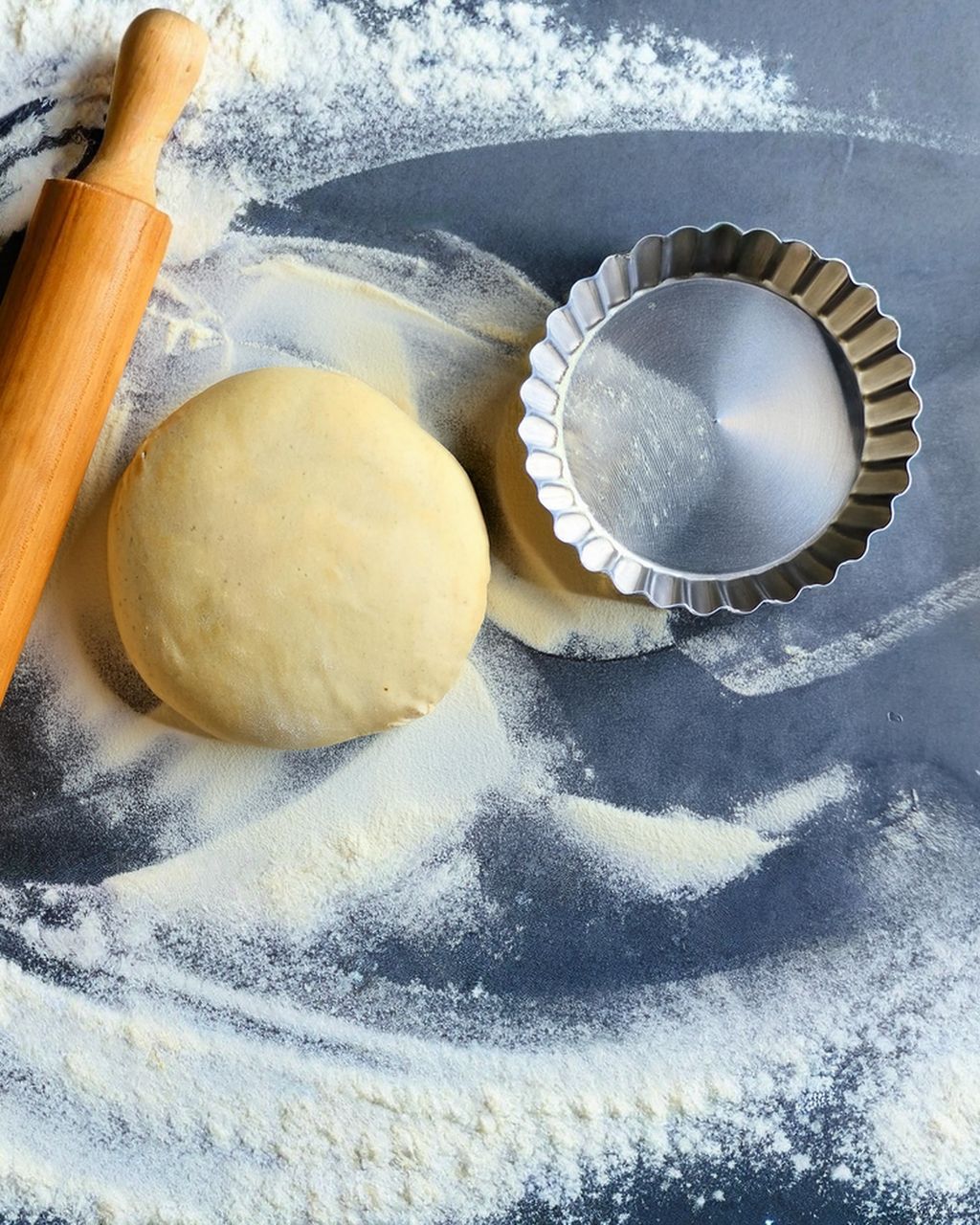
Flatten it into a disc, wrap it, and chill it in the fridge.
If the dough springs back and shrinks after rolling, the gluten has already developed. Let it rest another 20 minutes in the fridge — it won't disappear, but it will ease off.
Linzer cookies harden during the first 24 hours after baking for two reasons: they lose moisture and the sugar that dissolved in the oven re-crystallizes. Both are simple physics, not a flaw in the recipe.
In a hot oven, the residual moisture in the cookie is held in a supersaturated sugar syrup. As the cookie cools, that supersaturated syrup crystallizes back into sugar, and the freed-up water evaporates into the air. A cookie that was still soft coming out of the oven is noticeably harder the next day.
What this means in practice:
Don't judge crispness straight out of the oven. Linzer cookies are always soft at that point. You'll only know the real texture once they've cooled.
Some hardening is normal. It's expected with linzer cookies — that's exactly why they're sandwiched with filling and left to sit (see below).
A lot of hardening means overbaking. The longer a cookie stays in the oven, the less moisture it starts out with, and the harder it ends up.
Bake linzer cookies at 170–180°C (340–355°F) for about 8–10 minutes, until the edges turn golden and the center is still pale. Roll the dough to 3–4 mm thick — any thinner and it will overbake before you notice, any thicker and the center will stay raw.
Three things that matter more than the clock:
Go by the edges, not the timer. Once the edges start turning golden, they're done. Residual heat will finish the center.
Bake one tray at a time. Two trays at once means an uneven bottom and having to bake longer to compensate.
Keep the whole batch the same thickness. Unevenly rolled dough can't bake evenly — part of it turns tough before the rest is done.
Other types of crisp cookies follow a different window: we cover buttery, crumbly cookies baked at a lower temperature for longer in our piece on the Spanish classic Polvorones and mantecados: traditional Spanish Christmas cookies.
Sandwich linzer cookies with jam ideally 10–14 days before serving; at 3–5 days they'll still be firmer. The filling gradually releases moisture into the dry cookie, turning it from crumbly to silky and crisp-tender. This is standard practice for linzer cookies, not a rescue tactic — that's why they're traditionally baked first and left to wait.
What this depends on:
The thickness of the filling matters. A thick, lightly reduced jam releases moisture slowly and evenly. A runny one will soak the bottom half before the moisture reaches the rest of the cookie.
Redcurrant, apricot, rosehip. Classic choices, because they have enough acidity to balance the buttery dough and enough pectin to hold their shape.
Chocolate and ganache won't soften cookies. A cookie sandwiched with chocolate or a fat-based cream instead of a water-based filling won't soften — fat doesn't release moisture. Sandwich these just a few days before eating and expect them to stay crisp.
Add the sugar last. Icing sugar dusted over finished linzer cookies draws in moisture. Dust it on a day or two before serving, not right when you sandwich them.
If you've only got three days before serving, it's not wasted effort — two or three days will still make a noticeable difference, just not the full effect.
Three recipes that put the 3:2:1 ratio and filling-based softening into practice: classic linzer cookies, salted caramel linzer cookies, and pistachio linzer cookies.
Classic christmas cookies: delicate linzer cookies
Classic crisp linzer cookies — the basic ratio and method this whole article is built on
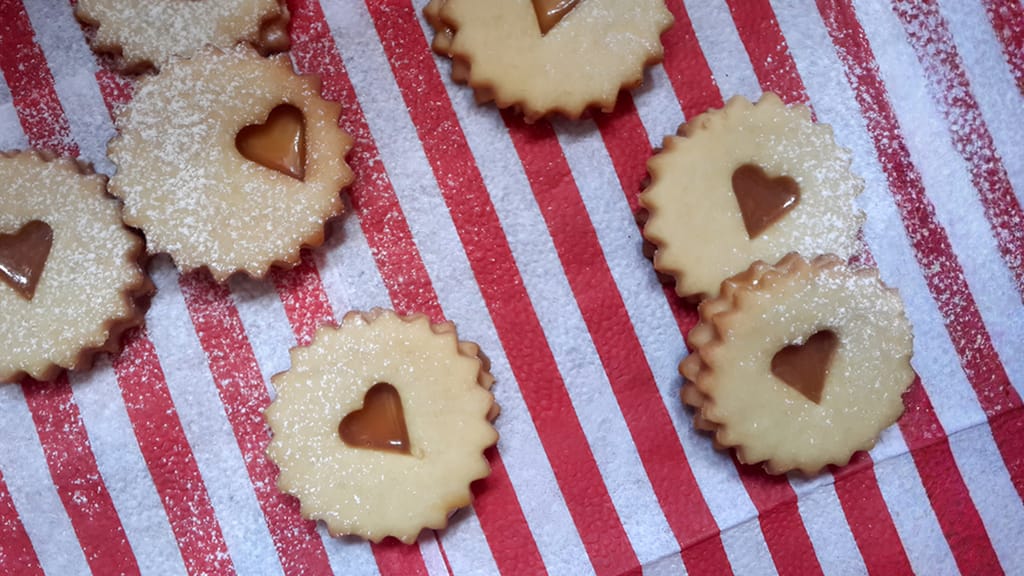
Linzer cookies filled with salted caramel
Salted caramel linzer cookies — an example of a filling that won't soften like jam

Unconventional linzer cookies with pistachios
Pistachio linzer cookies — how nuts in the dough change the crispness
Unfilled linzer cookies keep in a metal tin for 4–6 weeks, while jam-filled ones are best 2–4 weeks after filling, after which they start getting too soft. These are two separate stages: during the first 24 hours after baking, the cookie hardens as it loses moisture, while over the following weeks in the tin, it does the opposite and loses its crispness as it picks up moisture — either from the filling or from the air in the kitchen.
What keeps them in good shape:
A metal tin, not plastic. A metal tin isn't fully airtight and doesn't trap odors, so moisture doesn't build up inside it. A plastic container, on the other hand, seals it right in.
Store separately from softer cookies. Soft cookies give off moisture that linzer cookies will soak up, turning them limp. Keep each type in its own tin, even if it feels like overkill — moisture equalizes between different types within a single day.
Somewhere cool and dark, not the fridge. A pantry or cool cupboard is fine, the fridge isn't — the cycle of chilling and warming up draws condensation into the cookie.
Layer with baking paper. So the jam doesn't soak through into the layer below.
One thing that's easy to forget: open the tin as little as possible. Every time you open it, moist kitchen air gets in and condenses on the cold metal.
Yes — you can get moisture back into hardened linzer cookies, but it has to come slowly and from the outside. Quick fixes will make the cookie soggy instead of softening it.
What actually works, from gentlest to most drastic:
A slice of apple in the tin. Place it on a small piece of paper so it doesn't touch the cookies, close the lid, and leave for 12–24 hours. Then remove the apple, or the cookies will start going moldy.
A piece of bread crust instead of apple. Same principle, without the fruity flavor, and it releases moisture faster — take it out after 12 hours and don't leave it in the tin longer, it will go moldy just like the apple.
Sandwich them with jam. If the cookies are still unfilled, this is the best option: it fixes both the toughness and the flavor at once.
What doesn't work: the microwave (softens for 20 seconds, then comes out tougher than before) and sprinkling with water (soaks the surface while the inside stays hard). And if the cookies are tough because they were badly overbaked, none of these methods will save them — crispness can't be brought back into dough that's been baked too far.
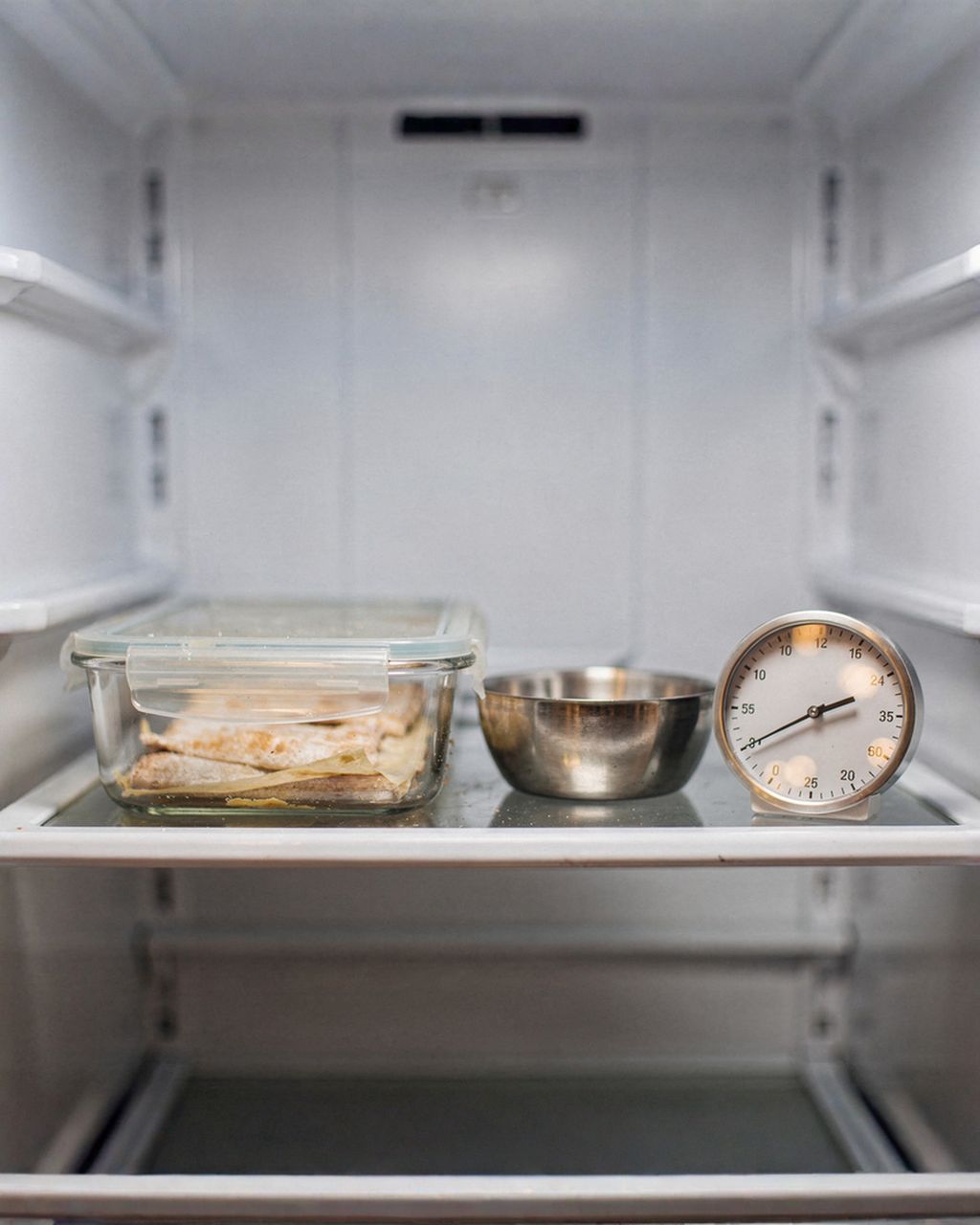
Chilling linzer dough only solves one thing — relaxing the gluten and evening out moisture — so it won't fix toughness caused by the wrong ratio of ingredients or overbaking. If you used too little butter relative to flour, used granulated sugar, or left the tray in the oven two minutes too long, the fridge won't undo that. Chilling also only works if the dough is wrapped: an uncovered disc of dough left in the fridge dries out on the surface and bakes up harder than the rest.
Linzer dough doesn't need to rest overnight — 30 to 60 minutes in the fridge is enough to relax the gluten and firm up the butter. Resting longer (2–24 hours) won't hurt, and the dough will roll out a little more obediently, but beyond 24 hours the surface starts drying out and cracks when rolled. If you're making the dough a day ahead, let it sit out for 10–15 minutes before rolling, or it will crack.
Lard is the closest substitute for butter — it actually makes an even crisper dough, thanks to its different fat crystal structure. Solid vegetable shortening holds its shape best, but it's flat in flavor. Margarine has roughly the same water content as butter (around 16%), the difference lies in melting point and how the fat behaves in the dough — it tends to be softer and the dough holds together less well. Reduced-fat spreads and margarines — 60–62% fat or 39–41% fat spreads — contain extra water and really don't work in linzer dough. Whatever you choose, it needs to go into the dough cold.
Linzer cookies are only tough around the edges when the dough is rolled thinner at the edges than in the middle — the edges overbake before the center is done. Roll the dough between two rolling guides or wooden spoon handles about 3–4 mm thick, or between two sheets of baking paper, to keep the thickness even across the whole piece. A hot edge of the baking tray can cause the same effect: keep the cookies at least two centimeters from the edge and don't fill the tray right into the corners.
You can tell sandwiched linzer cookies have gone soggy when the bottom half bends instead of snapping when you lift it, there's a darker, damp-looking ring around the filling, and the sugar on top has clumped into wet patches. At that point the moisture has already worked its way through the whole cookie and there's no reversing it — drying it out in the oven will just caramelize the filling and toughen the dough. The only thing you can save is the rest of the batch: split up the tin, set the unfilled cookies aside, and sandwich them in small batches over time rather than all at once.
Yes, raw linzer dough freezes very well — for up to three months. Flatten it into a disc (not a ball), wrap it in cling film, and defrost it overnight in the fridge, not on the counter. Thawing it quickly at room temperature melts the butter unevenly and the dough ends up crumbly. Once tempered for a few minutes, you can roll and cut it straight away.
One recipe worth heating the oven for, one tip, and one deal from the shop. Nothing else.