Soft honey gingerbread cookies that never go hard
Updated Sep 17, 2026
You'll know your gingerbread cookies are done when the edges firm up, the surface loses its shine, and a light finger-touch leaves no dent — which is sooner than you'd think. Colour won't help you much here: gingerbread dough is already brown before it even hits the oven, and by the time it darkens enough for you to notice, it's too late. This article gives you five signs that actually work (firm edges, a matte surface, the finger-touch test, how the dough behaves under a spatula, and the smell of the spices), plus exact times and temperatures by thickness, and what to do if you get it wrong.
You can tell gingerbread cookies are done by five signs that appear in exactly this order:
The edges firm up and hold their shape even if you give the tray a gentle shake.
The surface loses its shine — it goes from wet-looking to matte.
A light finger-touch in the centre leaves no dent; the dough just gives slightly and springs back.
When lifted with a spatula the cookie still flexes ever so slightly, but doesn't crumble or crack.
The smell of the spices intensifies and fills the whole kitchen — up until then, it mostly smells of honey.
It's enough if the first three check out; the fourth and fifth just confirm it. And above all: a cookie that's completely firm while still in the oven has already overbaked. It should firm up once it's out, not before.
The most reliable sign that gingerbread cookies are done is touching the centre of the biggest piece on the tray with a dry finger. Pull the tray halfway out, quickly press the centre, and judge like this:
Your finger sinks in and the dough sticks to it → give it another 60–90 seconds.
The surface springs back, gives slightly and bounces right back → take it out, it's done.
Nothing gives, it feels like a board → you've already overshot by a minute; pull it out right away.
Two things that throw this off: always test the biggest piece, not the smallest one at the edge, and don't touch it with a wet finger — a damp finger makes even a fully baked cookie feel sticky.
Colour is the worst indicator with gingerbread, because the dough is already dark before it even goes in the oven. Three things are to blame at once: honey and dark sugar give it brown colour right from the start, and baking soda makes the dough alkaline — and according to food chemistry, the Maillard reaction runs faster in an alkaline environment, so the colour shifts sooner and less noticeably than it would with, say, linzer dough.
In practice, this means:
Watch the edges only. They darken a shade before the centre does, and that's your real signal.
When the whole surface darkens to a deep brown, you've gone too far.
Browned corners on star points or animal ears are normal — they catch first. Black corners are not normal.
Baking soda isn't in the recipe by accident, either: in gingerbread it does more than just leaven, and regular baking powder won't sub in for it one-to-one.
The bottom of a properly baked gingerbread cookie is evenly brown, a shade darker than the top, and dry to the touch. Near the end of baking, lift one cookie with a spatula and compare:
A pale, dull, slightly damp bottom → not done yet, even if the top looks fine.
A dark brown to almost black bottom with a pale top → the tray is too low in the oven or too dark a colour; move it up a shelf.
A blotchy bottom → unevenly rolled dough or a warped tray.
Do this check on one cookie only, not the whole batch — every time you open the oven, the temperature drops and the rest of the tray bakes more slowly.
Bake gingerbread cookies at 170–180°C (340–355°F), and go by the thickness of the dough, not the size of the shape:
3 mm (thin cut-outs) — 6–8 minutes
5 mm (standard Christmas cookies) — 8–10 minutes
6–8 mm (thick pieces, gingerbread house parts) — 12–15 minutes
For a fan (convection) oven , drop it: 150–160°C (300–320°F), and check 1–2 minutes earlier, since moving air dries out the surface faster than the centre can bake through.
Roll the dough to one even thickness — that's the one thing that makes these times reliable numbers rather than guesses. Cookies of different thicknesses on the same tray can never all come out at the right moment, no matter what you do. Feel free to pull the smallest shapes off the tray with a spatula a minute before the rest.
For a more detailed rundown of temperatures across different types of Christmas cookies, see our article on what temperature to bake Christmas cookies at.
After you take them out, gingerbread cookies keep cooking on the hot tray — this is called residual heat, and it's exactly why you should pull them out looking "underdone". The tray stays hot, and the centre keeps firming up for a few more minutes after it comes out of the oven.
How to work with this:
Leave the cookies on the tray for 2–3 minutes so they finish setting and don't break apart when you move them.
Then transfer them to a wire rack so they don't steam and go soft on the bottom. On the tray, they'd soften from moisture, not from lingering warmth.
Only judge them once fully cooled. A warm cookie is always softer than it will be an hour later.
And keep two different things separate: whether it's baked through and whether it's soft. A cookie that's hard once cooled isn't necessarily overbaked — plenty of recipes are designed so the cookies only soften after a few days in the tin. If you want them soft straight away, you need a different dough, not a shorter bake.
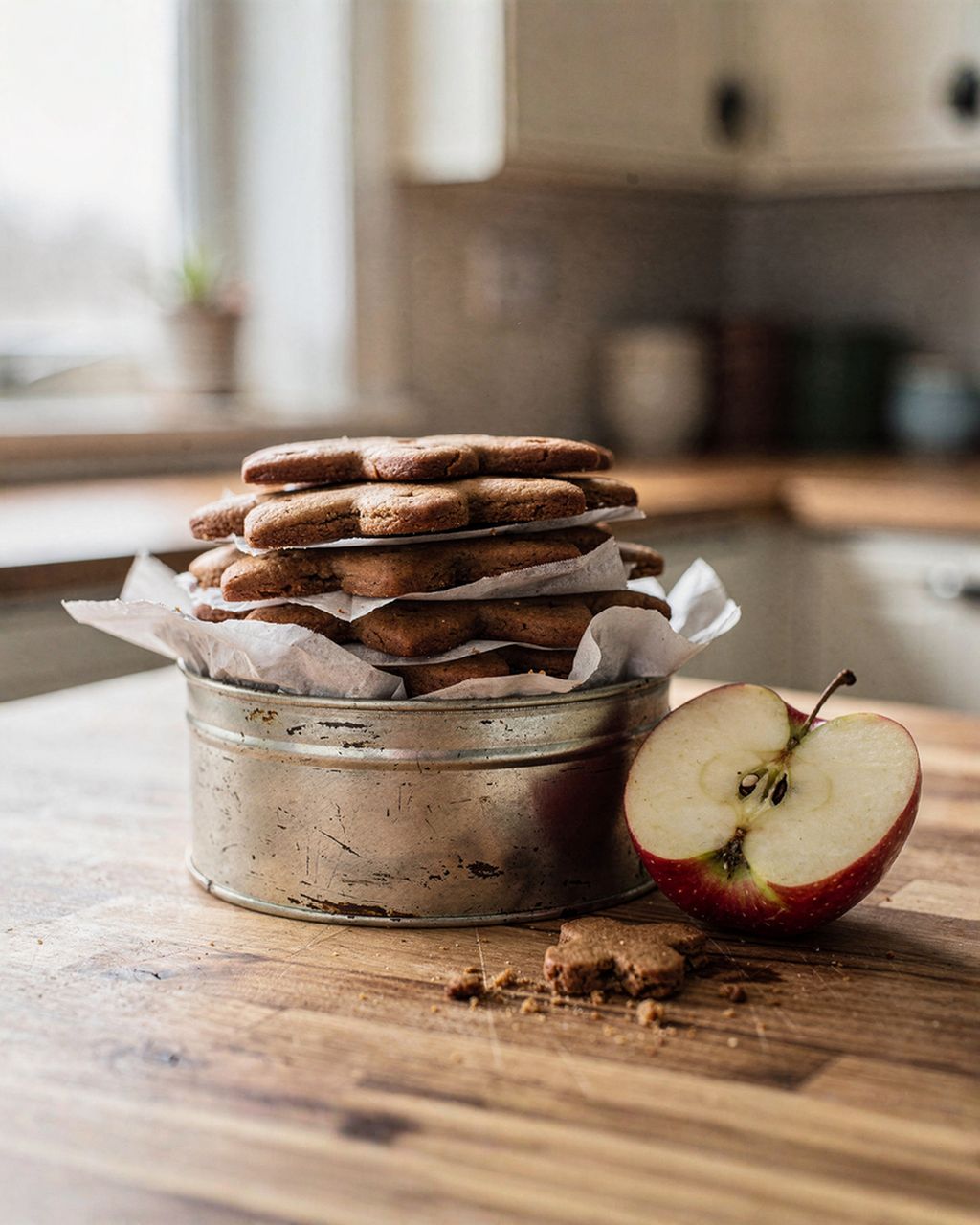
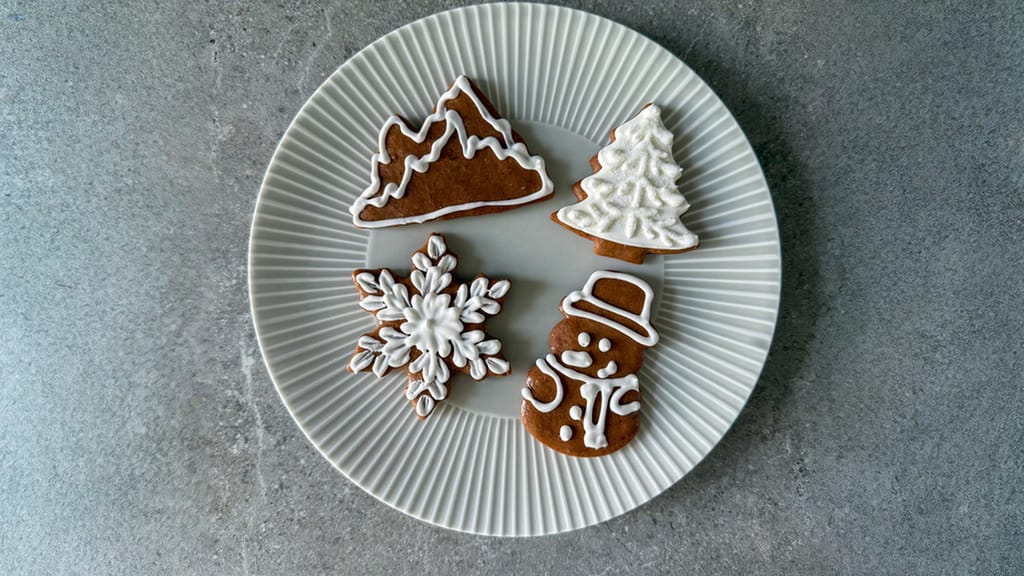
Soft honey gingerbread cookies that never go hard
Soft honey gingerbread cookies that don't go hard — a dough that gives you the right "done" signs on the first try
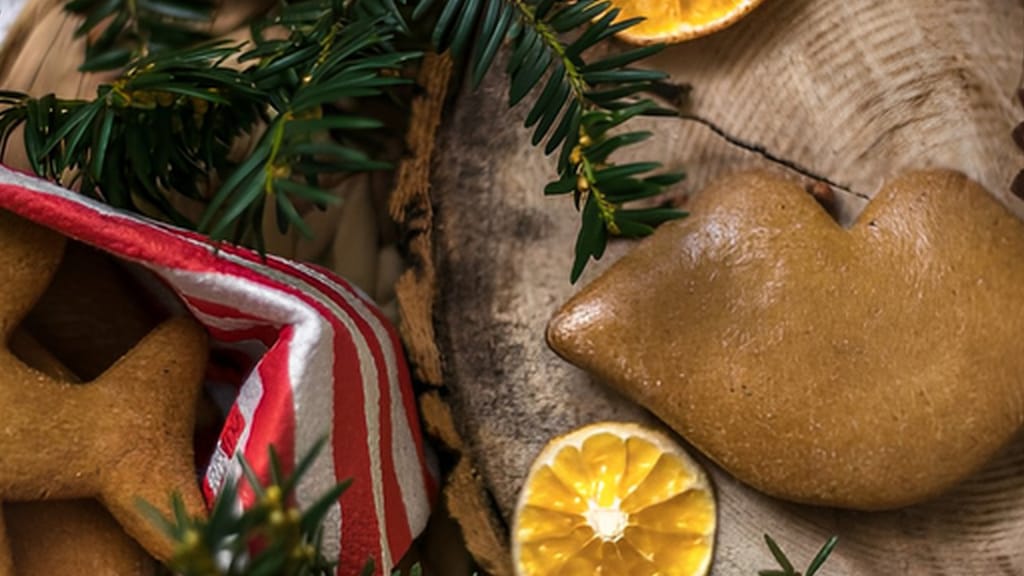
Soft gingerbread cookies
Deliciously soft gingerbread cookies you can enjoy right after baking, no waiting in the tin required
An underbaked cookie has a damp, darker streak when you break it open and sticks to your teeth; an overbaked one breaks dry, crumbly and evenly dark all the way through. So once cooled, break one cookie open and look at the cross-section — it reveals everything you might have missed in the oven.
Here's how to spot an underbaked cookie:
the centre sticks to your teeth and feels rubbery rather than soft
the broken edge shows a darker, damp streak in the middle, while the edges are lighter
the bottom is pale and leaves a greasy mark on your finger
in the tin, it makes the other cookies go soft and spoils faster, because the underbaked ones release moisture into the tin
Here's how to spot an overbaked cookie:
the broken edge is dry, crumbly and evenly dark throughout
there's a faint bitter aftertaste from scorched spices and baking soda
the corners and points are dark brown to black
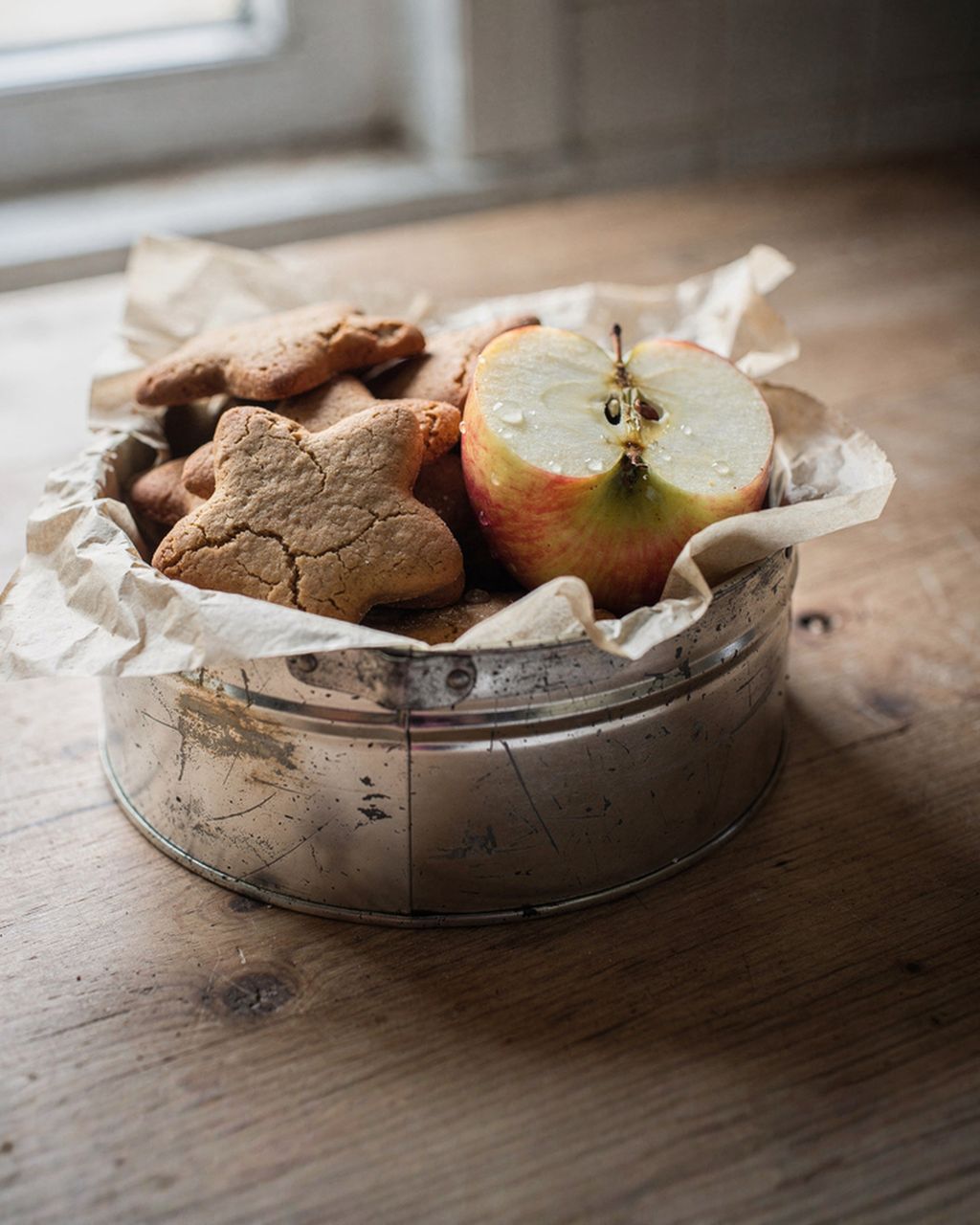
it won't soften even after a week in a tin with a piece of apple
The most common mistake: a cookie that's hard straight after cooling isn't automatically overbaked. Break it open. A dry, crumbly break means overbaked; a compact, dark break just means it hasn't had time to soften yet.
Most poorly baked gingerbread isn't down to misjudging the signs — it's down to prep mistakes that make the signs impossible to read in the first place:
Uneven dough thickness on the same tray. A 2 mm difference costs you roughly 2 minutes with thin sheets, and 4–5 minutes with thicker pieces.
Mixing big and small shapes on the same tray. Bake them separately, or pull the small ones out earlier.
Two trays at once in a conventional oven. The bottom one scorches while the top one stays raw.
An oven that isn't fully preheated. In a slowly rising heat, the cookies spread out before they even start to set.
A hot tray under raw dough. The butter melts before it even reaches the oven, and the shapes spread out of shape.
Opening the oven in the first 3 minutes. That's exactly when the baking soda is doing its rising work — a temperature drop will stop it in its tracks.
A dark or old baking tray. It absorbs more heat, so the bottoms darken minutes before the tops do.
Underbaked cookies can almost always be rescued; overbaked ones only partly.
Underbaked, still warm: pop the tray back in the oven at 170°C for 2–3 minutes and check again by touch. This is the best-case scenario — you'll never even know.
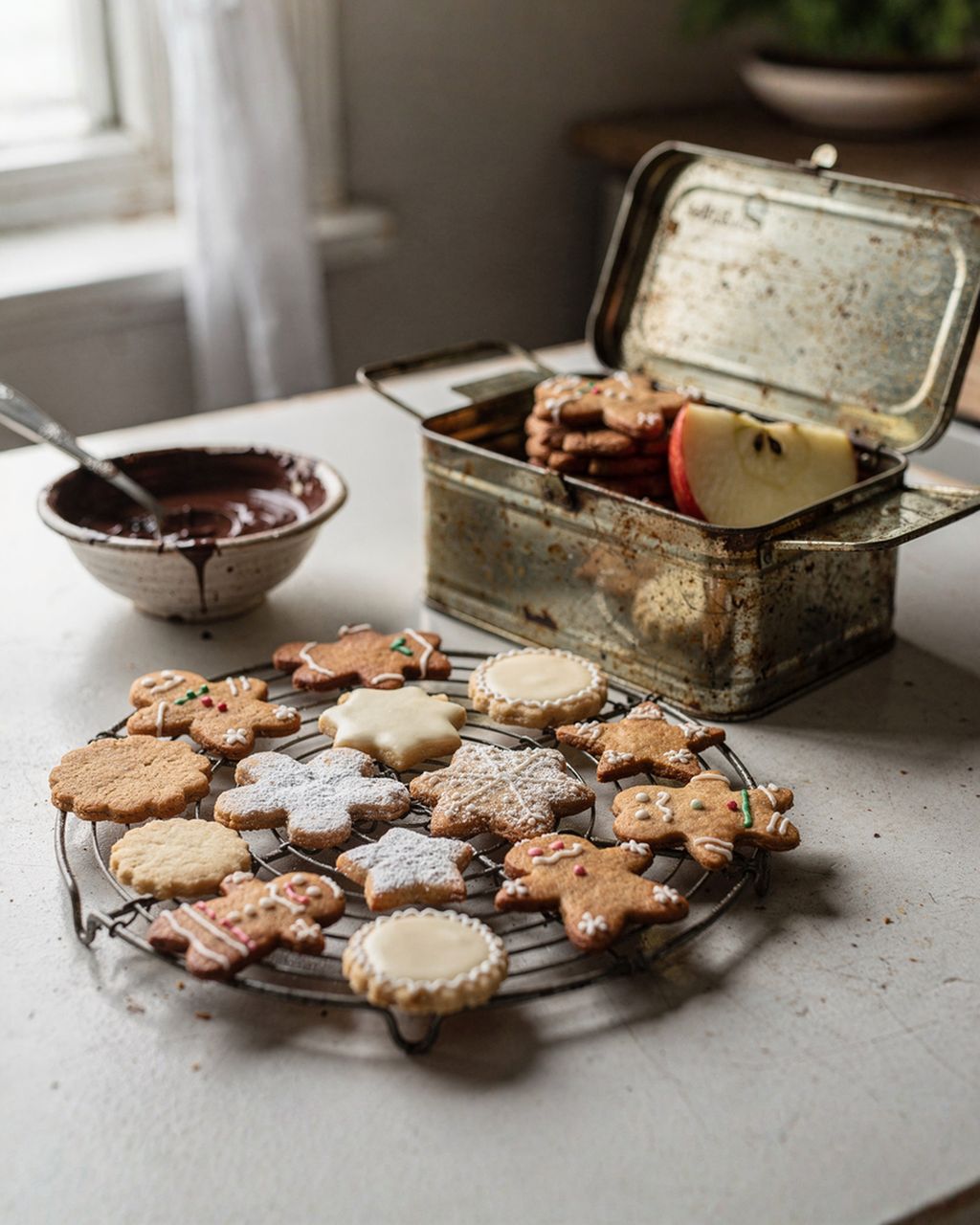
Underbaked, already cooled: oven at 150–160°C, 3–5 minutes, and expect them to darken and dry out a little. Definitely finish baking before decorating — the icing would melt and turn yellow in the oven.
Overbaked: there's no baking your way back from this, but you can still soften them. Put them in a sealed tin with a piece of apple or orange peel and let them sit for 2–3 days; the moisture will transfer into the cookies and make them pliable again. Don't bother trying to save badly burnt pieces — the bitter, scorched-spice taste will still be there.
We cover this in detail in our article on storing Christmas cookies and in the one about why gingerbread goes hard and how to keep it soft. And if you're baking ahead for the holidays, take a look at our calendar for when to bake which Christmas cookies — gingerbread is one of the ones you want to make first.
No, the toothpick test doesn't work on thin gingerbread. A sheet 3–5 mm thick is so thin that a toothpick will come out clean even from dough that's still raw in the middle. Rely on the finger-touch test and the matte surface instead. A toothpick only makes sense for gingerbread baked as one thick slab, where the crumb has real height.
Cookies curl mainly because the dough was rolled unevenly or the baking sheet is warped — the thinner spot sets first and pulls the edge upward as it firms. Roll the dough to an even thickness (ideally between two rolling guides), bake on a flat sheet, and chill the cut-out shapes for 10 minutes before baking so the dough can settle. You can still fix a still-warm cookie: press it flat against the sheet with a spatula for a few seconds while it's still pliable.
With an egg wash, skip the shine test and go by touch and the edges alone. A beaten-egg glaze stays glossy throughout baking, so the 'surface turns matte' sign doesn't apply. It also browns faster than the dough underneath, so the cookie can look darker and more done than it actually is.
Only with a fan (convection) oven, and even then, swap and rotate the trays halfway through. In a conventional top-and-bottom oven, the lower tray scorches from below while the top one is still raw by the time you'd catch it. If you don't have a fan oven, bake one tray at a time and let it cool on a rack between batches, or have a second cool tray ready — never cool a hot tray under running water, it will warp. On a warm tray, the dough also starts to spread even before it goes in the oven.
No, house pieces are baked longer and deliberately drier. A thickness of 6–8 mm for 12–15 minutes at 170°C gives you a slab sturdy enough to hold up the roof without curling; a soft, chewy cookie would sag under the weight of the icing. You'll know a piece is done when lifting it doesn't give at all and it sounds hollow when you tap it with a fingernail.
One recipe worth heating the oven for, one tip, and one deal from the shop. Nothing else.