Classic christmas cookies: delicate linzer cookies
Why Linzer Cookies Spread While Baking (and How to Stop It)
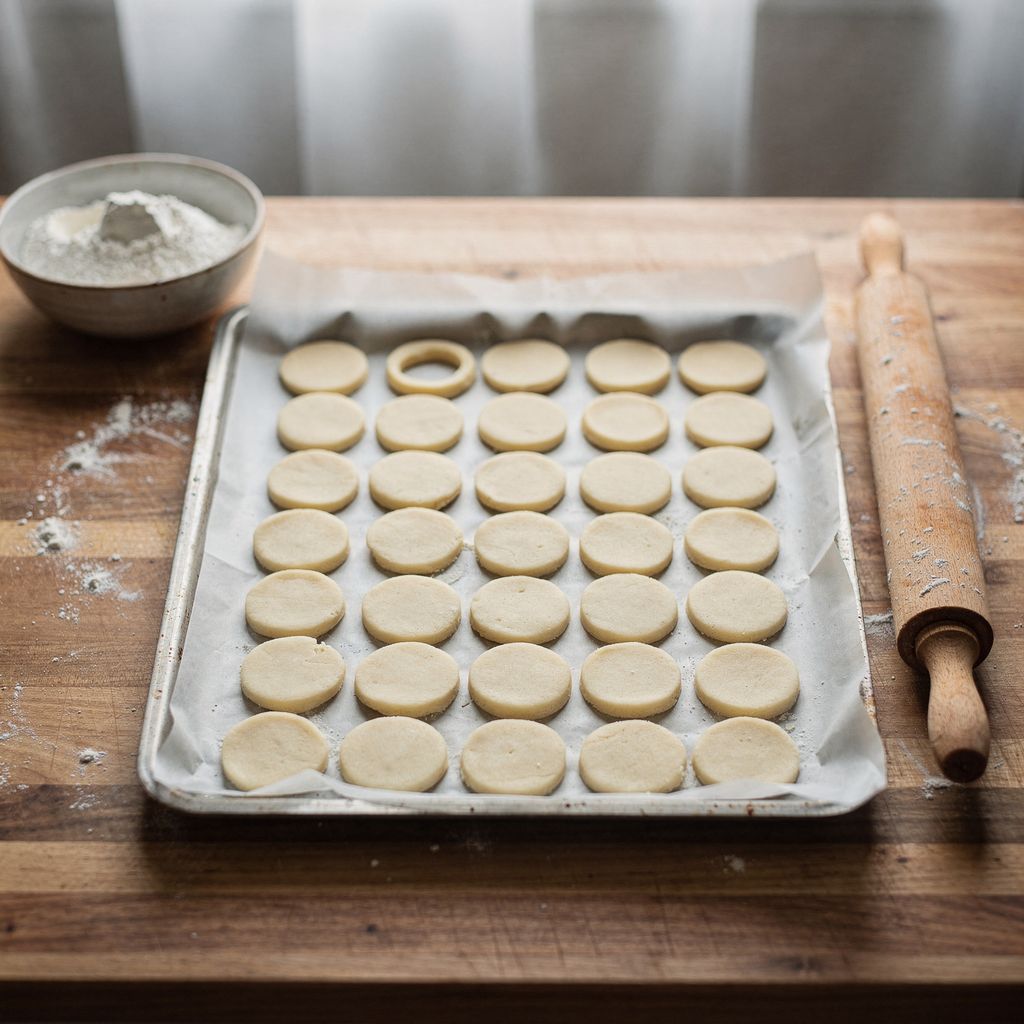
Updated Sep 17, 2026
Linzer cookies almost always spread for the same reason: the butter in the dough turned liquid before the flour and egg yolk could set the shape. The warmer the dough is when it goes into the oven, and the higher the ratio of fat and sugar to flour, the further it'll spread. The good news is that all six causes are easy to spot and fix before baking — and the most common one costs you just fifteen minutes in the freezer.
Linzer cookies lose their shape for these six reasons, ranked from most to least common:
The butter was too soft when you made the dough.
The dough wasn't chilled enough, or it warmed up on its way to the oven.
The ratio of ingredients is off — too much butter or sugar relative to the flour.
The dough contains granulated sugar instead of powdered sugar.
The oven was cooler than it claimed to be.
The tray was greased or still hot from the last batch.
There's one piece of physics behind all of this: butter doesn't melt all at once. It starts softening around 21°C (70°F) and turns fully liquid at roughly 35°C (95°F). In the oven, the dough heats up from the bottom, and unless a firm structure of swollen starch and set egg yolk forms fast enough, the fat turns liquid long before that happens — and the shape spreads under its own weight. Everything that follows really just comes down to winning that race in favor of the flour.
Linzer dough calls for butter straight from the fridge — around 6–8°C (43–46°F) — cut into cubes, not the soft, creamed butter you'd use for a pound cake. Linzer dough isn't a creamed batter. The fat should stay in small pieces coated in flour; those are exactly what melt in the oven and leave behind the little gaps that give the cookie its crumbly texture.
If you let the butter soften on the counter, or worse, melt it, you break its emulsion. Butter is roughly one-sixth water (about 16%), and once the fat melts, that water is released into the flour — the dough turns sticky and shiny, and it spreads in the oven.
How to tell it's right:
Cold butter can be grated or diced, and you can still see distinct pieces of it in the flour.
The finished dough is crumbly and cool to the touch, not sticky.
If the dough sticks to your fingers, don't add more flour — it's too warm, not too wet.
Work quickly and use your fingertips, not your whole palm. Hand surface temperature runs around 30–34°C (86–93°F), just a few degrees below the point where butter turns liquid. A food processor or stand mixer brings the dough together in a matter of seconds, so the butter barely warms up at all.
Let Linzer dough rest in the fridge for at least 2 hours, ideally overnight — and once you've cut out the shapes, pop the tray into the freezer for another 10–15 minutes right before baking. Most people skip that second step, and it's the one that actually makes the difference.
Chilling does three things at once: it firms up the fat, giving it a longer head start before it starts melting in the oven; it gives the flour time to fully absorb moisture, so the dough isn't sticky; and it lets the gluten relax, so the sheet doesn't shrink back while you're rolling it out.
A practical routine that keeps the shape intact:
Flatten the dough into a disc about 2 cm thick, wrap it, and chill — a disc cools much faster than a ball.
Roll it out to a sheet 3–4 mm thick, ideally between two sheets of parchment paper so you don't need to dust with flour.
Only work with a quarter of the dough at a time; keep the rest in the fridge.
The moment the dough starts to soften and stick to the rolling pin while you work it, put it back in the fridge. There's no rushing this step.
Move the cut-out shapes onto the tray and straight into the freezer while the oven finishes heating up.
Classic Linzer dough is built on a 3:2:1 ratio — 300 g all-purpose flour, 200 g butter, 100 g powdered sugar plus one egg yolk. Butter makes up two-thirds of the flour's weight, and sugar makes up a third. The moment you shift this ratio toward more fat or more sugar, the dough will spread in the oven — even if everything else is done right.
What happens when you stray from the ratio:
More butter than 200 g per 300 g of flour: the cookies taste more tender, but they'll spread in the oven. The further above the 3:2:1 ratio you push the butter, the worse the shape holds — the edges round off within the first few minutes and the pieces melt into flat discs.
More sugar than 100 g: sugar liquefies in the oven and lowers the dough's viscosity, so the pieces spread out and also brown faster.
A whole egg instead of just the yolk: the egg white adds extra water, making the dough softer and the baked result drier.
Baking powder or baking soda: these don't belong in Linzer dough. Leavening pushes the dough outward and blurs the crisp edges.
Weigh everything on a kitchen scale, not with cups and spoons. A heaping spoonful of sugar weighs noticeably more than a level one, and that small difference is enough to throw off the shape.
Use powdered sugar for Linzer dough — granulated sugar doesn't fully dissolve while mixing, and in the oven it only starts dissolving once it hits the moisture in the dough, right when the dough should be setting; the edges blur, and wherever a grain caramelizes on the surface, you get dark spots.
Powdered sugar also dissolves right as you mix the dough, so you don't need to cream or warm the butter to work it in. Plus, the starch added to powdered sugar to prevent clumping absorbs some of the moisture, which makes the dough slightly firmer.
Superfine (caster) sugar is a workable compromise, but let the dough rest longer before cutting so the fine grains have time to dissolve. Coarse granulated sugar has no place in Linzer dough at all — the grains will stay whole right through baking.
Bake Linzer cookies at 170–180°C (340–355°F) for about 7–10 minutes; in a fan (convection) oven, stick to the lower end, 160–170°C (320–340°F). A higher temperature won't cause spreading, but it will burn the edges before the centers are done. A cold oven is the real danger: the slower the dough heats through, the longer the butter has to leak out before the structure has a chance to set.
A common trap is that your oven is lying to you. Standard home ovens can run 10–20°C off from the dial, and the "preheated" beep often goes off once the air is hot but before the tray and walls actually are. A cheap oven thermometer solves this uncertainty for good — and if you don't have one, just let the oven run another 10 minutes after it beeps.
One more thing: don't bake two trays at once in a standard (non-fan) oven. The bottom tray gets more heat from below, the top one barely any — and it's the top tray that ends up spreading. This works fine in a fan oven, but swap the trays halfway through baking either way. As a rule, cookies bake at a lower temperature than most other baked goods, and Linzer cookies are the textbook example of that.
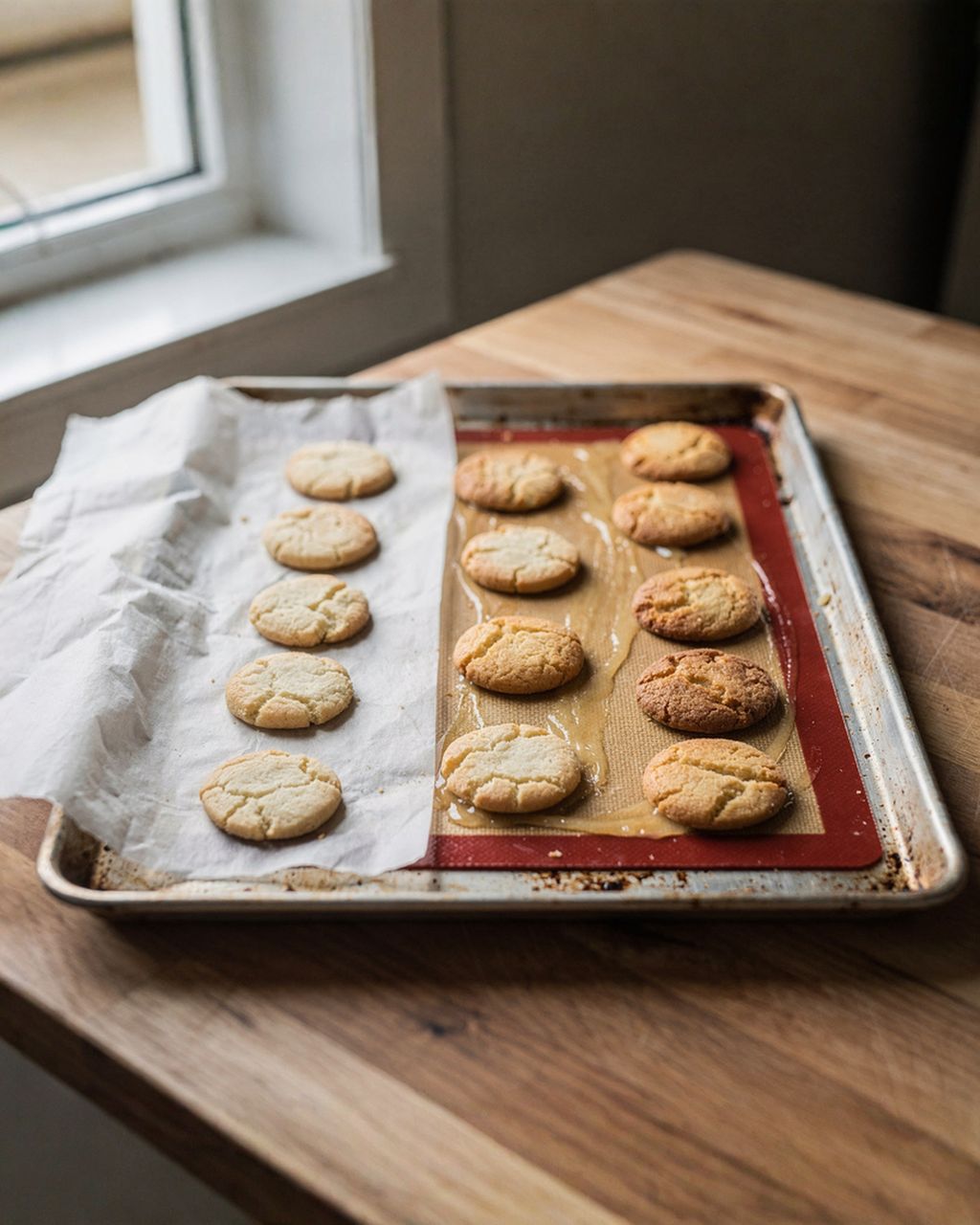
Bake on parchment paper or a silicone mat, always on a cool tray — never on one greased with butter or fat. A greased tray adds an extra layer of fat under the dough, and the dough will practically slide sideways on it in the oven.
A hot tray left over from the last batch is the other half of this mistake. The moment you place cold cut-out shapes on it, the butter starts melting immediately — before the tray even goes into the oven. The fix:
Keep two trays on hand and always let one cool down — at least 5 minutes under cold running water on the underside, or out on the balcony.
Cut the shapes directly onto parchment paper, then transfer the paper onto the cooled tray — no need to handle the soft dough at all.
Leave about 2 cm between pieces. Even well-made Linzer cookies spread a millimeter or two, and pieces that touch will break apart when separated.
Dark trays radiate more heat than light ones; drop the temperature by 10°C when using a dark tray.
A test cookie will tell you in eight minutes: bake a single round on its own and see what it does. If it keeps a sharp edge, you can bake the rest of the tray with confidence. If it spreads, you still have time to save the dough.
Quick checks before baking:
The rolled-out sheet can be lifted off the paper in one piece without stretching under its own weight.
A cut-out shape has a sharp edge that doesn't round off after sitting on the tray for a minute.
Pressing your fingernail into the dough leaves a clean mark without sticking.
The dough feels cool to the touch. If it's lukewarm, it belongs in the fridge, not the oven.
Spread-out Linzer cookies can be rescued, but you have to move fast: within 30 seconds of pulling the tray out of the oven, press the same cutter onto the hot cookie and trim off the spread edge. The dough is still soft enough to work at this point — after two minutes, it'll just crack.
Then follow these steps:
Wrap the rest of the dough and chill it for an hour. Nine times out of ten, that alone fixes it.
Recheck your ratio by weight. Only if it's already at 300:200:100 and the dough still spreads should you add 20–30 g more flour — no more than that.
Check your oven with a thermometer and let it preheat properly.
Don't throw out the spread-out pieces. They taste exactly the same, just not the right shape. Crush them into crumbs and use them as a base for a no-bake cream dessert or for truffle-style balls — what to do with leftover holiday cookies is easier to figure out than you'd think.
And if you're starting from scratch, use a dough built on the 3:2:1 ratio from the start and follow it exactly.
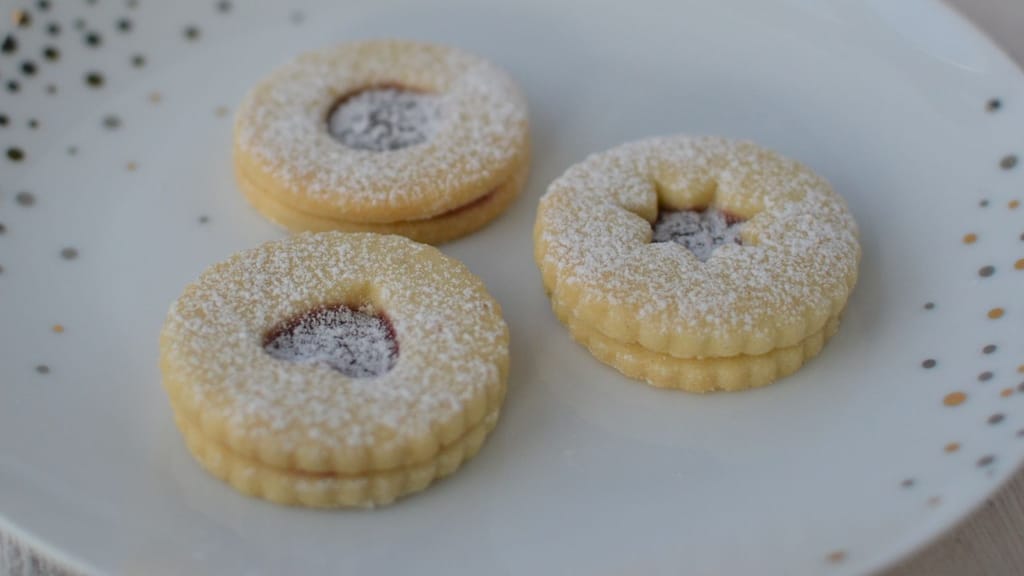
Classic christmas cookies: delicate linzer cookies
Classic crumbly Linzer cookies — dough in a 3:2:1 ratio that holds its shape in the oven
The basic ratio can handle tweaks as long as you don't touch the amount of fat. Swap in nuts or almonds for up to a fifth of the flour — they're naturally oily, and any more will soften the dough. Cocoa powder actually helps hold the shape, since it absorbs moisture; add 2 tablespoons and cut the same amount of flour.
Two finished recipes worth trying: pistachio Linzer cookies and salted caramel-filled Linzer cookies. For filled cookies, only fill them once fully cooled — warm filling will soften the base and turn crumbly cookies rubbery.
You can bake cut-out Linzer shapes straight from frozen — just add 1–2 extra minutes, since frozen fat gives you the biggest head start in the oven and the edges stay crisp. There's no need to thaw first; in fact, thawing would cost you that advantage. A wrapped disc of raw dough keeps in the freezer for about 3 months — let it soften overnight in the fridge, not on the counter.
The lower the fat content of your substitute, the more the cookies will spread: tub spreads often contain 60% fat or less (three-quarter-fat margarine is 60–62%, half-fat margarine 39–41%, others are simply labeled as X% spreadable fat), with the rest being water — so the dough will almost always spread in the oven. A hard block-style baking fat (nearly 100% fat) or a hard margarine at 80% fat will hold shape about as well as butter, but you'll lose that classic Linzer flavor. Tub-style spreads simply won't work for baking Linzer cookies.
Spreading only around the edges of the tray comes down to uneven oven heat, not the dough itself. Most home ovens have hot spots near the back wall and a cooler zone near the door, so part of the tray heats up more slowly and the fat has time to leak out before that area catches up. Rotate the tray 180° halfway through baking, and place the cookies more toward the center rather than right at the edges.
Yes, it matters — rolling on a floured surface works a noticeable amount of extra flour into the dough as you roll and cut, which throws off the 3:2:1 ratio and dries out the cookies. The scraps you re-roll a second and third time pick up the most flour. Roll the dough between two sheets of parchment paper or on a silicone mat instead — that way you won't need any flour at all.
The second tray spreads because the remaining dough sat out at room temperature longer and was handled more than the first batch. Every extra round of rolling scraps smears the butter into a thinner film, warms it up through your hands and the rolling pin, and the dough loses those small flecks of butter that give it its crumbly texture and clean shape. Always press the scraps back into a disc, wrap them, and chill for at least 30 minutes — and just like with the first batch, pop the tray of cut shapes into the freezer before baking.
One recipe worth heating the oven for, one tip, and one deal from the shop. Nothing else.