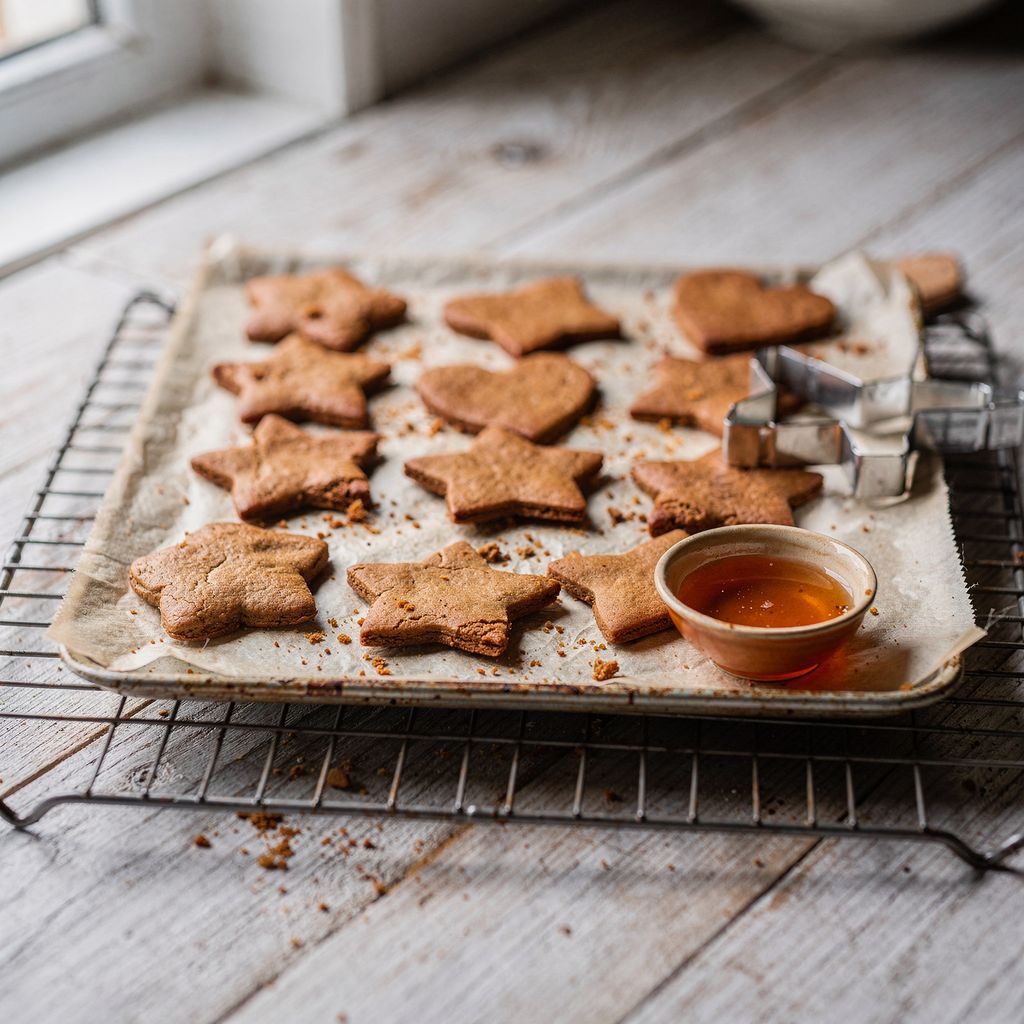
The best honey gingerbread cookies
Why Gingerbread Cookies Spread While Baking (and How to Stop It)
Updated Sep 17, 2026
Gingerbread cookies spread because the dough loosens in the oven faster than it can set. The fat melts, the honey and sugar thin out, the baking soda puffs the dough up — and before the egg protein locks the shape in place, your neat little star has turned into a flat blob with rounded points. The good news: there are only five causes, every one of them is fixable before baking, and the way a cookie spread tells you exactly which one hit you.
Gingerbread cookies spread for one of five reasons: too much baking soda, too much honey or liquid sugar, soft fat and warm dough, dough that hasn't rested enough, or an oven that's too cool paired with a hot sheet pan. In short:
Too much baking soda — puffs the dough up before it sets, and makes it more alkaline, which weakens its structure.
Too much honey, syrup, or invert sugar — the dough is thinner and keeps flowing longer in the oven.
Soft fat and warm dough — butter is already mostly liquid at 30°C (86°F), even before the tray reaches the oven.
Dough that hasn't rested— the flour hasn't fully absorbed the liquid, so the dough stays sticky and structureless.
An oven that's too cool, or a hot sheet pan — the slower a cookie bakes, the more time it has to spread.
Most spread-out batches come down to a combination of two of these — typically warm dough plus an oven running twenty degrees cooler than the dial says. Work through them in this order, since the first two get fixed in the recipe itself, and the other three at the counter.
A gingerbread cookie's final shape comes down to a race between how fast the dough flows and how fast it sets — and it's all decided in the first two to three minutes. Here's the timeline:
20–35°C (68–95°F): the fat softens, then melts completely. The dough loses structure and starts spreading outward.
around 50–60°C (122–140°F): the honey and sugar dissolve into the dough's moisture, thinning the mixture. Baking soda reacts with the acids in the honey, producing carbon dioxide that both lifts the dough and dilutes it further.
60–70°C (140–158°F): the egg proteins start to coagulate. This is the first point where anything actually holds.
80°C (176°F) and above: the proteins are set and the dough stops flowing. Thanks to the sugar content, the starch in gingerbread dough only swells partially — the final firming happens as it cools and the sugar hardens. That's why a gingerbread cookie keeps settling into its final shape for a few seconds even after it leaves the oven.
Everything that happens before that roughly 60°C mark counts toward spreading. That's why anything that shortens this phase — cold dough, a fast oven, a cold sheet pan — works in your favor, and anything that stretches it out works against you.
A little puffing up, by the way, is normal and desirable. A cookie should rise a few millimeters and stay plump; spreading is when it widens out sideways and its points go round.
Too much baking soda spreads cookies two ways at once — first with gas, then chemically. The carbon dioxide puffs up and dilutes the dough right when it's at its softest, while the soda also raises the dough's pH, which weakens the gluten and speeds up the Maillard reaction. The result is a cookie that puffs up, loses its edges, browns fast, and sometimes even tastes a bit soapy.
Here's how to fix it, in four moves:
For 500g of flour, gingerbread dough usually needs half to one level teaspoon of baking soda, not a heaped one. The difference between a level and a heaped teaspoon can easily be double the amount.
Always sift the soda into the flour or whisk it through — never sprinkle it straight into the honey. An unmixed clump will blow a crater in that one cookie, with a spreading rim around it.
Gingerbread needs baking soda, not baking powder — the acid in honey is exactly what activates it. Don't swap them one-for-one; the ratios are different.
If you cut back on the soda, expect the cookies to come out denser and firmer once baked. That firmness softens up again once they rest in a tin — not by adding more raising agent.
For 500g of flour, aim for 150–180g of honey; go above 200g and the dough won't hold its shape without a thorough chill first. Honey spreads gingerbread because it isn't a dry sugar — it's roughly 17–18% water and, being invert sugar, it stays liquid and pulls in extra moisture. The more honey in the dough, the thinner it goes into the oven, and the longer it keeps flowing before it firms up. It's the very same quality that keeps gingerbread soft — you just need to cap it.
If you need to firm the dough up, swap part of the honey for icing sugar at the same weight. You'll lose a bit of softness but gain crisp, defined edges. We cover separately why holiday baking calls for icing sugar rather than granulated sugar.
Dark honey, molasses, and syrups behave just like honey — count them toward the same total.
The traditional method of heating the honey, sugar, and fat together is fine. The key is letting the mixture cool all the way down to room temperature before the egg and flour go in. A still-warm mixture melts the fat right away, and it won't firm back up once it's in the dough.
Dough should go into the oven cold — ideally around 4–8°C (39–46°F), straight from the fridge. Butter starts softening around 20°C (68°F) and is fully melted by about 35°C (95°F), so dough that's spent an hour in a warm 24°C (75°F) kitchen is already halfway to spreading before the tray even touches the oven rack.
At the counter, that means five habits:
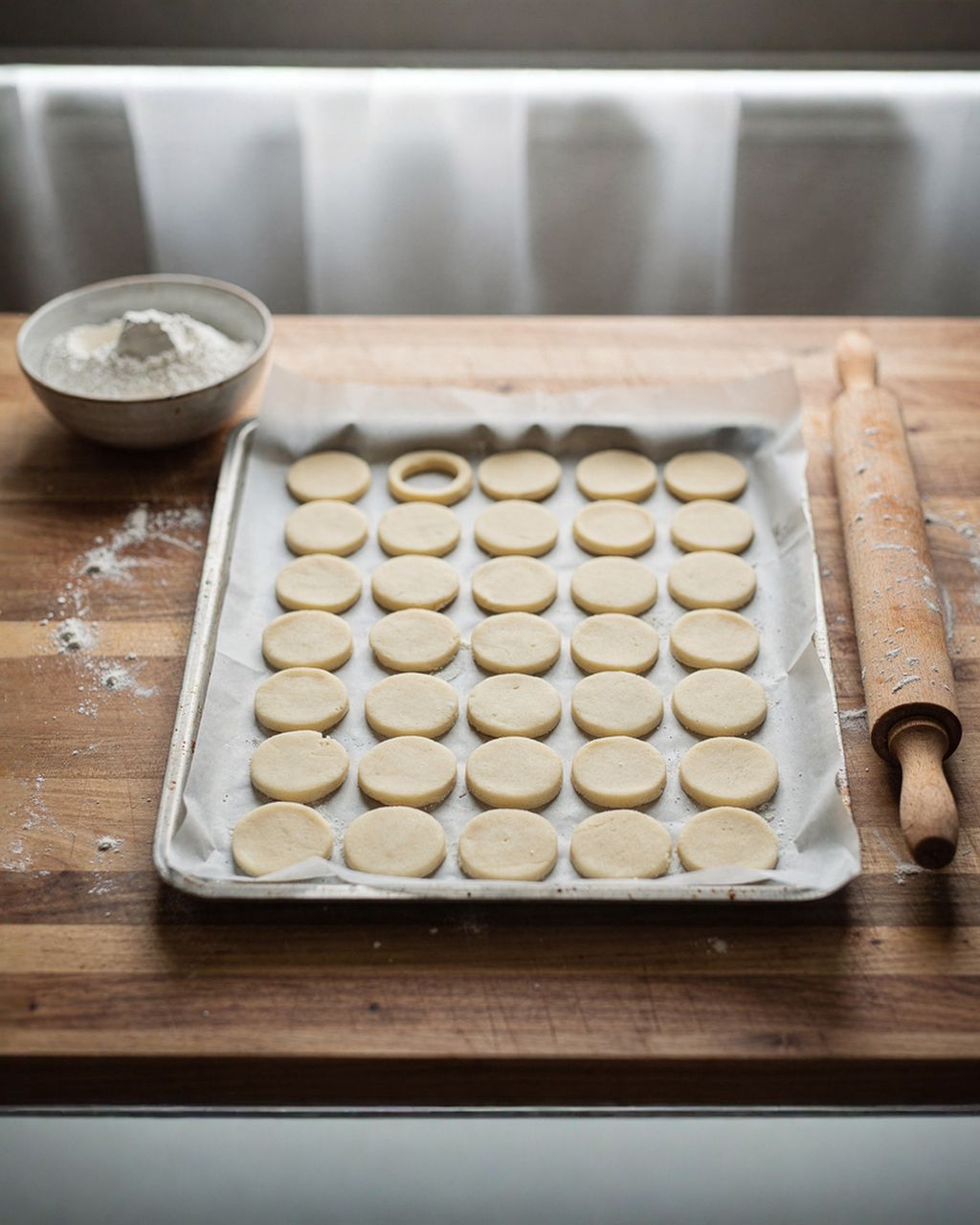
Roll out and cut only as much dough as fits on one baking sheet. Keep the rest in the fridge for now.
Once cut, put the shapes — still on the tray — into the fridge for 10–15 minutes or the freezer for 10 minutes before baking. It's the single most effective anti-spread move I know.
Put them in the oven straight from the cold, not after they've sat warming up on the counter.
Don't rework the scraps while they're still warm. Press them together, wrap, and chill again before rolling once more. A second batch tends to spread more precisely because it's warmer and more overworked.
Leave 2–3cm of space between cookies. A little spreading is normal, and you don't want them merging.
Let gingerbread dough rest for at least 24 hours, ideally 2–3 days — it can even sit in the fridge for several weeks. It's not just about flavor: during that rest, the flour fully absorbs the moisture from the honey and eggs, the baking soda distributes evenly, and the dough firms up and stops being sticky. Rested dough needs less flour on the counter, cuts more cleanly, and bakes with sharper edges.
Slower chemical changes are happening too, ones that, according to baking literature, affect the finished gingerbread's texture, volume, and aroma — which is why honey-based doughs traditionally rest for a long time, while shortbread-style dough only needs the fat chilled.
If you're baking for Christmas, this fits naturally into your schedule — our guide to when to bake which holiday cookies breaks it down by type. Gingerbread dough also freezes and thaws well, and comes out of the freezer nice and cold for baking; just thaw it in the fridge, not on the counter.
Bake gingerbread at 170–180°C (340–355°F) and, for thin pieces around 4–5mm, just 5–8 minutes. It sounds backwards, but it holds true: the lower the temperature, the more a cookie spreads. A cooler oven simply stretches out the window where the fat is melted and the structure hasn't set yet — giving the dough more time to flow.
Check your oven. Home ovens commonly run 10–30°C off from what the dial says. If everything's spreading and your ratios are right, suspect the oven.
Never put dough onto a hot sheet pan straight from the last batch. The fat melts instantly on contact, and the cookie spreads before the oven even gets a chance to work. Keep two trays on rotation, or run the tray under cold water and dry it off.
Use baking paper, not a greased tray. Grease on the tray acts like a slip layer and makes spreading worse.
Drop the temperature by about 20°C (35°F) for a fan/convection oven compared to conventional heat, and bake one tray at a time until you've dialed in the timing.
For general temperatures and times by type of holiday cookie, check our guide on oven temperatures for holiday baking.
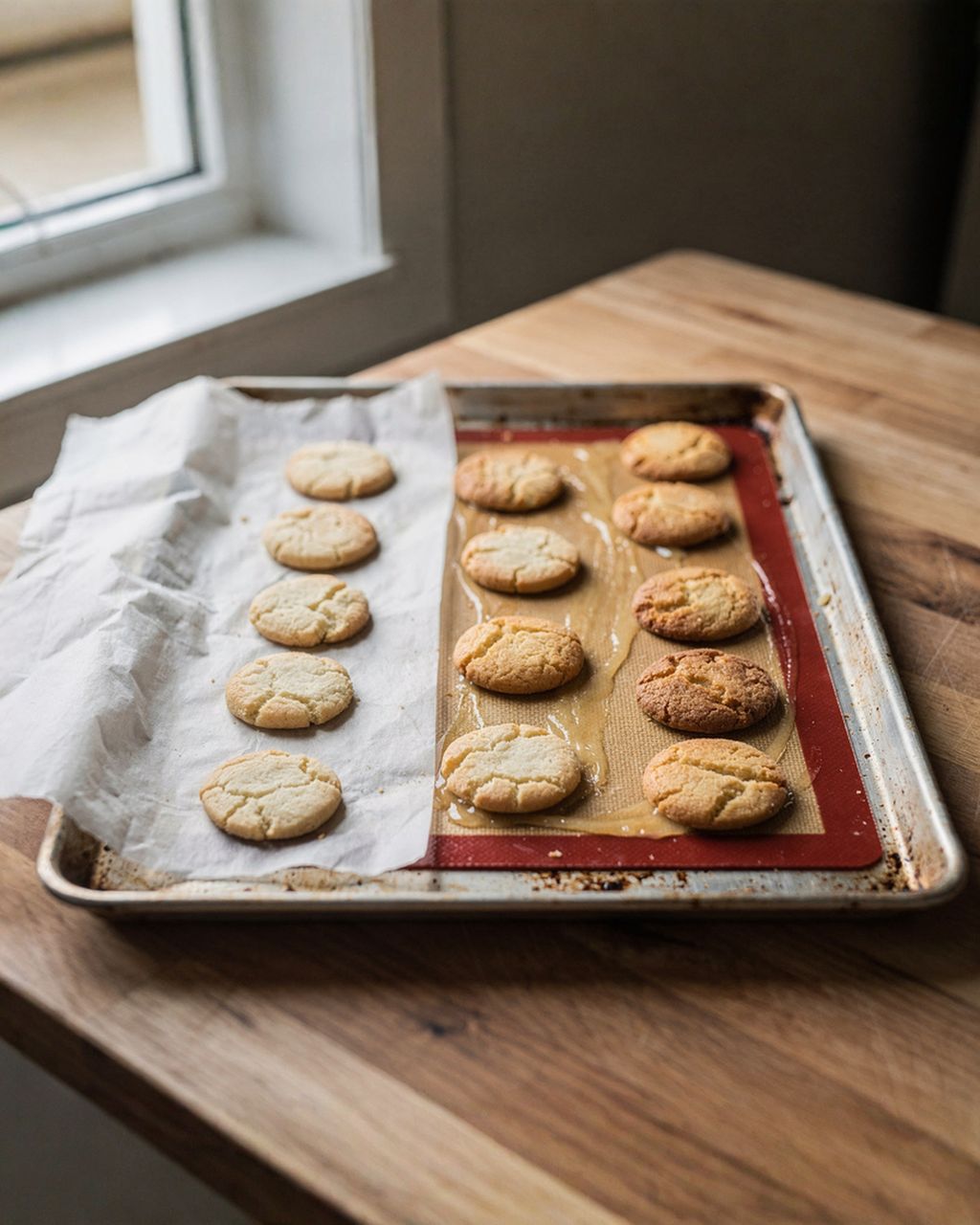
Bake a single test cookie before sending in a full tray — it costs you seven minutes and tells you exactly what to fix. The way it spread tells you the cause:
Spread out on all sides, thin, edges completely rounded → soft fat and warm dough. Chill the cut shapes and bake straight from the fridge.
Puffed up, then collapsed, surface cracked → too much baking soda. Cut back for the next batch, and bake this tray a touch hotter and shorter.
Edges are wet-looking and sticky, bottom too dark → too much honey, or oven too cool. Bump the oven up 10°C and shorten the time.
Shrunk smaller than the cutter → too much extra flour worked in at the counter; the dough's overdried.
Rose a few millimeters, but the points held → this is exactly right. Carry on baking.
Fix one thing at a time. If you chill the dough, crank up the oven, and cut the soda all at once, you'll never know which change actually did the job.
A spread-out cookie can still be squared up, but you have to act fast — within the first 30 to 60 seconds after it comes out of the oven, while it's still hot and pliable.
Press the same cutter back down onto it. Recutting the shape works surprisingly well, and the edge seals right back up.
Trim the edge with a sharp knife against a ruler or template, if it was a rectangle or square shape.
Leave it and decorate it anyway. White icing draws the eye along the lines you pipe, not the outline that spread — a thin line traced around the edge will visually restore the shape. For getting the consistency right, see our article on gingerbread icing.
Don't try to snap merged cookies apart once they've cooled. Cut between them with a knife while they're still on the tray, before they firm up.
Don't throw the trimmed-off scraps away. Crush them into gingerbread crumbs and use them in an apple filling or as a base layer for a no-bake dessert.
And after that, just store them in a sealed tin — even a spread-out cookie softens up nicely after a couple of weeks.
Two of our doughs reliably hold their shape: our best honey gingerbread cookies and soft honey gingerbread that never goes hard. Both sit within the ratio discussed above — around 150–180g honey per 500g flour — so the cookies stay soft without spreading outward. The recipe cards for both are right below this paragraph, and they double as a good benchmark if you're fine-tuning your own ratios.
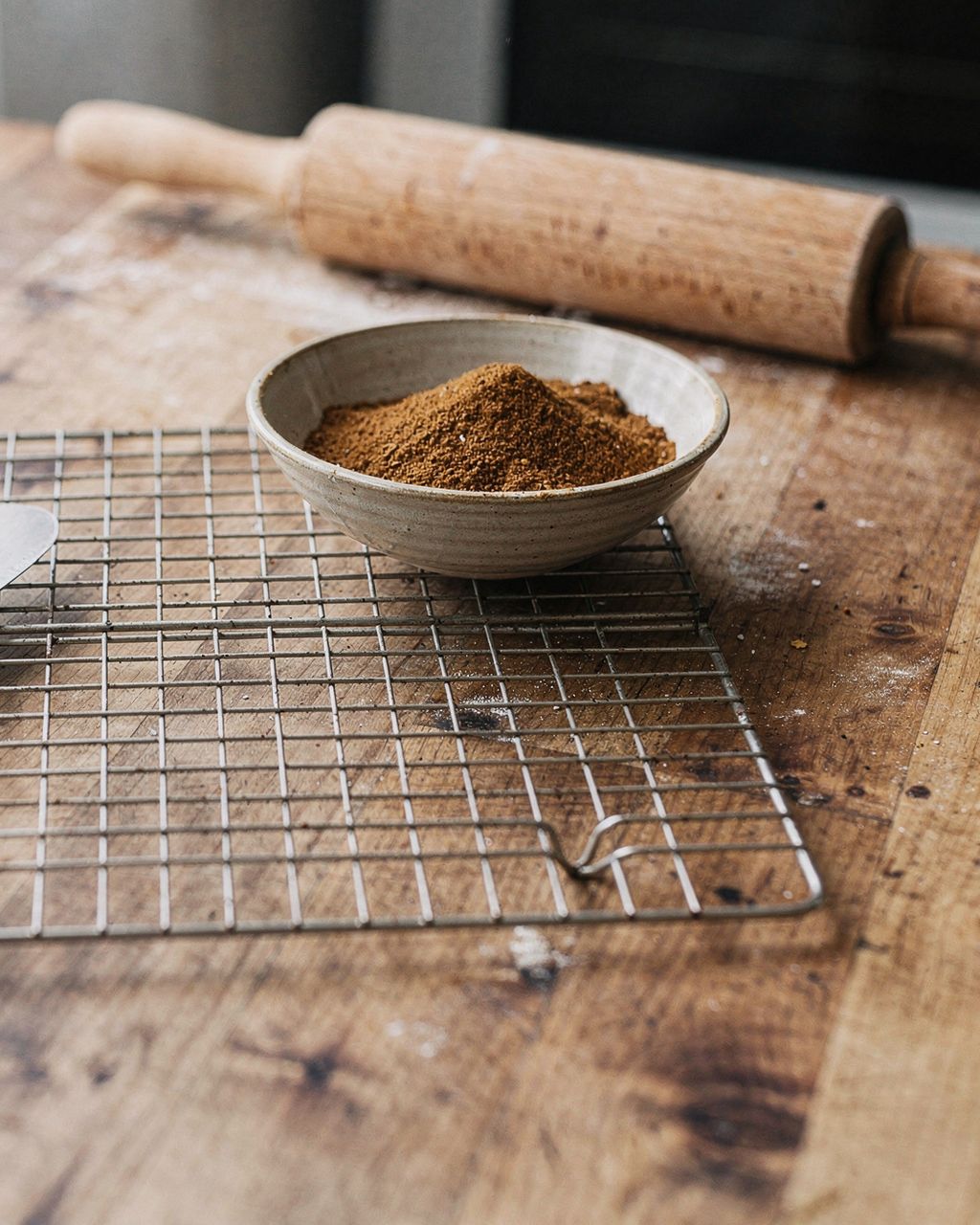
Two more links if you want to branch out: for the softest result, try our extra-soft gingerbread cookies — just plan on chilling the dough longer. And you can mix up your own fragrant spice blend using our recipe for homemade gingerbread spice mix.
The best honey gingerbread cookies
Best honey gingerbread cookies — a balanced honey-to-flour ratio that holds crisp edges once chilled
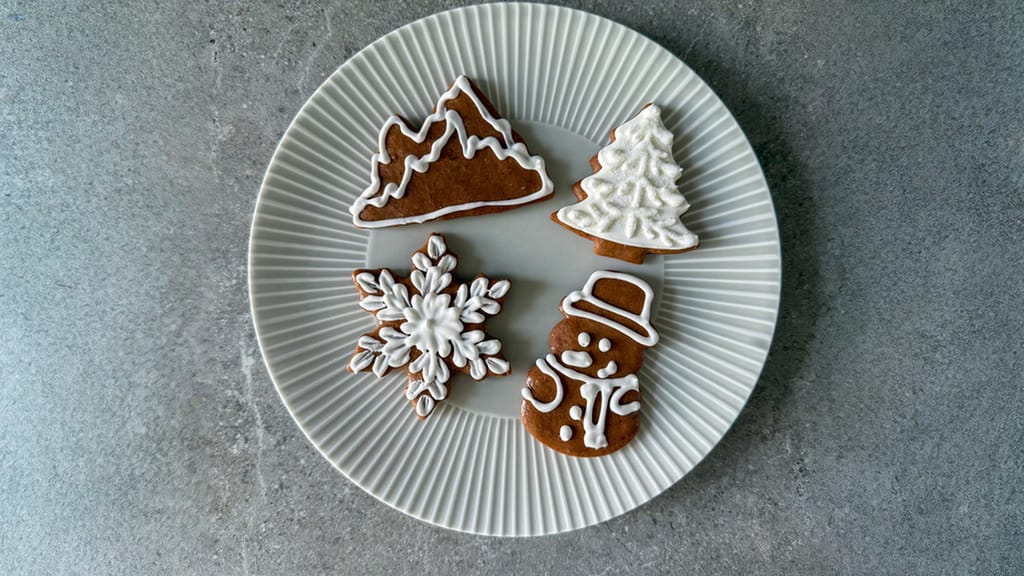
Soft honey gingerbread cookies that never go hard
Soft honey gingerbread that never goes hard — stays soft for weeks, without spreading
No, gingerbread doesn't need drying time — unlike meringues or macarons, a dried-out surface won't save its shape here. Spreading is fixed by cold dough and a hot enough oven, not by drying; in fact, cut-out shapes left sitting in a warm kitchen for too long just get softer and spread more. The one exception is if you're brushing the cookies with beaten egg before baking — let that set for a few minutes so the shine doesn't bleed outward.
Cut the pieces for a gingerbread house after baking, not before: bake the sheet of dough whole, and as soon as it comes out of the oven, trim it to a paper template with a sharp knife while it's still warm. Nobody will notice a 2mm spread on a star, but on a house wall it means a corner won't line up and the whole structure collapses. It also helps to use a dough with less honey and baking soda than a standard cookie dough, and to roll it a bit thicker — around 6–7mm.
Yes, butter-based dough usually spreads a bit more than dough made with lard or shortening, because butter melts across a lower, narrower range — it's already soft around 20°C (68°F) and fully liquid by about 35°C (95°F), while lard holds on to some of its solid structure for longer. Butter also contains around 16% water, which adds extra moisture to the dough. If you want butter for the flavor, compensate with chilling: pop the cut-out shapes in the fridge for 10–15 minutes before baking.
Yes, gluten-free gingerbread dough tends to spread more, because it lacks the gluten that holds wheat dough's shape until the egg proteins set it. It helps to chill it longer, roll it slightly thicker (5–6mm), and add a binder like psyllium or xanthan gum, in the amount suited to your particular flour blend. Also expect gluten-free dough to be stickier — roll it between two sheets of baking paper instead of on a floured surface.
Dough rolled to 4–5mm holds its shape best — thin enough to stay crisp, thick enough not to spread. Under 3mm, the cookie heats through faster than the edges can set, so it spreads faster and scorches easily; over 6mm, it puffs up more and stays soft in the middle, which is fine for a gingerbread house but not for decorative shapes. Since the eye can't judge a one-millimeter difference, the most reliable way to keep the thickness even is to use guide rails on either side of your rolling pin.
One recipe worth heating the oven for, one tip, and one deal from the shop. Nothing else.