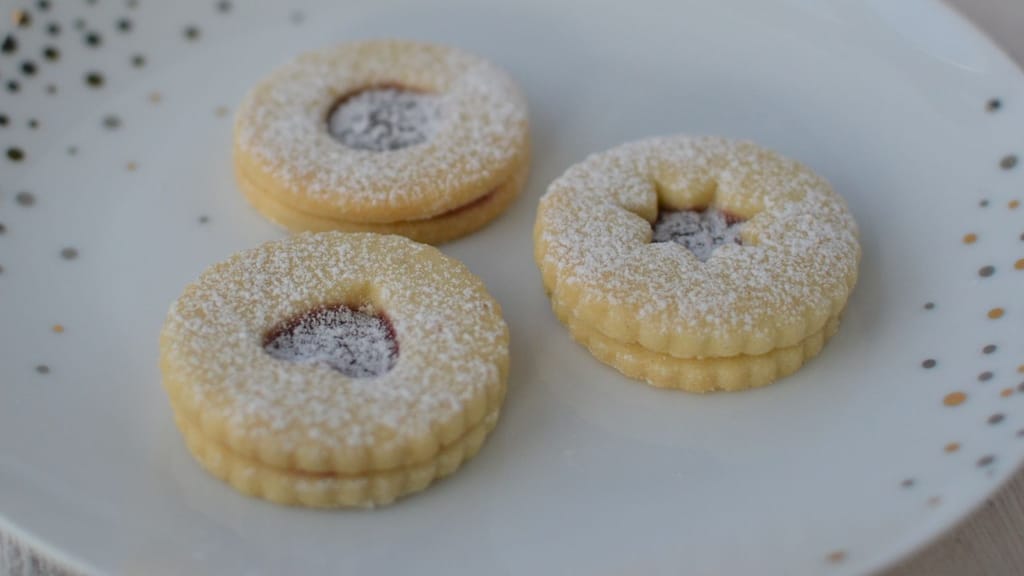
Classic christmas cookies: delicate linzer cookies
How Long Does Christmas Cookies Last: Shelf Life by Type
Updated Aug 29, 2026
How long Christmas cookies last really comes down to one thing: how much water is in them, and where that water sits. Dry baked cookies keep for weeks: unfilled linzer cookies 4 to 6 weeks, pressed shortbread ('pracny') 3 to 5 weeks, gingerbread 6 weeks to 6 months. Anything with a moist filling is measured in days: custard cream fillings 3–5 days in the fridge, buttercream 2–3 days at room temperature and 7–14 days chilled, jam sandwiched between two layers around 2–3 weeks. Below you'll find shelf life type by type, the reason behind it, and the concrete signs that tell you your cookies are past their best.
Dry baked cookies last 4–6 weeks, gingerbread 6 weeks to 6 months, cream-filled cookies 3–14 days, and no-bake ones with curd cheese just 2–3 days in the fridge. The times below apply when storing in a sealed container, in a cool, dry room (up to 20°C/68°F) — for filled types, factor in chilled storage or the fridge as well. These figures are for peak quality, not the last day they're technically still edible.
Gingerbread — 6 weeks to 6 months. The longest-lasting of all Christmas cookies.
Unfilled linzer cookies — 4–6 weeks. Just butter, flour, sugar — no extra moisture.
Pressed shortbread ('pracny') — 3–5 weeks. Dry, pressed butter dough that behaves just like linzer.
Meringue kisses — 2–3 weeks, and only in truly dry conditions. Moisture kills them faster than time does.
Vanilla crescents — 2–3 weeks. The limiting factor isn't mould but the ground nuts, which go rancid.
Coconut macaroons — 2–3 weeks. Egg white on its own has nothing to spoil, but coconut is fatty and picks up odours easily.
Linzer cookies sandwiched with jam — 2–3 weeks for flavour, but only crisp for 3–4 days.
No-bake sponge-and-fat balls — 10–14 days.
Cookies filled with buttercream — 2–3 days at room temperature, 7–14 days chilled (up to ~10°C/50°F) or in the fridge.
Cookies filled with condensed-milk cream — roughly a week in the fridge.
Cookies filled with custard cream — 3–5 days, and only in the fridge.
No-bake ones with curd cheese or cream — 2–3 days, in the fridge, no exceptions.
If these numbers seem short, here's the good news: almost every type on this list can be frozen and defrosted so well nobody will ever notice.
Filled cookies only last days because the filling contains free water (water activity roughly above 0.75), while dry baked cookies sit around 0.2–0.3. What matters is free water, not total water content. Food scientists have a number for this — water activity (aw) — and the rule of thumb is: below 0.70, mould and yeast barely grow at all, and below 0.60, according to food-safety references, virtually nothing grows. A dry biscuit sits well below the level where mould could even take hold. Jam typically falls around 0.75–0.84, buttercream roughly 0.75–0.85 depending on the recipe (more sugar and fat means lower water activity) — while curd cheese or cream sits around 0.95–0.99, right where bacteria thrive too, not just mould. That's exactly why curd-cheese cookies belong in the fridge and only last a few days. (Treat these figures as general food-science ranges, not a measured value for your specific batch.)
That's why filled cookies aren't simply "the same cookie, just with filling." They're a completely different food with a completely different clock. And that clock runs in a direction you'll notice well before any mould shows up: moisture migrates from the filling into the drier biscuit until the two even out. That's why jam-filled linzer cookies turn soft within three days, even though they won't actually spoil for another two weeks.
Cookies made with ground nuts go rancid sooner because grinding massively increases the surface area exposed to oxygen — for dry cookies, the shelf-life limit usually isn't mould, it's fat turning rancid. Unsaturated fats react with oxygen in the air and turn into aldehydes, which you smell as that telltale "old nut" or stale-oil aroma.
Two reasons this mainly hits crescents and nut-topped clusters:
Grinding increases surface area. A whole nut oxidises slowly; ground nut has several times more surface exposed to oxygen, so it happens dramatically faster.
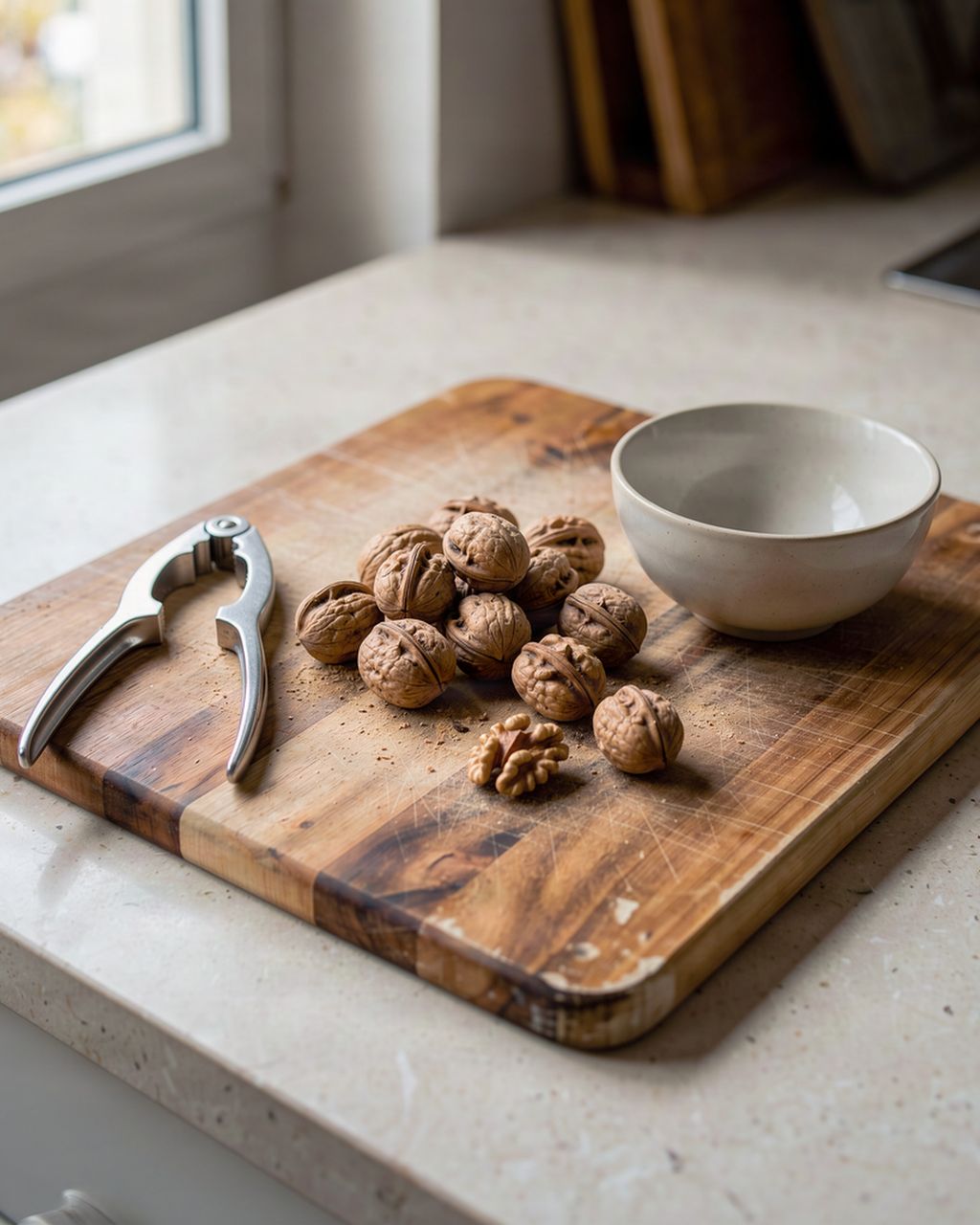
Walnuts are the most sensitive. Peer-reviewed sensory studies suggest shelled walnuts stored at room temperature start tasting noticeably rancid within roughly the first month; chilled and away from air, they last for months.
Which leads to one practical rule: grind nuts on the day you bake and keep finished crescents somewhere cool. A warm room roughly halves cookie shelf life for every extra 10°C (18°F), so a 12°C (54°F) pantry gives you roughly double the shelf life of a 22°C (72°F) living room.
Unfilled linzer cookies last 4–6 weeks, jam-sandwiched ones 2–3 weeks, and buttercream-sandwiched ones a maximum of 14 days when chilled. The difference isn't the dough — it's what's between the layers.
The trick that gets you both shelf life and crispness: bake and sandwich them right before serving. Plain layers keep for a month easily in a sealed container, while sandwiched cookies taste best on day three or four, once the jam has just softened the dough without turning it soggy.
One extra trap: linzer cookies that crumble or turn out hard after baking don't last any longer for it. Dry and hard aren't the same thing — hardness comes from overworked gluten, not low moisture.
Classic christmas cookies: delicate linzer cookies
Classic crumbly linzer cookies — the base recipe that keeps for up to six weeks unfilled
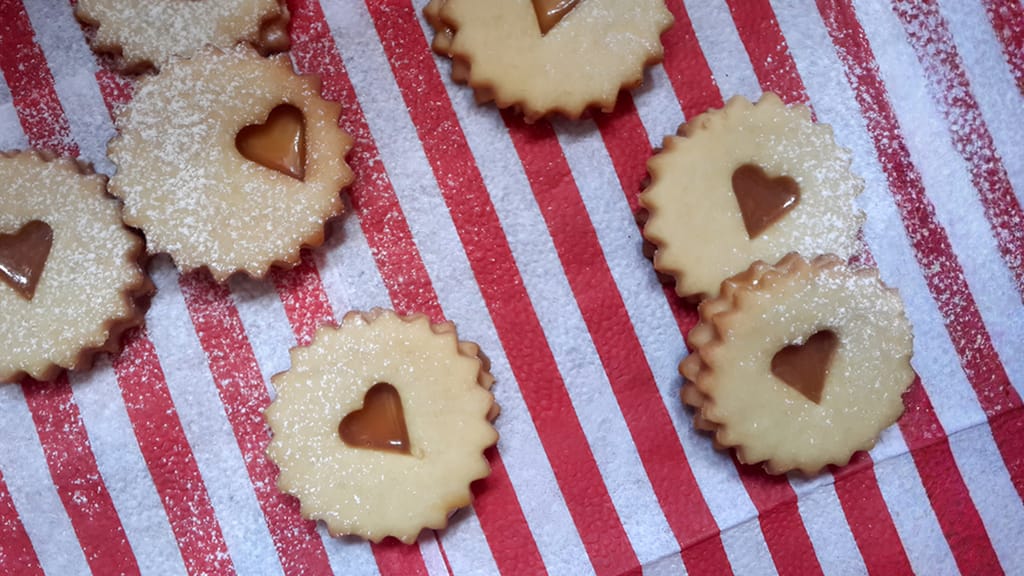
Linzer cookies filled with salted caramel
Linzer cookies with salted caramel filling: the filling cuts shelf life down to two weeks
Gingerbread lasts 6 weeks and, stored well, easily half a year — making it the longest-lasting of all Christmas cookies. Honey and invert sugar bind water, so gingerbread stays soft and dries out slowly — which is exactly why it outlasts every other type. Soft gingerbread can still grow mould, though, so it needs a dry, well-sealed container.
With gingerbread, the question isn't "will it still be good?" but "has it gone soft yet?" Freshly baked gingerbread is deliberately hard; it only softens as it pulls moisture back in from the surrounding air (or from an apple slice in the tin). That's exactly why it's baked first, often as early as November.
The one thing that does shorten its life is the egg-white-and-sugar icing — it eventually cracks and flakes off over time. It won't affect the taste, just the look.
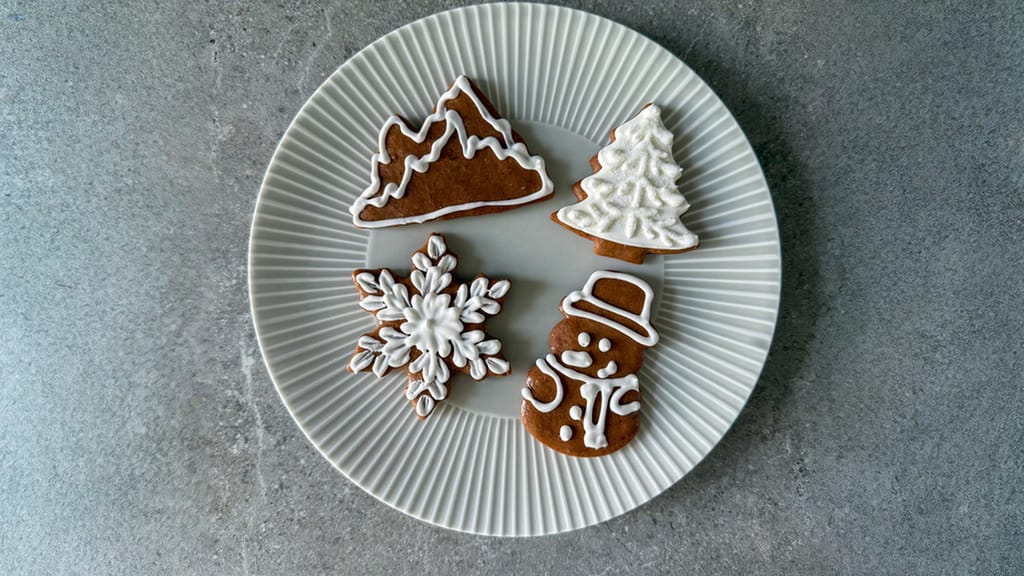
Soft honey gingerbread cookies that never go hard
Soft honey gingerbread that never goes hard — keeps for weeks or even months
Vanilla crescents are at their best for 2–3 weeks. They don't actually spoil — they just start smelling of old oil as the ground nuts inside gradually turn rancid.
What actually extends the shelf life of crescents:
Use almonds instead of walnuts. They contain far less polyunsaturated fat (~12g vs ~47g per 100g), and it's exactly those fats that go rancid fastest.
Grind nuts right before mixing the dough, rather than buying pre-ground nut mix weeks in advance.
Roll in sugar after cooling, but store them already coated. The layer of powdered sugar draws surface moisture away and keeps crescents drier — though it won't stop rancidity; only cold storage and a sealed container do that.
Store them separately. Crescents are a dry type; kept in the same tin as gingerbread, they'll soak up its moisture and turn chewy within a week.
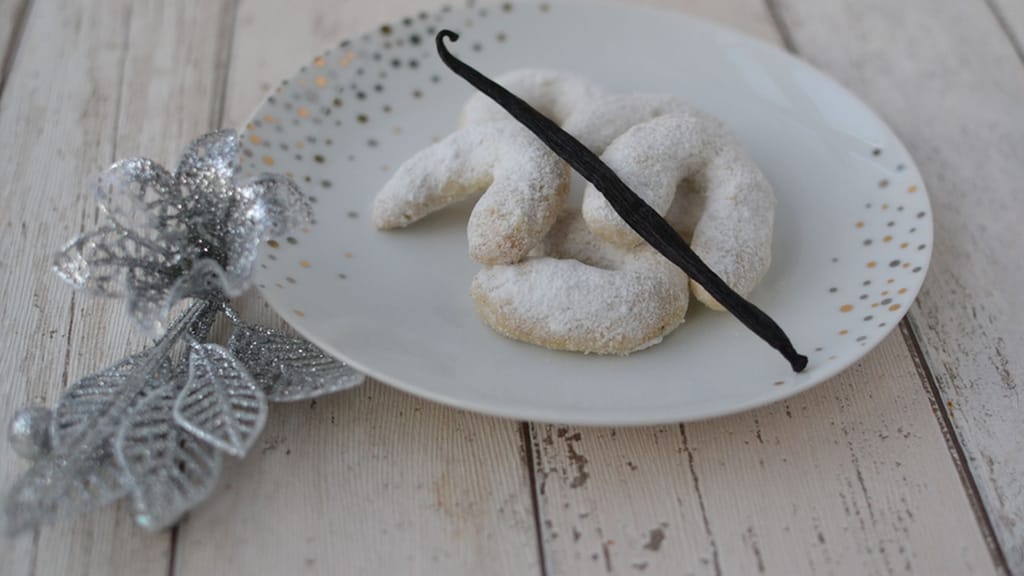
The best christmas cookies? vanilla crescents, of course!
Vanilla crescents that stay at their best for three weeks
Pressed shortbread lasts 3–5 weeks, coconut macaroons 2–3 weeks, and meringue kisses 2–3 weeks — as long as moisture doesn't get to them. For this trio, the enemy isn't time, it's humidity in the room.
Pressed shortbread ('pracny') is essentially pressed linzer dough: butter, flour, sugar, egg yolk. Dry and sturdy. If it goes soft, it's almost always because of whatever's sharing the tin with it.
Coconut macaroons are built on egg white and shredded coconut. The egg white itself has nothing to spoil once baked, but coconut is fatty and, more importantly, absorbs surrounding odours — stored next to gingerbread, a macaroon will taste of gingerbread within a week.
Meringue kisses are made from sugar and egg white and are the most hygroscopic cookie of the lot. In a humid kitchen they turn soft and sticky within two days, no matter how well they were baked. A few sugar cubes in the tin help, or a food-grade silica gel sachet — but only a sachet specifically made for food use; the ones from packaging are marked inedible and don't belong anywhere near your cookie tin.
No-bake cookies last 10–14 days, but versions with curd cheese or cream only last 2–3 days in the fridge. That wide range exists because "no-bake" isn't one recipe — it's three very different risk levels.
Sponge cake crumbs, fat, cocoa, powdered sugar. The most common version. Dried ingredients plus fat keep water activity low, giving you 10–14 days without issue.
The same with rum or liqueur added. Alcohol lowers water availability slightly, but in the amount you'd add to dough, it's mainly there for flavour — count on a few extra days, not weeks. And for baked cookies, don't rely on alcohol as a preservative at all: some evaporates during baking, but the effect on shelf life is negligible.
Anything with curd cheese, mascarpone, cream or raw egg white. That's no longer really a cookie — it's a fresh dessert. Fridge, and 2–3 days only.
Warmth is a bigger enemy for no-bake treats than for baked ones: without a baked structure to hold their shape, they slump in the heat and the fat starts separating. Above 20°C (68°F), shelf life drops fast.
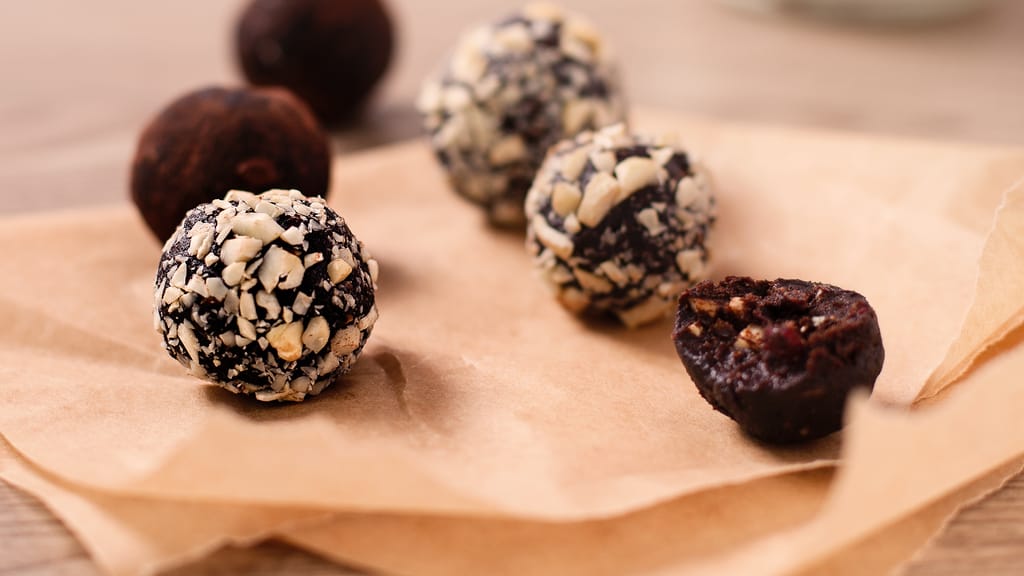
Cocoa date & oat balls
No-bake cocoa balls with oats and dates — keep for two weeks
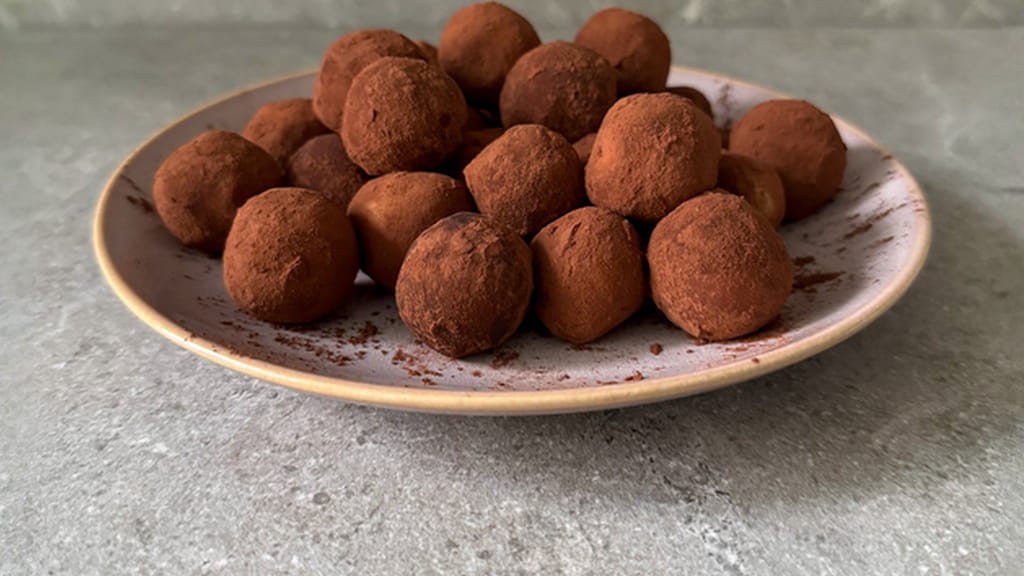
Baileys white chocolate truffles with sponge biscuits
No-bake white chocolate Baileys balls: the liqueur in the dough shortens shelf life
Cookies filled with custard cream last 3–5 days, buttercream-filled ones 7–14 days chilled; condensed-milk cream fillings last roughly a week in the fridge. The difference comes down purely to how much free water the cream contains and how much sugar is there to bind it.
Custard cream is mostly milk. High water activity, no real protection — it belongs in the fridge and should be eaten within five days.
Buttercream is high in fat and sugar, which partly bind the water. At room temperature, count on 2–3 days; chilled (up to ~10°C/50°F) or in the fridge, 7–14 days.
Condensed-milk cream is high in sugar thanks to the sweetened condensed milk, which binds some of the water — count on roughly a week in the fridge, and go by the date on the tin; both opened condensed milk and the finished cream need to stay chilled.
Whipped cream as a filling is a dead end. Within 24 hours it turns both itself and the biscuit soggy.
The same trick that works for linzer cookies applies here: fill them in the last few days only. Unfilled bases and the cream stored separately will keep, together, far longer than the assembled cookie ever would.
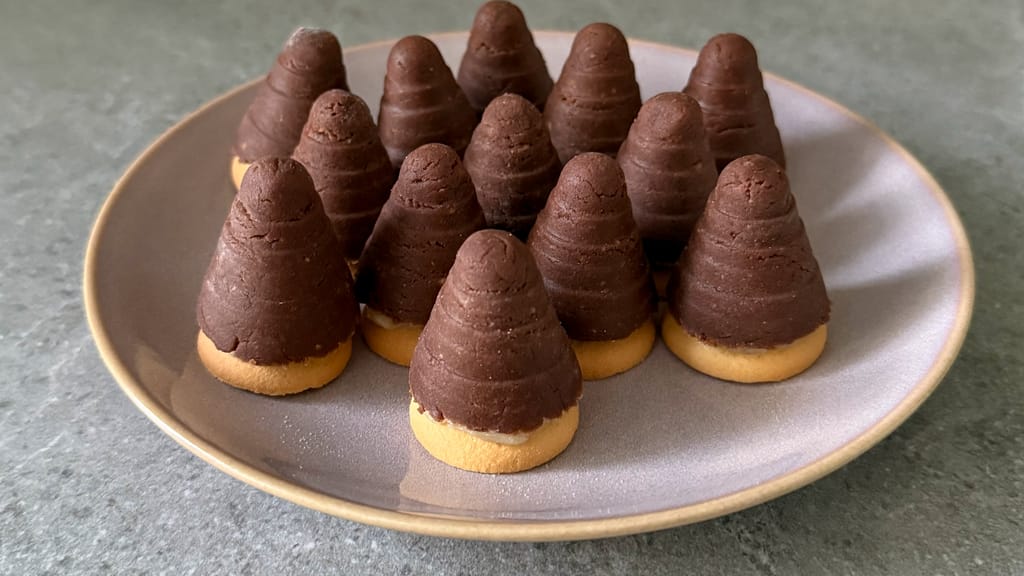
Grandma's traditional wasp's nest cookies with rum cream
Traditional rum-cream nut clusters ('wasp nests') — once filled, count on 7–14 days chilled
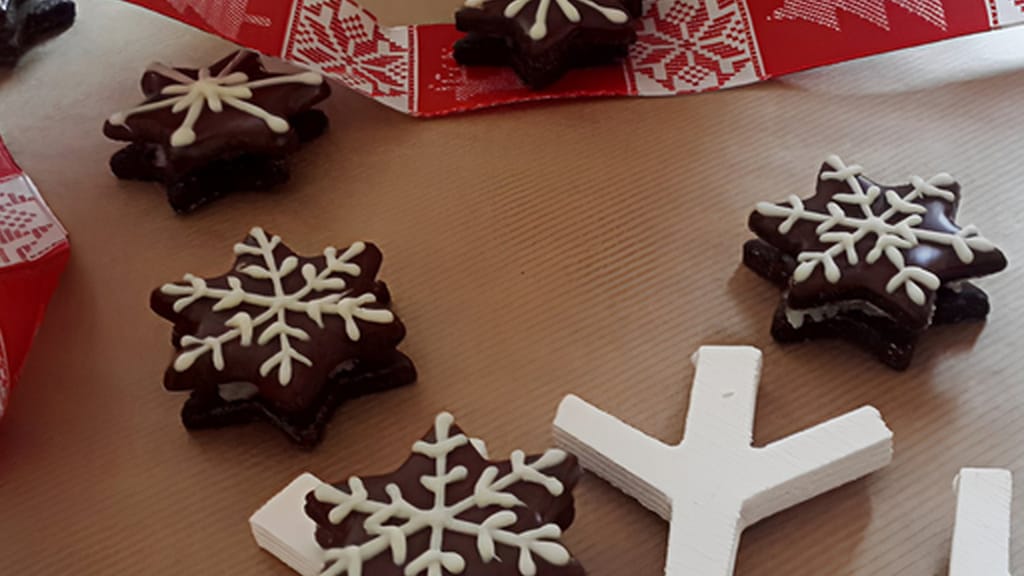
Cocoa star cookies with coconut cream
Cocoa stars with coconut cream: the filling shortens shelf life to just days
You'll know cookies are past their best when they bend instead of snapping, feel sticky, and have lost their aroma; they only become unsafe once they smell rancid or show a coating of mould. So separate two different things: cookies that are no longer good (still edible, just not worth serving), and cookies that are no longer safe (bin them). The signs are different and easy to mix up.
Cookies past their prime bend instead of snapping, feel sticky, and lose their aroma — they're still edible, just not at their best. Specific signs to watch for:
Crisp types bend instead of snapping. A linzer cookie or piece of shortbread bends without breaking — it's absorbed moisture.
Meringue kisses stick to your fingers or show tiny beads of syrup on the surface.
Gingerbread turns rock-hard and crumbles instead of giving way when you bite it — it's dried out because the container wasn't sealed properly.
The flavour has faded. Vanilla, lemon zest and spices practically vanish after a few weeks; volatile aromatic compounds are the first thing to go.
Everything tastes the same. The classic result of storing every type together in one tin.
What to do about it: crumble it into crumbs for a fruit crumble topping, stir it into yogurt, or bring back the crunch with a little heat — 5 minutes at 140°C (285°F), then cool on a wire rack.
Throw cookies out if they smell rancid, musty, show any coating, feel sticky and damp on the surface, or taste sour. Any single one of these signs is reason enough on its own:
Rancid fat. You'll smell it before you taste it: sharp, oily, like "old nuts" or an old deep-fryer. Typical in crescents, nut clusters, and anything with ground nuts.
A musty or cellar-like smell as soon as you open the tin. It can be an early sign of mould — better to throw the batch out. (A musty smell can sometimes just be absorbed from nearby storage or from rancid fat, but it's not worth gambling on which one it is.)
Any fuzzy, grey-green, white or black coating, especially where jam or cream meets the biscuit.
A sticky, damp film on the surface of a type that's supposed to be dry.
A sour or alcoholic taste in cookies with curd cheese, cream or fruit filling — usually a sign of fermentation.
For filled and moist cookies, one simple rule applies: if you're not sure of the date, you're not sure about the cookies either. Write the baking date on the tin. It saves you all the guesswork.
Treat this as general food-storage guidance, not an expert food-safety assessment — when a batch looks doubtful, the bin always wins.
Five things extend Christmas cookie shelf life the most: storing types separately, cool and dry conditions (10–15°C/50–59°F), filling late, an airtight container, and freezing. Ranked by real-world impact:
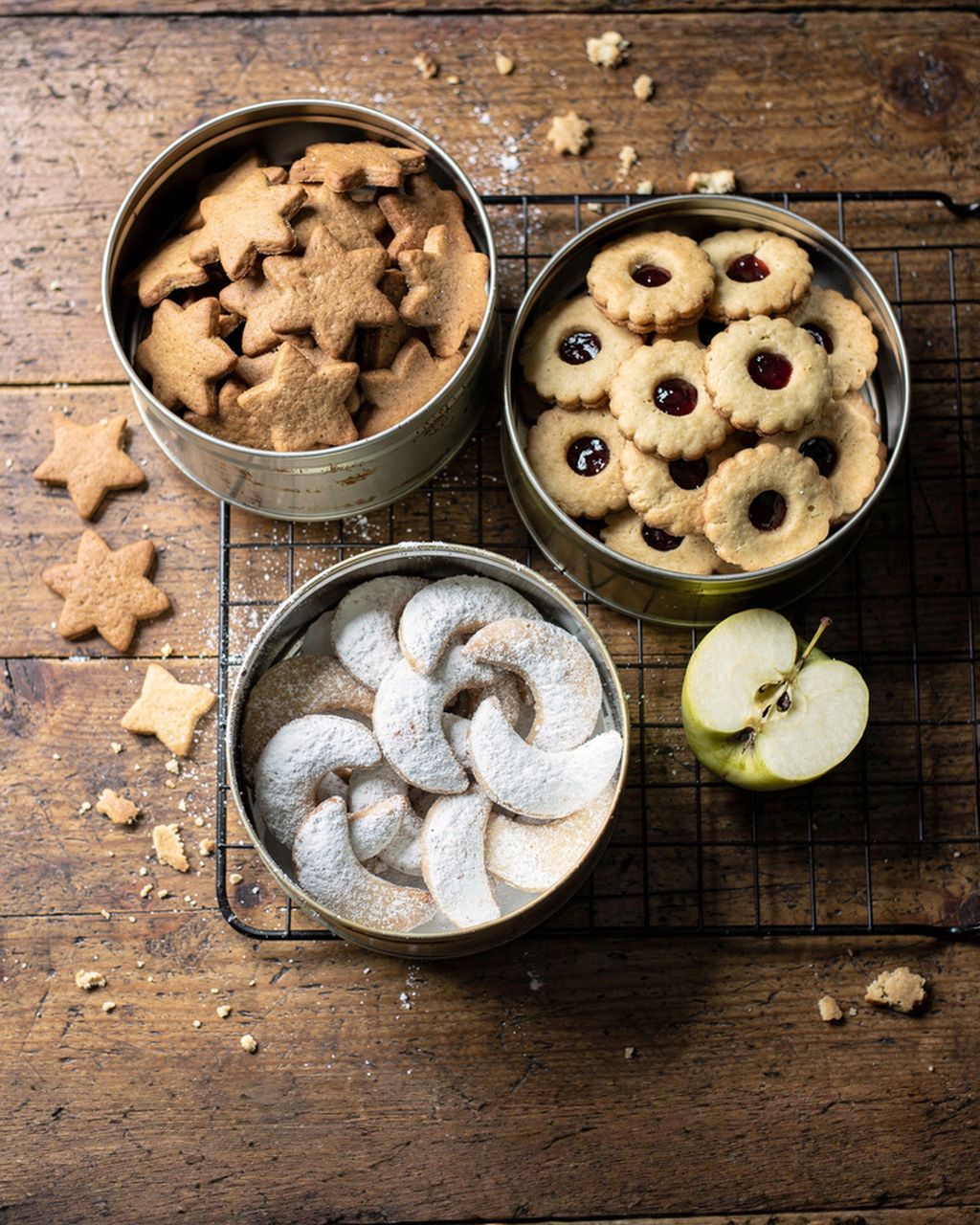
Store types separately. Dry cookies (linzer, shortbread, meringues) and moist ones (gingerbread, filled types) should never share a tin — moisture equalises between them and spoils both at once.
Cool, dry, dark. A pantry or unheated room at 10–15°C (50–59°F) roughly doubles shelf life compared with a 22°C (72°F) living room. Not the fridge, though — every time you take cold cookies out, air moisture condenses on them, and inside a closed tin, dry types turn soft.
Don't fill or sandwich in advance. Keep bases and filling separate, and assemble just a few days before serving.
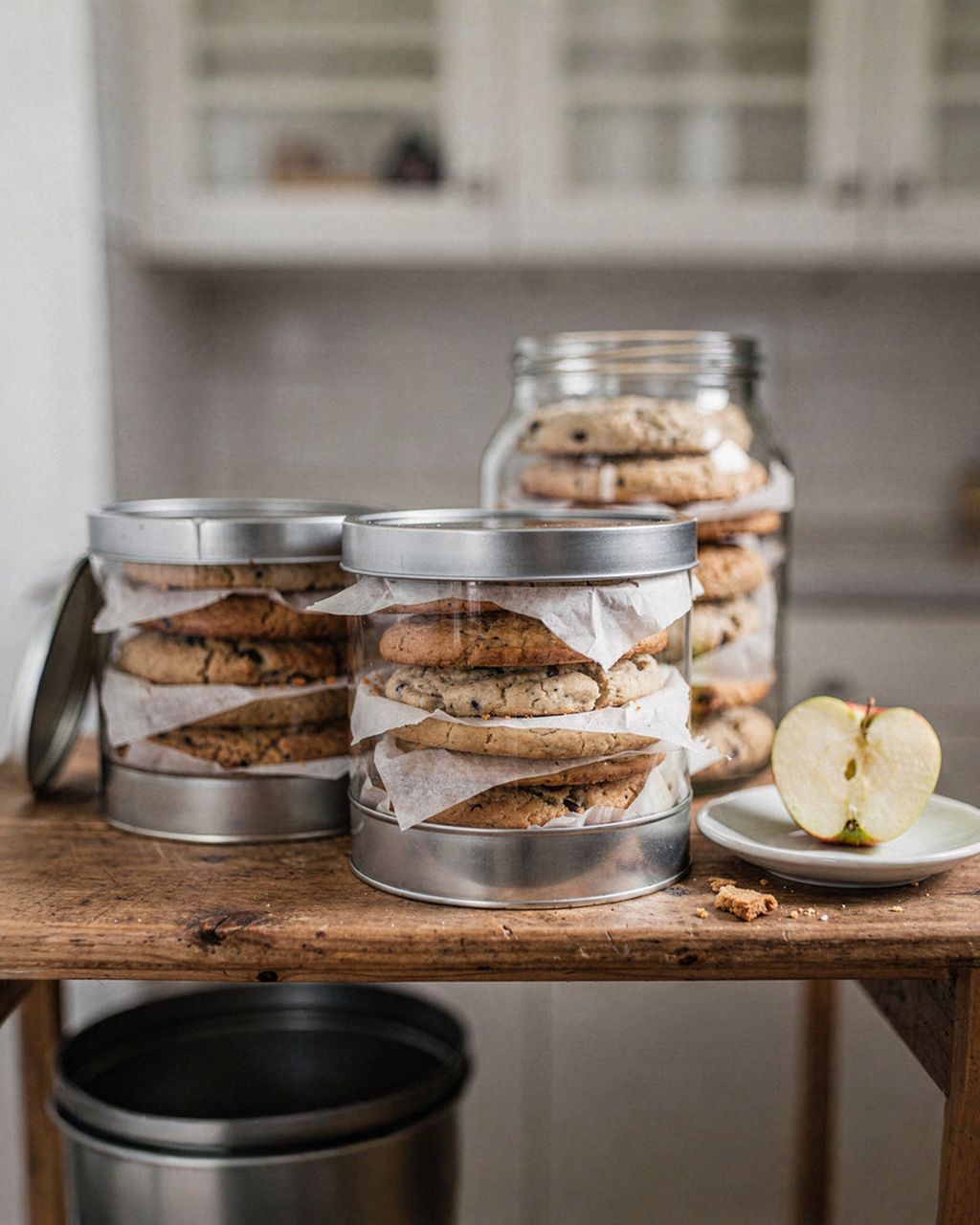
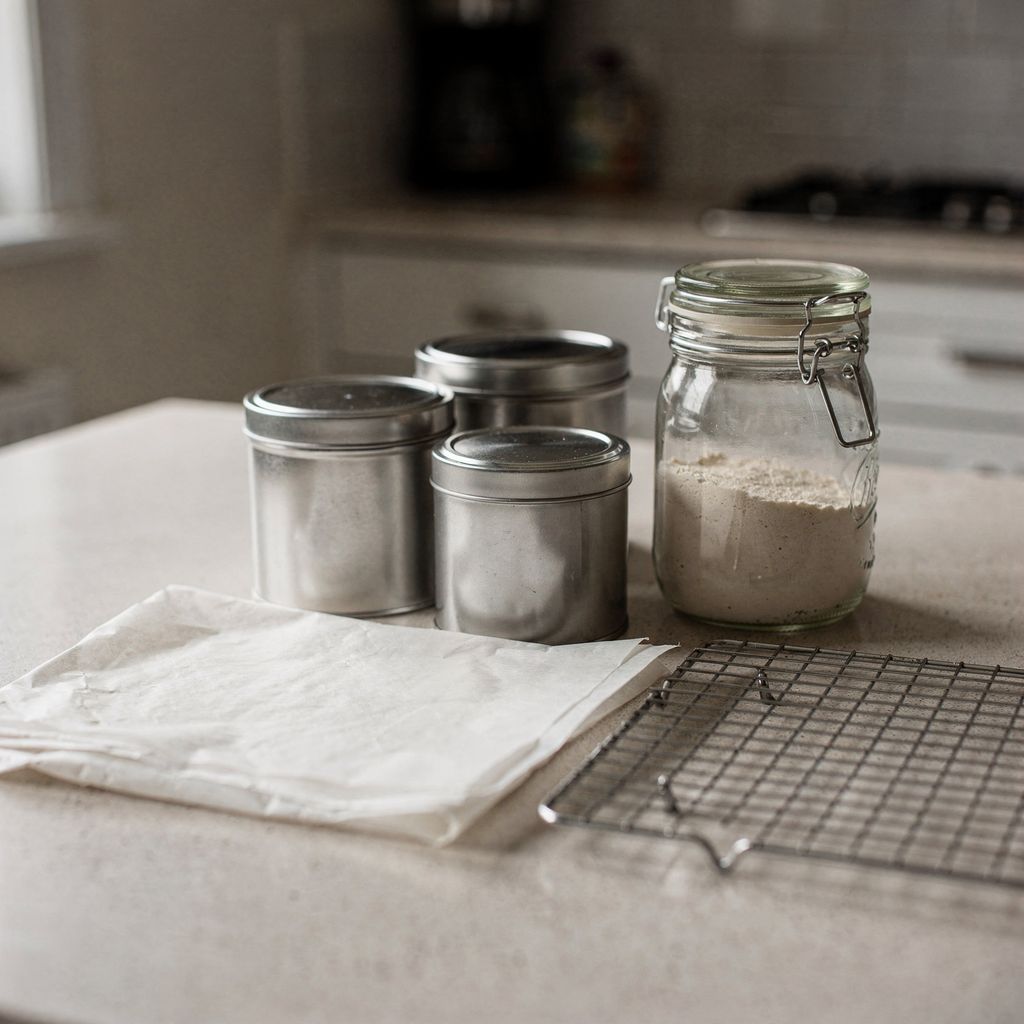
A sealed container, not a bowl covered with foil. A tin with a tight-fitting lid, or a clip-lock jar.
Freeze anything you won't eat within a month. In the freezer, most types keep for months with virtually no change — and how you defrost them matters even more than how you freeze them.
If you're baking ahead, your biggest lever comes before you even start baking: deciding what to bake in November and what's better left for the final week.
Bake gingerbread first — even as early as the start of November — then dry baked cookies three to four weeks ahead, and leave filled ones for the final week. Gingerbread actually improves as it sits, linzer cookies and shortbread hold their shape for a month, and anything with cream, curd cheese or whipped cream only lasts days. A practical plan: gingerbread in November, linzer layers, shortbread and no-bake balls in the first half of December, then sandwiching, filling and icing in the last week.
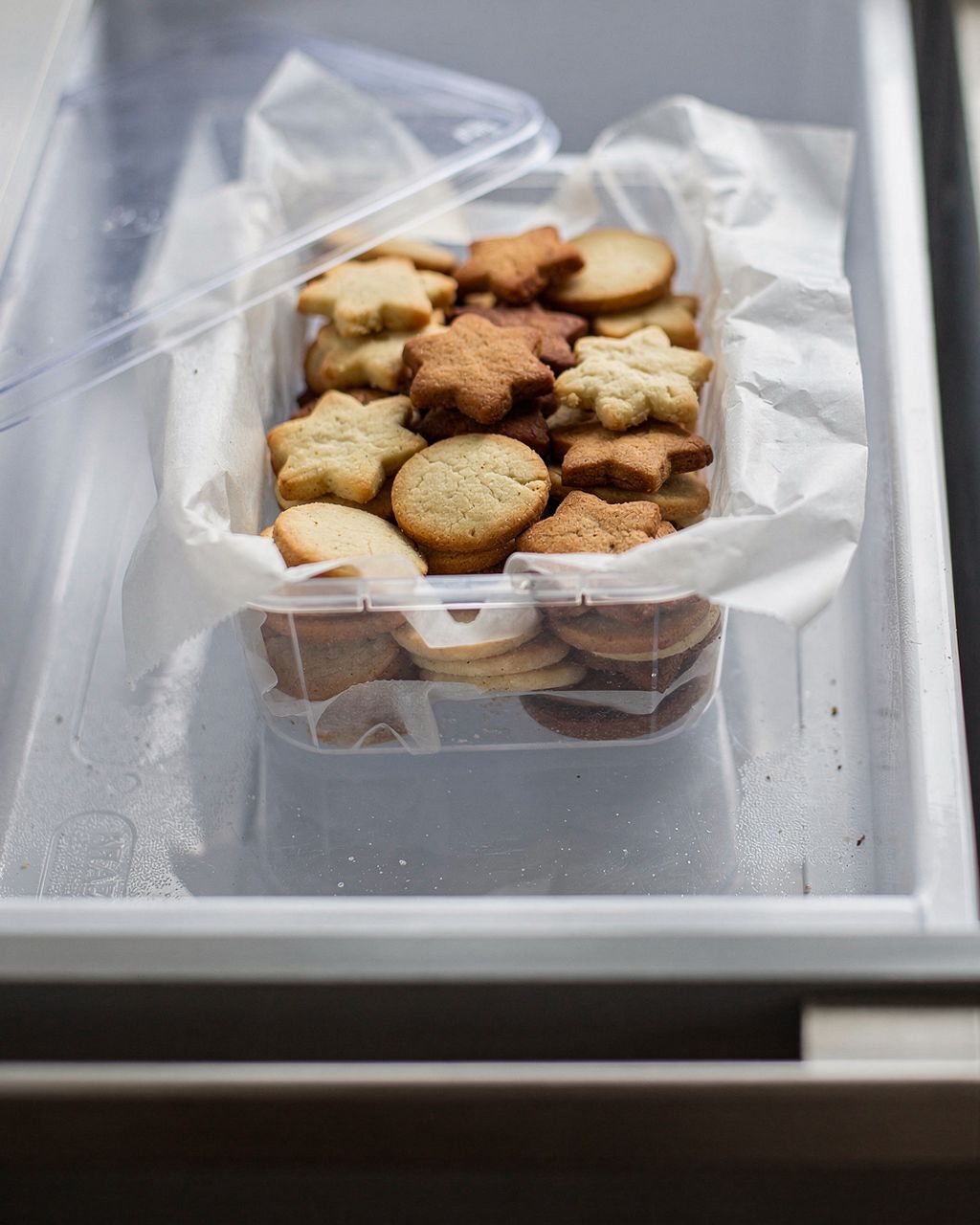
At −18°C (0°F), most Christmas cookies keep for three to six months with virtually no change. Dry baked dough and unfilled bases freeze best, while meringues and anything with whipped cream fare worst. Freeze them fully cooled, layered with baking paper between, in an airtight container.
Defrost cookies slowly and inside a closed container — if a cold surface is exposed to room-temperature air, moisture condenses on it and the cookies turn soggy. So take the box out of the freezer still closed, and only open it once the contents have reached room temperature. Add icing or dust with powdered sugar only after they've fully defrosted.
Dry cookies don't belong in the fridge — filled ones do. Every time you take dry cookies out of the fridge, moisture from the air condenses on the cold biscuits, and inside a closed container they turn soft — linzer cookies, shortbread and especially meringues will soften within two days. On the other hand, anything with custard cream, curd cheese, whipped cream or condensed-milk cream must go in the fridge. For dry types, a cool, dry pantry around 10–15°C (50–59°F) is ideal.
Linzer and other butter-based doughs keep in the fridge for 3–4 days when tightly wrapped in cling film. Gingerbread dough can rest anywhere from one day to several weeks — the longer it rests, the easier it rolls out, so follow the timing given in your recipe. Butter dough starts to darken on the surface and pick up fridge odours after three days, so it's better to freeze it than to leave it sitting for a week.
Store-bought cookies usually last longer than homemade ones because industrial production uses dough with lower water activity, invert sugar syrups, and packaging in a protective atmosphere. Invert syrups bind water, and there's no oxygen inside protective-atmosphere packaging — and oxygen is exactly what kicks off rancidity. At home you don't have those tools, but you do have freshly ground nuts and real butter, and that's precisely the trade-off behind their shorter shelf life.
One recipe worth heating the oven for, one tip, and one deal from the shop. Nothing else.