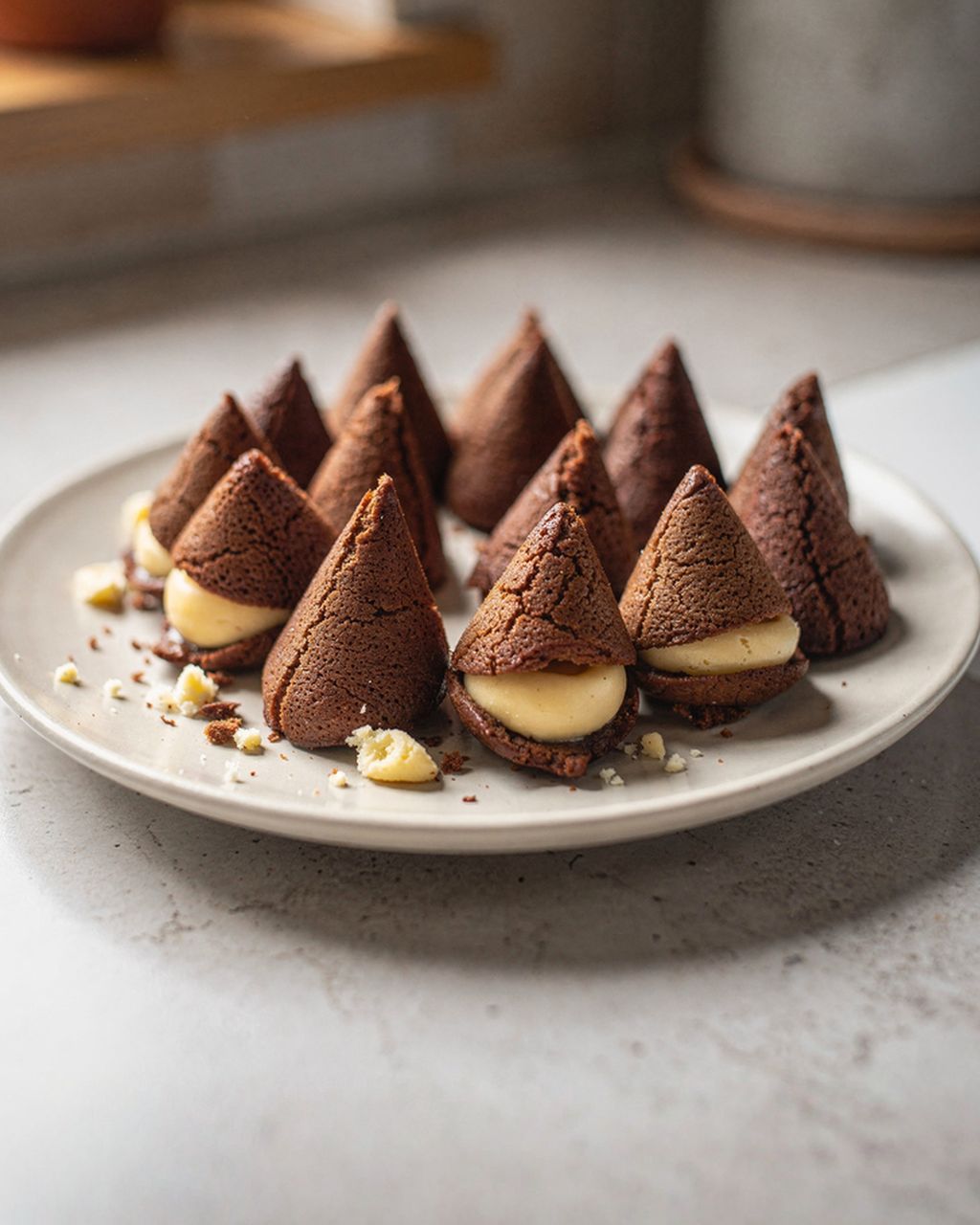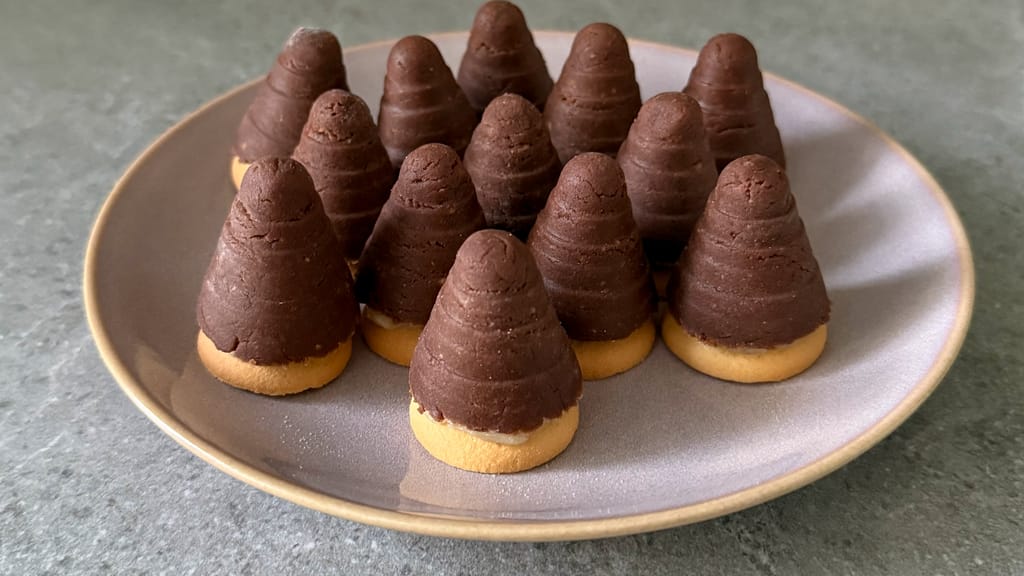
Grandma's traditional wasp's nest cookies with rum cream
Wasp Nests Leaking? Why It Happens and How to Keep Them Together
Updated Sep 25, 2026
Wasp nests (vosí hnízda) leak when the filling is warmer, runnier, or greasier than the delicate pastry shell can hold. Most often it's butter and custard mixed at mismatched temperatures, too much alcohol in the filling, nests piled right to the brim, or storing them somewhere too warm. The good news: you can spot and fix every one of these causes, usually before you even cap the nest off with the sponge disc.
Wasp nests leak for five main reasons: warm or runny filling, curdled filling, too much alcohol, overfilled nests and storing them somewhere too warm. Often several of these happen at once.
Warm or runny filling. Buttercream holds its shape well below about 20–22°C. Above that it noticeably softens, and in a warm room it will slowly start oozing out from under the lid.
Curdled filling. When you mix cold custard with soft butter (or the other way round), the fat separates from the water. The filling turns grainy and greasy, and the nest "sweats" fat.
Too much alcohol. Rum and eggnog liqueur are both liquids. Every extra spoonful thins the filling, and the alcohol also stops the butter from firming up properly.
Overfilled nests. When the filling reaches right up to the rim, the sponge disc pushes it out as you press it on. You end up with a leaky edge even if the filling itself is fine.
Warm storage. A box left by the radiator or on the kitchen counter near the oven will ruin even perfectly whipped filling.
But a wasp nest can also fall apart if the shell itself is too moist. We cover that separately below.
Both the butter and the cooled custard (or whatever base you're using for the filling) should be the same temperature, ideally 18–20°C – basically room temperature. That way the emulsion won't break, and the filling will turn out smooth, glossy and firm. Once made, it'll hold its shape until it's warmed above roughly 20–22°C.
Butter – take it out of the fridge at least an hour ahead. It should give easily when you press a finger into it, but shouldn't look shiny or greasy. Butter that's already starting to melt will never firm the filling up properly.
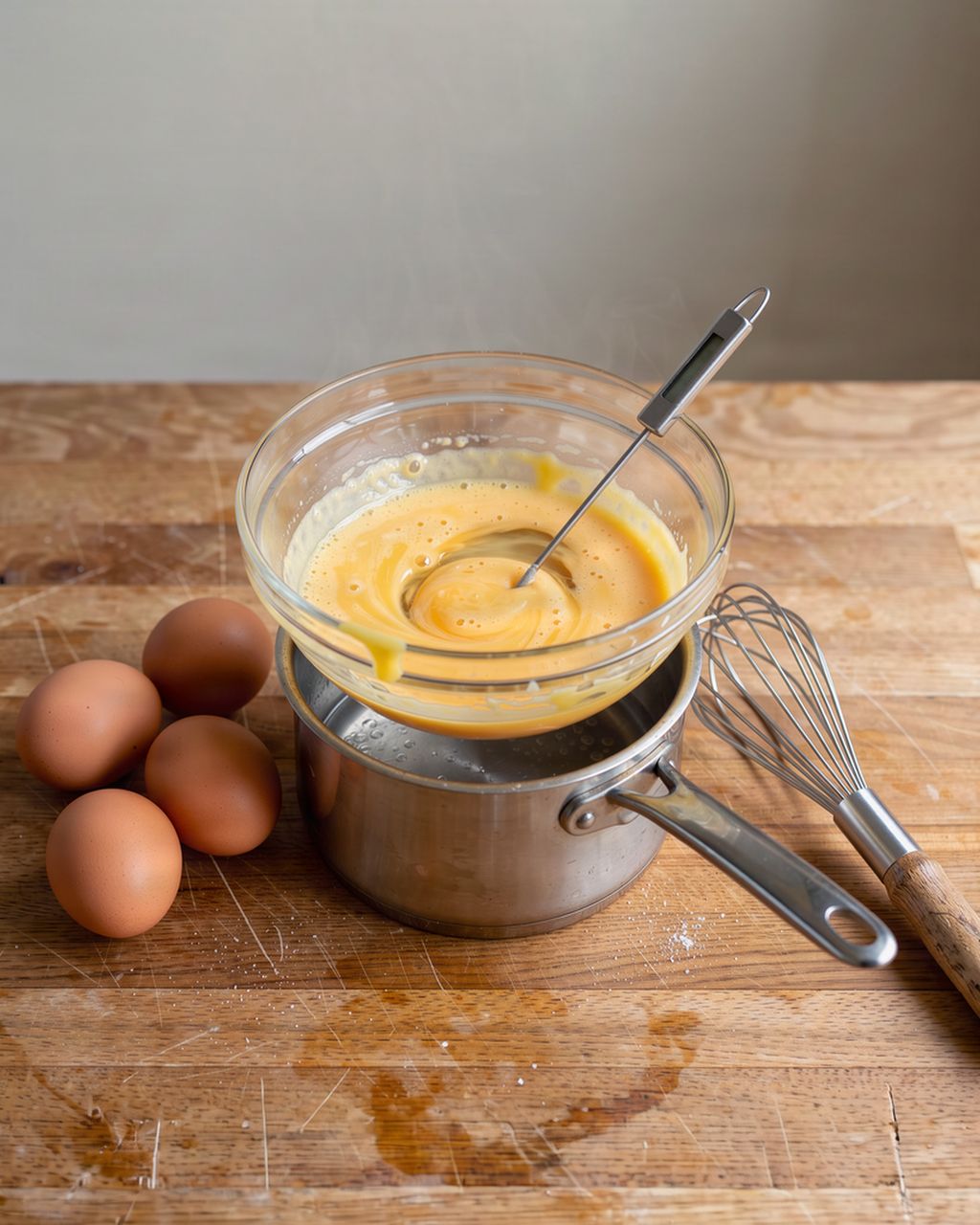
Custard – cook it ahead and let it cool completely. Press a piece of cling film directly onto the surface so it doesn't form a skin. Warm custard will melt the butter; custard straight from the fridge will curdle it into lumps.
Add it spoon by spoon. Beat the butter first until pale and fluffy, then add the custard a spoonful at a time. Only add the next spoonful once the previous one is fully combined.
Beat it long enough. Buttercream needs 5–8 minutes of beating. Once it's pale and airy, it'll hold its shape on the whisk instead of sliding off.
The filling is ready to pipe once it holds a peak on a spoon. If the peak flattens out straight away, it's too warm or too thin – and it'll leak in the nests too.
Curdled filling can almost always be rescued. Just fix the temperature and beat it again. First figure out whether the filling is too cold or too warm.
Grainy, stiff, with lumps of butter = too cold. Hold the bowl over a pan of hot water for a few seconds, or warm it from the outside with a hairdryer. Then beat it. It just needs the edges to soften slightly. If you overdo it and the filling turns runny, follow the next step instead.
Runny, glossy, soup-like = too warm. Put the bowl in the fridge for 10–15 minutes. Once the edges start to firm up, beat it thoroughly again.
Still separating out water? There's probably too much liquid in there, usually liqueur or milk. Beat in a spoonful of softened butter and don't add any more liquid.
Never put curdled filling into the nests hoping "the fridge will sort it out". The fat will keep leaking out even once chilled.
For buttercream filling made from 250 g of butter, use no more than 1–3 tablespoons of rum or eggnog liqueur, added a teaspoon at a time, right at the end. Adding more won't boost the flavour, it'll just thin the filling. Beat in each teaspoon and check the filling still holds a peak.
Rum is mainly there for the aroma. If you want a stronger flavour without adding more liquid, add a drop of rum flavouring instead.
Eggnog liqueur is thicker, but it's still a liquid. Homemade eggnog tends to be even runnier than store-bought, so go easy on it.
Milk and cream have no place in finished buttercream. Only the custard should soften it – not extra liquid.
For fillings that hold up better than classic buttercream, including some that won't turn soggy even after a week, see our article What to Fill Wasp Nests With.
A wasp nest shell only holds together when the dough is neither too dry nor too wet. Dry dough crumbles as soon as you tip it out of the mould. Wet dough sticks in the mould, then quickly turns damp from the filling and collapses.
Crumbling? Put the dough back in the bowl and add liquid drop by drop: rum, milk, cream, or melted butter. Knead it through and try again.
Sticky and gummy? Firm it up with ground sponge fingers or crushed biscuits. Add them gradually so you don't overcorrect.
After adjusting, let the dough rest in the fridge for at least an hour. Chilled dough shapes more easily and comes out of the mould more cleanly.
Work in a cool spot. In a warm kitchen the dough quickly turns greasy and sticky. Work with it in batches and keep the rest in the fridge in the meantime.
Let the unmoulded shells dry out. Before filling them, leave them standing uncovered for a few hours or overnight. The surface firms up a little so the filling doesn't soak in as quickly.
For a tried-and-tested base version, see our recipe for traditional grandma's wasp nests with rum filling. It'll show you exactly what properly worked dough should feel like in your hands.
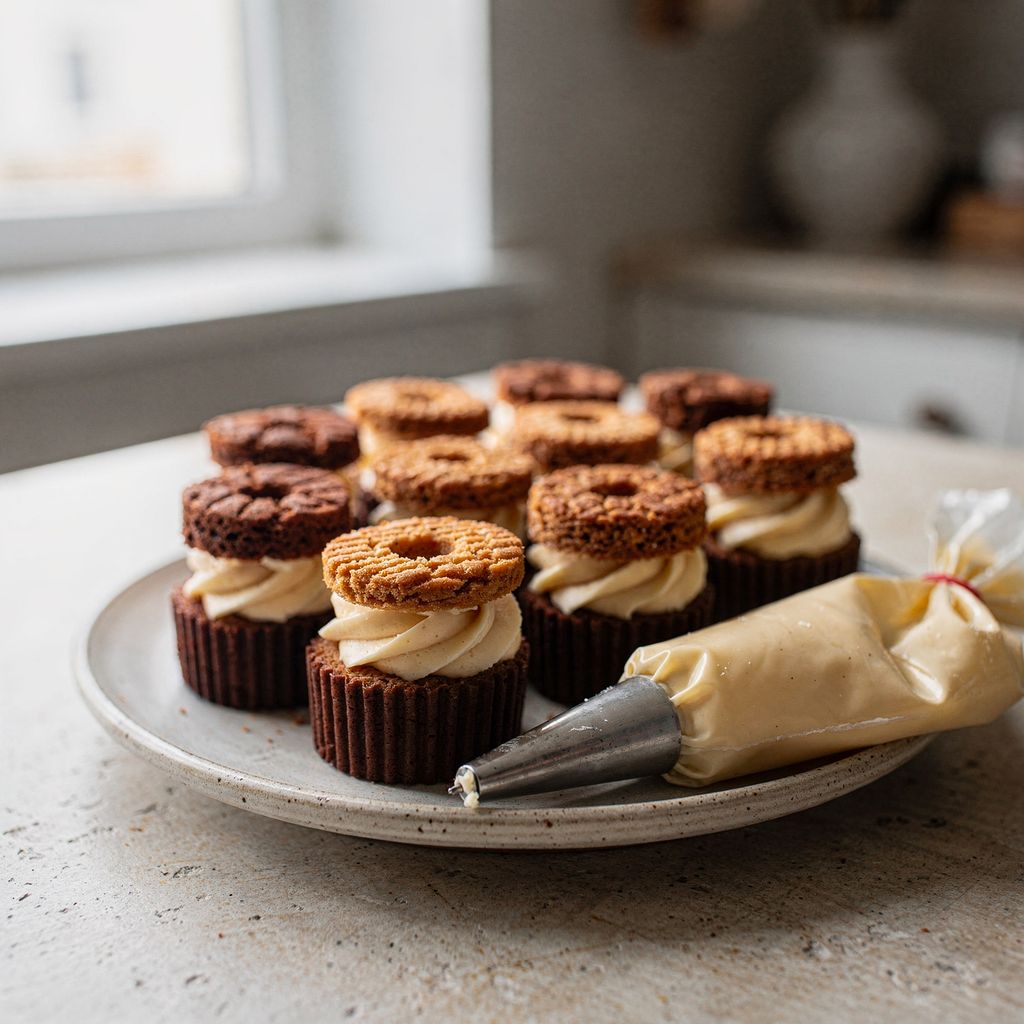
Fill wasp nests using a piping bag, leave 2–3 mm clear below the rim, and chill the finished nests upside down for at least an hour before packing them into a box.
A piping bag instead of a spoon. Using a bag with a plain round nozzle, or just a snipped-off tip, lets you pipe the filling exactly into the centre without smearing the rim. The sponge disc sticks better to a clean edge.
Don't fill it right to the rim. Leave a little space at the top. The sponge disc will press the filling down slightly so it spreads out exactly to the edges, not over them.
Press the lid on gently. Just press the sponge disc on, don't squeeze. If filling squeezes out, the nest is overfilled – use less next time.
Chill the nests straight away. Stand them sponge-side down on a tray in the fridge for an hour. The filling firms up and the lid sticks in place. Only then arrange them in a box.
Keep an eye on the filling as you pipe. If it softens in the bag from the warmth of your hand, pop the bag in the fridge for 5 minutes.
Wasp nests with buttercream or custard filling belong in the fridge or a genuinely cold pantry, in a sealed box and in a single layer, separated with paper if needed. Take them out onto a plate about 15–20 minutes before serving. The filling will soften slightly and the nests won't taste fridge-cold.
For how long cream-filled cookies keep, and why egg-based and custard fillings last less time than buttercream, see our article How Long Cream-Filled Christmas Cookies Keep. For how to store other types so they don't turn each other soggy, see our article How to Store Christmas Cookies So They Stay Crisp.
Fill wasp nests among the last things you do, 3–5 days before Christmas. You can shape and bake the empty shells up to 1–2 weeks ahead and keep them in a dry, sealed box.
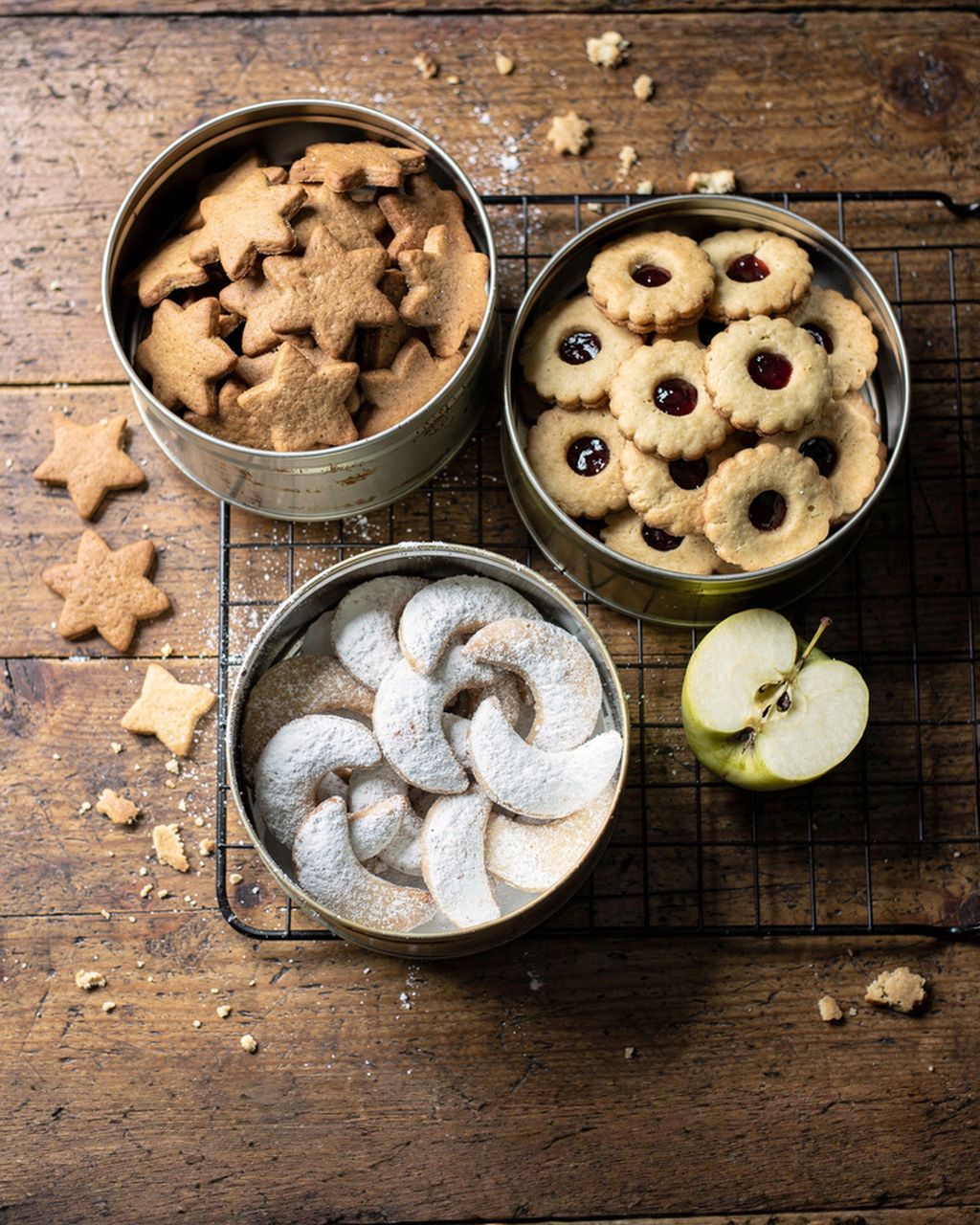
Ahead of time you can get any cookie without filling out of the way. With gingerbread storage, a few weeks in the box actually improves them, and crumbly linzer cookies also keep longer than you'd expect.
Leave for last the cream-filled kinds — wasp nests, coconut macaroons with filling, and anything with custard.
The freezer helps if you want the shells ready even further ahead. Find out how in our article How to Freeze Christmas Cookies and Dough.
For specific timings by type, check our Christmas cookie baking calendar and compare shelf life in our overview How Long Different Christmas Cookies Keep.
Grandma's traditional wasp's nest cookies with rum cream
Traditional Grandma's Wasp Nests with Rum Filling
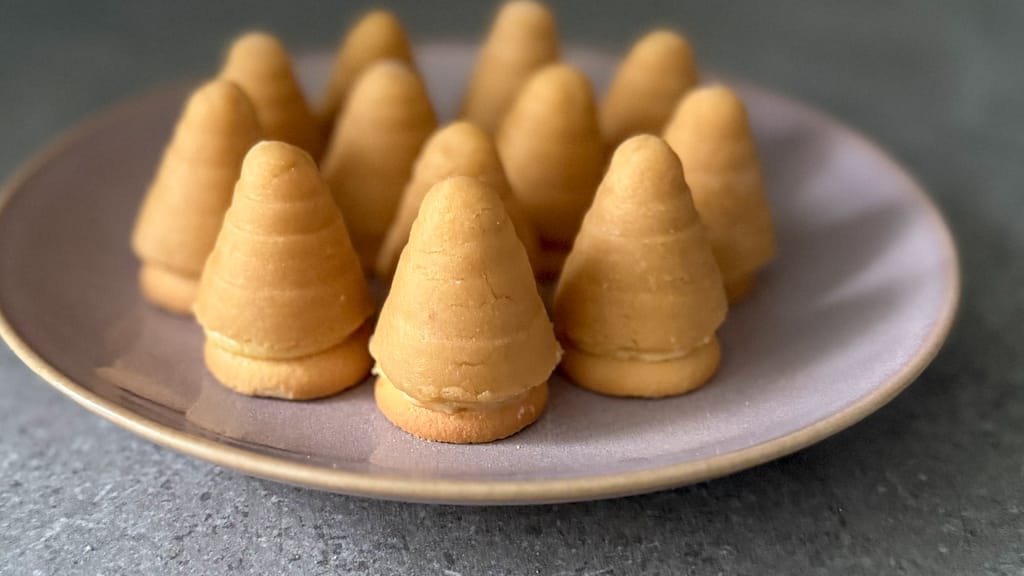
White chocolate wasp nests with mango and passion fruit
White Chocolate Wasp Nests with Mango and Passion Fruit
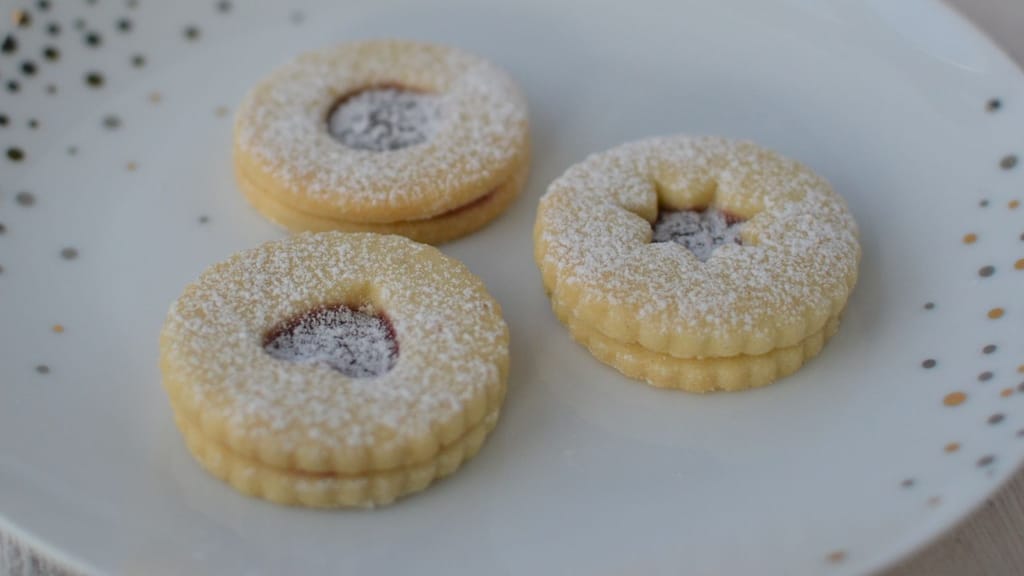
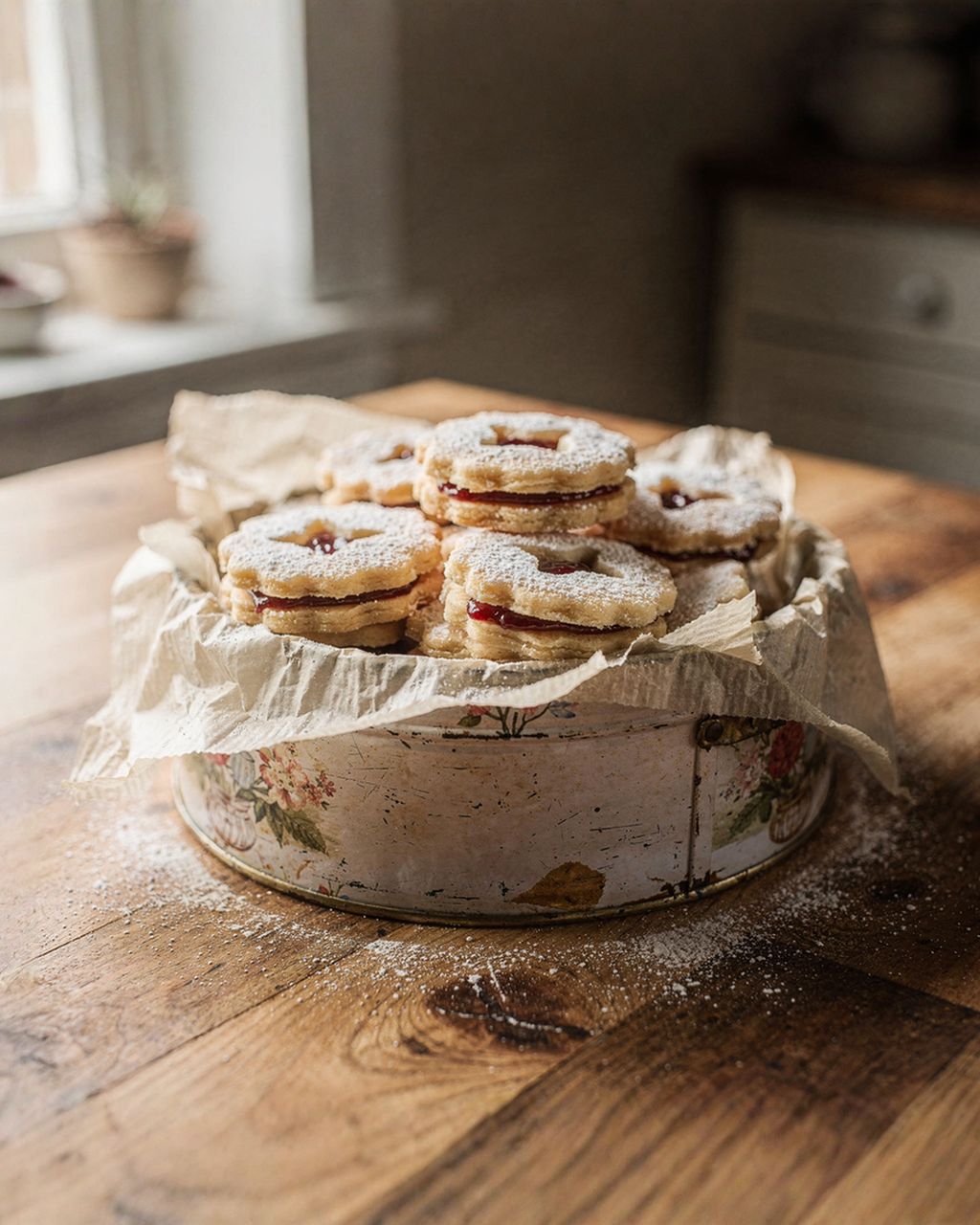
Classic christmas cookies: delicate linzer cookies
Crumbly Linzer Christmas Cookies – the dough also works for wasp nest lids
It's best not to use margarine or spreadable fat in wasp nest filling – they contain more water and less fat than butter, so the filling turns soft and starts leaking out of the nests sooner. By law, butter must be at least 80% fat, while spreadable fats are often well below that. If you absolutely must swap out the butter, choose a firm baking fat, not a tub spread.
Filling made from 250 g of butter with custard will fill roughly 50–70 wasp nests, depending on the size of your moulds. Each nest takes about 8–12 g of filling. If you pipe it to 2–3 mm below the rim, you'll actually use a bit less and nothing will overflow.
Yes, wasp nests can be frozen – it's best to freeze the empty shells and fill them fresh after thawing. Nests already filled with buttercream generally freeze fine, but custard-based filling can weep water once thawed and turn the shell soggy. For more, see our article on freezing Christmas cookies and dough.
Yes, wasp nests can be made without alcohol – replace the rum in the dough with milk or cream (added drop by drop), and use a drop of rum flavouring in the filling instead. Alcohol-free filling actually holds together slightly better, since there's no extra liquid in it.
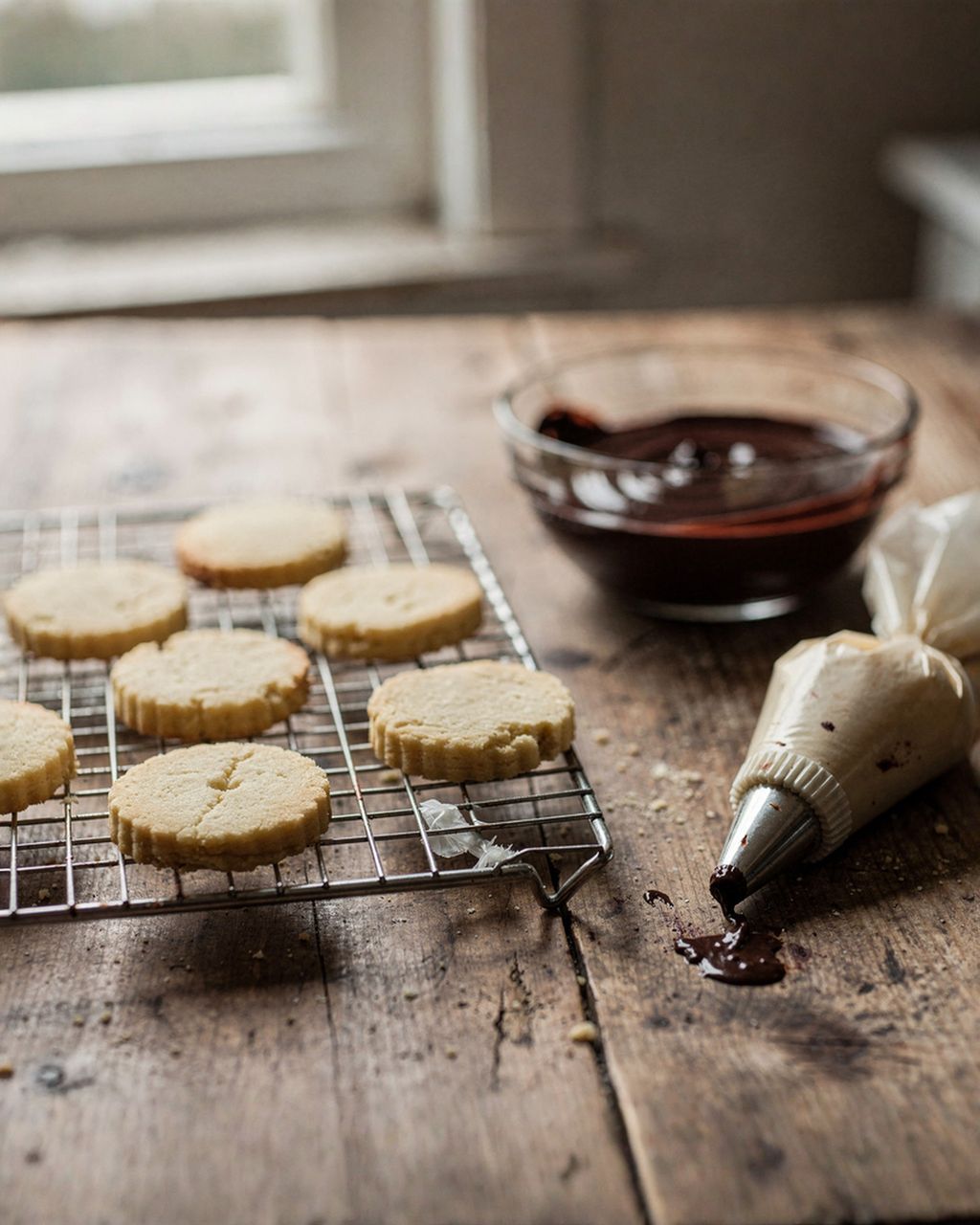
Any thin, dry round disc works: a small butter biscuit, a wafer disc, or a baked round of linzer-style shortcrust (see our Crumbly Linzer Christmas Cookies recipe below). It just needs to be dry and flat so it sticks to the filling instead of sliding off.
One recipe worth heating the oven for, one tip, and one deal from the shop. Nothing else.