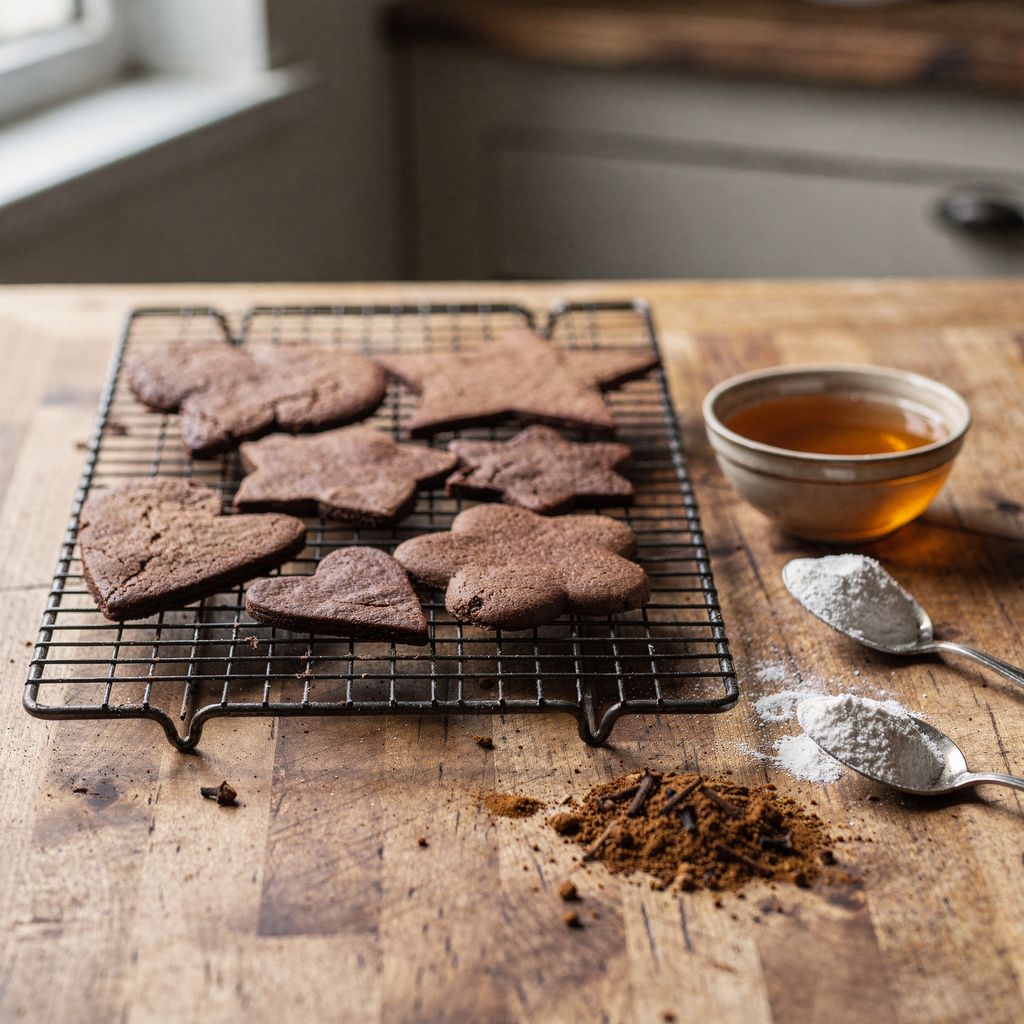
Soft honey gingerbread cookies that never go hard
Baking Soda in Gingerbread: Why Not Baking Powder
Updated Sep 17, 2026
Baking soda goes in gingerbread instead of baking powder because gingerbread dough already contains honey and dark syrup – acids that set the soda off – and soda also leaves the dough alkaline. Alkaline dough browns faster, spreads more, and stays moist. Baking powder brings its own acid along for the ride, so it neutralises the dough, leaving your gingerbread paler, taller, and more like a sponge cake. Here's the full chemistry, exact amounts, and when baking powder actually does belong in gingerbread.
Baking soda has three jobs in gingerbread – and rising is the smallest of them:
It leavens the dough. Together with acids from the honey, it releases carbon dioxide, which lifts the dough.
It shifts the dough to an alkaline pH. This is the main reason. There's more soda in gingerbread than the acids can use up, so the dough stays alkaline.
It lets the gingerbread brown and stay soft. Alkaline dough browns faster and has weaker gluten. That's where the chestnut colour and soft crumb come from.
Baking soda is sodium bicarbonate, a pure alkali. To release gas, it needs two things: moisture and acid. Gingerbread dough supplies both on its own – honey has an average pH of around 3.9 (ranging roughly from 3.4 to 6.1), and its main acid is gluconic acid, which makes up most of honey's total acidity. On top of that, dark syrup, fruit butter or cocoa are often added, so there's plenty of acid in the dough.
That said, soda also breaks down on its own from heat alone, with no acid needed. Decomposition starts at roughly 80–100°C and runs fully at around 200°C – so it completes entirely in the oven. It releases carbon dioxide and water, leaving behind sodium carbonate, a strongly alkaline salt. That alkalinity is welcome in gingerbread. In any pale, delicate baked good, it would be a flaw.
Baking soda is a pure alkali; baking powder is a ready-made mix of an alkali and an acid. Everything else follows from that:
Composition. Soda is a single substance (sodium bicarbonate). Baking powder is soda plus an acid – cream of tartar or diphosphates – plus starch as a filler to keep them apart.
What it needs. Soda needs acid from the dough. Baking powder needs nothing but moisture and heat.
Strength. Soda leavens about three to four times more strongly. One teaspoon of soda is roughly equivalent to three teaspoons of baking powder.
pH after baking. With soda, the dough stays alkaline. With baking powder, it ends up roughly neutral, since the acid and alkali cancel each other out.
That last line is really the whole point of this article. Baking powder is designed to leaven and do nothing else – which is exactly why it suits sponge cake, fruit-topped batter cakes or a Bundt cake, where you want volume and a pale crumb. Gingerbread, though, wants exactly what baking powder is deliberately built not to do: leave the dough alkaline.
Alkaline dough browns faster because the Maillard reaction proceeds more readily in an alkaline environment than an acidic one. The Maillard reaction is the meeting of amino acids and reducing sugars under heat – it kicks off around 140–165°C and speeds up as temperature rises. According to baking literature, browning is optimal at roughly pH 6 to 8, and soda pushes the dough toward the upper end of that range.
It's the same principle behind dipping pretzels in a soda solution before baking: the alkaline surface browns to a deep mahogany, while untreated dough would stay pale.
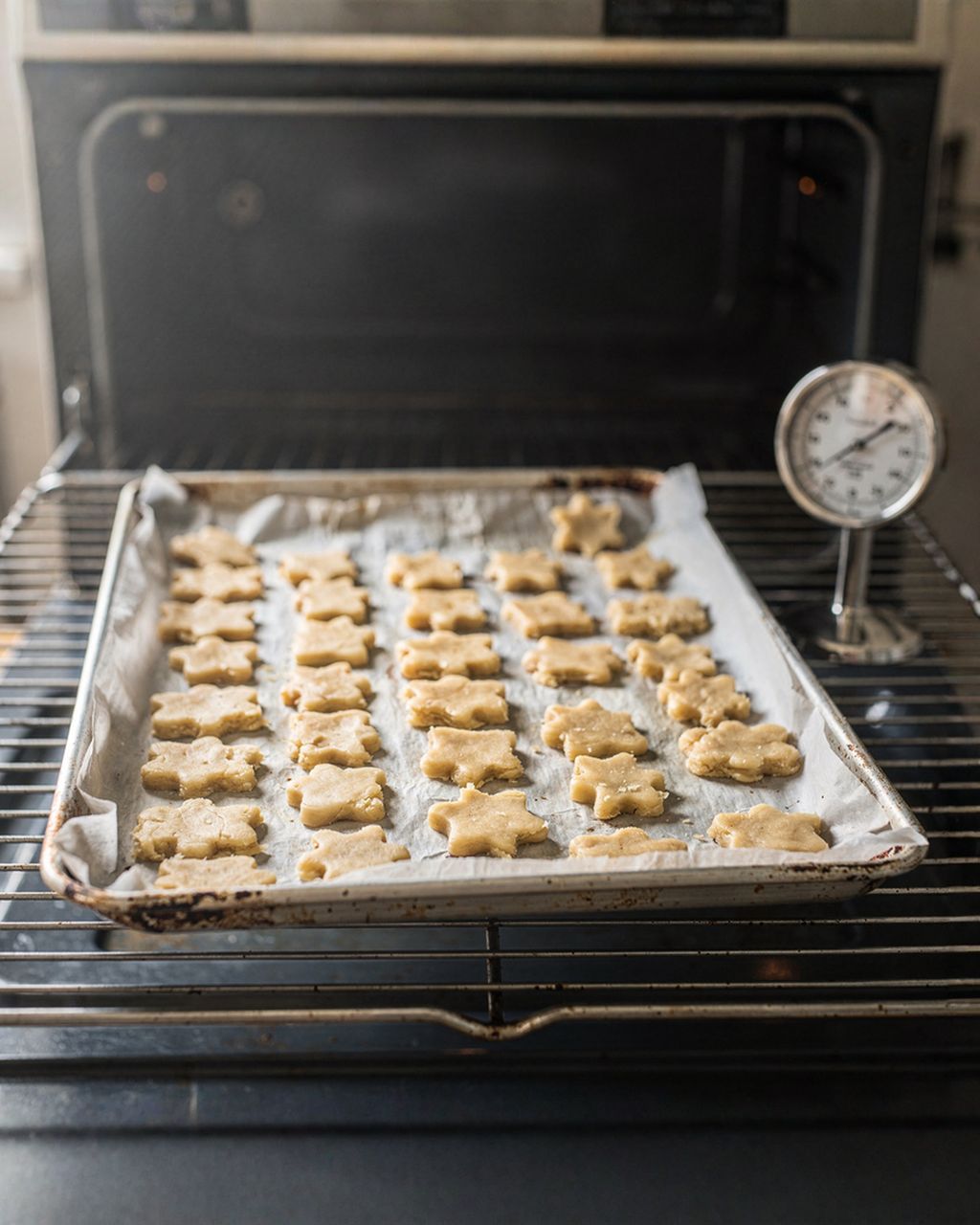
In practice, this is what makes gingerbread work. Thin gingerbread biscuits bake for just 8 to 10 minutes at 170–180°C. With soda in the dough, they pick up both colour and aroma within that short window. With baking powder, you'd need to bake them considerably longer to darken them – and by then they'd have dried out into crackers. Colour in gingerbread can't be made up for with longer baking; it has to come from the chemistry of the dough.
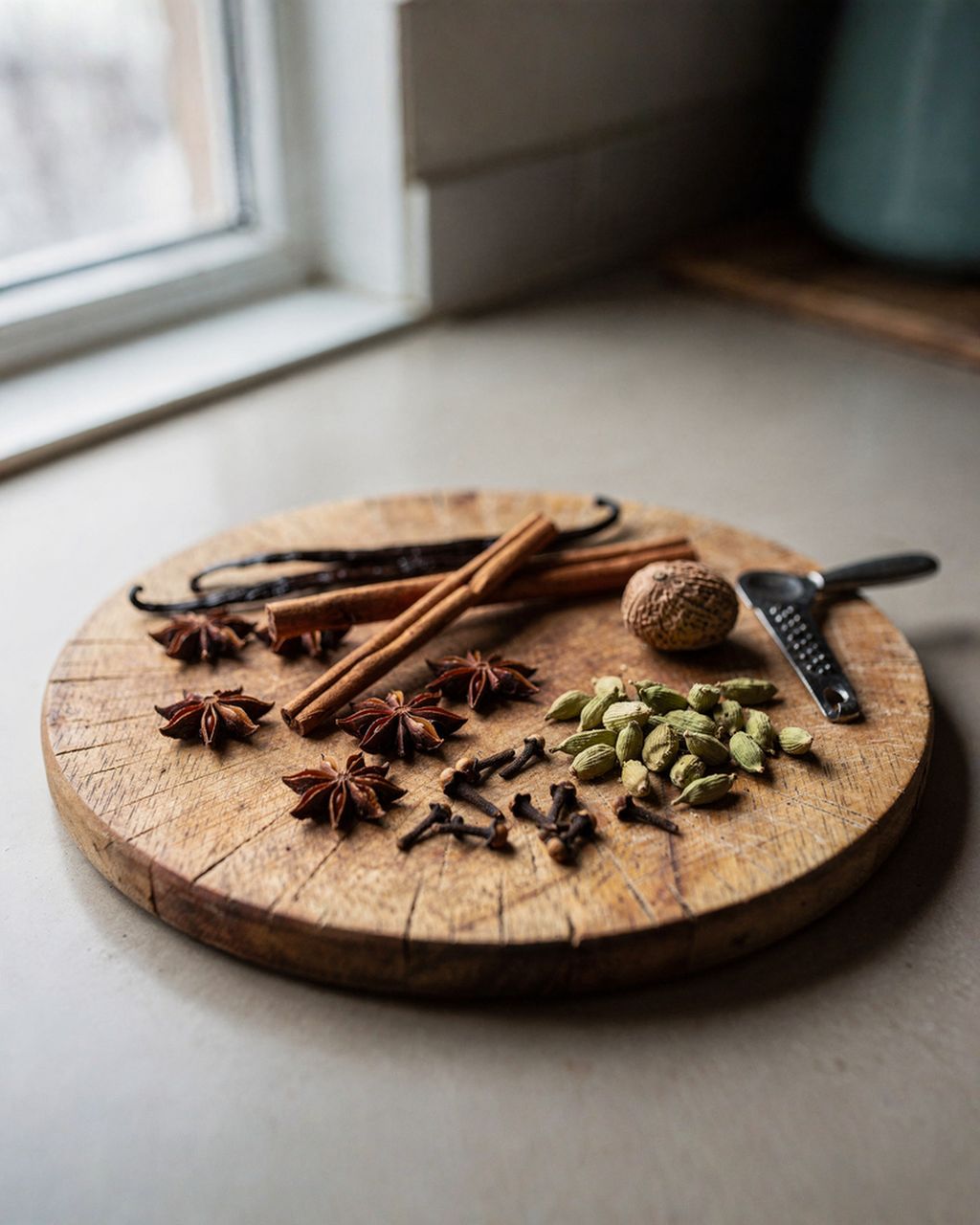
The Maillard reaction doesn't just build colour, though – it builds aroma too, that signature honey-and-spice smell you can pick up from two rooms away. But more soda doesn't mean more fragrant gingerbread – overly dark gingerbread veers toward caramel, and the cinnamon gets lost in it. Stick to a level teaspoon and let the spices shine, ideally your own homemade gingerbread spice mix.
Alkaline dough has weaker gluten, so gingerbread spreads more during baking, stays flat, and turns out softer once cooled. By raising the pH, soda weakens the gluten strands and slows protein coagulation, so the dough keeps flowing in the oven longer before it sets.
For cut-out gingerbread biscuits, that's exactly what you want:
The shape stays crisp and readable. A heart stays a heart, instead of puffing up into a dome.
The surface stays smooth. That's essential for decorating – icing can't be applied evenly onto a bulging, cracked top.
The crumb is fine, not spongy. Gingerbread should bite cleanly, not crumble.
With baking powder, the firmer gluten sets sooner, so the gas has nowhere to spread sideways and pushes upward instead. The result is a domed centre and often a cracked top crust. On a gingerbread house, that means the wall panels bow outward and won't fit together properly.
One thing isn't down to the soda, though: the way gingerbread turns soft after a few days is mainly the honey's doing. Its sugars are hygroscopic, drawing moisture from the air and from any filling, so gingerbread softens over time instead of going stale. Soda just sets the stage – it gives the crumb a fine, alkaline structure that has something to soften into. Hard, gluten-tight gingerbread made with baking powder ages far worse.
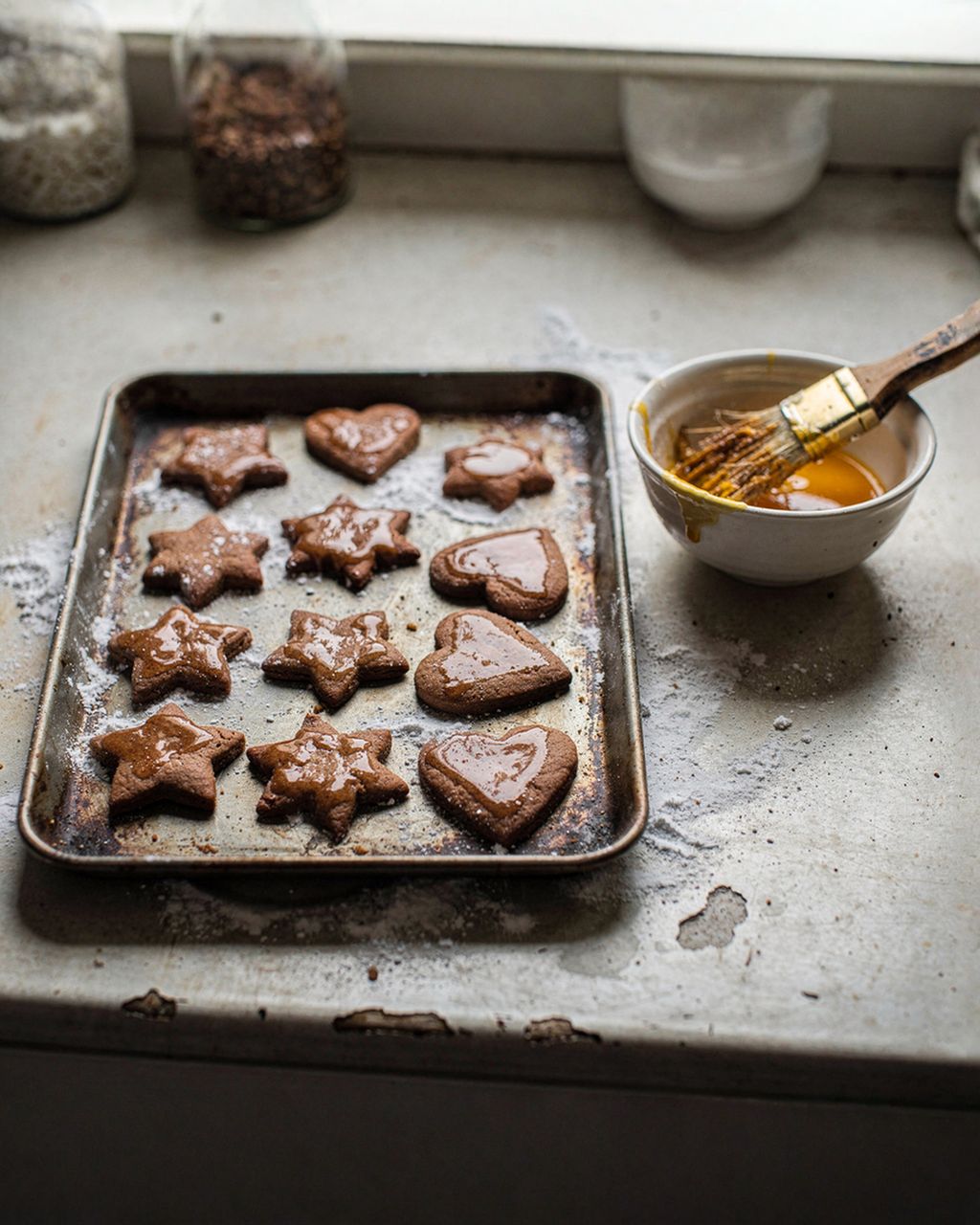
Soft honey gingerbread cookies that never go hard
Soft honey gingerbread with soda that never goes hard – soda and honey in action
For 500g of flour, use one level teaspoon of baking soda, so about 4–5g. More doesn't mean darker or better.
How to handle it:
Stir it into warm honey with syrup, not dry into the flour. This makes the honey foam up, dissolves the soda down to the last grain, and gets the reaction going evenly.
Or sift it in with the flour. Soda likes to clump, and one unsifted lump in a finished biscuit is a bitter, soapy bite.
Dissolved in a spoonful of milk or water, add it to the dough right at the end if you're working with cold fat and don't want to warm up the honey.
For wholegrain and spelt versions, like the spelt flour honey gingerbread with fruit butter, the dough tends to be heavier and denser. There it's worth topping up the soda with half a teaspoon of baking powder – not instead of it, but alongside it.
Let gingerbread dough with soda rest in the fridge for at least 12 hours, overnight if possible. The flour soaks up moisture, the spices settle in, and the soda gets time to spread evenly through the whole dough. Dough that hasn't rested long enough is harder to roll out and bakes unevenly.
Gingerbread made with baking powder turns out paler, taller, and drier – and the honey will taste sharper. Specifically:
Colour. Light brown to beige instead of chestnut. You can't make up for this by baking longer – you'll just dry the gingerbread out.
Shape. It puffs up and domes in the middle. Cut-out shapes lose their outline, and icing cracks on the bulging top.
Taste. The acids from the honey stay unneutralised, so the gingerbread tastes sharper and fruitier – less "gingerbready", more like a honey sponge.
Texture. Firmer gluten gives a more crumbly, spongy texture that goes stale faster and doesn't age well.
Can you still eat it? Sure. But you'll need roughly three times as much baking powder, and it still won't fix the colour or the aroma. Baking soda costs pennies and is in every supermarket – for gingerbread, it's genuinely worth tracking down.
Baking powder makes sense in gingerbread for poured tray bakes and honey cake bases, where you want height and an airy crumb rather than a flat, spread-out shape.
With a moist, poured batter, the situation is different from cut-out biscuits. The acids from the honey get used up before they can lift that much larger mass of batter, so soda alone can't manage the volume. That's why most tray-baked gingerbread recipes use both: soda for colour and softness, and baking powder for lift. It's not a mistake or overkill – each one is doing a different job.
The same logic applies to layered honey cakes like medovník, where it matters that the thin layers come out even and pliable.
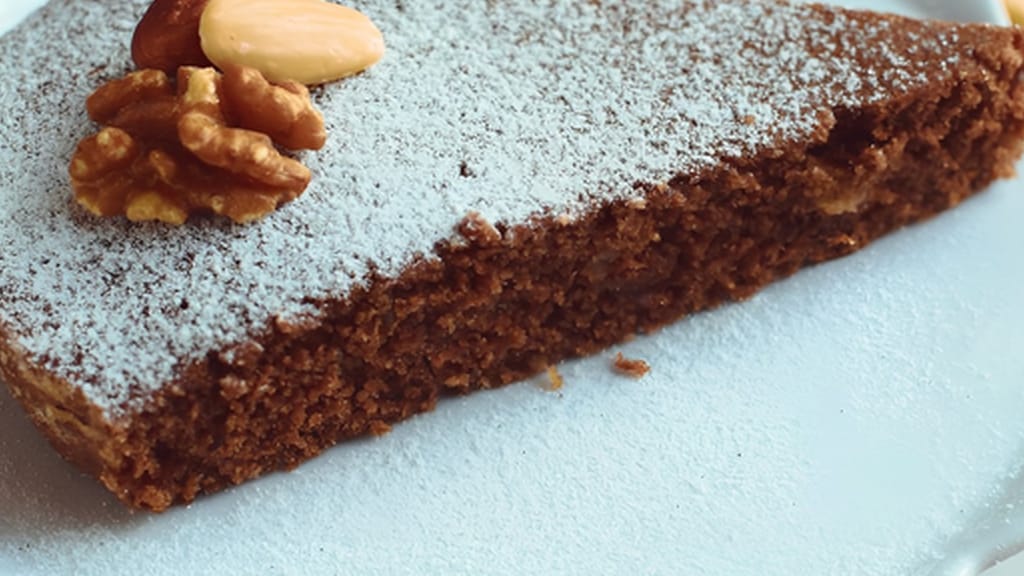
Lactose-free sheet pan gingerbread cake. quick and really good!
Lactose-free tray-baked gingerbread – a poured batter where soda and baking powder work together
Before baking soda came along, gingerbread was leavened with potash and hartshorn – and both are alkaline too, so they did the dough exactly the same favour.
Potash (potassium carbonate, K₂CO₃). A strong alkali. It lets the dough spread flat and brown, giving a dense, chewy crumb. In Germany, traditional spiced gingerbread still can't do without it.
Hartshorn, sometimes called baker's ammonia (ammonium bicarbonate). Breaks down under heat into carbon dioxide, ammonia and water, leaving tiny air pockets in the crumb. The result is a porous, delicately crisp structure that neither soda nor baking powder can produce.
Hartshorn does have one rule, though: it only works in thin, low-moisture bakes. In a thin spiced biscuit, the ammonia escapes fully during baking and leaves nothing behind. In a thick, moist cake base, it would have nowhere to escape to, and you'd taste the ammonia in the finished bake. That's why it's reserved for thin, crisp shapes – like Swedish pepparkakor, thin spiced gingerbread biscuits.
So all three leavening agents – soda, potash and hartshorn – share the same trait: they push gingerbread dough toward an alkaline pH. Baking powder is the only one in this family that doesn't do that. Which is exactly why it isn't the first choice for gingerbread.
Yes, it's one and the same substance – sodium bicarbonate. You'll find it in shops and recipes under names like baking soda, bicarbonate of soda, bicarb, or sodium hydrogen carbonate. Just don't confuse it with washing soda (sodium carbonate), which is far more alkaline and has no place in food.
Tip half a teaspoon of soda into a spoonful of vinegar or lemon juice – fresh soda fizzes up immediately and foams over the edge. If it only bubbles weakly or nothing happens at all, it's spent and shouldn't go in your gingerbread. Unopened soda keeps for two to three years; once opened, test it with vinegar after six months and replace it after a year. Tip it from the opened bag into a well-sealed container and keep it dry, away from kitchen smells – that way it lasts longest.
A bitter, soapy or metallic taste means some soda was left unneutralised in the dough – either you used more than the dough could handle, or it didn't dissolve properly and sat in lumps. Check your ratio: a level teaspoon per 500g of flour is the ceiling, unless the dough contains extra acids (fruit butter, dark syrup, soured cream). It also helps to stir the soda into warm honey rather than sprinkling it dry into the flour. Once baked, gingerbread can't be rescued – the bitterness won't fade with baking or ageing.
Well-wrapped gingerbread dough with soda keeps in the fridge for about a week – and it clearly benefits from resting for the first two days. Wrap it tightly in plastic or keep it in a sealed container so it doesn't pick up odours or dry out at the edges. It gradually darkens and firms up – let it soften a little at room temperature before rolling it out. For longer storage, divide it into flat discs and freeze; it keeps for three months in the freezer.
It can, but it'll be a different kind of bake – hard, glassy, and dark only from the caramelised honey. This is how old-fashioned hard gingerbread for moulds used to be made, deliberately meant for long storage and eaten only after weeks of ageing. If you're after a soft gingerbread you can bite into the very next day, you need a leavening agent.
Put the biscuits in a tin lined with sliced apple or a piece of bread crust, close the lid, and leave them for 3 to 7 days somewhere cool. Swap the apple for a fresh piece after two days so it doesn't go mouldy.
One recipe worth heating the oven for, one tip, and one deal from the shop. Nothing else.