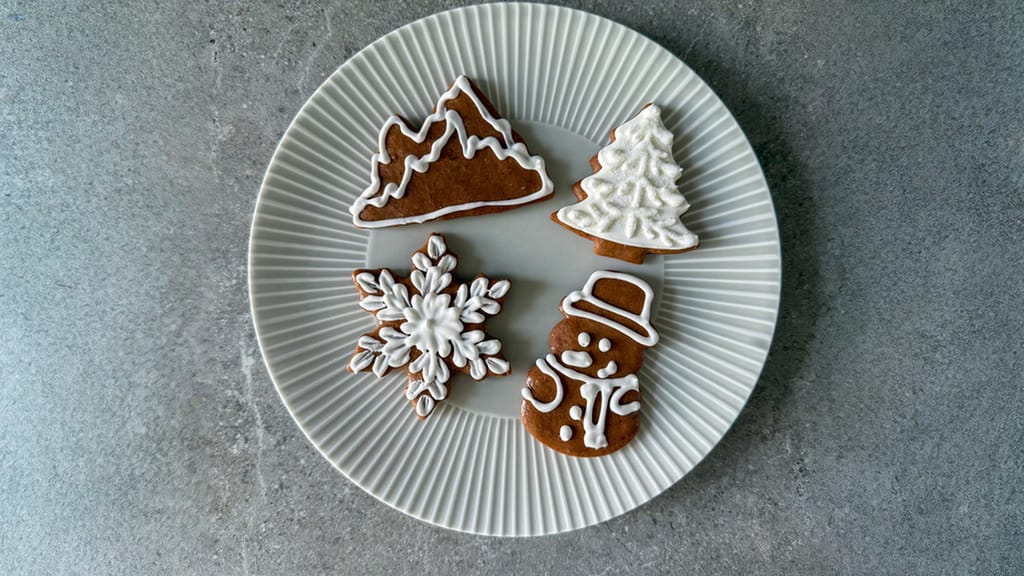
Soft honey gingerbread cookies that never go hard
Why Christmas Cookies Bake at a Lower Temperature: What Happens in the Oven
Updated Sep 17, 2026
Christmas cookies bake at a lower temperature – 150–170°C (300–340°F) for most kinds – because they're small, thin, and loaded with butter and sugar: at 180°C (350°F) the surface browns before the inside has time to dry out. This isn't caution or tradition. It's simply what happens to dough that's low in water and high in fat once it hits the oven. Once you understand the sequence of events, you'll stop watching the clock and start watching the colour instead – and you'll also spot the cases where you actually need to crank the heat up.
It comes down to size, composition, the goal (drying out rather than browning), and how much buffer time you have between "done" and "burnt."
Size. The pieces are thin and small, so heat passes straight through in a matter of minutes. The surface has nothing to wait for – the centre is done almost the same moment as the outside.
Composition. Lots of sugar and fat, very little water. Dough like that browns fast – and then it just keeps burning.
Goal. Most Christmas cookies aren't meant to turn golden-brown, they're meant to dry out. Drying is a slower process than crusting up, and it doesn't like to be rushed.
Buffer. At 150–160°C you've got two to three minutes between "done" and "burnt." At 180°C sometimes it's just thirty seconds – exactly the time it takes to find the corkscrew.
The rest of the article breaks down each of these in turn – along with the cases where a lower temperature is actually the wrong call.
Three things happen in sequence inside the oven: butter melts at 32–35°C, proteins set at 60–70°C, and then comes the longest phase – drying – during which the surface holds around 100°C and only browns once that's finished.
The butter melts almost instantly. Egg proteins and gluten coagulate from roughly 60–70°C, and it's this that fixes the dough's structure; starch in a rich, sugary, buttery dough barely gelatinises, which is why cookies end up crumbly rather than springy. Between the butter melting and the proteins setting, the dough is semi-liquid and spreads – the only thing that stops it is that protein structure firming up.
Then comes the longest phase: drying. As long as water is evaporating from the dough, the surface stays around 100°C and can't brown. Only once it's dried out does the surface temperature shoot up towards the oven temperature – and that's when colour starts to develop. The Maillard reaction really kicks in from around 140–150°C, and sucrose caramelises around 160–170°C.
High heat compresses this whole sequence. The surface jumps straight to browning while the inside is still damp. You know the result: dark edges, an underdone centre, and a chewy texture the next day instead of a crisp bite.
The smaller the piece, the greater its surface-to-volume ratio – and the faster heat reaches the centre. A 10cm brioche-style loaf needs 170–180°C just to cook through before the crust turns to charcoal. A 3mm-thick linzer round has its "centre" just 1.5mm from the surface. It doesn't need heat, it needs time.
Which gives you a simple rule: the thinner and smaller the cookies you're rolling, the lower you should go with the temperature. And the more it matters that every piece on the tray is the same size and the same thickness. Bake only one type and one thickness per tray – mixed sizes are the number one reason half a tray comes out pale and the other half burnt.
Buttery dough with a high sugar content browns faster than bread or cake because it lacks the water that would otherwise cool the surface down. Evaporating water keeps the surface around 100°C; once it runs out, the surface temperature spikes within moments. And in cookie dough, it runs out fast – there was never much water in it to begin with.
The type of sugar matters too. Icing sugar dissolves quickly and evenly, while granulated sugar stays in grains that caramelise in spots, leaving dark speckles on an otherwise pale round. We go into why most cookie recipes call for icing sugar in our article on icing sugar in Christmas cookies.
And then there's the fat: butter isn't pure fat. It contains milk protein and milk sugar – exactly the two ingredients the Maillard reaction thrives on – which is why butter-based cookies brown faster on their own than ones made with vegetable fat. If you're swapping out the butter, expect a different colour and a different texture too: what to use instead of butter in Christmas cookies.
Gingerbread dough browns faster than any other Christmas dough, for three separate reasons. Honey brings reducing sugars – glucose and fructose – which take part in the Maillard reaction more readily than plain beet sugar. Baking soda makes the dough alkaline, and food chemists confirm that an alkaline environment speeds up browning significantly (the same principle behind dipping pretzels in lye before baking). And dark spices deepen the colour on their own.
That's why gingerbread cookies are baked hot and fast: 170–180°C for 5–8 minutes, depending on thickness. Leave them in the oven "just a bit longer to be safe" and you'll end up with rock-hard biscuits – we cover the causes and the fix in why gingerbread cookies go hard and how to keep them soft.
Nut-based doughs have a similar problem from the opposite direction. Nuts are packed with fat and protein, which scorch and turn bitter at high heat before you even see them darken. That's why florentines, hollow nut crescents, and almond slices shouldn't go above 150–165°C.
Soft honey gingerbread cookies that never go hard
Soft honey gingerbread cookies that stay soft – short, hot baking in practice
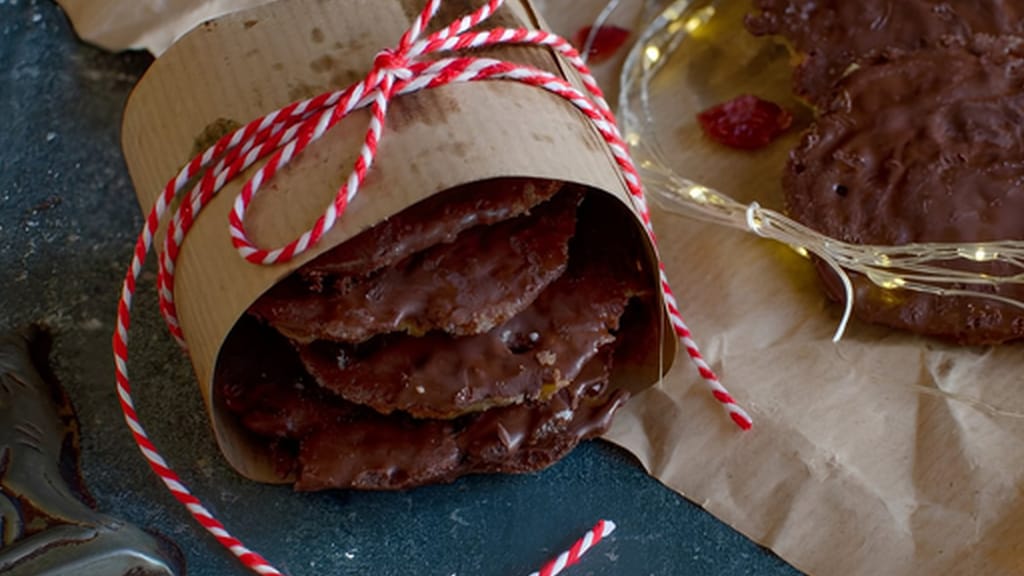
Chocolate-dipped marokánky (hazelnut florentine cookies)
Chocolate-dipped florentines – nutty cookies that need a lower temperature
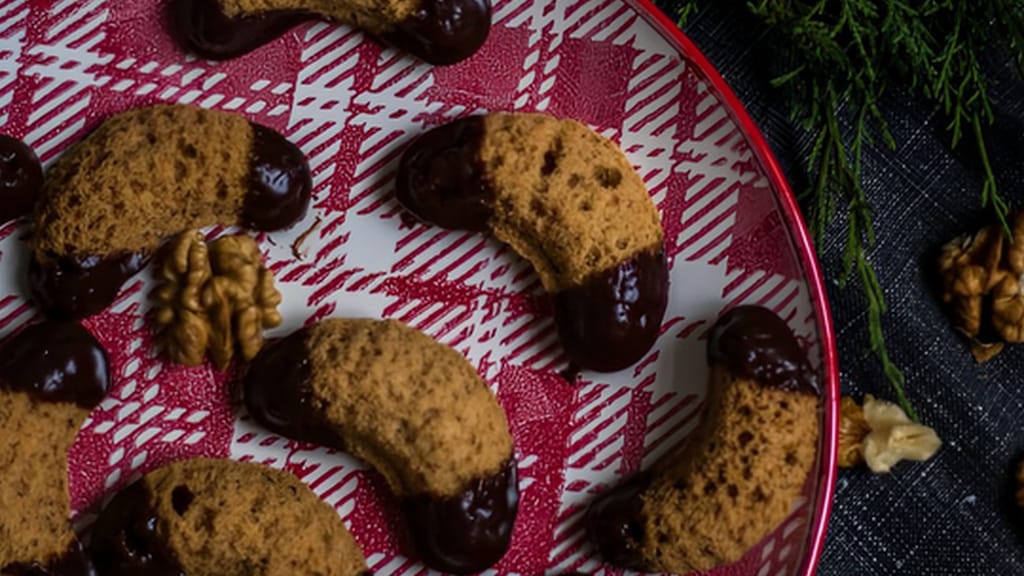
Hollow walnut crescents
Hollow nut crescents – delicate nutty cookies baked at 150–165°C
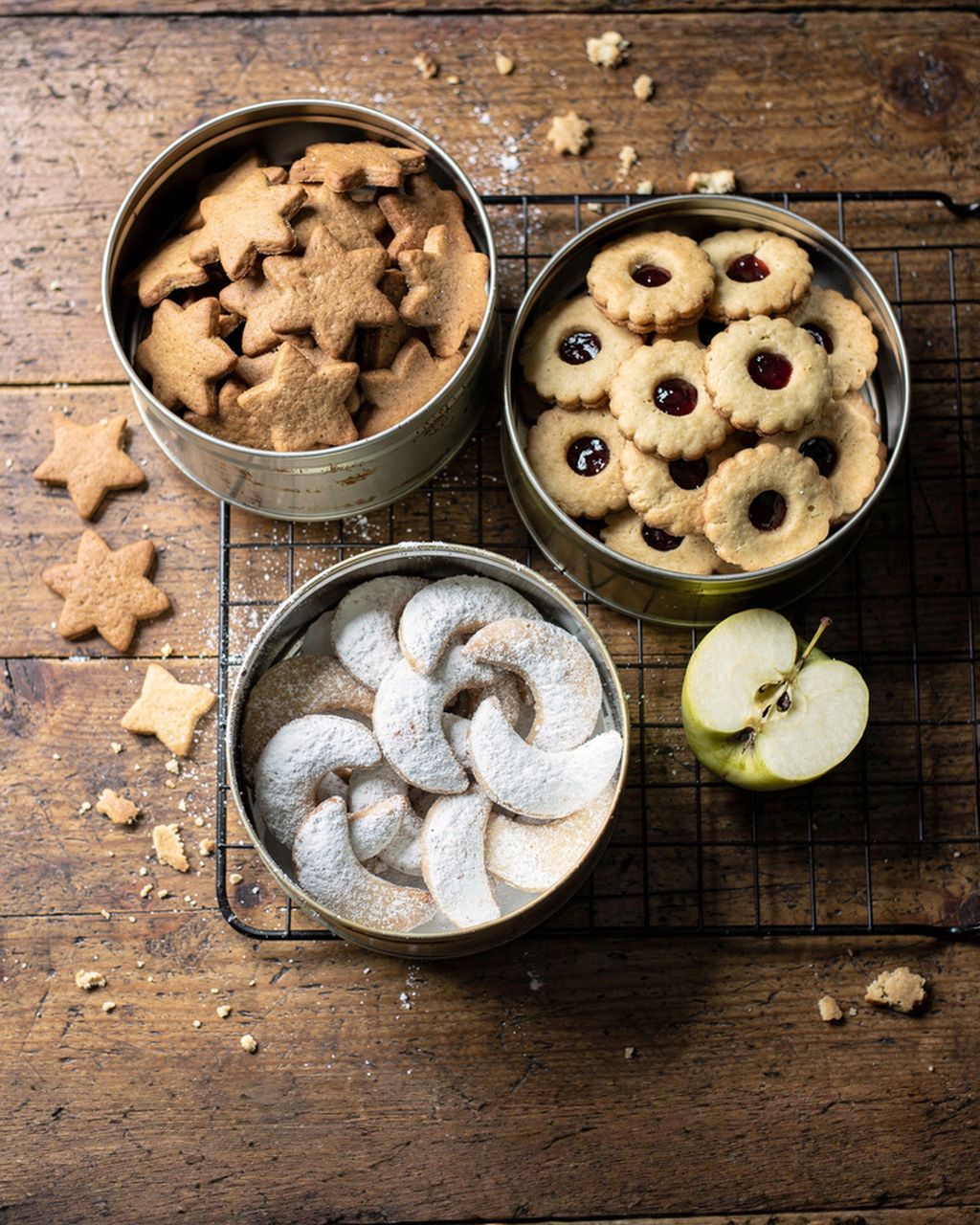
Linzer cookies, vanilla crescents, nut-filled tartlets: for these, the goal isn't a golden crust but a dry, crisp bite that melts away in your mouth. That's drying, not browning – and drying needs low heat and more time.
This is also how you know when they're actually done. Linzer cookies should stay pale, with barely a hint of gold around the edge; the moment the whole surface has browned, they're overbaked and will turn hard once cool. Pull them too early, on the other hand, and they'll stay damp inside and go soft in the tin within two days.
Why linzer cookies can turn hard even without overbaking, and what the fat-to-flour ratio has to do with it, is covered in hard linzer cookies: why it happens and how to keep them crisp. And if your dough is already crumbling apart while you're rolling it, why linzer dough crumbles tackles the cause before the oven even comes into it.
The extreme case is meringue kisses. These "bake" at 90–110°C for up to two hours – that's not baking anymore, that's pure drying. The moment the egg white starts to brown, you've lost both the crispness and the white colour.
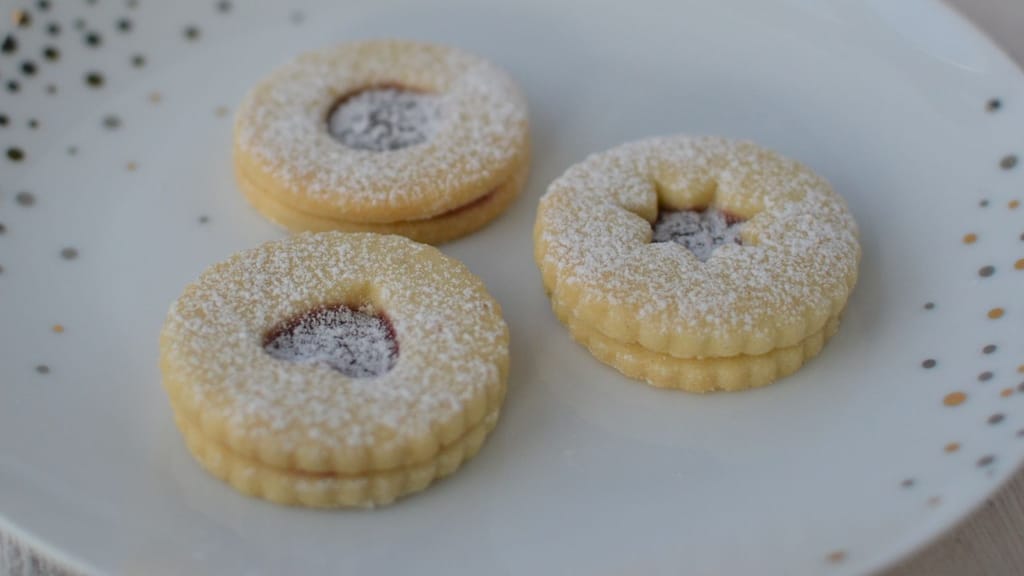
Classic christmas cookies: delicate linzer cookies
Classic linzer Christmas cookies – pale, crisp, baked at 160–170°C
Puff pastry and choux, gingerbread, yeasted Christmas bakes, and well-chilled cut-out dough all need more heat, not less.
Puff pastry and choux. Cream horns and choux rings need a fierce start around 190–200°C: the steam inside the dough has to lift it before the structure sets. At 150°C they'll just melt and turn glassy.
Gingerbread. 170–180°C for a short time beats 150°C for a long time. More time in the oven just dries them out and makes them hard – with gingerbread, you're fighting to keep moisture in, not chasing colour.
Yeasted Christmas bakes. Brioche-style loaves, stollen, filled buns: these need volume, and a quick start at 170–180°C is what gives it to them.
Well-chilled dough. If you're putting linzer dough into the oven straight from the fridge, feel free to go for the higher end of the range. Cold fat melts more slowly, the edges have time to set before the dough can spread, and cut-out shapes keep their crisp edges.
That last point matters because it runs against instinct: spreading isn't only about oven temperature – it's mostly about the temperature of the dough itself. Room-temperature dough will spread even at 150°C. Well-chilled dough holds its shape even at 175°C.
With a fan oven, subtract 20°C from the recommended temperature – bake cookies at 150°C instead of 170°C. That's because the fan blows hot air directly onto the surface of the cookies, so at the same dial setting it bakes faster and dries out the surface far more aggressively.
Conventional 170°C → fan oven 150°C
Conventional 180°C → fan oven 160°C
Conventional 160°C → fan oven 140°C. For low temperatures (below 150°C), only subtract 10°C.
Fan ovens do have one big advantage for cookies: they can handle two or three trays at once, which saves hours during the Christmas baking rush. Without a fan, always bake just one tray in the middle of the oven – on two shelves, the bottom one darkens from underneath while the top one stays pale.
For delicate types (meringue kisses, thin linzer cookies, coconut macaroons), a fan oven can actually work against you: the moving air dries them out too much and can even shift the lighter pieces around.
Ordinary home ovens can be off from the set temperature by 10–25°C in either direction, sometimes even more, and on top of that they cycle: the thermostat switches on and off, so the actual temperature oscillates around the set value. With a loaf that bakes for an hour, this evens out over time. With cookies that are done in eight minutes, it doesn't – you'll catch either the high swing or the low one.
What to do about it:
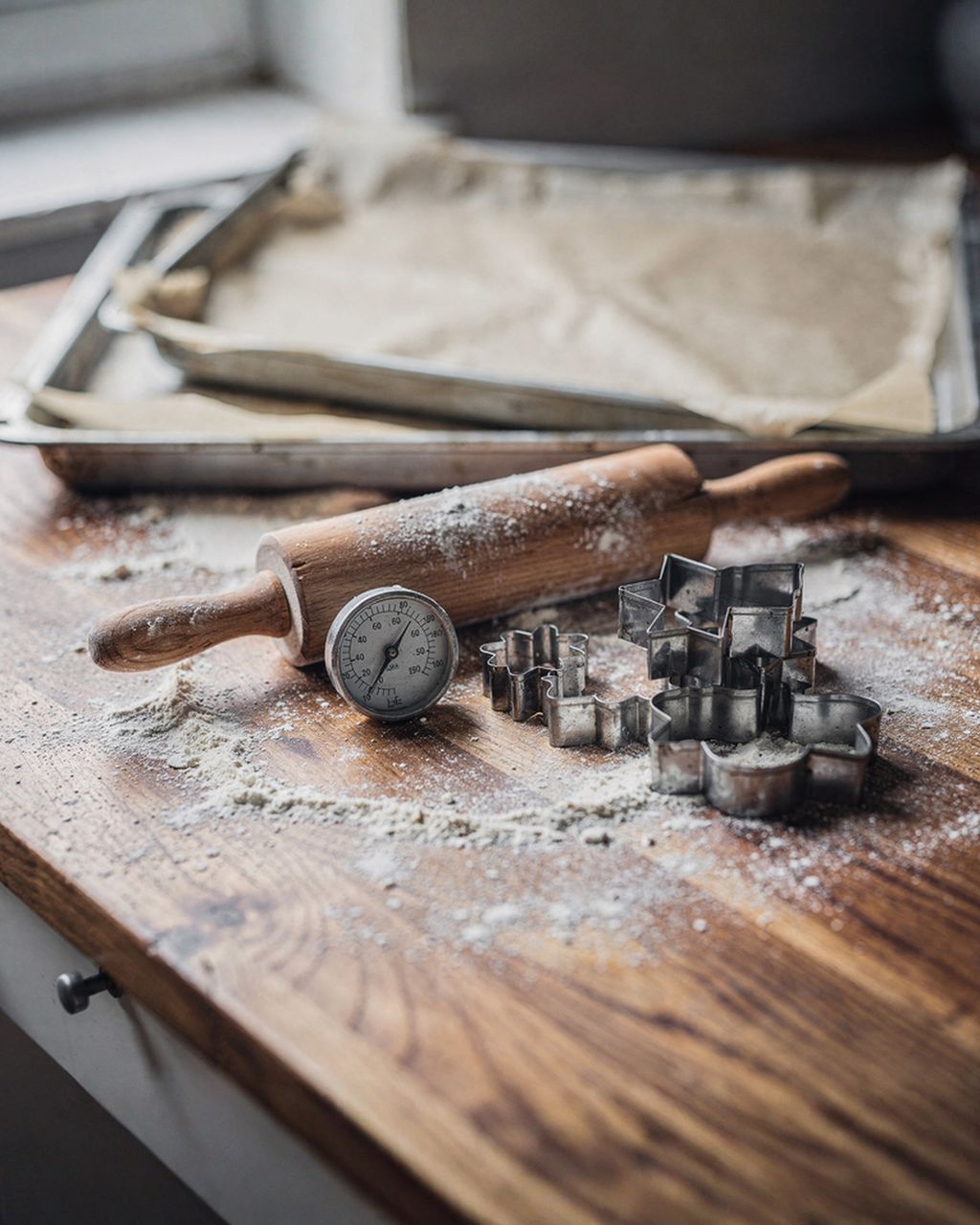
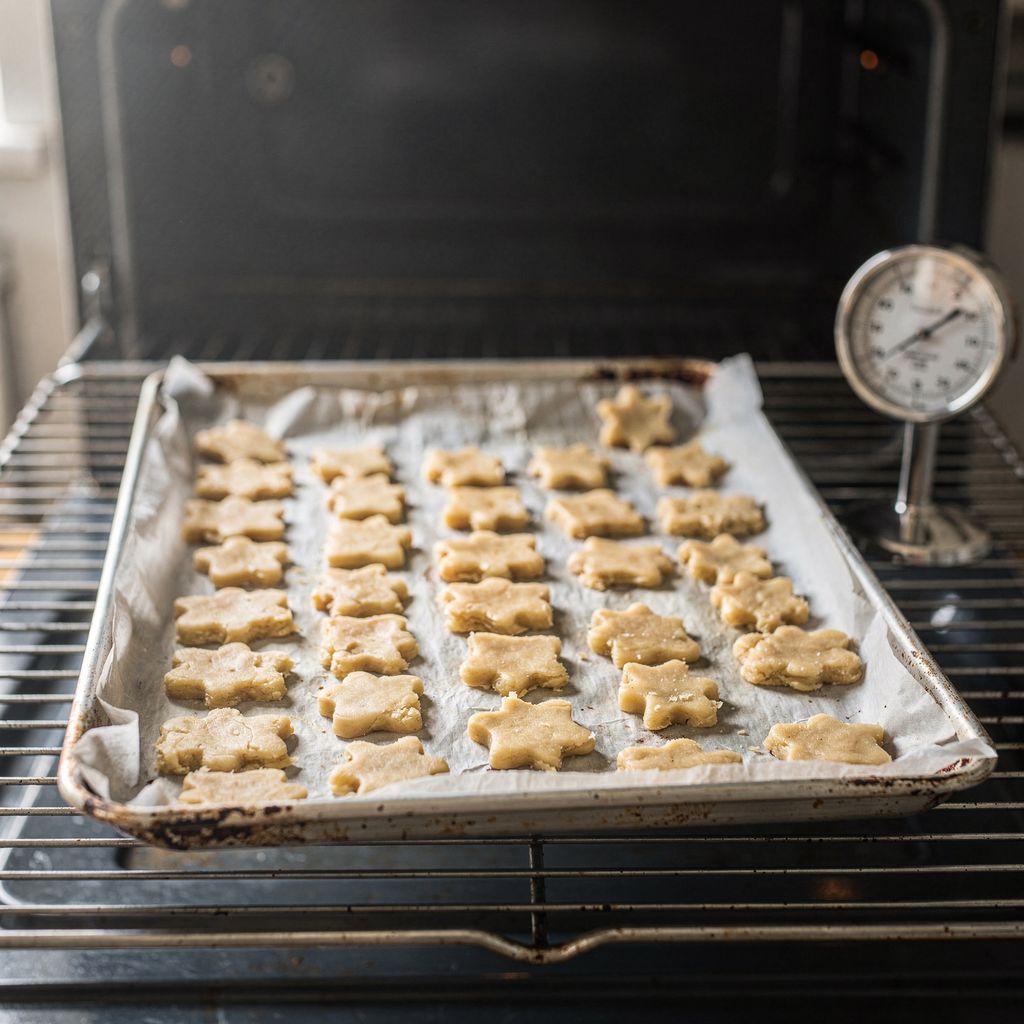
Get an oven thermometer and leave it in the oven permanently. Go by that, not the dial. It's the one small investment that actually turns this article into something useful.
Preheat for longer than the beep. The indicator light reports air temperature, not how warmed-through the walls and racks are. Give it another 10–15 minutes after it beeps.
Turn the tray 180° after two-thirds of the baking time. Almost every oven has a hotter corner.
A dark, thin tray absorbs radiant heat and burns the bottoms. A light-coloured, heavy-gauge tray, or the double-tray trick (slide one under the other), evens things out.
Treat the first tray as a test batch. Set the time two minutes shorter, check the result, and adjust the rest of the batch accordingly.
Most Christmas cookies bake at 150–170°C, gingerbread at 170–180°C, meringue-based mixtures at 90–150°C, and puff pastry or choux at 190–200°C. These ranges are for conventional (top and bottom) heat – for fan ovens subtract 20°C, or just 10°C below 150°C:
Linzer and buttery cut-out cookies: 160–170°C
Vanilla crescents and nut-based doughs: 150–165°C
Gingerbread: 170–180°C, briefly
Coconut macaroons and meringue-coconut shells: 130–150°C
Meringue kisses: 90–110°C, more drying than baking
Puff pastry and choux: 190–200°C
You'll find specific times for each type, plus which shelf to use, in our full guide what temperature to bake Christmas cookies at.
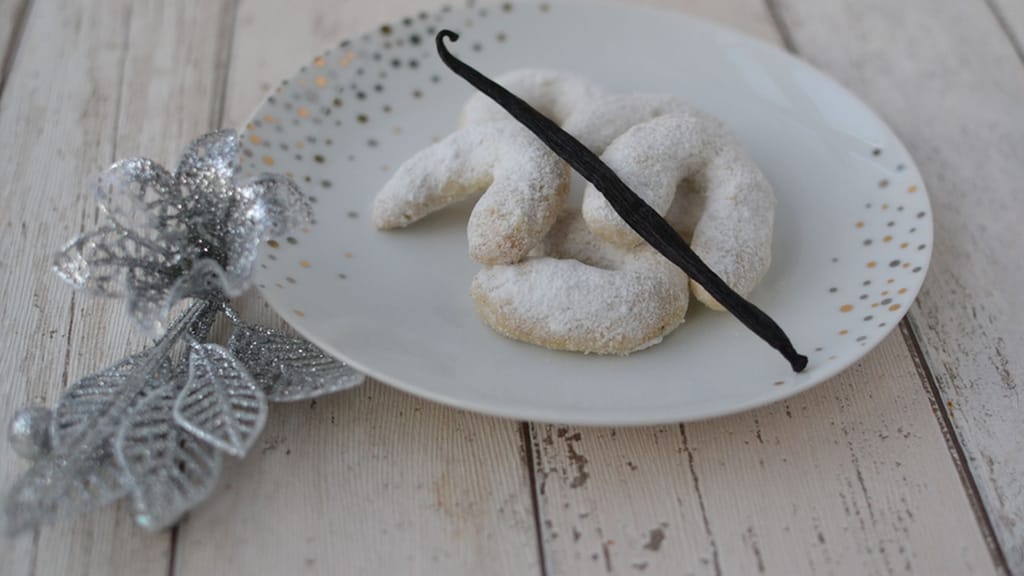
The best christmas cookies? vanilla crescents, of course!
Vanilla crescents – a nutty dough that wants 150–165°C and a pale surface
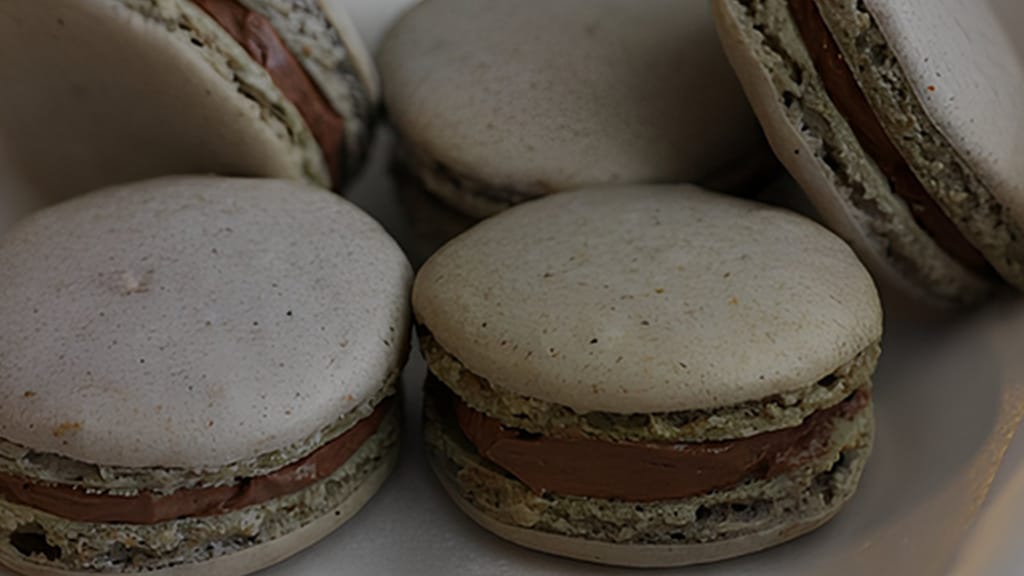
Lakronies
Coconut-meringue tartlets – meringue shells that dry rather than bake at 130–150°C
Uneven baking on a single tray usually comes down to three things: cookies of different thickness, a hotter corner in the oven, and a dark, thin tray. Roll all the pieces to the same thickness and bake only one type per tray – a thinner round will be done minutes before a thicker one right next to it. Turn the tray 180° after two-thirds of the baking time so the oven's hot spot gets shared evenly among all the pieces. And if the bottoms are darkening too fast, swap the dark tray for a light, heavy-gauge one, or slide a second tray underneath it.
Yes – the tray needs to cool between batches, because on a warm tray the butter starts melting before the pieces even make it into the oven, and the shapes spread out of shape. Let it sit on a cool worktop for two to three minutes, or rinse it under cold water and dry it. Easiest is to work with two trays: one bakes while you calmly arrange the next batch on the other, keeping the cut shapes in the fridge in the meantime.
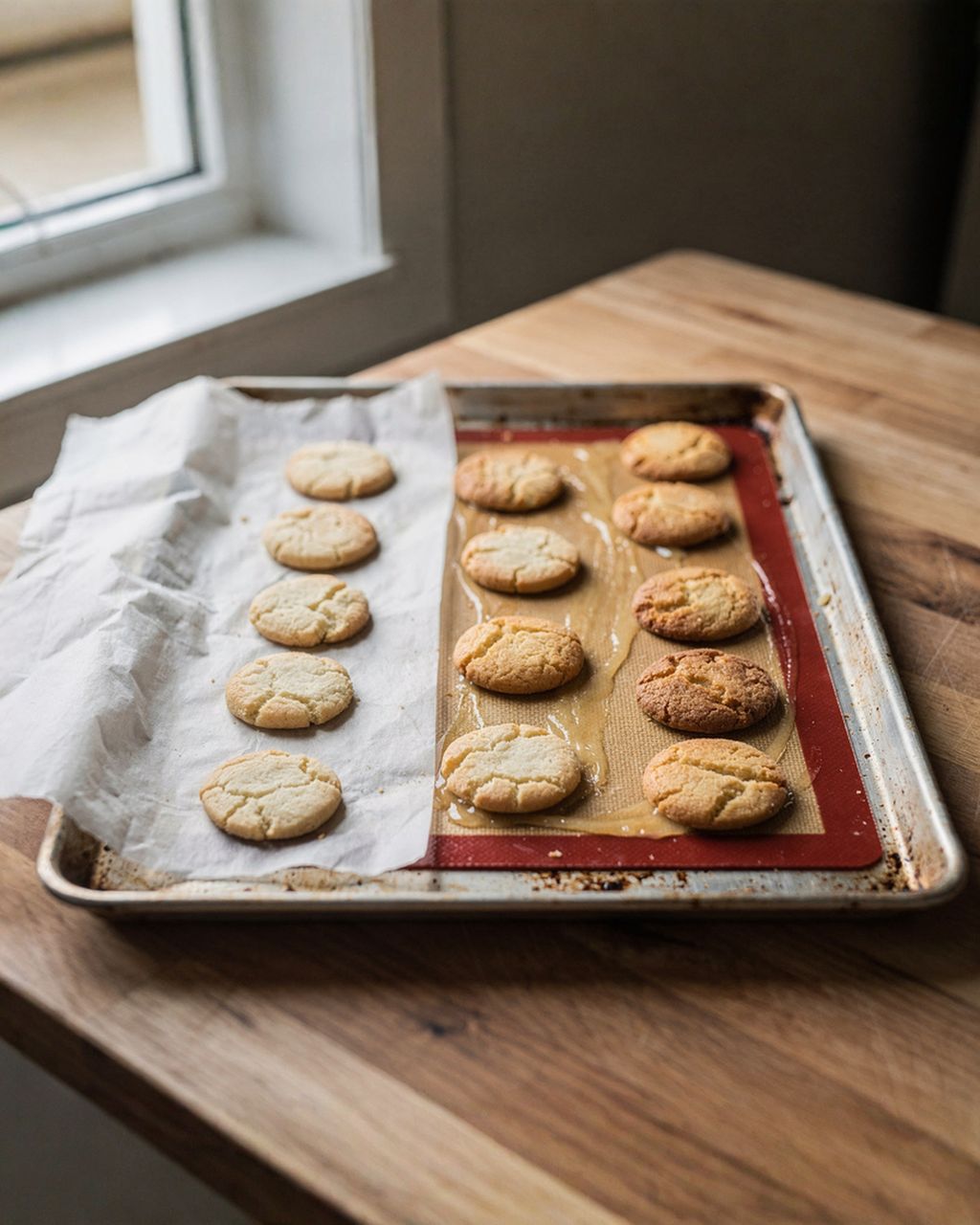
Parchment paper gives cookies a darker, crisper bottom; a silicone mat insulates and leaves the bottoms paler and softer. For linzer-style and cut-out cookies, where you want a pale, even base, silicone is the better choice. For cookies that should have a crisp bottom, reach for parchment. When switching between the two, allow an extra one to two minutes on silicone.
The same temperature ranges apply in a gas oven, but you need to account for how differently it behaves. An open flame means the bottom heat is noticeably stronger and the inside of the oven is more humid – cookies struggle to dry out properly and burn more easily underneath. Bake on a higher shelf than you'd expect (the second slot from the bottom is usually too low), use a double tray, and watch the bottoms rather than the tops. An oven thermometer matters even more here, since the dial markings on gas ovens are often just a rough guide.
Slightly darkened bottoms can be rescued once the cookies have cooled: just scrape them off with a fine grater or a sharp knife – the bitter layer is usually very thin. If the whole piece has gone dark, the bitterness has worked its way through the dough and can't be removed; crumble those cookies up and use them as a crumb base for creams or the bottom of a no-bake dessert. And immediately drop the temperature by 10°C and the time by two minutes for the rest of the batch – one ruined tray is a cheap way to calibrate your oven.
One recipe worth heating the oven for, one tip, and one deal from the shop. Nothing else.