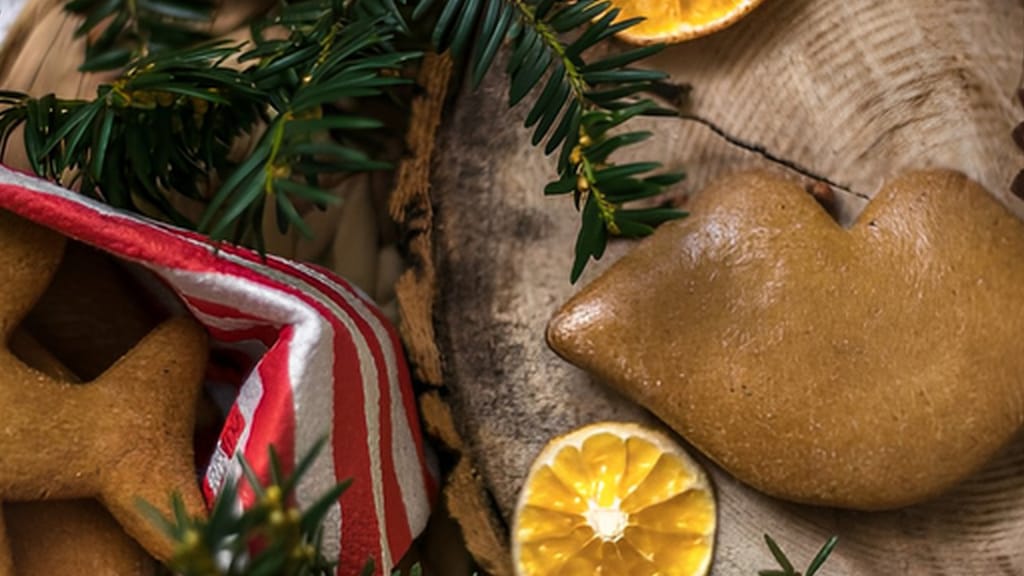
Soft gingerbread cookies
What Temperature to Bake Gingerbread Cookies: Times by Thickness
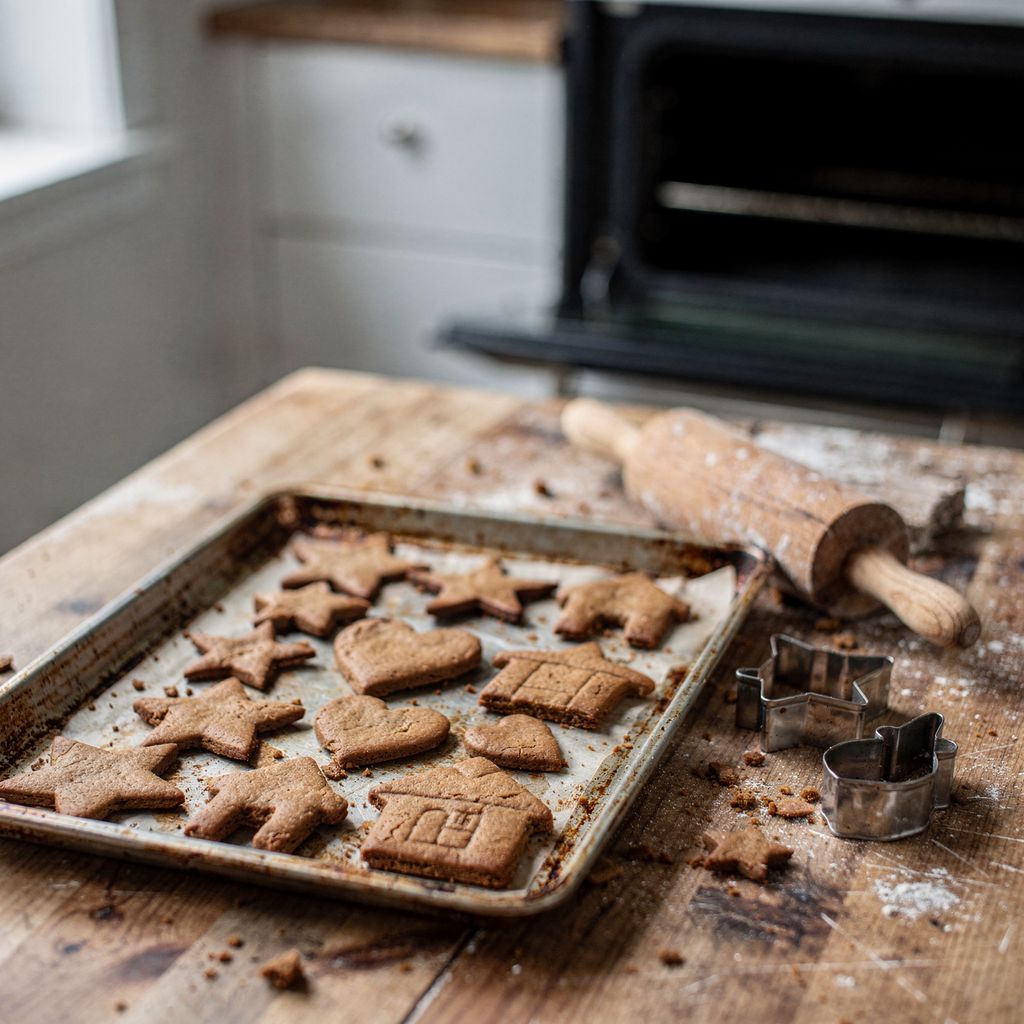
Updated Sep 25, 2026
Bake gingerbread cookies at 320–340°F (160–170°C) with conventional top/bottom heat (thin and classic cookies at 340°F, thick or large pieces at 320–330°F), or at 300–320°F (150–160°C) in a fan oven, for roughly 6–12 minutes depending on thickness; large pieces like gingerbread house walls can take up to 15 minutes. Cranking up the heat won't help: honey dough browns before it's fully baked through, and every extra minute turns it into a rock-hard biscuit. Below you'll find baking times by thickness, why honey is so sensitive to temperature, and how to tell the exact moment to pull the tray out.
Bake gingerbread cookies in a preheated oven at 320–340°F (160–170°C) with conventional top/bottom heat, for 6–15 minutes depending on thickness – thin and classic cookies at 340°F (170°C), thick or large pieces at 320–330°F (160–165°C). Time is mostly determined by the thickness of the rolled dough:
1/8 inch (3 mm) (thin cookies for decorating, tree ornaments): 340°F (170°C), 6–8 minutes
3/16 inch (4–5 mm) (classic cut-out gingerbread cookies): 340°F (170°C), 8–10 minutes
1/4–5/16 inch (6–8 mm) (thick, soft gingerbread cookies): 320–330°F (160–165°C), 10–12 minutes
large pieces (gingerbread house walls, large hearts): 320°F (160°C), 12–15 minutes
In a fan (convection) oven, lower the temperature by 20–35°F (10–20°C), so 300–320°F (150–160°C), and check a minute earlier – circulating air bakes faster and dries the dough out more.
Treat these numbers as a starting point, not a rulebook. Your oven, your dough, and your baking sheet will each shift things by a few minutes, so always keep an eye on the first tray.
Gingerbread cookies can't handle temperatures above 340°F (170°C) because the honey in the dough browns much sooner than regular sugar. Honey is high in fructose (around 38%), which according to food chemistry starts caramelizing at around 230°F (110°C), while beet sugar (sucrose) doesn't caramelize until roughly 320°F (160°C). Dark honey-based dough therefore colors quickly in the oven, and at high heat the edges scorch before the center has a chance to bake through.
Two other factors add to this:
Spices turn bitter. Cinnamon, cloves, and star anise lose their aroma when overbaked and leave behind a bitter, dusty aftertaste.
Baking soda needs time. Baking soda (or baking powder) reacts with the acidic honey, and heat releases carbon dioxide from it. At a moderate temperature, the cookie rises evenly and stays light; in an overheated oven, the surface hardens before the gas has a chance to spread, and the cookie cracks or puffs up unevenly.
We cover the general reasons why Christmas cookies are baked low and slow in Why Christmas cookies are baked at a lower temperature.
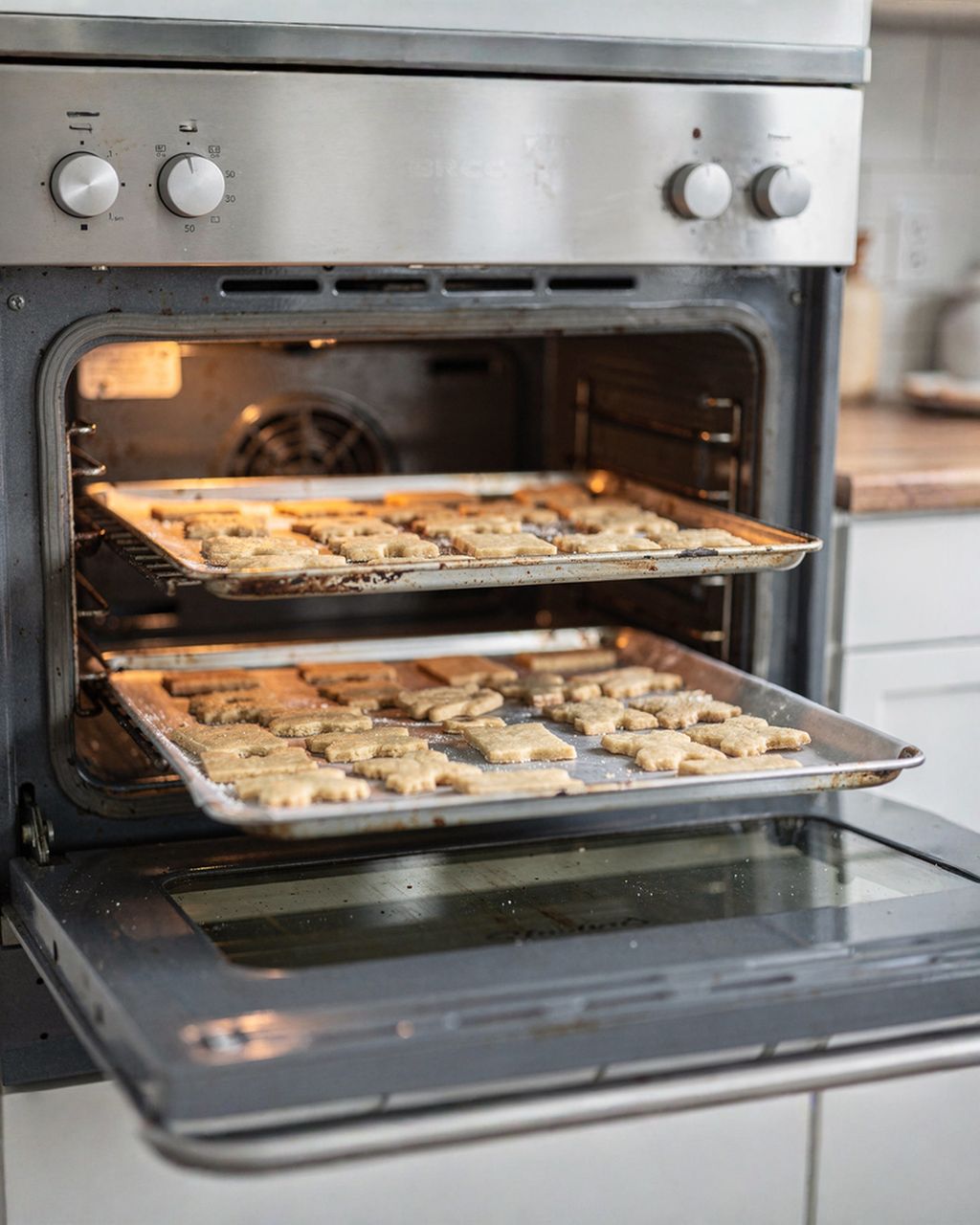
For gingerbread cookies, it's more reliable to use conventional top/bottom heat at 340°F (170°C), tray in the middle of the oven; a fan oven at 300–320°F (150–160°C) is only worth using when baking two trays at once. Heat comes evenly from above and below, and the cookies stay softer.
With a fan oven, keep in mind that:
cookies dry out more, so pull them out a bit earlier,
the area near the fan at the back tends to run hotter – rotate the tray 180° halfway through,
thin 1/8-inch (3 mm) cookies can overbake in just one extra minute.
If your oven has a fan-with-bottom-heat setting (a "pizza" function), don't use it for gingerbread – the bottoms will darken faster than the tops.
Thickness affects gingerbread baking time more than anything else. A difference of just 1 mm (about 1/32 inch) means roughly one to two extra minutes in the oven. If you put a 1/8-inch (3 mm) star next to a 1/4-inch (6 mm) heart on the same tray, one will overbake or the other will stay raw – you can't get both right at once.
Roll it out evenly. Place two rolling guides of equal height (or two wooden spoons) on either side and roll over them.
Sort shapes by size on the tray. Small ones on one tray, large ones on another, each baked for its own time.
Don't put cookies on a warm baking sheet. The dough will start to spread even before it hits the oven. More on this in Why gingerbread cookies spread while baking.
Take the cookies out as soon as the surface turns matte and springs back slightly when touched – not once they feel hard. They'll keep baking on the hot tray for another minute or two and firm up as they cool.
With dark honey dough, color is hard to judge, so rely more on sheen, springiness, and time. We break down all five reliable signs in How to tell when gingerbread cookies are done.
After removing from the oven, let the cookies sit on the tray for 2–3 minutes before moving them to a wire rack. On a hot tray, the bottoms would keep baking.
Shorter baking alone won't guarantee soft gingerbread cookies – you also need a dough with enough honey, rolled to 1/4–5/16 inch (6–8 mm), baked at the lower end of the time range (better a minute under than over) and time to rest in an airtight container, where the cookies draw in moisture.
If your gingerbread came out hard, try how to store gingerbread cookies so they soften, and if they keep turning out hard, check out why gingerbread cookies turn hard.
Tried-and-true recipes for soft gingerbread cookies:
Soft gingerbread cookies
Soft Gingerbread Cookies – a recipe for tender Christmas gingerbread
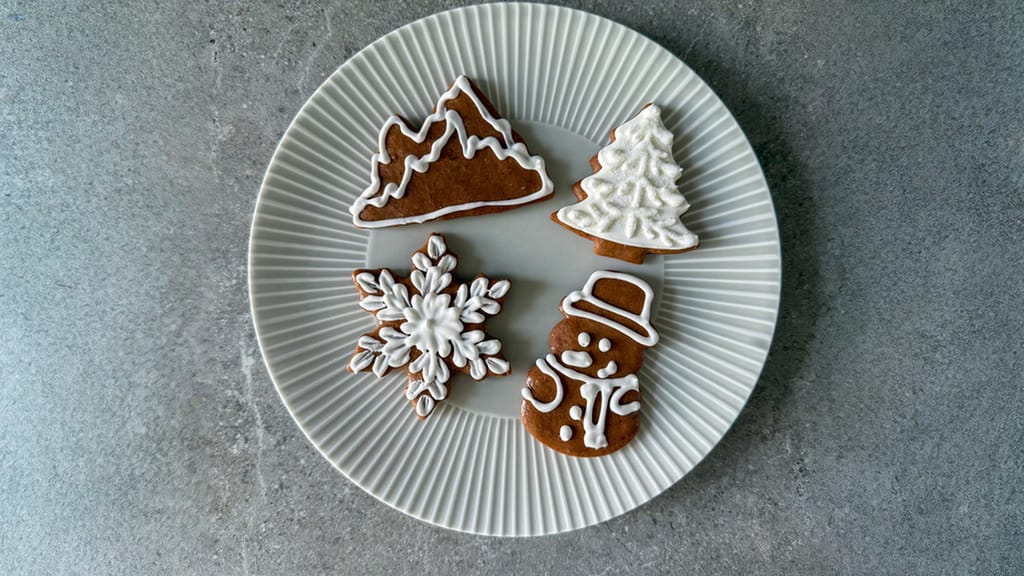
Soft honey gingerbread cookies that never go hard
Soft Honey Gingerbread Cookies That Stay Soft
Five mistakes most often ruin gingerbread cookies: too high a temperature, an unpreheated oven, baking until hard, mixing different thicknesses on one tray, and an egg wash without adjusting the time. Each has a simple fix:
Temperature too high. 350–390°F (180–200°C) gives you dark edges and dry cookies. Stick to 340°F (170°C).
Unpreheated oven. In a slowly heating oven, cookies spread and dry out. Let the oven preheat for at least 15 minutes.
Baking until "hard". A cookie that's already hard in the oven will be rock-solid once it cools.
Mixing different thicknesses on one tray. As mentioned above – one batch burns while the other stays underdone.
Egg wash without adjusting the time. Egg on the surface browns faster, so check egg-washed cookies a minute earlier. For what to brush on and when, see What to brush on gingerbread cookies for shine.
Gingerbread cookies should be baked earliest of all your Christmas cookies, even 3–4 weeks ahead, since they need time to rest and soften. For when to start on other kinds, see the Christmas cookie baking calendar.
Both the dough and baked cookies can be frozen – find the method in how to freeze cookies and dough. For how long gingerbread cookies keep compared to other Christmas cookies, see the shelf-life guide by cookie type, and for temperatures for linzer cookies, vanilla crescents, or vanilla kisses, see What temperature to bake Christmas cookies.
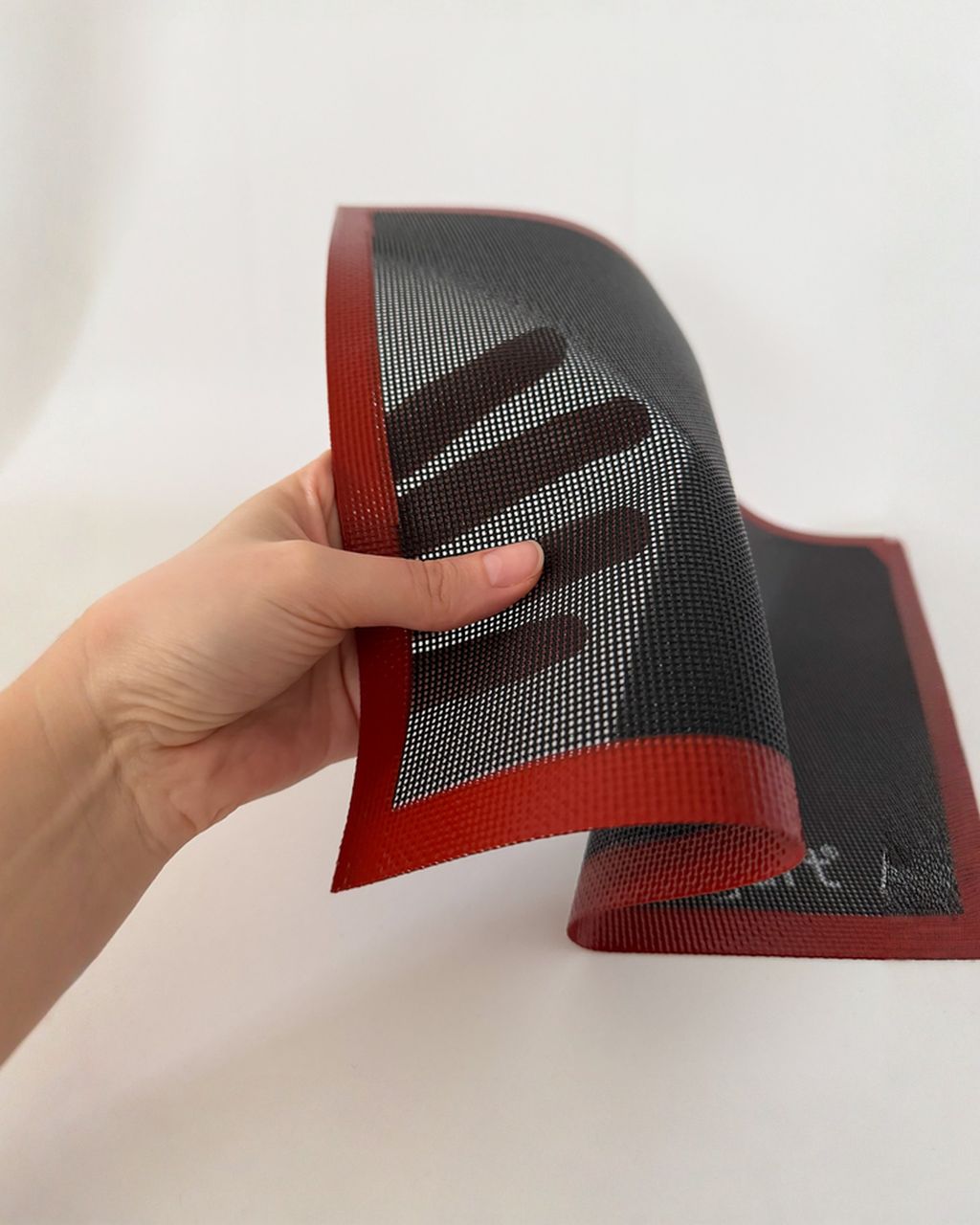
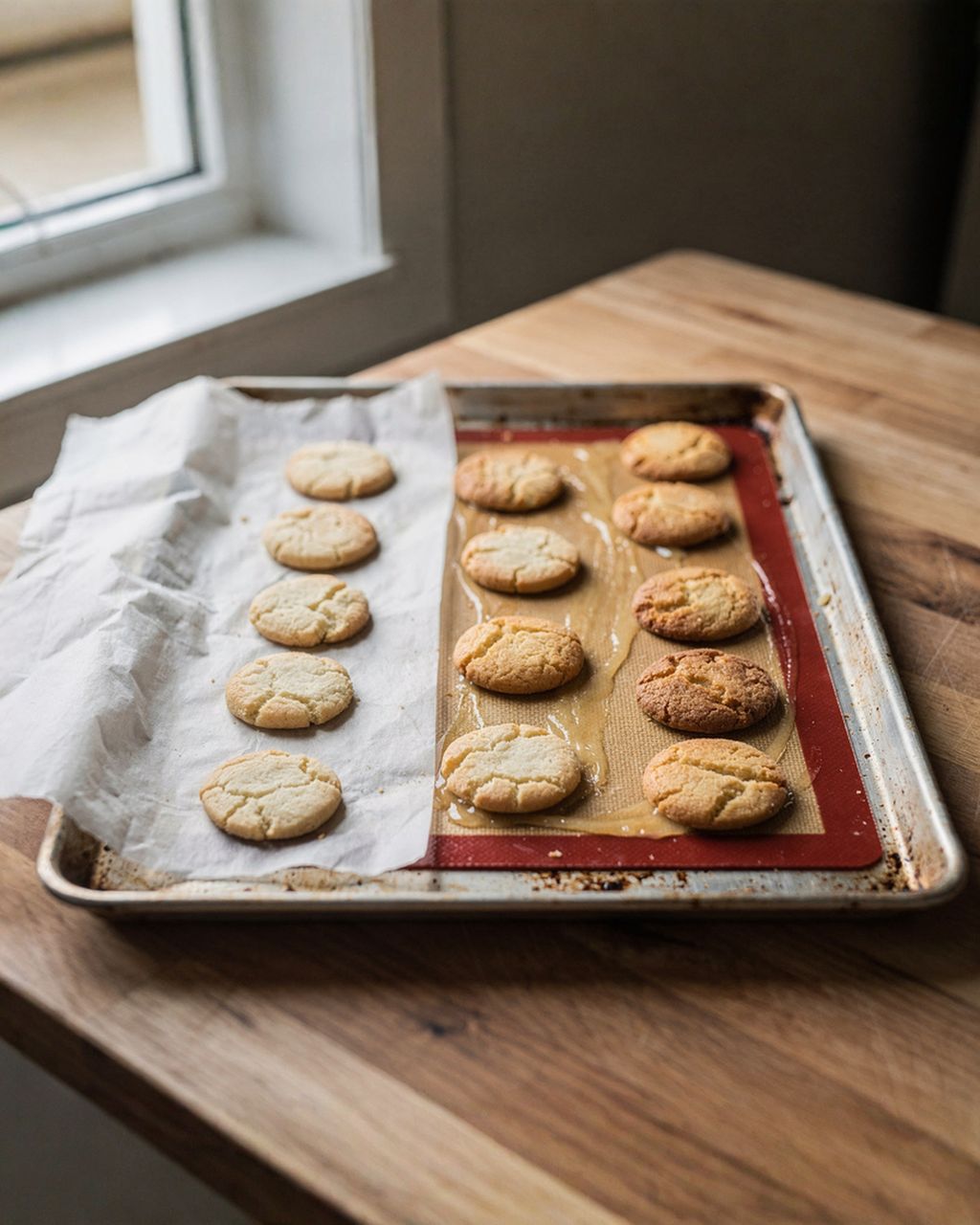
Gingerbread cookies turn out most reliably on parchment paper or a silicone mat – they won't stick, and the bottoms won't darken as fast. Parchment creates a buffer between the dough and the hot metal, so on a bare greased sheet, check them a minute earlier than usual.
Yes, honey-based gingerbread dough should rest for at least a few hours, ideally overnight in the fridge. This lets the honey and spices meld together, makes the dough easier to roll, and helps it hold its shape better in the oven. Let it warm up slightly at room temperature before rolling.
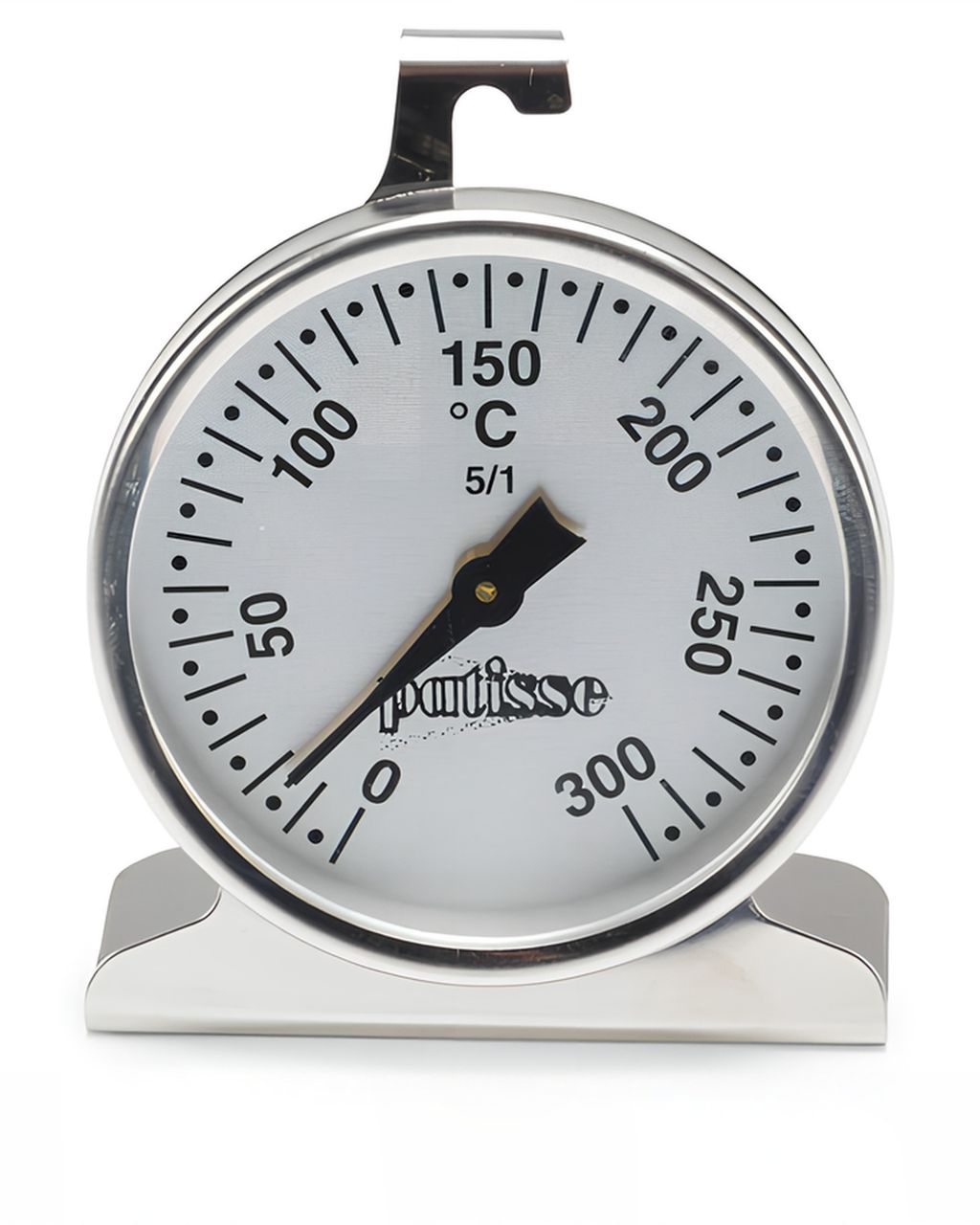
In a gas oven, bake gingerbread cookies at a setting roughly equivalent to 320–340°F (160–170°C) – on most dial-style ovens that's around mark 2-3 (mark 1 ≈ 300°F, mark 2 ≈ 350°F). Dials vary by manufacturer though, so check your oven's manual or verify with an oven thermometer. Gas ovens tend to run hotter from below, so place the tray a shelf higher than usual.
Flat gingerbread cookies are most often caused by stale baking soda or baking powder, or by an oven temperature that's too low for the leavening to activate properly. Replace opened baking soda every few months, and always fully preheat the oven to a true 340°F (170°C).
Yes, gingerbread cookies bake faster on a dark sheet and the bottoms darken sooner, because dark metal absorbs more heat than a light-colored or aluminum sheet. On a dark sheet, check a minute earlier than usual, or lower the temperature by about 20°F (10°C), and always use parchment paper.
One recipe worth heating the oven for, one tip, and one deal from the shop. Nothing else.