Bundt Pan - Tradition
Vegan Bundt Cake: What to Swap for Eggs, Butter and Milk So It's Moist and Releases Cleanly
Updated Oct 17, 2026
A vegan bundt cake bakes up just as moist as a classic one when you replace the eggs with aquafaba or applesauce, the butter with oil or plant-based baking fat, and the milk with soy milk soured with lemon. Baking powder and baking soda take care of the rise. The other half of success is the pan: vegan batter sticks more easily in an intricate pan, so you need to grease it with solid fat and dust it with flour. Below you'll find the exact ratios, the most common mistakes and a method that gets the cake out whole, with every ridge intact.
A moist vegan bundt cake comes down to three swaps and one adjustment to the leavening:
Eggs → aquafaba (45 ml per egg), applesauce (60 g per egg) or a flax "egg".
Butter → neutral oil (80 g in place of 100 g butter) or block plant-based baking fat (1 : 1).
Milk → soy milk 1 : 1, ideally soured with a tablespoon of lemon juice.
Leavening → add ½ teaspoon baking soda and a tablespoon of vinegar or lemon juice to the baking powder.
Why it works: in a classic bundt cake, eggs do three jobs at once. They bind the batter, trap air, and their proteins set during baking into a framework that holds the crumb up. No single replacement manages all three, which is why you combine them. Applesauce or aquafaba binds and holds moisture, while the acid and baking soda produce the bubbles that whipped eggs would otherwise provide.
If you only want to leave out the eggs and keep the butter and milk, see our egg substitute ratios for bundt cake. This article is about a fully vegan bundt cake.
The most reliable egg replacer in a vegan bundt cake is aquafaba, the liquid from a can of chickpeas: 3 tablespoons (about 45 ml) per egg. Your options, depending on the crumb you're after:
Aquafaba, 45 ml per egg. It behaves most like egg because it traps air. Whisk it lightly with a fork until foamy and fold it in at the end. The cake won't smell of chickpeas; the aroma disappears during baking.
Applesauce, 60 g per egg. Unsweetened. It adds moisture and keeps the cake moist for longer, though the crumb is a little denser. It suits a cake flavored with cinnamon or cocoa.
Ripe banana, 50–60 g per egg. It binds beautifully, but you can taste it. Expect a banana cake, not a vanilla one.
Flax "egg": 1 tablespoon ground flax + 3 tablespoons water, left to thicken for 10 minutes. It binds well but doesn't add lift. In a light-colored cake it leaves dark flecks.
Vegan yogurt (soy, coconut), 60 g per egg. It adds moistness and a bit of acidity that helps the baking soda.
A practical limit: with replacements, you can convert a classic recipe with up to three eggs. A classic bundt cake with 4–5 eggs relies on them so heavily that, once converted, it comes out heavy and damp however you combine the replacers. For a cake that size, reach for a recipe that was developed as vegan from the start, with the ratio of flour, fat and leavening worked out without eggs.
You can replace butter in a vegan bundt cake with neutral oil at 80 g of oil per 100 g of butter, or with block plant-based baking fat at 1 : 1. The difference is that butter is roughly 80% fat and the rest is mostly water, so you use about a fifth less pure fat.
Oil (sunflower, rapeseed/canola): the moistest crumb, which stays soft the next day. You can't cream it with sugar until fluffy, though, so the baking powder and soda have to do the lifting. For an oil-based batter, simply combine the dry ingredients with the wet and don't overmix.
Block plant-based baking fat: behaves most like butter, can be creamed with sugar and gives the classic bundt cake structure. Check the packaging to make sure it contains no whey or milk fat.
Coconut fat (deodorized, flavorless): as with oil, use 80 g in place of 100 g butter. Be aware that it solidifies below 24 °C (75 °F), so a cake from the fridge is hard. You'll find coconut fat in place of butter in our apple bundt cake with coconut fat.
Nothing fully replaces the flavor of butter. Make up for it with vanilla paste, freshly grated lemon zest and a pinch of salt, so the cake doesn't taste flat.
Replace milk in a vegan bundt cake with plant-based milk at 1 : 1. Soy works best, because it has the most protein of the common plant-based milks and, going by the nutrition information on packaging, comes close to cow's milk in this respect (around 3 g per 100 ml). Protein helps both the structure and the golden crust.
Soy: best structure and browning, neutral flavor.
Oat: sweeter, and the crust browns more. You may want to cut back the sugar slightly.
Almond and rice: thin and low in protein. They work, but the crumb is more crumbly.
Carton coconut milk (not canned): a delicate coconut flavor that suits a chocolate bundt cake.
Soured soy milk (a buttermilk substitute): stir 1 tablespoon of lemon juice or apple cider vinegar into 250 ml of soy milk and let it stand for 5–10 minutes until it curdles slightly. The acid reacts with the baking soda and produces the bubbles that whipped eggs would otherwise give you. That's why it's the easiest route to a fluffy vegan bundt cake.
You can replace some of the sugar in a bundt cake with fruit, but expect a different crumb. Sugar doesn't just sweeten: it binds water, softens the structure and creates the golden crust. When you replace part of it with blended dates or ripe banana, the cake will be moister, denser and darker. With sweeteners such as erythritol, you can't count on browning or on the cake staying moist the next day. It works best to cut the sugar by about a third and make up the missing sweetness with fruit.
A vegan bundt cake usually turns out dense or rubbery for one of four reasons:
Overmixed batter. Without eggs, the structure comes mainly from gluten, and the more you mix, the firmer and more rubbery it gets. Combine the dry and wet ingredients with a spatula only until the lumps of flour disappear.
Too many replacers at once. Four portions of applesauce in place of four eggs make a damp, heavy streak at the bottom. Convert a classic recipe only up to three eggs. For a bigger cake, use a recipe that is vegan from the start.
Leavening without acid. Baking soda without lemon, vinegar or yogurt won't react and leaves a soapy aftertaste. For roughly 300 g of flour, use 1 packet of baking powder (12 g) plus ½ teaspoon of baking soda with a tablespoon of acid.
The batter waited. Baking soda with acid starts bubbling immediately. Get the finished batter into a preheated oven within a few minutes, or the bubbles escape before baking.
Bake at 170–175 °C (340–350 °F) with top and bottom heat for roughly 45–55 minutes, depending on the size of the pan. It's done when a wooden skewer pushed into the highest point comes out dry or with just a few crumbs. Vegan batter tends to be moister, so check toward the longer time rather than the shorter.
Grease an intricate pan with solid plant-based fat, brushed into every crevice, and then dust it with flour. After baking, leave the cake in the pan for 10 minutes and then turn it out. This method is recommended directly by the pan maker Nordic Ware. It matters even more for a vegan bundt cake: without eggs the crust is softer, and the sugar in the batter catches more easily in deep ridges.
Solid fat, not oil. Block plant-based baking fat or solid coconut fat stays on the walls. Oil and melted fat run down into the lower ridges and leave the upper edges dry, and that's exactly where the cake tears.
Brush into every detail. Work a thin layer of fat in with a silicone brush, especially into sharp edges and around the center tube. Hold the pan up to the light to check that no matte spot has been missed.
Dust with flour, knock out the excess. Add a tablespoon of plain (all-purpose) flour, turn the pan so the flour catches everywhere, then tap out the rest upside down. For a cocoa bundt cake, use cocoa instead of flour so no white patches show.
Spray only if it contains flour. If you want a spray, choose a baking spray with added flour. According to the manufacturer, ordinary cooking spray leaves a sticky film on a nonstick surface, and the batter then sticks more and more.
Fill no more than ¾ full. Spread the batter to the sides with a spatula and tap the pan twice on the counter to release air bubbles trapped in the details.
10 minutes, then out. When you take it out of the oven, leave the cake in the pan for 10 minutes, gently shake the pan from side to side and turn the cake out onto a rack. If you let it cool completely in the pan, the sugar sets and glues it in.
Wash the pan by hand in warm water after baking, with no dishwasher and no steel wool. A scratched nonstick surface releases the cake less and less well.
The best choice for a vegan bundt cake is a cast aluminum pan with a nonstick finish. It conducts heat evenly, the crust browns the same all over and the edges of the pattern stay sharp. Other types have their pros and cons:
Cast aluminum with a nonstick finish: even baking, sharp detail, long lifespan. It's pricier and must be washed by hand.
Enamel or ceramic bundt pan: a classic from grandma's kitchen. It heats up more slowly and the bottom can bake through before the top. Fine for a simple shape, not for a detailed pattern.
Silicone pan: the cake releases most easily, but the crust doesn't brown much, the pattern is softer and you have to move the full pan on a baking sheet. We don't sell silicone bundt pans. If easy release is your main concern and looks matter less, it's an honest choice.
Of the Nordic Ware pans we carry, these suit a vegan bundt cake:
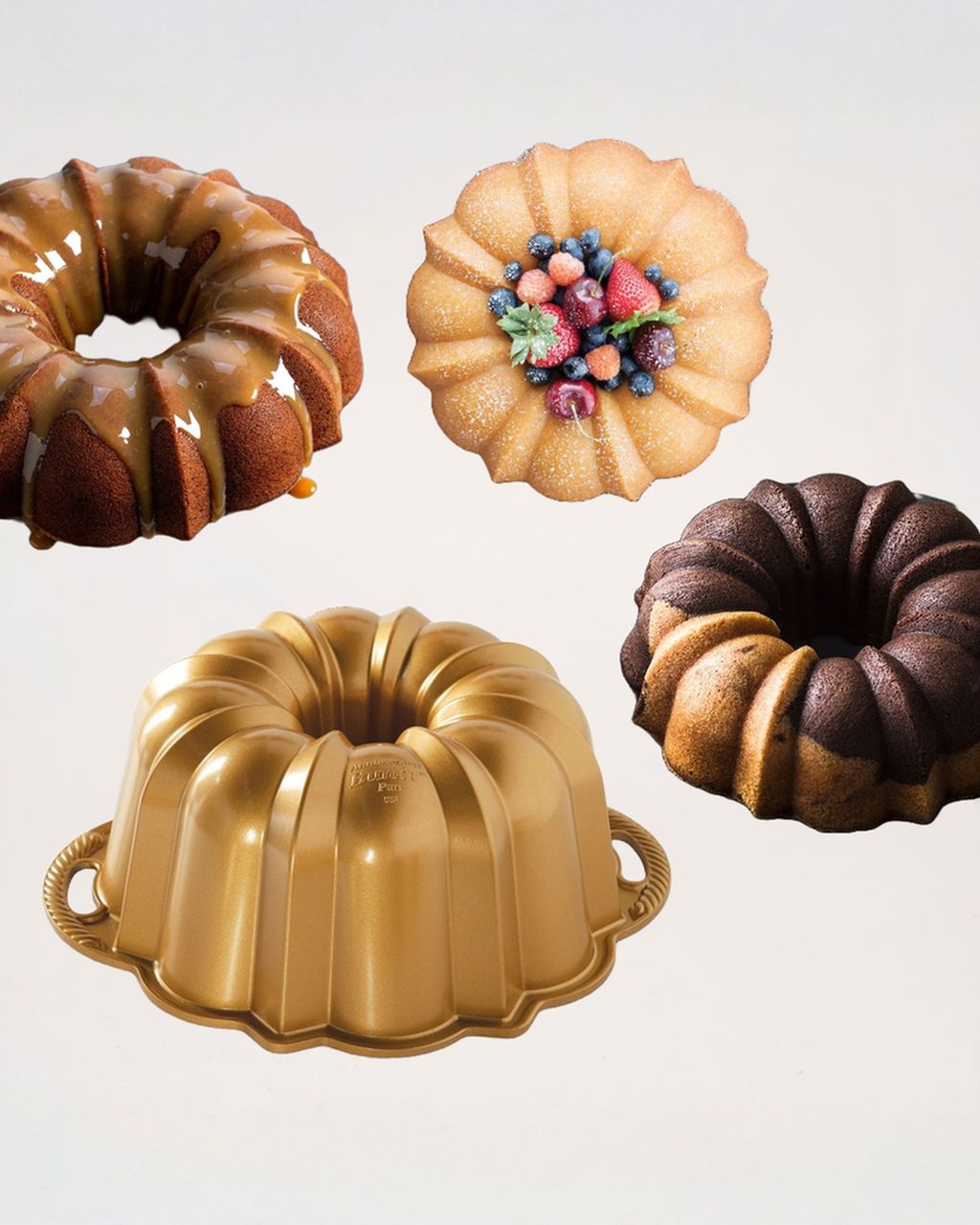
The Tradition bundt pan is a classic large shape with gentle waves and is the most forgiving with vegan batter. If you're baking a vegan bundt cake for the first time, start with this one.
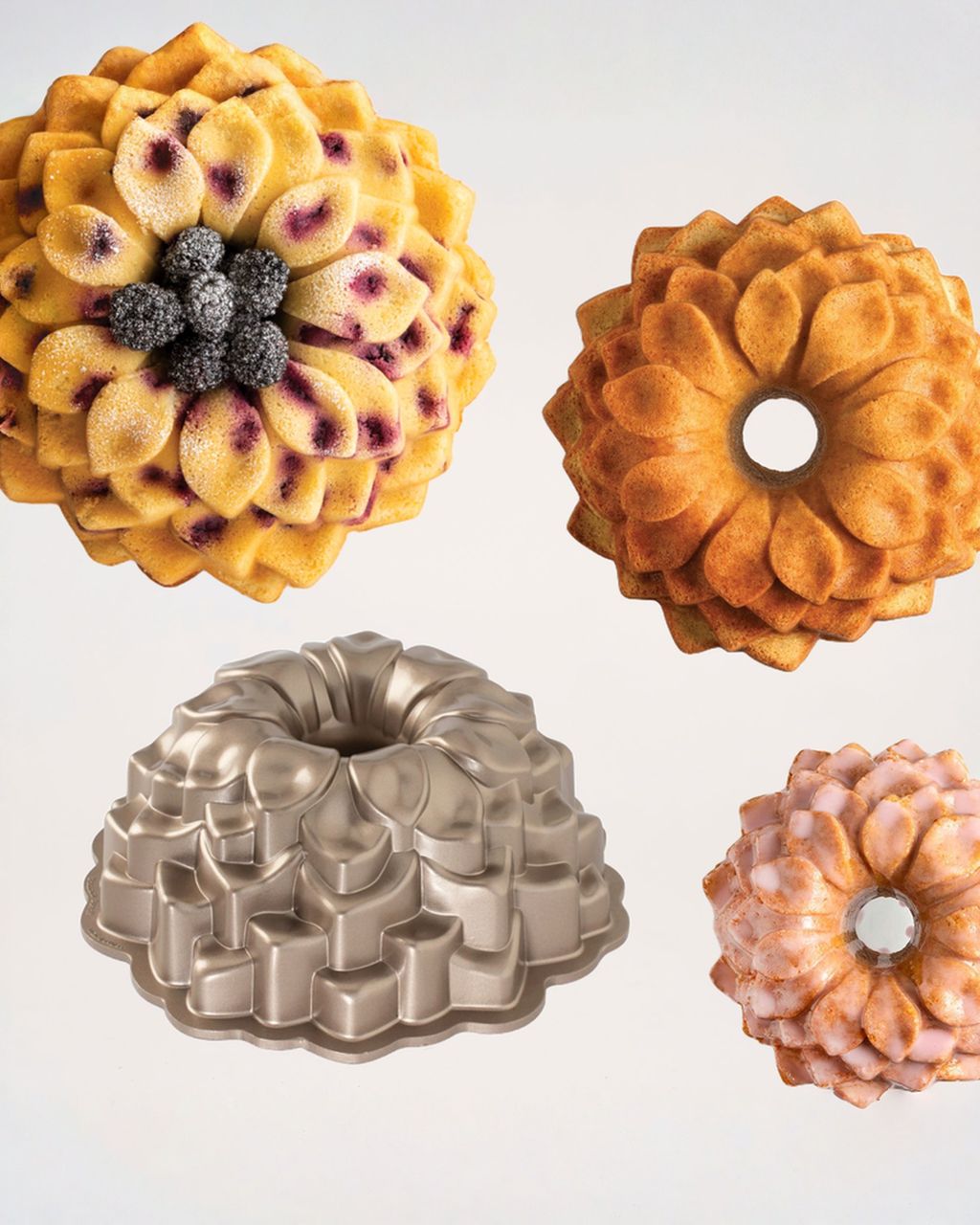
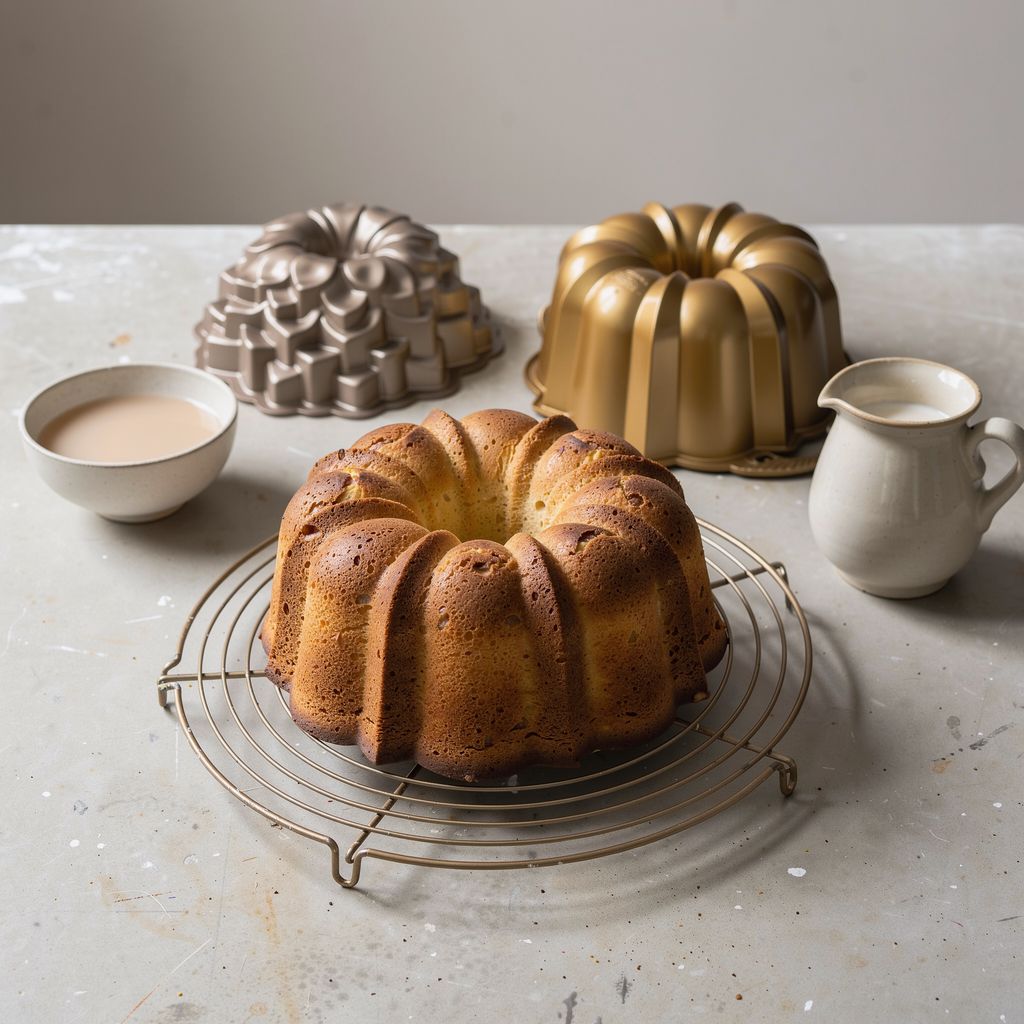
The Blossom bundt pan has deep petals. It calls for careful brushing, and the reward is a cake that looks like a gift even without a glaze.
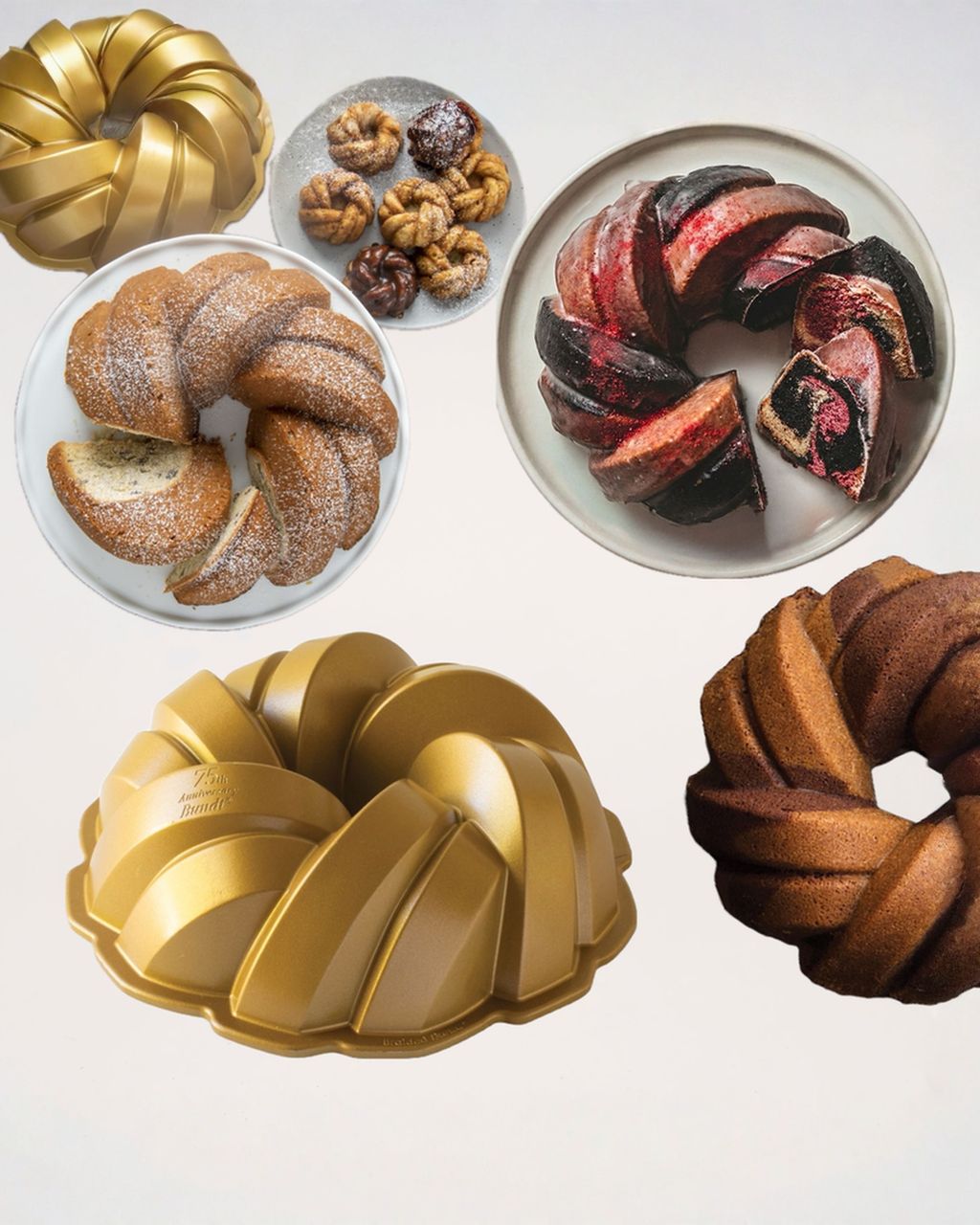
The Braid bundt pan has the finest detail, so you have to follow the solid-fat-and-flour method to the letter. It works best with smooth, fine batters made with aquafaba or vegan yogurt. Coarse purée or flax will smudge the pattern.
You'll find more shapes and sizes among our bundt pans.
A homemade vegan bundt cake keeps for about 3 days at room temperature, up to a week in the fridge and up to 6 months in the freezer. According to FoodKeeper (USDA, the Food Marketing Institute and Cornell University), store-bought cakes and muffins keep for:
room temperature: 3–7 days,
fridge: 7–10 days,
freezer: 6 months.
Homemade bundt cake has no preservatives, so stick to the lower end. At room temperature, keep it under a cake dome or wrapped in cling film. In the fridge a bundt cake dries out faster, and one made with coconut fat goes hard, so only put it there when your kitchen is warm or when you've topped it with something that needs chilling. For the freezer, let it cool completely, slice it and wrap it tightly. Thaw it at room temperature.
The same egg, butter and milk swaps work beyond bundt cake, but the ratios differ for each bake. You'll find an overview in our articles on what to use instead of eggs, butter and cheese in a vegan layer cake and cheesecake and which classic Christmas cookies turn out well when made vegan.
A vegan bundt cake usually goes hard in the fridge because it was baked with coconut fat, which solidifies below about 24 °C (75 °F). Let it sit at room temperature for 30–60 minutes before serving, or next time use oil instead of coconut fat, which keeps the crumb soft even when cold.
In the Czech Republic, white sugar is usually vegan because it's made mainly from sugar beet, and bone char isn't used in processing it. Bone char is used to bleach cane sugar in some countries outside the EU, so with imported cane sugar it's worth checking whether it carries a vegan label.
The simplest vegan glaze is dark chocolate melted with plant-based milk or coconut milk in a ratio of roughly 2 : 1. Check the chocolate's packaging to make sure it contains no milk fat or milk powder. For a white glaze, mix powdered sugar with lemon juice.
You can bake a gluten-free vegan bundt cake, but it's the hardest combination, because in a vegan bundt cake much of the structure comes from the gluten in the flour. Use a gluten-free baking blend with xanthan gum, choose a flax "egg" or applesauce as the egg replacer, since they bind better than aquafaba, and expect a denser crumb.
One recipe worth heating the oven for, one tip, and one deal from the shop. Nothing else.