The best christmas cookies? vanilla crescents, of course!
How to Store Christmas Cookies So They Stay Crisp
Updated Aug 29, 2026
Christmas cookies stay crisp when you store each type separately in a dry, well-sealed container and keep it somewhere cool, dark and dry — but not in the fridge. The most common mistake isn't a bad container, it's a mixed one: moisture always evens out between different types, so vanilla crescents next to gingerbread go soft, and gingerbread next to crescents goes rock-hard. Here's the full method — from sorting by type, through choosing the right container material, to the apple half that can help just as easily as it can ruin everything.
Cookies stay crisp if you stick to five things: store types separately, only fill the container once they're fully cooled, choose a sealed tin or glass container, keep it somewhere cool, dry and dark, away from the fridge and keep it away from strong-smelling foods. The rest of this article explains why — and where things most often go wrong.
Give each type its own container. Or at least group them by moisture level — crisp, soft, creamy.
Only once fully cooled. Warm cookies sealed in a container will turn damp on their own.
A sealed container, not a bowl covered in foil. Tin and glass hold their shape and keep smells out; a loosely covered bowl lets kitchen moisture in.
Cool, dry, dark. Roughly below 18°C (64°F) and, crucially, steady; filled and creamy varieties want it even cooler. Not above the oven, not next to a radiator, not in the fridge.
No strong smells nearby. Onions, cheese, cured meats, but also coffee and spices — cookies are fatty and pick up smells very readily.
Crisp and soft cookies should never share a container, because in a sealed space moisture always evens out between the pieces — settling at a level that suits neither type. What matters here is so-called water activity: not how much water a cookie contains, but how readily it releases that water into the surrounding air. In a closed container, water travels from the piece with higher water activity into the air, and from the air into the piece with lower water activity, until both sides balance out. It's simple moisture equalisation, so no trick will stop it — only keeping the types apart will.
In practice, this means the soft cookie 'wins' and loses at the same time. Gingerbread gives up moisture to a vanilla crescent: the crescent loses its snap and turns chewy, while the gingerbread hardens into a brick. Nobody comes out ahead. The same physics explains why jam-filled linzer biscuits soften on their own after a few days — moisture from the filling seeps into the pastry from the inside.
The second reason is smell. Cinnamon, cloves and rum from gingerbread and no-bake rum balls transfer into butter cookies, and there's no getting it back out. Aroma moves fast, and butter cookies hold onto it the most — butter cookies are basically fat, and fat absorbs aroma just as readily as moisture.
Sort your cookies into three groups: crisp and dry, soft and mellowed, creamy and no-bake. You don't need twelve containers for twelve types — you just need to make sure groups that handle moisture differently never share one.
Crisp and dry — vanilla crescents, plain (unfilled) linzer biscuits, jam thumbprints, meringues, coconut macaroons, nut wafers. These want absolute dryness and a well-sealed container. Meringues suffer from moisture worst of all: a damp meringue turns sticky and there's no fixing it.
Soft and mellowed — gingerbread, honey cakes, spiced biscuits. These actually need moisture and have time to absorb it. Store them separately, and a more breathable container is fine while they're still softening.
Creamy, filled and no-bake — rum balls, filled tartlets, wasp's nests, anything with a white chocolate coating. Whipped cream and curd cheese fillings belong in the fridge; a filling made from icing sugar and hydrogenated fat is fine in a sealed container in a cool place, while butter cream should be kept cool and eaten within a few days. Use pasteurised egg (or powdered egg white) in any no-bake fillings; it's best to avoid raw, unpasteurised egg altogether — but if you do use it, keep it refrigerated and eat within 24 hours. Never mix this group with the others.
Within a single group you can combine types — but separate layers with baking paper, and don't put a strongly aromatic type (rum, lemon zest, cloves) in the same container as a neutral butter cookie.
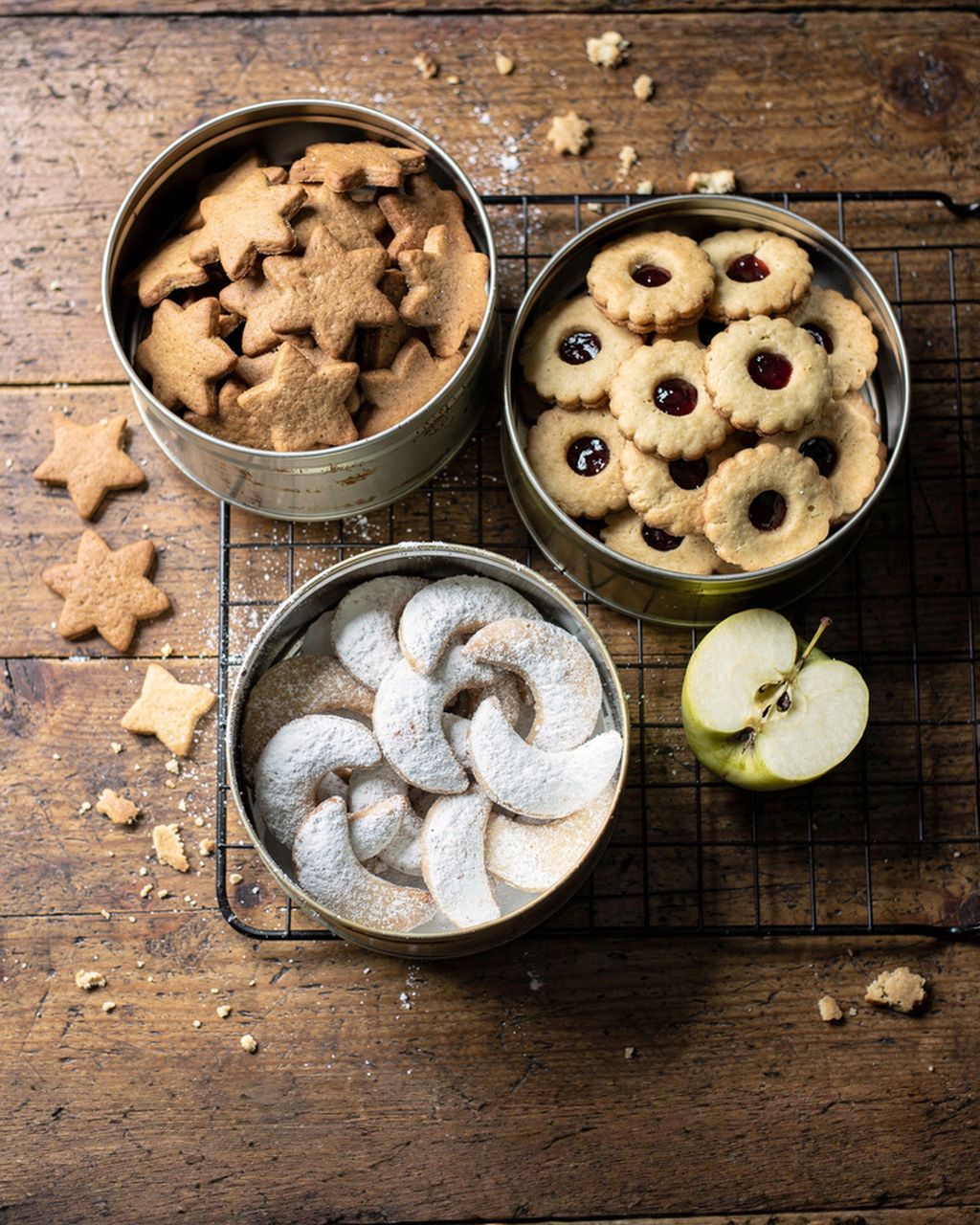
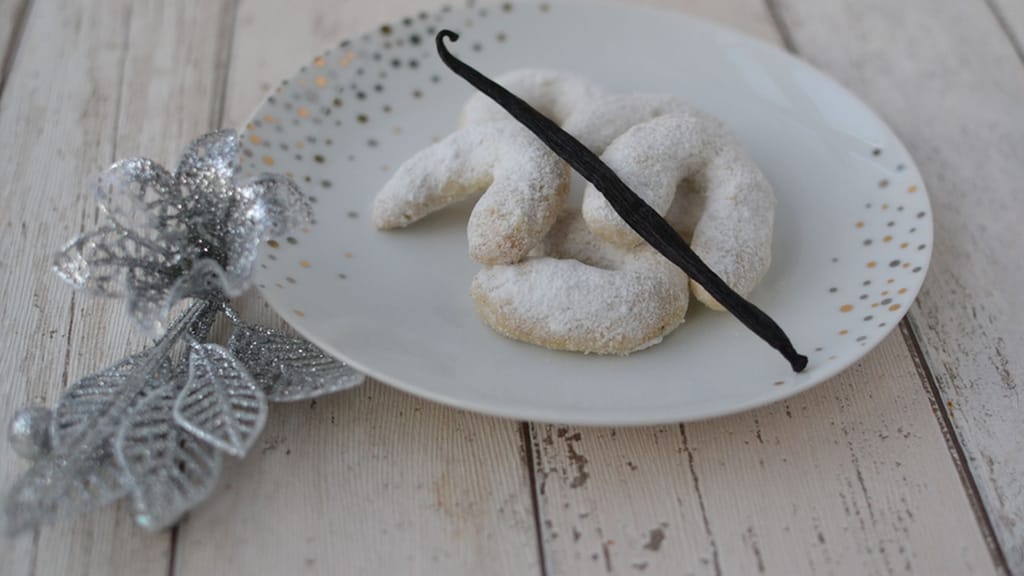
The best christmas cookies? vanilla crescents, of course!
Vanilla crescents — a classic crisp cookie stored dry and separately
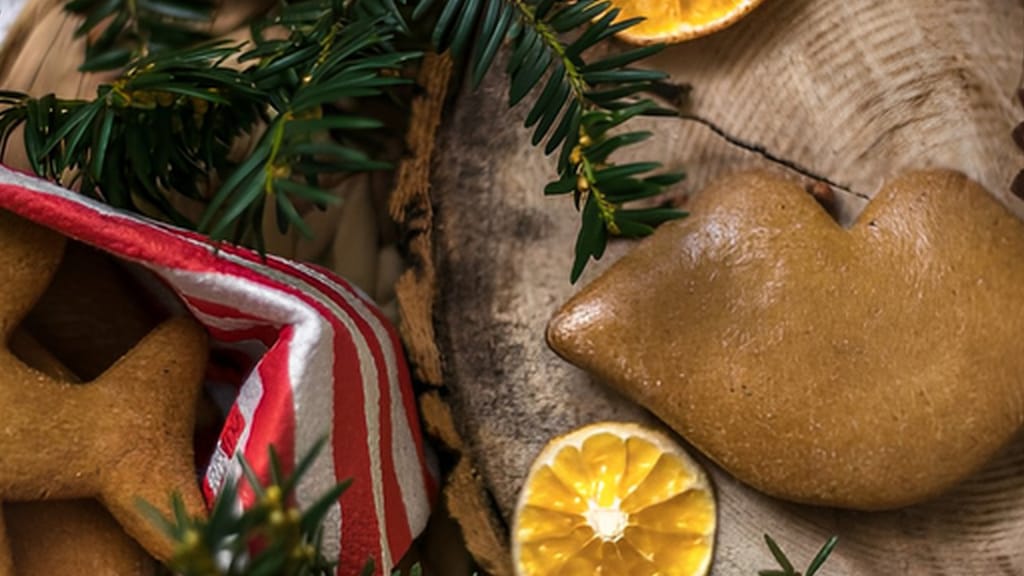
Soft gingerbread cookies
Soft gingerbread — a type that's actually meant to soften as it's stored
For crisp cookies, a metal tin works best; for creamy and no-bake types, use an airtight plastic or glass container kept cool (and refrigerated once whipped cream, curd cheese or egg are involved); and for gingerbread that still needs to soften, use a cardboard box lined with baking paper. The difference between materials isn't about looks — it's about how they behave with light, smell and moisture.
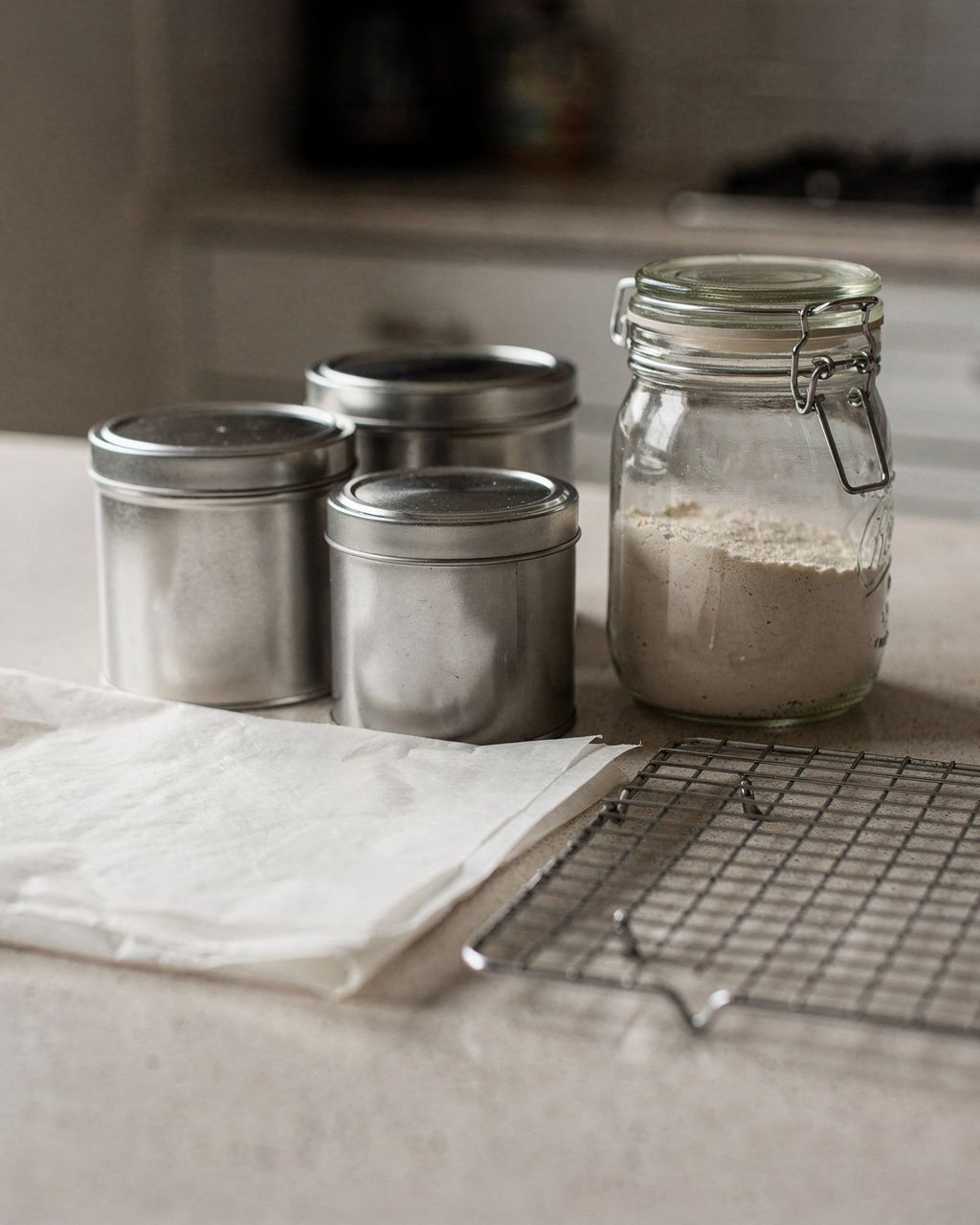
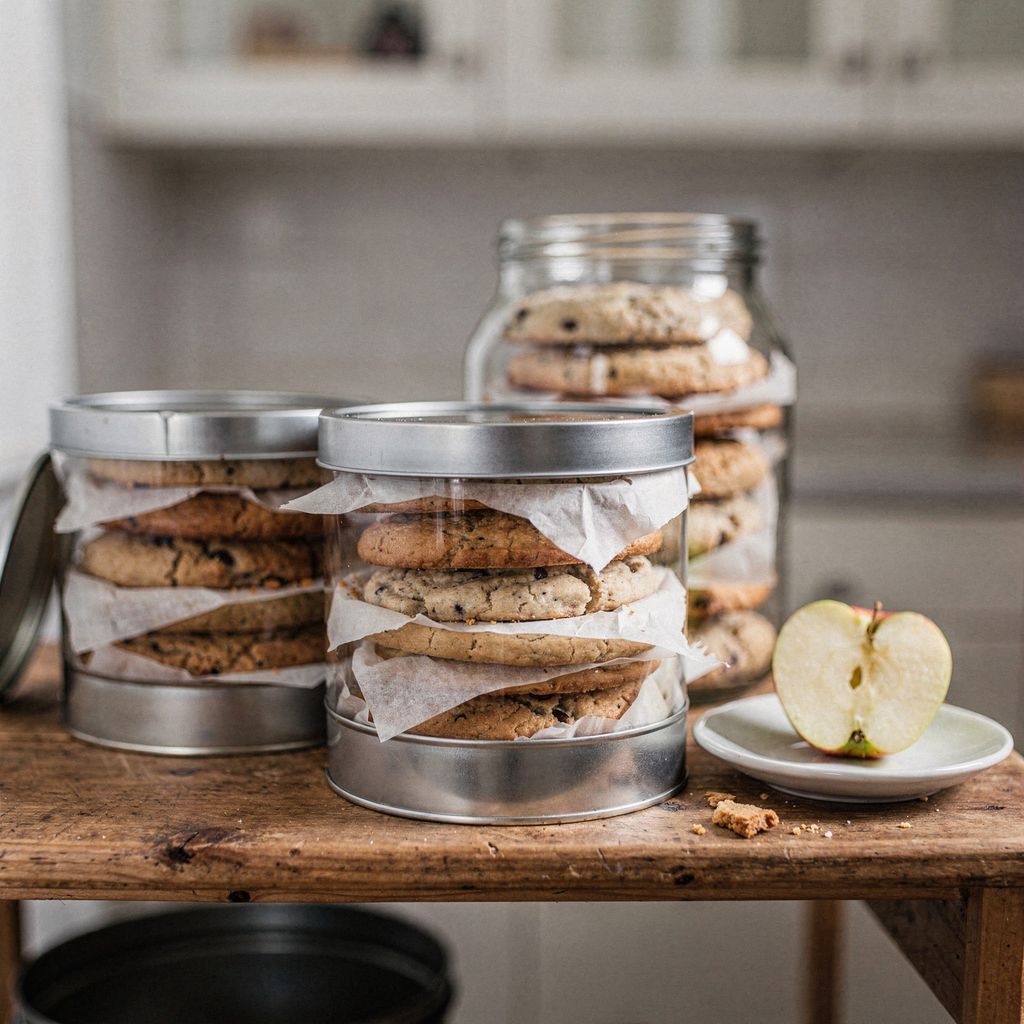
Tin. Seals well, blocks light, doesn't absorb smells. That's exactly what dry butter cookies need. The catch is that the container must be genuinely dry and the cookies fully cooled — a tin won't vent anything, so whatever you seal in stays in.
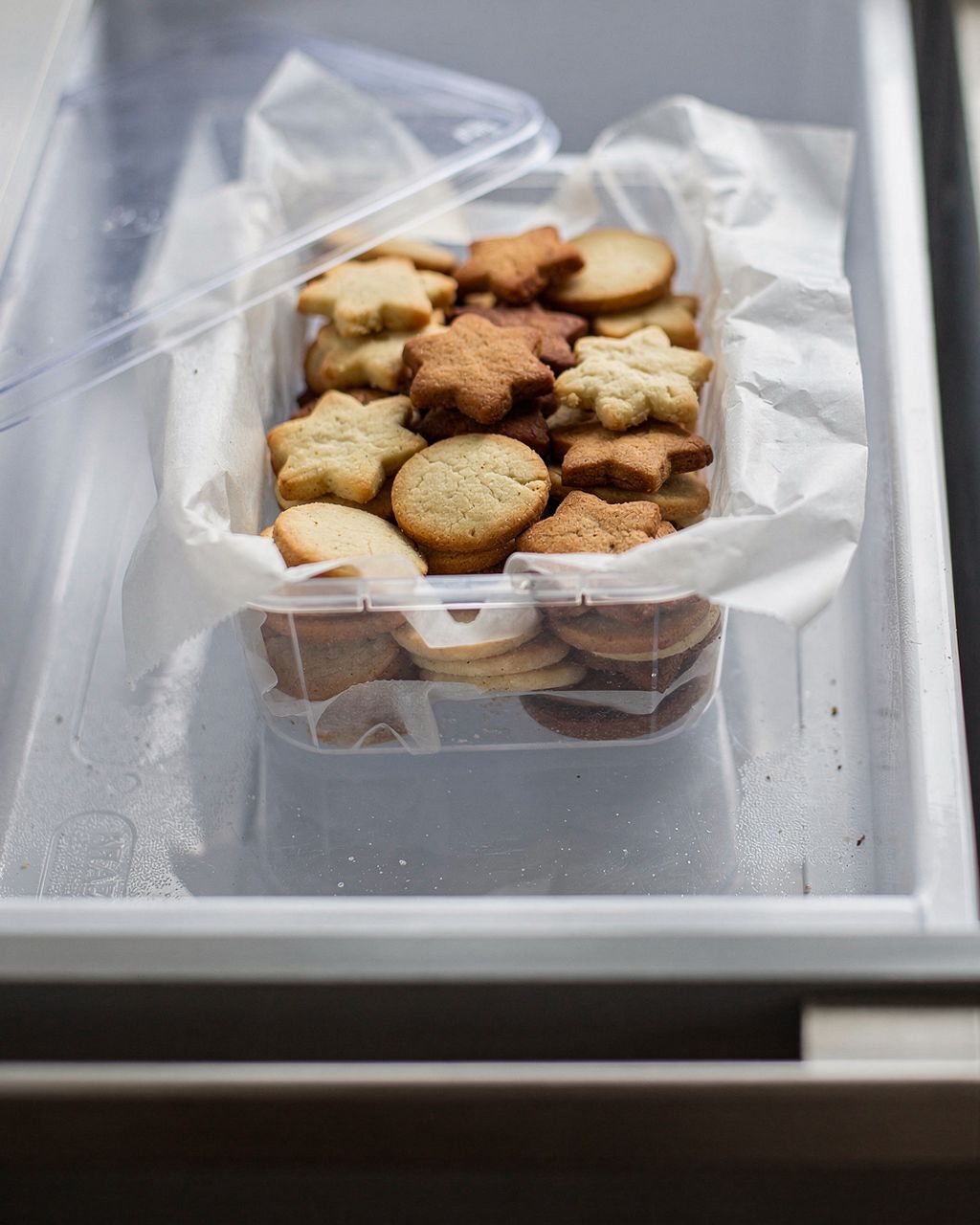
Plastic. Practical, lightweight, seals well, but over time it soaks up smell and fat and won't let go. Ideal for creamy and no-bake types, where airtightness is what matters most. Only use it for delicate butter cookies if the container is new or dedicated solely to cookies.
Glass. Neutral, absorbs nothing, easy to clean — the best choice if a clean flavour matters to you. The only downside is transparency: keep jars in a dark cupboard, not on a windowsill or countertop under a light.
Cardboard box. Breathable, so cookies inside it slowly dry out or absorb moisture depending on their surroundings. Bad for crisp types, good for gingerbread during its softening stage. Always line it with baking paper so the cookies don't soak up cardboard smell and grease stains.
Whatever the material, stick to this: fill containers only two-thirds full, separate layers with baking paper, and put decorated pieces on top. And stick a label with the type and date on the lid or inside the container — after three weeks you won't be able to tell otherwise.
The best spot for cookies is a cool, dry, dark pantry or cupboard — roughly below 18°C (64°F) and, crucially, at a steady temperature; filled and creamy types want it even cooler. Fluctuating temperature does more harm than a few extra degrees ever would: every cycle of cooling and warming shifts moisture around inside the container, which is exactly what you're trying to prevent.
Good spots include a pantry, cellar, unheated bedroom, cool hallway, enclosed porch, or a cupboard on the north side of the house. Bad spots include a cupboard above the oven, a shelf near a radiator or above the fridge (the compressor gives off heat at the back), and a windowsill, where sun during the day alternates with cold at night.
Darkness isn't just for looks. Light and heat speed up fat oxidation, so butter cookies — and especially nut-based ones with walnuts, almonds or hazelnuts — start tasting rancid sooner. Nut fat is the most sensitive to this, which is why keeping crescents and nut wafers in the dark helps them the most.
One last thing: don't store containers next to onions, garlic, cheese, cured meats or open coffee. Even a well-sealed lid isn't a total barrier, and the fat in cookies is an excellent smell-trap.
Christmas cookies don't belong in the fridge because, yes, it's cold in there, but it's also damp — and for crisp cookies, moisture is a worse enemy than a few extra degrees of warmth. On top of that, a container pulled out of the fridge into a warm kitchen will fog up both inside and out, so every time you open it you're creating condensation right on top of your cookies.
There's only one thing that does belong in the fridge: fillings that spoil quickly — whipped cream, curd cheese, egg, dairy-based creams. Keep these in a well-sealed container, away from open food, and let them warm up to room temperature for about twenty minutes before serving — cold cream tastes flat. A filling made from icing sugar and hydrogenated fat (rum balls, wasp's nests) doesn't need the fridge at all: a sealed container in a cool pantry or cellar is enough. Butter cream, on the other hand, should be kept cool and eaten within a few days.
For long-term stockpiling, the answer isn't the fridge but the freezer. Which types freeze well and how to defrost them without fogging is covered in a separate article on freezing Christmas cookies.
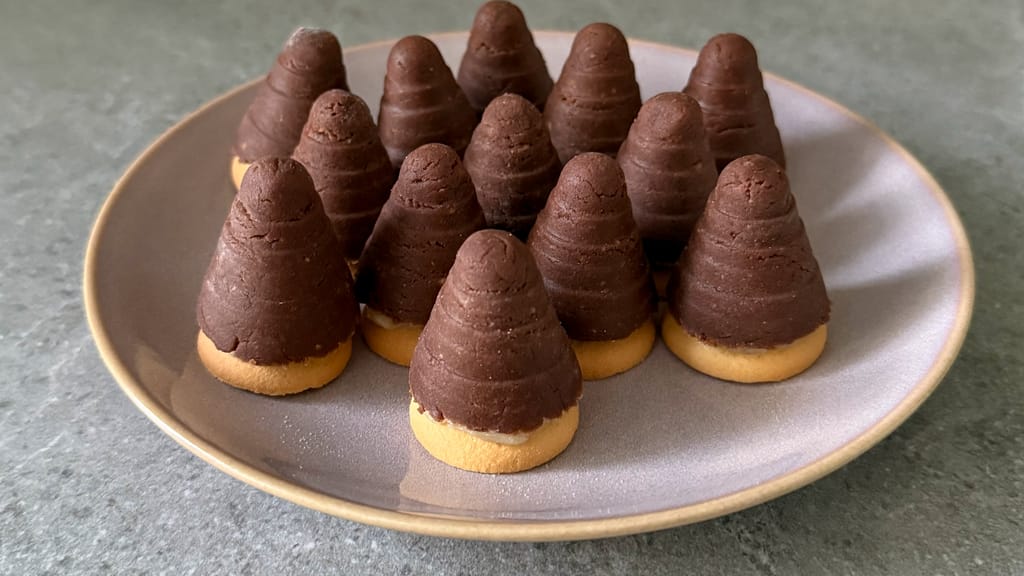
Grandma's traditional wasp's nest cookies with rum cream
Wasp's nests with rum cream — a no-bake cookie that belongs in a sealed, chilled container
A half apple in the container releases moisture and is used exclusively to soften hard cookies, mainly gingerbread — for crisp types, it's the fastest way to ruin them. It works simply: the apple releases water vapour, which raises the humidity inside the container, and the gingerbread absorbs it. Lightly baked gingerbread only needs two to three days; well-baked, firmer gingerbread can take a week or more — swap the apple out along the way as described below.
How to do it properly:
Use half an apple, not a whole one. Cut side up.
Set it on a small plate or piece of baking paper — never directly on the cookies. Direct contact with moisture will turn gingerbread mushy and dissolve any icing.
Swap it out after two days, three at the latest. A forgotten apple starts growing mould, and that mould will spread to the whole container.
Once the gingerbread has softened, remove the apple. From that point it's only adding moisture nobody needs.
When an apple does more harm than good:
With crisp types. Crescents, meringues, coconut macaroons and unfilled linzer biscuits are meant to be dry. An apple will make them damp, and that loss of crispness can't be undone.
In a mixed container. If you keep gingerbread and butter cookies together, the apple will soften both — and only one of them wanted that.
With cream- or icing-covered cookies. Moist air will turn the icing soggy and turn butter cream into a shiny, weepy mess.
If you forget about it. This is the single most likely way mould ends up in your cookie container. Write the swap date on the lid.
Gentler alternatives that work too: a crust of fresh bread (swap it just as often) or an orange slice, if you don't mind it also passing on its scent to the gingerbread. And if your gingerbread keeps going hard every single time, the fix isn't in the container — it's in the dough. A separate article on soft gingerbread covers why it hardens after baking and what to do about it at the baking stage.
In the right container, in the right spot, here's roughly what to expect: crisp butter cookies keep for 2–3 weeks, gingerbread and honey cakes for several months, and creamy/no-bake types depend on the filling: icing-sugar-and-hydrogenated-fat cream keeps 2–3 weeks in a cool pantry, butter cream a few days chilled, and whipped cream or curd cheese fillings just 2–3 days in the fridge. Use pasteurised egg (or powdered egg white) in any no-bake fillings; it's best to avoid raw, unpasteurised egg altogether — but if you do use it, keep it refrigerated and eat within 24 hours. Shelf life isn't determined by the baking date but by the ratio of fat, sugar and moisture — which is why honey-based gingerbread lasts months while whipped-cream cookies last only days.
A quick guide by type:
Dry butter cookies (crescents, jam thumbprints, unfilled linzer biscuits) — taste best in the first two weeks, then gradually dry out.
Jam-filled linzer biscuits — allow a few days to mellow, then reckon on about a week before the filling starts softening the pastry.
Gingerbread — time actually helps; it keeps for months and tastes better after three weeks than fresh.
Meringues — can theoretically last a long time, but in practice only as long as the container stays completely dry.
Creamy and no-bake types — it all comes down to the filling: icing-sugar-and-hydrogenated-fat cream lasts 2–3 weeks in a cool pantry; butter-and-sugar cream should be kept cool and eaten within a few days; and any cream cooked with milk, custard or egg belongs in the fridge and lasts only days, same as whipped cream or curd cheese. Make anything with whipped cream last of all.
A detailed type-by-type breakdown — including what can be baked a month ahead and what should only be made last-minute — is in our article on the shelf life of individual cookie types.
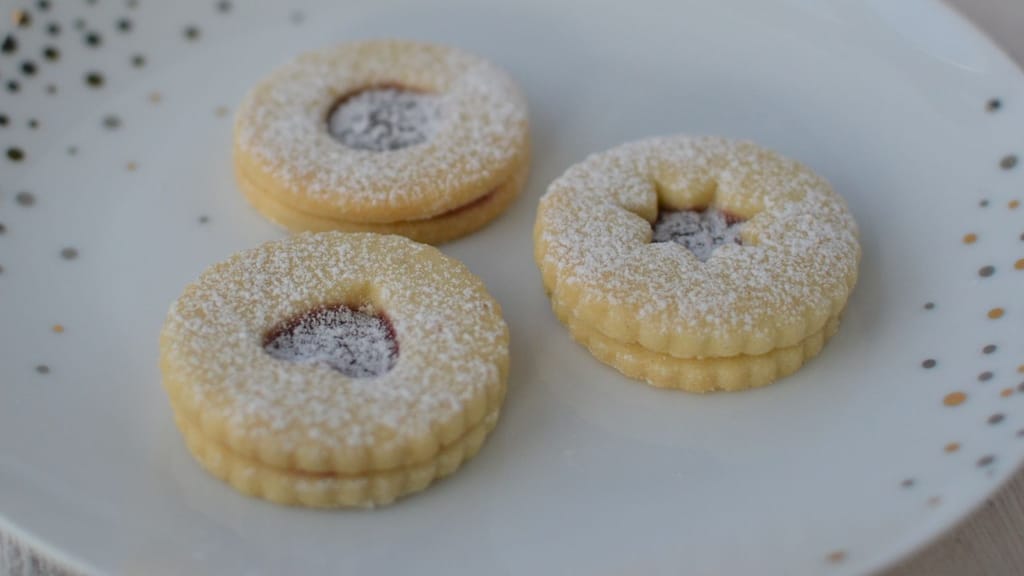
Classic christmas cookies: delicate linzer cookies
Classic crisp linzer biscuits — jam-filled ones are stored differently from unfilled ones
Damp or hardened cookies almost always come down to one of seven mistakes: mixing different types in one container, filling it while still warm, storing in a warm spot, an open bowl left out on the table, a forgotten apple, using a plastic bag instead of a proper container, and a damp container. In detail:
Everything crammed into one big container. The fastest way to end up with soft crescents and rock-hard gingerbread at the same time.
Filling the container while still warm. Leads to damp cookies and a risk of mould.
Storing somewhere warm. A cupboard above the oven or a shelf near a radiator significantly speeds up fat going rancid — roughly every 10°C (18°F) increase can double or triple the rate.
An open bowl left out on the table. Looks lovely, but within a day the cookies turn stale and pick up kitchen smells. Only set out what you'll eat today, and keep the rest in a sealed container.
A forgotten apple. Unchecked moisture, and mould throughout the whole container.
A plastic bag instead of a proper container. Doesn't seal, gets squashed, and delicate cookies end up as crumbs.
A damp container. After washing, let it dry out completely, ideally overnight upside down. A single drop of water under the lid does exactly the same damage to crisp cookies as a forgotten apple half.
Dry out soft, damp cookies in the oven at 100–120°C (210–250°F) for about 5–10 minutes, then let them cool completely on a wire rack before putting them back in a dry container. This works for crescents, jam cookies, linzer biscuits and coconut macaroons. It doesn't work for meringues or anything with icing or cream — the icing will melt and a damp meringue will never turn crisp again.
A plastic bag is a poor choice for long-term storage, while vacuum-sealing is actually a good one — but only for sturdy types. Plastic bags don't seal out moisture and delicate cookies just crumble inside them. Vacuum-sealing keeps cookies beautifully dry, but the pressure crushes crescents, meringues and decorated gingerbread, so it really only makes sense for firm linzer biscuits or for freezing.
Pack them in layers in a sturdy box, separating each layer with baking paper and filling any gaps so the cookies can't shift around. Put the heaviest, sturdiest types on the bottom and the delicate, decorated ones on top. Carry anything with whipped cream, curd cheese or egg filling in a cool bag inside a sealed container — at room temperature these last only a few hours at most. Use pasteurised egg (or powdered egg white) in any no-bake fillings; it's best to avoid raw, unpasteurised egg in fillings altogether — but if you do use it, keep it refrigerated and eat it within 24 hours.
Toss them as soon as you notice a rancid, oily or musty smell — with butter- and nut-based cookies this is the first warning sign, and it shows up before any visible change. Likewise, if you find mould in the container, throw the whole batch out — it's not enough to remove the affected piece, since mould filaments spread through an enclosed space even where you can't see them. A gingerbread that's gone hard or a crescent that's gone soft, on the other hand, is just a texture issue, not a safety one.
No — a container of crisp cookies should stay closed. Every time you open it, you let in moist kitchen air, which only harms dry cookies. There's one exception: if cookies that weren't fully cooled ended up inside and moisture has condensed under the lid. In that case, take the cookies out onto a rack, wipe the container completely dry, and let it air out before refilling it. For gingerbread that's still in its softening stage, it's the opposite — a more breathable container actually helps.
One recipe worth heating the oven for, one tip, and one deal from the shop. Nothing else.