Soft honey gingerbread cookies that never go hard
Updated Sep 17, 2026
Gingerbread cookies only go soft if you give them something to draw moisture from: store them in a tin or a paper box lined with baking paper, add a quarter of an apple on a scrap of paper, and leave them at room temperature for 2–14 days. Time alone won't do it — in a dry container with no moisture source, gingerbread cookies will still be hard a month later. Here's the whole process: what to store them in, what to add, how long it takes, and what to do if you need them soft by tomorrow.
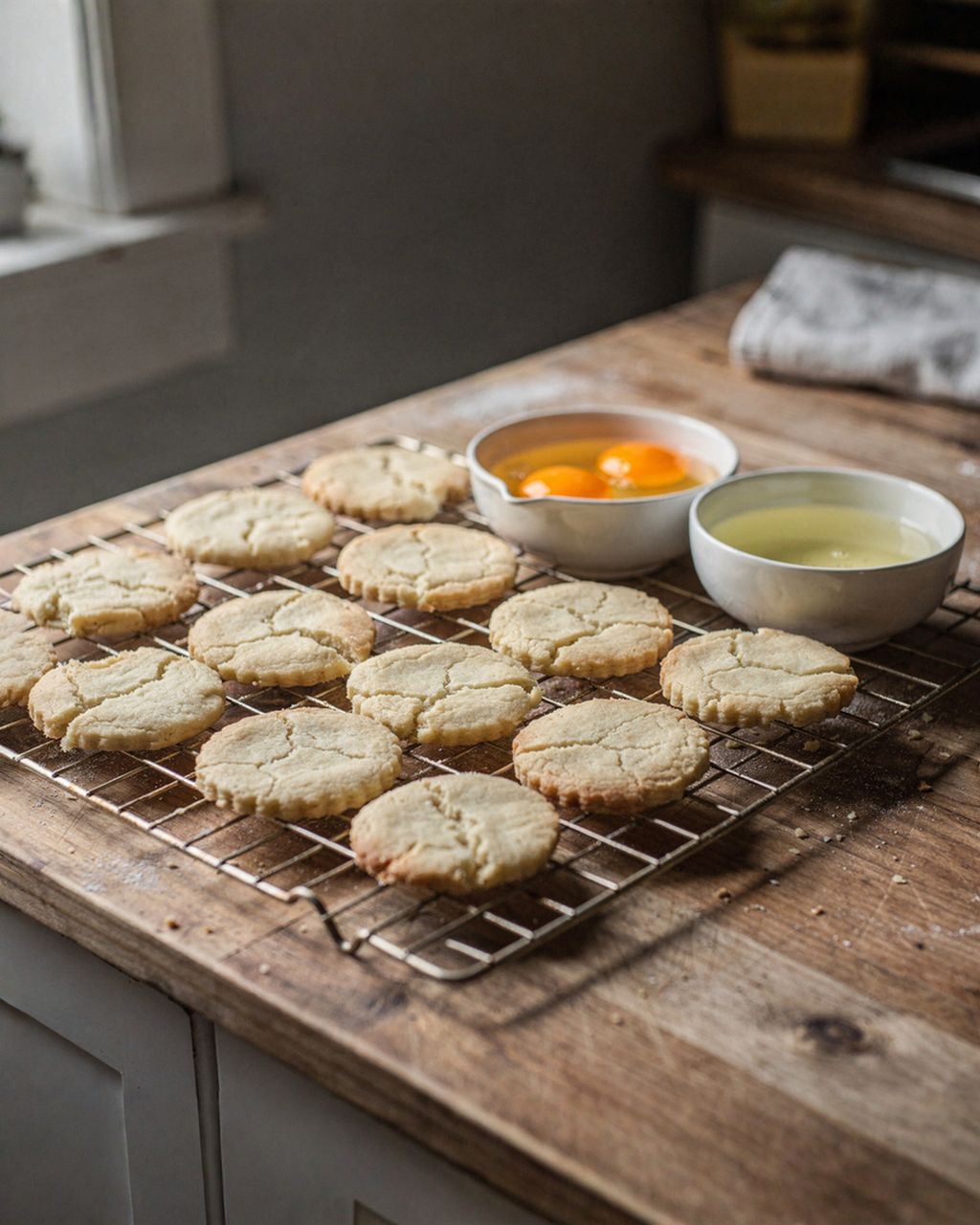
Gingerbread cookies come out of the oven hard because almost all the free water evaporates from that thin sheet of dense dough — and that's exactly how it's supposed to be. Gingerbread dough is low in fat and high in flour and honey or syrup, which bakes up into a dense, almost glassy, airless center with nowhere for moisture to come back from.
What saves the day is sugar chemistry. Honey and invert sugar are mostly fructose and glucose, and these are hygroscopic — they pull water in from the surrounding air. Fructose is the most hygroscopic of the common sugars, which is exactly why honey goes into gingerbread in the first place. Once baked, a gingerbread cookie behaves like a sponge for moisture: as long as there's some to take, it keeps taking it.
That's the whole logic behind the method. Hardness in gingerbread cookies isn't a flaw — it's a temporary state that only moisture fixes, not time. A cookie sealed in a dry plastic box has nowhere to draw water from, so it stays hard for exactly as long as you leave it there. Unlike most other Christmas cookies, with gingerbread you're actually storing them in the opposite direction — linzer cookies, vanilla crescents, and jam-filled cookies you want to keep crisp and dry, but gingerbread you actually want to make damp.
You soften gingerbread cookies in seven steps: let them cool, let the icing dry, line a tin with baking paper, add a quarter of an apple, close the tin at 18–22°C, swap the apple after two or three days, and remove it once the cookies are soft. In detail:
Let them cool completely on a wire rack. A warm cookie sealed in a box releases steam, which condenses on the lid and drips back down — leaving sticky patches and soggy icing.
Let decorated cookies dry for 12–24 hours in a single layer, with pieces not touching. A thicker layer of royal icing can need up to 48 hours.
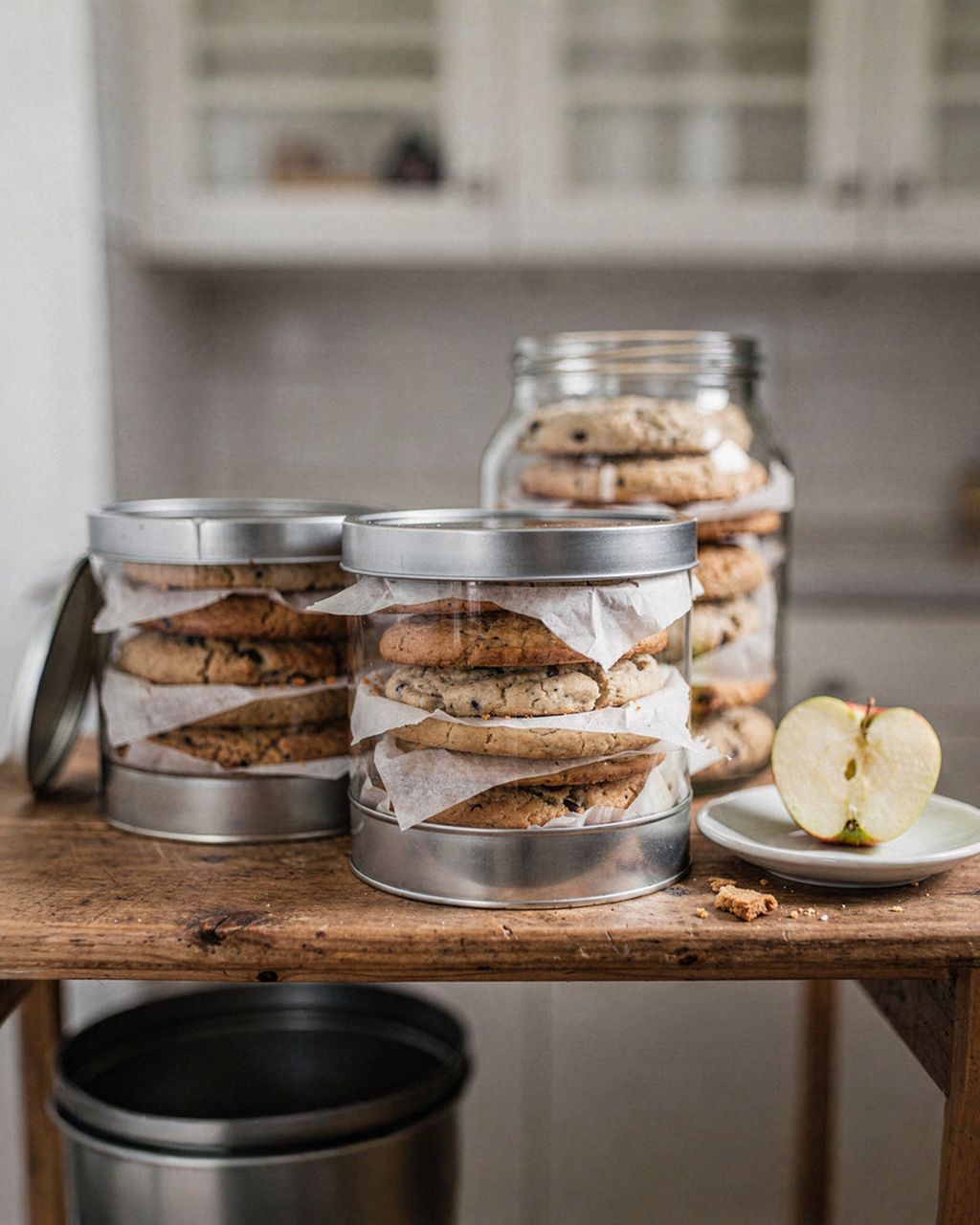
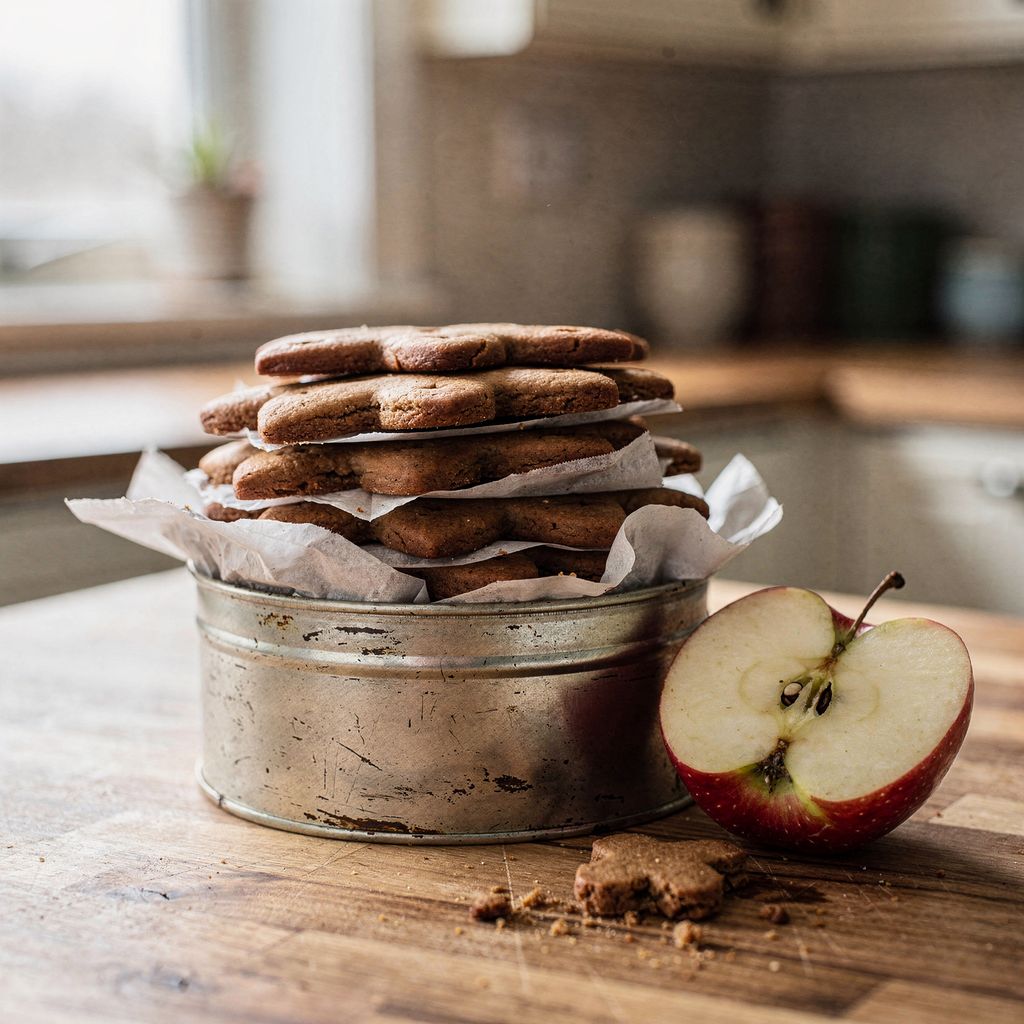
Line the container with baking paper and stack the cookies no more than two or three layers deep, with paper between each layer. A tall stack will crush the cookies at the bottom once they soften.
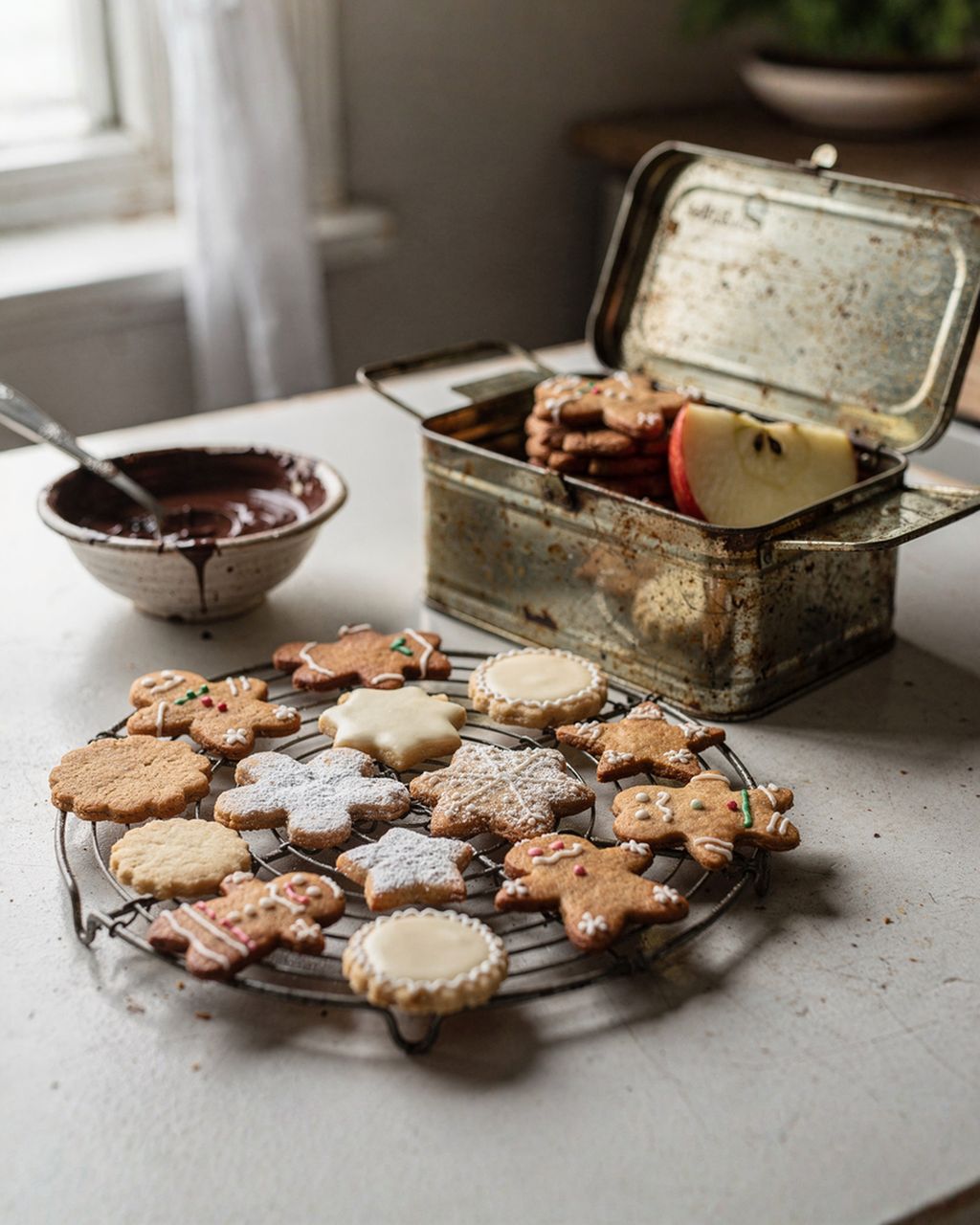
Add a moisture source — a quarter of an apple, skin on, set on a scrap of baking paper or in a small dish. Never place it directly on the cookies.
Close the container and leave it at room temperature, ideally 18–22°C. Not in the fridge, not by a radiator, not on a windowsill.
After two to three days, swap the apple quarter for a fresh one. This is the most commonly skipped step — and the one where the whole process usually falls apart, since an old apple starts to mold before the cookies have softened.
Once they're soft, remove the moisture source and just close the container. Otherwise the cookies keep going and end up gummy rather than pleasantly soft.
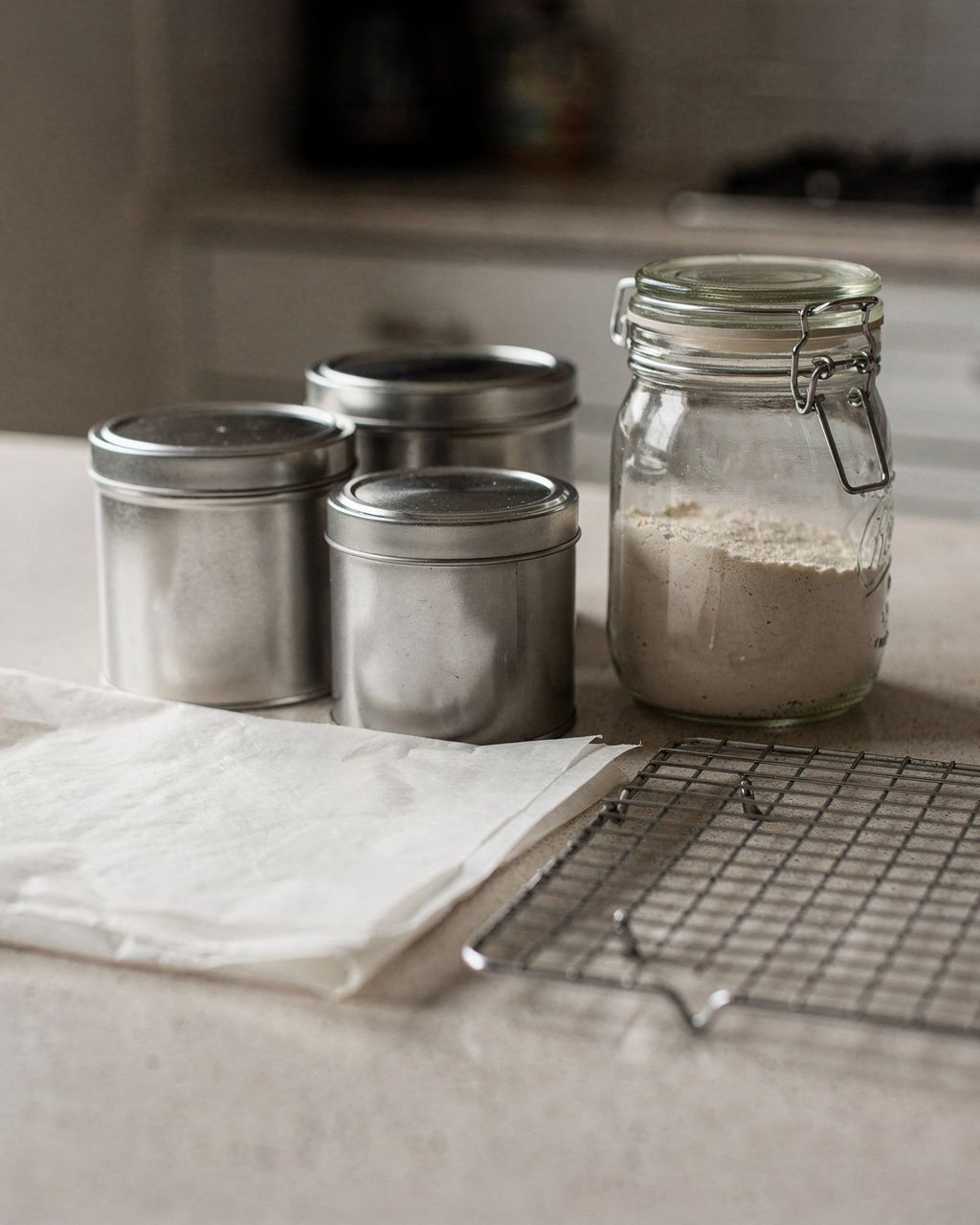
Your best bet is a tin or a paper box lined with baking paper. Both hold a humid microclimate inside while still breathing enough that things don't turn waterlogged.
A lidded tin — the most reliable option. It holds its shape, protects any decoration, and lets moisture even out slowly and evenly inside.
A paper box lined with baking paper — the classic approach, and it works fine as long as the room has normal humidity. In an overheated flat with dry air, cookies in a paper box soften more slowly, so you'll need more apple to compensate.
A plastic container with a silicone seal — the worst option. It's airtight, so without an apple nothing happens at all, and with one, moisture quickly overshoots into full-on condensation. If it's all you have, use a smaller piece of apple and check every day.
A zip-top bag — only for a handful of cookies over a few days. They get squashed inside, and the icing rubs off against the plastic.
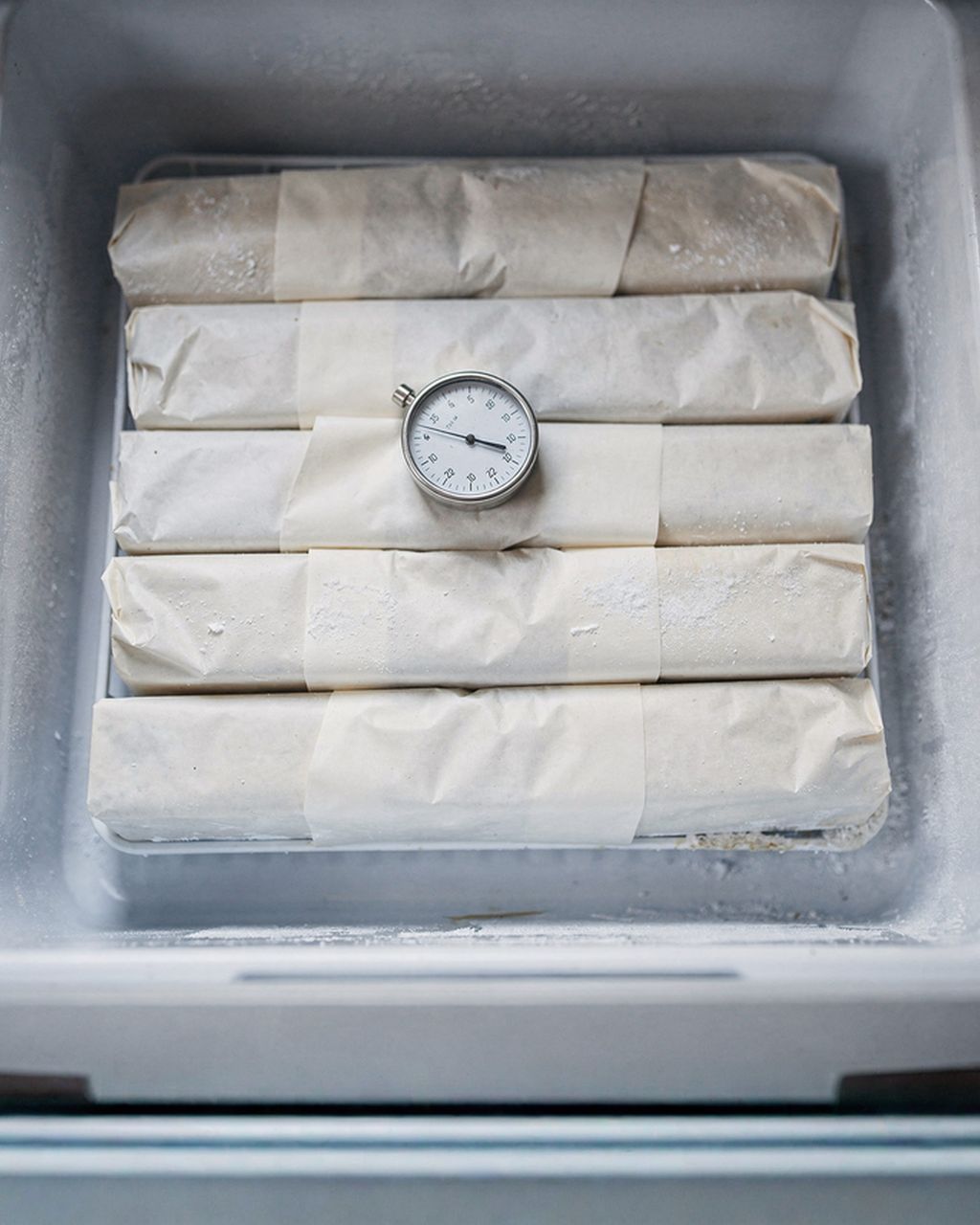
Don't put gingerbread cookies in the fridge. Cold air is dry, so softening stalls completely, and the moment you take them out, ambient humidity condenses instantly on the cold surface — the icing turns dull and tacky. If you need to skip ahead by half the winter, the freezer is the right move, not the fridge.
Add a quarter of an apple with the skin on, a piece of fresh bread crust, or a strip of lemon zest — always on a scrap of paper, never directly on the cookies. All three slowly release water and don't spoil before the cookies have a chance to soften. Ranked from fastest to slowest:
A quarter apple, skin on — the fastest and most effective option. It holds a lot of water, releases it steadily, and doesn't pass on any off-flavor to the cookies. Swap it out every two to three days.
Fresh bread crust — gentler and slower, good for thin, lightly baked cookies if you're worried an apple would overdo it. Bread molds faster than apple, though, so change it every two days.
A strip of orange or lemon zest — the slowest of the three, but it also lends the cookies some aroma. Great with strongly spiced honey gingerbread, unnecessary with more delicate ones.
What doesn't work, and what to skip:
Potato or carrot — they do release moisture, but also an earthy off-taste that gingerbread happily soaks up.
A damp paper towel laid directly on the cookies — it dissolves the icing and leaves a white mark wherever it touches.
An uncovered bowl of water in the whole pantry — the moisture just disperses into the room and never reaches the cookies. The humid microclimate needs to be inside the container, not in the room.
Based on experience, gingerbread cookies in a tin with an apple take roughly 2 to 14 days to soften — it depends on thickness and how well-baked they are. Treat the numbers below as a rough guide, not an exact measurement:
Thin (3–4 mm), lightly baked: roughly 2–4 days
Medium (5 mm), golden: roughly 4–7 days
Thicker (6–8 mm) or well-baked to a dark color: roughly 7–14 days
Dough with a high proportion of honey or invert sugar: a few days faster than the same dough made with plain granulated sugar
What matters most is how long they spent in the oven. A cookie pulled out just as the edges have set still has residual moisture left and only needs topping up — it's usually soft again within three days. A cookie baked two minutes longer has a dried-out center too, and the difference between the two can easily be two extra weeks of waiting.
Your home matters too. In an overheated flat with dry air, gingerbread softens noticeably more slowly than in a more humid kitchen, because the container is never perfectly airtight and some moisture keeps escaping. That's exactly why it might take your neighbor three days and you ten, even from the same recipe.
The fastest emergency fix: put undecorated cookies in the microwave with a damp paper towel, heat for 5–10 seconds on medium power, then let them rest under a lid or plate for 10 minutes. That's enough time for the steam to soak in without melting the sugar.
The oven works too: put the cookies on a baking sheet next to an oven-safe dish of hot water, heat for 5 minutes at 100°C, then leave the cookies in the switched-off, closed oven for 20 minutes.
But be realistic — quick softening is only skin-deep and won't last. The moisture only reaches the first millimeter below the surface, and within a few hours it either evaporates or spreads into the rest of the cookie, which is still dry. The result is a cookie that's hard again within a day, just a bit stickier. If you've got at least three days to spare, an apple in a tin will always beat the microwave.
Don't put decorated cookies in the microwave or oven. Royal icing turns damp when heated, loses its shine, and darker colors bleed into the dough.
Only stack decorated cookies once the icing has dried completely — for a thin outline, 12 hours; for filled areas or a thicker layer, allow up to 48. The test is simple: gently run a fingernail across the icing. If it doesn't leave a mark and nothing sticks, you can stack them.
The humid environment gingerbread cookies need is also the worst possible thing for dried icing. Royal icing is mostly sugar, so it's hygroscopic in its own right — in humidity it turns dull, softens, and richly colored outlines bleed into the surrounding dough. That's why experienced bakers stick to this order: soften the plain cookies first, then decorate them. A soft cookie also decorates better anyway, since it won't snap under pressure from the piping bag.
If that's not possible and you need to decorate right away, keep humidity on the lower side: a smaller piece of apple, daily checks, and paper between every layer so the icing on different cookies doesn't touch. For more on consistency and drying times, see the article on gingerbread icing.
Four things decide how soft gingerbread cookies turn out: honey in place of some of the sugar, shorter baking time, a thickness of 4–5 mm, and letting the dough rest in the fridge. The surest way to soft gingerbread, in other words, is through the dough, not the storage tin.
Honey in place of some of the sugar. Swap 20–30% of the granulated sugar for honey or liquid invert sugar. It brings in fructose, which draws in water on its own, keeping the cookie soft without any extra help. Don't replace all the sugar, though — the dough would turn too loose and the baked cookie would end up spongy.
Don't overbake. Bake gingerbread cookies for 8–10 minutes at 170–180°C and pull them out once the edges have set while the center still looks a touch softer. They'll finish setting on the tray.
A thickness of 4–5 mm. Under 3 mm, a cookie softens fastest, but it also overbakes easily and tends to break once soft — so 4–5 mm is the sweet spot. Over 8 mm needs a longer bake, which puts you right back at square one.
Let the dough rest. A few days in the fridge gives the honey time to spread evenly and work its way through the whole batch of dough.
For a detailed breakdown of the causes, see the article why gingerbread cookies go hard and how to make them perfectly soft. And if you're still planning out your baking schedule, gingerbread cookies belong right at the very start of your Christmas baking calendar — precisely because they need weeks to soften, unlike linzer cookies, which get baked at the last minute.
Both of these recipes rely on a higher proportion of honey, so they reach that soft texture even with less time spent in the tin.
Soft honey gingerbread cookies that never go hard
Soft honey gingerbread cookies that never go hard — a honey-rich dough that softens the fastest

Soft gingerbread cookies
Perfectly soft gingerbread: classic Christmas gingerbread cookies that turn soft after just a few days in the tin
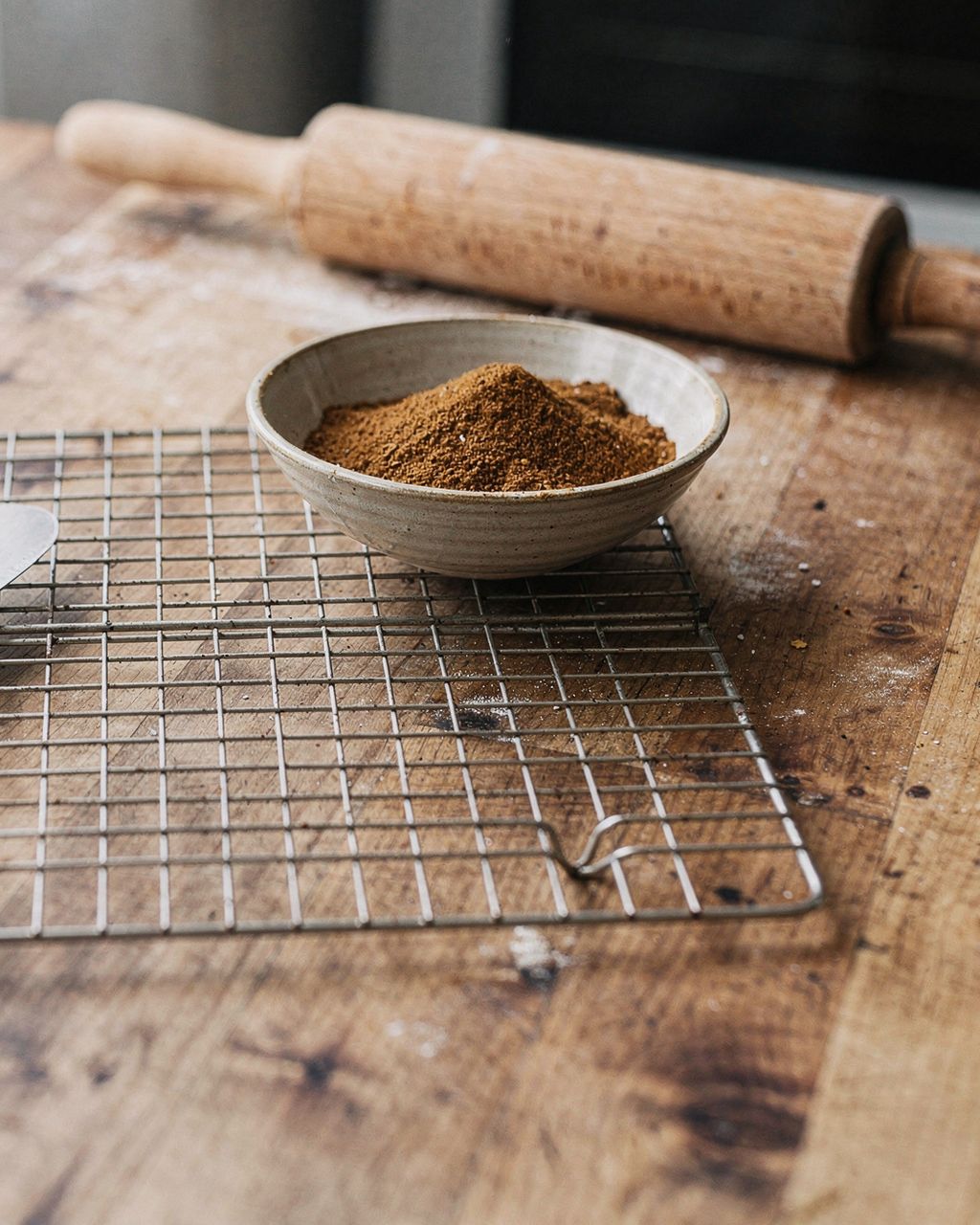
For a more traditional, bolder-flavored gingerbread cookie, try our best honey gingerbread cookies, and the whole aroma starts with homemade gingerbread spice mix. Freshly ground spice is worlds apart from whatever's been sitting in your drawer since last year.
No, always store gingerbread cookies separately. The moisture they need gets pulled from whatever's nearby — and the closest source is the linzer cookies, vanilla crescents, or other treats sitting next to them. The result is a batch where the gingerbread softens, but the rest of the cookies lose their crispness and turn soft and damp. Each type belongs in its own container, and gingerbread goes in the one with the apple.
Gingerbread cookies harden again after softening because the moisture they absorbed migrates back out into the dry room air. This happens whenever you take them out of the tin onto a plate, or leave them in an open box in an overheated flat — the cookie simply equilibrates with its surroundings. The fix: keep them in a closed container right up until serving, and only put out as many as will actually be eaten.
A properly soft gingerbread cookie bends and gives slightly when you bite it, but holds its shape and feels dry to the touch on the surface. An over-moist cookie feels sticky on the surface; on decorated ones, the icing takes on a wet sheen or starts to smear, and the cookie crumbles wherever it touches the paper. As soon as you notice this, remove the moisture source, swap in fresh paper, and leave the tin partly open for an hour.
No, the freezer won't soften gingerbread cookies. Freezing actually halts softening, because the air inside a freezer is extremely dry and any water is locked up as ice. That said, you can freeze gingerbread cookies for long-term storage without any harm — just let them come up to room temperature slowly in a closed container after thawing, then add the apple. Softening will then proceed completely normally, just starting only after thawing.
In a closed tin at room temperature, soft gingerbread cookies keep for several weeks — open the tin once a week to check on them. Just make sure the moisture source has already been removed, otherwise the cookies will gradually go from soft to rubbery. Keep a closer eye on decorated cookies, since the icing dulls and softens with prolonged moisture, so it's best to eat those sooner than the plain ones.
One recipe worth heating the oven for, one tip, and one deal from the shop. Nothing else.