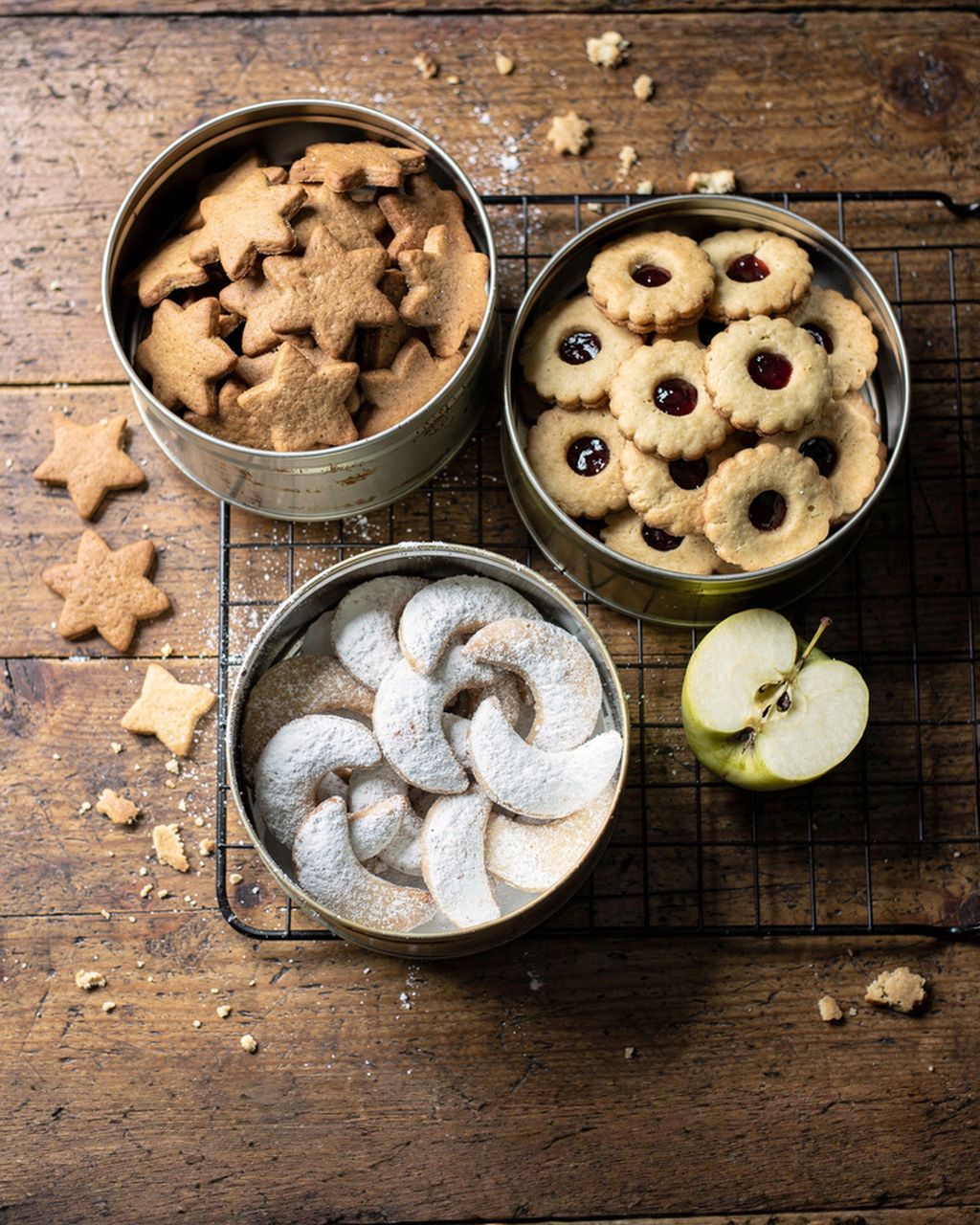
Classic christmas cookies: delicate linzer cookies
Christmas Cookie Baking Temperatures: Times by Type
Updated Aug 29, 2026
Christmas cookies bake at 150–180°C (300–350°F), and most types are ready in just 6–12 minutes. Pale butter dough wants 170°C (340°F), gingerbread can handle 180°C (350°F), and meringue kisses are more dried than baked at 90–100°C (195–210°F). That's lower and quicker than you'd expect for a cake — and the last thirty seconds decide whether you end up with crisp, melt-in-the-mouth cookies or crackers. Here are the exact numbers for every type, plus how to tell they're done when color won't help you.
Christmas cookies bake at 150–180°C (300–350°F), and most types are done in 6–12 minutes: linzer/cut-out cookies 170°C (340°F) / 8–12 min, gingerbread 180°C (350°F) / 5–8 min, vanilla crescents 170°C (340°F) / 10–12 min, "pracny" (molded shortbread) 170°C (340°F) / 12–15 min, coconut macaroons 130–140°C (270–285°F) / 15–20 min, meringue kisses 90–100°C (195–210°F) / 60–120 min. These figures are for conventional top/bottom heat with the tray on the middle rack:
Linzer and cut-out cookies – 170°C (340°F), 8–12 min (dough 3–4 mm)
Gingerbread – 180°C (350°F), 5–8 min (dough 4–5 mm)
Vanilla crescents – 170°C (340°F), 10–12 min
Molded shortbread ("pracny") – 170°C (340°F), 12–15 min
Coconut macaroons – 130–140°C (270–285°F), 15–20 min
Meringue kisses – 90–100°C (195–210°F), 60–120 min (drying rather than baking)
No-bake cookies – 0 minutes in the oven, 2 hours in the fridge
On fan/convection, drop the temperature by 20°C (35°F) for the baked varieties and keep the time the same — just check 1–2 minutes earlier. The exception is meringues: since they're dried rather than baked, 80–90°C (175–195°F) is enough. These times assume one tray in a fully preheated oven; each additional tray behaves differently, and we'll get to why below.
One rule that will save your entire batch: bake three test cookies first. Ovens commonly run 15–30°C (27–54°F) off from what the dial shows — older ovens often much more — and only a test cookie will tell you whether your 170°C is really 170°C.
Christmas cookies bake at 150–180°C (300–350°F), while cakes bake at 180–200°C (350–390°F), because cookies are small, thin, and loaded with fat and sugar — heat gets through them long before the surface would have a chance to brown. A cake is 4–6 cm thick and needs 180–200°C for 30–45 minutes just to get heat to the center. The center of a thin linzer round is cooked through almost from the start; the rest of the time is just drying out and browning the surface — and that's something you want to control, not rush.
Three things are at play here:
Butter melts around 32°C (90°F). If the dough releases it before the starch in the flour has set the structure, your round spreads into a puddle. A lower temperature gives the starch a head start.
The surface browns fast. Thin dough has a lot of sugar and protein relative to its volume, so at 200°C you'll get a burnt edge and a raw center before you can even turn around.
Cookies aren't cooked through so much as dried out. Crispness comes from evaporating water, not from color. A longer time at a lower temperature dries the dough evenly; a short time at high heat sears the outside and leaves the inside damp — and that kind of cookie goes soft again within three days.
Bake linzer cookies at 170°C (340°F) for 8–12 minutes — they're done when the edges are just barely golden and the center stays pale. Don't wait for the whole round to turn golden; by then it's already overbaked.
Time depends on thickness and size:
3 mm dough, rounds up to 4 cm: 8–9 min
4 mm dough, rounds 5–6 cm: 10–12 min
Taller cut-out shapes or double-layered cookies: add 1–2 min
Two things will throw off your timing faster than the oven will. First, the temperature of the dough: dough chilled in the fridge (2–4 hours, ideally overnight) holds its shape and needs about a minute longer than room-temperature dough, which tends to spread. Second, uniform thickness across the whole tray — if one round is 3 mm and another is 5 mm, you'll burn one and underbake the other no matter what you set the oven to.
Only sandwich filled linzer cookies together once they're completely cool, otherwise the jam will turn the dough soggy from the inside.
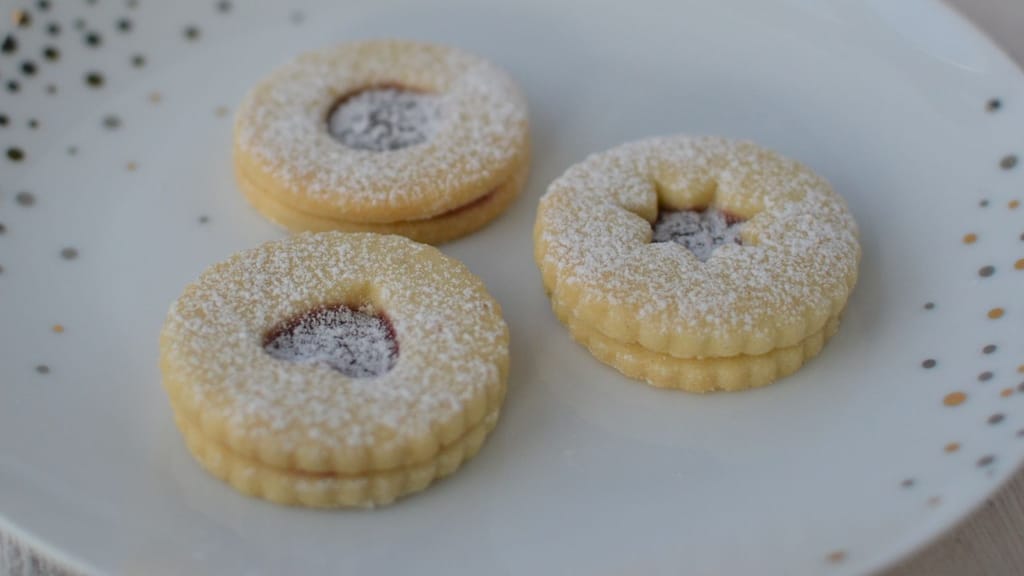
Classic christmas cookies: delicate linzer cookies
Classic linzer cookies — crisp dough that holds its shape at 170°C (340°F)
Bake gingerbread cookies briefly and at a higher temperature — 180°C (350°F) for 5–8 minutes, depending on size. Small shapes up to 4 cm need just 5 minutes; large hearts and stars need 7–8. At nine minutes, a soft gingerbread cookie is already a cracker.
Why go up when everything else goes down: at 150°C, gingerbread bakes for a long time, which gives it time to dry out and turn hard — hence short and hot at 180°C instead. But don't go higher than that: honey browns faster than regular sugar, so at 200°C the bottom burns within four minutes.
Color won't help you with gingerbread, since the dough is dark from the start. Here's how to tell it's done instead:
The surface has lost its shine and turned matte
The edges are firm, but the center still springs back slightly when you press it gently
The cookie slides across the tray without resistance
You'll pull gingerbread out of the oven while it still feels slightly underbaked. It firms up further as it cools, then softens again over the following days in a sealed tin.
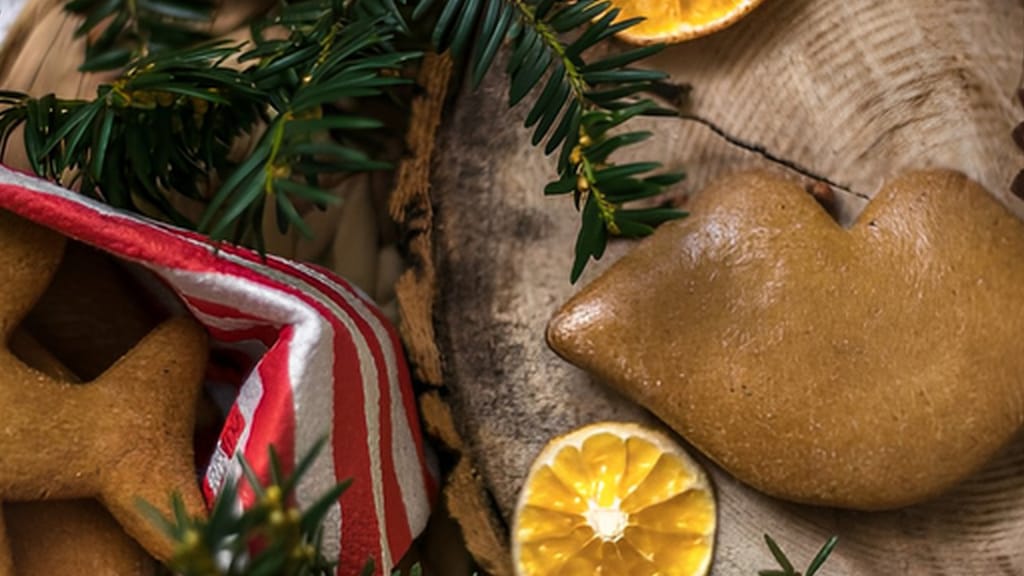
Soft gingerbread cookies
Soft gingerbread cookies — dough that only needs 5–8 minutes at 180°C (350°F)
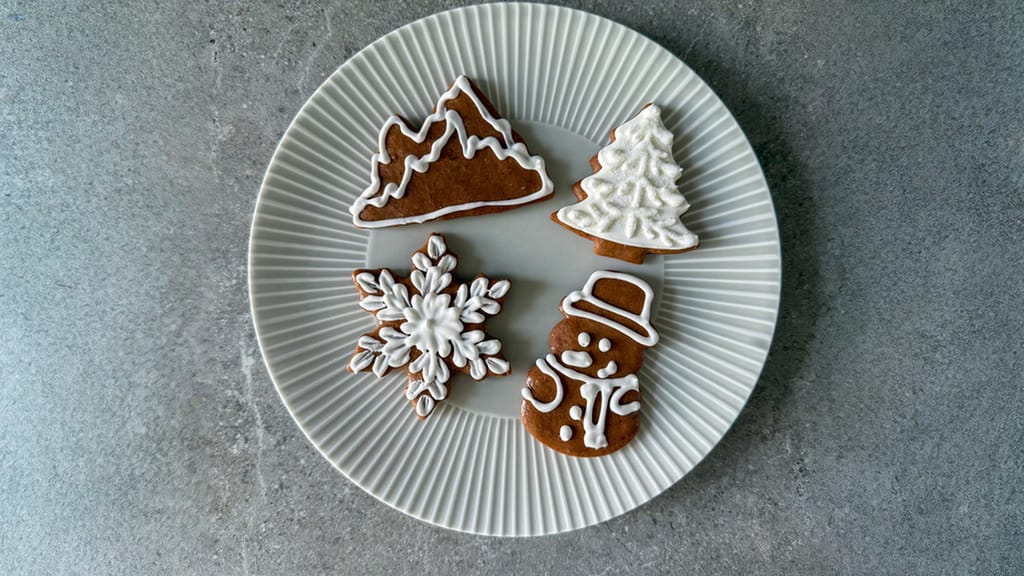
Soft honey gingerbread cookies that never go hard
Soft, honeyed gingerbread that never turns hard
Bake vanilla crescents at 170°C (340°F) for 10–12 minutes, until just the tips turn golden while the body of the crescent stays pale. Ground nuts brown faster than wheat flour — so don't go above 170°C, or you'll get the bitter taste of scorched nuts before the crescent is even cooked through.
Two things really matter here:
Shape them all the same size. A crescent made from 12 g of dough and one made from 20 g can't share a tray; the smaller one will be done after 10 minutes while the bigger one is still raw inside.
Roll them in vanilla sugar while hot, within 5 minutes of coming out of the oven. A cold crescent won't take up the sugar and it'll just brush right off. Also handle them gently — until they cool, they barely hold together.
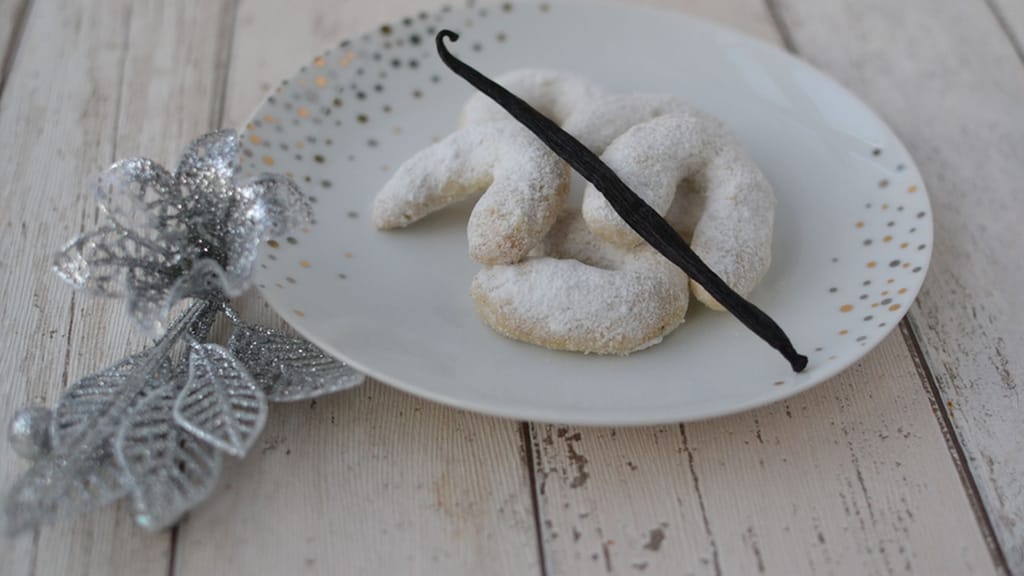
The best christmas cookies? vanilla crescents, of course!
Vanilla crescents — a classic baked at 170°C (340°F)
Bake molded shortbread cookies at 170°C (340°F) for 12–15 minutes — longer than linzer cookies, because the dough sits thicker in the mold and heat has to travel through metal to reach it. They're done when the edge against the mold turns golden and the center looks pale and matte.
What to watch for with molds:
Fill them two-thirds full. An overfilled mold overflows, and the baked-on overflow won't come off cleanly.
Space the molds 2 cm apart on the tray so air can circulate between them. Crowded together, they bake unevenly.
Metal conducts heat faster than a paper-lined tray, so the bottom finishes before the top. If the bottom darkens too fast, move the tray up a rack.
Turn them out while still warm, after 3–5 minutes. Hot cookies break apart; fully cooled ones stick in the mold.
The same figures apply to other mold-baked cookies — coconut cups, nut-filled bites, and bear paws alike.
Meringue kisses aren't baked so much as dried — 90–100°C (195–210°F) for 60 to 120 minutes, depending on size. Small 2 cm kisses need about an hour; pieces over 4 cm can easily take two. The goal isn't to cook the batter but to evaporate the water from the egg-white foam while keeping its original snow-white color.
Why so low: above 110°C, meringue starts to color — sugar reacts with the proteins in the egg white (the Maillard reaction), and that pure white is gone. Sugar itself doesn't start to caramelize until around 160°C. The hotter you go, the more likely a meringue is to crack, since the steam inside expands faster than it can escape. Cracks aren't a baking mistake — they're a sign the temperature was too high.
How to get it right:
Let the moisture escape. Prop the oven door slightly open with a wooden spoon so moisture can keep leaving; otherwise the evaporated water condenses back onto the meringues and leaves them sticky.
Fan/convection actually helps here — set it to 80–90°C (175–195°F); the circulating air carries the moisture away on its own.
Judge doneness by touch, not color: a finished meringue lifts cleanly off the parchment and sounds hollow when tapped. If it's still sticky, give it another 15 minutes.
Let them cool inside the oven with the door shut and the heat off. A sudden temperature change will crack them.
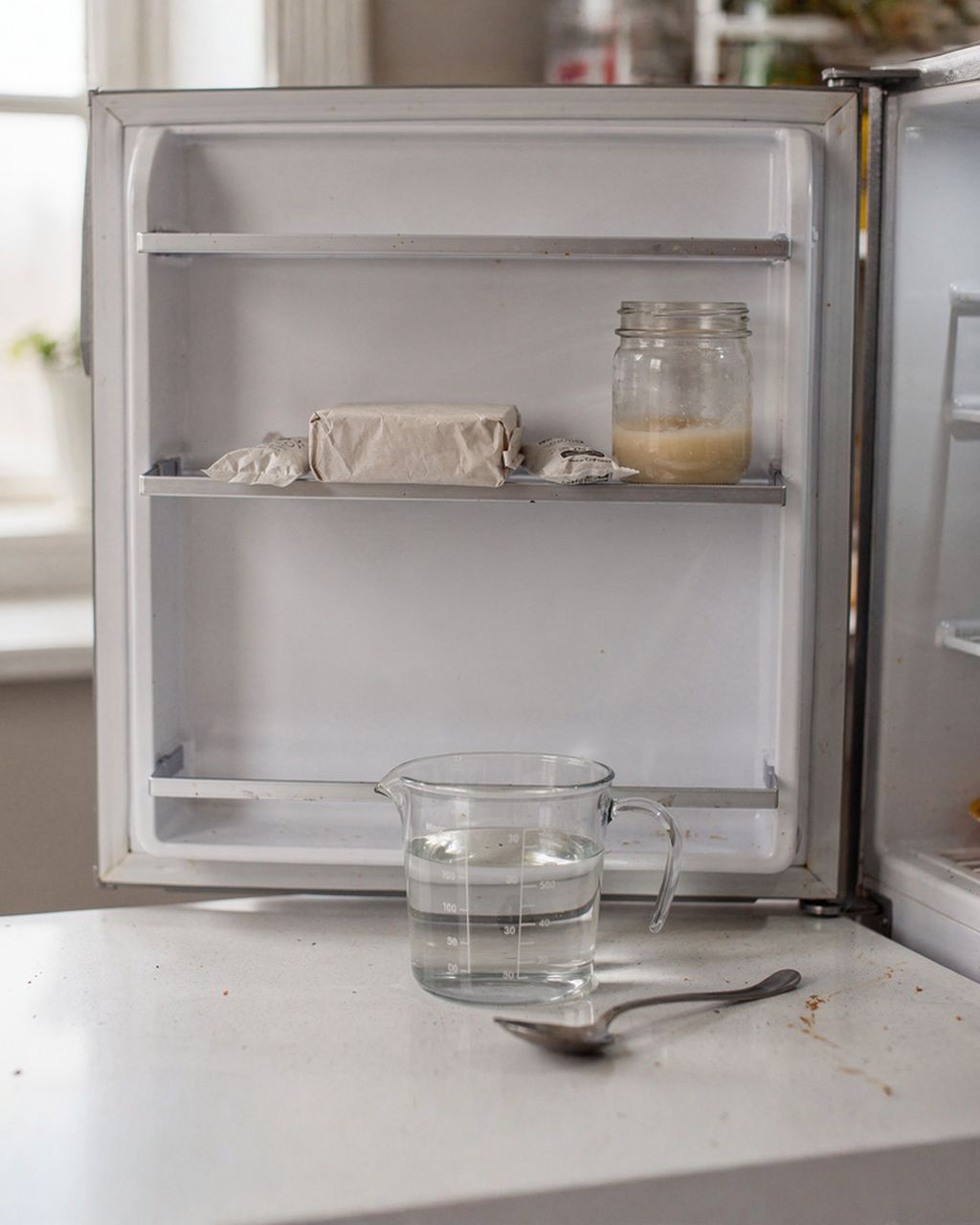
No-bake cookies firm up from cold, not heat — leave truffle balls and bars in the fridge for at least 2 hours, ideally overnight. Fat (butter, coconut oil, chocolate) sets firm at 4–6°C (40–43°F) and holds its shape; at room temperature, a ball left in a tin for two hours will have flattened out.
Times to keep in mind:
Balls before coating – 30 min in the fridge, so they're firm enough to roll
Finished balls and bars – 2 h before stacking them in a box
Chocolate coating – 15–20 min in the fridge to set firm to the touch
No-bake varieties don't keep as long as baked ones, and belong in the fridge, not in the pantry with the rest of your Christmas cookies.
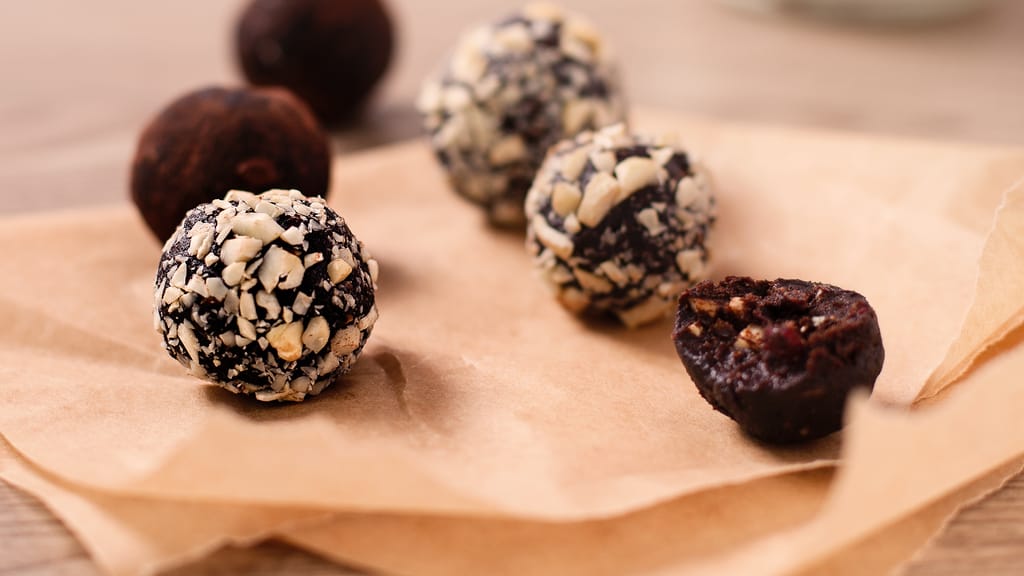
Cocoa date & oat balls
Cocoa balls made from oat flakes and dates — no-bake cookies that just need chilling
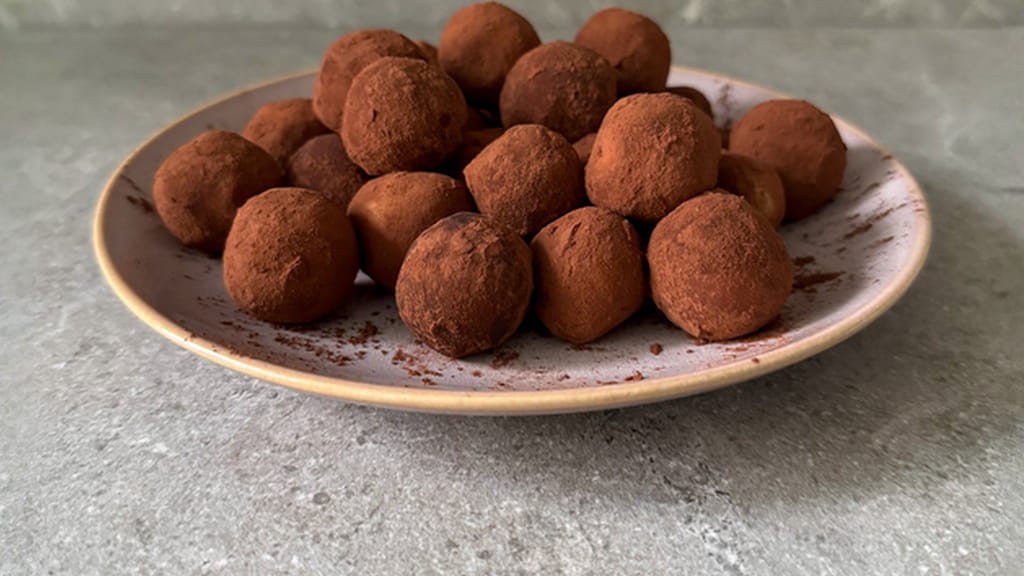
Baileys white chocolate truffles with sponge biscuits
No-bake Baileys balls with white chocolate and sponge biscuits
You can tell cookies are done by their edges, their surface, and how they behave on the tray — pale ones by the color of the edge, dark ones by a matte surface and springiness. The timer tells you when to go check; your eyes have to make the final call.
Pale cookies are done when the edge is just barely golden and the center stays pale — a round that's gone golden all over is already 1–2 minutes overbaked. With butter dough, it's all about the color of the edge:
Edge barely golden, center pale – done, take it out
Golden all over – overbaked by 1–2 minutes, will turn hard
Still fully white and soft after 12 minutes – your oven runs cooler than the dial shows; add 10°C (18°F), not more minutes
A test that doesn't lie: nudge a cookie with a spatula. A finished one lifts cleanly off the paper, whole, and holds its shape. An underbaked one sticks and bends. Keep in mind that cookies always feel soft straight out of the oven — they firm up as they cool and the sugar and fat set. Wait for crispness in the oven, and you'll end up with crackers instead.
With dark dough, color won't help you, since it's dark from the start. Go by other signs instead:
The surface has lost its shine and turned matte — the main tell
The center springs back gently when pressed, with no dent left behind
The bottom is firm when you lift a cookie — not wet or shiny
It smells right — with gingerbread, the spices really open up only in the last two minutes
If you're not sure, sacrifice one cookie and break it open: the center should look evenly porous, not gummy. With gingerbread, slightly underbaked always beats overbaked — it softens up after two days in the tin, while an overbaked one stays hard forever.
Fan/convection ovens bake faster and more evenly, so you lower the temperature by 20°C (35°F) and leave the time as is — just check 1–2 minutes earlier. 170°C becomes 150°C, while 8–12 minutes stays 8–12 minutes. (Or the other way round: keep it at 170°C and cut the time by roughly a fifth — but never lower both temperature and time at once, that's the most common reason for soft, underdried cookies.)
The fan circulates hot air throughout the oven, so there's no longer a temperature gap between the top and bottom, and heat reaches the dough faster. That has a few practical consequences worth considering:
You can bake 2–3 trays at once — the main reason to reach for fan mode for Christmas cookies. With conventional heat, sticking to one tray is wiser.
It dries things out more. That's an advantage for meringues (80–90°C, shorter time). It's a disadvantage for soft gingerbread — it'll dry them out noticeably more, so bake those conventionally instead.
It can blow light things around. Delicate decorations, almond flakes, or toppings on unbaked dough can end up shifted to the other side of the tray.
Swap the trays anyway. Even with the fan running, the lower tray sits closer to the heat source; switch them halfway through baking.
If a recipe doesn't give a fan-oven temperature, treat the number given as the conventional setting and subtract that 20°C.
The last tray of cookies bakes differently for three reasons: a hot tray, an oven door that's been opened repeatedly, and a dark tray that bakes the bottoms faster. The recipe isn't to blame — the conditions have simply changed. Here's what to do about it:
A hot tray. If you load raw dough onto a tray that just came out of the oven, the butter melts before the tray even gets back inside — and your rounds spread into puddles. Keep two trays on hand and always let one cool, or run it under cold water and dry it off.
An open oven door. Every time you open the oven, the temperature drops noticeably, and it takes several minutes to recover. With cookies, where minutes are everything, that really shows. Check through the glass and only open the door once.
A dark or old tray. Dark metal absorbs more heat and bakes bottoms faster — on one of these, drop the temperature by 10°C or cut 1–2 minutes off the time. A light aluminum tray, by contrast, bakes more gently.
One extra tip: always preheat the oven for at least 15 minutes after the indicator light goes off. The light reacts to the air temperature, but the walls and the tray are still cold at that point, so the first batch effectively bakes in a different oven than the second.
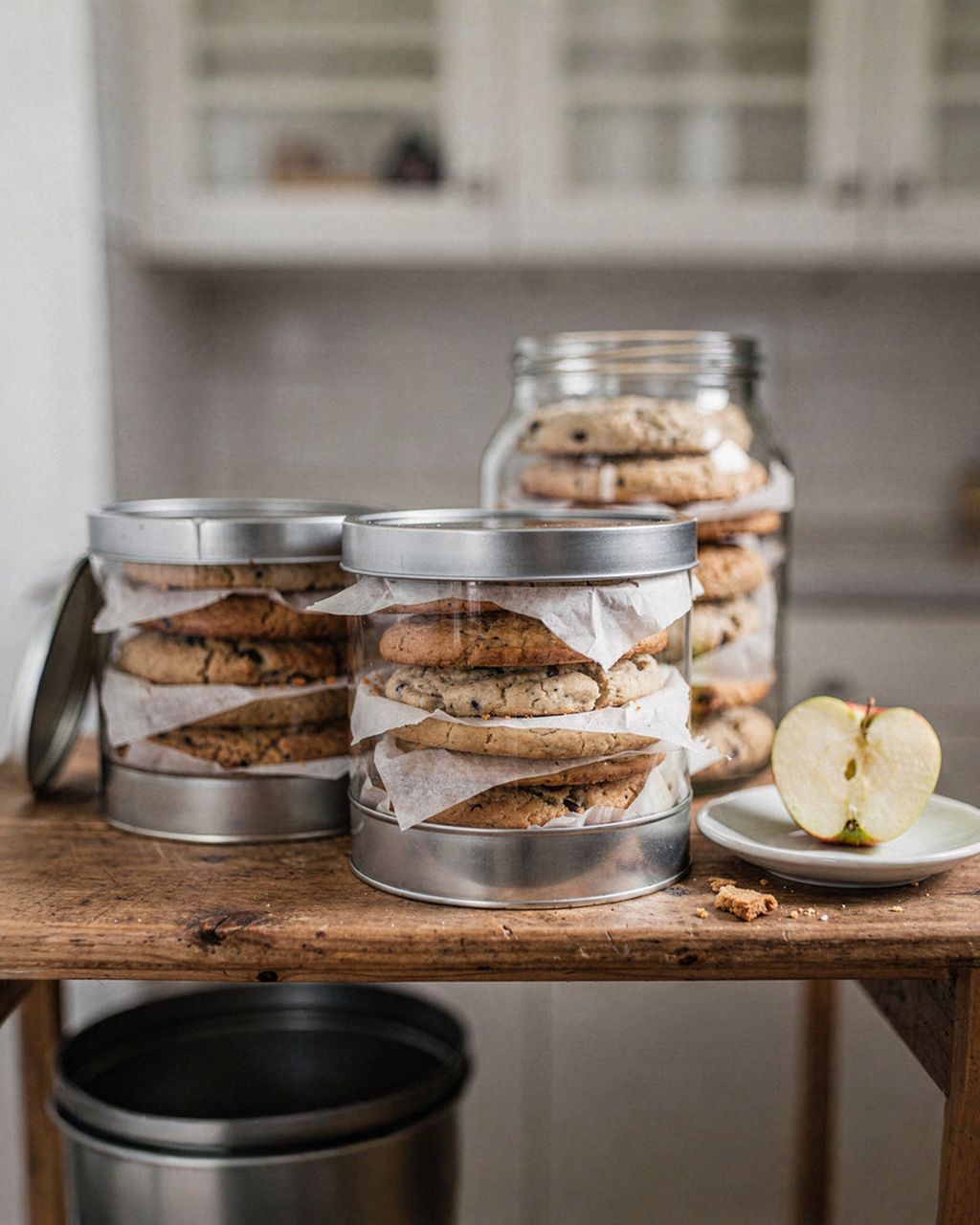
Shelf life depends on the type: gingerbread and unfilled linzer cookies keep 6 weeks or more in a tin in a cool, dry spot; linzer cookies sandwiched with jam keep 2–3 weeks; those filled with buttercream keep up to 14 days. No-bake cookies belong in the fridge and keep for 7–10 days. Store each kind separately — gingerbread releases moisture that would turn linzer cookies and crescents soggy. Add a slice of apple to the gingerbread tin to keep them soft; do the opposite with linzer cookies and add nothing at all, since moisture robs them of their crispness. Only pack cookies into a box once they're completely cold, or condensation will form inside.
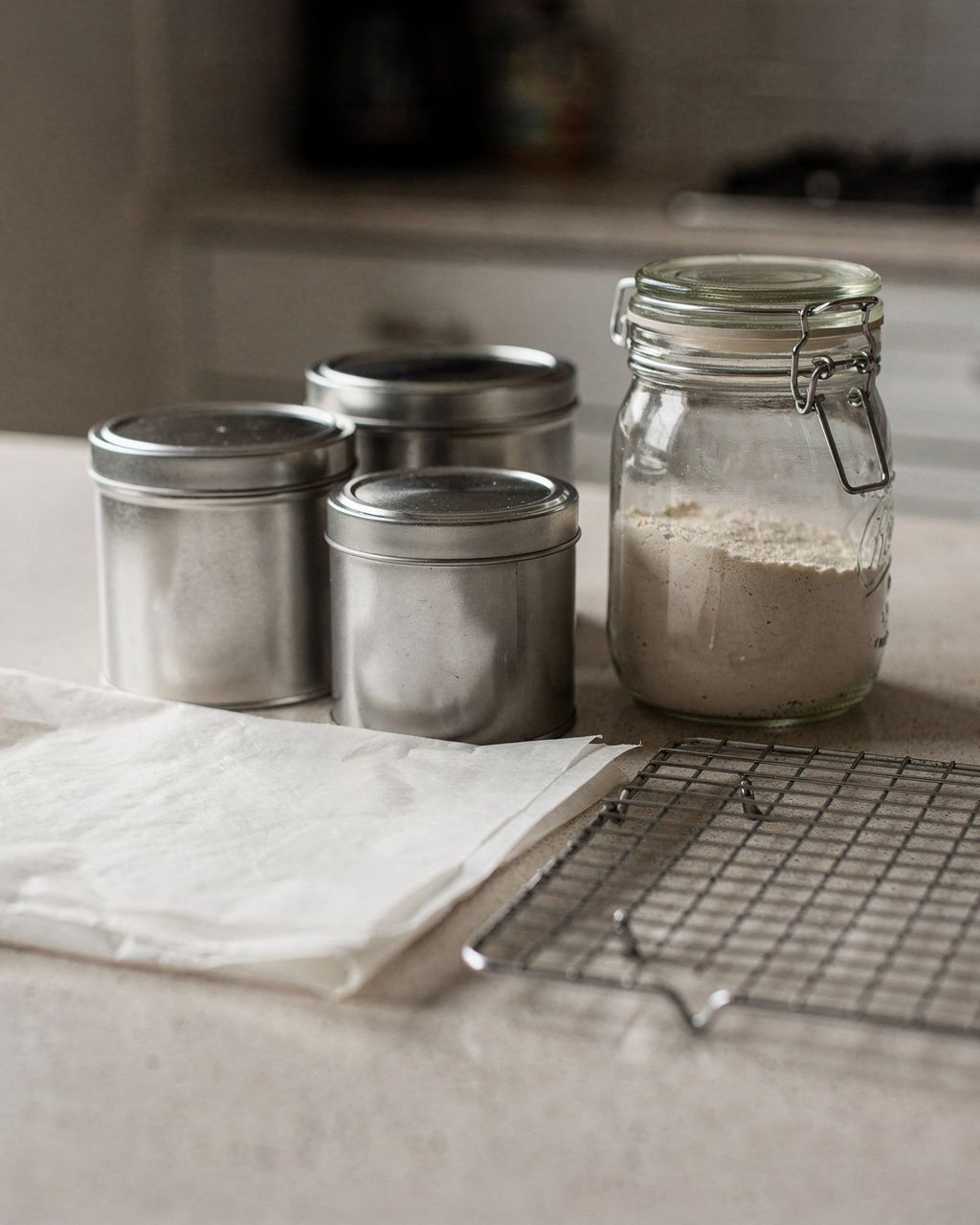
Parchment paper is the more versatile choice for cookies: it lets the bottom dry out properly, so cookies stay crisp. A silicone mat insulates more, so bottoms come out paler and softer — good for thin linzer cookies that scorch easily, but add 1–2 minutes for molded shortbread and gingerbread baked on it. Never grease the tray with fat: butter dough will spread sideways in melted fat.
Either your tray is too low in the oven, or you're baking on a dark tray that absorbs more heat. Move the tray to the middle rack, lower the temperature by 10°C (18°F), or slide a second tray underneath the dark one as insulation. With conventional heat, it also helps to switch to top-and-bottom heat together, rather than bottom heat alone.
You can only bake different types of Christmas cookies on one tray if they share the same temperature, time, and dough thickness — and that's rare. Linzer cookies at 170°C and gingerbread at 180°C won't both come out right on one tray; one will end up overbaked. On the other hand, two types of linzer dough with the same thickness, cut to a similar size, will bake together just fine. It's the thickness of the dough that matters, not the shape.
Bake cut-out pieces straight from the freezer for 1–2 minutes longer at the same temperature. There's no need to thaw them first — in fact, frozen dough holds its shape even better than chilled dough. A whole block of dough, though, should thaw in the fridge overnight; otherwise you won't be able to roll it out evenly, and the uneven thickness will throw off your baking time.
One recipe worth heating the oven for, one tip, and one deal from the shop. Nothing else.