Dried Egg White
Raw Eggs in Cookies, Candies & Creams: Salmonella Risk and How to Lower It
Updated Oct 17, 2026
Raw eggs in no-bake treats and creams carry a small but real risk of salmonella. Salmonella can hide even in a clean, uncracked egg, and neither no-bake sweets nor a cold cream have anything that would kill it. For a healthy adult it usually means an unpleasant bout of diarrhea, but for small children, pregnant women, older adults and people with weakened immunity it is more serious. The good news: you can cut the risk a lot at home. Heat the yolks or whites until the whole mixture reaches 71 °C (160 °F), or reach for pasteurized dried egg white.
The salmonella risk from a single raw egg is low, but in no-bake treats that use several eggs, it adds up. According to an older US estimate (FDA/USDA), roughly one egg in 20,000 carries salmonella; in the Czech Republic and the EU the share differs. But the cream for one tray of cookies can easily call for six yolks, the baking goes on for weeks, and the whole family eats the results.
The key point is that salmonella can be inside the egg, not just on the shell. The US FDA warns that even a clean, uncracked egg can carry it. So cracking carefully or washing the shell won't help.
If salmonella is present in a raw egg, two things matter:
Temperature. The Prague Hygiene Station gives a safe temperature as above 70 °C (158 °F) for at least 10 minutes, while US authorities (FDA, USDA) say egg dishes should reach 71 °C (160 °F) throughout. No-bake sweets and cold creams never reach either temperature.
Time in the warm. Below 4 °C (39 °F) salmonella doesn't multiply (according to the US research agency USDA ARS, the lower limit of its growth is around 5 °C / 41 °F), but at room temperature it does. A cream that sits on the counter for half a day is riskier than one that went straight into the fridge.
You'll find raw eggs mainly in no-bake balls and fillings bound with yolk, buttercreams made with yolks, tiramisu, chocolate mousse, egg white icing and homemade eggnog. Go through the recipe and look for a yolk or white that's added after cooking and then never goes into the oven or onto the stove:
No-bake sweets: rum balls, coconut balls and nut balls that use a raw yolk as a binder. We cover what to use instead of the yolk in the article What to Use Instead of Raw Eggs in No-Bake Treats.
Buttercreams with yolks: older recipes for fillings (for example for wasp's nest cookies or little wreaths) beat butter with sugar and raw yolks.
Tiramisu: classic tiramisu has a mascarpone cream made with raw yolks and whipped whites. There are egg-free versions too, so check the recipe, whether you're making the classic or our raspberry tiramisu. If the recipe calls for raw egg, use one of the methods below.
Chocolate mousse: the traditional version relies on raw whipped whites and often yolks as well. Check the recipe, whether you're making classic chocolate mousse or white chocolate mousse.
Egg white icing for gingerbread cookies (royal icing): raw egg white beaten with powdered sugar.
Homemade eggnog: formally an egg liqueur. It's often made from raw yolks with condensed milk and alcohol, so check the recipe for eggnog – the best Christmas drink or Sandtner's eggnog too.
Risk-free are creams in which the eggs are cooked: pudding cream, Parisian cream (which has no eggs at all), cooked yolk cream, or custard cooked until thickened. The same goes for everything that gets baked, such as classic shortbread Linzer cookies with yolk in the dough.
Most at risk are small children, pregnant women, older adults and people with weakened immunity. These are the groups named by the US FDA. The Prague Hygiene Station stresses small children and older adults in particular, because diarrhea quickly leads to dehydration in them.
In practice, if you bring sweets to a family visit, a nursery school or your grandmother, you don't know which guests belong to a risk group. That's why it pays to make the whole batch safe, not just a "little plate for the kids".
In a healthy adult, salmonellosis mainly shows up as diarrhea, fever and stomach cramps. The first symptoms usually appear a few hours to two days after eating, or 6 hours to 6 days according to the US CDC. If you feel unwell on the third day after the holidays, don't rule out the sweets as the cause.
At home, you pasteurize eggs by heating them, stirring constantly, until the whole mixture reaches 71 °C (160 °F), and then cooling them right away. That follows the US recommendation (FDA, USDA) for egg dishes. Prague hygienists give a stricter requirement (above 70 °C for at least 10 minutes), so the home method reduces the risk a lot but doesn't bring it to zero. The sugar or liquid in the mixture keeps the egg from curdling. Depending on what you need, there are four routes:
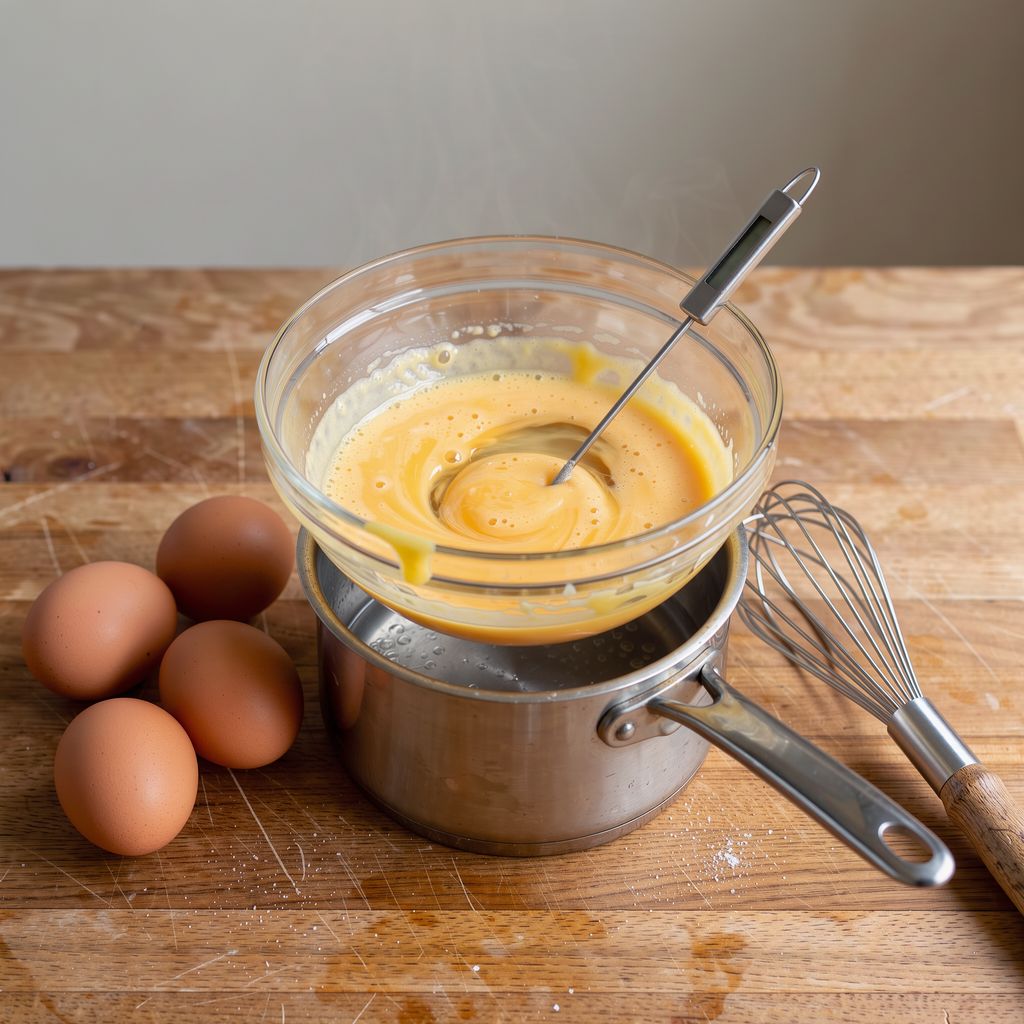
Yolks: whisk them with sugar and a little liquid over a water bath to 71 °C (160 °F).
Whites: make Swiss meringue, meaning whites with sugar warmed over steam to 71 °C (160 °F).
Whites: make Italian meringue, into which hot sugar syrup is poured.
Whole eggs in the shell: pasteurize them in a precisely controlled water bath (sous vide).
You can't do this without an instant-read kitchen thermometer. Guessing that "it's warm enough now" isn't good enough. An oven thermometer won't work for this; you need a probe that you can dip into the cream.
Whisk the yolks with sugar and a little liquid (milk, cream, coffee, wine, rum) in a metal or glass bowl over a pot of gently simmering water until the thermometer shows 71 °C (160 °F) throughout the mixture. The bottom of the bowl shouldn't touch the water.
Ratio: use at least 1–2 tablespoons of sugar or liquid per yolk. A yolk on its own starts to curdle at 71 °C (160 °F).
Keep stirring, especially toward the sides of the bowl, where the mixture is hottest. Measure the temperature in the middle of the bowl, not by the side.
Can you tell without a thermometer? Not reliably. A thick texture and pale color (as with zabaione) are good signs, but they won't confirm the temperature.
Cool right away: set the bowl in ice water and stir until the mixture cools. Only then fold it into butter or mascarpone, otherwise the fat will melt.
Yolks prepared this way can go into tiramisu, buttercream, no-bake balls and eggnog. For eggnog, heat the whole yolk base with the milk to 71 °C (160 °F) and add the alcohol only after it has cooled.
You make Swiss meringue by heating the whites with sugar over a water bath until the whole mixture reaches 71 °C (160 °F), and then whipping them. The ratio is usually about 1 part whites to 1.5–2 parts sugar by weight. Heat while stirring constantly until the sugar has dissolved completely, the mixture no longer feels gritty between your fingers and the thermometer confirms the temperature. Then transfer it to a stand mixer and whip until glossy, stiff and cool.
Swiss meringue is the base for Swiss meringue buttercream (with butter), for decorating cakes, and as a replacement for raw whipped whites in mousses. It's denser than ordinary meringue, so a mousse made with it comes out a little firmer.
Italian meringue is made by pouring sugar syrup boiled to 118–121 °C (244–250 °F) in a thin stream into whipped whites while whisking continuously. It's very stable and great in creams.
To be honest: the syrup cools quickly when it hits the whites, and the whole mixture may not reach 71 °C (160 °F) evenly. It lowers the risk considerably, but it's less measurable than with Swiss meringue. If you're cooking for a risk group, reach for Swiss meringue or pasteurized egg white instead.
If you have a sous-vide cooker, you can pasteurize eggs in the shell without cooking them. The often-cited sous-vide guide by Douglas Baldwin gives a bath of at least 75 minutes at 57 °C (135 °F). Then chill the eggs in ice water, label them and store them in the fridge.
The white will be a little milky and harder to whip (expect longer whipping), while the yolk stays liquid. This only works if the temperature is held precisely. An ordinary pot on the stove can't do it.
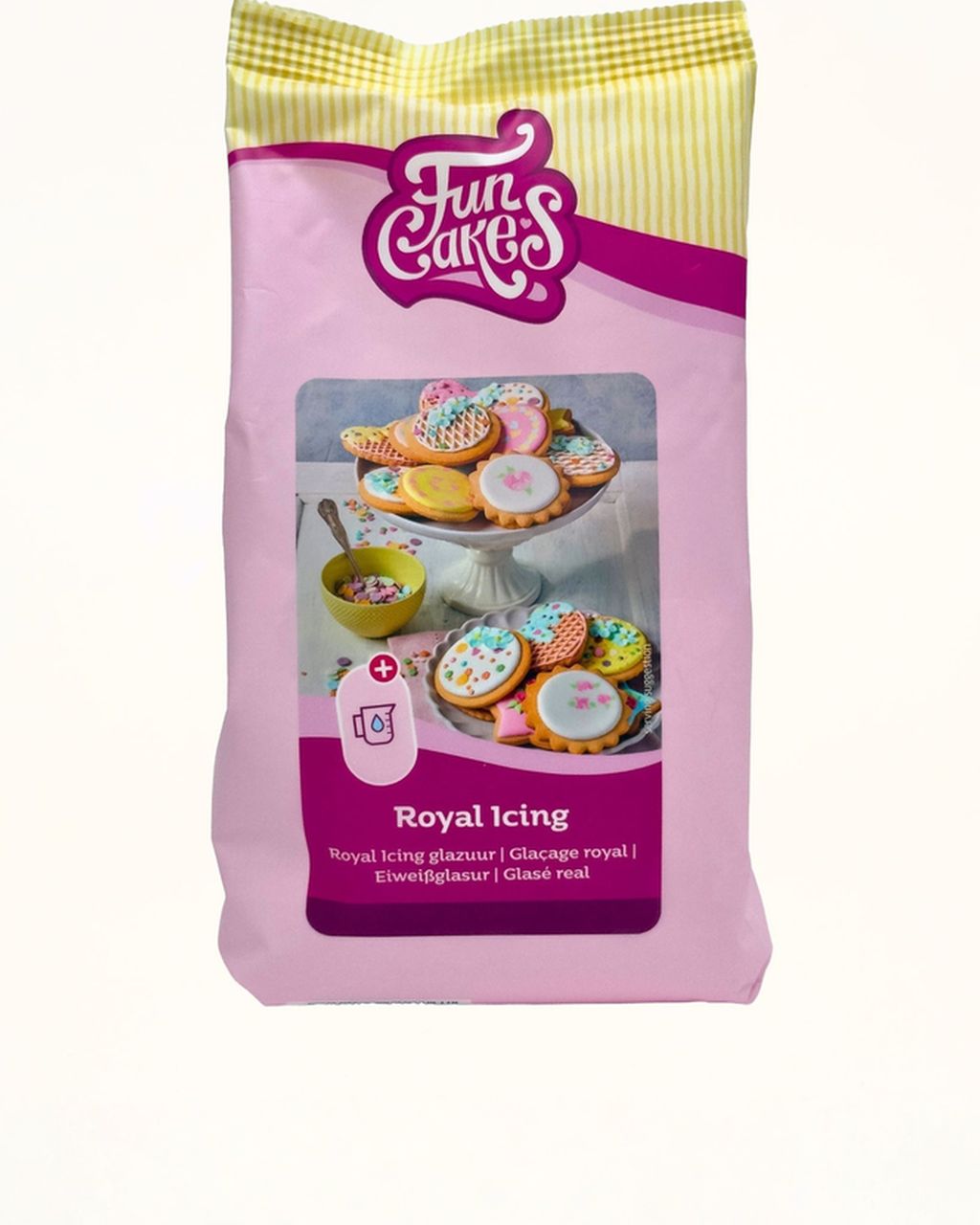
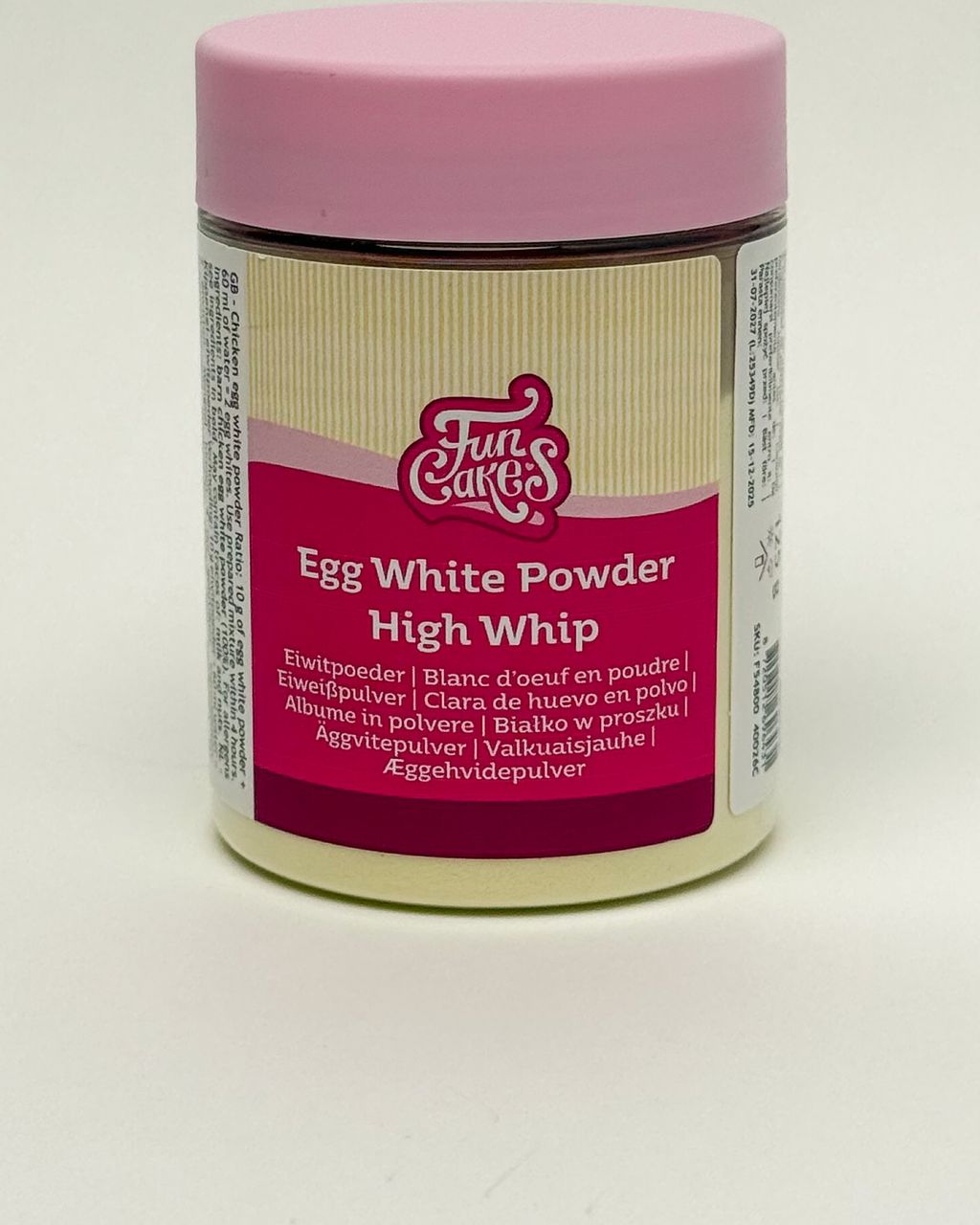
The easiest safe substitute for raw egg white is pasteurized dried egg white. It's already heat-treated, so you don't need to heat or measure it; you just mix it with water. It works for egg white icing, whipped whites in mousses, macarons and meringues, for example lilac meringues with lemon cream.
According to the manufacturer, our FunCakes dried egg white contains 100% pasteurized dried egg white. The manufacturer's details:
Dosage: 10 g powder + 60 ml water = 2 egg whites.
Once mixed, use the mixture within 4 hours.
Storing the powder: in a dry, cool place at 8–20 °C (46–68 °F), so in an ordinary pantry, not the fridge. You'll find the best-before date on the packaging.
For gingerbread icing, the manufacturer recommends mixing 10 g powder, 60 ml water, 300–500 g powdered sugar and a pinch of citric acid. If you don't want to weigh anything, there's ready-made FunCakes royal icing. According to the manufacturer, it contains sugar, dried glucose syrup, dried egg white and citric acid, so you only add water.
What dried egg white can't do: it doesn't replace yolk. For creams and balls bound with yolk, use water-bath pasteurization (see above), or pasteurized liquid eggs or yolks, which are sold chilled in a tub or carton. In the Czech Republic they're offered mainly by wholesalers and some supermarkets. We don't sell them. Keep them in the fridge and follow the time limit the manufacturer gives on the packaging for an opened pack.
You'll find more helpers for your sweets among the baking ingredients. If the egg in a recipe only binds, it may not need to be there at all. We cover substitutes by function (binding, fluffiness, creaminess) in the article What to Use Instead of Raw Eggs in No-Bake Treats.
Alcohol, acid and freezing won't reliably destroy salmonella in a cream; only heat is reliable. The most common myths:
Alcohol in balls or eggnog. Once diluted with the other ingredients, alcohol no longer kills bacteria effectively. The US FSIS and the expert site Food Safety News both point this out.
Lemon juice or citric acid. It makes icing more stable, but it doesn't replace pasteurization.
The freezer. Freezing stops salmonella but doesn't kill it. After thawing, it can keep multiplying.
Washing eggs. Salmonella can be inside the egg, so washing doesn't help. On top of that, a wet shell can let bacteria from the surface get inside, so don't wash eggs before use.
Eat creams and sweets made with raw eggs right after making them. The Prague Hygiene Station puts them among dishes that should be eaten immediately. What to watch for:
Raw yolks and whites after cracking: 2–4 days in the fridge (USDA/FSIS).
Raw eggs in the shell: up to 3 weeks in the fridge from purchase (FDA).
Finished dishes made with heat-treated eggs, including cream made with pasteurized yolks: 3–4 days in the fridge (FDA).
Outside the fridge: according to the FDA, don't leave a finished egg dish at room temperature for more than 2 hours, or for more than 1 hour if it's warmer than 32 °C (90 °F). Prague hygienists recommend keeping risky dishes below 10 °C (50 °F).
In practice: no-bake sweets with raw egg don't belong in a tin on the balcony for three weeks. If you want to make them ahead, use pasteurized yolks or whites and store them in the fridge.
No. An egg with salmonella looks, smells and tastes completely normal. Salmonella doesn't change an egg's color, smell or texture, so freshness and a clean shell say nothing about safety. Only heat (warming the whole mixture to 71 °C / 160 °F) or a pasteurized product lowers the risk.
Not automatically. Eggs from backyard hens can carry salmonella too. Commercial flocks are subject to veterinary checks, but with your own hens nobody confirms or rules out infection. Such eggs also often sit at room temperature. For no-bake treats, handle them the same way as store-bought eggs.
No. Drying doesn't solve the salmonella problem, because drying out doesn't reliably kill bacteria. For gingerbread cookies for kids and guests, use pasteurized dried egg white or a ready-made royal icing mix.
Yes. Pasteurized liquid eggs or yolks have already been heat-treated, so you can add them straight to tiramisu, creams and no-bake balls. The condition is that you keep them refrigerated and use them within the time the manufacturer gives for an opened pack. Keep the finished cream in the fridge and eat it within 3–4 days.
Above all, drink plenty of fluids, because diarrhea from salmonellosis leads to dehydration. Symptoms usually start a few hours to a few days after eating (6 hours to 6 days, according to the CDC). If it involves a small child, a pregnant woman or an older adult, or if a high fever lasts, blood appears in the stool, or there are signs of dehydration, see a doctor.
One recipe worth heating the oven for, one tip, and one deal from the shop. Nothing else.