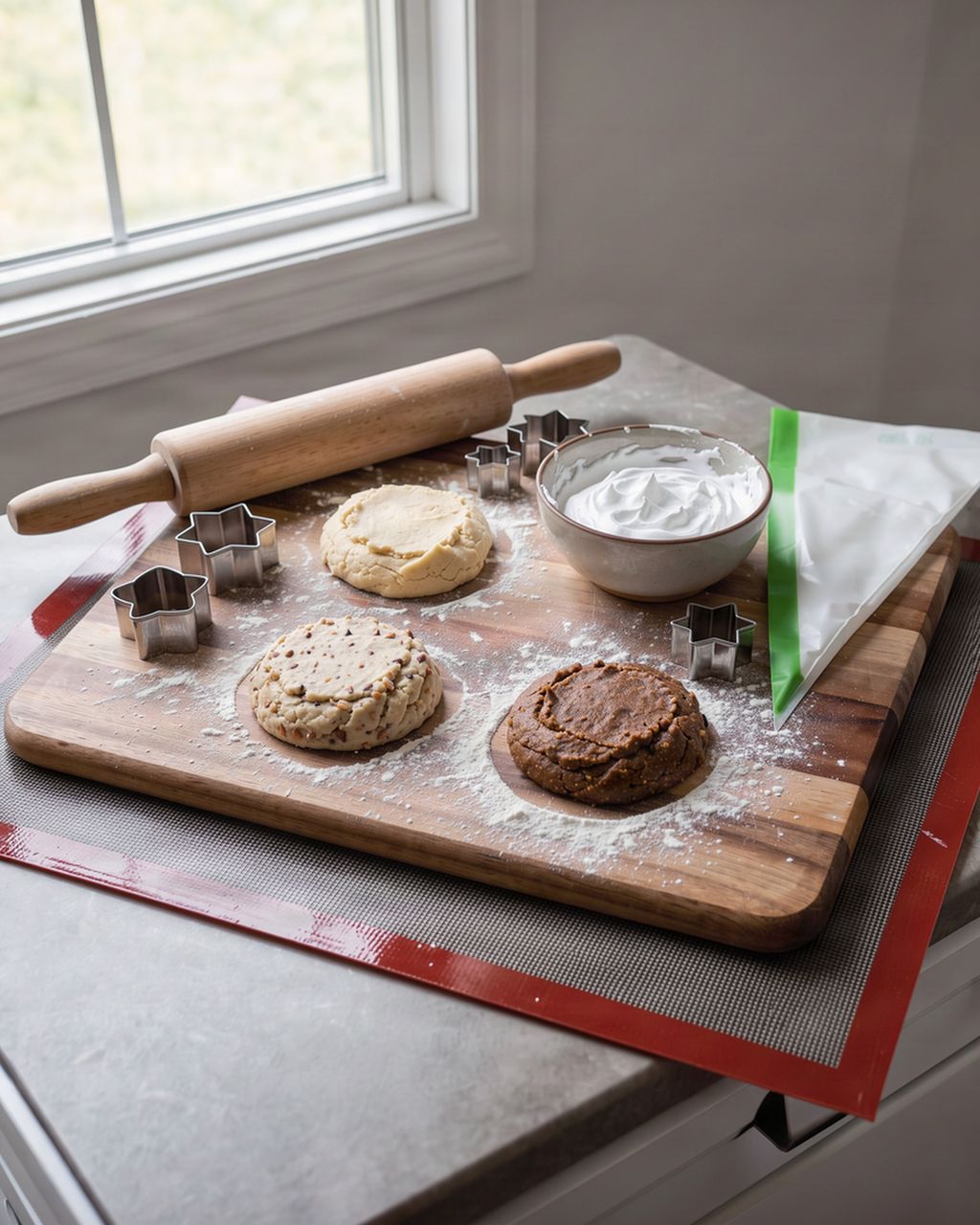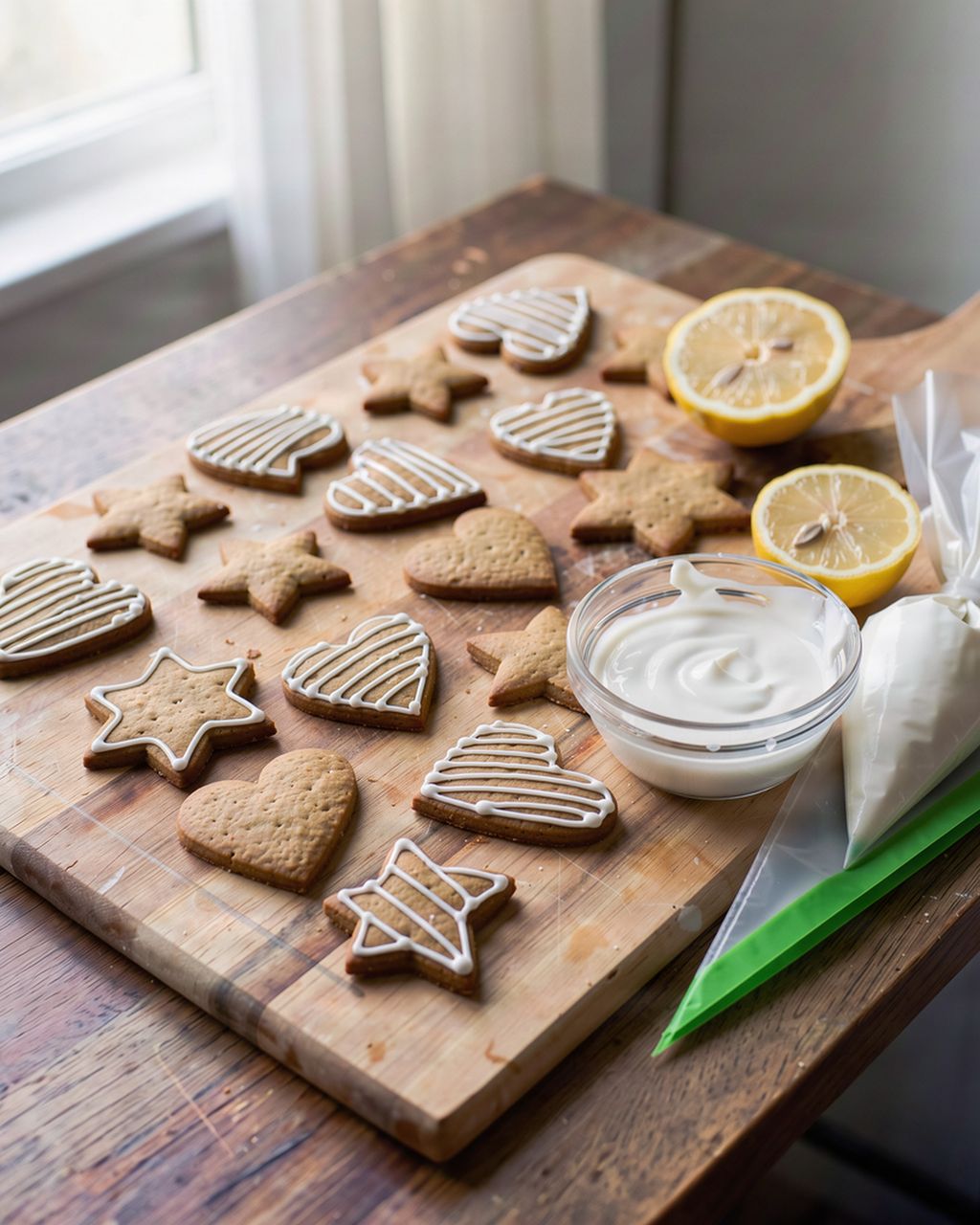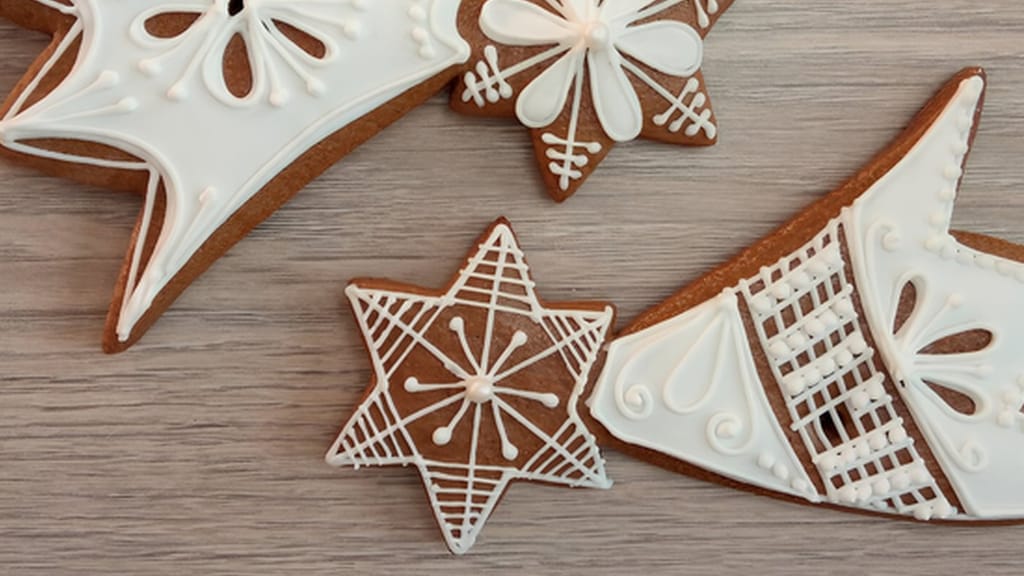
The best honey gingerbread cookies
Honey Gingerbread Cookies: Which Honey to Use, Why You Warm It, and What to Substitute
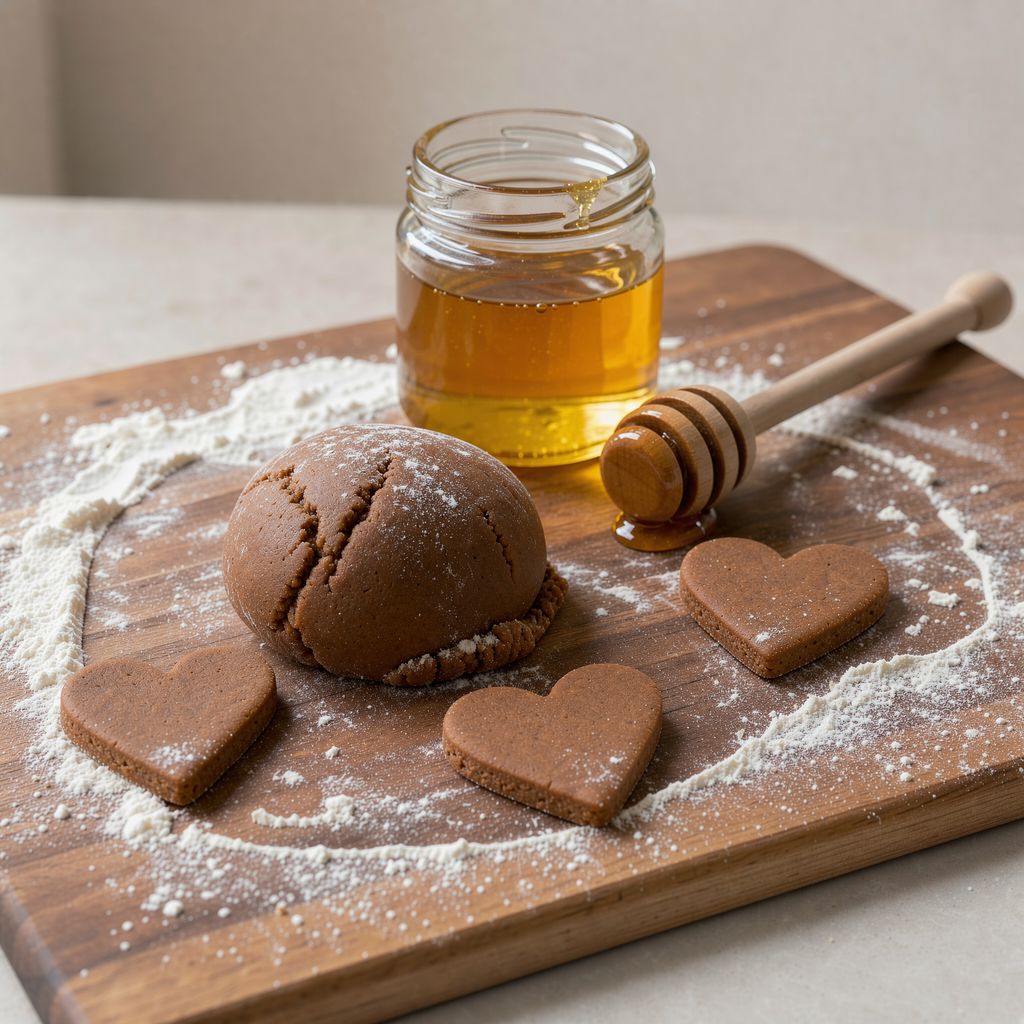
Updated Oct 17, 2026
It's the honey, not the spices, that makes honey gingerbread cookies what they are: it holds water in the dough, so the cookies soften after a few days, and it gives them a dark crust and that classic aroma. Without honey (or a close substitute) you end up with a hard, spiced biscuit. Here's what honey actually does in the dough, which kind to choose, why you warm it, and how to replace part of it by weight with invert sugar or glucose syrup.
Honey does three things in gingerbread dough: it holds moisture, browns, and softens. It all comes down to its makeup. According to commonly cited figures, honey is roughly 38% fructose, 31% glucose and 17–20% water, with the rest made up of other sugars, acids and aroma compounds. Beet sugar, by comparison, is pure sucrose.
Moisture and softness. Fructose and glucose are hygroscopic, so they bind water and even pull it in from the air. That's why honey gingerbread cookies turn firm right after baking, then soften in the tin within a few days. Plain sugar can't do that.
Color and flavor. Free simple sugars, fructose above all, brown in the oven faster than sucrose. That gives you the dark crust and a caramelly, slightly bitter flavor. The catch: honey dough burns easily.
Structure. Honey is mildly acidic, which helps baking soda: the acids in honey react with it and release carbon dioxide. Baker's ammonia (ammonium bicarbonate, also called hartshorn) doesn't need acid, since the oven's heat releases its gas. Thanks to the honey, the dough is dense and smooth at once, and it doesn't rise like a bundt cake.
If you mainly want to know why gingerbread cookies go hard and how to bring them back to soft, see Why gingerbread cookies harden and how to make them soft. Here we're sticking to honey itself.
The best choice is runny blossom or blended honey of medium color. It has plenty of flavor, won't overpower the spices and mixes in easily. Just avoid honey so strongly flavored that it drowns out the cinnamon and cloves. Specifically:
Blossom (meadow, wildflower, blended): the all-rounder, with a mild flavor and medium color.
Forest / honeydew: darker and more spicy, and it makes darker cookies. It crystallizes slowly, so it's easy to work with. Excellent for a traditional, old-fashioned Czech flavor.
Acacia: stays liquid for a long time (it's high in fructose) and gives the softest result, but its flavor is almost neutral.
Rapeseed (canola): turns into a white paste only a few days after extraction. You can use it, just melt it first (see below).
Buckwheat: very dark and bitter. Use it only in a blend, at most a quarter of the total honey.
Don't buy expensive honey for gingerbread. The delicate aroma of the finest honeys won't survive baking anyway, so a decent honey that tastes good off the spoon is enough. Choose honey from a beekeeper or with a clearly stated origin. Sugar syrups with honey flavoring aren't honey (see the section on substitutes).
You warm honey so that the sugar dissolves, blends with the fat, and the dough turns out smooth and uniform. Cold honey is thick, the sugar crystals won't dissolve in it and the butter won't combine with it. The dough would then be grainy and sticky.
How to do it:
Put the honey, sugar and fat (as your recipe says) in a saucepan and heat gently over low heat, stirring constantly, until the sugar dissolves, at roughly 60–70 °C (140–160 °F).
Don't boil it. As soon as bubbles appear around the edge, take it off the heat. Boiling evaporates water (the dough then turns hard and cracks), and the honey starts to caramelize and turn bitter.
Let the mixture cool to lukewarm, around 35–40 °C (95–105 °F), and only then stir in the egg. In hot honey it would curdle.
Work the flour, spices and raising agent into the lukewarm mixture. The dough will be soft at first and firms up only once it has cooled and rested.
There are also "cold method" recipes, where the honey is simply mixed with the other ingredients and the dough then rests for several days. That works too, as the honey gradually dissolves in the dough on its own. But the warm method is faster and more reliable. If your cut-out cookies spread in the oven, check out Why gingerbread cookies spread when baking and how to prevent it.
Crystallized honey is perfectly fine: just melt it gently in a water bath and use it like runny honey. Crystallization is natural: the glucose in honey forms crystals, and the more of it the honey contains (rapeseed, sunflower), the faster it sets. It has nothing to do with spoilage.
Stand the jar, lid off, in a pot of water at 40–45 °C (105–113 °F) and stir now and then. A small jar melts in about 20–45 minutes.
If you're going to heat the honey with sugar and butter anyway, you don't need to melt it first. Weigh it out solid and melt it straight in the saucepan with the rest.
Don't microwave it on full power. The edges overheat and scorch while crystals remain in the middle.
Just watch out for honey that is thin, smells fermented and has foam on top. That honey has fermented (it had too much water) and doesn't belong in the dough.
Only invert sugar syrup (with a high share of invert sugar) or golden syrup can replace all the honey 1:1 by weight. Store-bought "liquid invert sugar" and glucose syrup are for partial replacement only. Maple syrup won't work, as it's too thin. Plain granulated sugar won't either: the cookies come out hard and pale and never soften in the tin. Weigh substitutes, don't measure them by the spoonful: thick, sticky syrup scoops up differently every time and some always stays on the spoon, while a scale is exact.
An honest rundown of the substitutes, including ones we don't sell:
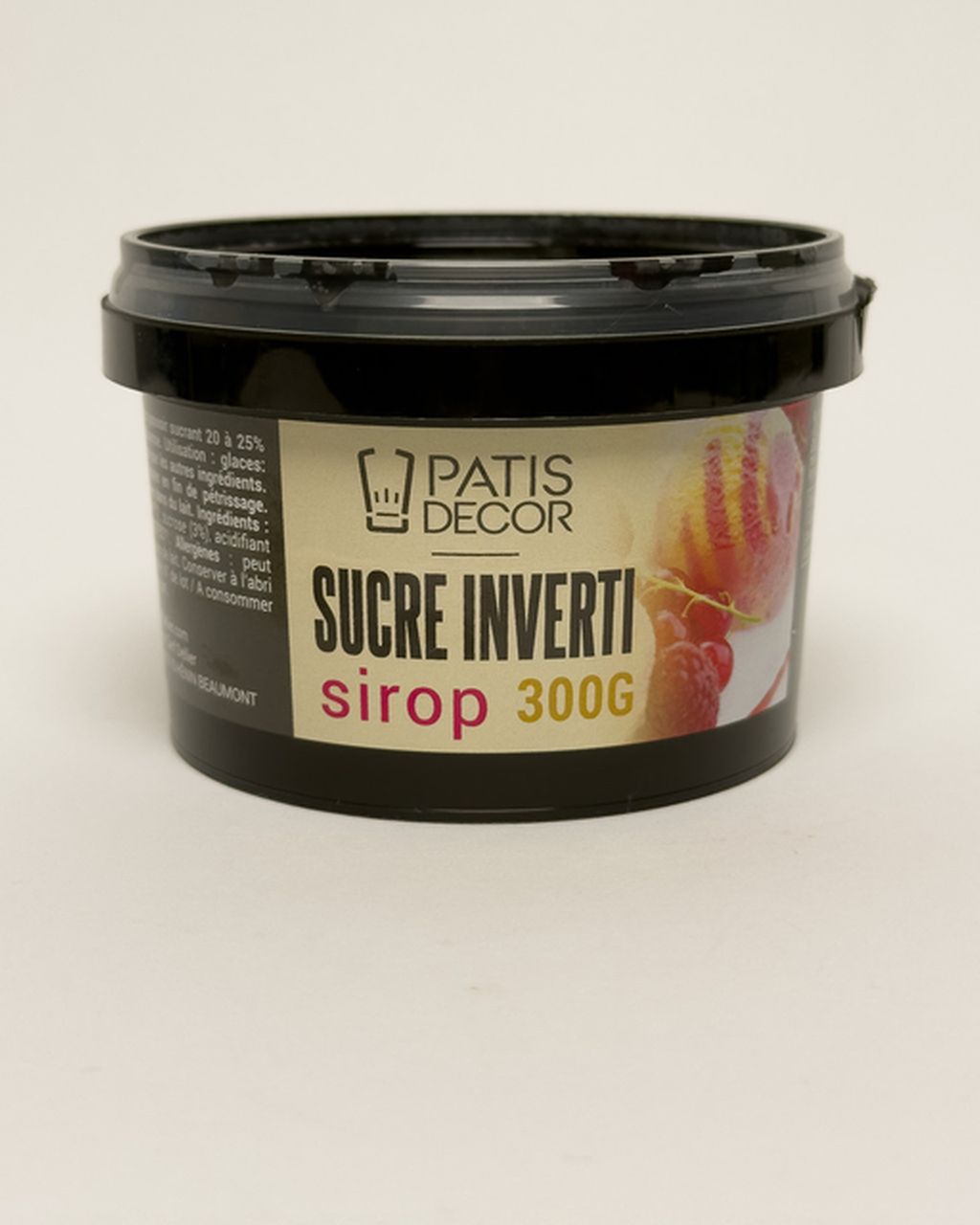
Invert sugar: chemically the closest to honey. Invert sugar is made by splitting sucrose into glucose and fructose. You'll find how much a product really contains on the label: in "liquid invert sugar" it makes up more than 3% and at most 50% of the dry matter, in "invert sugar syrup" more than 50%. The higher the share, the more it behaves like honey, only without the honey aroma. Use liquid invert sugar for baking mainly as a partial replacement, following the amounts below.
Invert sugar syrup with flavoring (once sold as artificial honey): invert sugar with honey flavoring and coloring. It works 1:1, but the flavor is flatter.
Golden syrup: a partially inverted sugar syrup, a classic in British gingerbread. Use it 1:1; the flavor is more caramel than honey.
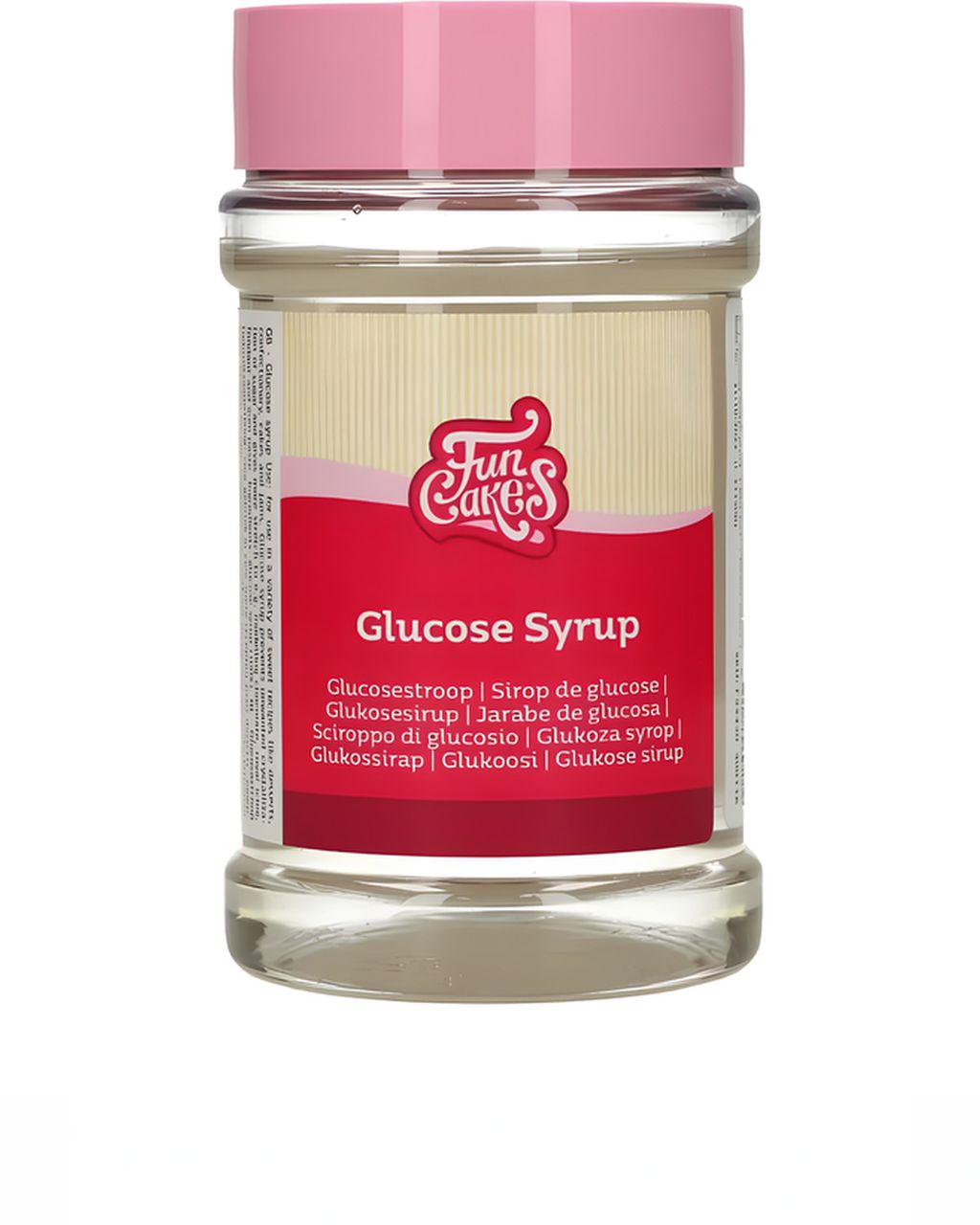
Glucose syrup: less sweet, binds water less strongly and doesn't brown as much. Cookies made with it hold their shape and stay tender, but not as soft. Use FunCakes glucose syrup (375 g) as a supplement, not a complete replacement.
Maple syrup: contains more water (around 33%) and has a pronounced flavor. It's too thin for a full replacement and the dough spreads.
So replacing all the honey is possible and the cookies will be soft and brown, they just won't taste of honey anymore. If you want to keep the honey flavor, replace at most about 40% of the honey, as we lay out below.
You'll find all the liquid sugars, syrups and invert sugar together in the baking sugars and syrups category. For what invert sugar actually is, see Invert sugar: what it is and why pastry chefs use it.
You can safely replace up to 40% of the honey with invert sugar and up to 20% with glucose syrup and the cookies will still taste of honey. For a typical 250 g of honey in a recipe, that means:
For tenderness: 150 g honey + 100 g invert sugar. The cookies will be just as soft, only slightly milder in flavor.
For shape (cut-out and decorated cookies): 200 g honey + 50 g glucose syrup. They spread less and have sharper edges.
Combination: 150 g honey + 50 g invert sugar + 50 g glucose.
Don't change the sugar in the recipe, or the flour. Honey is about 17–20% water, and glucose syrup is usually similar (up to 30% depending on the product, so check the dry matter on the label), while the water content of invert sugar varies by product. With a replacement of up to 40%, the liquid balance of the dough barely changes. Glucose syrup is very thick; it's easiest to weigh and melt when you put it straight into the saucepan with the honey. For detailed amounts of invert sugar in other doughs (ganache, yeast doughs, ice cream), see Invert sugar instead of sugar: how much to use.
Bake honey gingerbread cookies at 160–175 °C (320–350 °F; closer to 160 °C / 320 °F with a fan oven), thin cut-outs for 6–10 minutes. Take them out when the edges are golden and the centers are still soft. They finish firming up on the baking sheet and soften again in the tin.
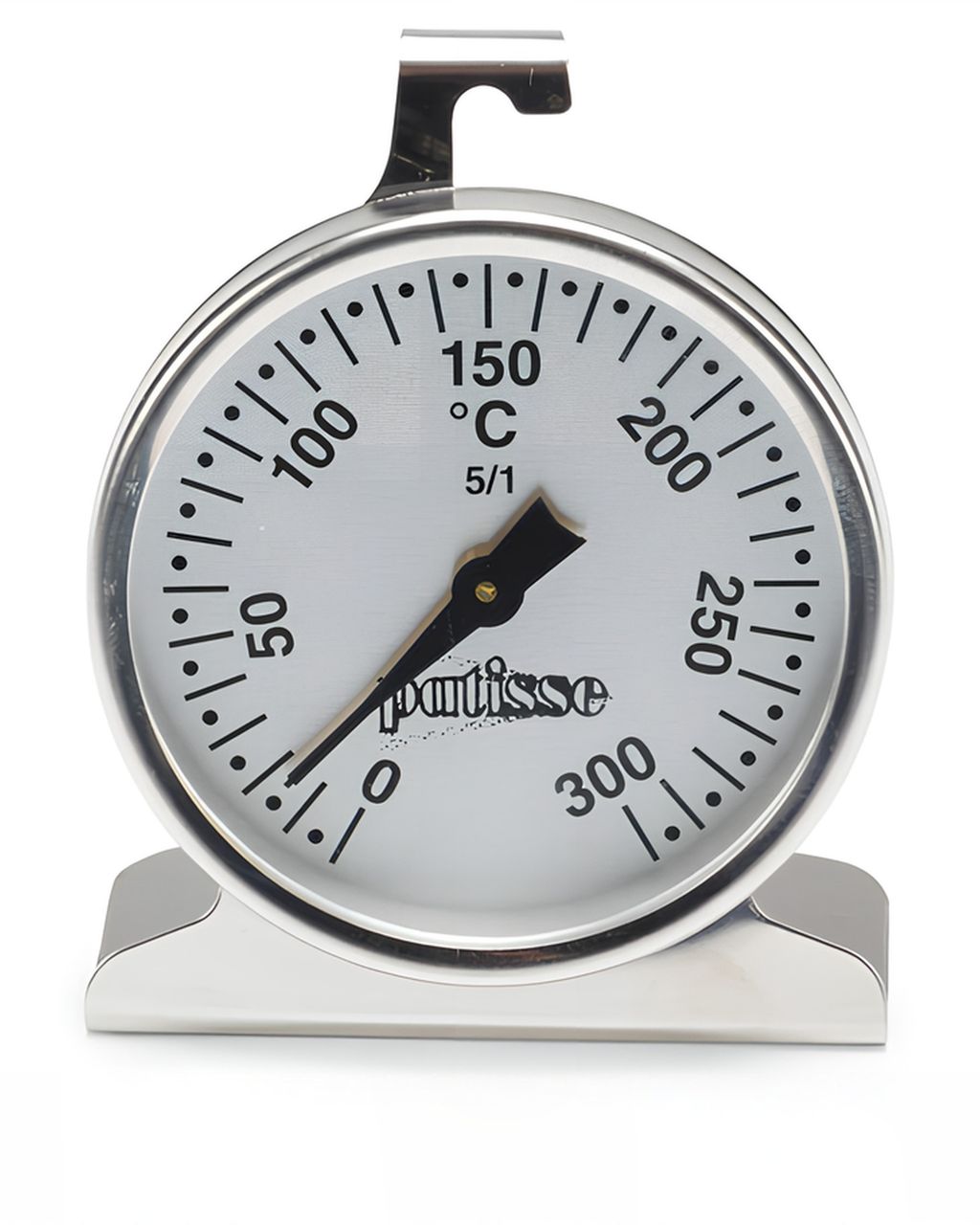
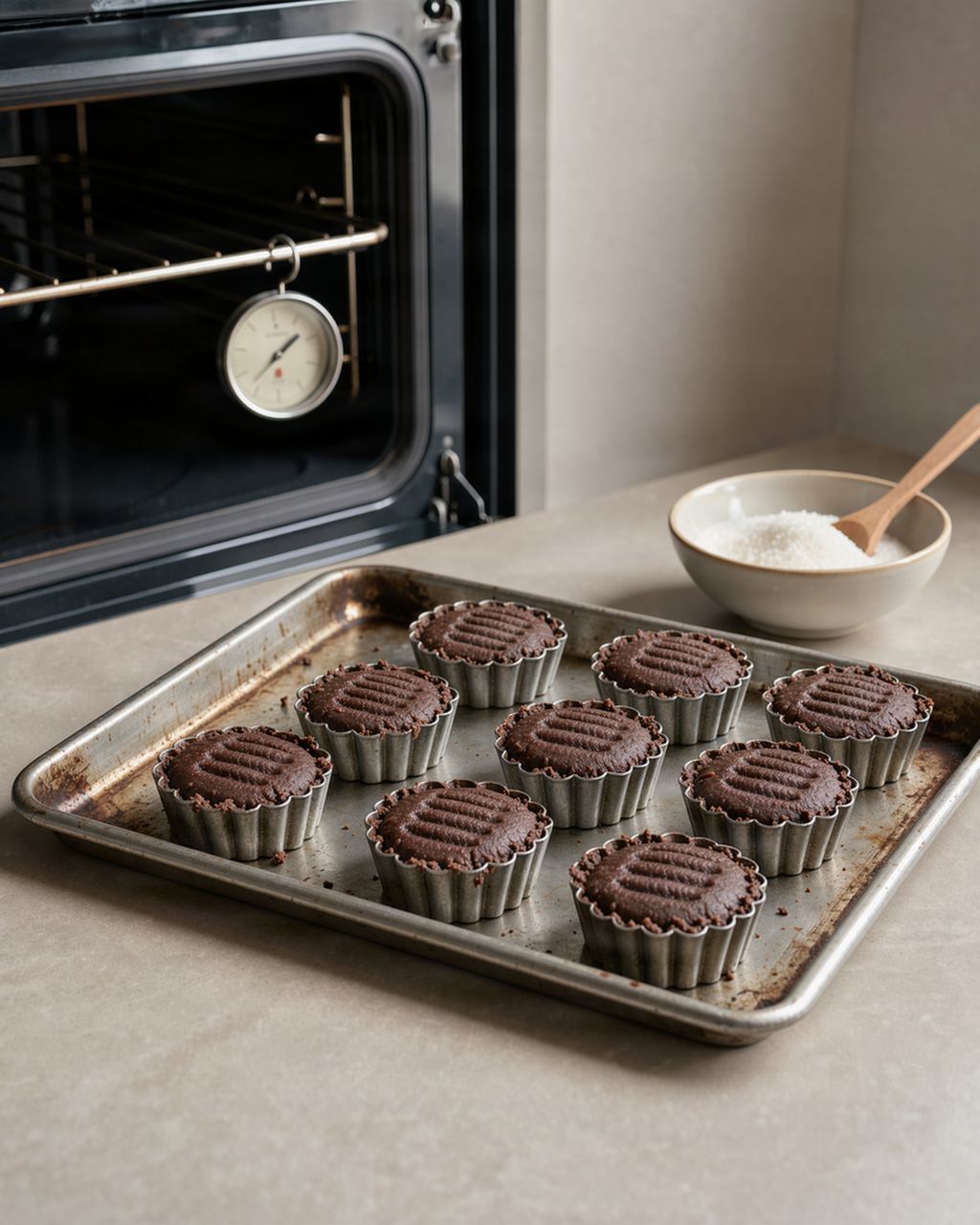
Honey (and invert sugar too) browns faster than sucrose, so with an extra 15–20 °C the golden crust turns bitter within two minutes. The real temperature in a home oven often differs from the setting by anywhere from a few to a few dozen degrees, especially early in baking. If your cookies darken sooner than they should, don't trust the display and measure it: hang a Patisse oven thermometer on the rack and you'll see the real temperature right away. We go through temperatures by cookie thickness in What temperature to bake gingerbread cookies at.
A recipe to try it all out on: The best honey gingerbread cookies. If you want them to stay soft as long as possible, try soft honey gingerbread cookies that don't harden.
The best honey gingerbread cookies
The best honey gingerbread cookies: a classic honey gingerbread cookie recipe
Yes, creamed (set) honey works in honey gingerbread cookies just like runny honey. It's simply honey that has been whipped under controlled conditions into fine crystals, and it melts in a saucepan with the sugar and butter in a few minutes. Weigh it out as the recipe says and change nothing else.
Honey gingerbread cookies are normally firm straight out of the oven and soften in an airtight tin within a few days. The sugars in honey bind water and gradually give it back to the cookies. If they still don't soften, they were probably baked too long or at too high a temperature, or the honey was boiled when you heated it and lost its water.
For 500 g of plain (all-purpose) flour, honey gingerbread cookies usually call for 150–250 g of honey. With less, the cookies come out firmer, hold their shape better and suit decorating. With more, they're softer and darker but spread more. The exact amount depends on your recipe, because the amount of sugar and fat matters too.
Properly stored honey keeps for years. Keep it in a closed jar in a dry spot at room temperature, not in the fridge, where it crystallizes faster. Crystallization isn't a flaw. Only throw honey out if it's thin, foamy and smells fermented.
Yes, honey gingerbread dough can be frozen for about 3 months. Wrap it tightly in plastic wrap, ideally divided into flat discs, and let it thaw overnight in the fridge before rolling. The honey keeps the dough from freezing rock-hard, so once thawed it rolls out just like fresh dough.
One recipe worth heating the oven for, one tip, and one deal from the shop. Nothing else.