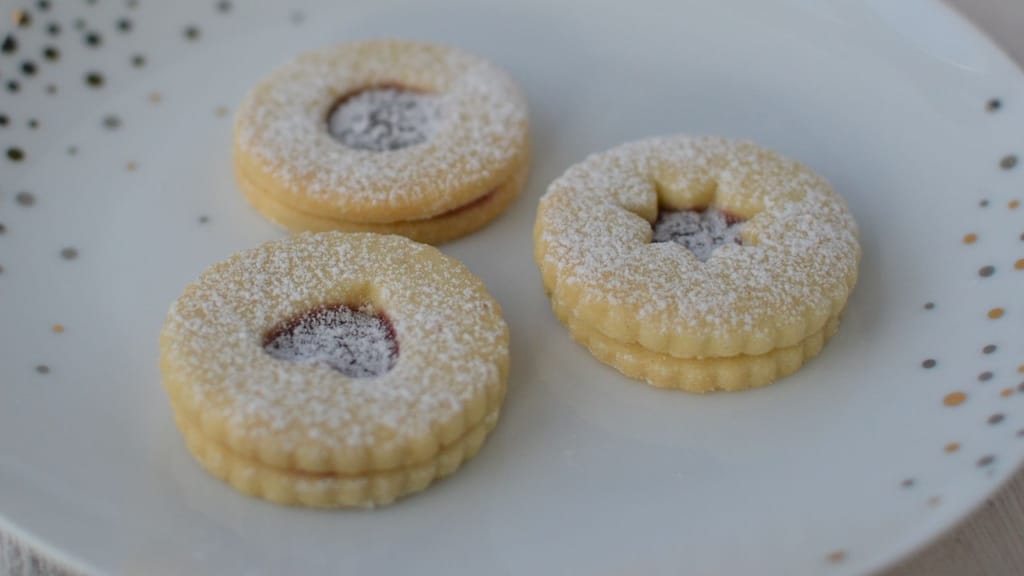
Classic christmas cookies: delicate linzer cookies
Linecké Cookie Baking Temperature and Time by Thickness (Without Browning)
Updated Oct 24, 2026
What temperature should you bake linecké cookies at? For dough rolled 3 mm (about 1/8 inch) thick, bake at 170–175 °C (about 340–350 °F) conventional, or 150–160 °C (about 300–320 °F) fan, for roughly 7–10 minutes. Pull them out as soon as the edges barely start to turn pale straw-yellow and the centers are still light. Linecké is rich in butter and sugar, so there's only a minute or two between "just right" and "brown." Below you'll find baking times by thickness and shape, the differences between oven modes, and a simple test for knowing when they're done.
Bake linecké at 170–175 °C (340–350 °F) conventional, or at 150–160 °C (300–320 °F) fan, for 6–13 minutes depending on thickness (3 mm takes roughly 7–10 minutes). Baking time is determined mainly by how thick the dough is. The temperature stays the same and only the minutes change:
2 mm (delicate tops, small shapes): 6–8 minutes
3 mm (the classic thickness for sandwiching): 7–10 minutes
4–5 mm (thicker rounds for filling): 10–13 minutes
Always let the oven preheat properly, ideally for 15 minutes. Otherwise the first tray bakes more slowly and the rest bake faster, and your timings stop being reliable.
Roll the dough out as evenly as you can. If a sheet of dough is 2 mm at one end and 4 mm at the other, the thin pieces will brown before the thick ones are baked through. Rolling-pin guide rings or two wooden strips of equal thickness on either side of the dough will help. For general temperatures for other kinds of cookies, see our overview of what temperature to bake cookies at, by type.
Tops with a cut-out window bake faster than solid bottoms, even when they're the same thickness. They have more edges, and the edge is the part that browns first. So:
Bake tops and bottoms on separate trays. Take the tops out 1–2 minutes earlier.
Put only same-sized shapes on one tray. Small stars next to large hearts will bake unevenly: the small ones brown while the large ones stay raw in the middle.
Large shapes (over 6 cm) need 1–2 minutes more, small ones (under 3 cm) 1–2 minutes less.
Leave 1–2 cm between cookies. Linecké doesn't spread much, but cookies placed tightly together bake more slowly.
Put the cut-out cookies in the fridge for 10–15 minutes before baking. Cold butter keeps the edges sharp and the dough won't spread in the oven, so it also bakes through more evenly. Why the dough uses only egg yolk and how that affects the texture is covered in our article on linecké dough and egg yolk.
Both modes work for linecké. Conventional (top and bottom) heat gives a more even, paler result, while fan can bake several trays at once. The difference is in the temperature:
Conventional (top and bottom heat): 170–175 °C (340–350 °F), one tray, middle rack. This is the surest choice when you want pale linecké.
Fan: 150–160 °C (300–320 °F), roughly 15–20 °C lower. The fan moves heat around faster and dries out the edges, so at the same temperature the cookies would brown.
Fan with two trays: allow 1–2 extra minutes, and halfway through swap the trays and rotate them 180°. The bottom tray almost always bakes differently from the top one.
A gas oven heats mainly from below. Bake on a rack one level higher and watch that the bottoms don't brown before the tops.
If you're not sure, bake a test tray of 4–5 cookies first. It can save your whole batch.
Linecké most often browns because the oven isn't baking at the temperature the display shows. Home ovens commonly are off by 10–20 °C, and with linecké that's the difference between a pale tray and a brown one. Other culprits:
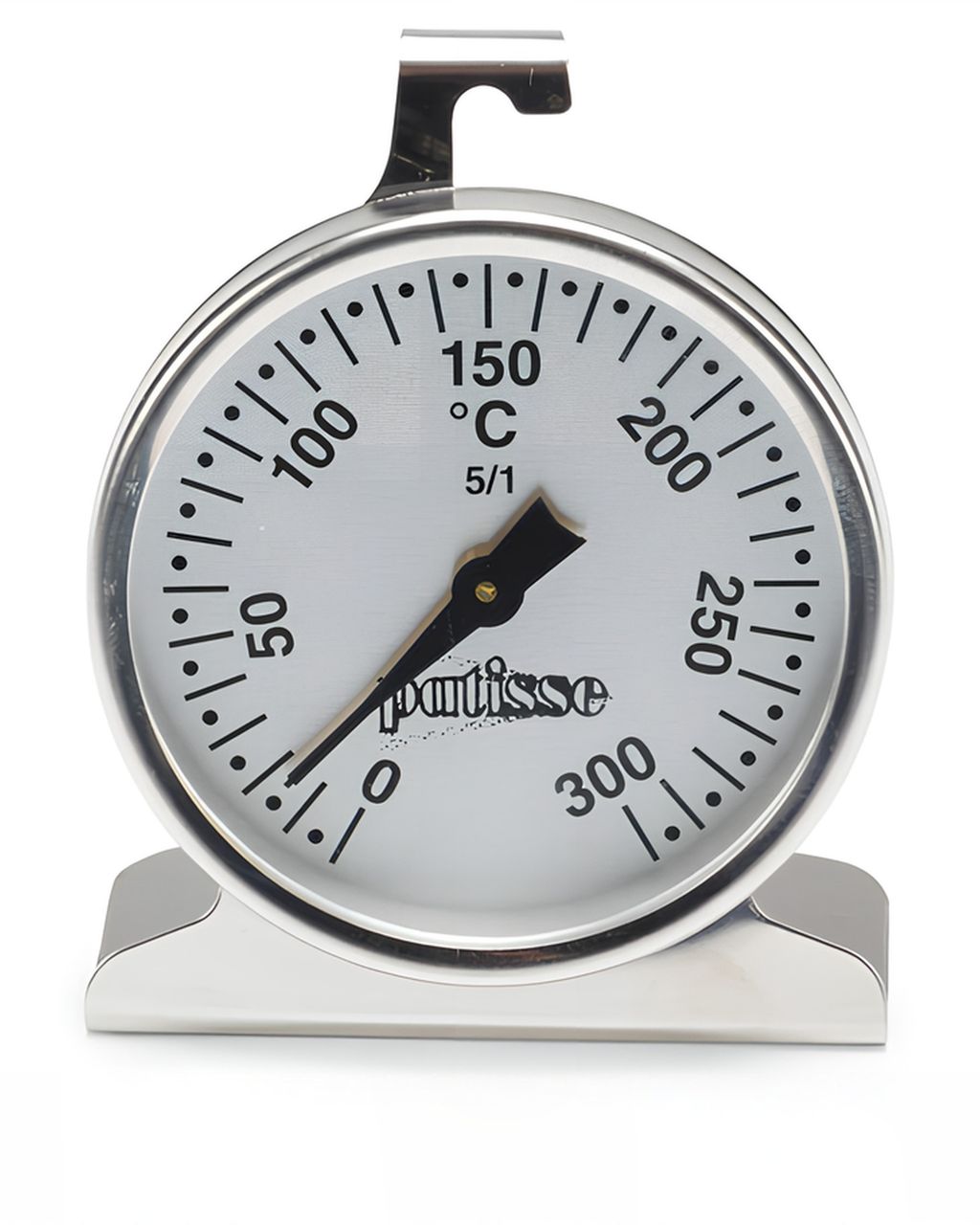
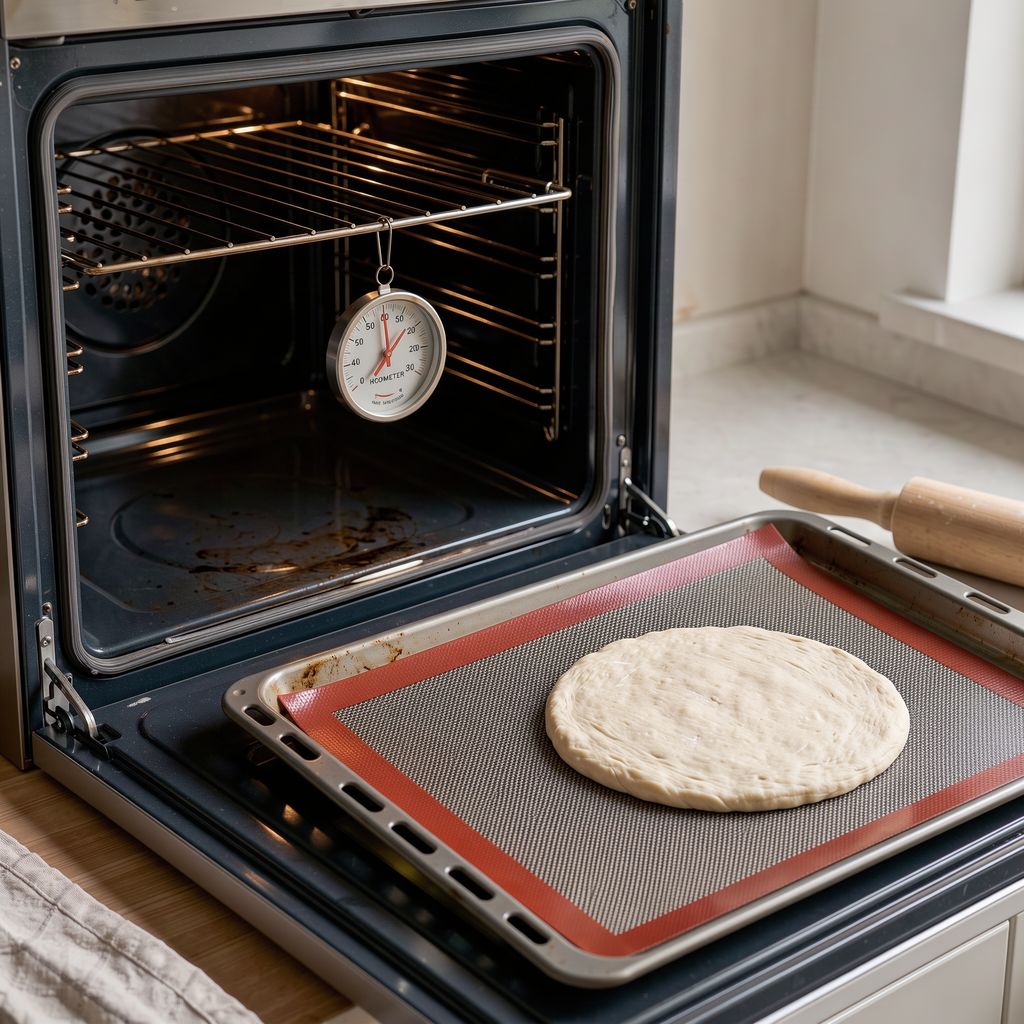
The thermostat is lying. The only way to find out is with a separate thermometer. Place it on the middle rack and compare it with the display after preheating. A simple Patisse oven thermometer, which stays in the oven throughout baking, is enough for this. A digital probe thermometer won't help here: it measures the inside of food, not the air in the oven.
A dark baking tray. A dark or enamel tray absorbs more heat and the bottoms brown sooner. A light aluminum tray, or a liner between the tray and the dough, will soften this.
A rack that's too high or too low. At the top the tops brown, at the bottom the bottoms do. Linecké belongs in the middle.
Carryover baking on the tray. A hot tray keeps baking outside the oven. If you leave the cookies on it for 5 minutes, they'll darken a shade. Slide the paper with the cookies onto a wire rack right after taking them out.
More sugar than the recipe says. Sugar caramelizes at the edges, so the more of it there is in the dough, the sooner the edges brown.
If you want more of the dough theory, the ratios are covered in the 3:2:1 linecké dough.
Linecké is done when the edges are just starting to change color to a pale straw and the center is still creamy-light, without the sheen of raw dough. That's the whole test, and you should take them out at exactly that moment, not once the edges turn golden.
Other signs that linecké is ready:
The surface is matte, not greasy-shiny. Shine means raw butter.
The underside (lift one cookie with a knife) is an even pale gold, not brown.
It's still soft to the touch. Linecké only firms up as it cools. If it's crisp in the oven already, it's overbaked.
The smell is buttery and sweet. Once you start to smell something nutty or caramel-like, the edges are already browning and it's high time to take them out.
Start checking a minute before the end of the shortest time. For the first few minutes nothing happens, then the color changes very quickly. Let the baked cookies cool completely on a wire rack before filling them, because warm ones break. For ideas on what filling to choose, see our article what to fill linecké cookies with.
You can bake linecké perfectly well on ordinary parchment paper. It's cheap, nothing sticks, and it's enough for most home batches. Its weakness is that it ripples on the tray and moisture collects underneath, so the bottoms bake less evenly.
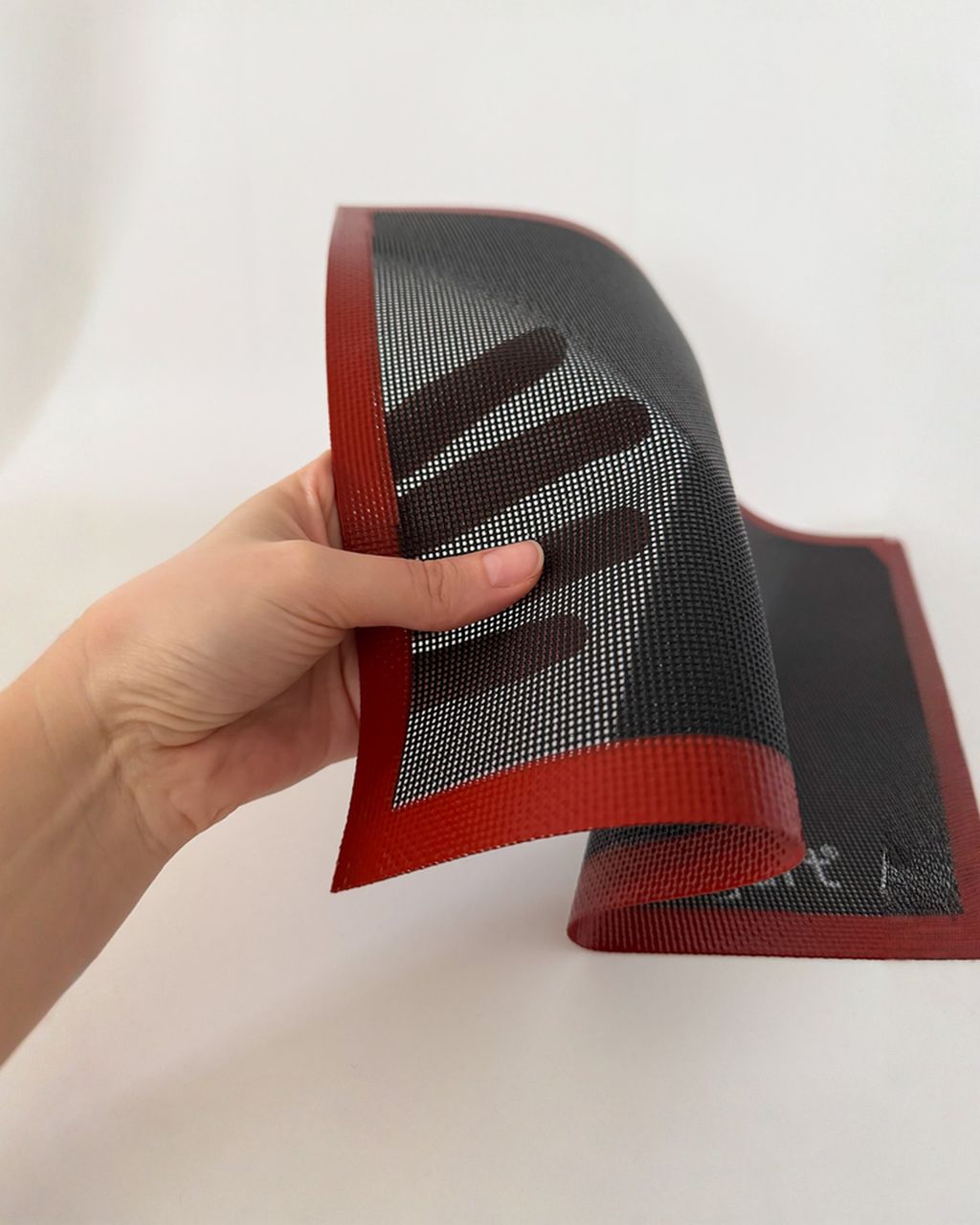
If you bake linecké every year on several trays, a perforated silicone baking mat is worth it. The tiny holes let hot air reach the bottoms, so they come out flat, dry and equally pale across the whole tray. The mat lies flat, so thin tops don't crack or curl. A smooth silicone mat without holes is fine too, though it bakes the bottoms a little more slowly and less dry.
What to choose:
Parchment paper: occasional baking, cheapest
Smooth silicone mat: reusable, bottoms come out a little softer
Perforated silicone mat: most even bottoms, best for thin tops
PTFE (Teflon) sheet: washable, but conducts heat much like paper
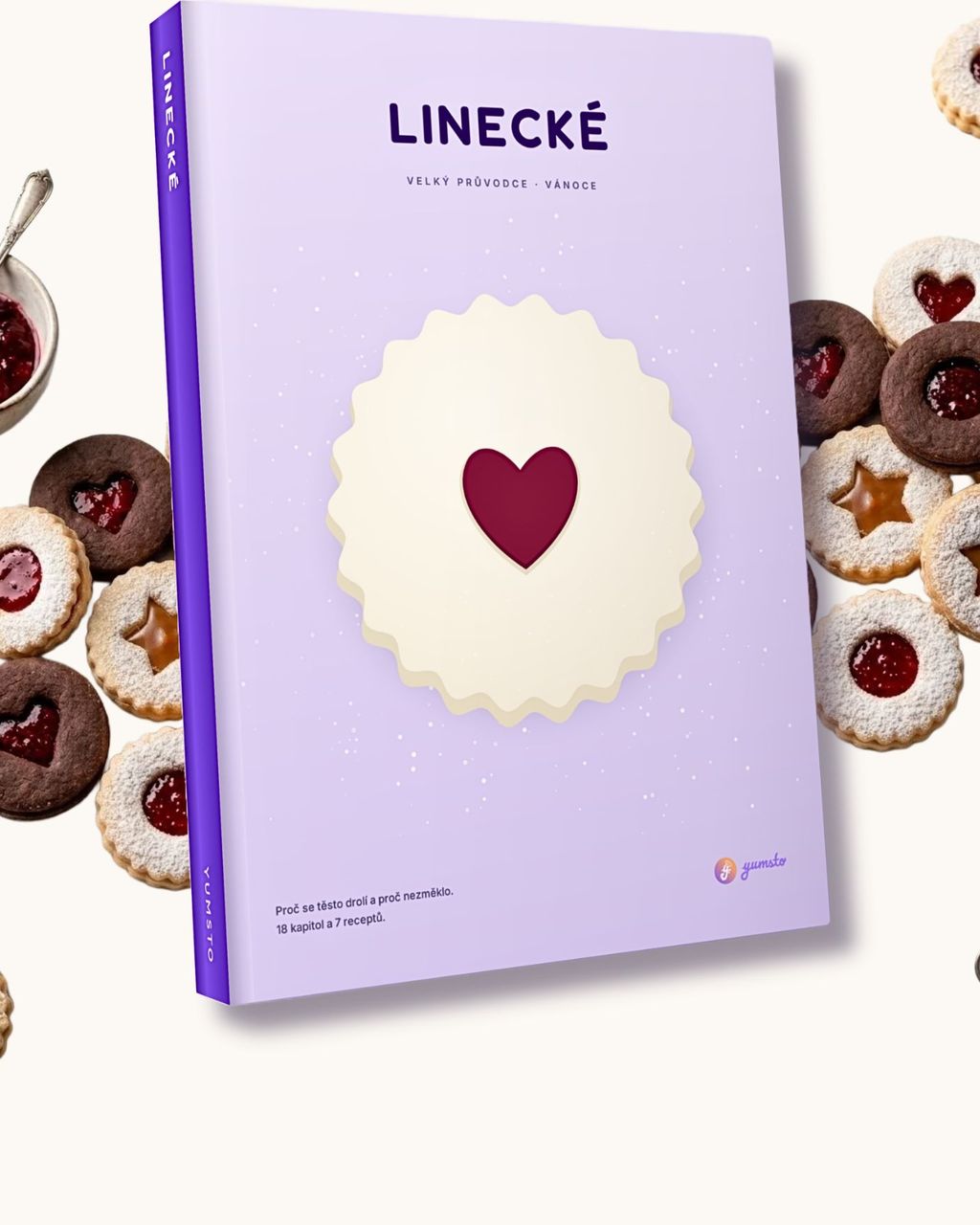
All the temperatures and times above suit classic butter linecké. Try them with our recipe for classic tender linecké cookies. If you want everything about the dough in one place, from making it to storing it, we've put together an e-book, Linecké: The Big Guide to the Dough: why the dough crumbles, why it didn't soften, and how to get the result right every time.
Similarly delicate butter cookies are vanilla crescents made with our recipe. Which nuts and flour to make them with is covered in our article vanilla crescents: which nuts and flour to use. For more inspiration for your holiday tray, browse our Christmas cookie recipes.
Classic christmas cookies: delicate linzer cookies
Classic tender linecké cookies: a recipe to test these times on
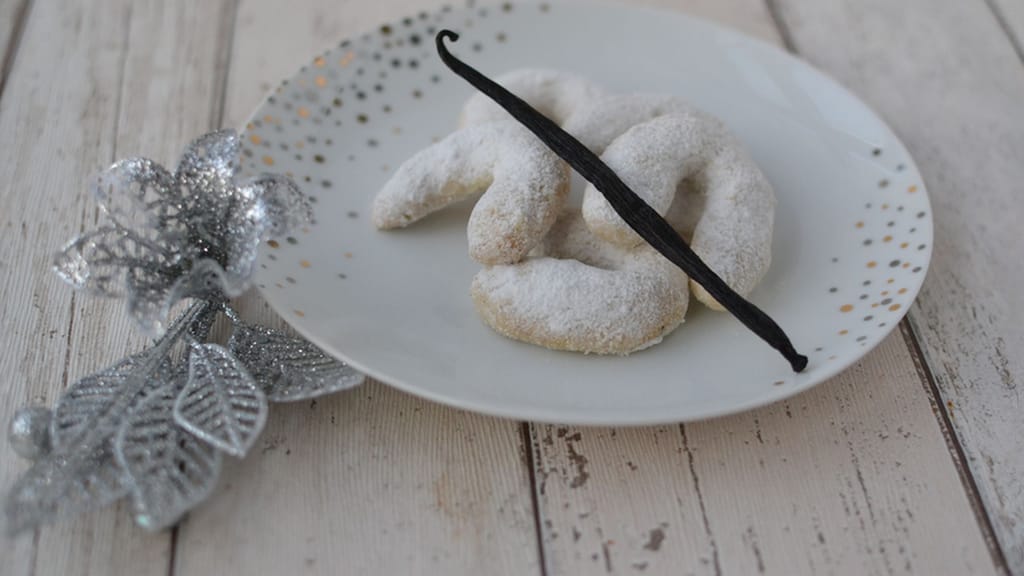
The best christmas cookies? vanilla crescents, of course!
Vanilla crescents: tender butter cookies to bake alongside linecké
Bake cocoa linecké at the same temperature and for the same time as the classic version. Bake nut linecké 5 °C lower and check it a minute earlier. With cocoa you can't judge doneness by the color of the edges, so go by time and surface: they're done when the surface looks matte, no longer shiny, and the edges feel firm to the touch. Nut linecké browns faster because ground nuts toast in the oven and darken sooner than plain butter dough.
Cut-out cookies can be baked straight from frozen. Keep the same temperature and just allow 1–2 extra minutes. A frozen block of dough, however, should thaw in the fridge overnight first, otherwise it can't be rolled out and it cracks.
Hard linecké is usually either overbaked or made from overworked dough. If the edges have browned, shorten the time by 1–2 minutes. If they're pale but still hard, the dough was kneaded too much or was too warm, so next time just bring it together quickly and let it rest in the fridge. You'll find more causes and fixes in our article [why linecké turns hard and how to make it tender](/cs/articles/linecke-tvrde-jak-udelat-krehke).
It's best to bake linecké 2–3 weeks ahead, because once the cookies are sandwiched with jam they keep softening and maturing for several days. Stored in a well-sealed tin in a cool place, they'll then keep for several weeks. For storage details, see our article [how long linecké cookies last](/cs/articles/jak-dlouho-vydrzi-linecke).
One recipe worth heating the oven for, one tip, and one deal from the shop. Nothing else.