Soft gingerbread cookies
Why Gingerbread Cookies Go Hard — and How to Make Them Soft
Updated Aug 29, 2026
Gingerbread cookies almost always turn hard after baking — and that's exactly how it should be. Gingerbread dough is dense, thin and packed with honey; the water cooks off in the oven, and as the cookies cool, the sugar and honey set into a glassy, hard mass. They only soften afterwards, shut away in an airtight tin where they draw moisture from something nearby — a cut apple, a slice of bread, or a strip of orange peel. That usually takes 24 to 48 hours. But if you've been waiting in vain into the second week, the problem isn't your patience — it's the dough or the baking. Both are fixable, and here's exactly how.
Gingerbread cookies go hard because the water evaporates out of the thin sheet of dough during baking, and as it cools, the melted sugar and honey set into a glassy state. So a hard cookie fresh out of the oven isn't a failed cookie — it's simply a cookie that's still missing its water.
Three things happen at once:
The water leaves.Gingerbread dough is usually rolled out quite thin, around 3mm, and baked for 7–9 minutes. From a sheet that thin, most of the free water manages to disappear before the cookie even turns golden — which is why we'd actually recommend rolling it a bit thicker, more like 4–5mm.
The sugar and honey set.While hot, they're liquid and soft. As the cookie cools, they shift into a glassy, amorphous state — hard and brittle. It's the same thing that happens when caramel sets.
There's barely any fat.Jam-filled shortbread biscuits are crumbly because fat coats the flour and stops it forming a firm structure. Gingerbread dough has very little fat, so it doesn't crumble — it just goes hard.
That's why a cookie straight from the oven clinks against the baking tray. And that's also why what rescues it is water, not more time in the oven.
Yes — with a classic honey-based dough, hardness right after baking is completely normal and expected — it's not something you've done wrong. The cookie comes out of the oven like a dry sponge: dense, closed-off, with a glassy surface. Only then comes the second half of the job, the part recipes often skip over: letting it soak up moisture.
This is exactly why gingerbread cookies are traditionally the first batch of the festive baking season, often made as early as mid-November — so they have time to soften before Christmas. Unlike vanilla crescents or meringues, which are best fresh, gingerbread is one of the few biscuits that genuinely improves with a bit of resting time. (Jam-filled shortbread and honey cake work the same way — both benefit from a few days for the flavours to settle together.)
What isn't normal, on the other hand: a cookie that's hard and dark, bitter at the edges, or shatters into shards when you bite into it. That's not a lack of water anymore — that's overbaking, and no amount of apple will fix it.
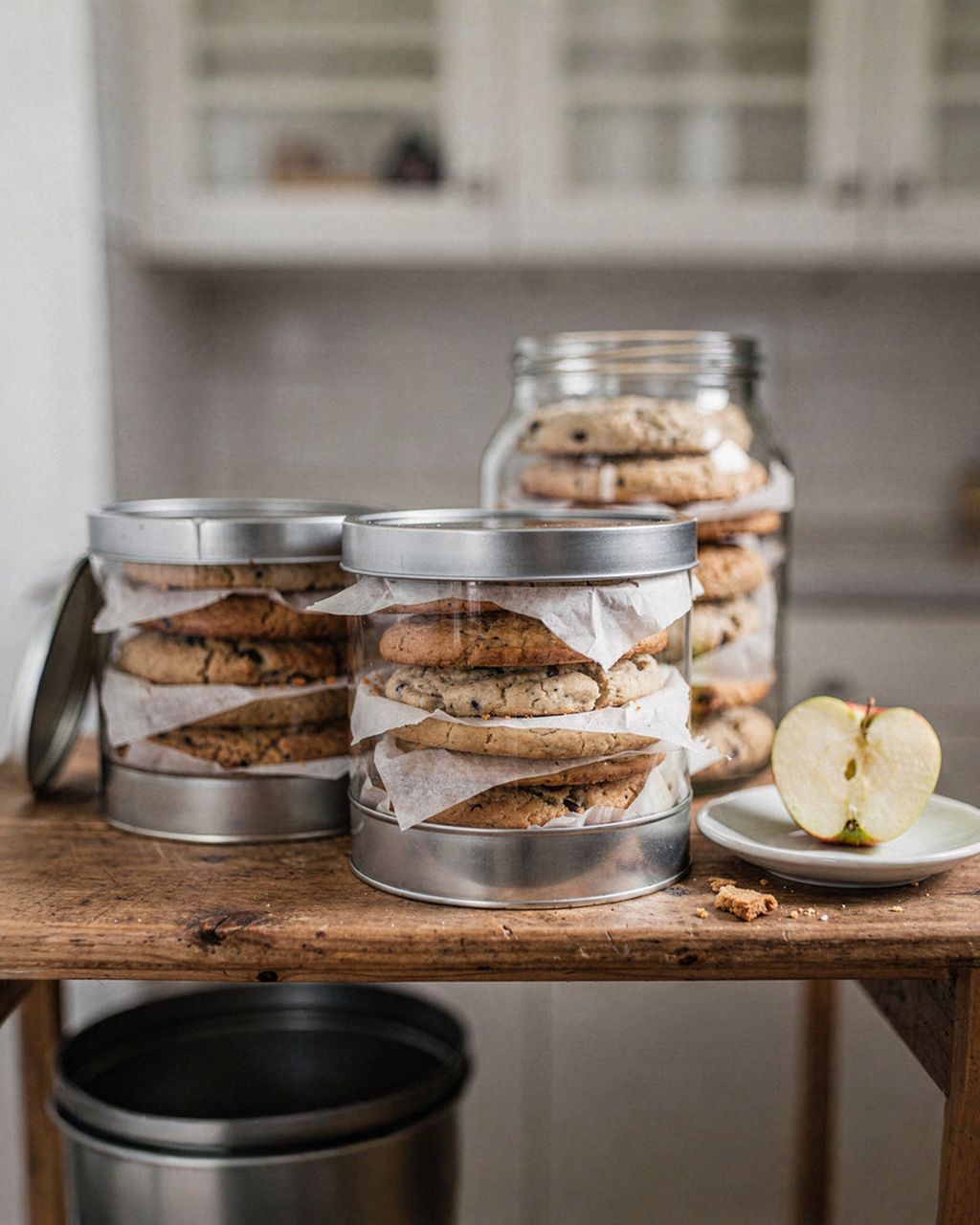
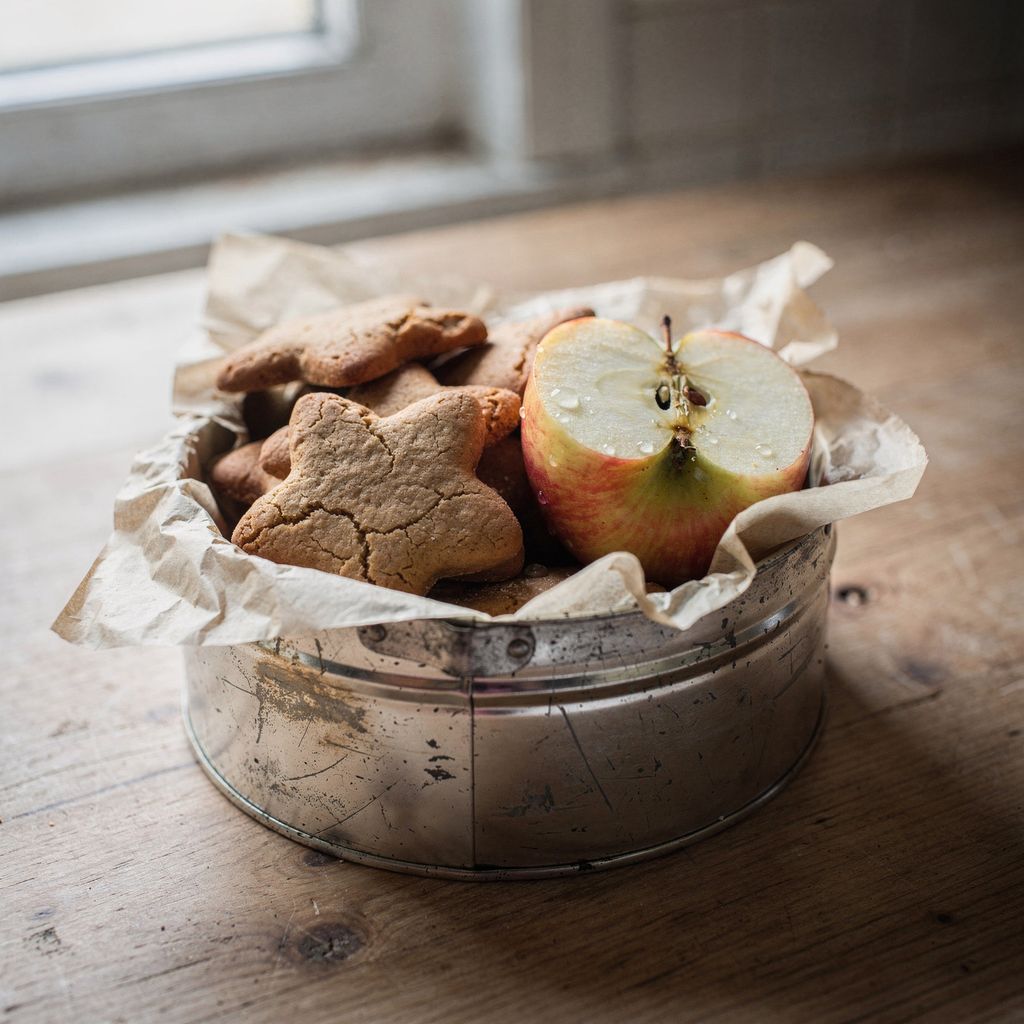
Gingerbread cookies soften when you shut them in an airtight tin along with something moist: a cut apple, a slice of fresh bread, or a piece of orange peel. All three work on the same principle — in an enclosed space, moisture travels from the wetter thing to the drier thing until the humidity evens out.
In that pairing, the cookie is always the drier one — and on top of that, it's actively asking for water: the honey and invert sugar inside it are hygroscopic, meaning they actively bind moisture from the air. An apple has a water activity of around 0.98, while a freshly baked cookie has far less. The air in the tin gets saturated with moisture from the apple, and the cookie soaks it up. You can even see it happen with bread: by morning it's gone hard. Part of that moisture really did transfer to the cookies — the rest is just bread going stale as usual.
Apple— the fastest option. Half or a quarter of an apple per roughly 30–40 cookies, cut side up, set on a piece of baking paper so it doesn't touch the cookies directly. Swap it out after two days.
A slice of bread— the cleanest option. A thick slice of fresh bread (stale, dried-out bread has nothing left to give). It doesn't go mouldy as readily as apple and won't pass on any flavour. Swap it out after two days.
Orange peel— the slowest but safest option. A strip of washed peel from an organic orange has less water than apple, so softening takes longer, but the mould risk is minimal and it lends the cookies a lovely fragrance.
A few things that matter more to the outcome than choosing between apple and bread:
The tin has to actually be airtight.A tin with a snug-fitting lid, a clip-top jar, or a box with a silicone seal. Moisture escapes into the room through a loosely closed lid, and nothing happens.
Layer with baking paperbetween the cookies rather than piling them up high. The bottom layer softens before the top one, and stacked cookies will stick together.
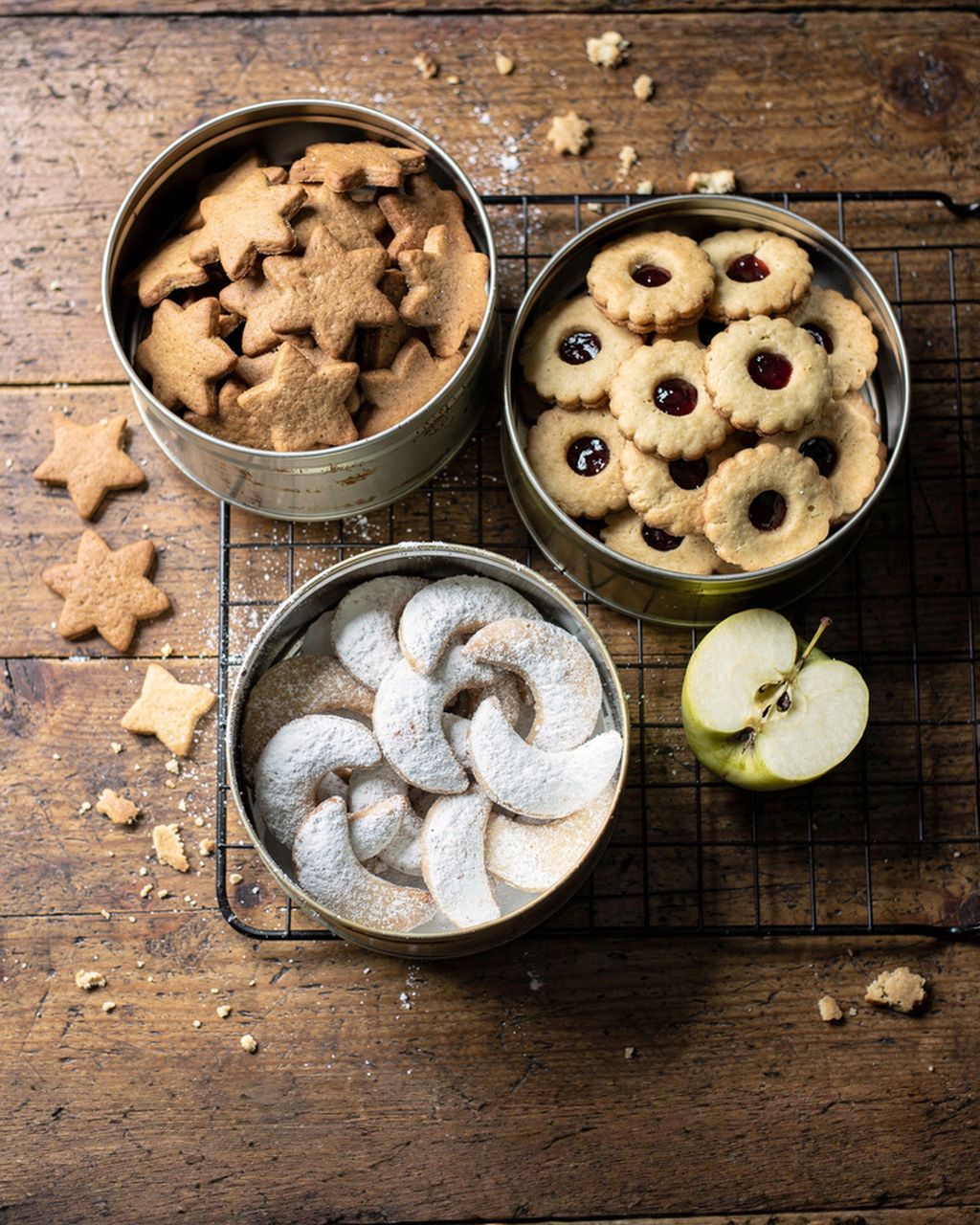
Don't store gingerbread with delicate biscuits.The very same moisture exchange that rescues gingerbread will turn jam-filled biscuits and crescents soggy. Keep every type in its own tin.
With apple or bread in a sealed tin, allow 24 to 48 hours. With nothing at all — just the tin at room temperature — it takes 3 to 7 days.
Here's how it plays out:
After 12 hoursthe surface stops looking glassy and the cookie no longer clinks when tapped. The bite is still hard.
After 24 hoursthin cookies (3–4mm) are done — the bite is soft, not chewy.
After 48 hourseven thicker ones (5–7mm) catch up, along with any that spent an extra minute in the oven.
After 3–5 days, in a full, well-sealed tin,cookies will soften even without apple or bread, purely from the moisture trapped inside. In a half-empty tin, expect a full week instead.
After a week with no result,there's no point waiting any longer. The problem lies in the dough or the baking, not the timing.
Two genuine ways to speed things up:
Brush with warm honey.Right after taking them out of the oven, brush the still-warm cookies with honey warmed with a spoonful of water. Honey is hygroscopic, holding moisture right at the surface, and the cookies are usually soft within about 24 hours. Bonus: the glaze gives them a lovely shine, like something from a proper gingerbread baker.
A warmer room.Set the sealed tin in a warmer room — warmer air can hold more water vapour, so the exchange happens faster. Just not near a radiator — the apple will dry out before it has a chance to give up any moisture.
What not to do: reheat the cookies in the oven. Heat drives water out rather than in, so they'll come out even harder than they went in.
Honey and invert sugar keep gingerbread soft because they're hygroscopic — they bind water to themselves and don't let go of it easily. A cookie with plenty of honey both draws in moisture from its surroundings faster and holds onto it noticeably longer afterwards.
The difference comes down to sugar chemistry. Regular granulated sugar is sucrose, a single molecule. Honey and invert sugar are blends of glucose and fructose — sucrose broken down into two simpler sugars. And fructose, according to food science literature, is by far the most hygroscopic of the common sugars: it binds atmospheric moisture more readily than sucrose and holds onto it once bound. On top of that, invert sugar stops sugar in the cookie from crystallising, so the surface doesn't turn grainy over time.
What this means for your dough:
Don't skimp on the honey.A tried-and-tested ratio is 150–200g of honey per 500g of flour. Below that, cookies harden faster, and an apple won't be able to do much about it.
Dark honey gives darker colour and a bolder flavour.Forest or honeydew honey adds colour and aroma to gingerbread, but when it comes to holding moisture, acacia honey is at least as good — it has the highest fructose-to-glucose ratio of the common honeys.
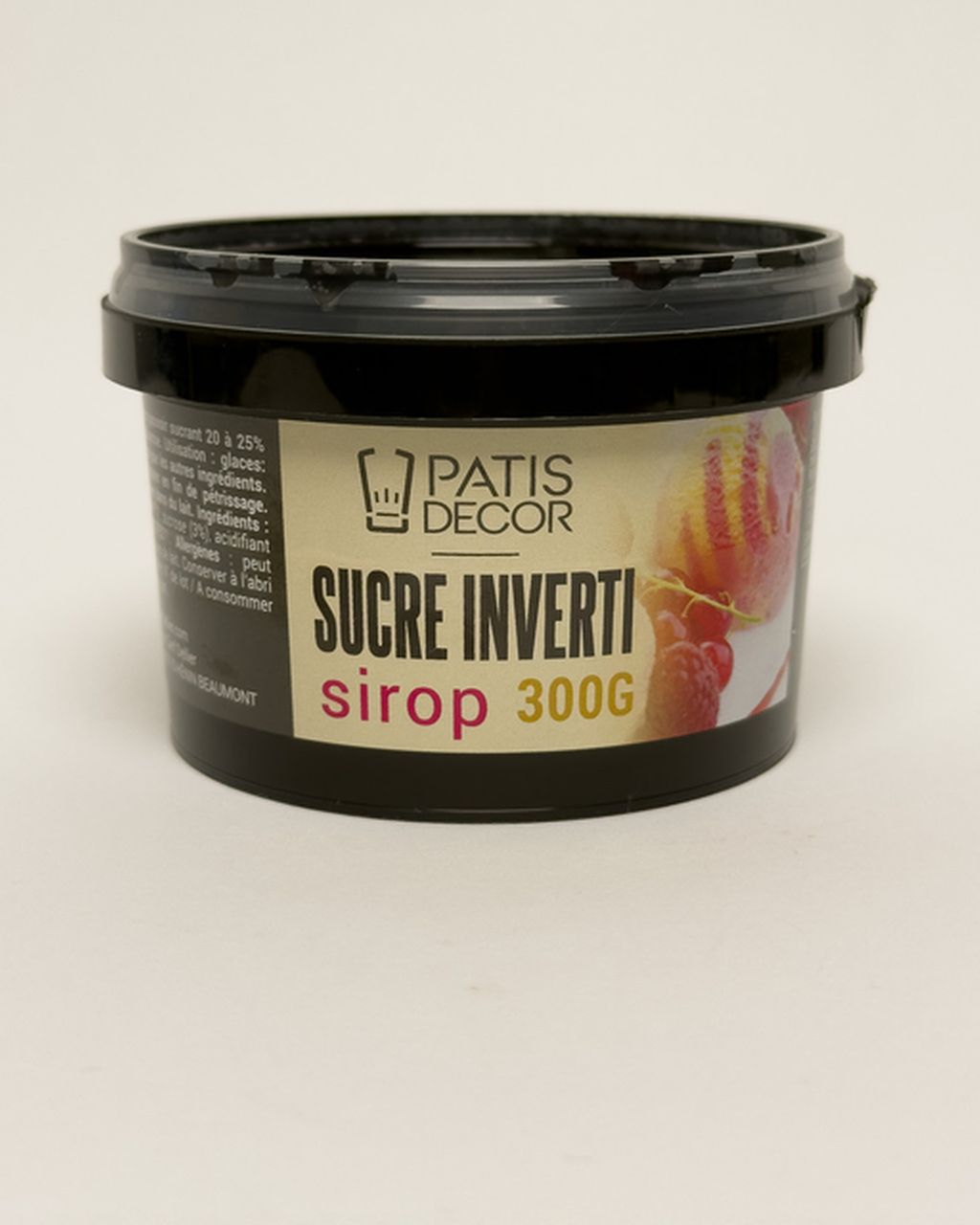
You can swap part of the honey for invert sugar.It keeps the texture just the same, only without the flavour — handy if you want the gingerbread spices to shine through rather than the honey. Feel free to swap out a third to a half.
Potash does more than you'd think.Potassium carbonate isn't just a raising agent that spreads the cookie outwards instead of upwards. It's alkaline, and the Maillard reaction happens more readily in an alkaline environment — hence the darker colour and that distinctly gingerbread flavour. You only need a little — around 3–5g (half to one teaspoon) per 500g of flour, dissolved in a splash of water. Any more than that and you'll taste it.
And a small note on spice: gingerbread spice mix doesn't affect the texture, but it decides whether your cookies smell like Christmas or like a cinnamon biscuit. A homemade gingerbread spice blend is simply in a different league to a shop-bought sachet.
Gingerbread cookies come out soft right after cooling when you get five things right: let the dough rest, roll it to 4–5mm, don't over-flour it, bake it briefly at 170–180°C, and take it out before it hardens in the oven.
Let the dough rest in the fridge.Overnight at the very least — a week or even a month is fine too. Over that time, the starch and gluten in the flour fully absorb moisture from the honey, so the dough rolls out smoothly and doesn't need extra flour dusted on. This is the most commonly skipped step — and the one that matters most for softness.
Roll to 4–5mm, not 3mm.A thin sheet, the way it's usually done, dries out in the oven before it even picks up any colour. A slightly thicker cookie holds onto its internal moisture — and cut-out shapes hold their edges just as well.
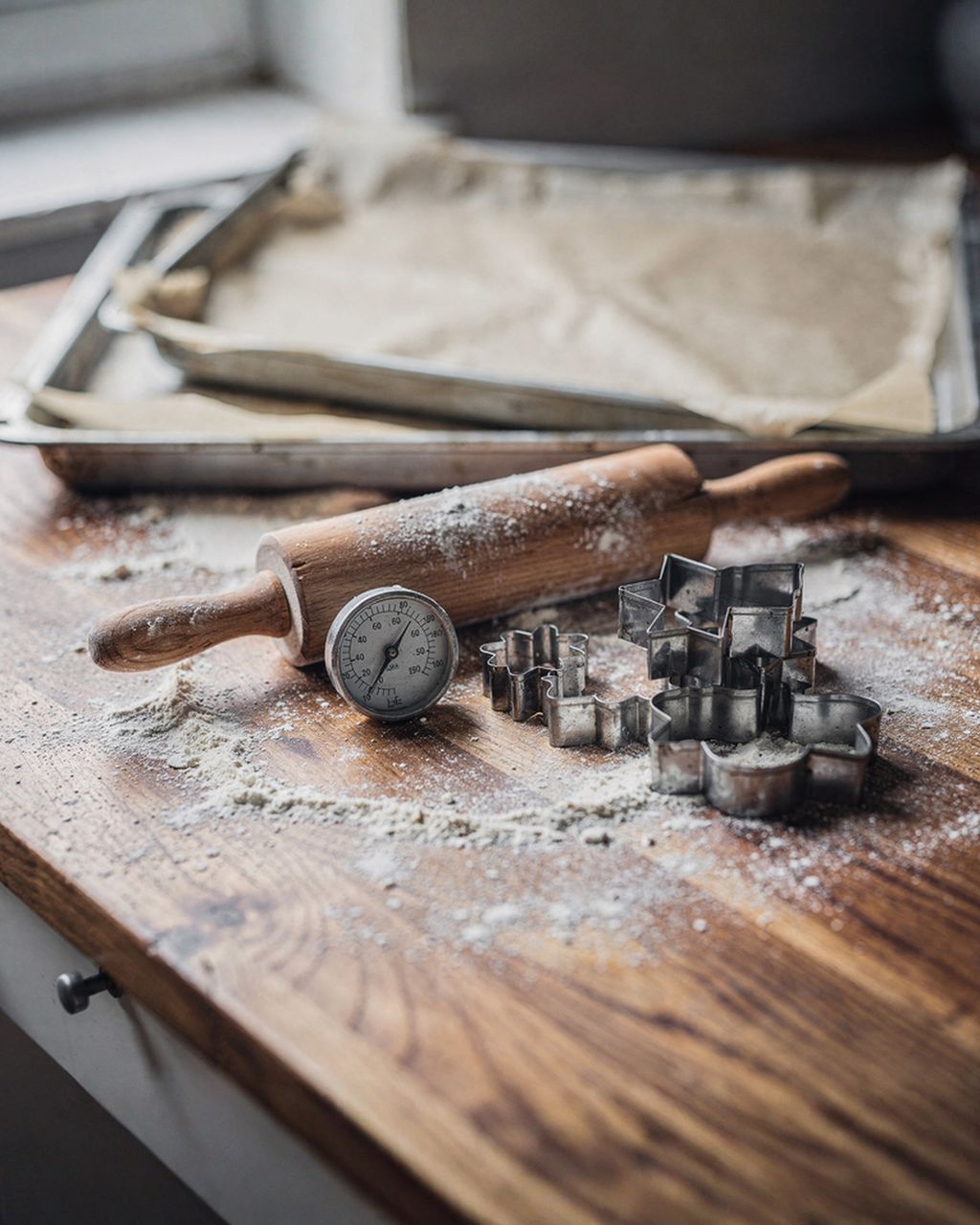
Don't add flour while rolling.Every extra spoonful of flour works directly against softness, and it's the single most common reason gingerbread cookies never soften. Roll the dough between two sheets of baking paper rather than on a floured surface.
Bake for 7–9 minutes at 170–180°C — for a 5mm sheet, lean towards the higher end.A cookie is done the moment its surface turns matte and loses its shine — not once it's browned. An overbaked cookie has caramelised sugar that nothing will ever soften again.
Take them out while they're still soft.They'll firm up a bit more on the tray as they cool. If you wait for them to feel firm while still in the oven, they're already two minutes overbaked.
A sixth thing, for good measure: brush them straight away.Icing or beaten egg forms a layer on top that slows down moisture loss. For the right consistency — one that won't run but is still pipeable — see our article on gingerbread icing.
Our recipe for really soft gingerbread cookies is built entirely around resting the dough and getting the honey ratio right — cookies from it come out soft practically straight away.
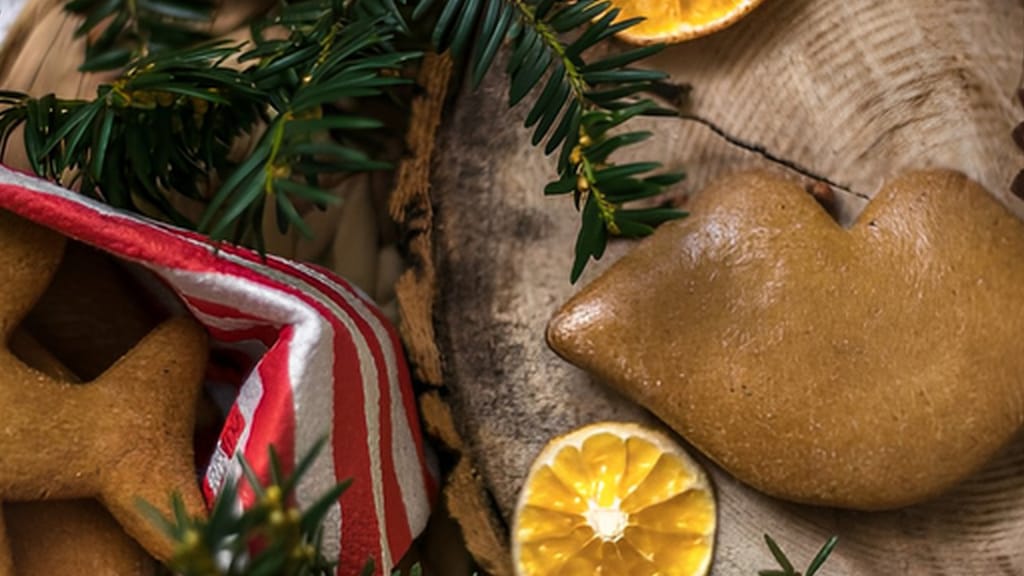
Soft gingerbread cookies
Soft Gingerbread Cookies — a recipe that solves softness in the dough, not just in the tin
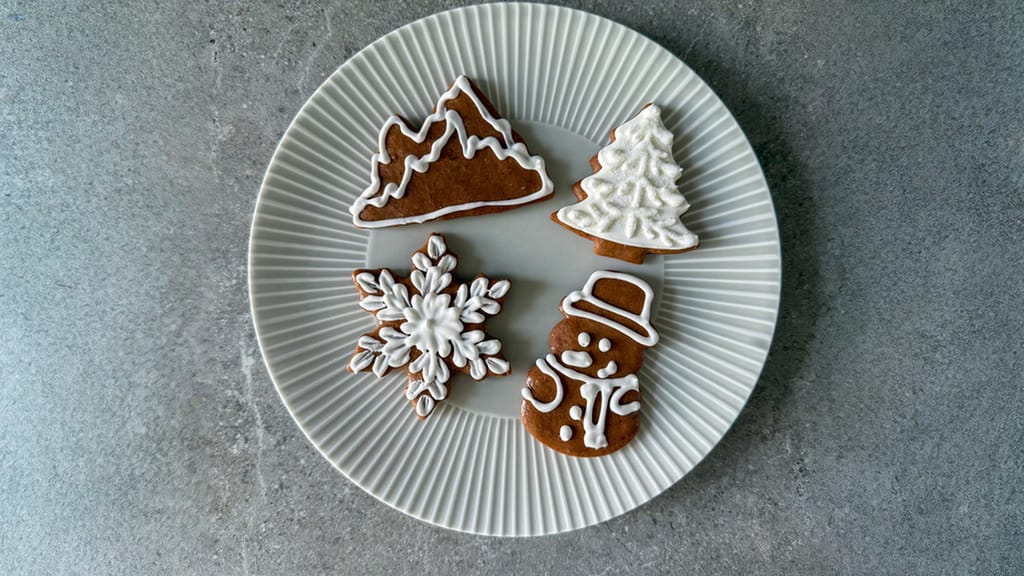
Soft honey gingerbread cookies that never go hard
Soft Honey Gingerbread That Never Goes Hard — a version with extra honey
If gingerbread cookies haven't softened even after a week in a sealed tin with apple, the problem lies in the dough or the baking, and no amount of waiting will fix it. Nearly every case comes down to one of these six things: too much flour, not enough honey, overbaking, dough that hasn't rested, a tin that doesn't seal properly, or a dry flat. In more detail:
Too much flour.By far the most common cause. Either it was in the recipe, or it got added while rolling. A cookie made from over-floured dough is hard straight away and stays hard forever — there's simply not enough moisture-binding power left in it. Next time, roll between sheets of paper instead.
Not enough honey.Below around 150g of honey per 500g of flour, the cookie lacks what it needs to draw in and hold onto moisture.
Overbaking.You can spot it by dark edges and a faintly bitter aftertaste. Caramelised sugar can't be undone.
Dough that hasn't rested.Dough that's mixed and baked within the hour hasn't had time for the flour to fully absorb moisture. It tends to be stiffer, needs more flour dusted on, and the results show it.
A tin that doesn't seal.Check it the simple way: after two days, feel the bread. If it's still soft, the moisture escaped outward instead of going into the cookies.
A dry flat.During heating season, indoor humidity can easily drop to 25–30%. Without apple or bread, cookies stand no chance in air that dry.
And what about cookies that are already hard and refuse to soften? Don't throw them out. Grate them or crush them into crumbs and stir them into yoghurt, use them as a topping for apple strudel instead of breadcrumbs, or turn them into the base of a no-bake gingerbread salami. Grated hard gingerbread, incidentally, is also a traditional thickener for dark game sauces and works beautifully in mulled wine — a few crumbs simmered with the syrup add both spice and body.
Gingerbread cookies will soften in the microwave, but only for a few minutes and only as a quick fix right before serving. Put them on a plate next to a small glass of water, or cover them with a damp tea towel, and microwave on the lowest power for 10–15 seconds. The steam softens the cookie, but it won't hold onto the moisture — within half an hour it's hard again, and reheating it repeatedly will dry it out for good. For genuine, lasting softness, the slow route through a sealed tin is the only thing that really works.
Ice your gingerbread cookies right after they've cooled, before they get the chance to soften. Icing sets faster and holds better on a hard, dry cookie than on a soft one, where the surface flexes underneath it. What's more, a layer of icing slows down moisture loss, so the cookie will still soften nicely in the tin afterwards and stay soft longer. Let the icing dry completely — usually 6 to 12 hours — before you shut the cookies away with the apple, or it'll go tacky and smear.
No — different types of biscuits belong in separate tins. Gingerbread cookies actively pull in moisture, while crisp bakes like jam-filled biscuits, vanilla crescents or meringues give it off. Put them together and they'll swap places: the gingerbread will soften, sure, but the crescents will turn soggy and fall apart, and the meringues will go sticky. Meringue-based treats are the most sensitive of all and shouldn't go anywhere near gingerbread.
Yes, raw gingerbread dough freezes really well — for up to three months. Wrap it in cling film as a flat slab rather than a ball, since it'll thaw faster that way. Let it thaw overnight in the fridge — during the slow thaw, the flour keeps absorbing moisture, so the dough rolls out smoothly. You can freeze baked, undecorated cookies too, but there's little point — they'll keep for weeks in a tin and actually improve.
The best substitute for honey is invert sugar syrup — it's essentially a blend of glucose and fructose, which is exactly what keeps gingerbread soft. Golden syrup works too, though it's only partially inverted, so it holds moisture a bit less effectively. Swap in the same weight and add a pinch of extra gingerbread spice so the flavour doesn't fall flat. Treacle also works — it contains both glucose and fructose, so it holds moisture well — but it will darken the cookies considerably and change the flavour. Maple syrup is mostly sucrose, so while it adds flavour, don't rely on it for softness — pair it with invert sugar syrup instead. What you shouldn't use to replace honey is granulated or icing sugar: sucrose doesn't hold moisture, so cookies made with it will go hard and stay that way.
One recipe worth heating the oven for, one tip, and one deal from the shop. Nothing else.