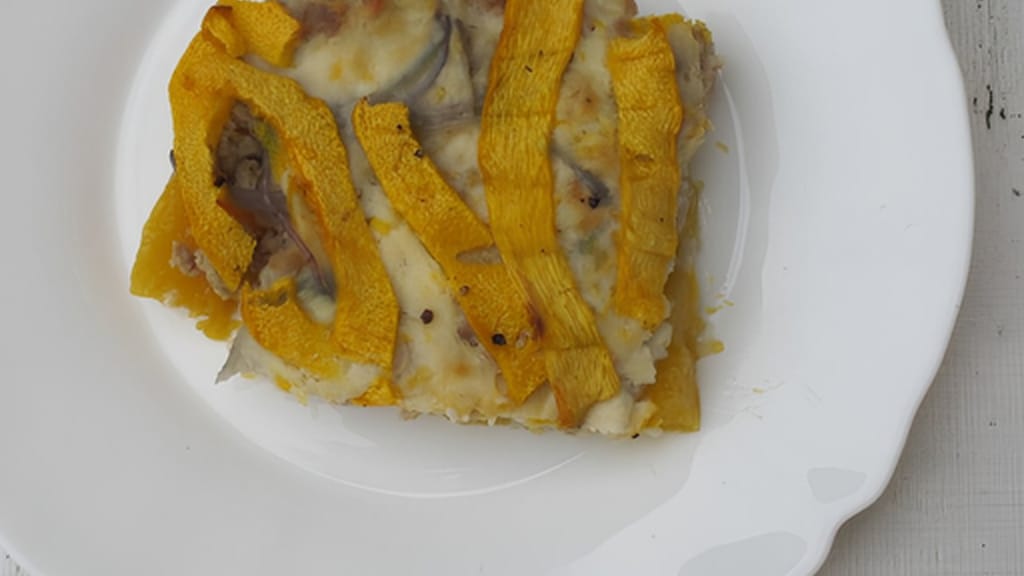
Heavenly potato gratin
Cheese Recipes: Bakes, Soups, Risottos, Toasties and What to Cook with Leftover Cheese
Cheese recipes come down to one question: should the cheese melt, brown or stay in chunks? That decides whether you end up with golden gratin potatoes, khachapuri with stretchy cheese, creamy risotto or a salad with crumbled feta. Below you'll find real recipes from Yumsto, sorted by dish and by cheese, a guide to how each cheese behaves in the oven, and ideas for using up the odds and ends in your fridge.
Cheese recipes fall into six types: oven bakes, toasties and savory baked goods, risottos, soups, salads and dips, and cheese as the main course. Each type needs a different cheese:
Bakes and gratins: cheeses that melt and brown, typically Gouda, Edam or Emmental.
Toasties and savory baked goods: stretchy, flavorful cheeses such as Gruyère, mozzarella with Emmental, or cheddar.
Risottos: finely grated Parmesan or another hard aged cheese that you stir in and that disappears into the rice.
Soups: young, soft cheeses such as Edam or Gouda that melt into a hot cream soup, plus a little niva (Czech blue cheese) for a bold flavor.
Salads and dips: cheeses that crumble and hold their pieces, mainly feta and niva.
Cheese as the main course: stuffed or baked hermelín (a Czech camembert-style cheese), grilled halloumi.
Cheese is just one part of a wider family; for more ideas with quark, cream or eggs, see dairy and egg recipes. Here we stay with cheese: what happens to it in the oven, which Yumsto recipes are worth making, and how to use up the last bits from your fridge.
We send seasonal cooking and baking plans and recipes made from everyday ingredients. Unsubscribe in one click.
It mostly comes down to moisture and age. Young, soft cheeses melt smooth, old hard cheeses tend to brown and crisp, and brined cheeses or cheeses made for grilling hold their shape. Here's what each cheese does in the oven and where it works best:
Gouda and Edam: melt evenly and turn golden. Best for gratins, baked potatoes and cauliflower.
Emmental: melts and stretches, and the bubbles on top brown. Best for fillings, khachapuri and fondue.
Gruyère: melts creamily and browns into a nutty crust. Best for baked toasties and French gratins.
Mozzarella: melts and stretches but hardly browns. Best for pizza and for baked goods, alongside a more flavorful cheese.
Cheddar: melts, but releases fat if overheated. Best in dough for savory baked goods and on burgers.
Parmesan and other hard aged cheeses: don't melt into strings, but brown and crisp up. Best in risotto, as a topping and for a crunchy crust.
Feta: softens but keeps its pieces. Best in salads, on roasted vegetables and in meat fillings.
Halloumi: doesn't melt, but fries golden. Best for the grill and the pan.
Niva and other blue cheeses: melt into a sauce, and in slices they turn golden at the edges. Best in dips, sauces and salads.
Hermelín: holds its shape outside and melts inside. Best baked whole or stuffed.
Cottage cheese and ricotta: don't melt, just warm through and set slightly. Best in layered bakes and in cakes.
One practical rule follows: put a cheese that browns on top of a gratin, a cheese that melts inside, and use the cheeses that don't melt wherever you want to taste distinct pieces.
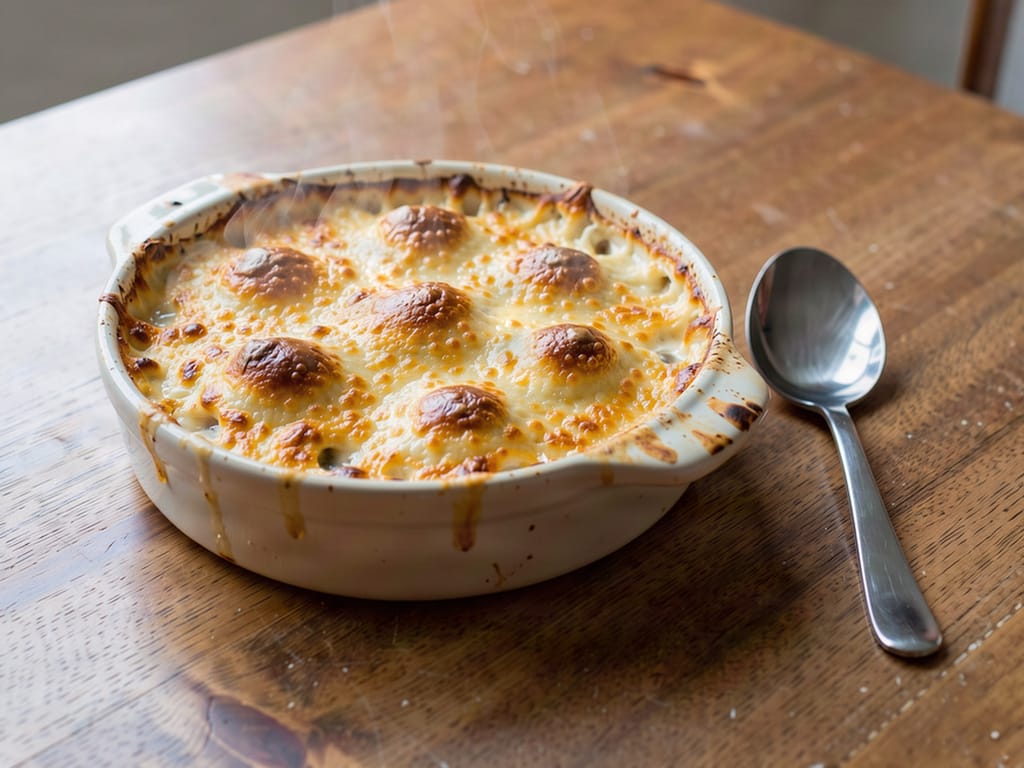
A cheese bake always has three layers: a soft base (potatoes, vegetables, squash), a liquid that holds it together (cream, béchamel, or eggs with milk) and cheese that turns golden on top. Three Yumsto recipes show three different routes.
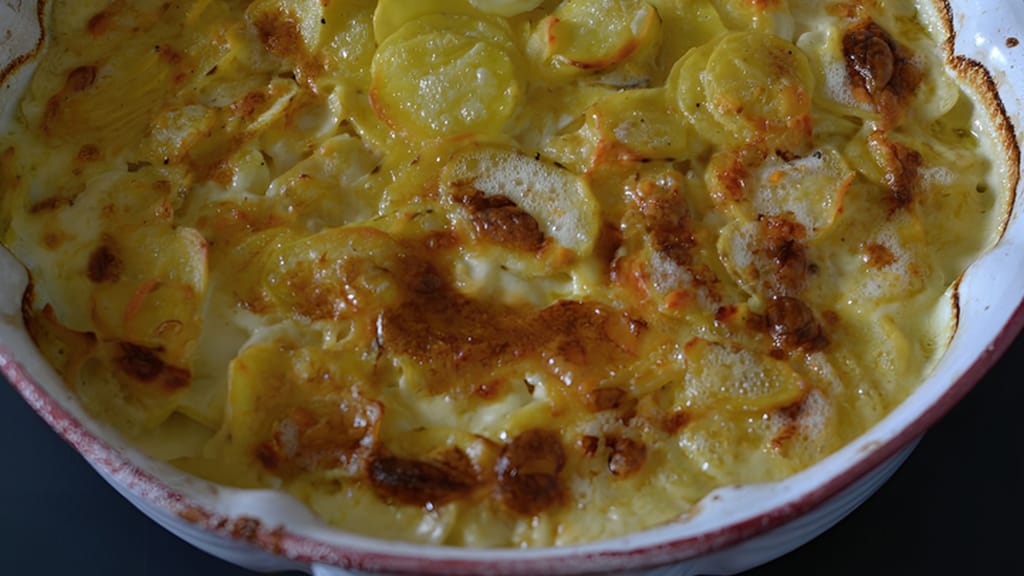
Divine gratin potatoes are the simplest version. Slice 1 kg of potatoes as thinly as you can, toss them in a bowl with coarsely grated Gouda, salt, pepper and whipping cream, tip them into a buttered baking dish and lay slices of butter on top. They bake for about an hour at 200°C (400°F), until the top is golden and a slice from the middle is easy to pierce. Thin slices are the whole secret: thick ones would brown outside and stay hard inside.
Heavenly potato gratin
Divine gratin potatoes with Gouda and cream
Squash baked with ground meat is a hearty autumn dinner. Sauté a shallot in a pan, add 1 kg of ground meat, break it up with a wooden spoon, then season with salt, pepper and thyme. Cook the meat until done: a probe thermometer in the mixture must read at least 71°C (160°F) and nothing should stay pink. Meanwhile, make a light béchamel from butter, all-purpose (plain) flour, milk and nutmeg, and layer slices of hokkaido squash 1 to 2 cm thick, the meat and the béchamel in a dish. It bakes for about 45 minutes at 200°C (400°F), until a knife slides through the squash without resistance. The cheese is optional here, and the recipe says to add it right near the end of baking so it only melts and doesn't burn.
Cauliflower baked with cashews and Gouda relies on the contrast of soft and crunchy. Dry the cauliflower florets well so water doesn't thin the cream, spread them in a baking dish and scatter over diced bacon and cashews, some chopped and some whole. Pour over cooking cream seasoned with salt, pepper and nutmeg and bake for about 40 minutes at 170°C (340°F), until the cauliflower is tender. Only then does the grated Gouda go on top, where it just melts in the oven.
On the same principle, soft vegetables, cream and cheese on top, you can also bake leeks or broccoli.
The cheese on top of a bake can go wrong in two ways: it burns before the dish is done, or it overheats, releases fat and turns hard. A few steps help you avoid both:
Add the cheese at the end. For dishes that bake longer than 30 to 40 minutes, put the cheese on for the last 10 to 15 minutes, as in the squash and cauliflower recipes.
Grate it yourself, coarsely. Store-bought grated cheese is often coated with an anti-caking agent, so it melts more slowly and less smoothly.
Combine two cheeses. Mix a cheese that melts (Gouda, Edam) with a handful of hard aged cheese, which adds color and a crisp crust.
Take the cheese out of the fridge a little ahead. Ice-cold cheese melts unevenly on a hot surface.
Cover and uncover. If the top browns too fast, cover the dish with aluminum foil and uncover it only at the end.
Let the dish rest for five to ten minutes. The cream and cheese set, so the gratin can be sliced instead of spilling across the plate.
Grated cheese is the fastest route to a hot baked dish: it spreads evenly and melts in the oven within minutes. Three Yumsto recipes show how far you can take it, from a toastie in half an hour to a yeast bread stuffed with cheese.
Croque monsieur is a French baked toast with ham and Gruyère. Toast slices of sandwich bread in a 180°C (350°F) oven on both sides, and meanwhile make a béchamel from butter, all-purpose flour and milk, seasoned with salt, pepper and nutmeg. Spread the bottom toast with béchamel and top it with ham off the bone and some of the cheese. Brush the top toast with Dijon mustard on one side and béchamel on the other, sprinkle with the rest of the cheese and bake for 5 to 10 minutes, until the cheese turns golden. The béchamel is why croque monsieur isn't just a toastie: it keeps the sandwich moist, and the cheese melts over it in an even layer.

Croque monsieur: toasted ham and cheese sandwich
Croque monsieur: baked toast with ham and Gruyère
Khachapuri is Georgian cheese bread; following the Yumsto recipe, one dough makes two flatbreads stuffed with mozzarella and Emmental. Make a yeast dough from lukewarm milk, yeast, flour, salt, eggs and butter, chop the cheeses finely in a food processor and mix in pieces of cold butter. Roll out a round, put half the filling in the middle, fold the edges toward the center, press the parcel back out into a flatbread and prick it with a fork so the steam can escape. Brushed with egg yolk beaten with milk, it bakes for about ten minutes at 250°C (480°F). No cheese should show anywhere, or it will leak out and burn on the baking sheet.
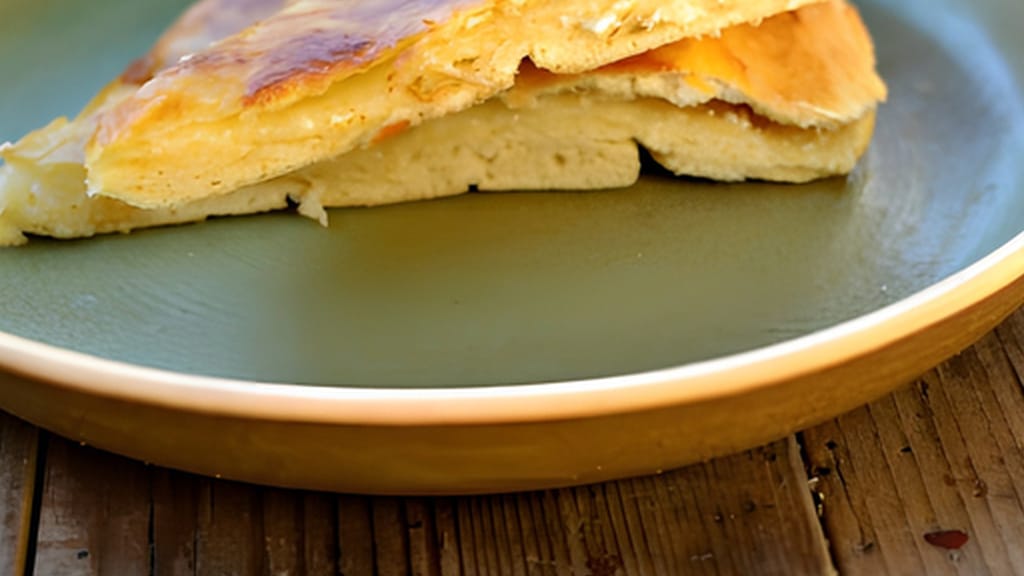
Khachapuri – georgian cheese bread
Khachapuri: Georgian bread stuffed with mozzarella and Emmental
Chili cheddar scones are a savory bake with no yeast. Mix flour with a little powdered sugar, salt, pepper, ground chili and baking powder, stir in coarsely grated cheddar and rub in the butter until crumbly. Eggs beaten with buttermilk bring the dough together into a sticky mass, which you spoon onto a baking sheet, sprinkle with chili or pepper and bake for 15 to 20 minutes at 185°C (365°F) until golden. They're best still warm, when the cheddar smells strongest; along with the khachapuri, they also suit a festive table, such as a New Year's Eve spread.
Cheddar belongs on a burger too. In the recipe for homemade hamburgers with cheddar and onion, the ground meat patties are grilled until no pink remains inside and a probe thermometer in the center reads at least 71°C (160°F), and the cheese goes on at the end so it melts. The onion is slowly caramelized in butter and deglazed with red wine, and the buns are homemade from yeast dough.
Finely grated cheese belongs in béchamel, soup and risotto; coarsely grated suits gratins, toasties and dough. Fine cheese melts quickly and without a trace. Coarse cheese lasts longer in the oven and forms bubbles and a crust on top. In dough, as in the cheddar scones, it leaves little pockets of melted cheese.
Cheese goes into risotto at the very end and off the heat: take the finished risotto off the burner, stir in the grated cheese and keep stirring vigorously until it combines with the starch from the rice into a cream. Add salt only afterward, because both cheese and stock are salty on their own. Risotto doesn't need cream; the creaminess comes from the starch the rice releases as you keep stirring. Which rice to choose and how to make risotto step by step is covered in the article how to cook creamy risotto.
In the recipe for halibut with Italian risotto and spinach, arborio rice is toasted with onion and garlic, deglazed with white wine, and then hot vegetable stock is added ladle by ladle for about 20 minutes. At the end you stir in 25 grams of Parmesan. Spinach wilts in the pan with the garlic set aside, and the halibut portions are pan-fried for 2 to 3 minutes per side; a squeeze of lemon juice finishes them on the plate.
Creamy risotto with turkey roulade and spinach is more festive. Open turkey breast like a book, layer it with slices of provolone and spinach leaves, roll it up tightly and tie it, brown it on all sides, add liquid and braise the roulade. Turkey is poultry, so the roulade is done when a probe thermometer in the thickest part reads 74°C (165°F). The risotto is made the same way as above, with chicken stock, and at the end you stir in cold butter and grated hard aged cheese or Parmesan; you can add the pan juices from the roulade too.
Cheese goes into soup once the hot cream soup is done and off the boil, finely grated and added by the handful; in a bubbling soup it curdles into strings and releases fat. Young, soft cheeses such as Edam or Gouda melt best, niva gives the soup a bold salty flavor, and Parmesan is better as a topping.
We don't have a creamy cheese soup on Yumsto yet, but a good base is the cauliflower cream soup with coriander and nigella. The cauliflower is cooked in salted water along with its core and young leaves, blended with some of the cooking water and softened with whipping cream and a few drops of truffle oil; it's served with sandwich bread croutons, coriander and nigella seeds. The recipe itself has no cheese. If you stir a handful of finely grated Edam or a piece of niva into the finished soup, it thickens and picks up a cheesy flavor; after that, just warm it through, don't boil it.
Cottage cheese doesn't melt in the oven; it just warms through and sets slightly, so it suits layered dishes where it should stay in soft curds, and under another cheese that turns golden on top.
Baked potatoes with cottage cheese and vegetables need potatoes cooked ahead. If you cook them the day before, refrigerate them within 2 hours, as the recipe and the US food safety agency FSIS advise; cold potatoes are also easier to slice. In a baking dish, layer the potatoes, crumbled cottage cheese, shallot and sliced spring onion, and peas with carrot, finish with a last layer of potatoes and bake for 20 minutes at 180°C (350°F). Then pour over milk beaten with eggs, sprinkle with grated Edam and bake for roughly another 20 minutes, until the custard sets.
Baked potato patties with vegetables and cottage cheese are portions made straight on the baking sheet. Shape cooked, grated potatoes, egg, salt and whole-grain spelt flour into patties and fry them until golden; meanwhile sauté pepper, zucchini and shallot and simmer them with tomato purée, herbs and herbes de Provence. Put a spoonful of vegetables and a spoonful of cottage cheese on each patty, bake for about 15 minutes at 200°C (400°F) and finish with fresh basil.
Unlike most cheeses, halloumi doesn't melt, so you can sear it directly on the grill or in a pan; it needs strong heat and is eaten warm, while it's still soft.
In the recipe for burgers with sun-dried tomatoes and halloumi, you slice the halloumi and marinate it with zucchini rounds in oil with grilled-vegetable seasoning. Mash avocado with soft fresh goat cheese (žervé) into a smooth cream, season with mayonnaise, salt and pepper and stir in the chopped sun-dried tomatoes from the oil. On a hot grill, cook the zucchini, buns and halloumi, which you leave until it has golden-brown stripes and turn only once. Assemble the burger and serve right away, because cooled halloumi stiffens and turns rubbery. If you'd rather have meat than halloumi, make ground meat patties and grill them until they reach at least 71°C (160°F) in the middle.
For pan-frying, the same applies as on the grill: a dry, hot surface, little fat and no moving the cheese until it releases by itself. Cut the slices about a centimeter thick; thinner ones dry out, thicker ones don't heat through in the middle.
Feta is a salty brined cheese that only softens with heat and holds its pieces; that's why it's most often crumbled over salads and roasted vegetables, or used to stuff meat.
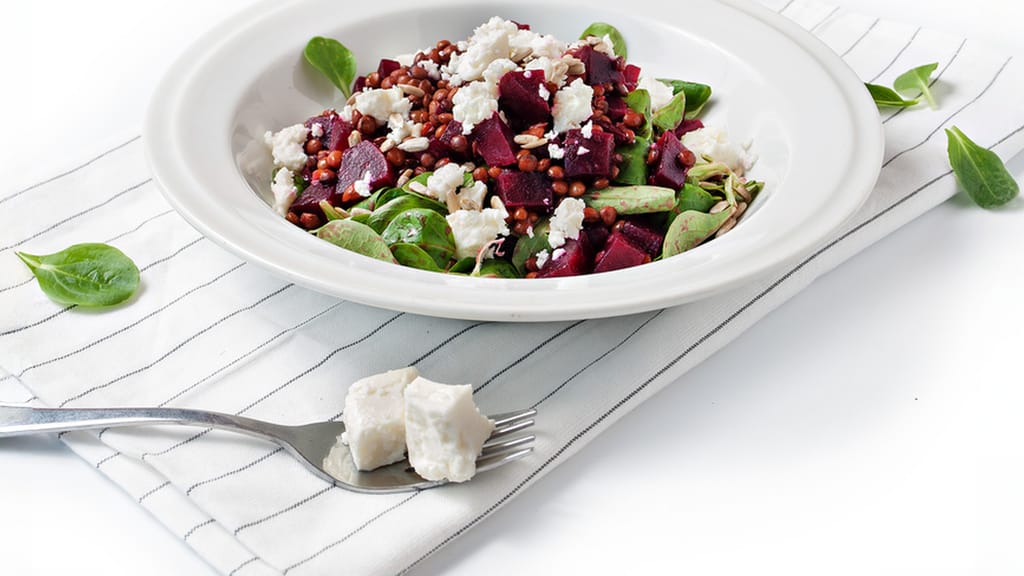
Lentil salad with beetroot and feta is ready in 13 minutes. Drain the canned lentils and let them drip dry, dice the precooked beetroot, and rinse and thoroughly dry the lamb's lettuce, since wet leaves would make the salad soggy. Toss everything gently, drizzle with olive oil, then crumble feta on top and scatter over sunflower seeds, both just before serving so the feta doesn't turn pink from the beetroot and the seeds stay crunchy.
Roasted vegetable salad with feta is a warmer variation. Roast hokkaido squash at 170°C (340°F) until tender, and add a whole red pepper, which you then let steam in a bowl under plastic wrap, peel and slice. Gently toss the vegetables with iceberg lettuce and a dressing of plain yogurt, oregano, olive oil and salt, crumble feta on top and sprinkle with pumpkin seeds.
Feta works in meat dishes too. In the recipe for stuffed pork tenderloin with feta and zucchini, you cut a pocket in tall medallions, press feta into it, cover each medallion with a slice of dry-cured ham and sear it in olive oil, ham side down. An unstuffed tenderloin would only need 63°C (145°F), but a stuffed one needs more: the medallions are done when a probe thermometer in the center of the feta filling reads 74°C (165°F), as the US food safety agency FSIS specifies for stuffed meat. Then let them rest for 3 minutes. Meanwhile, sauté thin slices of zucchini with garlic, coriander and chili, and finally stir in the rest of the feta.
Raclette is a Swiss cheese for melting: its cut face is heated, and the melted layer is scraped onto boiled potatoes and eaten with pickled gherkins, pickled onions and cured meats. We don't have a separate raclette recipe on Yumsto yet, but the article raclette at home covers everything that matters: which cheese to buy, how much to allow per person and what to serve with it.
A related evening of melted cheese is fondue: the cheese melts in wine in a pot, and you dip bread into it. Why fondue sometimes splits or turns rubbery, and which cheeses belong in it, is explained in the article cheese fondue at home. If you don't have a raclette grill or a fondue pot, the oven gives you a similar experience: halve boiled potatoes in their skins, top them with slices of a cheese that melts well and put them under the broiler for a few minutes, until the cheese starts to bubble.
Ricotta is a delicate, moist whey cheese that doesn't melt in the oven but sets; that's why on Yumsto you'll find it mainly in sweet baking: in moist cakes, tender pastry and creams.
Plum ricotta cake with almonds starts with plums marinated in vanilla sugar and brandy. Beat the ricotta with cane sugar, vanilla sugar and orange zest, then gradually mix in the egg yolks and cooled melted butter, followed by flour with ground almonds, baking powder and salt, and finally fold in whisked egg whites. Pour the batter into a pan, arrange the plums cut side up, scatter over sliced almonds and bake for 40 to 50 minutes at 170°C (340°F); the center may stay slightly moist and will set as it cools.
Apricot galette with ricotta dough and rosemary shows that ricotta can make dough too. Work cold butter with flour and salt into crumbs, add the ricotta and briefly knead a smooth dough, which rests in the fridge for at least 30 minutes. Roll it into a circle 25 to 28 cm across, pile the apricots tossed in sugar, cornstarch, rosemary, lemon zest and vanilla in the middle, fold the edges over the fruit and bake for about 40 minutes at 180°C (350°F).
Tartlets with ricotta and quark cream have a cocoa shortcrust shell, blind-baked for about 20 minutes at 180°C (350°F), weighed down with dried beans on parchment paper. The cream is just ricotta, full-fat quark (tvaroh, a Czech fresh curd cheese), granulated sugar and lemon juice, briefly whisked smooth. Fill the shells only once they've cooled completely, since the cream would thin out in warm ones, and decorate with raspberries.
Niva is a Czech cheese with blue noble mold, distinctly salty and sharp; a little goes a long way in a dish, and it's best balanced with something sweet or rich, such as beetroot, nuts or sour cream.
Blue cheese dip with walnuts is ready in a quarter of an hour. Whisk sour cream with mayonnaise and a crushed garlic clove, stir in cheese grated on a fine grater (chilled cheese grates most easily) and only then season with salt and pepper. Divide the walnuts into two piles, chopping one coarsely and the other almost to crumbs: the fine ones thicken the dip and scent it, while the coarse ones stay crunchy in it.
Roasted beetroot, walnut and niva salad relies on the contrast of sweet beetroot and salty cheese. Wrap the beets in two layers of aluminum foil, roast for two hours at 220 to 250°C (425–480°F), then peel, slice, drizzle with olive oil and scatter over the walnuts. Cut the niva into thin slices and put them on a piece of foil under the broiler for a moment, until they start to melt and turn golden at the edges; as they cool, they set crisp.
In the carrot and broccoli quiche with gorgonzola, the blue cheese bakes right on top of the filling. Press a dough of rolled oats, whole-grain rye flour, butter and milk into a pan and pour over eggs beaten with milk, grated carrot and briefly blanched broccoli. It bakes at 200°C (400°F); after 10 minutes, sprinkle the quiche with crumbled gorgonzola, which you can happily swap for niva, and bake for roughly 10 more minutes, until the eggs set and the filling doesn't wobble when you shake the pan.
Hermelín is a Czech cheese with a white mold rind; it holds its shape outside and ripens to a cream inside, which is why you can stuff it or bake it whole.
Garlic hermelín stuffed with walnuts is a cold version that you make a day ahead. Cut each cheese horizontally into two equally thick rounds and scoop the soft center out of both halves with a spoon, leaving a rim all the way around. Mash the scooped-out cheese with softened butter, add finely crushed garlic and chopped walnuts, fill both halves with the mixture and press them together. Wrap tightly in plastic wrap and leave in the fridge, ideally until the next day, so the butter firms up and the cheese can be sliced.
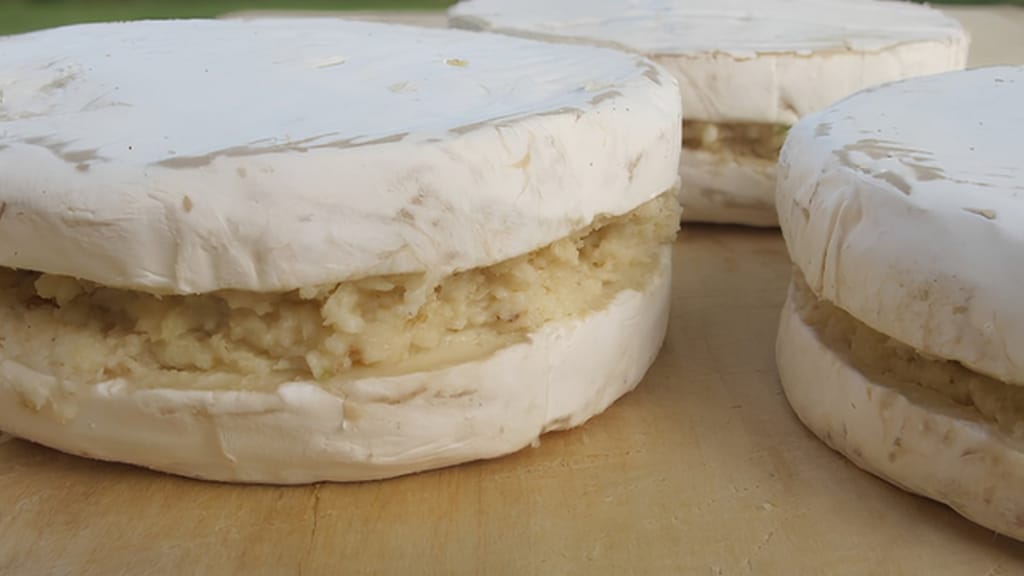
Garlic camembert stuffed with walnuts
Garlic hermelín stuffed with walnuts
The warm version, meaning how long to bake hermelín so it doesn't leak and what to serve with it, is covered in a separate article, baked hermelín in the oven.
The easiest thing to cook with leftover cheese is a dish where the cheeses get mixed: a bake, savory pastry, a dip or a sauce. The ends of various hard and semi-hard cheeses can be grated together and used as one cheese.
Bakes: use the mixed grated leftovers in place of Gouda in gratin potatoes, or in place of Edam in šunkofleky with cabbage (a Czech baked pasta dish). For that, you sauté cabbage with onion, smoked ham and mushrooms, season with caraway and garlic, add peas and cooked pasta, bake the mixture for 10 minutes at 180°C (350°F), then pour over eggs beaten with milk, sprinkle with cheese and bake until the eggs are completely set.
Savory baked goods: any strong, harder cheese works in the cheddar scones in place of cheddar.
Dip and spread: leftover blue cheese makes the base for a niva dip.
Cheese board: nice pieces of different cheeses suit a platter served with wine; how to put one together and how much cheese to allow per person is in the article cheese board.
Freezer: cheese you won't get around to using can usually be grated and frozen; which cheeses tolerate freezing and which don't is covered in the article can you freeze cheese.
Don't throw away the rind of a hard aged cheese. Dropped into a soup or tomato sauce while it cooks, it adds flavor, and you fish it out before serving.
Cheese špecle (Czech soft egg dumplings) are hot dumplings layered with grated cheese that melts between them, topped with golden fried onion. Use a cheese that melts well and has a strong flavor, such as Emmental or Gruyère, plus a little blue cheese (niva) for a kick. You can put the assembled layers in a hot oven for a few minutes so the cheese binds everything together. We don't have a separate recipe for cheese špecle on Yumsto yet.
The quickest cheese recipes on Yumsto are the lentil salad with beetroot and feta (13 minutes) and the blue cheese dip with walnuts (a quarter of an hour). For a hot dish in about half an hour, try croque monsieur, a baked toast with ham, béchamel and Gruyère. If you have potatoes cooked the day before, you can bake them quickly with leftover cheese too.
You can replace Parmesan in risotto with Grana Padano or pecorino; both grate finely and melt into the rice. Pecorino is made from sheep's milk and saltier, so use a little less and hold off on the salt. Softer cheeses such as Gouda or mozzarella turn stringy in risotto and make it heavy. Whichever cheese you use, stir it in off the heat and add salt only after it.
A cheese bake keeps in the fridge for 3 to 4 days if you refrigerate it within 2 hours of baking; these times come from the US food safety agency FSIS. In the freezer it keeps good quality for 3 to 4 months. Reheat it until it's hot all the way through and a probe thermometer in the center reads 74°C (165°F). For the best flavor and texture, reheat it only once.
Gouda tends to be richer and softer than Edam, so it melts more creamily in the oven, while Edam is drier and turns golden on top faster. Both are semi-hard cheeses that work well in a gratin, and you can swap one for the other. For the best topping, mix them and add a handful of hard aged cheese for a crisp crust.
One recipe worth heating the oven for, one tip, and one deal from the shop. Nothing else.