Raclette at Home: Which Cheese, How Much per Person and What to Serve (Potatoes, Pickles, Cured Meats)
Cheese Fondue at Home: Which Cheeses, How Much Wine, and Why It Splits or Turns Rubbery
Updated Nov 16, 2026
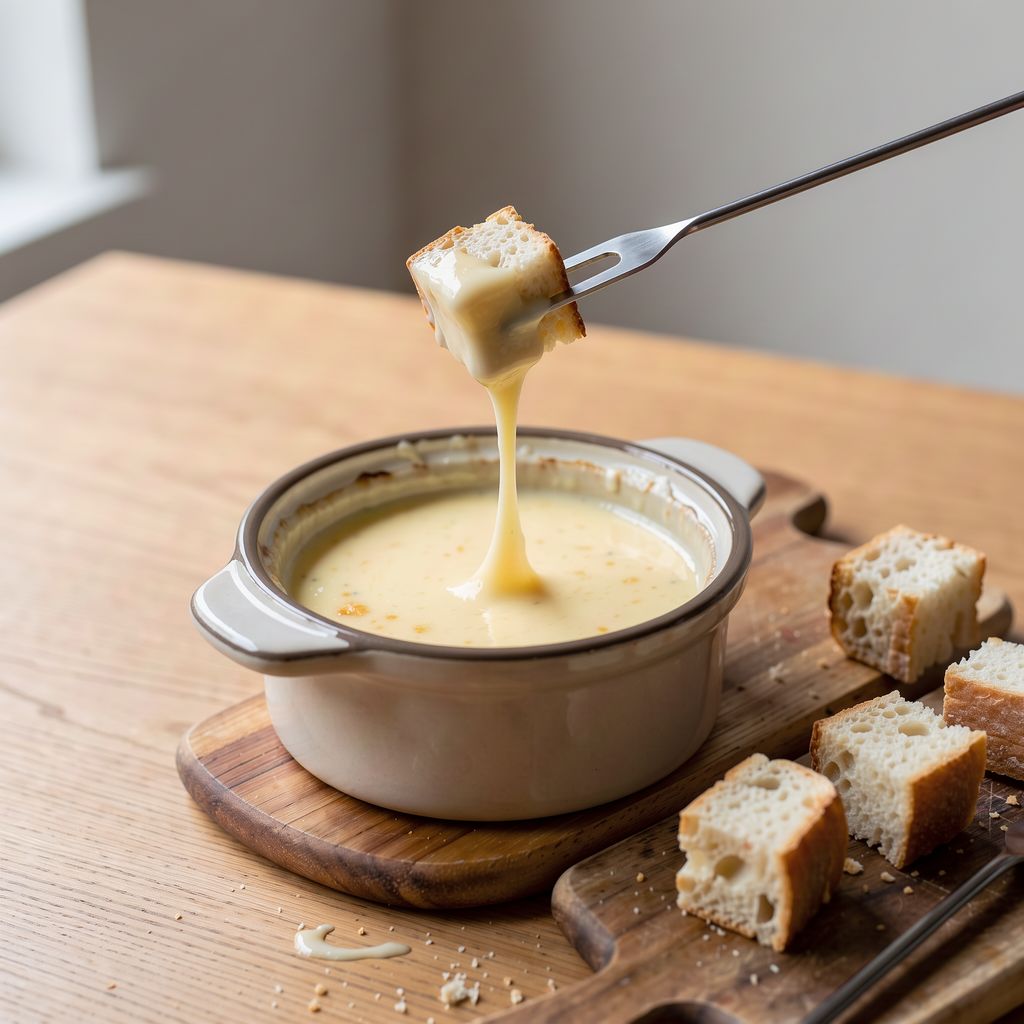
For cheese fondue, plan on about 200 g of cheese, 75 ml of dry white wine and 1 heaping teaspoon (about 4 g) of cornstarch per person. In the classic Swiss moitié-moitié version, that cheese is half gruyère and half vacherin fribourgeois. The rest comes down to temperature and acidity: fondue doesn't split out of bad luck, but because it's too hot, it lacks acid, or the wrong cheese is in the pot. Below you'll find how to prevent it, how to rescue a split fondue, what to dip in it and how to make it without alcohol.
For cheese fondue as a main course, plan on 200 g of cheese, 75 ml of dry white wine and about 4 g of cornstarch per person.
Cheese: 200 g (120–150 g is enough as a starter or alongside other food)
Dry white wine: 75 ml
Cornstarch: 1 heaping teaspoon, about 4 g
Garlic: for rubbing the pot, 1 clove for the whole batch
Kirsch (cherry brandy): to taste, typically 1 tablespoon per person, added at the very end
For four people, that means 800 g of cheese, 3 dl (300 ml) of wine and 4 heaping teaspoons (about 16 g) of starch, much like traditional Fribourg recipes, which call for 3–4 dl (300–400 ml) of wine. Keep the ratio of cheese to wine at about 8 : 3 by weight. More wine gives a thinner fondue that runs off the bread; less wine gives a thick mass that scorches easily.
Seasonal baking plans, tested recipes and kitchen tricks that save you time. Unsubscribe in one click.
For fondue you need a hard or semi-hard Alpine cheese that melts well and has enough fat and moisture: classically gruyère, vacherin fribourgeois, Emmental or Appenzeller.
Moitié-moitié (Fribourg): 50% gruyère, 50% vacherin fribourgeois. Gruyère brings nutty depth, vacherin brings creaminess and a mild tang. The best-known Swiss classic.
Neuchâtel: half gruyère, half Emmental. Milder, stretchier, and both cheeses are easier to find.
A sharper version: replace part of the gruyère with Appenzeller for a more piquant flavor.
What to avoid:
Very aged, dry cheeses (Parmesan, gruyère aged over 18 months): they have little moisture, don't melt smoothly and release fat.
Young, rubbery cheeses (mozzarella, a cheap block of Edam-style cheese): they turn into a stringy rubber you can't twirl onto a fork.
Low-fat cheeses: without fat there's nothing to emulsify, so the result is grainy.
Pre-shredded bagged cheese: it's often coated in starch or cellulose to stop clumping, which makes fondue floury. Grate your own.
If you can't find vacherin, go for the Neuchâtel version. It's better than chasing substitutes that don't melt the same way.
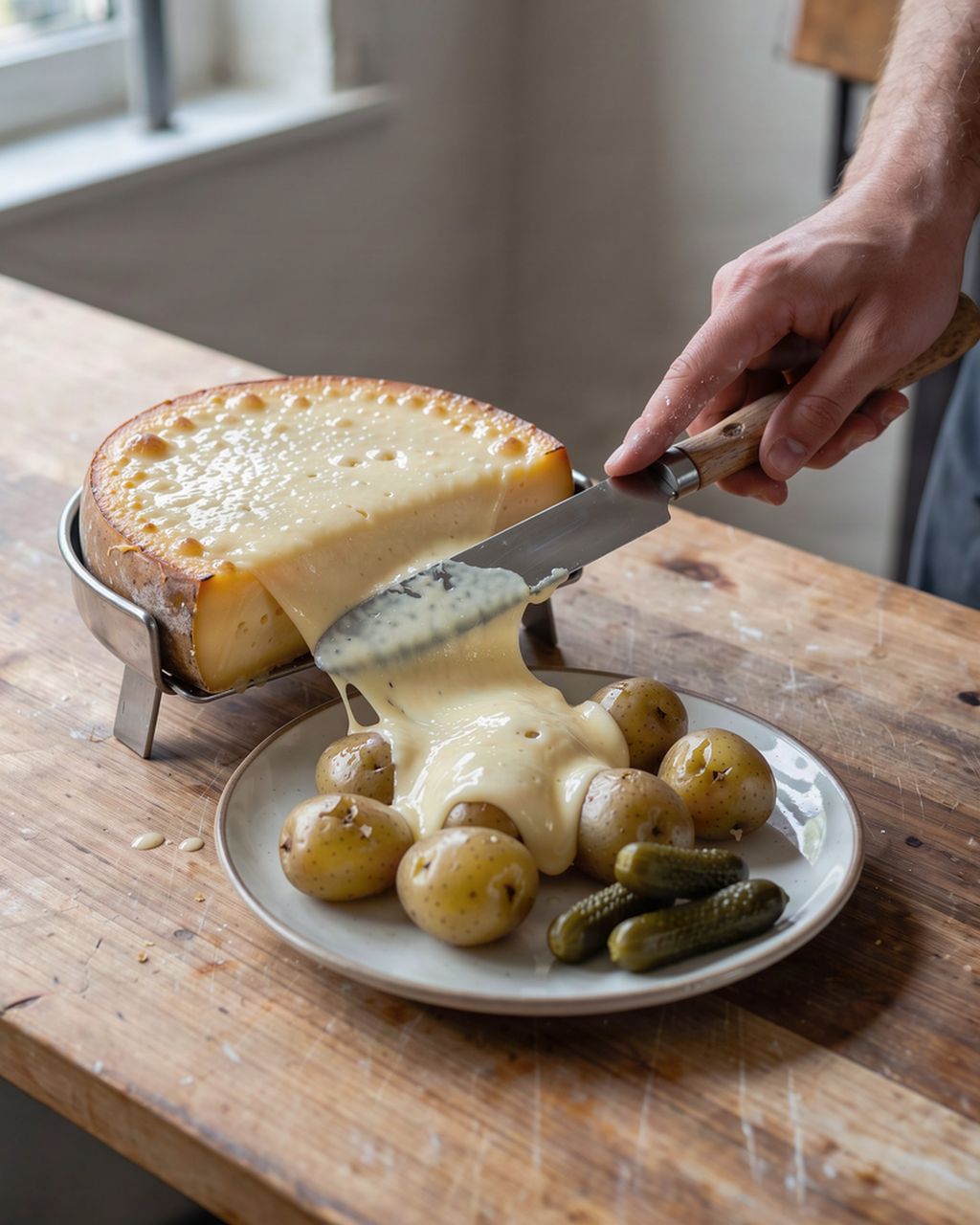
If you'd rather have your cheese melted in a pan, you'll find the method in our article on raclette at home.
Cheese fondue takes 15 minutes, and the whole secret is melting the cheese slowly in acidic wine, never at a hard boil.
Rub the pot with garlic. Run a cut clove over the bottom and sides of a caquelon (a ceramic fondue pot) or a heavy-bottomed saucepan. If you love garlic, mince it finely and leave it in the pot.
Toss the cheese with starch. Grate the gruyère coarsely and cube the vacherin, then toss each cheese separately in a bowl with the starch. This coats every piece and prevents lumps.
Heat the wine over medium heat until the first tiny bubbles appear. Don't boil it.
Add the gruyère by the handful and stir with a wooden spoon in a figure eight or zigzag, not in circles. Add the next handful only once the previous one has melted.
Let it bubble briefly once, then add the vacherin. The short boil is needed for the starch to thicken. Then turn the heat down and only then stir in the vacherin, which must not boil.
Season with kirsch, freshly ground pepper and a pinch of nutmeg. The consistency should be like thick cream: it clings to a cube of bread and doesn't run off.
Carry it to the table onto a preheated rechaud (a stand with a burner) and serve right away.
Fondue splits for five reasons: it's too hot, it lacks acid, the cheese is unsuitable, you added the cheese all at once, or there isn't enough starch. Rubbery, stringy fondue comes from the same causes, just in a milder form.
Cheese is held together by a network of proteins (caseins) linked by calcium. Heating loosens this network, and if you overheat it, the proteins tighten into clumps and squeeze out the fat. That's why you see a yellow greasy layer with a grainy mass beneath it.
Too much heat. A hard boil literally curdles the proteins. Melt the cheese over low heat and, at the table, keep the fondue just below a simmer. Vacherin can't tolerate boiling at all, which is why it goes into the pot only after you lower the heat.
Not enough acid. Tartaric acid from the wine and citric acid from lemon bind calcium and loosen the casein network, so the cheese melts smoothly instead of clumping into rubber. According to the Cheese Science Toolkit (opens in a new tab), the acids in fondue work much like the emulsifying salts in processed cheese. That's why the wine should be dry and acidic; a sweet or low-acid wine won't hold a fondue together. If you're not sure, add a tablespoon of lemon juice.
Unsuitable cheese. Young cheeses (mozzarella) have a firm, elastic network and stretch like chewing gum; old, dry cheeses don't have enough water and release fat.
Too much cheese at once. If you dump the whole bowl of cheese into the wine at once, some of it overheats before the rest has melted. Go by the handful.
Not enough starch. Starch stabilizes the emulsion of fat and water. Without it, fondue separates more easily.
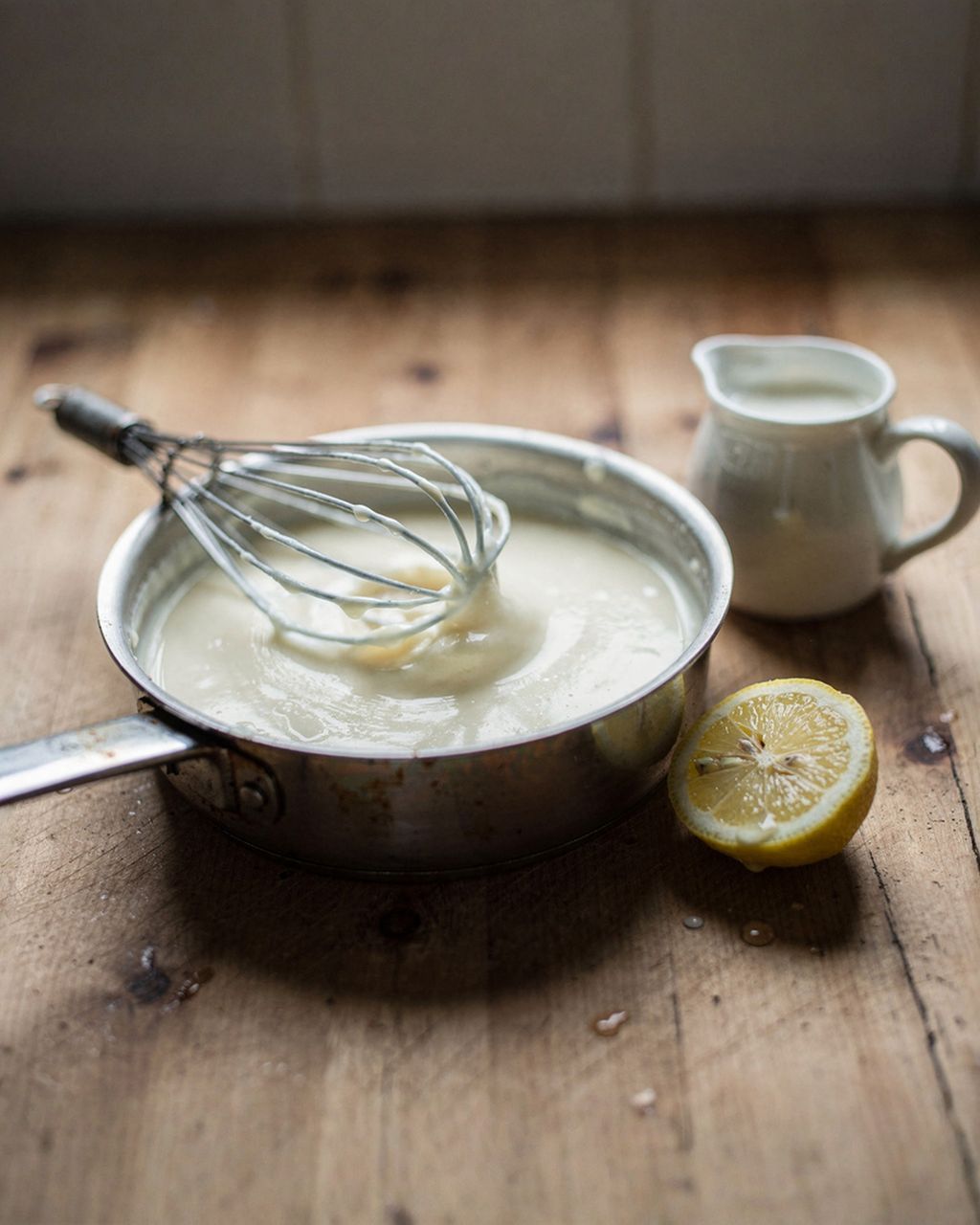
A split fondue can almost always be saved: take it off the heat, add acid and starch, and whisk vigorously.
Take the pot off the heat right away.
Stir 1 teaspoon of starch into 2 tablespoons of wine (or kirsch) and add 1 tablespoon of lemon juice.
Pour it into the fondue and whisk with a whisk, not a spoon. Within a minute or two the fat works back in and the mixture turns smooth.
Then return it to low heat and warm it gently.
If the fondue is instead too thick and rubbery, stir in a tablespoon or two of warm wine and a teaspoon of lemon juice. If it's too thin, stir in a handful of cheese tossed in starch, or a little starch mixed into wine, and warm it gently over low heat.
At the table, fondue should only bubble gently around the edges, never bubble across the whole surface. If the surface starts to boil, lower the flame; if the cheese on top starts to skin over and thicken, add a little warm wine.
Keep the flame small. With an alcohol or gel burner that has an adjustable shutter, leave it partly closed. Set an electric fondue set to its lowest setting.
Stir with every dip. Everyone dipping traces a figure eight across the bottom with their piece of bread. This keeps the fondue mixed and stops it from scorching.
When it thickens, stir in a tablespoon of warm wine.
The crust on the bottom is the reward. At the end, a golden cheese crust forms on the bottom, which the Swiss call la religieuse. Don't let it burn black: lower the flame, pry it loose and share it among everyone.
The main thing to dip into cheese fondue is day-old bread cut into cubes of about 2.5 cm (1 in), each with a bit of crust, because the crust holds the cube on the fork so it doesn't fall into the pot. Plan on about 150–200 g of bread per person.
Bread: white baguette, sourdough, darker rye bread. You can also bake your own crusty homemade baguettes for fondue; let them rest for a day so they're firmer.
Potatoes: small potatoes boiled in their skins and halved. A common alternative to bread in Switzerland.
Vegetables: briefly blanched broccoli and cauliflower, pieces of bell pepper, mushrooms, cherry tomatoes.
Fruit: slices of tart apple or pear, a sweet-and-sour contrast to the salty cheese.
Cured meats: cubes of ham, small sausages, dried meat.
On the side: pickles, pearl onions and pickled mushrooms in vinegar; their acidity nicely balances the richness of the cheese.
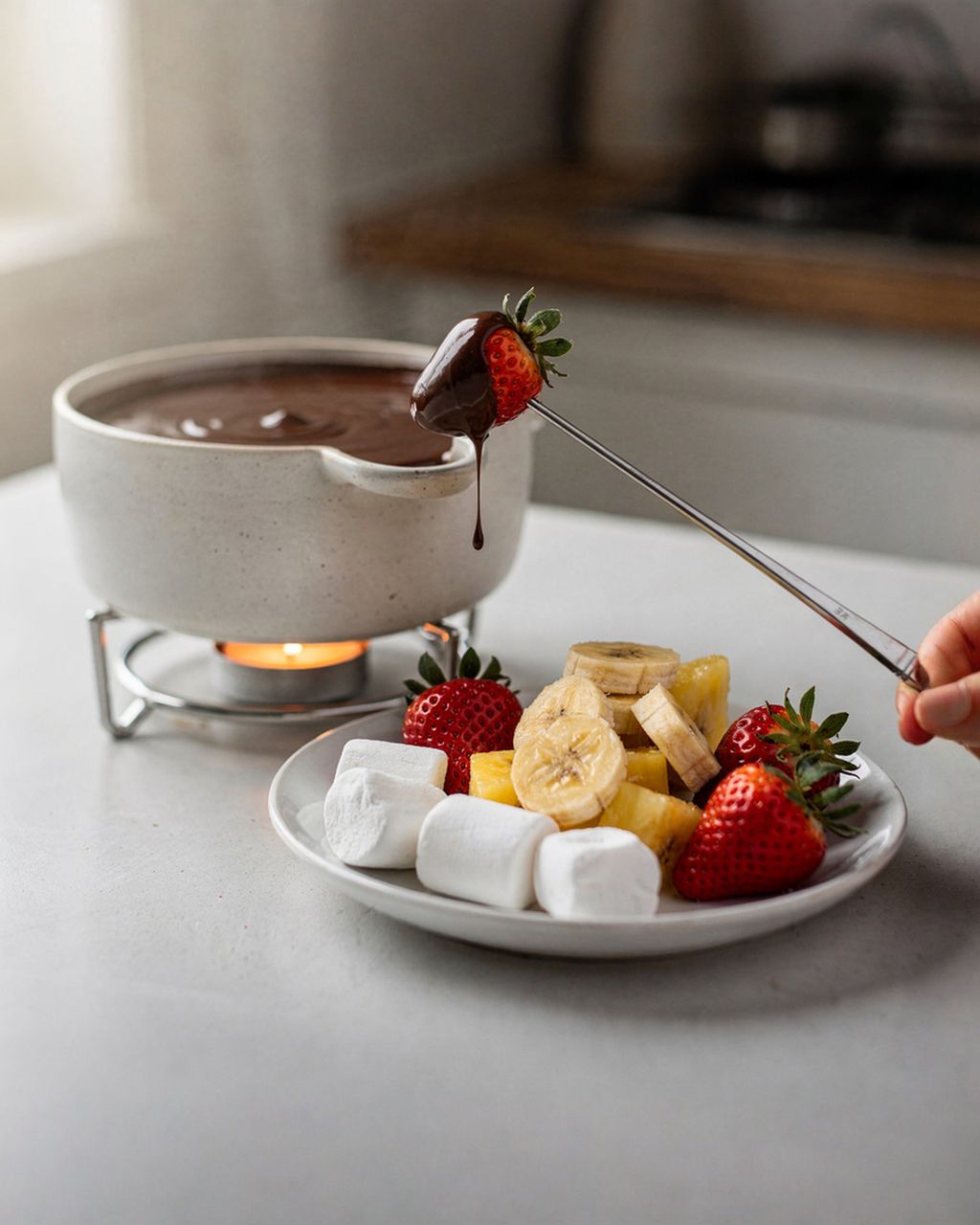
Wondering where to fit fondue into a menu? It works beautifully as the warm centerpiece of a New Year's Eve table alongside New Year's Eve canapés. And for dessert, a sweet version fits well: chocolate fondue at home.
To make alcohol-free cheese fondue, replace the wine with the same amount (75 ml per person) of light broth or non-alcoholic white wine. Simply leave out the kirsch. For children and pregnant women, choose a non-alcoholic wine with 0.0% alcohol (wine with up to 0.5% is also sold as non-alcoholic), and use broth, not wine or kirsch, for rescuing a split fondue and for thinning it at the table.
Wine gives fondue not only flavor but above all the acid that keeps the cheese smooth. Non-alcoholic wine tends to be less acidic, and broth has no acid at all. So with broth, always add 1 tablespoon of lemon juice for every 2 dl (200 ml) of liquid; without it, the fondue is more likely to split and turn stringy. With non-alcoholic wine, lemon doesn't hurt, and if the wine is mild rather than tart, add it too.
The alcohol in fondue doesn't cook off completely, not even close. According to the US Department of Agriculture (USDA) table, about 40% of the alcohol remains after 15 minutes of gentle cooking, and alcohol added to a hot liquid and immediately taken off the heat retains about 85%. Fondue is cooked only briefly and the kirsch goes in at the end, so the classic version definitely contains alcohol. For children, pregnant women, drivers and anyone who doesn't drink alcohol, make the version without wine.
You don't need a special set for cheese fondue. A heavy-bottomed saucepan and any tabletop burner that holds a gentle heat will do. A ceramic caquelon works best, though, because it spreads heat slowly and evenly; thin stainless steel pots made for chocolate or oil fondue can scorch the cheese easily.
Traditionally, you drink the same dry white wine the fondue was made with, or hot black or herbal tea. Cold drinks are fine too, but a light, crisp wine or tea goes best with rich cheese.
Fondue is best fresh, but move leftovers to an airtight container and refrigerate them within 2 hours of turning off the burner; use them within 3 days. Put the chilled cheese in a saucepan with a spoonful of wine or water and a teaspoon of lemon juice, then melt and warm it over low heat, whisking constantly, until it bubbles gently around the edges. The US Department of Agriculture (USDA) advises reheating leftovers to 74°C (165°F). You can prepare the grated cheese tossed in starch ahead of time; in a sealed container in the fridge it keeps until the next day.
One recipe worth heating the oven for, one tip, and one deal from the shop. Nothing else.