Cheese Fondue at Home: Which Cheeses, How Much Wine, and Why It Splits or Turns Rubbery
Raclette at Home: Which Cheese, How Much per Person and What to Serve (Potatoes, Pickles, Cured Meats)
Updated Nov 16, 2026
For raclette at home, plan on 150–250 g of cheese per person (the Swiss rule of thumb is about 200 g for a main course), plus boiled potatoes in their skins, cornichons, pearl onions and a platter of cured meats. That's really all you need. Melted cheese gets scraped over hot potatoes, the sour pickles cut its richness and the cured meats add saltiness. It's perfect for a winter or New Year's Eve evening with friends: everyone cooks their own, and all you do is set the table and then sit down with the rest of the group.
Plan on 200 g of cheese per person when raclette is the main and only dish of the evening. The Raclette Suisse association recommends roughly 200 g of cheese and 200 g of potatoes per person. That matches what people actually eat.
150 g per person when raclette is part of a bigger New Year's Eve spread or you have lots of cured meats and vegetables.
200 g per person as the standard for an evening where raclette is the main course.
250 g per person for a group of big eaters, or when nothing else is being served.
Plan on 200–300 g of potatoes per person and 80–100 g of cured meats per person. It's better to buy a little extra cheese: leftovers won't go to waste (see the FAQ), but empty pans at half past nine will kill the mood.
Seasonal baking plans, tested recipes and kitchen tricks that save you time. Unsubscribe in one click.
The best choice is raclette cheese: a semi-hard cow's-milk cheese from Switzerland or the French Savoie, aged for about 2–6 months (Raclette du Valais AOP at least 3 months, Savoie raclette at least 8 weeks). It melts smoothly and creamily without releasing grease. That comes down to a combination of three properties:
Fat: full-fat; Raclette Suisse has at least 45% fat in dry matter, Raclette du Valais AOP at least 50%. The fat keeps the melted cheese supple.
Moisture: a younger cheese still has enough water, so it flows and doesn't tear. An old cheese loses its water and, when heated, separates into a greasy puddle and rubbery protein.
Aging: a short aging time means the protein network is still intact. The cheese stretches, turns golden and doesn't fall apart.
The original Raclette du Valais AOP is made from raw milk and only in the canton of Valais. If you're expecting a baby, eat raw-milk cheese only when it's piping hot and bubbling (that's the advice of the UK's NHS because of listeria), or buy raclette made from pasteurized milk. It tends to be more pronounced, with a stronger cellar and nutty aroma. Where to buy it: at cheese shops and delis, where they'll cut it for you from the wheel, and before Christmas also at larger supermarkets, where it's often already sliced specifically for raclette. For the grill, you want slices 3–4 mm thick.
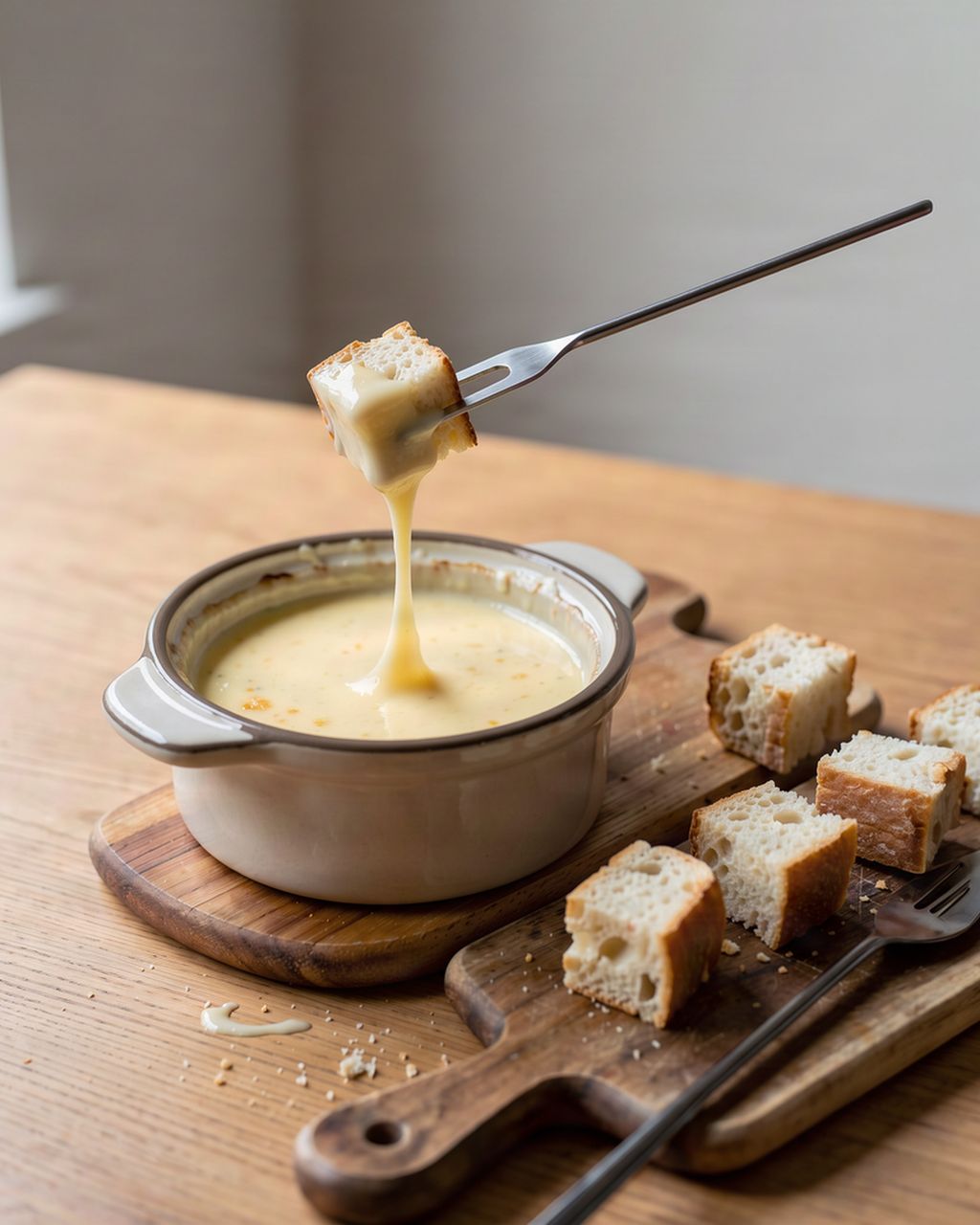
If you'd rather dip your cheese than scrape it, see how to make cheese fondue.
Look for a young to medium-aged, semi-hard, full-fat cheese. It melts without releasing grease. Proven substitutes:
Morbier: raclette's French cousin, with at least 45% fat in dry matter. The texture is almost identical and the flavor milder.
Fontina: creamy, melts very smoothly and tastes mildly nutty.
Appenzeller: bolder and more herbal, and it melts well. Good when you want more flavor.
Gruyère (younger, up to 6–8 months): nutty and slightly sweet. Older pieces are drier and tend to release grease.
Young Gouda or Tilsit: available everywhere and they melt reliably, just with a milder flavor. Mix them half and half with a more flavorful cheese.
What doesn't work: long-aged hard cheeses (Parmesan, old cheddar) separate into grease and crumbs. Fresh mozzarella releases water and turns stretchy like rubber. Low-fat cheeses don't melt, they just harden. Grated cheese doesn't work well on the grill; slices melt more evenly.
The classic is four things: potatoes in their skins, cornichons, pearl onions and cured meats. Everything else is a bonus.
Potatoes: small, firm, waxy type A (salad potatoes), boiled in their skins in salted water until tender, roughly 15–20 minutes depending on size. Don't peel them. The skin holds the potato together and the cheese clings to it better.
Cornichons and pearl onions: their acidity balances the richness of the cheese. Without them, raclette feels heavy after the third pan. Pickled mushrooms in vinegar go well here too.
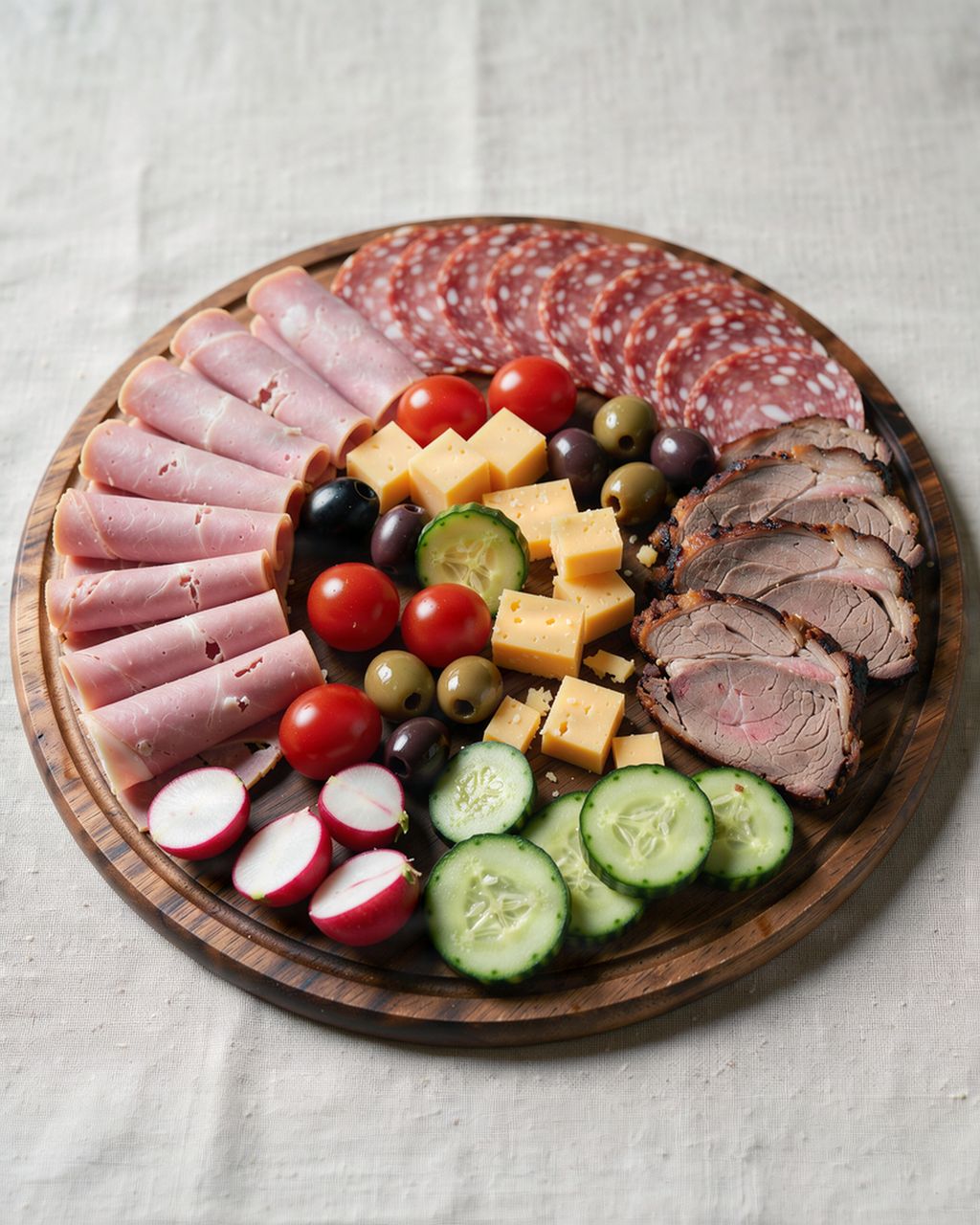
Cured meats: dry-cured ham, air-dried beef, good salami or pancetta. Salty, thinly sliced, nothing that needs long cooking.
Seasoning: freshly ground black pepper and sweet paprika. Sprinkle them straight onto the melted cheese.
Optional for the grill: slices of bell pepper, mushrooms, onion, zucchini, baby corn, pieces of pear.
On the side: green salad with a sharp vinaigrette, and baguette.
In Switzerland, raclette is served with dry white wine (typically Chasselas) or hot tea. A beer instead of wine, or a mug of hot non-alcoholic punch, won't bother anyone either.
You have three options: a tabletop raclette grill with pans (the most common at home), half or a quarter of a wheel under a melting heater (the traditional Swiss way) and the oven (when you have no equipment at all). For a group of six at home, the grill wins.
On a tabletop raclette grill, cheese melts in the pans under the heating element in 2–4 minutes, until it starts to bubble and turn golden. Everyone puts a slice of cheese in their own pan and scrapes it onto their potatoes with a wooden spatula when it's ready. Meanwhile, the top plate warms the potatoes and grills vegetables.
For 6 people you need a grill with at least 6 pans. For 8 or more, two smaller ones are worth it.
Switch the grill on 10 minutes ahead so it's properly hot.
Put just one slice in each pan. In an overcrowded pan the cheese melts unevenly and spills over the edge.
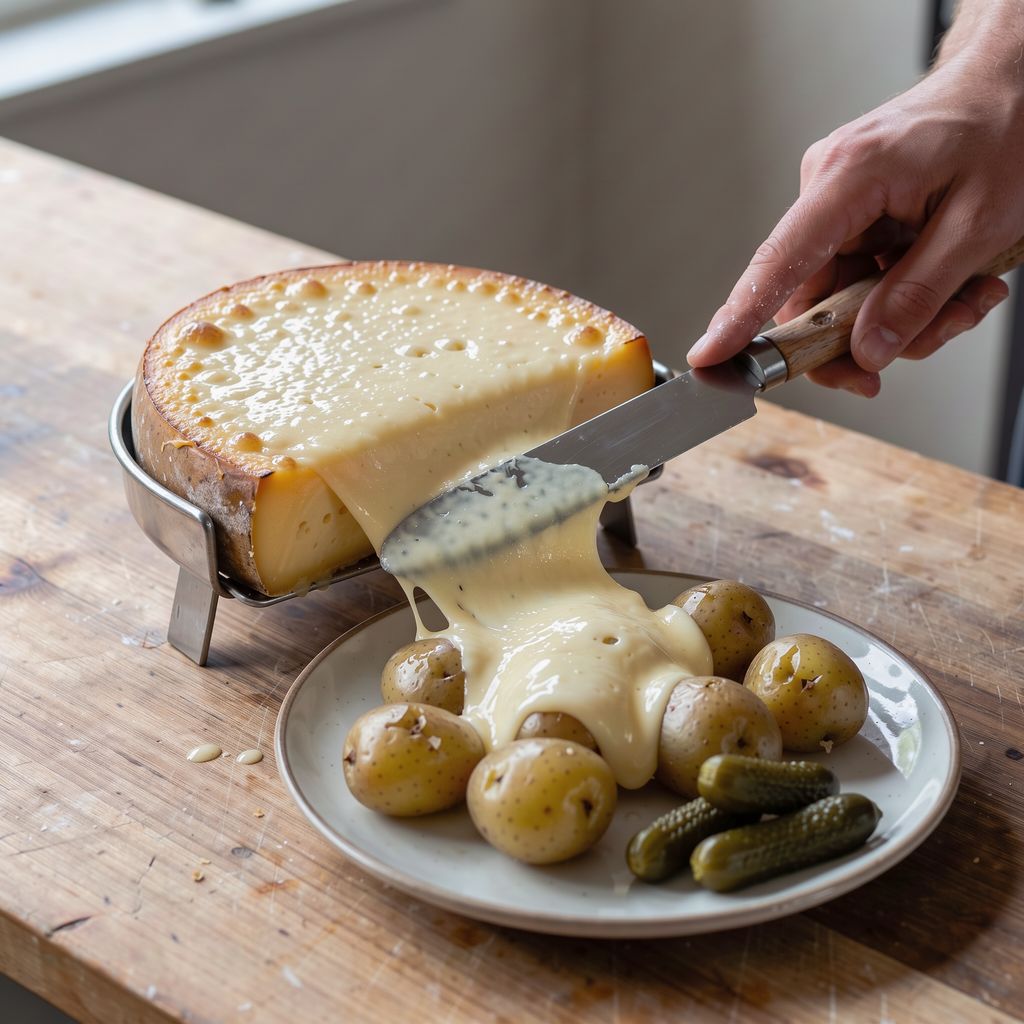
Traditional Swiss raclette is made from half or a quarter of a wheel under a melting heater: when the cut surface turns golden and starts to run, it's scraped with a knife straight onto a plate of potatoes. It's quite a show, and it tastes best because you get the toasted rind too.
But you need a special device (you can rent one), and bear in mind that a whole wheel weighs about 5 kg and a quarter roughly 1.2–1.5 kg. That's just right for 6 people. One person ends up scraping all evening, so take turns.
To make raclette in the oven, spread cooked potatoes in a baking dish or on a baking sheet, cover them with slices of cheese and put them under the oven broiler at 220–230°C (430–445°F) for 4–6 minutes, until the cheese bubbles. It works, but you lose what's best about raclette: everyone cooks their own whenever they like, and you eat continuously all evening. For a big group, bake in several batches one after another.
You can prepare almost everything for raclette ahead of time — the cured meats, pickles, vegetables and sliced cheese — so in the evening all you do is boil the potatoes and switch on the grill.
The day before: shop, pick the wine, check the grill and pans, and get an extension cord ready (a grill for 6 people draws 1,200–1,500 W).
Morning or afternoon: arrange the cured meats on a platter and cover it with plastic wrap. Put the cornichons and onions in bowls. Cut the vegetables for the grill. Slice the cheese into 3–4 mm slices, layer them with parchment paper and keep them in the fridge.
An hour before guests arrive: boil the potatoes. Drain them after cooking and keep them in a covered pot in the oven at 80°C (175°F) until the guests arrive. At the table, keep them warm on the top plate of the grill.
30 minutes ahead: take the cheese and cured meats out of the fridge. Room-temperature cheese melts faster and more evenly.
For raclette for 6 people as the main dish of the evening, buy 1.2–1.5 kg of raclette cheese, 1.2–1.8 kg of small potatoes and 500–600 g of cured meats. The full list:
Raclette cheese: 1.2 kg (200 g per person). For a hungry table, 1.5 kg (250 g per person).
Small firm potatoes (type A): 1.2–1.8 kg
Cured meats: 500–600 g (e.g. 200 g dry-cured ham, 200 g air-dried beef, 150 g salami)
Cornichons (small pickled cucumbers): 1 jar, about 350 g
Pearl onions: 1 jar
Vegetables for the grill: 2 bell peppers, 250 g mushrooms, 1 zucchini
Green salad: 1 head + ingredients for the vinaigrette
Baguette: 1–2 loaves
Seasoning: black pepper, sweet paprika, salt
Drinks: 2–3 bottles of dry white wine and a non-alcoholic alternative (tea, punch)
After raclette you want something small and sweet, not another heavy course. Fruit works best, or sorbet, or, if you're already in a "dipping" mood, chocolate fondue at home with strawberries, pineapple and pieces of banana.
Planning raclette for New Year's Eve? You'll find the whole plan for the evening in the article New Year's Eve Party Food at Home.
Yes, the natural rind of raclette cheese is edible, and on the grill or under the heater it crisps up nicely. The exception is cheeses with a wax or plastic rind, such as some goudas. Cut that off before melting.
Wrap leftover raclette cheese in parchment paper and it keeps in the fridge for about a week. Use it for potato bakes, cheese toasties or omelets. You can freeze it, but thawed cheese turns crumbly, so it's only good for baking afterward.
For a vegetarian raclette, simply leave out the cured meats and put more vegetables on the grill: mushrooms, bell peppers, zucchini, onions and pieces of pear or figs, which go well with the cheese. Just check that the cheese is made with microbial rennet. Traditional raclette is made with animal rennet.
Raclette is cheese melted in slices and scraped over potatoes, while cheese fondue is cheese melted with wine in a pot, where you dip bread. Raclette is easier to prepare, and there's no risk of the cheese splitting the way fondue can in the pot; you just need to pick the right cheese.
On the top plate of a raclette grill you can cook thin slices of meat or small sausages, but bear in mind they cook more slowly and give off smoke. Keep a separate plate and fork for raw meat and cook it all the way through, especially sausages and poultry. For a relaxed evening, cured meats that don't need cooking at all are the better choice.
One recipe worth heating the oven for, one tip, and one deal from the shop. Nothing else.