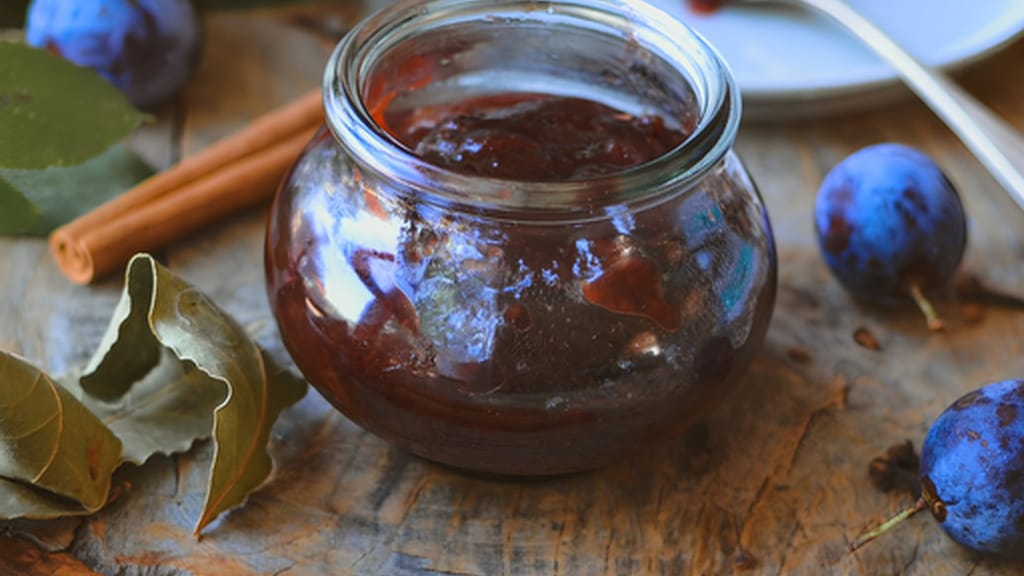
Harvest your plums, skip the slivovitz, and make chutney instead
Cheese Board: How Much Cheese per Person, Which Cheeses to Pick and How to Arrange It (with Fruit, Nuts and Bread)
Updated Nov 16, 2026
Plan on 50–60 g of cheese per person when the board is a starter or one of several nibbles, and 120–150 g per person when cheese is the main event of the evening. That means 1 kg of cheese feeds roughly 15–20 people with wine, or 6–8 people who are meant to make a meal of it. Pick 3–5 cheeses of different types (soft, semi-hard, hard, blue, goat), take them out of the fridge 30–60 minutes ahead, pair each one with something sweet, something tangy and something crunchy, and don't leave the cheese out for more than two hours.
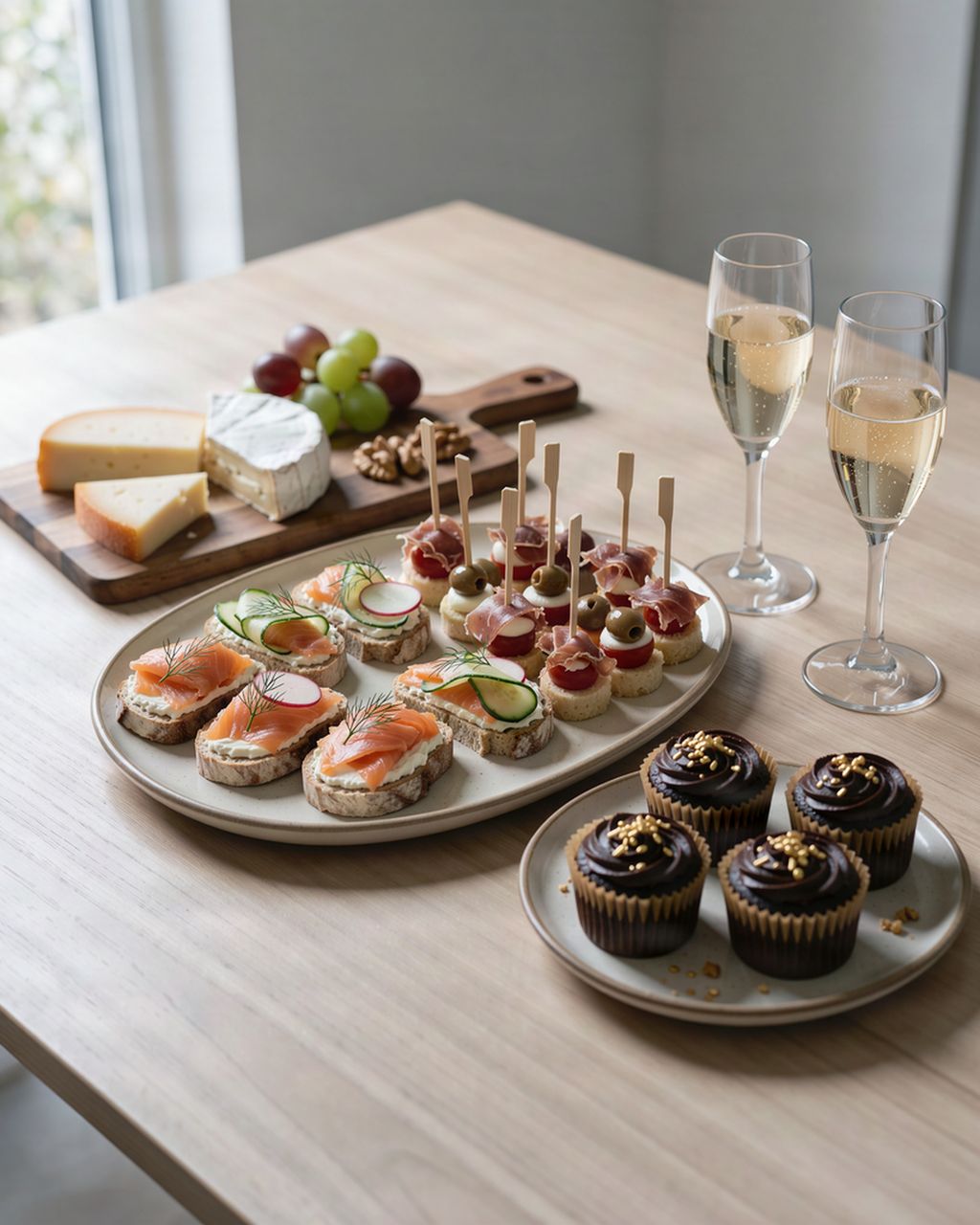
For a starter, 50–60 g per person; as a main course, 120–150 g. It depends on what else is on the table: with open-faced sandwiches (chlebíčky) and bite-size canapés, even 40 g is enough, while for an evening when nothing but cheese is on the menu, go for the top of the range.
Starter, aperitif, cheese after dinner: 50–60 g per person
Party with several kinds of food: 60–80 g per person
Cheese board as the main course: 120–150 g per person
Divide the portion among however many cheeses you choose: for 8 people as a starter, that's 400–500 g, for example four cheeses of 100–120 g each. Count the accompaniments separately: roughly 50–80 g of fruit, a handful (15–20 g) of nuts and 3–4 slices of baguette or a few crackers per head.
1 kg of cheese feeds 15–20 people as a starter, or 6–8 people as a main course. If you're buying a kilo, split it into 4–5 pieces of 200–250 g so each type has enough room and none ends up as mere decoration. Hard cheeses get eaten more slowly (they're more intense, so a smaller piece goes a long way), so feel free to buy a little less of them than of the mild semi-hard cheese everyone reaches for.
Seasonal baking plans, tested recipes and kitchen tricks that save you time. Unsubscribe in one click.
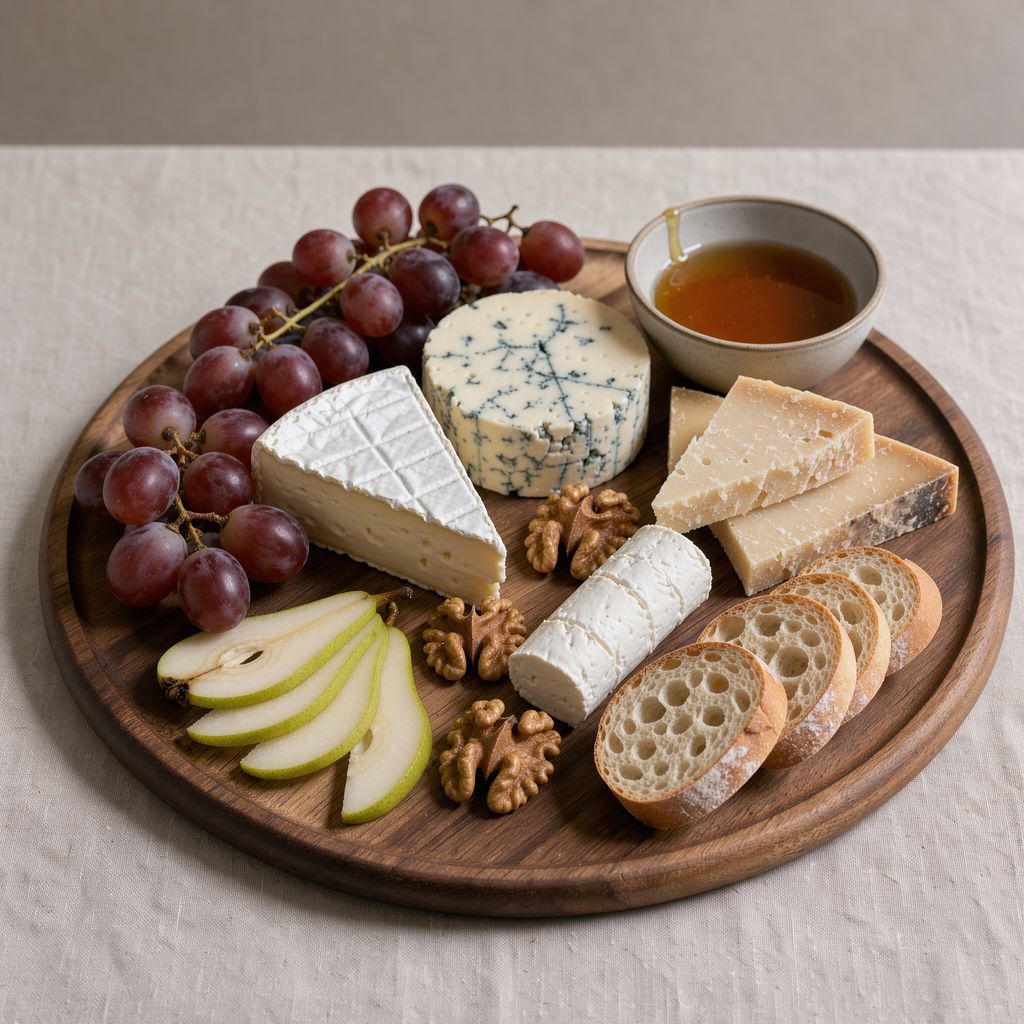
Pick 3–5 cheeses that differ in texture, milk and intensity: soft, semi-hard, hard, blue and goat. For a smaller board, the first three are enough; add the blue and the goat if you want the board to have character. Three cheeses look considered, while more than five start to blur together on one board (and in the mouth).
Soft with a white bloomy rind – brie, camembert, hermelín (a Czech camembert-style cheese). Creamy and mild, it appeals to almost everyone. This is the cheese that disappears first. Don't offer soft and mold-ripened cheeses, or cheeses made from unpasteurized milk, to pregnant guests, though – the Czech National Institute of Public Health advises against them because of listeria.
Semi-hard – Gouda, Edam, Tilsiter. Nutty and milky, a safe bet for children and for guests who don't like bold flavors.
Hard, long-aged – Parmesan, grana padano, comté, Emmental, aged (mature) Gouda, pecorino. Salty, with little crystals in the paste; a small amount goes a long way.
Blue – gorgonzola, Roquefort, niva (a Czech blue cheese). Pungent and bold, it divides opinion – a smaller piece is enough.
Goat – a fresh goat cheese log, ash-ripened aged goat cheese, or sheep's milk cheese if you like. Fresh and tangy, with the typical "animal" note.
Czech cheeses work just as well on a board: hermelín as the soft one, Edam or Tilsiter as the semi-hard, niva as the blue and a farm goat cheese from the market. A simple rule: buy at least one cheese everyone knows and one that will surprise your guests.
Every cheese needs something sweet (fruit, honey), something tangy or spicy (chutney, mustard) and something crunchy (nuts, bread). Sweetness tames saltiness and sharpness, tang cleanses the palate of fat, and crunch contrasts with the creamy texture.
Soft (brie, camembert, hermelín): grapes, pear, cranberries, walnuts, a drizzle of honey, baguette.
Semi-hard (Gouda, Edam, Tilsiter): apple, mustard, fruit chutney, pickles, dark bread.
Hard (Parmesan, comté, pecorino): honey, dried or fresh figs, almonds, pear, a few drops of balsamic reduction.
Blue (gorgonzola, niva): honey, pear, walnuts, figs, even a few squares of dark chocolate.
Goat: honey with thyme, figs, pomegranate, pistachios, slices of radish.
You can make the chutney yourself – a homemade plum chutney from your own harvest goes well with cheese and balances the saltiness of hard and blue cheeses. A neutral baguette is good for the bread, but so is homemade no-knead bread or crunchy pea flour crackers for guests who avoid wheat. Choose understated bread and crackers – a rosemary-flavored cracker will overpower a delicate goat cheese.
Harvest your plums, skip the slivovitz, and make chutney instead
Plum chutney for a cheese board
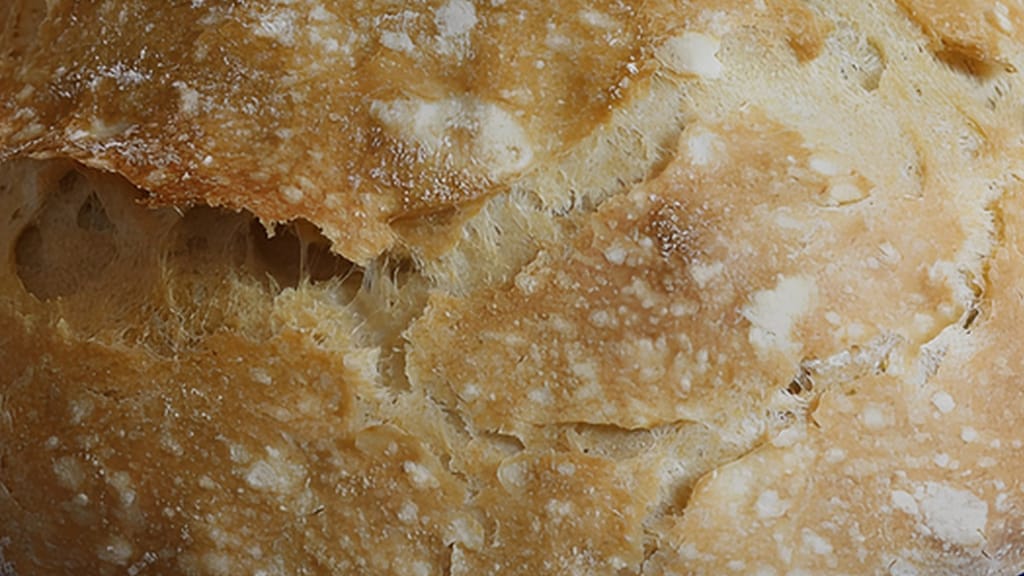
No-knead bread: the lost recipe
No-knead bread for a cheese board
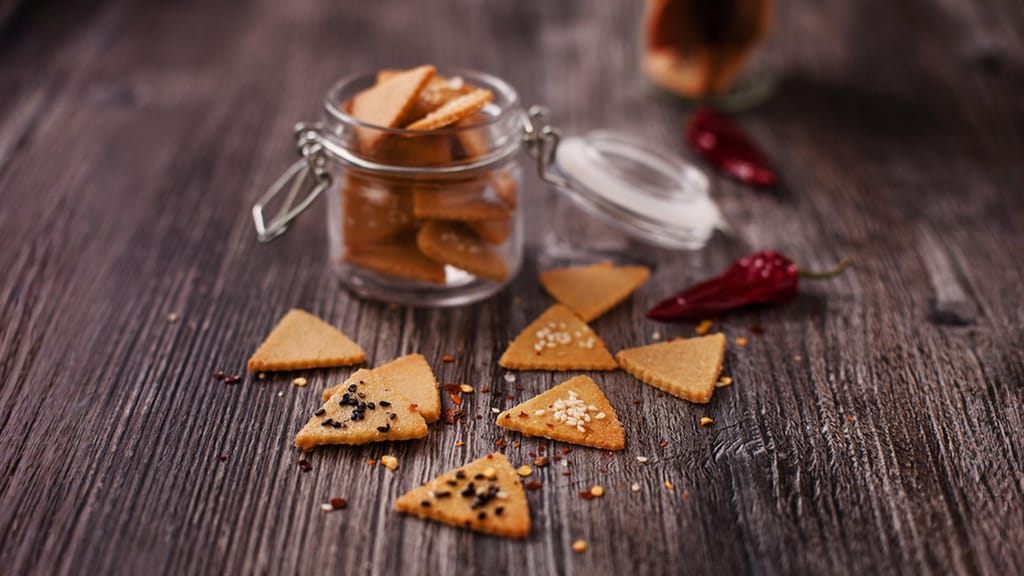
Pea flour crackers
Pea flour crackers for a cheese board
Take the cheese out of the fridge 30–60 minutes before serving: about 30 minutes for soft and goat cheeses, up to an hour for hard and semi-hard ones. That time counts toward the two hours the cheese may spend out of the fridge in total: after 30 minutes of tempering, leave soft cheese on the table for 1½ hours at most. Cold cheese tastes muted – the fat is firm and the aromatic compounds aren't released, so brie is rubbery and Parmesan has no scent.
Slice while the cheese is still cold – it cuts more cleanly, especially soft cheeses.
Cover the sliced cheese with a kitchen towel or plastic wrap until serving so it doesn't dry out.
In an overheated room (above 24°C / 75°F), shorten the tempering to 20–30 minutes, otherwise soft cheeses will turn runny before your guests arrive.
Cut each cheese so that everyone gets a bit of rind and a bit of the center – the center is usually the mildest, the rind the most pronounced. It depends on the shape:
Wheel or small round cheese (camembert, hermelín): like a cake – wedges from the center to the edge.
Wedge of soft cheese (brie from a large wheel): don't cut off the "tip", because everyone wants it. Slice lengthwise, parallel to the sides of the wedge, so the center is shared fairly.
Block of semi-hard cheese (Gouda, Edam): slices 5–7 mm thick, then halve them into triangles, or cut into sticks.
Wedge of hard cheese (Parmesan): don't slice it – break it. Push in a short Parmesan knife and pry out irregular chunks, which have a better texture.
Wedge of blue cheese: thin wedges from the center to the rind so every piece has some blue vein. It crumbles, so it's enough to cut the first two pieces and leave the rest whole.
Goat cheese log: rounds about 1 cm thick. For a clean cut, use a taut thread, unflavored dental floss or a knife dipped in hot water.
Give each cheese its own knife, at least the blue – otherwise its flavor and mold will spread across the whole board. Which knife suits which job is covered in the article on how to choose a kitchen knife for meat, vegetables, bread and cheese. Feel free to leave part of each cheese as a whole piece – the board looks more abundant and the cheese doesn't dry out.
Build from largest to smallest: cheeses first, then bowls, bread, fruit and finally nuts in the gaps. That way the board looks full even when nothing on it is superfluous.
The base. A wooden board, slate slab or large platter. Keep in mind that cheeses need room around them for cutting.
The cheeses. Space them well apart rather than in one row. Go clockwise from the mildest to the boldest – guests instinctively start at the brie and finish at the blue.
The bowls. Honey, chutney, mustard, olives – set small bowls next to the cheese they go with. They give the board its structure.
The bread. Along the edge or fanned out between the cheeses. Put delicate crackers in a bowl alongside instead; they'll go soft on moist fruit.
The fruit. Grapes in larger bunches; slice pears and apples at the last minute and brush them with lemon so they don't brown.
Nuts and small extras. Walnuts, almonds, dried apricots, a sprig of rosemary or thyme – fill every gap with them.
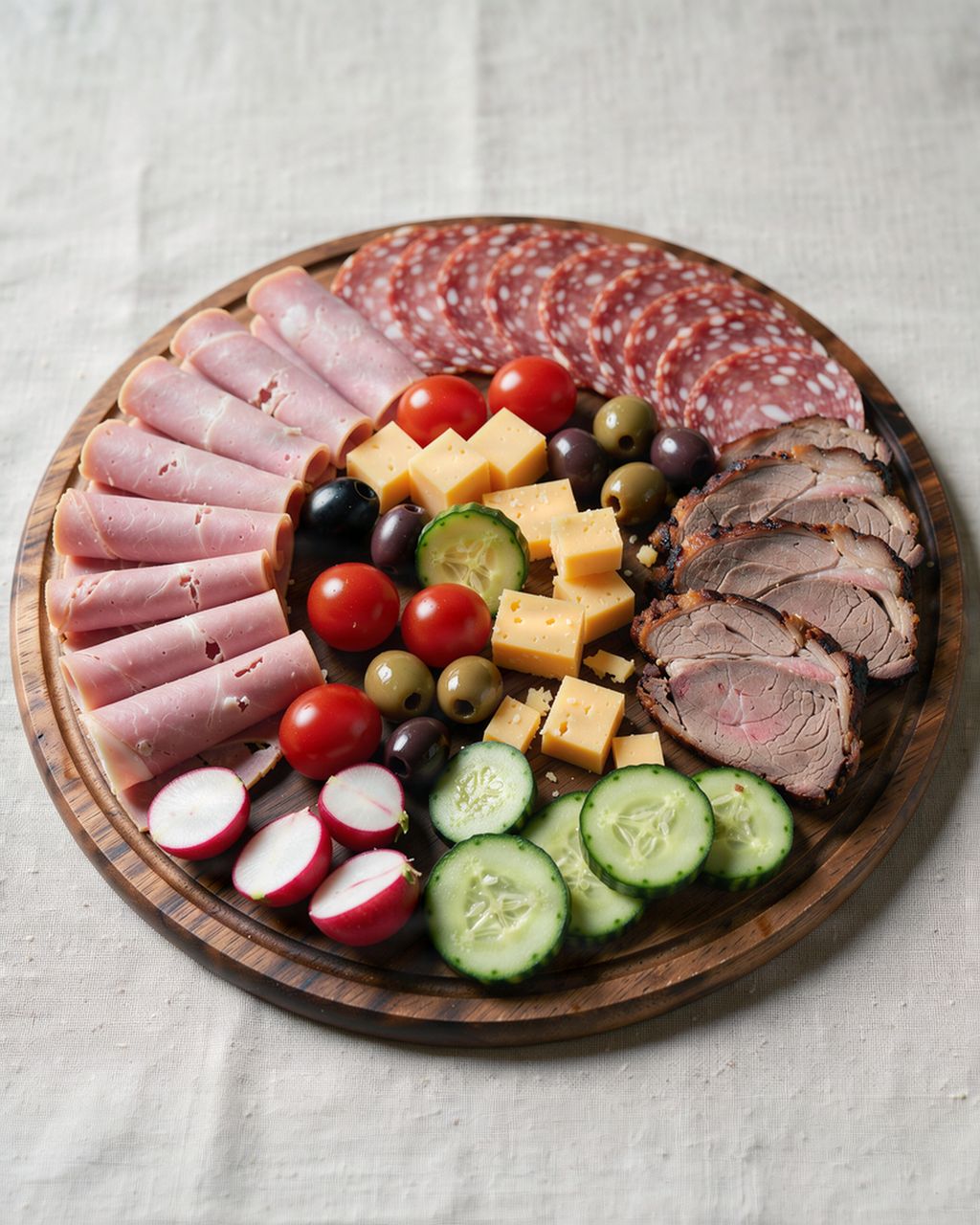
If you're also putting out meat, cured meats and vegetables, take inspiration from the article on how to build a platter that looks abundant. Cured meats can share a board with cheese; just keep them a little away from the soft cheeses. You'll find more ideas for quick entertaining under the party snacks tag – for example easy cheese sticks, which add a warm bonus to the board.
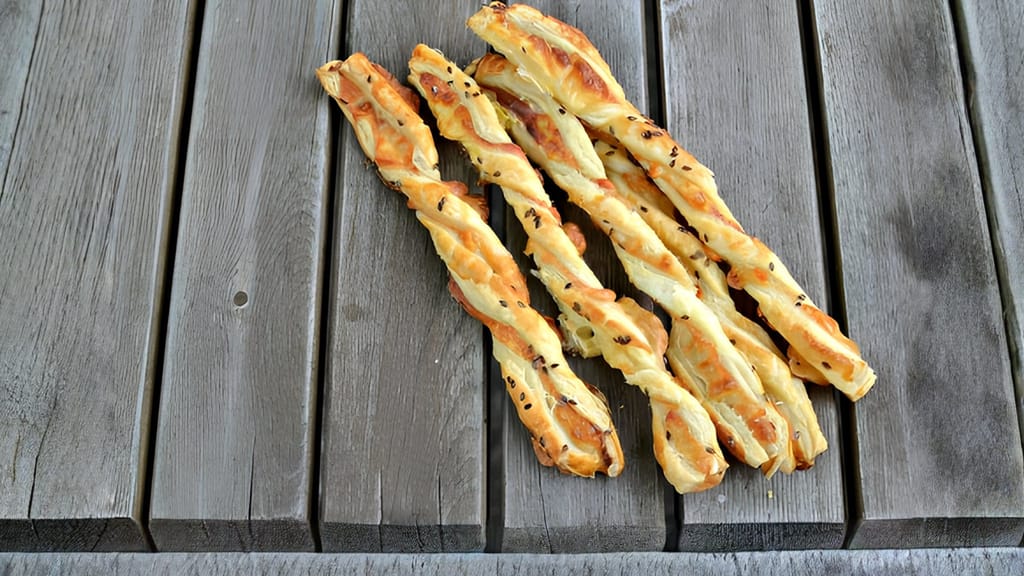
Easy cheese straws
Easy cheese sticks as a warm bonus for a cheese board
According to US Dairy (opens in a new tab), cheese shouldn't sit at room temperature for more than 2 hours, or just one hour in heat above 32°C (90°F); soft and fresh cheeses with a high water content are the most vulnerable, while hard cheeses are hardier.
Soft and fresh cheeses (brie, camembert, fresh goat cheese): after 2 hours on the table, throw them out; don't put them back in the fridge.
Hard and semi-hard cheeses (Parmesan, Gouda, Edam): these are hardier, and according to US Dairy you can wrap them after the party and return them to the fridge. They do dry out and lose flavor on the table, though, so clear them away after two hours anyway.
For a long party, don't put everything out at once. Prepare two smaller boards and bring out the second after an hour and a half – the cheese will still be at the right temperature and nobody will be eating hardened edges.
Planning a cheese board for New Year's Eve? You'll find how to fit it into the whole evening and what to prepare a day ahead in the plan for New Year's Eve entertaining at home.
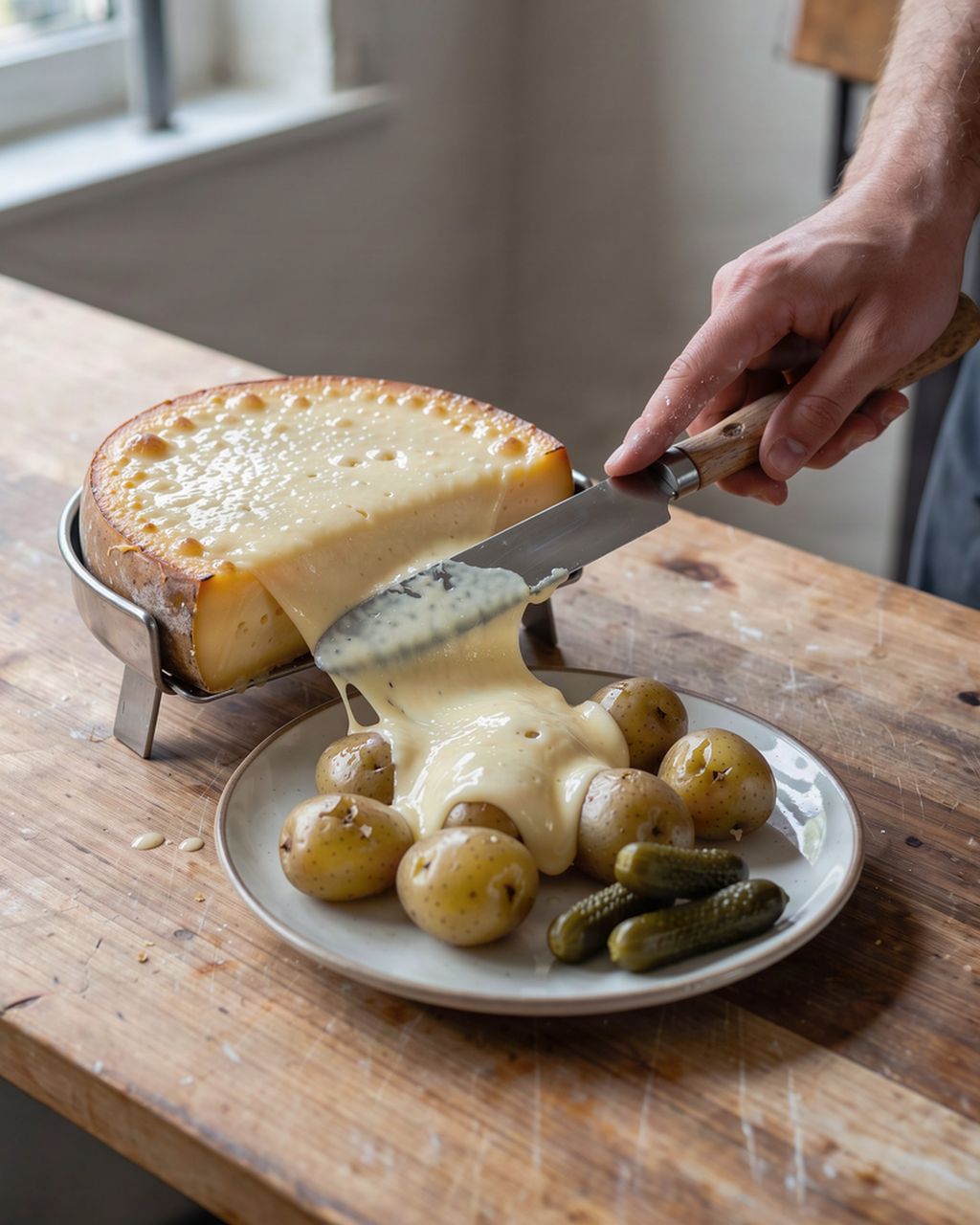
When cheese is meant to be the main course of a winter evening, make raclette or fondue instead of a cold cheese board. For raclette at home you need a different cheese than for a board, and the same goes for cheese fondue, where the right blend of cheeses and wine is what matters most. The accompaniments from the cheese board – pickles, bread, pears – suit all three, though.
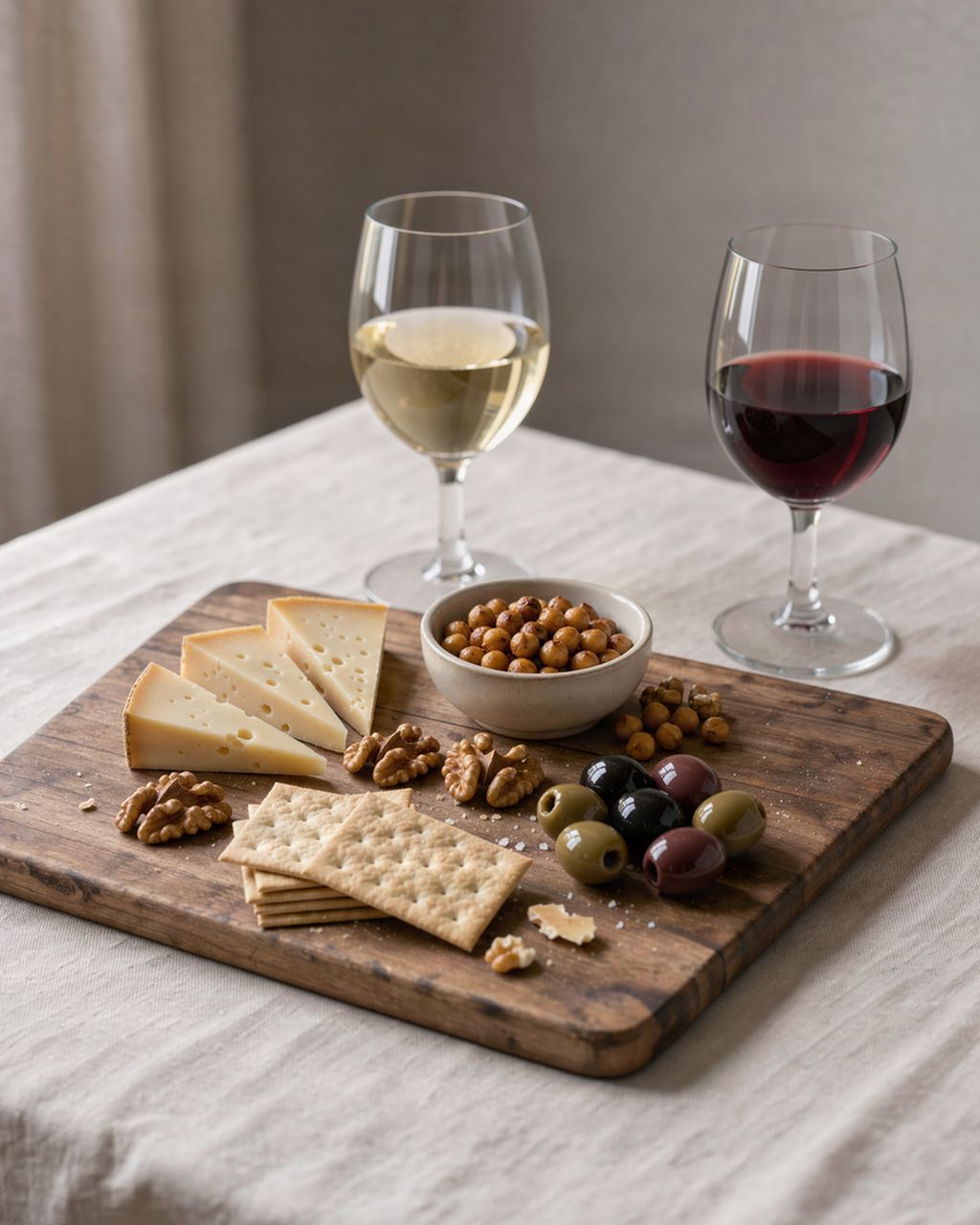
A dry white wine with fresh acidity, such as Riesling or Sauvignon Blanc, suits a cheese board best and works with soft, goat and semi-hard cheeses alike. Blue cheeses pair best with a sweet wine (straw wine or ice wine), while hard aged cheeses can handle a lighter red such as Pinot Noir.
Don't assemble the whole board a day ahead, but you can slice hard and semi-hard cheeses the evening before and keep them wrapped in the fridge. Cut soft cheeses on the day you serve, slice the fruit just before serving, and add the bread and crackers to the board at the very end so they don't go soft.
Wrap opened cheese in wax paper or parchment paper, then place it loosely in a bag or container and keep it in the vegetable drawer. Tight plastic wrap suffocates cheese, and soft cheeses start to smell quickly under it. Wrap blue cheese separately so its mold doesn't spread to the others.
Either works: as a starter or with aperitifs, or the French way, after the main course and before dessert. Before a meal, go for smaller portions and milder cheeses so guests don't fill up before dinner; after a meal, bold hard cheeses and blue cheeses with a sweet wine suit better.
Use leftovers in hot dishes: grate hard cheeses over pasta or risotto, put semi-hard cheeses on toasts and in bakes, and crumble blue cheese into an [apple, walnut and gorgonzola salad](/cs/recipes/salat-s-jablkem-orechy-a-gorgonzolou--1b9e2bc9-2271-4c53-99c6-89b2809f3b27). Simmer Parmesan rinds in a soup to add depth.
One recipe worth heating the oven for, one tip, and one deal from the shop. Nothing else.