Almond-chocolate peanut butter cookies
Peanut Butter Recipes: Cookies, Cups, Truffles, Satay Sauce, Smoothies and More to Bake
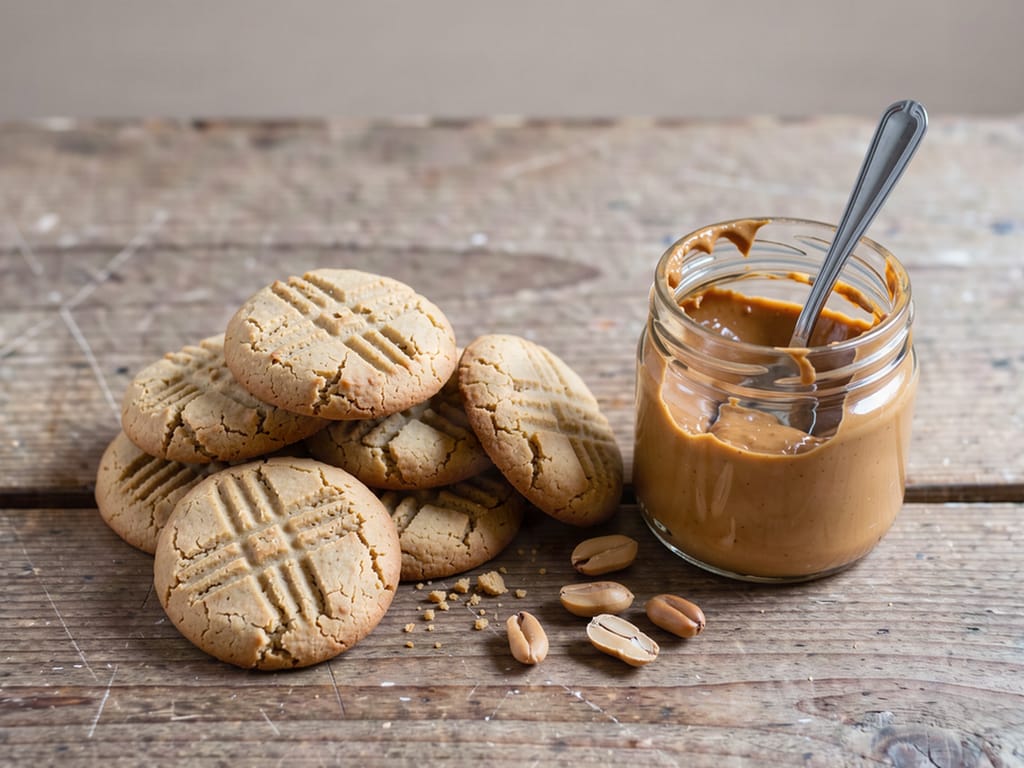
Peanut butter recipes all start with one jar that works for both sweet and savory: you can bake cookies and bars with it, stir together no-bake chocolate cups, truffles and cocoa balls, blend it into a smoothie, or cook a peanut sauce for satay. Below you'll find the essentials for each dish, the tricks that decide how it turns out, and how to grind your own peanut butter at home.
The best recipes with peanut butter are these: peanut butter cookies, autumn bars with peanut cream, chocolate peanut cups, chocolate truffles, cocoa balls made with oats and dates, a banana smoothie, no-churn ice cream, toast with poached pear, and chicken satay with peanut sauce. Together they cover everything you can do with it: bake, mix cold, freeze, blend and cook.
They run from sweet to savory:
Baking: cookies and bars, where peanut butter replaces part of the fat and gives the dough a nutty flavor.
Christmas cookies and treats: cups and truffles (no oven), where peanuts meet chocolate.
No-bake recipes: balls, smoothies and ice cream. The balls and smoothie are ready in minutes, while the ice cream needs a few hours in the freezer.
Weekend breakfast: toast with peanut butter and pear.
Savory: satay and peanut sauces and dressings.
Most of these are treats for nibbling or sharing, not everyday meals, so treat them that way: smaller portions, more flavor.
A tested recipe and one tip that makes it work. Unsubscribe in one click.
Coming up: December 3, St Nicholas bread men, December 10, soft honey gingerbread, and December 17, cocoa Linzer cookies with apricot.
Most recipes call for smooth, unsalted peanut butter, meaning a paste made from roasted peanuts with no added sugar or oil.
What really matters in a recipe:
Smooth or chunky. Smooth blends better into fillings, ganache and dough. Chunky adds crunch to cookies, but it doesn't belong in truffles or ganache, where the pieces won't melt and spoil the smooth texture. For smoothies, reach for smooth too, since it gives a creamy texture right away.
Unsalted or salted. Most recipes here assume unsalted and add salt separately, so you control the saltiness. Use salted where a recipe specifically asks for it, such as the ice cream below. If you only have salted, cut back the salt the recipe adds.
Natural, or with sweetener and stabilizer. Peanut-only paste separates in the jar, with the oil rising to the top. Stir it thoroughly to the bottom before using, otherwise you'll scoop oil from the top and dry paste from the bottom, and the dough turns out greasy or crumbly. Sweeter spread-style versions don't separate, but they add extra sugar to sweet recipes and don't belong in savory ones.
A quick rule: if your peanut butter has firmed up in the fridge, let it soften to room temperature for fillings so it matches the other ingredients. Warm it for a few seconds over a water bath only for ganache, sauces and smoothies, where warm, runny peanut butter mixes in far more easily than a cold lump.
Homemade peanut butter takes just one ingredient: blend roasted peanuts in a food processor for 5–10 minutes, with pauses, until the crumbs turn into a smooth paste. You don't need anything else, and salt is optional.
Step by step:
Peanuts. Take roasted, unsalted, skinless peanuts. If yours are raw, spread them on a baking sheet and roast in a 170–180°C (340–355°F) oven for about 12–20 minutes, stirring every 5 minutes, until fragrant and lightly golden. Watch them closely: they go from roasted to burnt in a moment, and bitterness can't be rescued in the paste.
Blend them warm. Peanuts still lukewarm from the oven release their oil more readily than cold ones, so the paste is smoother and comes together faster.
Go through all the stages. First you get coarse crumbs, then a fine meal, then a dense ball that spins around like dough. This is where most people stop and add oil. Don't. Keep blending, and within a minute or two the ball loosens into a glossy paste on its own.
Take breaks. Every minute, stop the machine, scrape the mixture down from the sides with a spatula and let the motor rest. Appliances heat up on long runs, and small ones don't like it.
Season. At the end you can add a pinch of salt. For a chunky version, set aside a handful of peanuts at the start, chop them briefly and stir them into the finished paste.
300 g of peanuts gives you a full small jar. Store it in the fridge in a closed jar, scoop with a clean spoon and make smaller batches. If it starts to smell of rancid oil or taste bitter, throw it out.
The best things to bake with peanut butter are cookies and bars with peanut cream. In dough it acts as both fat and flavor: it adds moistness and nutty depth, and it browns beautifully. That's exactly why it turns golden faster in the oven than a classic butter dough, so keep an eye on it from the start.
Three things decide every bake with peanut butter:
Stir the jar. Separated oil on top means greasy dough, and dry paste from the bottom means crumbly dough.
Bake for less time. Take cookies out when the edges are golden and the center is still soft. They firm up on the baking sheet.
Salt. Peanuts without salt taste flat, and a pinch of salt opens up their flavor. That's why recipes add it even to sweet bakes.
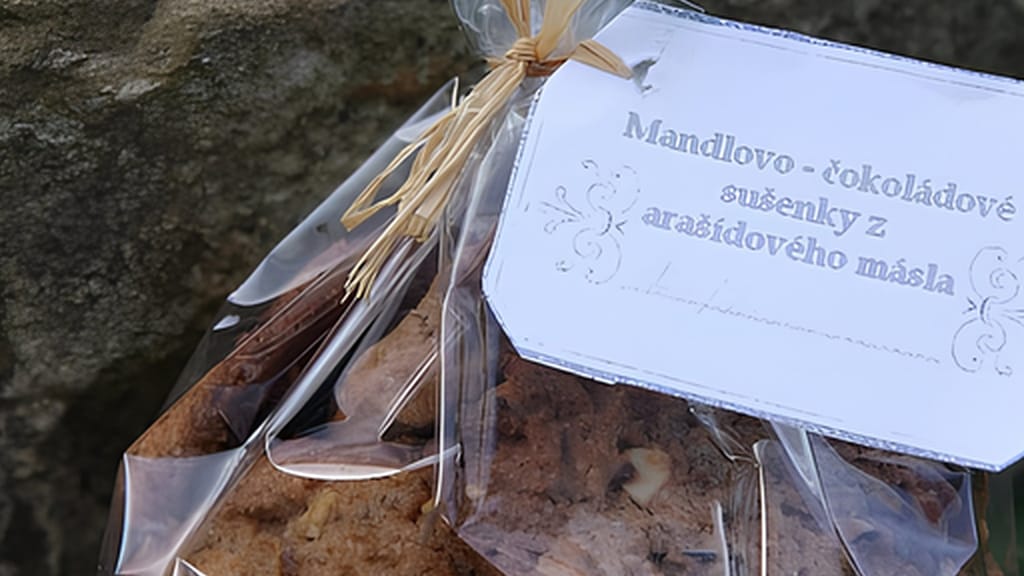
Almond chocolate peanut butter cookies are the fastest bake in this roundup, ready in 31 minutes. Finely chop sliced almonds and 70% dark chocolate, quickest with a few short pulses of a chopping blade so the chocolate doesn't melt from friction. Then in a bowl mix flour, baking powder, granulated sugar, melted and slightly cooled butter, salt, 180 g peanut butter, an egg and milk, and stir in the almonds and chocolate.
Drop small spoonfuls onto a parchment-lined baking sheet, flatten them slightly and leave gaps between them, because they spread as they bake. Bake at 180°C (350°F) for 10–12 minutes, until the edges turn lightly golden. The centers will still be soft when you take them out and will firm up on the sheet in a moment. Only then move the cookies.
If you enjoy cookies in general, you'll find more types, techniques and temperatures in our article on how to bake homemade cookies, from chocolate chip cookies to cantuccini.
Almond-chocolate peanut butter cookies
Almond chocolate peanut butter cookies: ready in 31 minutes from one bowl
Autumn bars with peanut cream and figs show how peanut butter works in a cream rather than in dough: the base is apple and cinnamon, and the peanut butter goes into the pudding cream on top.
Temperature decides the cream. Let the pudding cool completely and whip it separately, as you do the softened butter, and only then combine them in portions. Both parts must be at a similar temperature, or the cream will curdle into grains. Whip the peanut butter in only after the cream is finished, so it doesn't weigh it down before the butter and pudding come together.
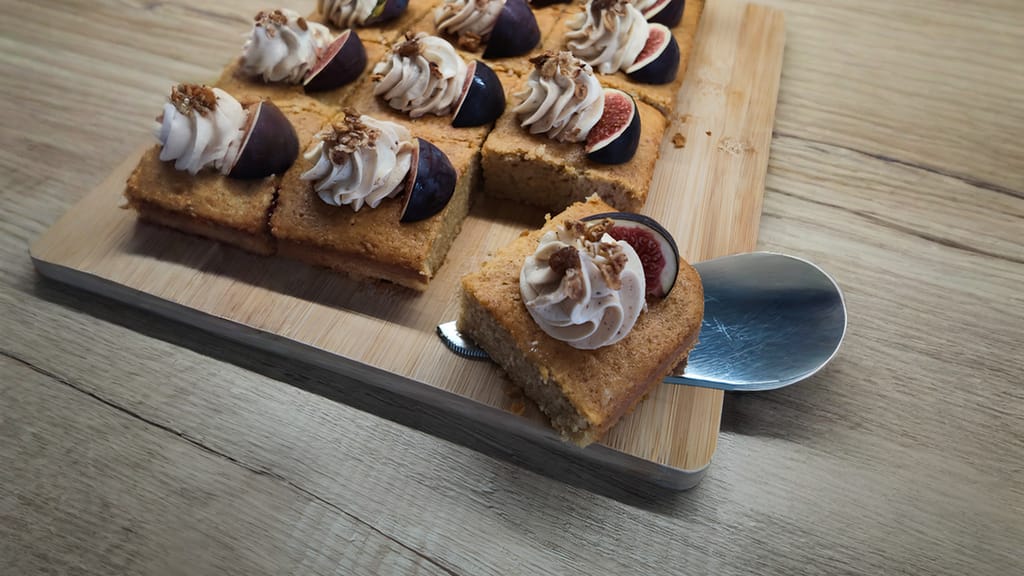
Autumn squares
Autumn bars with peanut cream and figs
For peanut butter treats, the best pieces are the no-oven ones where peanuts meet chocolate: chocolate peanut cups and chocolate truffles. Both hold their own on a plate among Christmas cookies, and you can make them ahead, since they need time in the fridge.
Chocolate peanut cups are a layer of dense peanut cream under a chocolate cap, ready in 50 minutes with no baking. Beat the filling from 200 g peanut butter, softened butter, powdered sugar and brown cane sugar. You can do it with a wooden spoon, or faster with an electric mixer.
Put tiny paper cups into a mini muffin pan. The pan supports them so they don't collapse as you fill them. Put roughly a small teaspoon of filling in each and smooth it so the chocolate layer is an even thickness everywhere. Melt milk chocolate and 85% dark chocolate over a water bath, pour it over the filling and chill the pan for about half an hour.
The water under the bowl should only barely simmer, and not a drop may get into the chocolate, or it will thicken and turn lumpy. Store finished cups in the fridge, because in a warm room the chocolate softens and gets sticky.
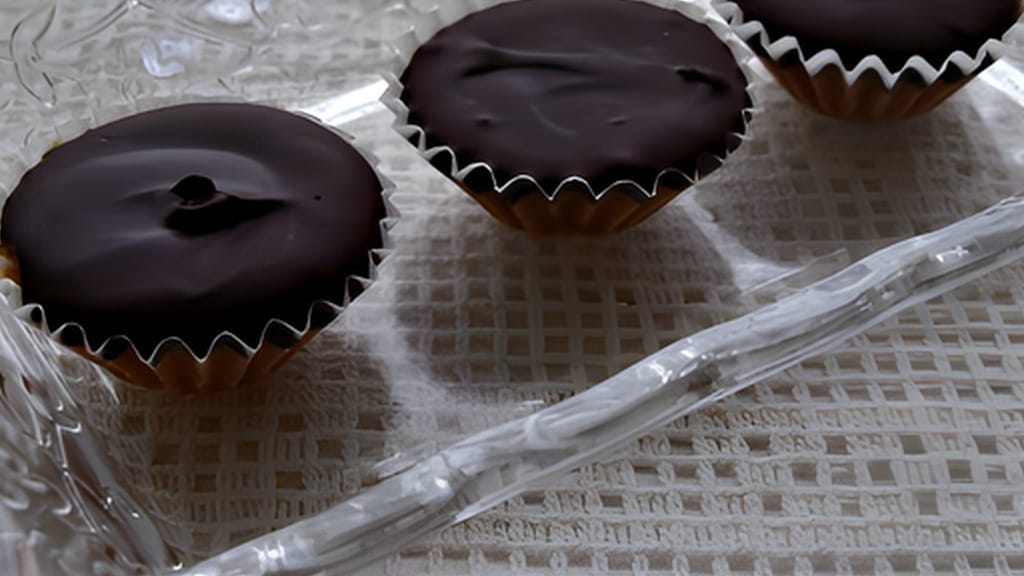
Nigella lawson's chocolate peanut butter cups
Chocolate peanut cups: peanut cream under chocolate, no baking
Chocolate truffles with peanut butter are a milk chocolate ganache with just 25 g of peanut butter stirred in, so the peanut is a subtle undertone rather than the main flavor. Heat whipping cream gently, at most to the boiling point, take it off the burner and add 320 g milk chocolate. Wait a moment, then stir with a wooden spoon into a smooth cream.
Add the peanut butter and a pinch of salt, taste and add more salt carefully. Pour the ganache into a bowl lined with plastic wrap, cover the top with plastic wrap too and let it set, ideally overnight. Then cut it up, roll it into balls and coat them in cocoa or freeze-dried raspberries.
The thinner the layer of ganache in the bowl, the faster it sets. Just heat the cream, and don't boil it for long.
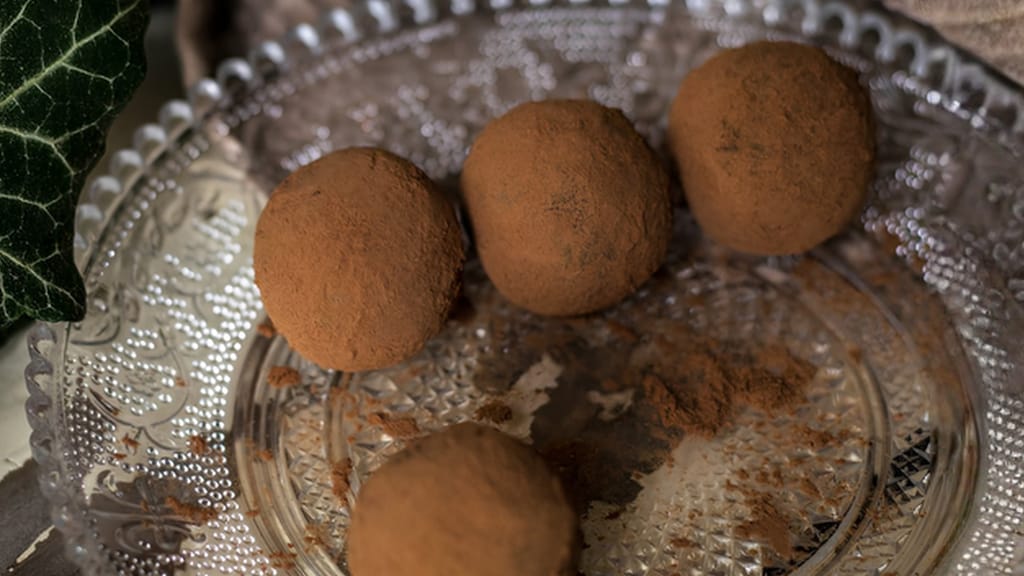
Chocolate peanut butter truffles
Chocolate truffles with peanut butter coated in cocoa and raspberries
Without baking, you can make cocoa balls, a smoothie and ice cream from peanut butter. The balls and smoothie are ready in minutes, while the ice cream needs a few hours in the freezer. Here peanut butter does what eggs or fat do in baking: it holds the mixture together and makes it creamy.
Cocoa balls with oats and dates are ready in 20 minutes, and the blender makes about 12. The mixture is made of dried dates, rolled oats, shredded coconut, cocoa, 40 g peanut butter and a little water. Use fine oats as they are, but blend coarse ones briefly first. Pit the dates and blend or chop them as finely as you can, then combine everything.
With a spoon, scoop out equal pieces and roll them between your palms into balls the size of a walnut. If the mixture sticks to your hands, dampen them lightly. The balls are a perfect job for kids: nothing is baked and nothing can burn.
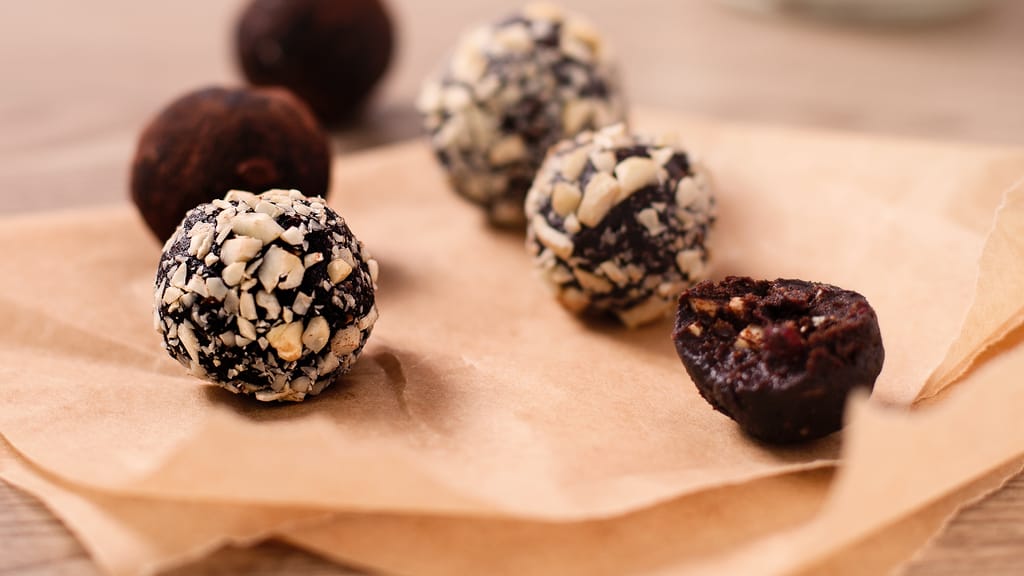
Cocoa date & oat balls
Cocoa balls with oats, dates and peanut butter in 20 minutes
A peanut butter banana smoothie takes two minutes and makes two glasses. Pour almond milk into the blender first, then add the bananas, peanut butter, hazelnuts and maple syrup and blend until smooth. Besides peanuts, it also contains tree nuts, hazelnuts and the almonds in the almond milk, so warn guests with allergies.
The riper the bananas, with brown spots on the peel, the sweeter and creamier the smoothie. The milk at the bottom of the blender helps the blades spin through the dense peanut butter, so it doesn't stick to the sides.
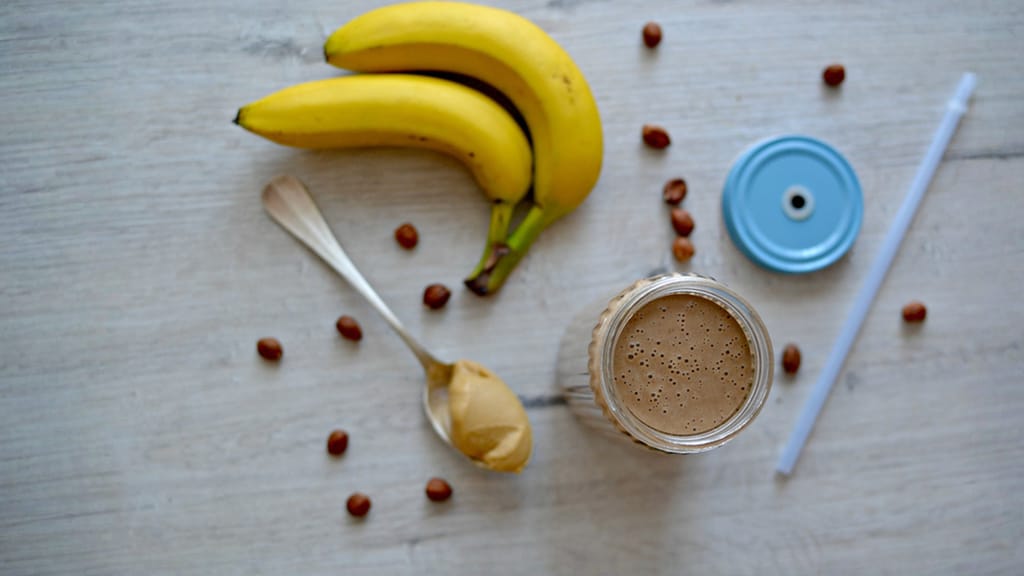
Peanut butter banana smoothie
Peanut butter banana smoothie in two minutes
No-churn vanilla peanut butter ice cream is built on a peanut ripple in a fluffy vanilla cream of mascarpone and cream. The key is the peanut emulsion: briefly warm salted peanut butter in a water bath with cream and invert sugar and stir it into a glossy mixture, which you then layer with the cream in the pan.
What decides the result is plastic wrap pressed right onto the surface of the cream, which keeps out air and ice crystals. Before serving, let the pan soften on the counter for 5–10 minutes so you can scoop it.
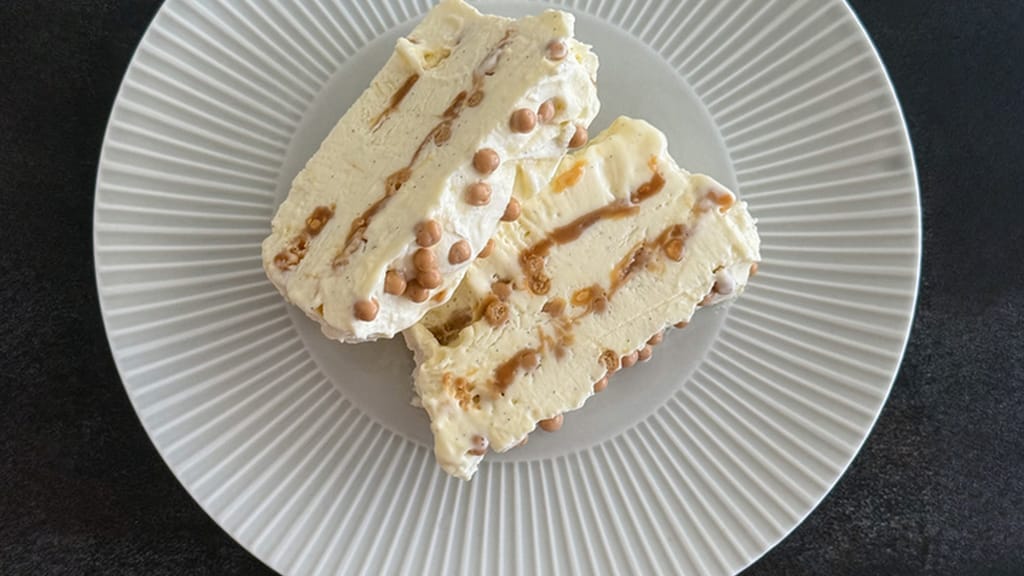
No-churn vanilla ice cream with peanut butter swirl
No-churn vanilla peanut butter ice cream
Toast with peanut butter, poached pear and coconut chips is a weekend breakfast that takes 36 minutes. You loosen the peanut butter with a little cream so it isn't so dense and doesn't stick to the roof of your mouth. It's topped with a pear poached in red wine with spices and coconut chips baked with smoked paprika.
Salty, smoky chips against a sweet pear are exactly the contrast peanut butter suits.
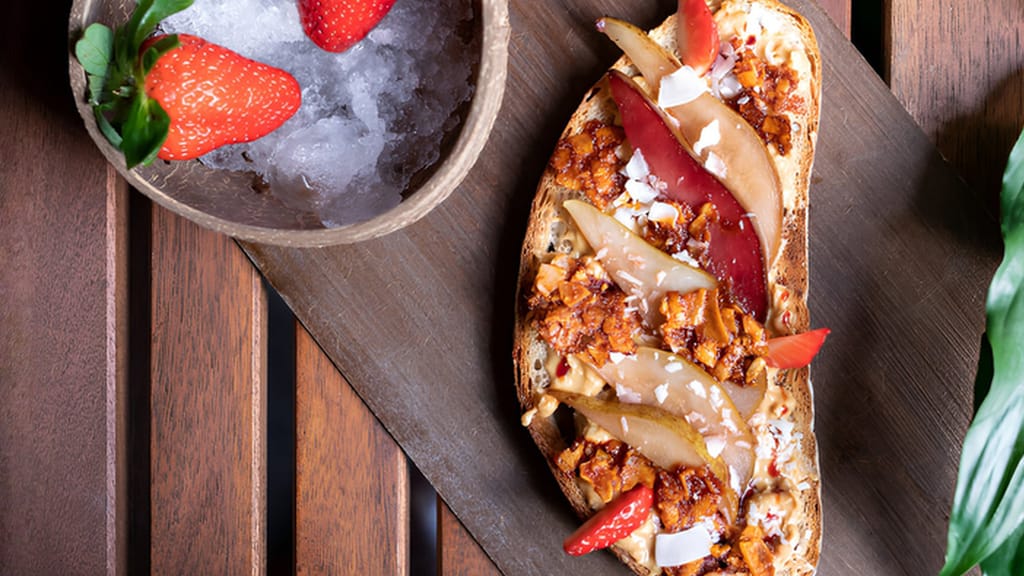
Peanut butter toast with coconut chips
Peanut butter toast with poached pear and coconut chips
On the savory side, peanut butter makes mainly peanut sauce for satay and dressings for salads and noodles. It works because peanut butter is a thick paste of finely ground peanuts in their own oil: it thickens a sauce without flour and carries the flavors of soy sauce, lime, chili and garlic.
The basic ratio for a savory peanut sauce: for 2 tablespoons of peanut butter, 1 tablespoon of soy sauce, 1 tablespoon of lime juice, 1 teaspoon of sugar and chili to taste. The teaspoon of sugar belongs in a savory sauce, as it balances the salt and acidity. Then adjust the thickness with warm water or coconut milk.
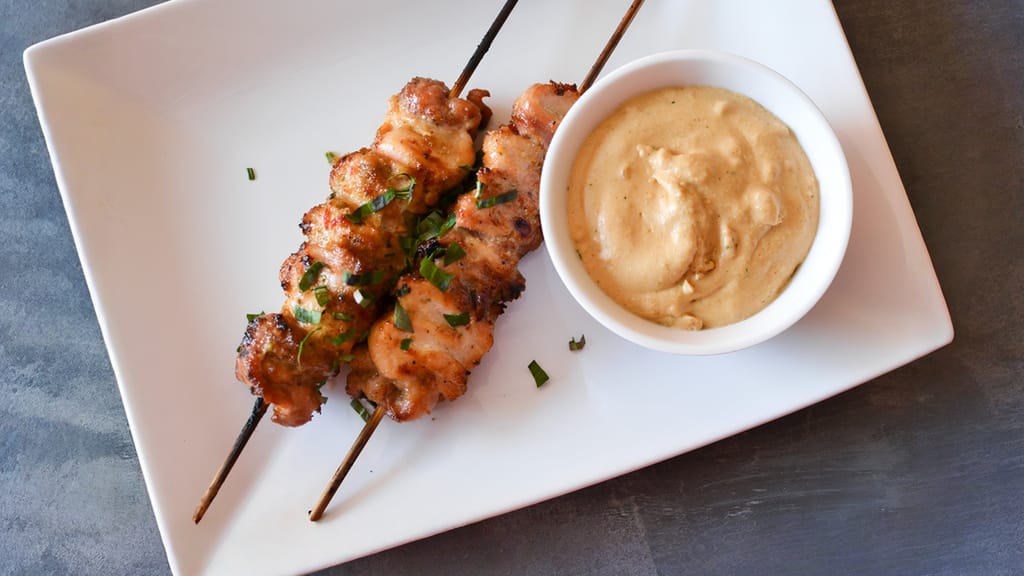
Chicken satay with peanut sauce is chicken breast cut into thin strips, marinated overnight, grilled on skewers and served with a warm sauce made from 150 g peanut butter and coconut milk. Chop the garlic, chili, ginger and lemongrass as finely as you can, so their flavor gets into the meat and larger pieces don't scorch on the grill, and mix them with the other marinade ingredients. Don't rinse the chicken breasts, just pat them dry with a paper towel, cut them into long thin strips, coat them in the marinade and leave them in the fridge until the next day.
Make the sauce just before grilling. In coconut oil, sauté the scallions, chili and garlic, add the lemongrass and peanut butter and stir until it melts. Stir in the soy and fish sauce and the coconut sugar, blend until smooth and finally pour in the coconut milk.
Soak wooden skewers in water for 10 minutes so they don't burn on the grill. Take the chicken out of the fridge only when the grill is heating up, thread on the strips and grill over high heat. The chicken is done when an instant-read thermometer in the thickest piece reads 74°C (165°F), which is the minimum the US Food Safety and Inspection Service (FSIS) gives for poultry. Put the leftover sauce with coconut milk and the grilled meat in the fridge within 2 hours at the most (within 1 hour if the temperature is above 32°C).
For more Asian dishes you can manage at home, including pho and quick stir-fries, see our article Asian dishes at home: pho, satay and Mongolian beef.
Peanut dressing is peanut sauce thinned into a pourable dressing: stir a tablespoon of peanut butter with a tablespoon of soy sauce, the juice of half a lime, a drop of honey or syrup and enough warm water that the dressing runs off a spoon. The warm water matters, because in cold water peanut butter just breaks into clumps.
Season with finely grated garlic, ginger or chili. The dressing suits cold noodles, a salad of shredded cabbage and carrot, or as a dip for raw vegetables. It thickens as it stands, so thin it with a spoonful of water before serving.
Almost everything works with peanut butter if it's stirred, just warm enough and seasoned with salt. The most common mistakes and what to do about them:
The dough is greasy or crumbly. The jar wasn't stirred. Next time, stir right down to the bottom. For now, add a spoonful of milk to crumbly dough and a spoonful of flour to greasy dough.
The cream curdled. The peanut butter was cold from the fridge and the cream warm, or the other way around. Let both come to the same temperature and whip again.
The chocolate seized. Water or steam got into it. Melt it over barely simmering water and wipe the bowl dry.
The sauce is too thick. Peanut butter firms up as it stands. Thin it with warm water or coconut milk, not a cold liquid.
It tastes flat. It's missing salt or acidity. Add a pinch of salt to sweet dishes and a drop of lime to savory ones.
Peanuts pair best with chocolate, banana, caramel, dates, apples, coconut, chili and lime. If you're not sure how to boost a recipe, reach for one of them.
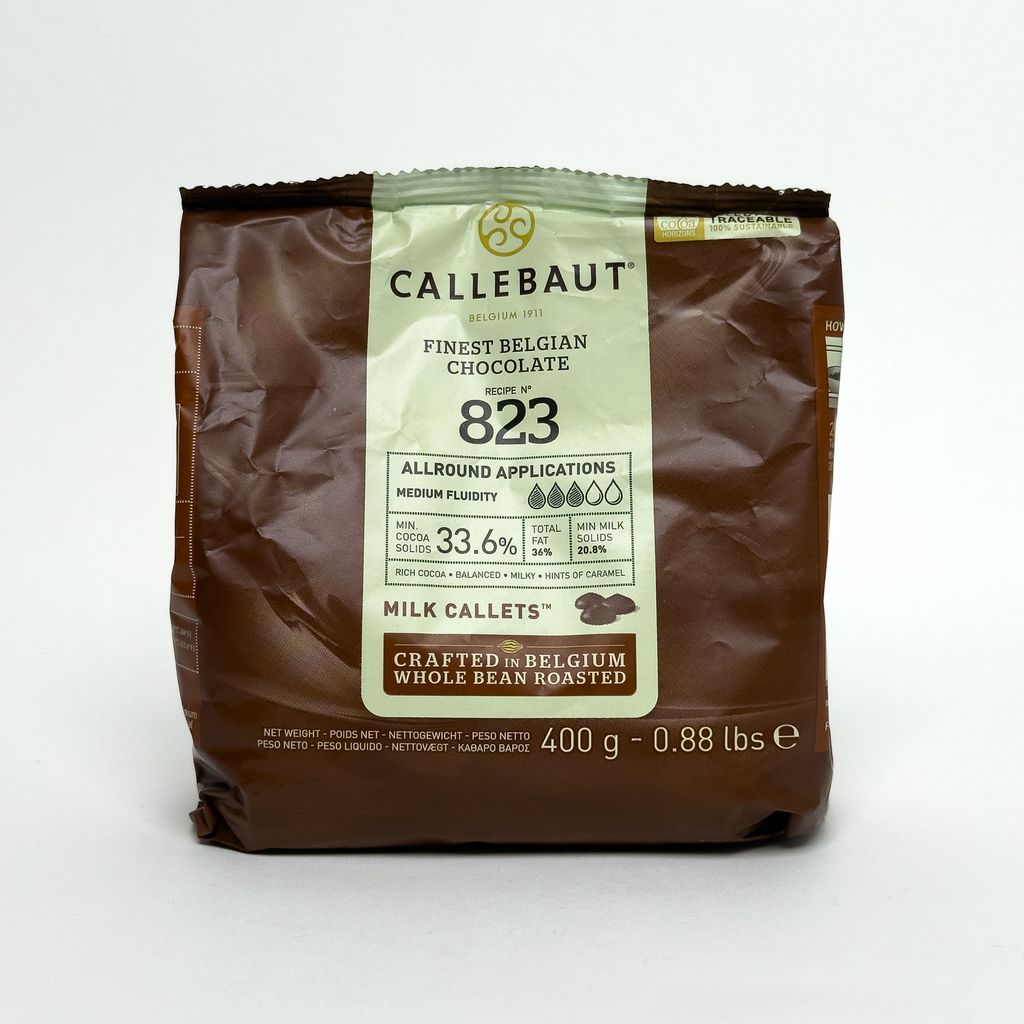
Callebaut
Callebaut Milk Chocolate Callets (823) 400gSwap in another nut butter in the same amount, most often almond or cashew. Those aren't suitable for anyone with a tree nut allergy, which some people with peanut allergies also have. For peanut allergies, sunflower seed butter works, or tahini if your guest isn't allergic to sesame. Always ask first and cook with clean utensils. The flavor will differ, but the texture of cookies, fillings and sauces stays similar.
Powdered peanut butter is ground peanuts with most of the oil pressed out, and you turn it into a paste by mixing it with water. It works best in smoothies, porridge and savory sauces, where it dissolves in the liquid. In baking it can't replace regular peanut butter one to one, because it adds no fat to the dough and cookies would turn out drier.
For a quick snack, the banana smoothie and the cocoa balls made with oats and dates fit best. Both are ready in 20 minutes and nothing needs baking. We don't assess nutritional values or health benefits here. Whether a recipe fits your eating plan is something you can judge from its ingredients and portion size.
Keep opened peanut butter in a tightly closed jar and always scoop it out with a clean spoon. It firms up in the fridge, so let it soften at room temperature before using. If it starts to smell of rancid oil or taste bitter, throw it out.
One recipe worth heating the oven for, one tip, and one deal from the shop. Nothing else.